
Views: 222 Author: Youti Clothing Publish Time: 2026-04-17 Origin: Site


As a China-based OEM suit manufacturer working with global brands, I've seen first-hand how the line between business casual and business professional attire has shifted in offices from New York to Berlin and Dubai. Understanding these dress codes is no longer just a matter of style; it directly affects your brand image, client trust, and even perceived competence in high-stakes meetings. [sites.udel]
In today's hybrid work era, companies are redefining what "dressing appropriately" looks like, but the underlying logic of each dress code remains surprisingly consistent. As a supplier of tailored suits and professional apparel, we break it down for our clients using one simple lens: how much authority and formality do you need to project in a given setting? [propellant]
- Business casual: Polished, relaxed office wear that balances comfort and professionalism; ideal for day-to-day work in modern corporate environments, creative industries, and tech. [sites.udel]
- Business professional: Structured, conservative, and highly formal looks for interviews, board meetings, key presentations, and roles in finance, law, consulting, and government. [linkedin]
From an expert manufacturer's perspective, the key is not just "what to wear," but how to systematize wardrobes—especially for teams or brands—so employees can move confidently between both codes with a compact, well-planned set of garments. [propellant]

In our OEM work for European and US brands, business casual is the default office uniform in most non-client-facing roles. It's less formal than a full suit but far more polished than weekend wear. [morganhunter]
Core business casual items we recommend for men: [sites.udel]
- Shirts: Cotton button-downs, long-sleeved dress shirts, occasional fine-gauge polos; no logo-heavy T‑shirts. [sites.udel]
- Pants: Chinos, khakis, and tailored trousers in navy, charcoal, tan, or soft earth tones. [sites.udel]
- Layers: Lightweight blazers, unstructured jackets, fine knit sweaters, or cardigans. [sites.udel]
- Shoes: Loafers, brogues, Derbies, Chelsea boots, or minimalist leather sneakers in more progressive offices. [sites.udel]
- Accessories: Simple watch, subtle belt, optional pocket square for a slightly elevated look.
From an industry standpoint, brands that do business casual collections well focus on breathable fabrics, subtle textures, and easy mix-and-match color palettes, which makes it easier for employees and end customers to build weekly outfits. [propellant]

Business professional is where your classic two- or three-piece suit becomes the central element of your look. In conservative sectors—banking, law, corporate leadership—this is still the expected standard in high-visibility situations. [linkedin]
Key components of men's business professional attire :
- Suit: Matching jacket and trousers in navy, black, or charcoal, sometimes with a waistcoat.
- Shirt: Crisp, long-sleeved, collared dress shirt in white or pale blue.
- Tie: Solid or subtly patterned in conservative colors (navy, burgundy, dark red).
- Shoes: Classic leather Oxfords, Derbies, or brogues in black or dark brown, well-polished.
- Accessories: Cufflinks, dark socks, dressy watch, belt matching shoe color and finish.
As an OEM supplier, we see that global brands still allocate premium fabrics and construction details to their business professional lines because customers associate weight, drape, and finishing with authority and status. [propellant]

| Aspect | Business Casual (Men) | Business Professional (Men) |
|---|---|---|
| Formality level | Moderately formal, relaxed | Highly formal, conservative |
| Typical setting | Everyday office work, internal meetings, creative roles (sites.udel) | Interviews, board meetings, client pitches, legal/finance roles (morganhunter) |
| Top | Button-down shirts, polos, fine knits | Structured dress shirts with collar and cuffs |
| Layers | Optional blazer, cardigan, light jacket | Tailored suit jacket, sometimes waistcoat |
| Bottoms | Chinos, tailored trousers in varied colors | Matching suit trousers in classic tones |
| Shoes | Loafers, Derbies, brogues, leather sneakers (in modern offices) (sites.udel) | Leather Oxfords, Derbies, classic brogues only |
| Colors & patterns | Broader color range, subtle patterns acceptable (sites.udel) | Navy, black, charcoal, very subtle patterns only |
| Expression | More room for personal style (morganhunter) | Focus on authority and neutrality (morganhunter) |
This structure is extremely useful for HR teams building dress-code guides and for fashion buyers briefing their collections. [thoughtlab]
From a practical standpoint, professionals do not want to overthink outfits every morning—they want clear rules tied to scenarios. Based on feedback from international clients and wearer surveys, here's how dress codes typically map to real situations. [morganhunter]
Lean business professional when: [linkedin]
1. Attending job interviews or assessment centers.
2. Presenting to senior leadership or external investors.
3. Appearing in court, boardrooms, or high-profile negotiations.
4. Leading sales pitches in conservative industries.
Business casual is generally appropriate when: [morganhunter]
1. Working in tech, media, marketing, or startups.
2. Attending internal meetings without external stakeholders.
3. Participating in training, workshops, or team offsites.
4. Working in offices that explicitly state "business casual" or "smart casual."
For global brands, we often help create capsule collections that support both ladders: entry-level employees can start in business casual, then "step up" to business professional with complementary pieces rather than rebuilding their wardrobe. [propellant]
A point many generic style blogs underestimate is fabric engineering. From the factory floor, we see how fiber choice, weave density, and finishing determine how long a suit looks sharp and how it behaves in real office conditions. [thoughtlab]
For business professional suits :
- Wool and wool blends remain the gold standard for structure, durability, and wrinkle resistance.
- All-season wool works across climates and reduces the need for multiple suit sets.
- Heavier wool blends for winter keep the wearer warm without compromising drape.
For business casual collections :
- Cotton and cotton blends are ideal for shirts and chinos, offering breathability.
- Linen or linen blends for summer require careful weaving to balance airflow with crease control.
- Stretch fibers (e.g., elastane blends) can dramatically improve comfort for long commutes and hybrid workdays.
As a manufacturer, we often advise brand partners to differentiate product lines by micro-details—lining choice, stitch density, interlining structure—so customers can genuinely feel a step-up when they move from business casual to business professional range. [propellant]

Beyond basic "navy vs black" discussions, our styling support to clients focuses on versatility and photogenic quality—especially as more meetings happen on video. [thoughtlab]
Color guidelines for business professional: [linkedin]
- Stick to navy, charcoal, and black suits for maximum formality and easy coordination.
- Keep shirts in solid white or pale blue to avoid distraction on camera.
- Choose ties in controlled tones (navy, burgundy, dark red) with minimal pattern.
Color guidelines for business casual: [sites.udel]
- Introduce softer shades like light blue, lavender, and light pink shirts in summer.
- Use darker browns, deep greens, and navy in cold seasons for balance.
- Experiment with subtle checks or micro-patterns on shirts and chinos, not on entire suits.
For HR teams creating visual dress code guides, we usually recommend side-by-side outfit grids showing "acceptable" vs "too casual / too flashy" combinations, since employees respond faster to images than text. [medianug]
To make this truly actionable, here are ready-to-use formulas we share with international buyers and corporate clients when they plan uniforms or curated collections. [thoughtlab]
Business casual formulas: [sites.udel]
1. Light blue button-down + navy chinos + brown loafers + leather belt.
2. White oxford shirt + grey tailored trousers + dark knit cardigan + Derby shoes.
3. Fine polo shirt + tan chinos + navy unstructured blazer + minimalist leather sneakers (appropriate in modern offices).
Business professional formulas: [morganhunter]
1. Charcoal suit + white shirt + navy tie + black Oxfords.
2. Navy suit + pale blue shirt + burgundy tie + brown brogues.
3. Black suit + white shirt + conservative tie + black Oxfords for the most formal occasions.
Brands that translate these formulas directly into bundle offers (e.g., "Interview Ready Set" or "Everyday Business Casual Pack") tend to see stronger conversions and fewer returns because customers understand exactly when and how to wear each piece. [medianug]
From our vantage point as a Chinese OEM specializing in suits and professional wear, successful international labels treat their manufacturing partners as strategic advisors, not just factories. [thoughtlab]
Brands typically rely on us to:
- Adapt core patterns to different body types across regions while keeping brand fit standards consistent. [thoughtlab]
- Source appropriate fabrics for specific markets (e.g., lighter blends for Southeast Asia, heavier wool for Northern Europe).
- Optimize size ranges and grading to reduce returns and support inclusive fit. [thoughtlab]
- Produce private-label lines that align precisely with each client's brand tone—more relaxed for lifestyle brands, more formal for corporate or uniform brands. [propellant]
If you are a brand owner, wholesaler, or importer, partnering with an experienced OEM allows you to build tightly focused "business casual" and "business professional" capsules with confidence in fabric performance, fit, and scalability. [propellant]
If you are a foreign brand owner, wholesaler, or apparel producer looking to build or upgrade your business casual and business professional collections, working with an OEM specialist can dramatically reduce your trial-and-error. [propellant]
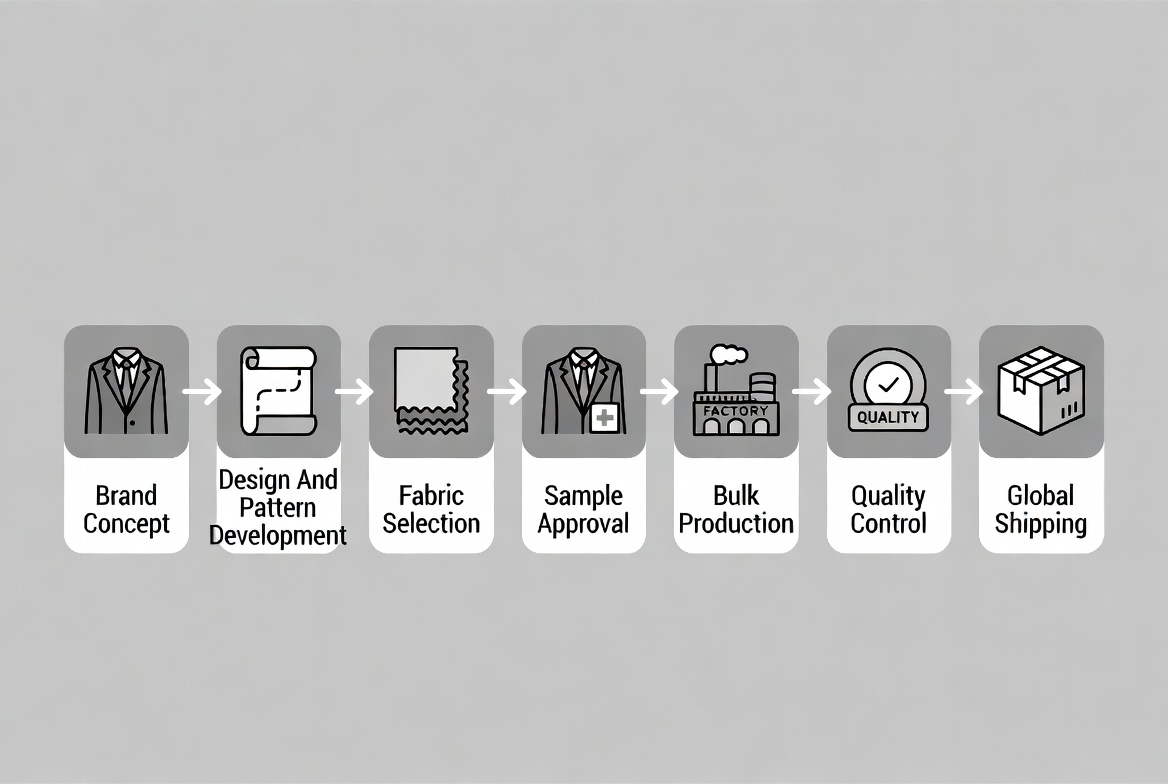
At Shanghai Youti Clothing Co., Ltd., we support you from concept to shipment:
- Collaborative design and pattern development tailored to your market.
- Fabric proposals optimized for climate, budget, and brand positioning.
- Flexible MOQ for test orders, followed by scalable production.
- Strict quality control and consistent sizing for global markets.
You can brief us with your mood boards, existing best sellers, or simply the dress codes you want to target, and we help you transform those ideas into ready-to-sell business casual and business professional lines under your brand. [thoughtlab]
1. Is a blazer always required for business casual?
No. In many modern offices, a shirt and tailored trousers are sufficient for business casual, and the blazer becomes optional, typically added for client meetings or presentations. [morganhunter]
2. Can I wear sneakers with a business casual outfit?
Minimalist leather sneakers are increasingly accepted in business casual settings, especially in tech and creative industries, but they are rarely appropriate for pure business professional dress codes. [morganhunter]
3. How many suits does a professional really need?
For business professional environments, most wardrobe experts suggest at least two to three high-quality suits (e.g., navy, charcoal, black) that can be rotated and rest between wears. [linkedin]
4. Are patterned shirts acceptable in business professional settings?
Subtle patterns like fine stripes or micro-checks can work in some offices, but solid white and light blue remain the safest choice for formal meetings and interviews. [linkedin]
5. What fabrics are best for hot climates in professional attire?
Lightweight wool, wool blends, cotton, and some linen blends are common choices for hot climates because they balance breathability with structure and wrinkle resistance. [propellant]
1. StudioSuits – "Business Casual vs Business Professional Attire: Essential Guide for Modern Professionals" (source article content and structure inspiration). <https://www.studiosuits.com/blogs/articles/business-casual-vs-business-professional-attire>
2. University of Delaware – "Business Casual vs. Business Professional." Definitions and example garments. <https://sites.udel.edu/wibatud/2024/02/12/business-casual-vs-business-professional/> [sites.udel]
3. Morgan Hunter – "Finding the right fit: Business Casual vs. Business Professional." Use-case scenarios and interview recommendations. <https://www.morganhunter.com/2022/08/03/finding-the-right-fit-business-casual-vs-business-professional/> [morganhunter]
4. LinkedIn – "Business Casual vs Professional Attire for Women (Tips & Examples)." Color and formality guidance. <https://www.linkedin.com/pulse/business-casual-vs-professional-attire-women-tips-examples-sethi-63bqc> [linkedin]
5. Propellant Media – "SEO for Fashion Brands — How to Rank, Convert, and Sell More." Content strategy insights for fashion and apparel brands. <https://propellant.media/fashion-brand-seo-strategies/> [propellant]
6. ThoughtLab – "Content Strategy Guide for the Fashion Industry." Visual content and storytelling recommendations. <https://www.thoughtlab.com/blog/fashion-content-strategy/> [thoughtlab]
7. MediaNug – "Best Practices for Effective Advertising Clothes Strategies." User-generated content and engagement tips. <https://www.medianug.com/blog/4-best-practices-for-effective-advertising-clothes-strategies> [medianug]


