
Views: 222 Author: Youti Clothing Publish Time: 2026-05-03 Origin: Site


Top workwear manufacturers and suppliers in France combine strong technical know‑how, strict EU compliance and mature OEM/ODM capabilities, making the country a strategic sourcing base for European buyers. This guide explains how to evaluate French workwear partners and profiles leading manufacturers, while also introducing Shanghai Youti Clothing Co., Ltd. as a flexible, cost‑efficient OEM option for France‑focused brands. [sourceready]
Professional buyers typically screen French and international workwear factories on four dimensions:
- Factory certifications and compliance:
- ISO 9001 for quality management, ISO 14001 for environmental management and, where applicable, ISO 45001 for occupational health and safety. [sourceready]
- CE marking and EN ISO standards for PPE and high‑visibility garments, for example EN ISO 20471 for high‑vis and EN ISO 11612 for heat and flame. [sourceready]
- OEKO‑TEX or similar textile safety labels to ensure skin‑contact safety and low chemical residues.
- R&D and product engineering capability:
- Ability to engineer fabrics for abrasion resistance, breathability and ergonomic comfort, including lighter flame‑retardant constructions and smart textiles. [sourceready]
- In‑house pattern teams and design offices able to translate brand image guidelines (logo, color, fit) into scalable collections. [sourceready]
- QC process and production stability:
- Documented incoming fabric inspection, in‑line sewing checks and pre‑shipment AQL sampling, plus traceable batch records.
- Evidence of stable output volumes, for example the capacity to ship millions of garments annually and maintain permanent stock for fast‑moving references. [sourceready]
- Lead‑time reliability and service model:
- Hybrid model combining stock‑supported basics with made‑to‑order programs, allowing regular replenishment plus customized image wear.
- Transparent planning (critical path management), clear communication in English or French and digital collaboration tools for artwork, tech packs and approvals.
A practical example: when assessing a new French supplier, many experienced buyers request not only certificates but also a copy of the latest ISO audit report and a list of EN standards per product family, then compare this with the labeling on shipped samples.

France is one of Europe's most structured and regulated workwear markets, with a core segment value around 700–900 million USD/EUR and expected annual growth of 3–4% toward 2030. Several structural factors make French manufacturers particularly attractive for global buyers targeting Europe: [grandviewresearch]
- Strong safety and environmental regulation:
- The French market is driven by strict occupational safety enforcement and evolving EU environmental rules, including PFAS phase‑outs and circularity targets. [sourceready]
- As a result, leading French brands have built deep expertise in certified PPE, PFAS‑free finishes and recycling programs for end‑of‑life uniforms. [sourceready]
- Mature industrial clusters and heritage brands:
- Companies such as Cepovett Safety and DMD France have decades of experience, integrated design offices and large stock platforms serving industries from construction to energy. [sourceready]
- This ecosystem resembles China's specialized clusters (for example, regional hubs for textiles or electronics) and gives buyers access to a complete value chain from fabric development to finished garments. [sourceready]
- Strategic access to EU markets:
- France provides convenient access to neighboring countries and strict compliance alignment with EU norms, reducing regulatory risk when distributing to Western Europe. [oroel]
For buyers, combining French manufacturers for high‑spec, market‑visible lines with competitive OEM partners in China for volume basics increasingly becomes a balanced sourcing strategy. [oroel]
The following list focuses on manufacturers and groups that:
- Specialize in workwear, uniforms and/or PPE for industrial or service sectors.
- Demonstrate verifiable certifications (ISO, EN, CE) and a track record in the French or broader EU market. [sourceready]
- Offer OEM/ODM support, from basic logo placement to fully custom brand image collections. [sourceready]
- Show clear capacity data, stock programs or export footprint suitable for long‑term partnerships. [sourceready]
The selection combines French‑headquartered manufacturers and international OEM suppliers with a strong focus on the French and European workwear market. [oroel]
- Company profile: Cepovett Safety is the PPE and professional clothing arm of the French Cepovett Group, active since 1948 and recognized as a European leader in certified workwear. [sourceready]
- Product focus: High‑visibility, multi‑risk and sector‑specific PPE garments for industries such as energy, construction and utilities, designed to meet stringent EN and CE standards. [sourceready]
- Capabilities:
- Integrated design and manufacturing with large‑scale logistics: 11 million parts shipped annually, delivery to about 140 countries and significant warehousing capacity. [sourceready]
- Strong eco‑programs, including textile collection and repurposing initiatives plus tree‑planting schemes to support sustainability objectives. [sourceready]
- OEM/ODM and services: Offers tailor‑made PPE programs and catalog products, with expert support on standards like EN ISO 20471 high‑visibility requirements. [sourceready]
- Company profile: DMD France is an independent, family‑run workwear and PPE manufacturer dating back to 1894, with fully integrated technical and industrial operations.
- Product focus: Standard industrial workwear, high‑visibility, multi‑hazard and weatherproof garments, plus "Brand Image" workwear collections aligned with customer identity.
- Capabilities:
- Own workshops, integrated design office and around 400,000 pieces of permanent stock, enabling responsive delivery and flexible order planning.
- Continuous development of innovative, performance‑driven garments designed around end‑user job requirements.
- OEM/ODM and services: Provides fully customized designs for specific professions and company images, from pattern development to colorways and trims.
- Company profile: Marck Et Balsan is widely cited as a key B2B uniform and protective clothing supplier to security forces, military and institutional customers in France. [sourceready]
- Product focus: Uniforms and intervention gear for defense, law enforcement and related sectors, where durability, compliance and image are critical. [sourceready]
- Capabilities:
- Broad experience with complex technical specifications and tender‑driven projects for public institutions. [sourceready]
- Deep understanding of traceability and security requirements in sensitive applications. [sourceready]
- OEM/ODM and services: Typically operates within framework contracts and custom uniform programs, with tight control over material and compliance chains. [sourceready]
- Company profile: Mulliez‑Flory is recognized in market reports as a comprehensive workwear, corporate clothing and protective garment supplier within the French professional clothing ecosystem. [sourceready]
- Product focus: Multi‑sector workwear, uniforms and protective clothing, including solutions for healthcare, services and industry. [sourceready]
- Capabilities:
- Ability to manage large B2B rollouts with coordinated garments across roles and departments. [sourceready]
- Strong sourcing and quality management for fabrics aligned with EU standards. [sourceready]
- OEM/ODM and services: Provides tailored corporate clothing concepts, including color, branding and fit harmonization at group level. [sourceready]
- Company profile: Le Laboureur is a traditional French workwear manufacturer known for combining heritage styling with modern protective functions. [sourceready]
- Product focus: Durable garments for artisans, outdoor work and construction, often using robust fabrics and classic silhouettes. [sourceready]
- Capabilities:
- Smaller‑scale, design‑driven production ideal for premium lines or niche collections. [sourceready]
- Emphasis on fabric quality and long product life to meet sustainability expectations. [sourceready]
- OEM/ODM and services: Suitable for brands seeking a "heritage" French look, with potential for co‑developed capsules or limited editions. [sourceready]
Although based in China rather than France, Shanghai Youti Clothing Co., Ltd. is representative of the new generation of specialized OEM partners behind many private‑label workwear programs sold into the French and wider European markets. [sourceready]
- Company profile: Shanghai Youti focuses on uniforms and work clothes for overseas brands, wholesalers and manufacturers, with a long history of export‑oriented production and OEM service. [sourceready]
- Product focus:
- Core industrial workwear (jackets, trousers, coveralls, vests) and uniforms for logistics, construction, light industry and services. [sourceready]
- Custom logo placement, color matching and packaging tailored to distributor needs.
- Capabilities and positioning:
- High cost‑efficiency and flexible MOQs, enabling smaller and mid‑size European brands to launch or refresh collections without the very high minimums sometimes seen at large EU factories. [sourceready]
- Emphasis on communication efficiency (English‑speaking teams, fast sampling feedback) and agile engineering support for pattern adjustments and fit corrections during development.
- OEM/ODM and services:
- Deep OEM customization from fabric selection (weight, composition, finishing) through trims and branding to packaging; suitable for distributors wanting to mirror French‑market fits while leveraging competitive Asian production. [sourceready]
- Particularly strong for buyers who manage their own sales channels in France but prefer a manufacturing partner that can handle iterative development and smaller test orders.
In practice, many French workwear importers now combine a domestic brand or design office with flexible Asian OEMs like Shanghai Youti to balance cost, innovation and local market adaptation. [oroel]
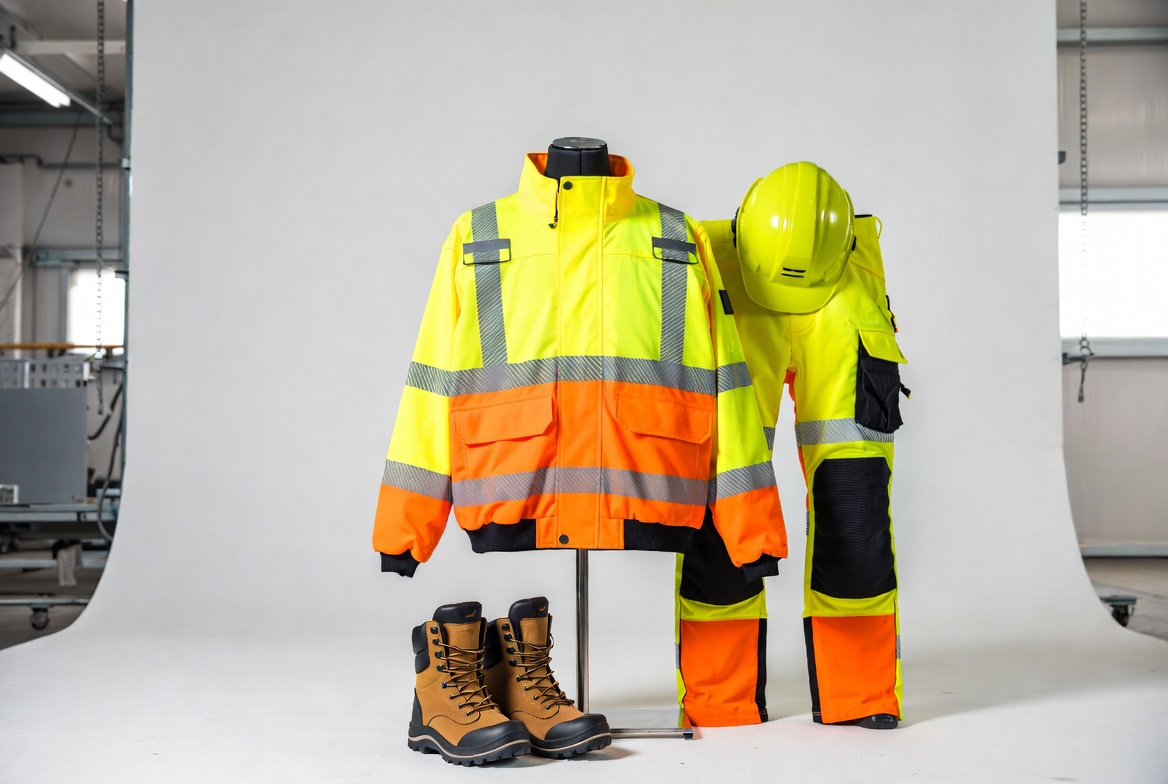
When comparing French manufacturers with offshore OEM partners, buyers should pay attention to several technical aspects:
- Materials and fabric performance:
- For industrial garments, typical fabrics include poly‑cotton blends (for durability and comfort), high‑tenacity polyester and technical blends with inherent flame‑retardant fibers. [sourceready]
- Functional parameters to benchmark include fabric weight (gsm), tear and abrasion resistance, color fastness, shrinkage and pilling performance.
- Safety and performance standards (examples):
- EN ISO 20471 for high‑visibility garments (class 1 to 3), including minimum fluorescent and retroreflective surface areas. [sourceready]
- EN ISO 11612 for protection against heat and flame, EN 1149 for antistatic clothing and sectoral norms for specific hazards. [sourceready]
- CE marking signifying conformity with relevant EU directives and regulations for PPE.
- Environmental and social compliance:
- Increasing emphasis on PFAS‑free finishes, recycled fibers and take‑back programs in line with EU circularity policies; some French groups already run uniform recycling and zero‑waste programs. [oroel]
- Buyers often seek OEKO‑TEX‑certified fabrics and traceable supply chains to support ESG reporting.
- Production model:
- French manufacturers often maintain significant ready‑to‑ship stock plus long‑term framework contracts with large industrial clients. [sourceready]
- Chinese OEMs like Shanghai Youti typically offer wider style diversity, more aggressive pricing and highly customizable MOQs suited for brand portfolios. [sourceready]
An effective sourcing strategy evaluates not just headline certifications but also test reports, fabric data sheets and the supplier's experience with specific EN norms relevant to the buyer's risk profile.
The following table summarizes key differentiators between selected suppliers (publicly available or typical ranges):
| Supplier | Headquarters | Typical Strengths | Indicative MOQ For Custom Styles | Certifications & Focus | Typical Customer Profile |
|---|---|---|---|---|---|
| Cepovett Safety | France | Large‑scale certified PPE and professional clothing, strong sustainability programs, multi‑industry coverage. sourceready | Medium–high (optimized for large frameworks; small runs via catalog customization). sourceready | EN/CE‑compliant PPE, ISO quality systems, circular textile initiatives. sourceready | Utilities, energy, construction groups, pan‑European industrial clients. sourceready |
| DMD France | France | Integrated design office, own workshops, 400k pieces permanent stock, heritage since 1894. | Medium; stock models low MOQ with fast delivery, fully custom typically higher. | Focus on workwear and PPE aligned with EU norms; family‑run governance. | Distributors, SMEs and large companies needing stock + image wear. |
| Marck Et Balsan | France | Uniforms and intervention gear for military and security, complex tender experience. sourceready | High; projects usually large and tender‑based. sourceready | Defense/security‑grade uniforms, EN/CE compliance per tender. sourceready | Governments, security forces, institutional buyers. sourceready |
| Mulliez‑Flory | France | Multi‑sector workwear and corporate clothing, strong program management. sourceready | Medium–high; structured for large B2B rollouts. sourceready | EN/CE workwear and protective clothing, ISO quality systems. sourceready | Healthcare, services, industrial groups with broad staff bases. sourceready |
| Le Laboureur | France | Heritage‑style workwear with robust fabrics and durable construction. sourceready | Low–medium; suitable for niche, premium lines. sourceready | Quality‑driven workwear aligned with EU norms. sourceready | Premium brands, specialized retailers, artisan‑focused channels. sourceready |
| Shanghai Youti Clothing | China (serving EU) | High cost‑efficiency, flexible MOQs, agile OEM/ODM for uniforms and workwear. sourceready | Low–medium; attractive for small/mid‑size brands and test collections. sourceready | Export‑oriented OEM, able to produce to buyer‑specified EN/CE fabrics and trims. sourceready | European brands and wholesalers wanting tailored private‑label collections for the French market. sourceready |
For any shortlisted supplier, buyers should validate actual MOQs and certification scopes during direct negotiations, as these can vary by product, fabric and customer segment.
Professional buyers in the French workwear segment frequently encounter similar challenges:
- Material downgrading and "spec sliding":
- A common risk is receiving garments made with slightly lighter or lower‑grade fabrics than those quoted, which can reduce durability and compliance margins. [coverallchina]
- To mitigate this, insist on specifying gsm ranges and performance metrics in contracts and verify incoming shipments with random lab tests.
- Incomplete or outdated certifications:
- Some suppliers show ISO or EN certificates that have expired or that only cover part of their product range. [coverallchina]
- Buyers should cross‑check certificate validity directly on the certification body's database and confirm the precise scope (site, activities and product categories).
- Over‑optimistic lead times:
- Underestimated lead times can disrupt rollouts, especially when fabrics involve special finishes or when shipping from Asia to France.
- Clarify capacity assumptions, reserve production slots for large orders and build in contingency buffers for fabric sourcing and logistics.
- Fragmented size and fit standards:
- French end users expect specific size grading and ergonomic fit; copying generic Asian size charts can lead to high return rates.
- Successful importers often run at least one fit‑testing round in France with real workers before finalizing size specs.
An insider practice that many seasoned European buyers apply—but that is rarely spelled out online—is the "three‑batch consistency test":
1. Place a small pilot order of one or two core styles with a new supplier.
2. Within 6–9 months, repeat the order twice with only minor changes.
3. Compare fabric handfeel, color shade, sewing quality and labeling across all three batches.
If the supplier can keep all three batches within your tolerance for shade, shrinkage and finishing quality, their internal sourcing and QC systems are typically robust; if not, you will often see "silent" changes in interlining, thread or fabric finish.
- Request a complete dossier: ISO certificates, EN test reports, REACH compliance declarations and, where relevant, OEKO‑TEX certificates. [sourceready]
- Verify ISO certificates via certification body databases (for example, Bureau Veritas, SGS, TÜV) using certificate numbers and company names.
- For EN/CE PPE, ask for EU‑type examination certificates and Declaration of Conformity (DoC) by product group.
- Technical brief: Provide detailed specs (fabric gsm, composition, color, finishing, pocket layout, reflective tape requirements and size range) along with intended EN standards.
- First prototype: Evaluate fit, ergonomics, reinforcement placement and sewing quality, then give structured feedback.
- Pre‑production sample (PPS): Approve "golden samples" that will be used as reference during bulk production, ideally signed or sealed by both parties.
For cross‑border cooperation with OEMs like Shanghai Youti, digital photos, annotated tech packs and video calls can significantly accelerate sampling iterations.
- For French domestic suppliers: Deliveries are often DDP or ex‑warehouse, simplifying customs; focus on delivery slots, packaging and labeling. [sourceready]
- For imports from China or other countries:
- Clarify Incoterms (FOB, CIF, DAP) and responsibilities for freight, customs clearance and duties.
- Factor in transit times (sea versus rail or air), especially for seasonal or tender‑linked deliveries.
- Consider framework agreements with volume and price bands for a 2–3‑year horizon, especially with French manufacturers serving large industrial sectors. [sourceready]
- Implement regular quality reviews, on‑site or remote audits and annual product line updates to keep pace with regulatory and ergonomic changes.
France offers a mature, regulation‑driven workwear ecosystem with established manufacturers like Cepovett Safety, DMD France and others, providing strong compliance and program management for European buyers. At the same time, export‑oriented OEM partners such as Shanghai Youti Clothing Co., Ltd. give brands serving the French market additional flexibility, lower MOQs and competitive cost structures for private‑label lines. [sourceready]
For procurement managers planning their 2026–2028 sourcing roadmap, the most resilient strategy is to build a small portfolio of complementary partners: at least one French manufacturer for compliance‑critical and image‑sensitive ranges, plus one agile OEM partner for cost‑efficient custom development and pilot projects. If you share your target segments (for example construction, logistics, services) and annual volume expectations, we can help you sketch a concrete dual‑sourcing plan and sample roadmap tailored to your situation. [grandviewresearch]
1. How can I check if a supplier's ISO 9001 certificate is still valid?
- Ask for a scanned copy including the certificate number and certification body, then verify it on the certification body's online database or by direct inquiry. [coverallchina]
2. How do I ensure that garments actually comply with EN ISO 20471 or other EN standards?
- Request EU‑type examination certificates and DoCs for each high‑visibility style, cross‑check product references and labels with the documentation and, if needed, commission independent lab tests from a notified body. [sourceready]
3. What is a reasonable MOQ for custom workwear for the French market?
- Large French manufacturers may prefer higher MOQs per style/color to optimize production, while OEM partners like Shanghai Youti can offer lower MOQs, especially for emerging or niche brands. [sourceready]
4. How can I prevent fabric downgrading between orders?
- Lock in fabric specifications (supplier, gsm range, performance tests) in the contract, keep sealed reference samples and perform random tests on each batch to detect deviations early. [coverallchina]
5. For a mid‑size French distributor, is it better to work directly with Chinese OEMs or only with French manufacturers?
- Many mid‑size distributors adopt a hybrid model: French manufacturers for tender‑sensitive, highly regulated or fast‑moving items and Chinese OEMs for cost‑sensitive basics and test collections, balancing compliance, responsiveness and margin. [oroel]
- [France Workwear Market Report 2026 – SourceReady] (market size, PFAS and regulatory context). [sourceready]
- [France Workwear Market Insights – Spherical Insights & Consulting] (long‑term forecast and CAGR). [sphericalinsights]
- [France Workwear Market Size & Outlook – Grand View Research] (segment analysis and revenue timeline). [grandviewresearch]


