
Views: 243 Author: Youti Clothing Publish Time: 2026-08-26 Origin: Site


Content Menu
● What Is the Difference Between a Jacket and a Coat?
● Jacket Characteristics: Shorter, Flexible, and Layer-Friendly
● Coat Characteristics: Longer Coverage and Higher Thermal Protection
● Jacket vs. Coat: The Five Buying and Development Factors
>> 1. Climate and Temperature Range
>> 3. Fabric, Fill, and Construction
● How to Choose a Jacket or Coat for Your Collection
● Expert Notes for Custom Outerwear Development
>> Specify Function Before Decoration
>> Treat Fit Samples as Product Testing
>> Plan Branding Into the Construction
● Jacket vs. Coat: Which One Should You Choose?
>> Is a jacket the same as a coat?
>> Can a puffer be called a jacket or a coat?
>> Is a trench coat a jacket or a coat?
>> Which is warmer: a jacket or a coat?
>> What fabrics are best for custom jackets?
>> What fabrics are best for winter coats?
>> Can an OEM manufacturer help develop a jacket from a sketch?
When developing outerwear, the difference between a jacket vs. coat affects far more than product naming. It influences fabric selection, fit, warmth, production cost, merchandising, target climate, and how customers understand the product online and in-store.
At Shanghai Youti Clothing Co., Ltd., we work with overseas brands, wholesalers, and apparel businesses on OEM outerwear development. In practical production conversations, the line between a jacket and a coat is not always fixed. However, garment length, insulation, fabric weight, intended use, and styling provide a reliable framework for product teams and buyers.
This guide explains the key differences between jackets and coats, shows how to select the right category for a collection, and shares practical development considerations for custom outerwear programs.
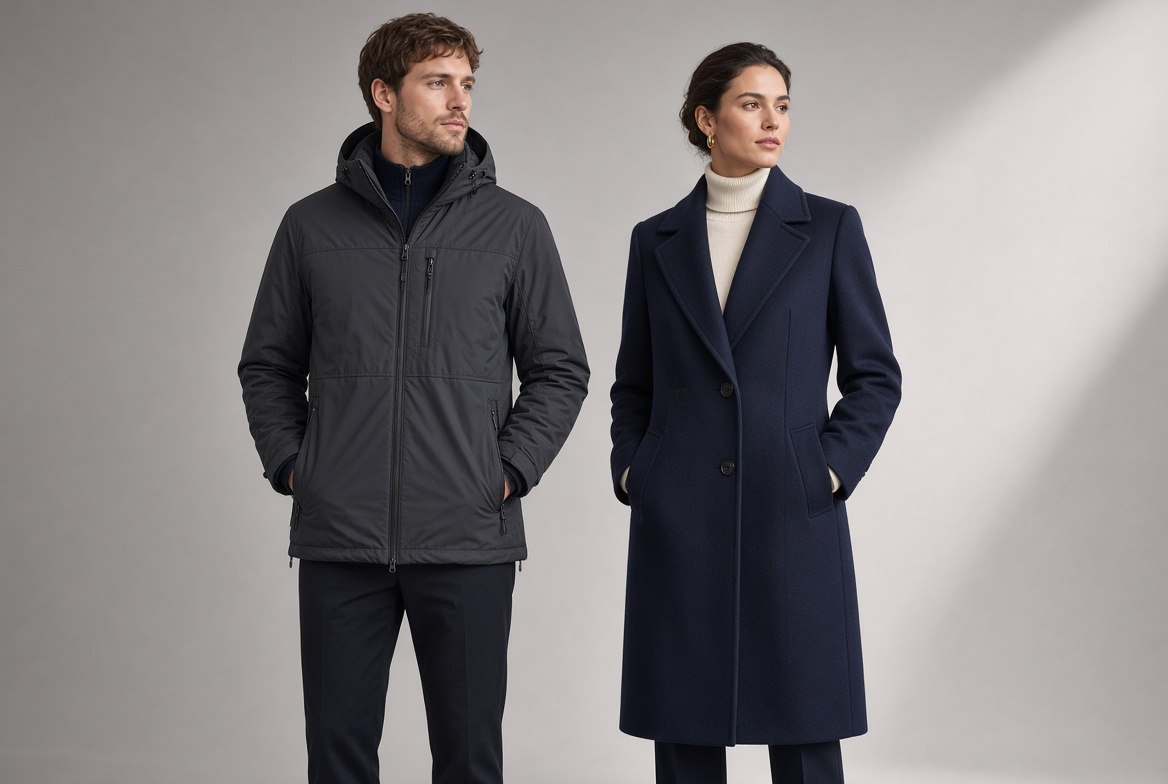
A jacket is generally a shorter outerwear garment. It usually ends at the waist, hip, or upper thigh and is commonly designed for layering, mobility, transitional weather, casual wear, workwear, or active use.
A coat is typically longer, heavier, and more protective. It often extends below the hips, toward the thigh, knee, calf, or ankle. Coats are commonly developed for colder conditions, formal occasions, commuting, and elevated winter collections.
The distinction is useful, but not absolute. A padded jacket can provide more warmth than a lightweight wool coat. Likewise, a long technical jacket may offer weather protection similar to a coat. For brands, the best classification should reflect the garment's silhouette, performance purpose, and customer expectation.
| Feature | Jacket | Coat |
|---|---|---|
| Typical length | Waist to hip, sometimes upper thigh | Below hip to knee, calf, or longer |
| Weight | Light to medium, sometimes heavy | Medium to heavy |
| Warmth | Light to moderate, depending on insulation | Moderate to high |
| Main purpose | Layering, casual styling, workwear, activewear | Cold-weather coverage, formal dressing, winter protection |
| Common closures | Zipper, snaps, buttons, hook-and-loop fasteners | Buttons, concealed plackets, zippers, belts |
| Typical fabrics | Denim, nylon, cotton twill, leather, fleece, softshell | Wool, melton, cashmere blends, down-filled fabric, heavy synthetics |
| Common seasons | Spring, fall, mild winter, year-round layering | Fall, winter, cold and wet climates |
| Typical fit | Cropped, regular, relaxed, sporty, fitted | Structured, straight, tailored, oversized, longline |
In everyday language, a jacket is often described as a short coat. Cambridge Dictionary defines a jacket as a "short coat," while Oxford Learner's Dictionaries describes it as a short, light coat worn over other clothing.
A jacket usually offers more freedom of movement and easier styling across changing temperatures. For brands building commercial outerwear assortments, jackets are often a high-volume category because they fit multiple seasons and consumer lifestyles.
Most jackets finish around one of these points:
- Natural waist
- High hip
- Full hip
- Seat level
- Upper thigh
The final length should match the product's intended function. For example, a cropped bomber jacket prioritizes proportion and style. A workwear jacket may be slightly longer to improve coverage during movement. A technical shell jacket may extend to the hip or below the seat to improve weather resistance.
A broad jacket range can help a brand serve different buyers, weather conditions, and price points.
- Bomber jackets with rib cuffs, rib hems, front zippers, and a compact silhouette
- Denim jackets with durable cotton denim, metal hardware, and casual styling
- Leather jackets made with genuine leather, PU leather, or other leather alternatives
- Varsity jackets featuring contrast sleeves, rib trims, patches, embroidery, or chenille details
- Field jackets with multiple patch pockets and utility-inspired construction
- Work jackets made with canvas, twill, duck fabric, or durable blends
- Puffer jackets with down, recycled polyester fill, or synthetic insulation
- Windbreakers using lightweight woven shells for wind and light-rain protection
- Softshell jackets combining stretch, breathability, and water resistance
- Fleece jackets developed as mid-layers or lightweight standalone outerwear
For OEM programs, the same silhouette can support very different market positions. A basic nylon bomber may target promotional retail, while a premium version may use recycled shell fabric, custom lining, branded zipper pullers, woven labels, embroidery, and a refined fit block.
A coat is usually developed as a more substantial outer layer. The additional body length improves coverage over trousers, skirts, dresses, tailoring, knitwear, and mid-layers.
This is especially valuable for customers who commute, travel, work outdoors, or live in regions with cold, wet, or windy winters.
Coats can be classified by their finished body length:
- Hip-length coats: A bridge category between a long jacket and a short coat
- Thigh-length coats: A practical option for daily winter wear
- Knee-length coats: Popular for classic wool coats, trench coats, and formal outerwear
- Midi coats: Typically below the knee and above the ankle
- Full-length coats: Designed for maximum coverage and a dramatic silhouette
Longer garments require additional attention during sampling and bulk production. Hem balance, walking ease, back vents, lining movement, pocket placement, button reinforcement, and packing dimensions all become more important.
- Wool coats with structured construction and woven wool or wool-blend fabrics
- Overcoats designed to be worn over suits, blazers, or layered outfits
- Trench coats featuring belts, storm flaps, epaulettes, and water-resistant woven fabrics
- Puffer coats with extended lengths and insulated quilting
- Parka coats with hoods, insulated linings, utility pockets, and weather-focused details
- Duffle coats with toggle closures and hooded styling
- Pea coats with double-breasted fronts and a shorter, nautical-inspired profile
- Car coats generally falling around mid-thigh for driving and daily commuting
A coat often uses more fabric, lining, trims, and sewing operations than a shorter jacket. That can increase its material consumption and production complexity. Brands should account for this early when setting target retail prices and order quantities.
For apparel brands, the most useful question is not simply, "Is this a jacket or a coat?" A better question is, "What problem should this outerwear piece solve for the customer?"
Start with real wearing conditions.
A lightweight cotton jacket may work well for spring and autumn. A quilted puffer jacket can support mild-to-cold weather. A long down-filled coat may be more suitable for extended outdoor exposure in low temperatures.
Consider:
- Average seasonal temperature
- Rain and snow exposure
- Wind level
- Indoor-to-outdoor transitions
- Layering habits in the target market
- Customer activity level
A commuter walking ten minutes to public transport needs different protection from a customer moving between a car and an office.
Length changes both appearance and function.
A waist-length jacket can create a casual, youthful, or sporty profile. A knee-length coat tends to feel more polished and protective. Longer outerwear also reduces cold-air exposure around the hips and upper legs.
For private-label development, define the intended finished garment length in the tech pack rather than using vague terms such as "short" or "long." A precise measurement from high point shoulder to hem helps reduce sampling misunderstandings.
Fabric selection determines hand feel, durability, weight, weather performance, and perceived value.
| Product Goal | Suitable Material Directions |
|---|---|
| Casual everyday jacket | Cotton twill, denim, nylon, polyester, fleece |
| Premium urban jacket | Wool blend, technical nylon, suede-look fabric, leather |
| Lightweight weather layer | Polyester shell, nylon ripstop, coated woven fabric |
| Winter puffer | Downproof shell, recycled polyester shell, synthetic insulation or down fill |
| Tailored winter coat | Wool, wool-cashmere blend, melton, brushed woven fabric |
| Rain-focused outerwear | PU-coated fabric, laminated fabric, waterproof breathable shell |
Do not select fabric based on appearance alone. Confirm the required tests and performance standards before bulk production. Depending on the product, this may include colorfastness, pilling, seam strength, water repellency, waterproofness, down leakage, shrinkage, and dimensional stability.
A jacket typically fits closer to the body, though oversized designs remain popular in many markets. A coat often requires more ease because it may be worn over knitwear, hoodies, blazers, or tailored clothing.
For a brand developing both categories, separate fit blocks are usually necessary.
A fitted jacket block should not simply be lengthened into a coat. As length increases, the garment needs reconsideration around the chest, waist, hip, sleeve shape, armhole, sweep, vent placement, and lining allowance.
A longer garment is not automatically more expensive, but it often requires more resources.
Potential cost drivers include:
- Fabric consumption
- Lining consumption
- Insulation weight
- Number of pockets
- Hardware and custom trims
- Quilting complexity
- Waterproof seam treatment
- Pattern complexity
- Sewing time
- Embroidery, printing, badges, and labels
- Inspection and packing requirements
A smart collection often includes multiple price tiers. For example, a brand may offer an entry-level windbreaker, a mid-range padded jacket, and a premium long puffer coat. This creates broader seasonal coverage without forcing every customer into one price level.
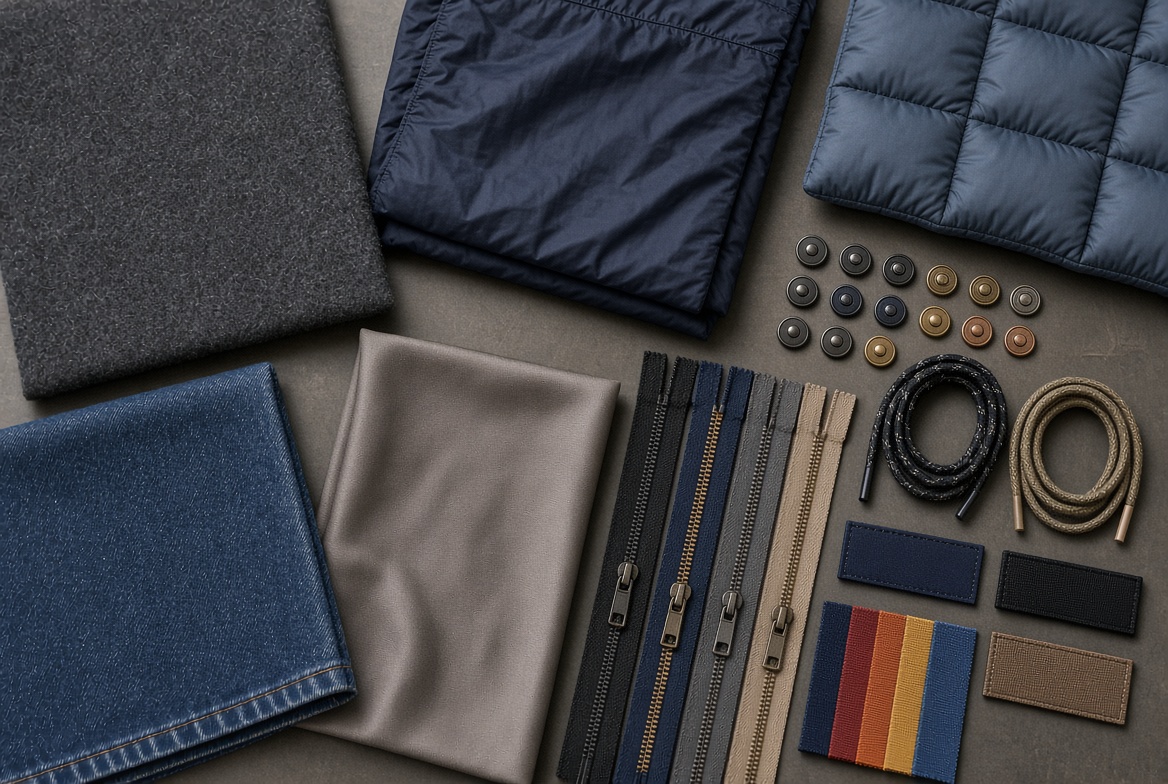
Use this practical decision process before finalizing a design brief.
1. Define the end user. Identify the customer's climate, age range, lifestyle, price expectations, and preferred styling.
2. Set the wear scenario. Clarify whether the garment is for commuting, travel, workwear, streetwear, outdoor activity, schoolwear, uniform use, or promotional distribution.
3. Choose the temperature goal. Specify light layering, moderate warmth, cold-weather insulation, or severe-weather protection.
4. Decide the target length. Use a measurement range, not only a visual reference.
5. Select fabric and insulation. Balance appearance, hand feel, function, sustainability goals, and cost.
6. Build a complete tech pack. Include measurements, construction details, artwork files, color standards, trim specifications, label placement, and packaging requirements.
7. Review a pre-production sample. Check fit, visual balance, workmanship, materials, labeling, and packaging before bulk manufacturing.
This process reduces costly corrections later. It also gives the manufacturer clearer direction during pattern development and sampling.
In factory discussions, we often see brands focus first on the front appearance of a jacket or coat. That is understandable, but production success depends on details that may not be visible in a mood board.
A jacket with a zipper, hood, and quilted lining may look straightforward. Yet its final performance depends on the shell fabric, lining, fill weight, stitch density, zipper quality, pocket construction, cuff design, and seam finishing.
Before choosing decorative elements, determine:
- How warm should the garment feel?
- Does it need water resistance or full waterproof protection?
- Will it be worn over a blazer or thick sweater?
- Is machine washing required?
- Does it need to pack compactly for travel?
- Does the target customer expect recycled or certified materials?
These decisions shape the product from the first sample onward.
A fit sample is not only a visual approval step. It is an opportunity to test movement, layering, reach, sitting comfort, hem behavior, pocket access, and closure operation.
For coats, test the garment while walking, sitting, climbing stairs, and carrying a bag. For jackets, test arm mobility, shoulder movement, zipper smoothness, cuff comfort, and how the hem behaves during daily activity.
Branding should be integrated early rather than added at the final stage.
Possible branding placements include:
- Woven neck labels
- Printed neck transfers
- Hem labels
- Sleeve labels
- Embroidered chest logos
- Rubber patches
- Metal badges
- Custom zipper pullers
- Branded snap buttons
- Inside care-label messaging
- Custom hangtags and packaging
Each option has different minimum order requirements, lead times, costs, and technical limitations. Early planning helps maintain visual consistency across the full outerwear range.
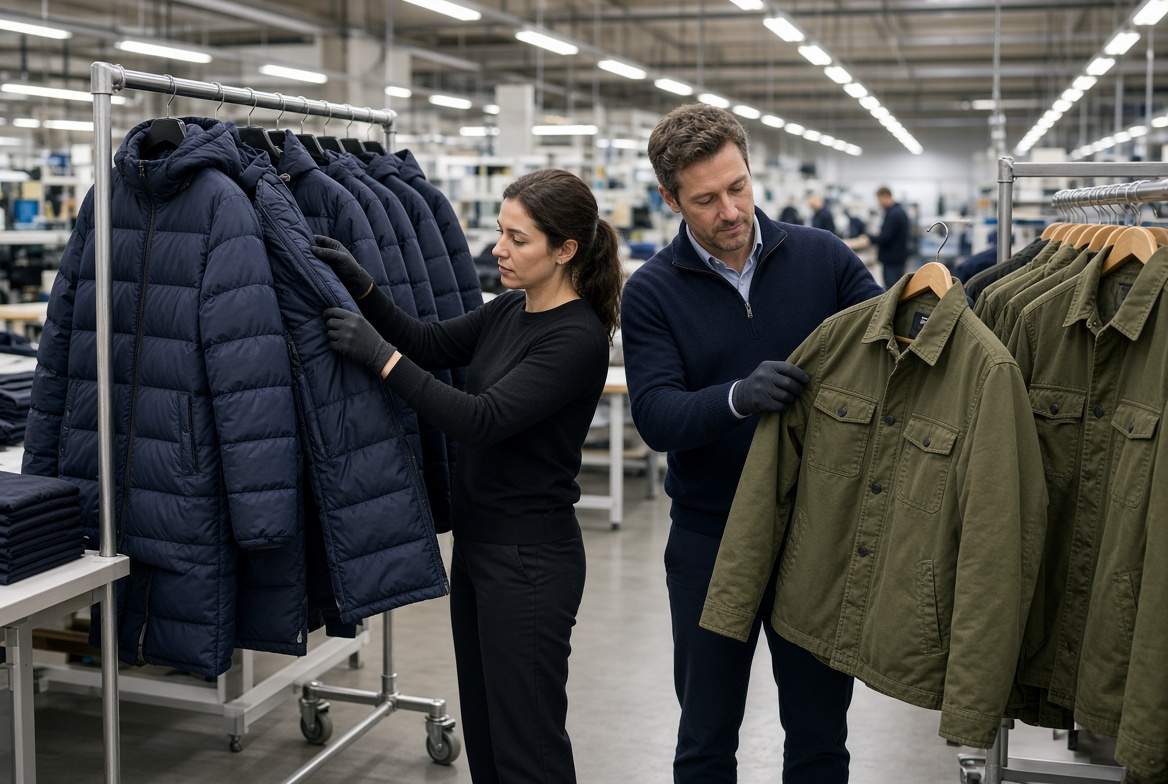
Choose a jacket when your customer needs versatility, easier layering, mobility, transitional-weather comfort, or a casual silhouette. Jackets are well suited to streetwear, workwear, uniforms, active styles, and everyday collections.
Choose a coat when your customer needs greater warmth, a more refined silhouette, extended coverage, or winter-focused protection. Coats are a strong fit for formalwear, premium urban collections, cold-climate assortments, and long-lasting seasonal staples.
Many strong outerwear collections need both. A jacket gives customers a flexible daily layer, while a coat provides a reliable cold-weather option. Together, they create a more complete seasonal assortment.
Shanghai Youti Clothing Co., Ltd. supports OEM development for custom jackets, padded outerwear, workwear, varsity jackets, bombers, parkas, puffer coats, and other professional apparel categories. Share your design concept, target market, material preferences, artwork, and quantity requirements to begin evaluating the right construction and production plan for your brand.
Not exactly. A jacket is usually shorter and lighter, while a coat is generally longer, heavier, and designed for greater warmth or coverage. However, some styles overlap, especially padded or technical outerwear.
Yes. A puffer can be called a puffer jacket when it is shorter, often around the waist or hips. It is usually called a puffer coat when it extends below the hips and provides more coverage.
A trench is generally classified as a coat because of its longer silhouette and outer-layer function. Short trench-inspired designs may be marketed as trench jackets.
A coat is often warmer because it usually has a longer body and heavier construction. However, warmth depends on insulation, fabric, wind protection, fit, and layering. A well-insulated puffer jacket can be warmer than an unlined wool coat.
The best fabric depends on the product. Cotton twill and denim suit casual and workwear jackets. Nylon and polyester work well for lightweight and technical styles. Leather, wool blends, and premium synthetics can support more elevated collections.
Wool and wool blends are common for tailored coats. Downproof woven shells with down or synthetic insulation are widely used for puffer coats. Water-resistant synthetic shells can be suitable for parkas and functional winter outerwear.
Yes. A capable manufacturer can help turn a sketch, reference photo, or concept into a production-ready product. The process normally includes pattern development, material sourcing, sampling, fit adjustments, trim confirmation, bulk production, quality inspection, and packing.
- [Cambridge Dictionary — Jacket]
- [Oxford Learner's Dictionaries — Jacket]
- [Argus Apparel — Coat vs Jacket: Key Differences for Apparel Brands]
- [TLD Apparel — Coat vs Jacket: Essential Differences to Understand]


