
Views: 218 Author: Youti Clothing Publish Time: 2026-08-21 Origin: Site


Content Menu
● Checkered Shirt Patterns Explained
>> Small Checks Look More Formal
>> Large Checks Create a Casual Statement
● How to Style a Checkered Shirt for Different Occasions
>> 1. Smart Casual Office Outfit
>> 2. Checked Shirt With Jeans
>> 3. Checked Shirt Over a T-Shirt
>> 4. Checked Shirt With Chinos
>> 5. Checked Shirt With Shorts
>> 6. Checked Shirt With a Blazer
>> 7. Checked Shirt With a Suit and Tie
● The Pattern-Scale Rule for Better Outfits
● Fit and Construction: What Makes a Checked Shirt Look Better
● Fabric Selection for Checkered Shirts
● How to Care for a Checkered Shirt
● Common Checkered Shirt Styling Mistakes
● Develop Your Checkered Shirt Collection
>> Is a checkered shirt formal or casual?
>> Can I wear a checkered shirt with jeans?
>> What color trousers go with a checkered shirt?
>> Should a checkered shirt be tucked in?
>> Can I wear a checkered shirt with a tie?
>> What checkered shirt is best for summer?
>> How should a checkered shirt fit?
A checkered shirt is one of the most flexible pieces in a modern wardrobe. Whether you are dressing for a client meeting, a relaxed Friday at work, a weekend trip, or a casual dinner, the right checked shirt can look refined, approachable, and effortless.
The key is not simply choosing a pattern you like. It is understanding check size, color contrast, fabric weight, fit, and the formality of the occasion. From our experience working with shirt development for international apparel buyers, the most wearable checked shirts are designed with balance: a clear pattern, proportionate scale, reliable construction, and a fit that supports movement without excess fabric.
This guide explains how to wear a checkered shirt well, avoid common styling mistakes, and choose the right construction for your collection or private-label shirt program.
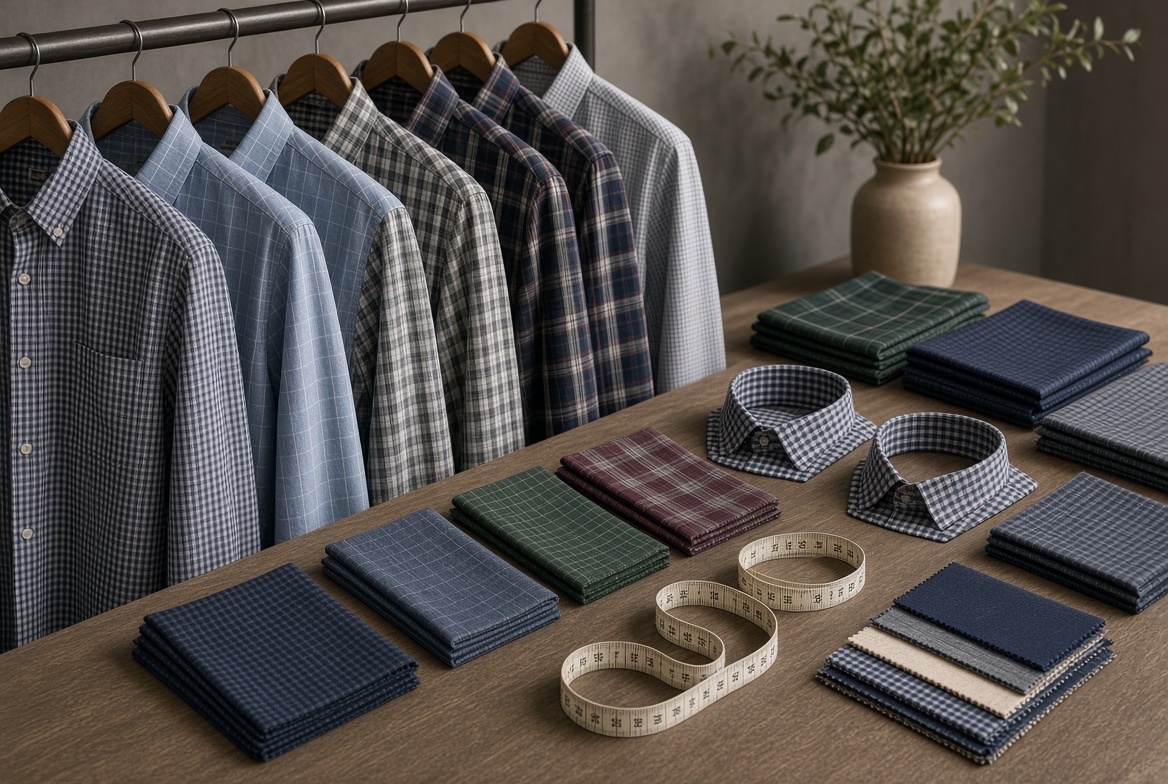
A checkered shirt uses horizontal and vertical lines that intersect to create repeated square or rectangular patterns. In everyday use, "checked" and "checkered" generally describe the same type of visual structure.
However, not every checked fabric creates the same impression. Some patterns look crisp and professional, while others feel casual, heritage-inspired, or more expressive.
A well-made checkered shirt should offer:
- Balanced pattern alignment across the front placket and chest pocket
- Consistent yarn color and clean color contrast
- Appropriate pattern scale for the intended occasion
- A fit that follows the shoulder line without pulling at the chest
- A collar and cuff structure that match the shirt's end use
For buyers, these details influence whether a shirt feels like a dependable core product or a short-lived seasonal item.
Choosing the pattern is the first styling decision. The visual size of the check directly affects how formal, bold, or easy-to-pair the shirt becomes.
| Pattern | Visual Character | Best Use | Easy Pairing |
|---|---|---|---|
| Gingham | Even, small checks | Office, smart casual, business travel | Navy chinos, grey trousers |
| Windowpane | Large, open squares | Blazer outfits, modern business casual | Solid suit trousers |
| Tattersall | Thin, repeated colored lines | Country-inspired smart casual | Denim, corduroy, chinos |
| Madras | Colorful, lightweight checks | Summer and resort wear | Shorts, light denim |
| Plaid | Multi-colored crossed stripes | Weekend, casual layering | T-shirt, jeans, boots |
| Houndstooth | Broken, geometric check | Elevated casual and tailoring | Black or charcoal trousers |
| Glen check | Fine woven check structure | Tailoring and polished occasions | Navy blazer, wool trousers |
Small-scale checks usually read as more refined because they look calmer from a distance. Gingham, micro-check, and fine graph checks work especially well for office shirts, uniform programs, and shirts designed to sit under a blazer.
A light blue-and-white gingham shirt, for example, can replace a plain blue business shirt without making the outfit feel overly casual.
Larger plaid, buffalo check, and bold windowpane patterns naturally attract more attention. They work best when the rest of the outfit is simple.
If the shirt has large red, navy, or green checks, pair it with:
- Dark indigo jeans
- Plain chinos
- Neutral outerwear
- Minimal footwear
- A solid T-shirt when layering
One noticeable pattern is usually enough. Let the checked shirt be the focal point rather than competing with patterned trousers, loud sneakers, or graphic accessories.
The most reliable way to style a checkered shirt is to start with the occasion. Then choose the check scale, fabric, fit, and styling details accordingly.
A checkered shirt can bring personality to workwear while remaining polished. Select a fine gingham, small tattersall, or subtle windowpane design in navy, pale blue, grey, or soft brown.
Wear it with:
- Tailored chinos or wool-blend trousers
- A navy, charcoal, or beige blazer
- Leather loafers, derbies, or clean minimalist sneakers
- A belt that matches the shoe color
Keep the shirt neatly tucked in for formal workplaces. If the workplace is more relaxed, an untucked shirt can work when the hem is designed for casual wear and ends around mid-fly level.
A checkered shirt with jeans is a reliable casual formula. It works because denim offers texture without introducing another busy pattern.
For a cleaner result, choose:
- Mid- or dark-wash straight jeans
- A regular-fit or slim-straight checkered shirt
- White leather sneakers, suede boots, or loafers
- A plain crew-neck T-shirt for an open-shirt layer
Avoid combining distressed jeans with a very busy multi-color shirt unless the goal is deliberately rugged. A more versatile option is a navy, black, olive, or rust plaid shirt paired with dark denim.
Wearing a checkered shirt open over a T-shirt creates a relaxed layered look. This style works best with plaid, brushed cotton, flannel, Madras, or overshirt-weight fabrics.
Follow these simple steps:
1. Choose a plain T-shirt in white, black, grey, cream, or a color already found in the check.
2. Leave the shirt unbuttoned or fasten only one or two middle buttons.
3. Use jeans, chinos, or tailored shorts as the base.
4. Ensure the outer shirt has enough room to layer without appearing oversized.
5. Keep the T-shirt hem shorter than, or close to, the overshirt hem.
This is an ideal look for travel, weekend retail, hospitality uniforms with a casual tone, and lifestyle collections.
Chinos make a checked shirt feel more intentional than jeans while staying comfortable. The combination works for lunch meetings, casual offices, trade-show travel, and evening social occasions.
For an easy outfit, try:
- Blue gingham shirt + stone chinos + brown loafers
- Green tattersall shirt + navy chinos + suede desert boots
- Grey windowpane shirt + olive chinos + white sneakers
- Red-and-navy plaid shirt + beige chinos + dark brown boots
Use contrast carefully. If the shirt is bright, choose neutral chinos. If the shirt is muted, olive, tobacco, navy, or burgundy trousers can add depth.
In warm climates, lightweight checkered shirts can work with shorts without looking too informal. Madras, cotton poplin, linen-cotton, and lightweight oxford fabrics are practical choices.
For the best proportions:
- Choose shorts that finish above or around the knee
- Wear the shirt untucked
- Roll the sleeves once or twice
- Choose low-profile sneakers, loafers, or sandals suited to the setting
- Avoid overly long, oversized shirts
A pale blue checkered shirt with tailored navy shorts is a strong resort, holiday, or summer retail combination. It remains relaxed but looks far more considered than a basic printed tee.
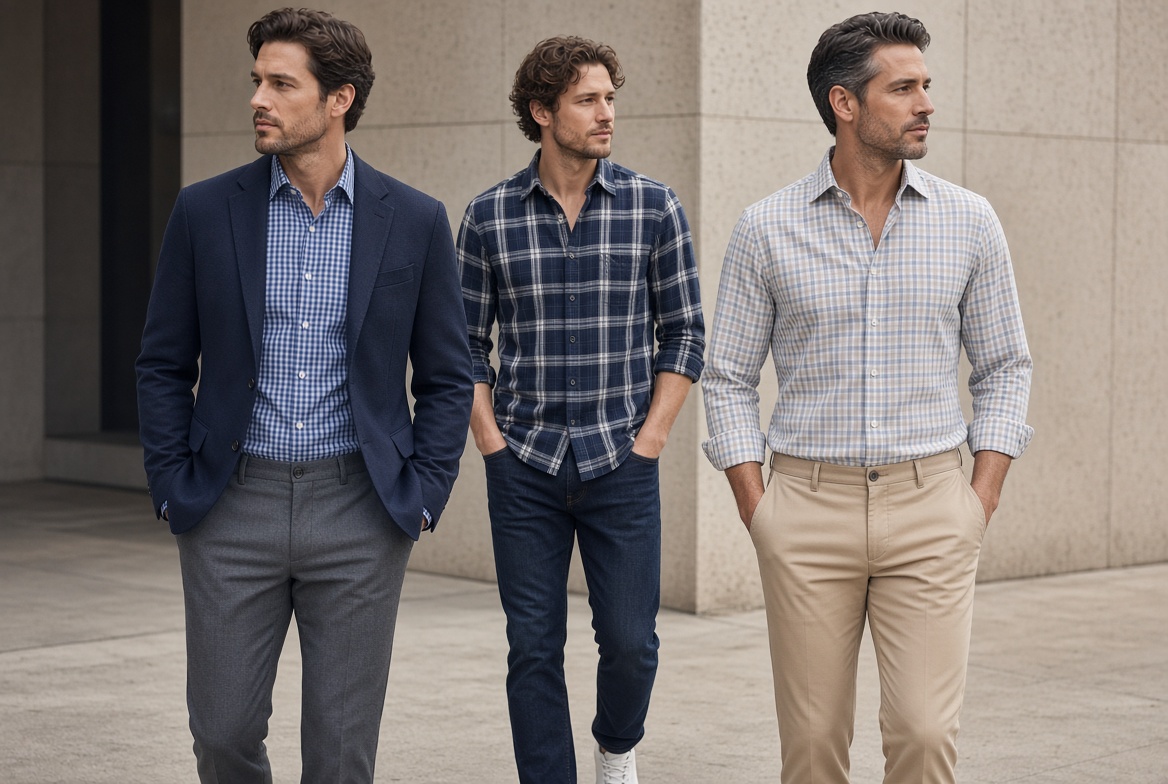
A blazer and checkered shirt combination can look sophisticated when the pattern scales are clearly different.
The safest formula is:
- Fine check shirt
- Solid blazer
- Solid trousers
- Simple tie or no tie
For example, pair a fine blue-and-white gingham shirt with a navy blazer, grey wool trousers, and brown leather shoes. The shirt adds visual interest, while the blazer keeps the outfit professional.
If wearing a checked blazer, choose a much smaller shirt check or a nearly solid micro-pattern. Keeping distinct pattern scales prevents the outfit from appearing visually crowded.
A checkered shirt can be worn with tailoring, but the pattern must be restrained. Fine gingham, small tattersall, and subtle graph checks are the strongest choices.
Use these rules:
- Keep the shirt pattern small
- Select a solid suit in navy, charcoal, or medium grey
- Choose a solid tie, or a tie with a much larger and quieter pattern
- Keep the shirt collar structured enough for the tie knot
- Avoid high-contrast casual plaid fabrics
A fine blue check shirt with a solid navy suit and dark knit tie is suitable for business settings where personality is welcome but formality still matters.
The most common checkered-shirt styling mistake is combining patterns that are too similar in size and intensity. The result can look confusing even when every individual garment is attractive.
Use this practical rule: create visible difference in pattern scale.
If your shirt uses a small check, you can wear it under a larger-check blazer. If your jacket has a large check, choose a subtle micro-check shirt or a plain shirt. Keep trousers solid whenever two patterned garments are already present.
A useful visual benchmark is to make one pattern appear noticeably larger than the other rather than nearly identical in scale. Sharing one color between the patterns can also make the combination feel connected.
A pattern cannot compensate for poor fit. In fact, checks make fit issues more visible because warped lines immediately reveal pulling, twisting, or excess volume.
- Shoulder seam: It should sit close to the shoulder edge.
- Chest: Buttons should close without pulling or opening.
- Sleeve length: The cuff should reach the wrist bone when worn unrolled.
- Body length: A dress shirt needs sufficient length to stay tucked; a casual shirt should have a shorter, curved or straight hem for untucked wear.
- Armhole: A higher, well-shaped armhole usually improves mobility and creates a cleaner silhouette.
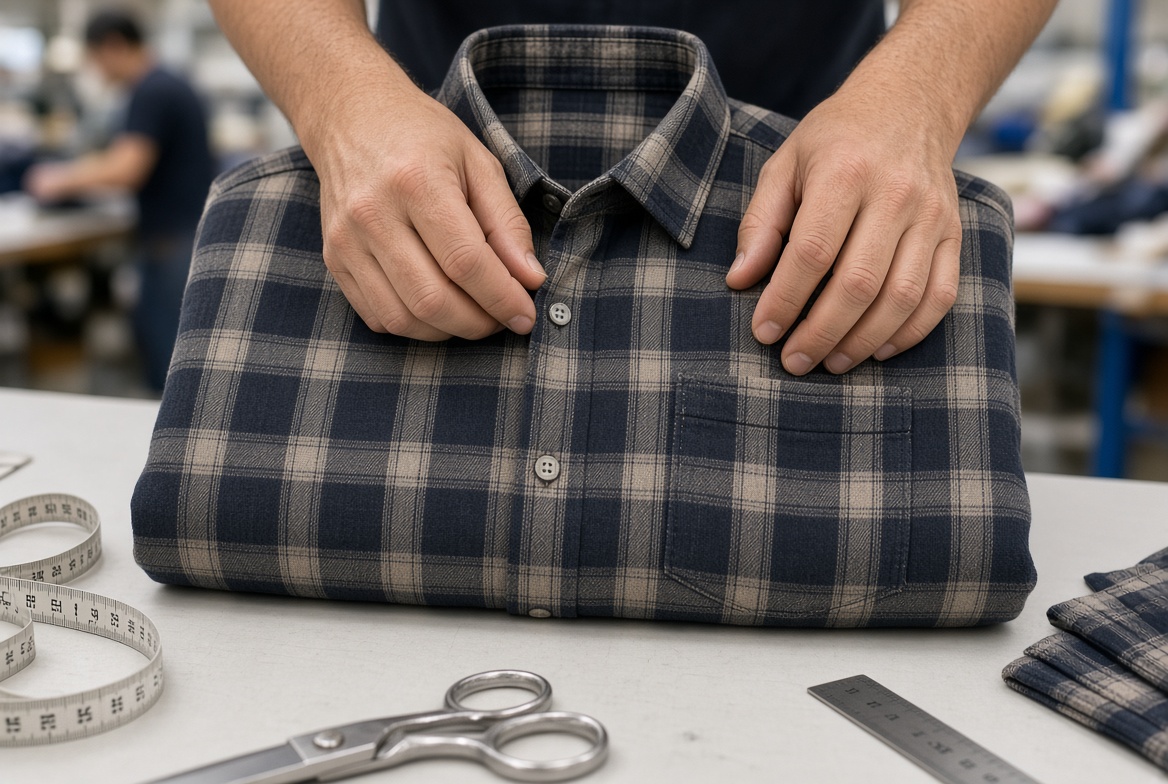
- Pattern matching: Horizontal checks should align across the center front where possible.
For private-label buyers, pattern matching deserves special attention. A chest pocket that interrupts the check without alignment can make an otherwise good shirt appear lower grade. Aligning the pocket pattern with the shirt body creates a cleaner, more premium visual result.
| Fit Type | Best For | Key Benefit |
|---|---|---|
| Slim fit | Contemporary business and younger fashion markets | Clean, close silhouette |
| Regular fit | Broad retail appeal and uniform programs | Comfortable, versatile shape |
| Relaxed fit | Overshirts, casual streetwear, layering | More room for movement and layers |
| Tailored fit | Premium business and smart-casual collections | Balanced shape without excessive tightness |
Fabric changes both the look and performance of a checkered shirt. The same gingham design will feel very different in crisp poplin, soft brushed flannel, stretch cotton, or linen blend.
Cotton poplin is smooth, lightweight, and crisp. It is a practical choice for business shirts, spring/summer ranges, and fine gingham patterns.
Best for:
- Office-ready check shirts
- Uniform and corporate apparel
- Lightweight formal shirts
- Sharp collar presentation
Oxford cloth has a more visible basket weave and a slightly more casual character. It works well for button-down collars, everyday shirts, and smart-casual collections.
Best for:
- Weekend shirts
- Campus and preppy styling
- Durable everyday wear
- Button-down collar programs
Brushed cotton and flannel create a soft, warm hand feel. They are natural choices for autumn/winter plaid shirts, overshirts, and outdoor-inspired collections.
Best for:
- Layering over T-shirts
- Casual shirts with jeans
- Seasonal capsule collections
- Relaxed workwear-inspired designs
Linen-cotton blends offer breathability while reducing some of the sharp creasing associated with pure linen. They work especially well in lighter checks for warm-weather export markets.
Best for:
- Resort collections
- Summer casualwear
- Lightweight long-sleeve shirts
- Vacation and leisure ranges
Good care protects the color clarity, collar shape, and overall life of a checked shirt. Always follow the garment's care label first, because fabric composition, dye method, trims, and finishing can change the correct process.
For most washable cotton checkered shirts:
- Separate light colors from dark or bright colors
- Wash according to the care label, often in cool or cold water
- Treat stains promptly rather than rubbing aggressively
- Avoid excessive detergent
- Reshape the shirt after washing
- Use low heat or air drying when recommended
- Iron while slightly damp for a smoother finish
Proper color sorting helps reduce dye transfer, particularly for dark navy, red, black, and saturated plaid designs. Fabric-care authorities also recommend following garment-label instructions and testing stain treatment in an inconspicuous area when colorfastness is uncertain.
Avoid these mistakes to keep a checked shirt looking intentional.
- Wearing a large, high-contrast plaid with heavily distressed jeans and graphic footwear
- Pairing a casual flannel check with a formal silk tie
- Mixing several patterns with similar scale
- Choosing a shirt that pulls across the chest or shoulders
- Wearing an untucked shirt that is too long for casual styling
- Using an overly stiff formal collar on a relaxed overshirt
- Ignoring pattern alignment on the placket and pocket
- Matching every color exactly rather than using coordinated neutrals
The best checkered-shirt outfits usually rely on one clear pattern, solid supporting pieces, and a well-proportioned fit.
A successful checkered shirt collection needs more than attractive artwork. It requires the right relationship between fabric, yarn-dye development, garment fit, collar structure, construction details, and target-market expectations.
Shanghai Youti Clothing Co., Ltd. supports overseas brands, wholesalers, and apparel businesses with OEM shirt development and production. Our team can help translate your product concept into a market-ready shirt program, from check-pattern selection and fabric sourcing to sampling, fit refinement, labeling, packaging, and bulk production.
If you are building a business-shirt line, a casual plaid capsule, a seasonal flannel range, or a custom uniform project, contact our team to discuss your target market, preferred fabric, size range, technical requirements, and order plan.
It can be either. Fine, low-contrast checks such as gingham and micro-checks suit office and tailored outfits, while large plaid and bold buffalo checks are better for casual settings.
Yes. Dark or mid-wash jeans are one of the easiest pairings. Keep the jeans clean and relatively simple so the shirt remains the main visual element.
Navy, grey, beige, stone, olive, and dark denim work with most checked shirts. Choose trousers in a solid color that appears in the shirt or complements its overall tone.
Tuck it in for business settings, tailored trousers, and blazer outfits. Leave it untucked for casual outfits only when the shirt has an appropriate casual length and hem shape.
Yes, if the shirt has a small, restrained pattern and a structured collar. Pair it with a solid suit and a plain or clearly different-scale tie.
Lightweight cotton poplin, linen-cotton, and Madras checks are strong summer choices. Look for breathable fabric, lighter colors, and a comfortable regular or relaxed fit.
The shoulder seams should sit close to the shoulder edge, the chest should not pull at the buttons, and the sleeves should allow natural movement. Checks should remain visually straight rather than stretching across the body.
1. [Bombay Shirt Company — How To Style A Checkered Shirt]
2. [American Cleaning Institute — Laundry Basics]
3. [American Cleaning Institute — Fabric Care]
4. [American Cleaning Institute — Laundry 101 Guide]
5. [Cotton Incorporated — Lifestyle Monitor]


