
Views: 222 Author: Youti Clothing Publish Time: 2026-06-02 Origin: Site


Content Menu
● Why Retiring Worn Clothing Protects Your Professional Brand
● Key Signs Your Suit or Shirt Should Be Retired
>> Fabric Breakdown – Thinning, Shiny, or Pilling
>> Permanent Stains and Discoloration
>> Shrinkage, Stretching, and Warped Fit
>> Damaged Fasteners and Unrepairable Seams
● When Style and Silhouette Become Outdated
>> Misalignment with Your Current Role
● Practical Decluttering Rules for Busy Professionals
>> The One‑Year Rule (With Smart Exceptions)
● Sustainable Ways to Retire Clothing Responsibly
>> Donate or Sell Pre‑Loved Professional Wear
>> Textile Recycling and Circular Fashion
● Investing in High‑Quality Suits and Shirts That Last Longer
>> What Defines a High‑Quality Suit?
>> How to Choose Business Shirts That Age Well
● OEM Perspective – When Brands Should Refresh Their Collections
>> Monitoring Wear Patterns and Customer Feedback
>> Partnering with OEM Manufacturers for Longer‑Lasting Lines
● Step‑by‑Step Wardrobe Audit Checklist
>> Five Steps to Audit Your Suits and Shirts
● Example Wardrobe Rotation Table for Busy Professionals
● Call to Action – Upgrade Your Wardrobe with Expert OEM Support
● FAQ – Retiring and Replacing Professional Clothing
Knowing when to retire a suit or dress shirt is not just about style—it directly impacts how clients, colleagues, and partners perceive your professionalism and reliability. As an OEM clothing manufacturer, we see every stage of a garment's lifecycle, from fabric selection to the moment it quietly "fails" in a client's wardrobe. [centra]
Your wardrobe is a working asset, not a museum. Yet many professionals keep tired suits and shirts in rotation long after they stop serving their image, comfort, or brand. In this guide, we combine real-world tailoring experience, wardrobe consulting insights, and OEM manufacturing expertise to help you recognize when to retire clothing, how to declutter responsibly, and how to invest in better replacements that last longer and look sharper. [wgcontent]
A suit or shirt can technically still be wearable long after it stopped being business‑appropriate. The problem is that most people around you will notice before you do. [centra]
- Clients read wrinkled, shiny, or sagging fabric as a lack of attention to detail. [centra]
- Team members may interpret an obviously outdated silhouette as being out of touch.
- In industries like finance, law, or B2B sales, visual cues of polish and reliability strongly influence trust and perceived competence. [wsiworld]
From our vantage point as an OEM supplier to international brands, we see that top performers treat clothing as part of their communication toolkit, not a casual afterthought. They maintain a rotation of suits and shirts, retire underperforming pieces early, and invest in durable, well‑constructed replacements. [hqts]
This section gives practical, visual cues you can apply during a five‑minute wardrobe check. [centra]
Even high‑quality wool or cotton has a lifecycle. Over time, daily friction and cleaning wear down the fibers. [centra]
Look for:
- Shiny areas on elbows, seat of trousers, and knees (wool fibers compressed and fatigued). [centra]
- Thinning fabric where light passes through more easily, especially on shoulders and cuffs.
- Pilling on trousers, sleeves, or shirt plackets that does not disappear with gentle depilling. [centra]
When these signs appear, repairs cannot restore the fabric's structural integrity—continuing to wear the piece risks a sudden tear at the worst possible moment, such as a client meeting or trade show. [centra]
Some stains and discoloration are a point of no return:
- Collar and cuff yellowing that persists after professional cleaning. [centra]
- Bleach spots or uneven fading on dark suits or shirts.
- Set‑in deodorant or sweat stains that have changed the fabric's texture and color. [centra]
Repeated attempts to clean these often thin the fabric further, making the garment both fragile and visually tired. [centra]
If your suit or shirt no longer sits cleanly on your body, it will betray you in photos, boardrooms, and video calls. [centra]
Common warning signs:
- Jacket pulls across the button, creating "X‑wrinkles" at the front. [centra]
- Shirt placket gaping between buttons, especially around the midsection.
- Trouser waistband cutting in or, conversely, sagging and requiring constant adjustment. [centra]
- Sleeve or trouser length noticeably shorter or longer than when purchased.
Dry cleaning, frequent laundering, and body changes all affect fit; once a garment moves beyond what tailoring can fix, it's time to replace. [centra]
Broken zippers and missing buttons are often fixable; however, there is a limit. [centra]
You should retire the garment when:
- Buttonholes have stretched so much they no longer hold buttons securely.
- Seams keep reopening even after repair, indicating fabric fatigue. [centra]
- The zipper tape has separated from the fabric, and the area is too fragile to restitch.
In our factory QC lines, this level of damage is treated as end‑of‑life and never allowed into export shipments. [hqts]
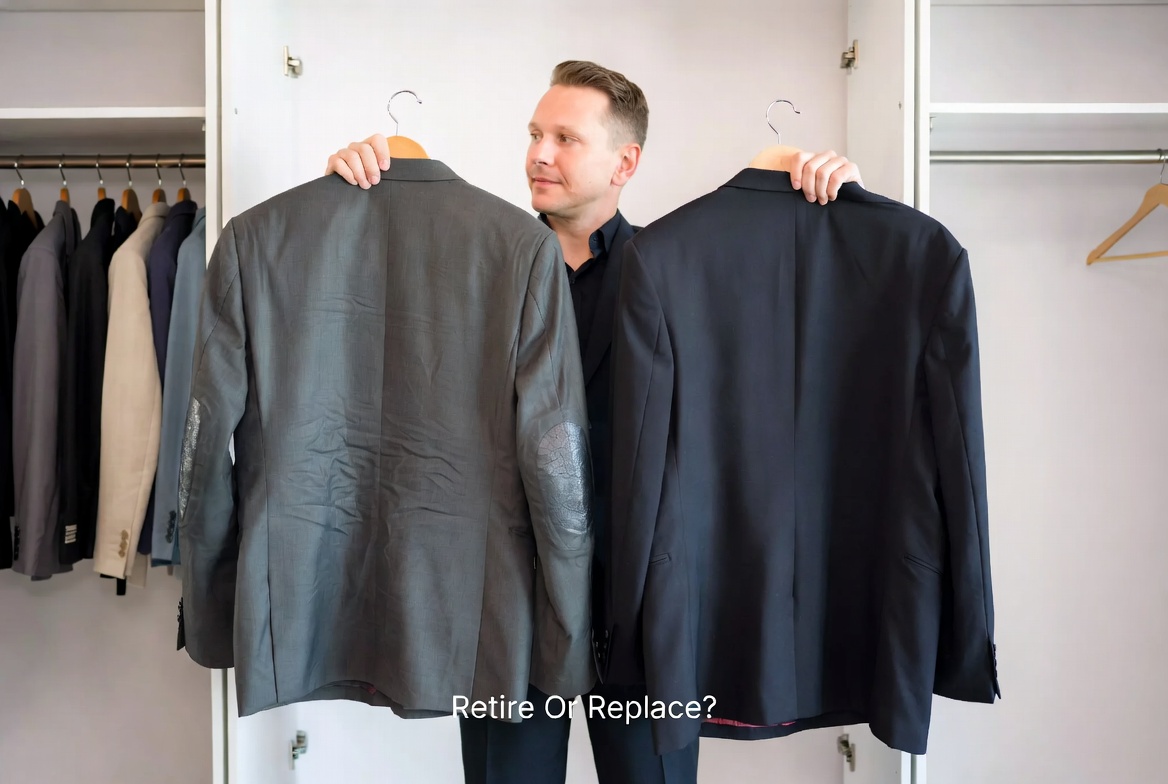
Not all wardrobe retirements are due to damage; sometimes, the issue is style drift. [centra]
Men's and women's tailoring evolves more subtly than streetwear, but it does evolve. [centra]
Signals your suit or shirt looks dated:
- Extremely wide or ultra‑skinny lapels compared with current business norms. [centra]
- Low‑rise dress trousers that visually shorten the legs.
- Oversized shoulder pads that create a boxy, unnatural line.
- Excessive contrast stitching or flashy buttons that no longer match modern professional dress codes.
A simple test: compare your oldest suit to a recent photo of respected industry leaders. If your silhouette looks like it belongs in another decade, it may be time to move on. [salt]
As careers progress, wardrobe needs change. [centra]
For example:
- A mid‑level sales rep might prioritize versatile navy and charcoal suits.
- A C‑level executive often needs elevated fabrics, subtle patterns, and impeccable fit.
- Professionals transitioning from operations to client‑facing roles may require an immediate upgrade. [centra]
If you consistently skip a piece because it no longer feels aligned with your authority level, trust that instinct—that garment is ready to be retired.
Knowing *what* to retire is one step; knowing *how* to decide quickly is another. [centra]
A simple, effective rule: if you haven't worn it in 12 months, let it go. [centra]
Make reasonable exceptions for:
- Seasonal items (winter overcoats, linen suits).
- Special‑occasion wear (tuxedos, formal dresses).
- Truly sentimental pieces (wedding suit, milestone promotion jacket). [centra]
This rule prevents "maybe someday" pieces from clogging your closet and keeps your day‑to‑day wardrobe lean, intentional, and easy to manage. [siteimprove]
To avoid sliding back into clutter, adopt a one‑in, one‑out habit:
1. Every time you buy a new suit, retire one older suit.
2. Every time you add a dress shirt, remove one that is worn, dated, or rarely used. [centra]
3. Apply the same logic to ties, belts, and outerwear.
This approach mirrors the way professional wardrobe stylists and clothiers manage client closets—maintaining a tight, high‑performing rotation instead of endless volume. [wgcontent]
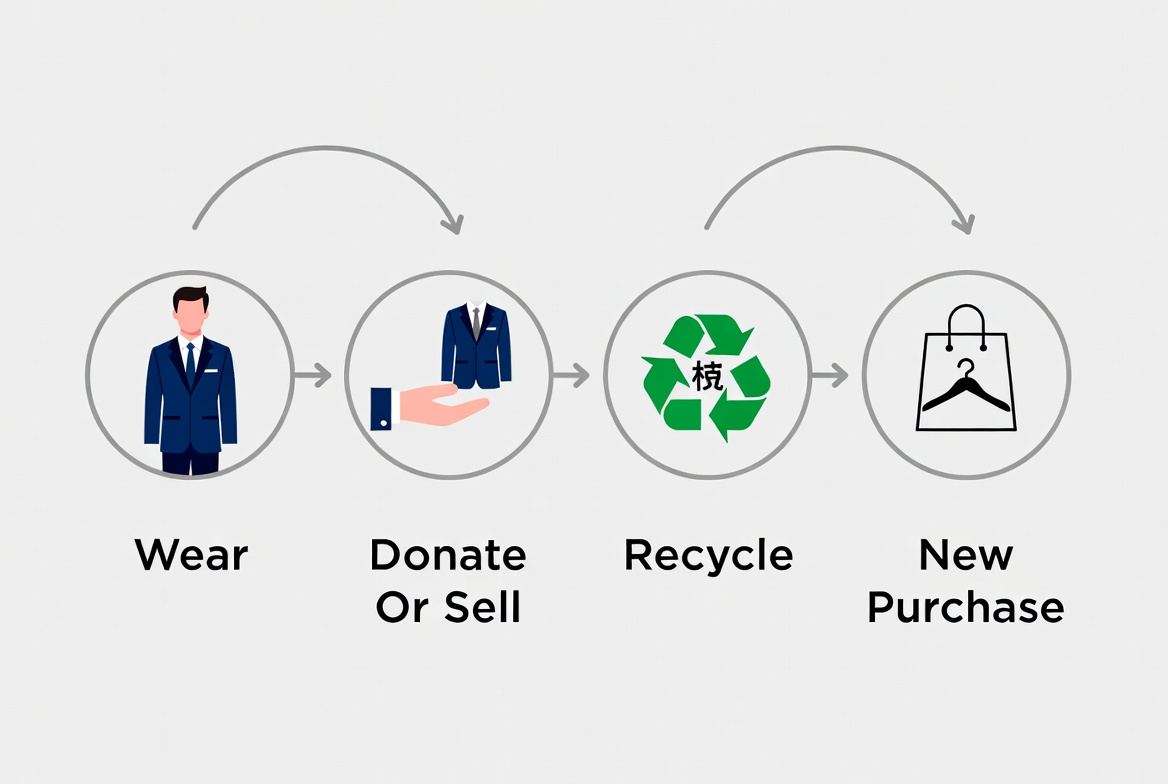
Retiring clothes does not mean sending them straight to landfill. [centra]
If a garment is still structurally sound, consider:
- Donating to local charities, job‑readiness programs, or community organizations.
- Selling via consignment platforms or second‑hand boutiques specialising in professional wear. [centra]
Well‑made suits and shirts often find a second life with young professionals entering the workforce, where they can still deliver significant value. [centra]
For items beyond wear:
- Explore textile recycling programs offered by municipalities or large retailers. [hqts]
- Look for "take‑back" schemes where old garments are shredded and reused as insulation, industrial cloths, or new fibers. [centra]
Globally, leading fashion and textile experts recommend extending garment life where possible and closing the loop through recycling when not, supporting a more circular fashion economy. [shenglufashion]
From our experience manufacturing suits and shirts for international brands, the difference between a two‑year garment and a ten‑year garment is often decided long before you see it in a store. [hqts]
When sourcing or purchasing your next suit, pay attention to:
- Fabric composition: High‑twist wool blends or wool‑polyester blends engineered for durability and crease resistance. [hqts]
- Construction: Half‑canvas or full‑canvas construction offers better drape and longer shape retention than fused jackets.
- Stitching: Even, dense stitching at seams and stress areas such as armholes and trouser crotch.
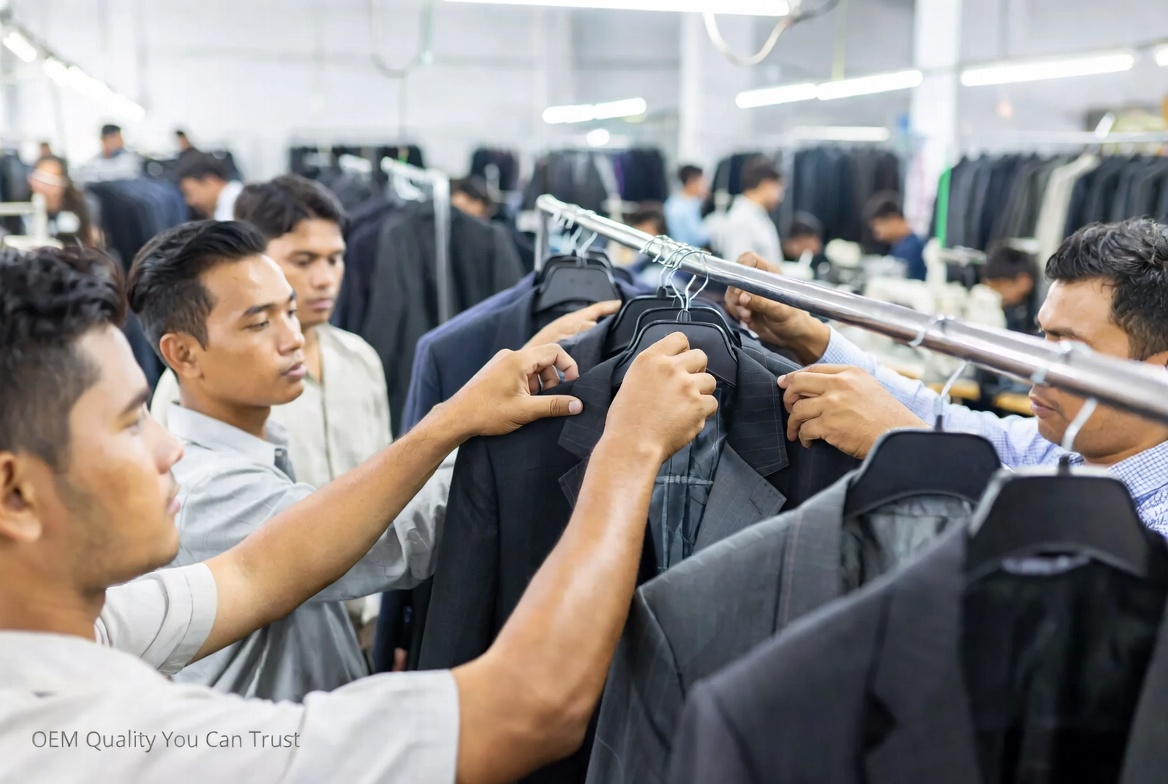
As an OEM, we work with foreign brands to specify yarn counts, interlining types, and button materials that balance cost and longevity for their target markets, ensuring suits survive real‑world use in offices, travel, and events. [hqts]
Well‑made shirts dramatically extend the lifespan of your suit rotation.
Look for:
- Tightly woven cotton or cotton blends with good colorfastness.
- Reinforced collar and cuffs with quality interlining that resist bubbling after washing.
- Button sewing with lockstitch or cross‑stitch patterns to reduce lost buttons. [hqts]
Many of our international OEM clients specify higher standards for stitching density and seam allowances because they understand that shirts are the workhorse of any wardrobe—they absorb sweat, daily friction, and frequent washing. [hqts]
For B2B buyers—brands, wholesalers, and private label owners—understanding clothing retirement from the end‑user perspective is crucial to planning your product strategy. [hqts]
Leading fashion and apparel brands track:
- Customer reviews mentioning fit changes, pilling, or quick fading.
- Warranty and return data for seam failures or button loss. [hqts]
- Corporate client feedback about how long suits and shirts remain presentable in daily wear.
This feedback informs adjustments to:
- Fabric specs (yarn quality, weight, blends).
- Stitching standards and QC thresholds.
- Care label instructions and aftercare guidance. [hqts]
OEM partners like Shanghai Youti Clothing Co., Ltd. can help you:
- Redesign core suit and shirt collections with better fabric and construction while respecting your target price. [hqts]
- Add wardrobe care tips on hangtags or product pages so your customers keep garments in circulation longer.
- Offer private label or OEM updates timed with your brand's seasonal refresh, aligning with how long garments realistically last in your customers' wardrobes. [tapstitch]
This combination of product engineering and lifecycle awareness supports both brand loyalty and sustainability positioning.
To make this guide immediately actionable, use the following simple 30‑minute process.
1. Pull everything out
Take all suits, blazers, and dress shirts out of your closet and lay them on a bed or rack. [centra]
2. Sort by frequency of wear
Create three groups: weekly, monthly, and rarely worn. [centra]
3. Inspect for the four major signs
For each item, check fabric breakdown, stains, fit issues, and fastener/seam problems. [centra]
4. Apply the one‑year rule
Move any unworn‑for‑12‑months pieces into a retire/donate pile unless they are seasonal or special occasion. [centra]
5. Plan replacements intentionally
List which garments you truly need to replace, prioritizing versatile colors and high‑quality fabrics. [siteimprove]
| Item type | Minimum rotation | Signs to retire (quick scan) |
|---|---|---|
| Business suits | 3–5 pieces | Shiny elbows/knees, outdated lapels, poor fit. (centra) |
| Dress shirts | 7–10 pieces | Collar yellowing, fabric thinning, gaping placket. (centra) |
| Casual shirts | 4–6 pieces | Heavy fading, pilling, shapeless silhouette. (centra) |
| Formalwear (tux) | 1–2 pieces | Outdated cut, visible wear on lapels, stains. (centra) |
This structure protects you from overusing any single garment while ensuring you always have polished options ready for important meetings, travel, and events. [centra]
If you recognize several of the warning signs in your current wardrobe, this is the right moment to retire underperforming pieces and rebuild around higher‑quality suits and shirts. [centra]
As a specialized OEM clothing manufacturer based in China, Shanghai Youti Clothing Co., Ltd. works with international brands, wholesalers, and private labels to create tailored suits, dress shirts, and professional apparel that balance durability, fit, and price. [hqts]
- For brands and wholesalers: Partner with us to refresh your core collections with fabrics and constructions designed to withstand real business wear.
- For corporate buyers: Work with our OEM team to develop consistent, long‑lasting uniforms and business attire for your organization.
Contact our team to discuss your next suit or shirt program and learn how OEM manufacturing can extend your customers' wardrobe lifecycle while elevating your brand's perceived quality. [hqts]
Q1. How long should a business suit last if I wear it weekly?
A well‑constructed suit, worn once per week and properly cared for, typically lasts 5–8 years before fabric thinning, shine, or style changes justify retirement. [salt]
Q2. How often should I replace my dress shirts?
Dress shirts worn in regular office rotations often need replacement every 1–3 years, depending on fabric quality, washing frequency, and how many shirts you rotate. [wsiworld]
Q3. Is it better to repair or replace an older suit?
Minor repairs such as button replacement or small seam fixes are worthwhile; however, if you see widespread fabric wear, multiple alterations, and clear style dating, replacement usually offers better long‑term value. [centra]
Q4. What colors should I prioritize when rebuilding my wardrobe?
For most professionals, start with navy, charcoal, and mid‑gray suits, complemented by white and light blue shirts; these combinations work across industries and occasions. [tapstitch]
Q5. How can an OEM manufacturer improve my brand's suit or shirt line?
OEM partners can optimize fabric specs, construction methods, and quality control based on your target market's real usage patterns, extending garment life and reducing returns while keeping pricing competitive. [hqts]
1. Tom James Company – "Signs to Retire Clothing," wardrobe care guidelines and decluttering tips.
https://www.tomjames.com/blog/signs-to-retire-clothing/ [centra]
2. HQTS – "How to Source Clothing from China: Tips to Find the Best Manufacturer," insights on manufacturing and sourcing quality apparel from China.
https://www.hqts.com/sourcing-clothing-china-manufacturer/ [hqts]
3. WG Content – "E‑E‑A‑T for content quality," practical roadmap for demonstrating experience, expertise, authority, and trust in content.
https://wgcontent.com/blog/eeat-content-quality-seo-geo/ [wgcontent]
4. Siteimprove – "A creator's guide to SEO content strategy," guidance on structured content, headings, and keyword use.
https://www.siteimprove.com/blog/seo-content-strategies/ [siteimprove]
5. Power Digital / Tapstitch – Fashion SEO and content marketing insights for apparel brands.
https://www.tapstitch.com/blog/post/fashion-brand-seo-strategy-guide [tapstitch]
6. SALT.agency – "Content strategies and trends for fashion brands," trends in fashion‑related content and style evolution.
https://salt.agency/blog/evergreen-content-strategies-for-fashion-brands/ [salt]
7. WSI World – "Everything You Need to Know About SEO for Small Business," on‑page optimization and keyword integration best practices.
https://www.wsiworld.com/blog/everything-businesses-need-to-know-about-seo [wsiworld]
8. PW Skills – "What is Google E‑E‑A‑T, Guidelines & Why it is Important For SEO?", explanation of E‑E‑A‑T for SEO.
https://pwskills.com/blog/digital-marketing/google-e-e-a-t [pwskills]


