
Views: 222 Author: Youti Clothing Publish Time: 2026-05-28 Origin: Site


What do waitresses wear? They wear carefully designed uniforms that balance comfort, safety, and style while expressing the restaurant's brand and making service more efficient. As an OEM workwear manufacturer in China, Shanghai Youti Clothing Co., Ltd. works with overseas brands to turn these style and performance requirements into scalable, high‑quality uniforms that staff actually like to wear. [glynistao]
From busy hotel breakfast shifts to late‑night cocktail bars, a waitress uniform is part of the guest experience, not just "something to wear to work". When I design or review uniforms for restaurant clients as an industry partner, I always look at three pillars: functionality, brand fit, and staff comfort over a full shift. In this guide, we'll break down what waitresses wear today, how different venues approach uniforms, and how to choose pieces that work in real life, not just in mood boards. [uniformmarket]
For context, I'll also share insights from our manufacturing floor at Shanghai Youti Clothing Co., Ltd. in Shanghai, where we support global brands, wholesalers, and importers with OEM waitress uniforms and other workwear. [ipcompany.en.alibaba]
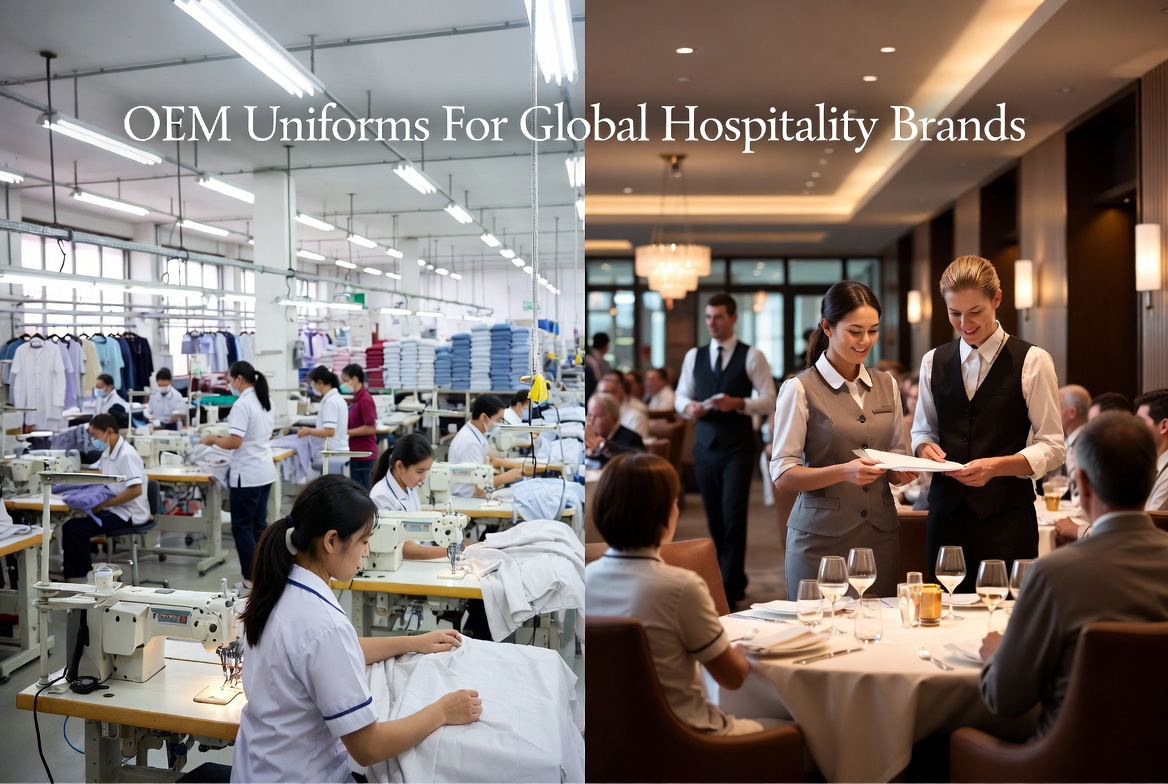
A good waitress uniform does much more than look neat on the first day. In most successful restaurants, uniforms support five key goals: [glynistao]
- Functionality and safety: Easy movement, no tripping hazards, practical pockets, and fabrics that resist stains and frequent washing. [glynistao]
- Branding and ambiance: Colors, cuts, and details that align with the restaurant's positioning—casual family diner, chic bistro, or luxury hotel. [glynistao]
- Professionalism and teamwork: A consistent uniform helps staff feel like a team, which you can literally see in smoother service during rush. [glynistao]
- Staff identification: Guests should be able to spot a server in one glance, especially in busy or dimly lit spaces. [glynistao]
- Customer confidence: Well‑groomed, well‑fitting uniforms reassure guests that the operation is organized and hygienic. [glynistao]
From a supplier's perspective, we see that venues with clear uniform standards have fewer returns, fewer staff complaints, and higher re‑order consistency season after season.
The original article organizes waitress outfits into modern, classic, and casual uniforms, which is still a very helpful way to think about your options. But in practice, each category can be tuned for climate, body type diversity, and brand storytelling. [glynistao]
Modern uniforms lean into minimalism, performance fabrics, and tailored silhouettes. Typical combinations include: [glynistao]
- Fitted button‑up shirts in stretch cotton or blends
- Tailored pants or pencil skirts
- Subtle colors (black, charcoal, navy, deep green) with branded accents
From a manufacturing standpoint, stain‑resistant and moisture‑wicking fabrics are critical here: they look sharp under restaurant lighting and survive high‑frequency laundering without losing shape. Modern uniforms are ideal for boutique hotels, contemporary Asian fusion concepts, and cocktail bars that want a clean, Instagram‑ready look. [adroll]
Classic uniforms are what most guests still picture: crisp white shirts, black vests, black pants or skirts, and aprons. This style works beautifully in: [glynistao]
- Fine‑dining restaurants
- Steakhouses and wine bars
- Banquet and hotel F&B teams
Manufacturers can refine classic uniforms with wrinkle‑resistant shirting, reinforced seams at stress points, and adjustable waistbands to fit more body types without constant tailoring. The key is a polished, timeless impression that survives trends and still looks appropriate years later. [glynistao]
Casual waitress uniforms prioritize comfort and approachability. You'll typically see: [glynistao]
- Branded T‑shirts or polos
- Jeans, chinos, or casual skirts
- Simple waist aprons
This style is common in cafés, family restaurants, beach bars, and quick‑service concepts where guests expect a relaxed atmosphere. To keep casual uniforms professional, we recommend consistent color standards, logo placement, and minimum fabric weights so garments don't look faded or thin after a month. [glynistao]
Even within a chosen style, you still need to assemble a practical "uniform system". Here are the core pieces most teams use, and what to look for from an OEM perspective. [glynistao]
A well‑cut waitress dress can be a one‑piece solution that looks elegant and is easy to manage for staff. Best practices include: [glynistao]
- Slight stretch in the fabric for bending and reaching
- Necklines and hemlines that respect local culture and company policy
- Hidden side or waist pockets that don't distort the silhouette
In our Shanghai factory, we often develop two versions of the same dress—short‑sleeve and 3/4‑sleeve—to adapt to different climates and seasons for overseas buyers.
Pants are popular with waitresses who prioritize movement and coverage. Good work pants should offer:
- Medium‑weight fabric with spandex or mechanical stretch
- Secure waistband with enough rise to prevent gaping
- Dark colors that hide stains (black, navy, charcoal)
For export orders, we recommend buyers define a size grading strategy early, because average measurements differ by region and target market.
Skirts bring a more classic or feminine touch and are still widely used in hotels and formal venues. Pencil and A‑line cuts dominate, but function matters as much as style: [glynistao]
- Slits or godets for walking and stair‑climbing
- Lining to prevent cling and see‑through issues
- Easy‑care materials that keep their shape through repeated cleaning
We often propose a "mix‑and‑match" approach: allowing staff to choose between pants and skirts within the same color and fabric family to support comfort and inclusivity.
Vests and waistcoats add structure and a clear "on‑duty" look. They can: [glynistao]
- Create a recognizable silhouette across front‑ and back‑of‑house
- Hide shirt wrinkles and provide extra pockets
- Carry branding through contrast piping, buttons, or embroidered logos
Layering pieces are also helpful in climates with strong air‑conditioning or outdoor seating where temperatures fluctuate.
The black waitress apron remains a workhorse in every segment. For serious operations, we suggest: [glynistao]
- Double‑stitched pockets sized for POS devices, notepads, and pens
- Durable twill or canvas that still feels comfortable around the waist
- Clear separation of "front" and "back" to save time during busy shifts
Branded T‑shirts or work shirts become mobile billboards for your logo. Beyond printing quality, check that fabric weight and hand‑feel match your brand promise—premium coffee chains can't afford see‑through tees. [glynistao]
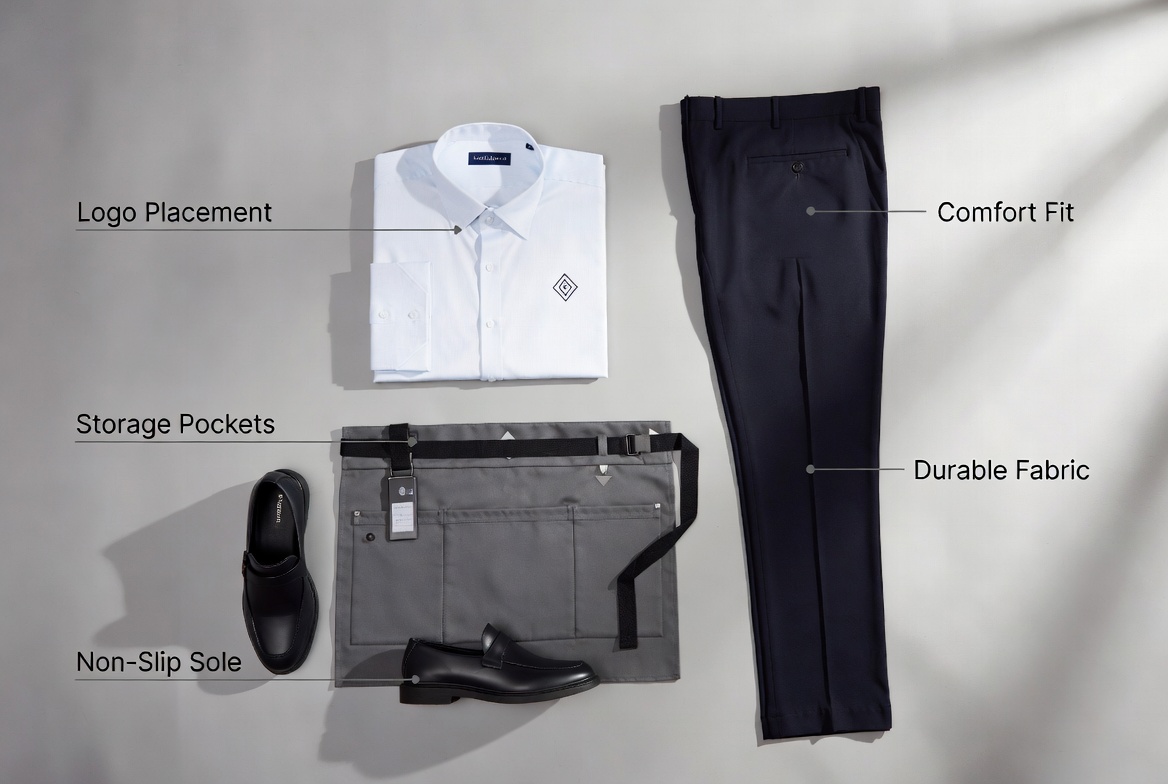
Long shifts on hard floors make footwear a health and safety issue, not just a style choice. When advising clients, I usually insist on three non‑negotiables for waitress shoes: [glynistao]
1. Slip resistance – Outsoles designed for wet, oily floors greatly reduce fall risk. [glynistao]
2. Support and cushioning – Padded insoles, arch support, and shock absorption to fight fatigue over 8–10 hour shifts. [glynistao]
3. Cleanability and durability – Leather or coated synthetics that withstand spills and regular cleaning without cracking. [glynistao]
Many brands now specify certified slip‑resistant footwear as part of the official uniform policy because of insurance and liability considerations. Even if shoes are not supplied directly by the restaurant, give staff clear guidelines with recommended styles and colors. [adroll]
Uniforms should feel like a natural extension of the venue's interior design and menu. The same outfit that looks perfect in a French fine‑dining room will feel out of place in a surf‑side café. [glynistao]
Hotels need uniforms that work across breakfast, banquets, and room‑service corridors. Typical features include: [glynistao]
- Coordinated color palette across F&B outlets
- Layering pieces for air‑conditioned ballrooms and outdoor terraces
- Subtle branding that fits the broader hotel identity
Our overseas hotel clients often request modular collections: shirts, vests, pants, and dresses in the same fabric family so they can adapt looks across outlets while keeping procurement simple.
Cocktail bars and lounges favor more fashion‑forward looks—sleek dresses, fitted tops, and bolder cuts. However, comfort and safety still apply: [glynistao]
- Fabrics should allow full movement behind a crowded bar
- Hemlines and necklines must align with local HR policies
- Dark, rich colors photograph well in low light
When designing OEM pieces for this segment, we often reinforce stress points (side seams, straps) due to more dynamic movement and frequent dry‑cleaning.
Fine‑dining uniforms must be precise and almost invisible—they should never distract from food and service. Elements that work well include: [glynistao]
- Tailored dresses or skirt‑suits in high‑quality suiting fabrics
- Classic shirts with French cuffs or subtle details
- Vests or jackets that signal seniority for head waiters
Fine‑dining buyers typically prioritize fabric drape, stitching quality, and color fastness, and are more willing to invest in higher‑end materials that will last multiple seasons.
Cafés, bakeries, and casual restaurants usually favor relaxed silhouettes and friendly colors. You'll often see: [glynistao]
- T‑shirts, polos, or chambray shirts
- Jeans or chinos
- Bib or waist aprons with big pockets
Even when the mood is casual, you still need unified pantone colors and logo placement to avoid a "mismatched" look on busy weekends. This is where bulk OEM production ensures consistent colors across re‑orders.
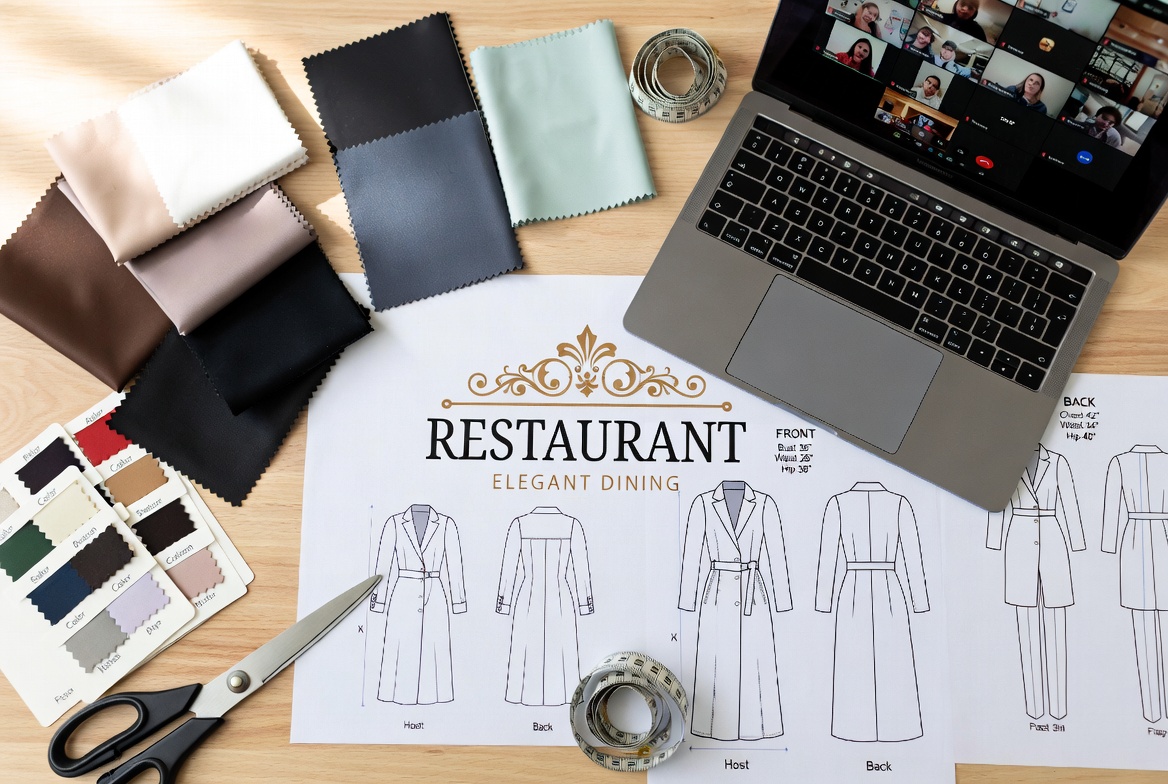
As a uniform OEM supplier, we often receive reference photos or basic sketches from overseas buyers and help them turn ideas into production‑ready designs. Based on those projects, here's a practical step‑by‑step framework.
Before choosing colors, clarify:
- What atmosphere do you want guests to feel (formal, playful, minimalist)?
- What are your climate and cleaning conditions (hot kitchen, outdoor seating, industrial laundry)?
- What level of coverage and modesty does your brand and local culture require?
Clear answers prevent expensive redesigns later.
For waitress uniforms, we often recommend:
- Blended fabrics (e.g., polyester–cotton with stretch) for durability and easy care
- Dark or mid‑tones for bottoms to hide stains
- Colorfast dyes tested against the washing methods you actually use
In our Shanghai Youti facility, we run sampling with 10–15 day lead times so overseas clients can physically test wash performance and comfort before confirming bulk orders.
Comfort drives staff acceptance of any new uniform. Practical tactics include:
- Separate fit blocks for men and women where relevant
- Elastic inserts or adjustable waist tabs on pants and skirts
- Size ranges tailored to your local workforce demographics
Well‑designed size runs reduce alterations and returns for distributors and wholesalers.
A strong uniform system carries brand elements without becoming a costume. Consider:
- Logo placement (chest, sleeve, apron, name badge)
- Accent colors on piping, buttons, and lining
- Matching or complementary neckwear for more formal venues
Labeling and packaging can also be customized for private‑label brands or distributors who want to resell under their own name.
Serious operations think beyond the first order. Discuss with your OEM partner:
- Forecast quantities and reorder cycles
- Standard vs. rush lead times (ours are typically 45–60 days for mass production after approvals)
- Stock strategies for best‑selling sizes
This planning stabilizes costs and ensures new hires get the same uniform as existing staff.
Shanghai Youti Clothing Co., Ltd., founded in 2018, focuses on business clothing and work uniforms for international buyers. With 15 assembly lines and 6 automated production chains, we can deliver over 3 million pieces annually, supporting both large hospitality groups and specialized distributors. [work-jacket]
Our internal structure includes a design and development department, sampling production, business management, and after‑sales quality inspection, allowing us to support OEM projects end‑to‑end. For overseas brands, wholesalers, and agents, this means you can send us tech packs, photos, or physical samples, and we will develop custom waitress dresses, pants, aprons, and coordinated workwear collections for your local markets.
If you're planning a new restaurant concept, rebranding an existing chain, or expanding your uniform line as an importer, partnering directly with a dedicated OEM like us simplifies the entire process—from fabric sourcing and patternmaking to labeling and logistics. [ipcompany.en.alibaba]
If you are a restaurant brand, distributor, or workwear importer looking for reliable OEM manufacturing in China, we can help you develop custom waitress uniforms that match your concept, budget, and local regulations. You can share your tech packs, reference photos, or existing samples, and our team will recommend fabrics, cuts, and size runs tailored to your market.
Get in touch with Shanghai Youti Clothing Co., Ltd. to discuss your next collection, request samples, or ask technical questions about fabrics and sizing for waitress and other work uniforms. [work-jacket]
Q1. What is the most common waitress uniform today?
The most common setup is still a shirt plus dark pants or skirt, paired with a waist or bib apron and non‑slip shoes, customized in color and branding by venue type. [glynistao]
Q2. How often should restaurants update their waitress uniforms?
Most brands review uniforms every 3–5 years, or sooner if they rebrand, change their positioning, or experience repeated complaints from staff about comfort or practicality. [linkedin]
Q3. Are custom waitress uniforms much more expensive than stock items?
Custom OEM uniforms typically cost more per piece than generic catalog items but often save money over time by improving durability, fit, and consistent brand presentation. Larger order volumes can significantly reduce unit cost. [adroll]
Q4. What fabrics work best for hot or humid climates?
Lightweight blended fabrics with breathability and moisture‑wicking properties, plus looser cuts and short sleeves, perform best in hot or humid markets. Darker colors on bottoms still help hide stains. [glynistao]
Q5. Can one uniform design work across multiple restaurant concepts in a group?
Yes, many hotel and group operators use a shared "core" uniform and then adjust aprons, accessories, and small color details by outlet to keep operations simple while preserving each concept's identity. [glynistao]
1. Stock Mfg Co. "What Do Waitresses Wear?" – Overview of waitress uniform purposes, styles, and components. [https://stockmfgco.com/blogs/stories/what-do-waitresses-wear] [glynistao]
2. Shanghai Youti Clothing Co., Ltd. – Company overview, capacity, and OEM services for business wear and uniforms. [https://ipcompany.en.alibaba.com]
3. UniformMarket. "Search Engine Success: SEO Basics For Uniform Retailers." Guidance on keyword placement and original content for uniform businesses. [https://www.uniformmarket.com/blog/seo-basics-for-uniform-retailers] [uniformmarket]
4. AdRoll. "Product Page SEO: How to Boost Rankings For Your Product Content." Practical advice on UX, images, and reviews that also applies to uniform and workwear pages. [adroll]
5. LS Digital. "E‑E‑A‑T Guidelines 2025: How to Build Google‑Friendly Content." Best practices for demonstrating experience, expertise, authoritativeness, and trust. [lsdigital]
6. Google. "Search Engine Optimization (SEO) Starter Guide." Official search documentation for structuring and optimizing web content. [developers.google]


