
Views: 222 Author: Youti Clothing Publish Time: 2026-05-24 Origin: Site


As someone who has helped restaurants in the US, Europe and Asia design and source waiter uniforms for more than a decade, I can tell you this: what your waiters wear is no longer "just clothes" – it is a strategic tool for branding, guest experience and staff performance. Done well, your server uniforms quietly communicate your concept, professionalism and standards before a single plate hits the table. [unicut.com]
In this guide, I'll walk you through what waiters wear today, how leading restaurants are updating their uniforms, and what to consider when you design or refresh your own waiter dress code. I'll also show you how an experienced OEM manufacturer like Shanghai Youti Clothing Co., Ltd. supports global brands with custom waiter uniforms and broader uniforms and work clothes programs. [work-jacket]
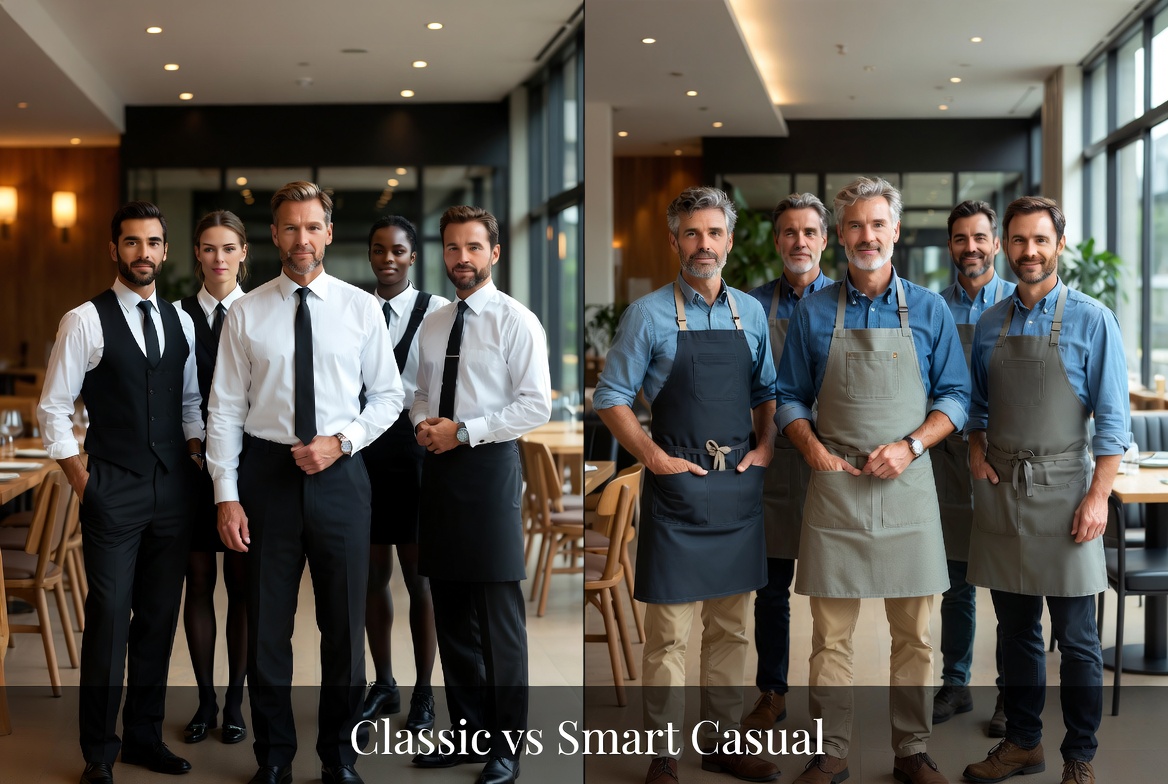
Across markets, most waiter uniforms are built from the same core components: shirt, trousers or skirt, shoes, and often an apron, layered with optional vests, ties or jackets depending on formality and climate. While details vary, the goals are consistent: a coherent look that reflects the restaurant brand, keeps staff comfortable and safe, and is durable enough for daily service. [loman]
Typical pieces include:
- Shirt: Button-up dress shirt, oxford shirt, chambray shirt or branded polo, long or short sleeve depending on concept and season. [impacttrading.co]
- Bottoms: Black trousers, chinos, skirts or dark jeans for casual venues, with stretch and breathability for long shifts. [loman]
- Apron: Waist, bib or cross-back apron with pockets for order pads, pens and POS devices. [impacttrading.co]
- Footwear: Non-slip, closed-toe shoes designed for all-day wear on hard floors, often black leather or synthetic. [loman]
- Layers & accessories: Vests, blazers, ties, bowties, pocket squares, scarves or name tags for added polish and branding. [unicut.com]
The classic waiter uniform most people picture is a white dress shirt with black trousers, often with a black waistcoat, tie or jacket. This combination remains the standard for fine dining, steakhouses, hotel restaurants and banqueting because it signals tradition, formality and precision. [unicut.com]
Key elements of a classic look:
- White dress shirt
- Black trousers or skirt
- Black tie or bow tie
- Waistcoat or blazer
- Black leather dress shoes
This style works best when your concept is built around heritage, ceremony or a more formal guest experience. For example, the RPM Steak uniform program described in the original article uses tailored vests and structured pieces to reinforce a premium steakhouse atmosphere.
Modern restaurants, cafés, breweries and fast-casual chains often choose a smart-casual or casual uniform that feels relaxed but still deliberate. [sfatec]
Common combinations include:
- Short-sleeve chambray shirts with black or khaki chinos
- Branded polos with dark jeans and a waist apron
- Lightweight long-sleeve shirts with rolled sleeves and workwear-inspired aprons
These outfits allow more movement, are cooler in open kitchens or outdoor environments, and can feel more aligned with contemporary, lifestyle-driven restaurant brands. The example from Stock Mfg. featuring black stretch service chinos and a short-sleeve gray chambray shirt is typical of this current trend. [sfatec]
Color is one of the fastest ways to link uniforms to your brand identity. A beachside restaurant might opt for light blues and whites, while a Japanese-inspired venue could mix indigo aprons with minimalist silhouettes. [unicut.com]
When choosing colors and branding elements, consider:
- Concept alignment: Match colors to your logo, interior design and menu style.
- Readability: Ensure any logos or name tags can be read at a glance.
- Maintenance: Darker tones hide stains better; lighter palettes require stricter laundry standards.
- Cultural expectations: In some markets, certain colors carry specific meanings that can help or hinder your brand story.
The Momotaro project mentioned in the original article blended Japanese and Western influences to produce uniforms that felt both authentic and functional, illustrating how thoughtful color and styling reinforce a fusion concept. [unicut.com]
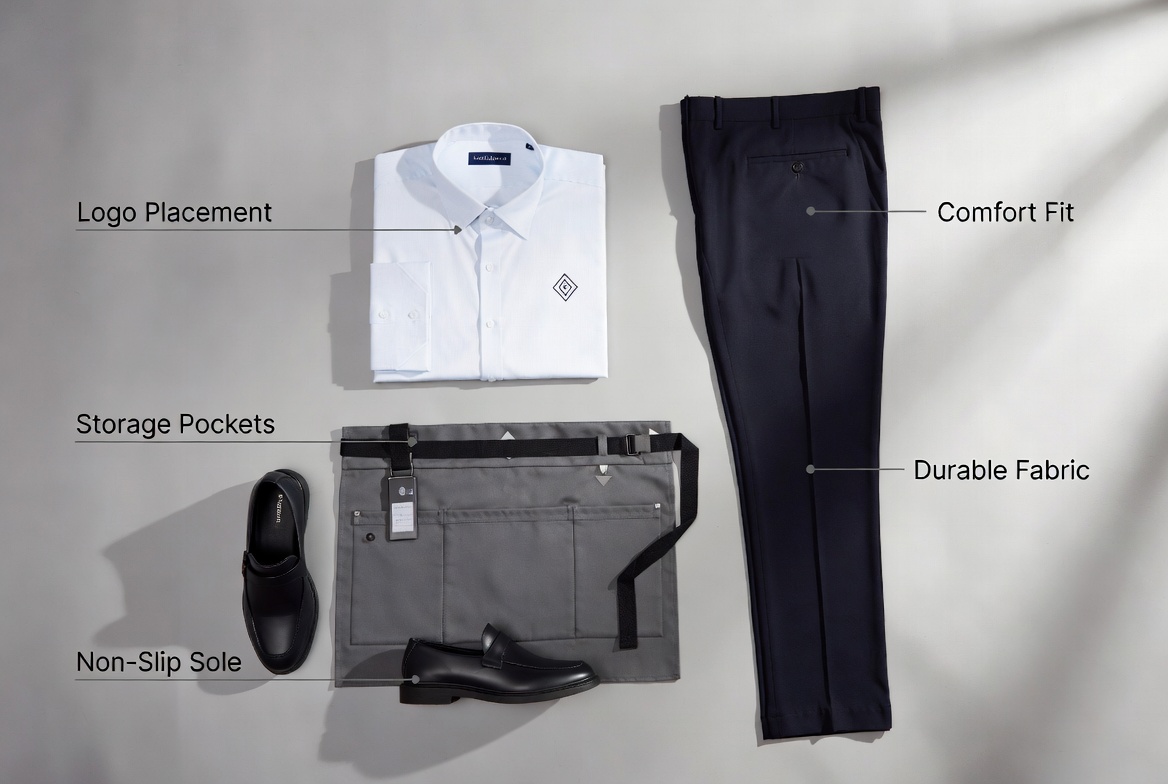
Aprons have evolved from simple protective layers into some of the most expressive elements of waiter uniforms. In many contemporary restaurants, a distinctive apron is the main visual signature of the front-of-house look. [cargocrew.com]
Common apron types:
- Waist aprons: Great for fast-paced service; pockets are accessible and movement is unrestricted. [loman]
- Bib aprons: Provide more coverage for messy service, wine bars and open kitchens. [loman]
- Cross-back aprons: Distribute weight across the shoulders, ideal for long shifts.
Popular apron materials and finishes include twill, denim, herringbone and canvas, often with contrast stitching, leather straps or custom embroidery. Custom details like the flap and embroidery in the Cherry Circle Room apron project show how subtle design choices can lift the entire uniform program. [sfatec]
From an operational perspective, fit is one of the most important – and most overlooked – drivers of waiter performance. Poorly fitted shirts and trousers restrict movement, look sloppy and can even create safety issues in tight spaces. [impacttrading.co]
- Shoulders and chest: The shirt should sit close without pulling, allowing full arm movement for carrying trays and reaching across tables.
- Waist: A slight taper prevents excess fabric bunching when tucked into aprons or trousers.
- Length: Long enough to stay tucked during bending and stretching.
- Sleeves: For long sleeves, cuffs should remain visible but not drag into food; rolled sleeves should stay secure.
- Length: Avoiding bunching at the ankles reduces trip risks and maintains a sharp line. [loman]
- Ease: A slightly tapered leg with stretch in the fabric supports long hours on the move. [impacttrading.co]
- Options for women: Higher waistlines or more fitted styles can be offered, but range of motion must remain the priority. [loman]
Accessories like vests, ties and aprons should be adjustable so staff can fine-tune fit, especially in teams with diverse body types. Adjustable satin-backed vests and elastic or tie-waist aprons, as used in the Stock Mfg. examples, are good models to follow. [loman]
Even the best-designed uniform fails if grooming and footwear do not support the overall standard. Many high-performing restaurants treat grooming and shoe guidelines as part of the uniform itself. [impacttrading.co]
- Hair should be neat and secured away from the face; facial hair should be trimmed where permitted. [loman]
- Nails should be short and clean; minimal or neutral nail polish is generally safest for foodservice. [loman]
- Perfume and jewelry are usually kept subtle to avoid hygiene issues and guest discomfort. [loman]
The original article rightly emphasizes that well-groomed waiters "make all the difference" in how guests perceive your restaurant.
Waiters often spend an entire shift on hard surfaces, carrying hot plates and glassware, so shoe choice is a safety decision as much as an aesthetic one. [impacttrading.co]
Best practice:
- Slip-resistant soles suited to wet or greasy floors
- Closed toes for protection from spills and dropped cutlery
- Good cushioning and arch support to reduce fatigue
Investing in a standard shoe policy, or even subsidizing approved footwear, can significantly reduce accidents and sick days. [impacttrading.co]
Small, controlled touches of personalization – branded pocket squares, subtle scarves, name tags or color-coded pins – can give staff individuality without compromising brand consistency. Industry guidance increasingly favors allowing limited personal flair to support staff morale and retention. [unicut.com]
The hospitality market for uniforms is growing quickly, with analysts projecting hospitality uniform demand to increase at a compound annual growth rate above 10% over the next several years. Within that growth, several design trends have emerged for waiter and waitress uniforms: [omrglobal]
- Breathable, lightweight fabrics: Structurally square, breathable silhouettes with side panels or slits are popular for comfort in warm, high-activity environments. [sfatec]
- Statement aprons: More restaurants are using aprons in bold colors, prints and textures as the hero piece of the uniform. [cargocrew.com]
- Softer, "cloud" colors: Selected hospitality trend reports highlight soft, cloud-like tones and calming palettes for 2026, especially in café and brunch concepts. [cargocrew.com]
- Customization at scale: Embroidery, print and subtle branded details are now expected rather than optional extras. [unicut.com]
These trends align with what we see daily supporting international clients at Shanghai Youti Clothing: operators want uniforms that perform like technical workwear but photograph like lifestyle fashion. [ipcompany.en.alibaba]
Based on both industry best practices and what we observe across hundreds of hospitality clients, here is a straightforward process to design or refresh your waiter uniform policy. [desygner]
- Clarify your concept: fine dining, casual, fast-casual, bar, café, hotel.
- Map tasks by role (server, bartender, host, runner) to understand functional needs. [loman]
- Note any regulatory requirements around hygiene, safety or protective clothing in your jurisdiction. [loman]
- Decide on formality level (classic vs smart-casual).
- Select your color palette and logo placement.
- Gather reference images from restaurants you admire (including curated collections from vendors like Stock). [desygner]
- Prioritize breathable, stain-resistant and durable fabrics suitable for frequent washing. [impacttrading.co]
- Offer a size range and, where possible, different cuts to accommodate different body types. [loman]
- Document minimum fit standards (shirt length, trouser length, shoe type, grooming expectations). [loman]
- Create sample sets and run a 2–4 week trial with a small staff group.
- Collect feedback on comfort, heat, movement, and how easy the garments are to maintain. [loman]
- Adjust details like pocket placement, apron length and fabric weight before full rollout. [loman]
- Roll out a clear written policy supported by images and examples.
- Provide laundering guidelines or partner with a professional laundry where appropriate. [loman]
- Review uniforms annually to keep them aligned with brand evolution and emerging trends. [cargocrew.com]
Designing a strong waiter uniform concept is only half the job; the other half is producing it reliably and at scale. This is where an experienced OEM partner matters.
Shanghai Youti Clothing Co., Ltd. is a China-based manufacturer specializing in uniforms and work clothes, including waiter uniforms, business formalwear and broader corporate apparel programs. With 15 assembly lines and multiple automated production chains, we produce over 3 million garments annually for clients across Europe and North America. Our operations are supported by dedicated design, development, sampling and quality inspection departments, ensuring consistent control from concept to shipment. [work-jacket]
For hospitality customers, this means:
- Custom waiter uniforms that reflect your brand, from fabric selection to trims and embroidery.
- Flexible order quantities and timelines, with typical sampling windows of around 10–15 days and production lead times of approximately 45–60 days, depending on complexity. [ipcompany.en.alibaba]
- Internationally recognized certifications – including ISO 9001 and multiple safety and performance standards – that help you meet internal compliance requirements. [work-jacket]
If you are planning a new restaurant opening, a rebrand or a regional rollout, partnering early with your OEM supplier ensures your waiters' uniforms, work clothes and back-of-house garments arrive aligned and on schedule. [ipcompany.en.alibaba]
If you are a restaurant owner, hospitality group, wholesaler or brand looking for a reliable OEM partner for waiter uniforms and broader workwear, you can reach the Shanghai Youti team at 15900585127@163.com or +86-15900585127, or visit our website to discuss your custom program. [work-jacket]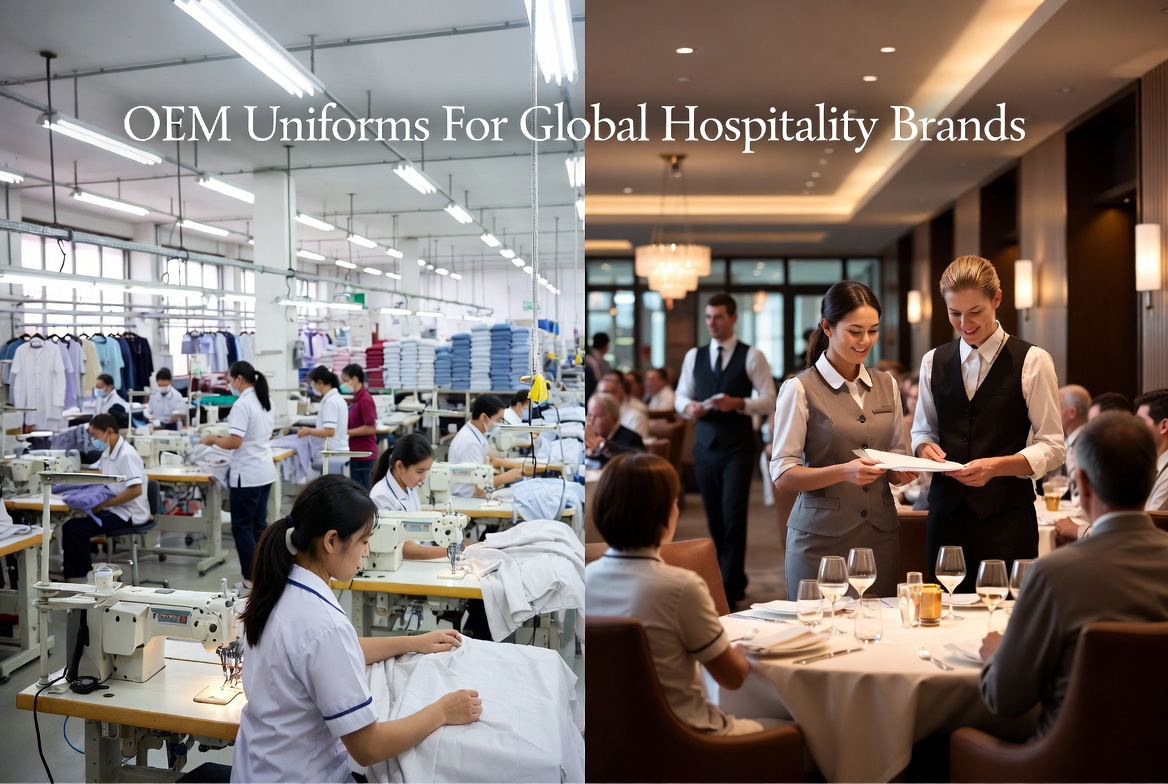
1. Are aprons required in food service?
Aprons are not legally required everywhere, but they are widely recommended because they protect clothing, present a more uniform look and provide practical storage through pockets. Many operators treat aprons as part of basic personal protective equipment for servers and bartenders. [impacttrading.co]
2. What uniform does a chef wear compared with a waiter?
A chef's uniform typically prioritizes heat resistance, hygiene and coverage, often using jackets, pants with stretch, non-slip shoes and robust aprons. Waiters, by contrast, wear lighter, more guest-facing garments focused on brand expression and mobility rather than heavy protection. [unicut.com]
3. What should a hostess or host wear?
Hosts and hostesses usually dress slightly more formally than servers, reflecting their role as the first point of contact. In upscale settings this might mean dresses, blouses with tailored trousers or blazers, while more casual concepts can opt for branded shirts or polos that coordinate with the server uniform. [loman]
4. How often should we replace waiter uniforms?
Replacement frequency depends on garment quality, laundering intensity and concept, but many hospitality uniform specialists suggest reviewing and replacing heavily used pieces every 6–12 months or when visible wear, fading or damage appears. High-quality fabrics and construction can extend this cycle and reduce long-term costs. [impacttrading.co]
5. Where can I get ideas and suppliers for waiter uniforms?
You can explore curated restaurant uniform collections from specialist brands like Stock for visual inspiration. When you are ready to produce at scale, contacting professional OEM suppliers such as Shanghai Youti Clothing Co., Ltd. lets you translate those concepts into durable, cost-effective waiter uniforms tailored to your brand and market. [ipcompany.en.alibaba]
1. Stock Mfg. Co. "What Do Waiters Wear?" (original article and examples used as baseline content and inspiration). [Link]
2. Google Search Central. "Creating Helpful, Reliable, People-First Content." Guidance on E-E-A-T and people-first content for SEO.[Link] [developers.google]
3. TopRank Marketing. "E-E-A-T and SEO: Optimizing for Google's Guidelines." Practical recommendations for demonstrating experience, expertise, authority and trust.[Link] [toprankmarketing]
4. UniformMarket. "Search Engine Success: SEO Basics For Uniform Retailers." Discussion of keyword placement and original content strategy for uniform businesses.[Link] [uniformmarket]
5. Desygner. "6 Steps to Create Content for a Uniforms Business." Advice on audience targeting, visuals and SEO for uniform companies.[Link] [desygner]
6. Loman AI. "Best Practices for Restaurant Staff Uniforms – Enhancing Professionalism and Efficiency." Detailed breakdown of comfort, branding, durability and safety for restaurant uniforms.[Link] [loman]
7. Unicut. "Waiter/Waitress Uniform." Insights into branding, comfort and seasonal adjustment for waiter uniforms.[Link] [unicut.com]
8. SFAtec. "Trends in Waiter and Waitress Uniforms." Overview of contemporary trends in breathable silhouettes and colorful aprons.[Link] [sfatec]
9. Cargo Crew. "Uniform Trends 2026." Commentary on emerging uniform colors and the rise of waist aprons in hospitality.[Link] [cargocrew.com]
10. Impact Trading. "Why Waiter/Waitress Uniforms Matter." Discussion of comfort, safety and customization in waiter uniforms.[Link] [impacttrading.co]
11. OMR Global. "Hospitality Uniform Market Size and Forecast." Market outlook indicating strong growth in hospitality uniforms.[Link] [omrglobal]
12. Shanghai Youti Clothing Co., Ltd. "Company Overview." Corporate information, capabilities and certifications for uniforms and work clothes OEM services.[Link] [ipcompany.en.alibaba]
13. Shanghai Youti Clothing Co., Ltd. "Customized Workwear, Business Suits, Office Wear." Official website outlining product range, certifications and contact details.[Link] [work-jacket]


