
Views: 202 Author: Youti Clothing Publish Time: 2026-07-25 Origin: Site


Content Menu
● What Makes a Blazer, a Suit Jacket, and a Sport Coat Different?
● Blazer vs Suit Jacket vs Sport Coat: A Simple Comparison
● How to Identify Each Jacket by Fabric, Buttons, and Construction
● What OEM Jacket Brands Should Focus On
● What Buyers Should Ask Before Ordering Custom Jackets
● Why This Matters for Global Buyers
>> 1. Can a blazer be worn with jeans?
>> 2. Is a suit jacket the same as a blazer?
>> 3. What is the most casual of the three?
>> 4. What color blazer is the most versatile?
>> 5. Can a suit jacket be worn as a sport coat?
>> 6. What should OEM buyers pay attention to first?
Choosing between a blazer, a suit jacket, and a sport coat is easier when you know what each one is designed to do. The difference is not just about appearance; it also affects formality, fabric choice, styling, and how well the jacket works with the rest of the outfit.
For brands, wholesalers, and apparel buyers, this distinction matters even more because the wrong jacket type can create confusion in product positioning, merchandising, and customer expectations. A well-designed jacket collection should help the buyer understand when to wear each piece and why one jacket works better than another.

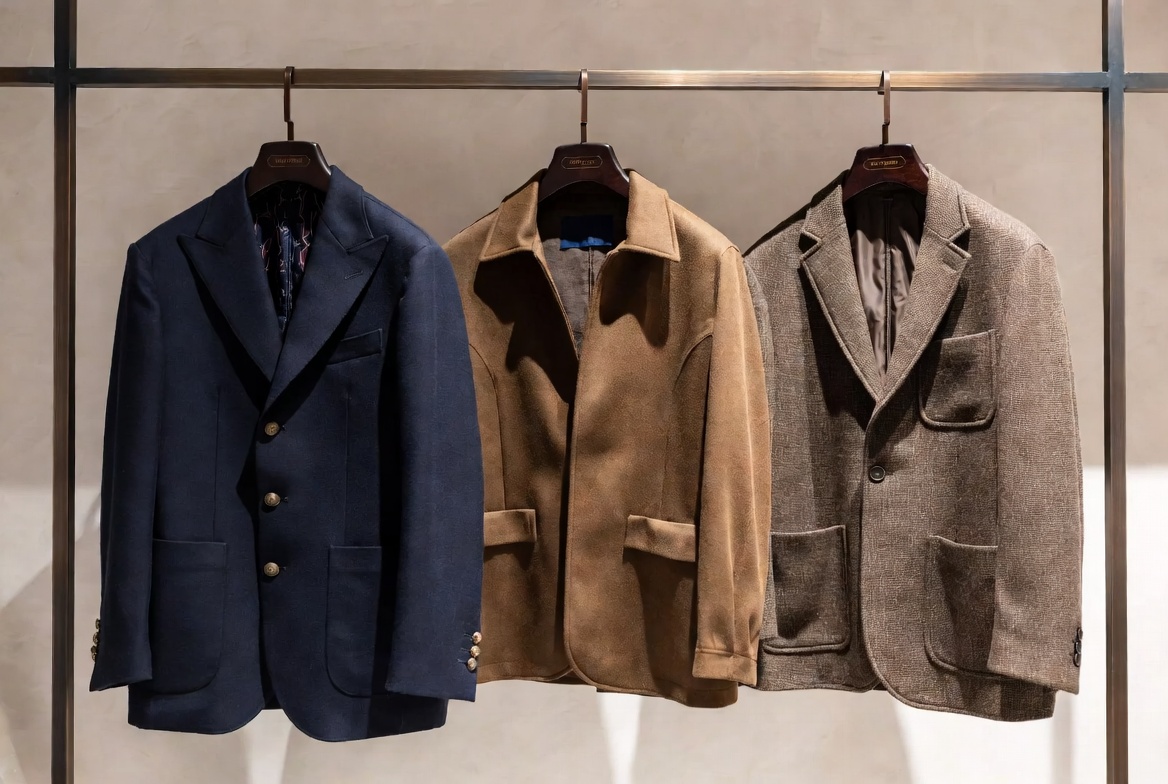
The simplest way to separate them is by fabric, matching trousers, and level of formality. A suit jacket belongs to a suit and is made to be worn with trousers from the same fabric and pattern. A blazer usually has a solid color and contrasting buttons, while a sport coat is generally more casual and often uses textured or patterned fabric.
In modern menswear, the terms are sometimes used loosely, but buyers should still treat them as separate product categories. That clarity helps brands avoid mislabeling and makes the shopping experience easier for end customers.
| Item | Main Look | Matching Trousers | Typical Form Factor | Best Use |
|---|---|---|---|---|
| Suit jacket | Clean, formal, coordinated | Yes, same fabric | More structured | Business, formal events, ceremonies |
| Blazer | Solid, polished, versatile | Usually no | Moderately structured | Smart casual, business casual, events |
| Sport coat | Textured, relaxed, expressive | No | Softer and less formal | Casual office wear, weekend outfits, layering |
This table reflects the most practical market difference: a suit jacket is built for coordination, a blazer is built for flexibility, and a sport coat is built for relaxed styling. That is also why product pages, size guides, and garment descriptions should use the correct label instead of treating all three as the same item.
A suit jacket usually uses smoother suiting fabric and a more refined finish. It often looks best when paired with its original trousers, and the structure is meant to support a sharper silhouette.
A blazer is commonly solid colored, with contrasting buttons that create visual separation from the trousers. Navy remains a classic choice, but modern collections also include charcoal, black, camel, and seasonal tones for broader retail appeal.
A sport coat is often the most relaxed of the three. It may use herringbone, checks, tweed, flannel, linen blends, or other textured fabrics, which makes it easier to style in mixed outfits.
A suit jacket is the best choice when the outfit needs the highest level of coordination and polish. Think board meetings, formal business settings, weddings, or any event where a matched set creates confidence and consistency.
A blazer works well when the outfit needs structure but not full formality. It fits neatly into business casual wardrobes, client dinners, travel looks, and events where you want to look refined without appearing overdressed.
A sport coat is the most flexible choice for relaxed styling. It pairs well with chinos, dark denim, and other separated trousers, making it a strong option for buyers who want one jacket that can move across many situations.
The easiest styling rule is to match the jacket's formality with the rest of the outfit. If the jacket is structured and smooth, the shirt, trousers, and shoes should also feel polished. If the jacket is textured and relaxed, the rest of the outfit can be softer and more casual.
A few practical rules help avoid mistakes:
- Suit jacket: Wear it with matching trousers whenever possible.
- Blazer: Pair it with non-matching trousers in a complementary color.
- Sport coat: Choose trousers that contrast in texture or tone.
- Buttons: Contrasting buttons usually signal blazer styling.
- Fabric: Heavier textures usually read as more casual.
For end customers, these rules reduce confusion. For brands, they improve product presentation because the customer can quickly understand what the garment is for and how to wear it.
One common mistake is assuming all jackets with lapels are interchangeable. They are not. The strongest visual clue is whether the jacket is designed to stand alone or belong to a matching set.
Another mistake is using the wrong fabric for the wrong market. A structured wool jacket may work well in formal business channels, while a textured sport coat may perform better in smart-casual or seasonal collections.
A third mistake is weak product naming. If a blazer is described like a suit jacket, or a suit jacket is marketed like a casual coat, the buyer loses trust. Clear naming improves product clarity, conversion, and customer satisfaction.

For OEM buyers, jacket categories should be planned around market behavior, not just design preference. In 2026, buyers continue to prefer versatile garments that can move from formal to casual settings, which makes blazers and lighter sport coats especially relevant.
Here are the most important collection priorities:
1. Clear category definition. Each jacket type should have its own fabric story, fit direction, and use case.
2. Strong visual consistency. Buttons, pocket style, lapel shape, and lining should support the jacket's purpose.
3. Seasonal fabric planning. Lightweight blends work better for spring and summer, while wool-rich options serve autumn and winter.
4. Market-specific color planning. Navy, grey, and black stay reliable, but textured neutrals and deeper seasonal shades can expand assortment depth.
For a China-based supplier serving overseas brands and wholesalers, this is where OEM value becomes visible: better category planning leads to better retail storytelling and fewer product returns.
Before placing an order, buyers should confirm a few points with the factory:
- Is this jacket meant to be sold as a suit jacket, blazer, or sport coat?
- Does the fabric support the intended level of formality?
- Are the buttons, pockets, lapels, and lining aligned with the jacket type?
- Will the garment be sold as a standalone piece or part of a set?
- Does the fit work for the target market's body profile and dressing habits?
These questions save time during development and reduce the chance of product mismatch. They also help suppliers create a better garment brief, which improves sample quality and final production consistency.
The jacket category is not just a style choice; it is a merchandising decision. When the product definition is clear, the customer can understand the value immediately and choose faster.
That matters even more for export-focused manufacturers and apparel brands because international buyers expect precise product language, accurate styling guidance, and dependable construction. In practice, that means your product pages, catalog copy, and line sheets should use consistent naming and practical outfit advice.
A suit jacket is the most formal because it belongs to a matched set. A blazer sits in the middle and offers polished flexibility. A sport coat is the most relaxed and the easiest to style in mixed outfits.
For brands and OEM buyers, the real advantage comes from treating these as distinct products with distinct purposes. That clarity improves design decisions, strengthens product pages, and helps customers buy with confidence.
If you are developing a jacket collection for overseas markets, request a category-based OEM quotation and build your line with clear differences in fabric, structure, and styling purpose.
Yes. A blazer often works well with dark jeans when you want a polished but relaxed look.
No. A suit jacket is designed to be worn with matching trousers, while a blazer is usually meant to stand alone.
A sport coat is usually the most casual because it often uses textured or patterned fabrics and is made for mixed separates.
Navy is the most classic and versatile blazer color because it works across business, travel, and smart-casual settings.
Sometimes, but only if the jacket has enough character and is not tied too tightly to a matching suit. In general, it is safer to wear a suit jacket with its matching trousers.
They should first define the jacket category, then align fabric, buttons, pockets, and fit with the intended use case.
1. Tom James, "What's the Difference Between a Sport Coat, a Blazer and a Suit Coat?" — [https://www.tomjames.com/blog/difference-between-sport-coat-blazer-suit-coat/] [360doc]
2. StudioSuits, "Blazer vs Suit Jacket vs Sport Coat: Key Differences" — [https://www.studiosuits.com/blogs/news/blazer-vs-suit-jacket-vs-sport-coat-key-differences] [360doc]
3. Bluffworks, "Blazer vs. Sport Coat: What's the Difference?" — [https://shop.bluffworks.com/blogs/journal/sport-coat-vs-blazer] [shop.bluffworks]
4. Esquire, "The 14 Best Blazers for Men to Build a Wardrobe Around" — [https://www.esquire.com/style/mens-fashion/g69999404/best-blazer-for-men/] [esquire]
5. Wessi, "7 Ways to Style a Blazer in 2026" — [https://www.wessi.com/blogs/male-fashion-advices/the-versatile-blazer-7-ways-to-style-one-jacket-for-every-occasion-in-2026] [wessi]
6. Shanghai Garment, "OEM Clothing Manufacturer" — [https://shanghaigarment.com/oem-clothing-manufacturer/] [shanghaigarment]
7. Valtin Apparel, "10 Trusted Blazer Manufacturers In China" — [https://valtinapparel.com/10-trusted-blazer-manufacturers-in-china/] [valtinapparel]
8. New Asia Garment, "Top OEM Clothing Manufacturers in China" — [https://www.newasiagarment.com/top-oem-clothing-manufacturers-china/] [newasiagarment]
9. Deloitte, "2026 Manufacturing Industry Outlook" — [https://www.deloitte.com/us/en/insights/industry/manufacturing-industrial-products/manufacturing-industry-outlook.html] [deloitte]


