
Views: 229 Author: Youti Clothing Publish Time: 2026-07-26 Origin: Site


Content Menu
● Why Suit Care Matters More Than Most People Think
● 1. Read the Care Label First
● 2. Brush the Suit After Every Wear
● 3. Let the Suit Rest Before You Wear It Again
● 6. Spot Clean Small Stains Immediately
● 8. Dry Clean Only When It Is Actually Needed
● Extra Care Tips for Better Results
● What Brands and Manufacturers Should Consider
● FAQ
>> 1. How often should a suit be cleaned?
>> 2. Can you wash a suit at home?
>> 3. What is the best way to remove wrinkles from a suit?
>> 4. Is it okay to wear the same suit every day?
>> 5. What should I do if I spill coffee on my suit?
>> 6. How should I store a suit long term?
When you invest in a suit, you are not just buying clothing. You are buying shape, structure, and confidence, so keeping a suit clean is really about protecting that value over time. The right care routine helps a suit stay fresher, last longer, and look more professional between wears.
A suit collects more than visible dirt. It absorbs body oils, dust, airborne particles, food traces, moisture, and odor, all of which can slowly break down the fabric and construction. Overcleaning can also be a problem, because repeated harsh cleaning may shorten a suit's life and affect its drape.
That is why the best suit care strategy is not "clean it more." It is clean it smarter. A good routine combines brushing, airing out, spot cleaning, proper storage, and occasional professional cleaning only when needed.

Before doing anything else, check the care label inside the jacket and trousers. This is the fastest way to know whether the suit can be spot cleaned, hand washed, professionally cleaned, or should be handled very cautiously.
Most suits made from wool, silk, velvet, or heavily structured construction are best treated by professionals. Suits made from cotton, linen, or some polyester blends may allow gentler home care, but only if the label supports it. If the label says dry clean only, do not try to machine wash or hand wash the garment.
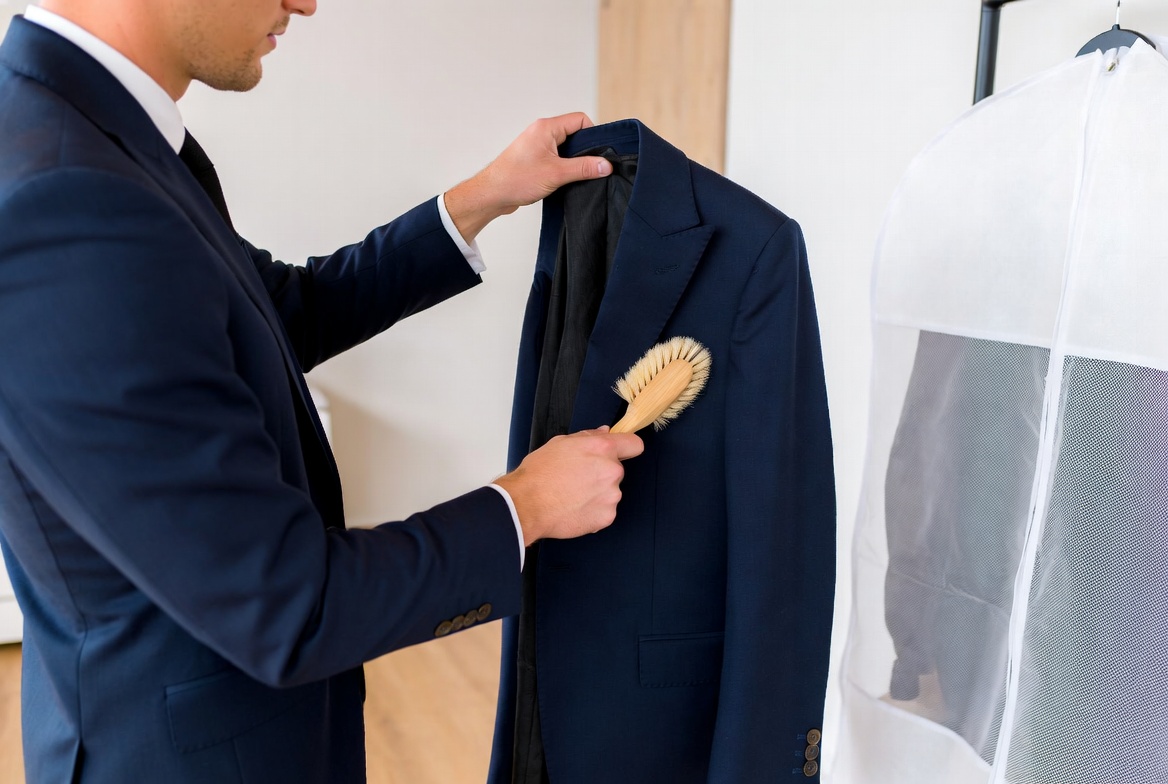
A suit brush is one of the most underrated tools in a wardrobe. A soft natural-bristle brush helps remove dust, lint, and fine debris before they settle into the fibers.
Use short, gentle downward strokes. Start at the shoulders and lapels, then move to the chest, sleeves, and trousers. This simple habit helps the suit look cleaner immediately and reduces the need for frequent deep cleaning.
A suit needs recovery time. After a full day of wear, the fabric holds moisture from the body and needs time to return to its natural shape.
A practical rule is to avoid wearing the same suit on consecutive days. If possible, rotate between at least two or three suits, especially for regular business wear. This helps preserve the shape of the knees, elbows, and seat while also reducing odor buildup.
After wearing a suit, hang it in a well-ventilated place for several hours before putting it back in the closet. This allows moisture and odor to dissipate naturally.
Do not trap a worn suit in a sealed garment bag or crowd it into a tight wardrobe space right away. Good airflow matters because it helps the fabric breathe and reduces the chance of mustiness. If the suit was worn in humid weather, give it even more time to air out.
A thin wire hanger can distort a suit jacket very quickly. The shoulders are especially vulnerable, and poor hanger support can leave bumps, stretching, or long-term shape loss.
Use a wide, curved wooden hanger with a shoulder shape that matches the jacket. This helps the garment hold its structure and improves airflow during rest periods. For trousers, hang them in a way that avoids sharp creases at the knees or waistband.
The faster you act, the better your chances of removing a stain cleanly. For small spills, use a clean cloth or tissue to blot the area gently from the outside toward the center.
Do not rub. Rubbing pushes the stain deeper into the fibers and can damage the fabric surface. For many fresh stains, a little cold water and a mild fabric-safe cleaner are enough, but always test a hidden area first. If the stain is greasy, colored, or uncertain, stop early and seek professional help.
| Stain type | First move | What to avoid |
|---|---|---|
| Water-based spill | Blot with a clean dry cloth, then use cold water | Hot water and rubbing |
| Oil-based stain | Blot, then absorb with a safe powder if suitable | Scrubbing or soaking |
| Food stain | Lift solids gently first, then blot | Rubbing into the weave |
| Odor after wear | Air out first, then reassess | Overusing fragrance sprays |
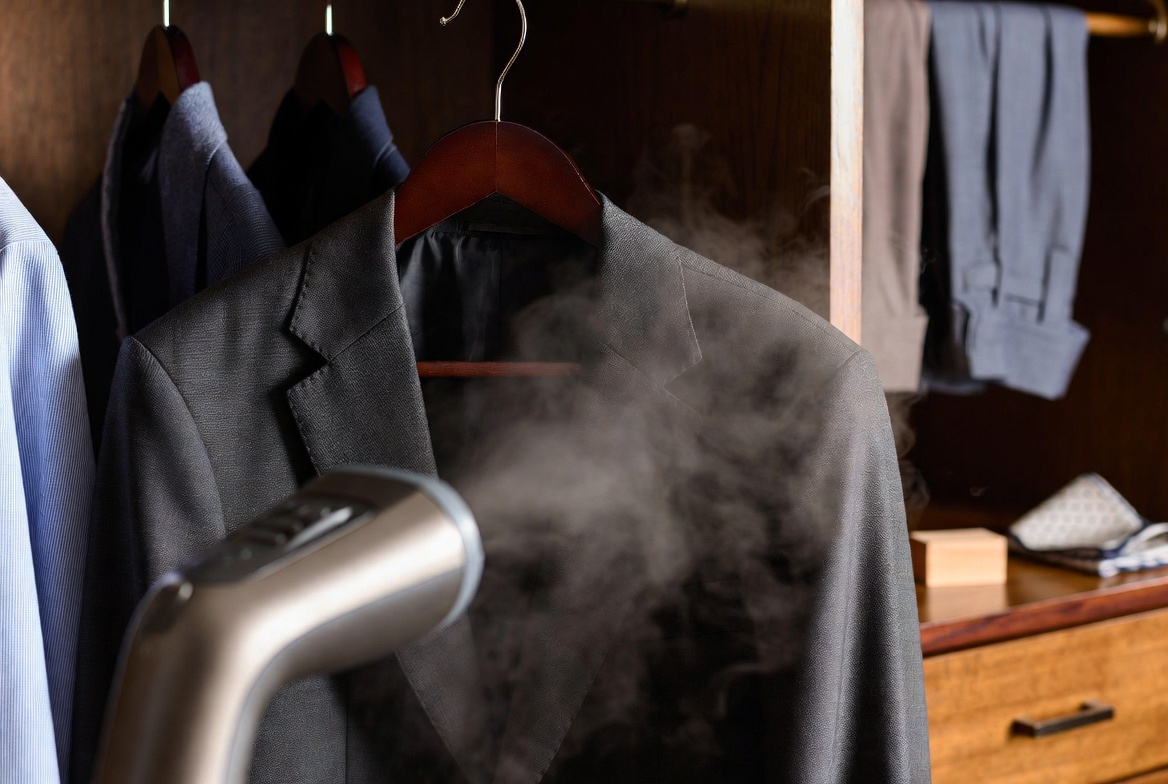
Wrinkles happen, but aggressive pressing can flatten texture and leave shine on the fabric. A garment steamer is usually the safer option for suit care because it relaxes creases without pressing directly into the fibers.
If you must iron, use low heat and a press cloth between the iron and the suit. Never press over a stain before it has been removed, because heat can set the mark permanently. A suit should look crisp, not glossy or overheated.
Many people send suits to the cleaner too often. That can be unnecessary for lightly worn suits and may slowly wear down delicate materials.
A better approach is to clean only when there is visible soil, persistent odor, or a stain you cannot remove safely at home. For routine office wear, brushing, airing, and spot cleaning should handle most situations. This balanced approach keeps the fabric in better condition and helps the suit last longer.
Storage is where many suits are quietly damaged. Never store a suit while it is damp, and never leave it crushed in plastic for long periods.
Use a breathable garment bag only for dust protection, not for long-term trapping of moisture. Keep suits in a cool, dry closet with space between pieces. If moths or seasonal storage are concerns, add cedar blocks or another fabric-safe storage aid, and make sure the suit is fully clean before packing it away.
These small habits make a big difference over time:
- Empty pockets after each wear.
- Keep a lint roller in your office or travel bag.
- Change out of the suit soon after arriving home.
- Avoid wearing the jacket in smoky, greasy, or high-splash environments.
- Brush trousers at the end of the day, not only the jacket.
- Check seams, buttons, and lining regularly so small issues do not become repairs.
For brands and OEM buyers, suit care guidance is part of product quality. The clearer the care instructions, the better the end-user experience and the lower the risk of misuse complaints. Well-constructed jackets, reliable interlining, stable linings, and properly tested fabrics all affect how a suit behaves during wear and cleaning.
For export-focused apparel programs, it is smart to align fabric choice, construction method, and care label language before production begins. A suit that looks premium in the showroom should also be easy for the customer to maintain in daily use.
A simple routine is often the most effective:
1. Wear the suit carefully.
2. Brush it after use.
3. Air it out before storage.
4. Spot clean stains quickly.
5. Steam lightly when needed.
6. Clean professionally only when necessary.
7. Store it with enough space to breathe.
If you want a suit to keep its shape, color, and clean appearance, consistency matters more than one-time deep cleaning.
For most suits, clean only when needed, such as after visible stains, strong odor, or noticeable buildup. Between cleanings, brush and air it out after wear.
Some suits made from washable fabrics may allow gentle home care, but only if the care label permits it. Wool, silk, velvet, and lined suits are usually better handled professionally.
Use a garment steamer whenever possible. If ironing is necessary, use low heat and a press cloth to protect the fabric.
It is better to rotate suits and avoid consecutive-day wear. Resting the fabric helps preserve shape and extend garment life.
Blot the spill immediately with a clean cloth, do not rub, and use cold water if appropriate. If the mark remains or the fabric is delicate, take it to a cleaner.
Store it clean, dry, and on a wide hanger in a breathable garment bag. Keep it in a cool closet with space around it and add moth protection if needed.
1. Whirlpool. "How to Wash a Suit at Home." [https://www.whirlpool.com/blog/washers-and-dryers/how-to-wash-a-suit.html]
2. StudioSuits. "9 Tips for Keeping Your Suit Clean." [https://www.studiosuits.com/blogs/articles/9-tips-for-keeping-your-suit-clean]
3. Apsley Tailors. "Suit Care Tips: How to Take Care of Your Suits." [https://www.apsleytailors.com/blog/suit-care-tips-how-to-take-care-of-your-suits]
4. Laurastar. "The Ultimate Suit Care Guide." [https://www.laurastar.com/ultimate-suit-care-guide/art62.html]
5. King & Allen. "The K&A Guide to Suit Maintenance." [https://kingandallen.co.uk/journal/tips-advice/the-ka-guide-to-suit-maintenance/]
6. Press Cleaners. "How Often Should You Dry Clean A Suit in 2026." [https://www.presscleaners.com/blog/often-dry-clean-suit/]


