
Views: 283 Author: Youti Clothing Publish Time: 2026-07-24 Origin: Site


Content Menu
● Introduction: Why Source Mens Formal Shirts from China
● How We Selected These Manufacturers
● Key Evaluation Criteria for High-Quality Shirt Factories
>> Factory Certifications and Compliance
>> R&D and Product Development Capability
>> Quality Control and Process Discipline
>> Capacity, Flexibility, and Lead Times
>> Communication and Project Management
● Technical Considerations for Mens Formal Shirts
>> Workmanship and Construction
>> Functional and Environmental Requirements
● Top 10 Mens Formal Shirts Manufacturers in China (2026)
>> 1. Shanghai Youti Clothing Co., Ltd.
>> 2. Guangzhou Joyord Sportswear Co., Ltd.
>> 3. SHIJIAZHUANG QIAN FANG Import and Export Trade Co., Ltd.
>> 4. Guangzhou Ishman Clothing Firm
>> 5. Shenzhen Pingshan District Yimeiya Trading Firm
>> 6. Shantou Chaoyang District Gurao Fanzhi Clothing Factory
>> 7. Shaoxing Region Woven Shirt Specialists
>> 9. Shanghai Tang–Linked Premium Shirt Production
>> 10. Cluster-Based OEMs in Guangdong and Hebei
● Capacity, MOQ, and Certification Overview
● Common Pitfalls When Sourcing Mens Formal Shirts
>> Fabric Substitution and Hidden Downgrades
>> Uncontrolled Subcontracting
>> Expired or Misused Certificates
● Industry "Insider" Tip: Monitoring Quality Over Time
● Buyer's Guide: Working Effectively with Chinese Shirt Factories
>> Sampling Strategy and Approval Flow
>> Defining Technical Specifications
>> Production Planning and Lead Times
>> Logistics and Shipping Considerations
● Summary
China remains one of the most important hubs for mens formal shirt production, supported by mature textile supply chains, large-scale garment clusters, and increasingly professional management systems. For international procurement managers, this means broad supplier choice, competitive pricing, and the ability to match different quality levels, volumes, and compliance needs within a single country.
At the same time, rising labor costs and growing global competition have pushed many Chinese factories to move up the value chain. Modern shirt manufacturers now invest in automated cutting, streamlined production lines, and more rigorous management systems, which benefits buyers who seek consistent, long-term partnerships rather than one-off price-driven orders.

To create a practical short list for professional buyers, this guide uses a structured, transparent selection framework. The goal is not to label a single "top" supplier, but to identify representative manufacturers that cover different positioning: high-volume producers, flexible mid-sized factories, and agile partners for small and emerging brands.
Key dimensions used in the selection include:
- Proven experience in mens shirts or formalwear as a core product category
- Export orientation and clear track record with overseas clients
- Availability of basic quality and management certifications
- Evidence of OEM and, where relevant, ODM capability
- Production capacity, on-time delivery performance, and communication efficiency
- Coverage of different clusters in China such as Shanghai, Guangdong, Zhejiang, and Hebei
This mix allows procurement managers to shortlist factories that align with their own business models, from large retailers to niche labels and corporate uniform projects.
When evaluating shirt factories, professional buyers look beyond catalog images and unit price. They examine whether the factory operates a robust management system, often demonstrated by certifications such as ISO 9001 for quality management or recognized social audits.
For apparel destined for Europe or other regulated markets, buyers may also require evidence that the factory understands and respects chemical safety and consumer protection requirements. Even when no formal certification is mandated, factories with experience in these areas tend to manage risk more effectively and respond more quickly to documentation requests from retailers or authorities.
Mens formal shirts seem simple at first glance, but the details matter: collar shapes, interlining selection, button quality, stitching density, and pattern alignment all influence perceived quality. Factories with in-house patternmakers, graders, and sampling rooms can translate a buyer's tech pack into consistent production, adjust fits to different markets, and suggest alternative constructions when cost or performance targets require.
A capable development team can also support fabric sourcing: proposing appropriate yarn counts, weave types (such as poplin, twill, or pinpoint), and finishes (non-iron, easy-care, or moisture management) that match the positioning of the buyer's brand.
A strong QC system typically covers several stages: fabric inspection, cutting checks, in-line inspections during sewing, and final inspections based on agreed AQL standards. For formal shirts, attention to key points such as collars, cuffs, buttonholes, and seams is essential.
Factories with disciplined QC processes usually maintain detailed records, standard operating procedures, and clear defect categories. This structure reduces the risk of unexpected quality problems in bulk production and supports traceability if issues arise later in the supply chain.
Mens formal shirt factories in China span a wide capacity range, from specialized workshops to large plants with multiple lines. Larger factories can handle high volumes and complex multi-style orders but may require higher minimum order quantities (MOQs). Smaller or mid-sized factories can be more flexible with MOQs and design changes, which is advantageous for emerging brands, niche labels, or test runs.
Typical bulk lead times range from around 20 to 35 days after sample approval for standard shirts. More complex programs—such as coordinated corporate wear or shirts with special functional fabrics—may require longer.
Timely, clear communication often makes the difference between smooth projects and those plagued by misunderstandings. Professional buyers look at response times, the factory's ability to interpret tech packs, and how well they manage change requests or highlight risks.
Factories that assign dedicated project managers, maintain clear documentation, and provide regular production updates help buyers control timelines and avoid surprises.
Common fabric types for mens formal shirts include:
- Poplin: smooth, lightweight, and suitable for everyday office wear
- Twill: slightly heavier with a diagonal weave, often better for cooler climates
- Pinpoint oxford: a finer version of oxford, balancing durability and refinement
Buyers often specify parameters such as GSM, yarn count, fiber composition (pure cotton, cotton-polyester blends, or cotton with elastane), and finishing processes. For premium shirts, long-staple cottons, higher thread counts, and finishes such as mercerization contribute to a softer handfeel and improved appearance.
Key workmanship indicators include:
- Stitch density (e.g., stitches per centimeter)
- Collar and cuff construction quality, including fusing consistency
- Pattern matching for stripes and checks across seams
- Button attachment strength and alignment
- Clean finishing inside seams and armholes
These details affect not only aesthetics but also durability, especially for shirts that must withstand frequent washing and pressing.
Many markets now expect shirts to meet specific functional or environmental performance thresholds. This can range from colorfastness and shrinkage limits to restrictions on certain chemicals used in dyes or finishes. Buyers increasingly integrate these requirements into their specifications and expect factories to support test reports and documentation.
Shanghai Youti Clothing Co., Ltd. is a Shanghai-based manufacturer established in 2018, operating 15 assembly lines and multiple automated production chains with an annual capacity exceeding three million pieces across its product portfolio. The company focuses on businesswear (such as shirts and suits), uniforms, workwear, and jackets for international markets.
A distinguishing feature of Shanghai Youti is its combination of manufacturing capacity with robust quality and compliance management. The company maintains a structured quality system and has undergone audits to align with international buyers' expectations for controlled, traceable processes. Its experience spans markets in Europe, North America, and other regions where documentation and standards are critical.
For mens formal shirts, Shanghai Youti offers:
- A flexible OEM model that allows buyers to submit tech packs, images, or reference samples
- A library of hundreds of existing styles that can be adapted for small and mid-sized brands
- Support for custom branding, including embroidery, woven labels, and special trims
- Typical sample lead times in the range of 10–15 days and bulk lead times of around 45–60 days for more complex programs
Because of its balance of capacity, compliance awareness, and willingness to work closely with smaller and mid-sized brands, Shanghai Youti is particularly attractive to buyers seeking high value rather than purely low-cost options. It is also suitable for companies that need both formal shirts and related corporate or protective garments from the same supplier.
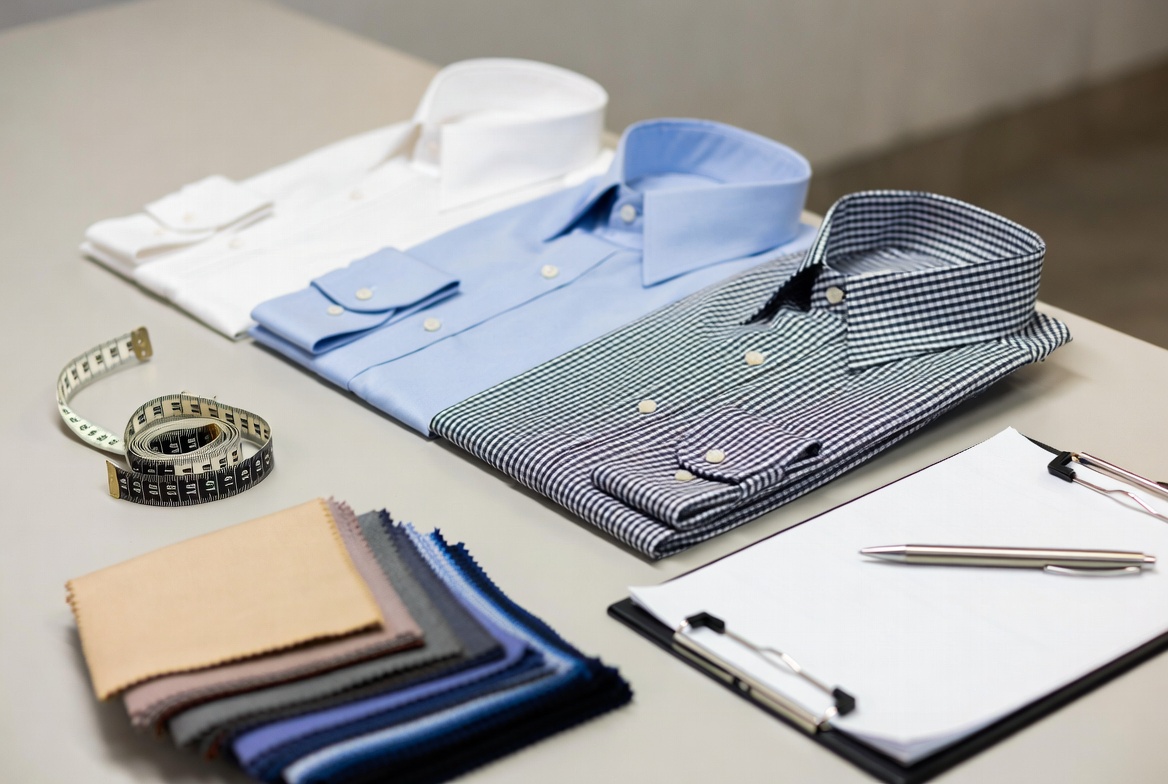
Guangzhou Joyord is a custom-focused manufacturer with a strong presence in mens shirts, polos, and other knit and woven tops. Its operations are based in the Guangdong region, one of China's most mature garment clusters with easy access to fabrics and logistics.
The company emphasizes customization capabilities across fabric, colors, sizes, and branding elements such as embroidery or printing. With a record of stable on-time delivery and a substantial proportion of repeat orders, it is well suited for buyers who need regular replenishment and flexible designs rather than extremely high-volume, single-style programs.
SHIJIAZHUANG QIAN FANG is located in Hebei province, a region with established weaving and apparel-making capabilities. The company combines garment manufacturing with export trading services, offering mens shirts alongside related woven garments.
Its strengths include balanced capacity, experience in export documentation, and the ability to manage orders for both standard and slightly customized shirt programs. This makes it a practical option for buyers who prefer a combination of factory and trading functions in one partner, particularly when sourcing multiple product categories from the same supplier base.
Guangzhou Ishman focuses on men's shirts, polo shirts, and related tops within the Guangdong garment cluster. The company is known for emphasizing schedule reliability, an important factor for buyers whose sales campaigns and retail seasons leave little room for delays.
By keeping a clear product focus and managing its capacity carefully, Guangzhou Ishman is a strong choice for buyers who prioritize predictable lead times and streamlined repeat orders rather than frequent style changes or experimental designs.
Based in Shenzhen, Yimeiya supplies mens shirts, T-shirts, pants, and sleepwear, using a mix of in-house resources and tightly controlled partner factories. Shenzhen's logistics advantages—proximity to major ports and efficient transport infrastructure—enhance its ability to support international shipments.
Yimeiya stands out for fast communication and flexibility across multiple product categories, which is particularly attractive to importers consolidating different garments in a single shipment. Buyers seeking coordinated assortments that include shirts alongside other apparel items often find this model efficient.
Located in Shantou, Gurao Fanzhi Clothing Factory specializes in men's shirts, polo shirts, and boys' garments. It benefits from the local manufacturing ecosystem, where small and medium-sized factories maintain close relationships with fabric suppliers and trim vendors.
By focusing on shirts and related tops, the factory offers a relatively tight product range, which helps maintain consistency and efficiency. It is a suitable partner for brands needing both adult and youth products within the same style family.
The Shaoxing region in Zhejiang province is widely known for woven fabrics and corresponding garment production. Within this cluster, several manufacturers specialize in mens dress shirts, often working closely with local textile mills to manage fabric development, dyeing, and finishing.
These woven shirt specialists typically emphasize color consistency, shrinkage control, and fabric appearance. Buyers looking for premium-feel dress shirts, especially those using yarn-dyed stripes or checks, often turn to Shaoxing-based factories to leverage their fabric-handling expertise and vertical integration.
ARLISMAN Garment is recognized for its focus on mens formal and businesswear, including shirts, suits, and related tailored products. This positioning makes the company particularly relevant for brands that need a coherent look across multiple garment categories.
Because ARLISMAN handles both shirts and suits, it can coordinate fabric selection, color palettes, and sizing systems to ensure that formal outfits work seamlessly together. It is suitable for buyers running businesswear collections, corporate attire programs, or upmarket retail assortments where fit and visual consistency are crucial.
Shanghai Tang is better known as a brand than a pure OEM supplier, but the factories associated with its production represent a high standard of workmanship in shirts and formalwear. These operations reflect premium-level expectations for collar construction, finishing, and overall garment appearance.
While not always accessible as conventional OEM partners, understanding the quality level of such factories helps buyers benchmark what premium shirts should look and feel like. For brands positioning themselves at the higher end of the market, working with factories that follow similar quality practices can be a strategic advantage.
Beyond individual company names, many buyers work with broader factory clusters. Guangdong (including Guangzhou and Shenzhen) and Hebei (including Shijiazhuang) host numerous mens formal shirt manufacturers listed on major B2B and industry platforms.
These clusters offer:
- Multiple factories with varying scale and specialization
- Competitive pricing driven by dense competition and shared supply chains
- Shorter lead times thanks to proximity between fabric mills, accessory suppliers, and sewing plants
For buyers with diversified product portfolios or large volumes, building a supplier base across these clusters can reduce risk and provide flexibility in balancing cost, capacity, and quality.
To support practical decision-making, it helps to compare key indicators across representative factories. Exact numbers vary by season and project, but several patterns are common:
- Monthly capacities for mens formal shirts commonly range from tens of thousands to over one hundred thousand units for mid-sized factories, and considerably more for large plants.
- Bulk MOQs for customized shirts typically fall between 100 and 500 units per style-color, depending on fabric sourcing constraints, trim minimums, and line utilization requirements.
- Factories serving demanding export markets often maintain documented management systems, and some hold recognized quality or social audit certificates.
Shanghai Youti, in particular, combines an annual output in the millions of pieces with a structured management system and a clear focus on export markets, making it well positioned for buyers who need both capacity and reliability.
One of the most frequent issues reported by experienced buyers is fabric downgrading between sample approval and bulk production. Examples include lowering yarn counts, increasing synthetic content, or using lighter-weight fabric than specified, all of which can cut costs but degrade handfeel and durability.
To mitigate this risk, buyers can:
- Tie approvals to specific fabric lot numbers and retain reference swatches
- Request fabric test reports for GSM, composition, and basic performance
- Conduct incoming fabric inspections before cutting, either directly or via third-party inspectors
Collars and cuffs often determine whether a shirt looks professional after a few washes. Poor-quality interlining or incorrect fusing conditions can cause bubbling, delamination, or distortion.
Best practices include defining fusing conditions and interlining requirements in the tech pack, performing wash tests on pre-production samples, and adding collar and cuff checks to inline and final inspection checklists.
Some factories accept orders within their capacity limits but later subcontract part of production to smaller workshops when schedules become tight. This can introduce inconsistency in workmanship and expose buyers to social compliance risks.
Experienced buyers often monitor production through a combination of methods: regular photo or video updates from the production floor, third-party inspections that verify factory addresses, and careful review of shipping documentation. Sudden changes in workmanship, packaging, or labeling are warning signs that production might have been moved.
Another pitfall is reliance on certificates that are outdated or not applicable to the specific factory location or product category. In some cases, buyers discover that a certificate belongs to a related company rather than the facility actually producing their goods.
To avoid this, buyers can verify certificates with the issuing bodies, check validity dates, and confirm scope and site coverage. They can also cross-check company names and addresses on certificates against the factory's official registration documents.
A widely known but seldom documented practice among seasoned buyers is tracking the gap between first and subsequent orders. Many factories put exceptional effort into the first bulk order to secure the business, then gradually reduce material or workmanship quality in later orders in ways that can be hard to detect at a glance.
To manage this risk, buyers often:
- Retain sealed reference samples from the first bulk shipment as a benchmark
- Compare subsequent production against these reference samples, focusing on fabric weight, drape, color, and collar behavior after washing
- Specify that certain critical components—such as fabric composition, interlining quality, or button material—cannot be changed without written approval
Randomly testing recurring orders for key parameters helps ensure that quality does not drift over time, even when visual inspection suggests that everything is "the same."
Before committing to significant orders, buyers should verify the supplier's legal status and operating conditions. Checking the business license, registered address, and legal representative through official or reputable third-party channels helps confirm that the factory is a legitimate entity.
It is also useful to clarify whether the counterpart is a direct factory, a trading company, or a combination. Each model has its benefits: direct factories offer closer control over production, while trading companies can provide flexibility in sourcing from multiple plants.
A structured sampling flow reduces the risk of misalignment and rework:
- Prototype sample: to confirm basic style and fit
- Pre-production (PP) sample: made with final fabric, trims, and construction
- Top-of-production (TOP) sample: taken from the initial bulk production for final confirmation
Factories like Shanghai Youti, which operate in multiple garment categories, typically follow such staged approval processes. Clearly documenting comments and approvals at each stage helps keep both buyer and supplier aligned.
A comprehensive tech pack should cover:
- Fabric details: composition, GSM, weave type, finishing
- Measurement chart with tolerances for each size
- Construction notes: collar type, cuff type, placket style, seam types
- Trims: buttons, labels, interlining, thread specifications
- Packaging: folding method, polybag specifications, labeling, barcodes
Suppliers with strong OEM experience can help refine these specifications by pointing out potential conflicts or suggesting cost-effective alternatives.
Realistic timelines account for fabric sourcing, sampling, production, inspection, and shipping. Buyers should consider seasonal constraints such as major holidays, including the Lunar New Year, which can significantly affect capacity and schedules across the country.
Sharing forecasts and rolling projections, even if only indicative, helps factories plan better and allocate the right resources. This is especially important for programs involving multiple styles, colorways, or coordinated outfits.
When deciding between different shipping terms, buyers weigh control versus simplicity. Many opt for FOB arrangements at major ports like Shanghai, Shenzhen, or Guangzhou, using their own forwarders. Others, especially smaller brands, may prefer more bundled solutions where the supplier coordinates freight.
Regardless of the chosen model, defining carton dimensions, weight limits, and pallet configurations early in the process reduces delays and unexpected cost surcharges at destination warehouses.
China's mens formal shirt industry offers a broad spectrum of suppliers, from high-volume cluster-based factories to flexible, compliance-focused manufacturers like Shanghai Youti Clothing Co., Ltd. For professional procurement managers, the challenge is to move beyond basic pricing comparisons and evaluate factories on the full spectrum of capabilities: technical competence, process control, communication, and long-term consistency.
By applying structured selection criteria, understanding the technical subtleties of mens formal shirts, and proactively managing common pitfalls, buyers can build reliable supplier portfolios that support sustained business growth and protect brand reputation.
1. Baidu B2B Data – 2026 Top 10 Men's Shirt Manufacturers in China https://b2bdata.baidu.com/en/rank/all-area/clothingunderwear/mens-tops/men-shirts
2. Made-in-China – Mens Shirt Manufacturers & Suppliers https://www.made-in-china.com/manufacturers/mens-shirt.html
3. Alibaba – Men's Formal Shirt Manufacturers & Suppliers https://www.alibaba.com/supplier/mens-formal-shirt-manufacturers.html
4. Asian Sourcing Group – Top 10 Clothing Manufacturers in China for 2026 https://asiansourcinggroup.com/top-10-clothing-manufacturers-in-china/
5. Shanghai Youti Clothing Co., Ltd. – Company Profile https://www.work-jacket.com/aboutus.html
6. Texleader – Economic Operation of China's Garment Industry in 2025 https://www.texleader.com.cn/en/news-35400.html
7. Ninghow Apparel – Verifying Business Licenses and Certifications https://www.ninghowapparel.com/blog/verifying-business-licenses-certifications-iso-wrap-gots/
8. Statista – Global Apparel and Formalwear Market Data (2025–2026) https://www.statista.com/


