
Views: 222 Author: Youti Clothing Publish Time: 2026-06-08 Origin: Site


Content Menu
● Why Waiter Uniforms Matter More Than You Think
● Key Features Of The Best Waiter Uniforms
>> 2. Fit, Mobility, And Comfort
>> 3. Practical Design Details
● Style Inspiration: Real-World Waiter Uniform Concepts
>> Classic Steakhouse Elegance: RPM & Jeff Ruby
>> Heritage And Interior‑Driven Concepts: Spring, Cherry Circle Room, Soho House
>> Casual And Relaxed Concepts: Parachute, The Hampton Social, Maxwells Trading
>> Personality‑Driven Concepts: Sketch And Elizabeth Street Café
● How To Choose The Right Waiter Uniform For Your Restaurant Concept
>> Step 1: Clarify Your Brand And Service Level
>> Step 2: Define Functional Requirements
>> Step 3: Choose A Core Uniform Framework
>> Step 4: Align With Budget And Lifecycle
● Latest Trends In Waiter Uniforms And Work Clothes (2026)
● OEM Sourcing Guide: Working With A Chinese Uniform Manufacturer
>> Typical OEM Process For Custom Waiter Uniforms
>> What To Look For In An OEM Uniform Partner
● Call To Action: Plan Your Next Waiter Uniform Upgrade
● FAQs About Waiter Uniforms And OEM Sourcing
When you choose the best waiter uniforms, you are not just dressing your team—you are designing your guest experience, your brand image, and your daily operations. As an OEM workwear supplier working with overseas restaurants and hospitality brands, I've seen how a well-planned uniform program can increase staff confidence, improve service efficiency, and even boost online reviews. [uniteduniforms-usa]
In this guide, I'll walk you through what actually works in real restaurants, highlight standout waiter uniform examples, and share practical sourcing tips if you're considering custom uniforms and work clothes from an OEM manufacturer in China. [ohuniform]
For many guests, the first human touchpoint with your brand is the server who greets them at the door. That one uniform instantly communicates whether your restaurant is formal, casual, playful, or premium. [uniteduniforms-usa]
From a professional standpoint, the right waiter uniform should deliver three core outcomes:
- Brand alignment – Colors, cuts, and details that match your interior design and concept. [cargocrew]
- Durable performance – Fabrics that survive frequent washing, stains, and long shifts without losing shape. [salt]
- Employee comfort and safety – Breathable materials, freedom of movement, and smart coverage around high‑risk areas (tray carrying, hot plates, spills). [haiyuanworkclothes]
When those three elements are in balance, uniforms stop being "clothes you have to buy" and become a long-term asset for your business. [wearunify]
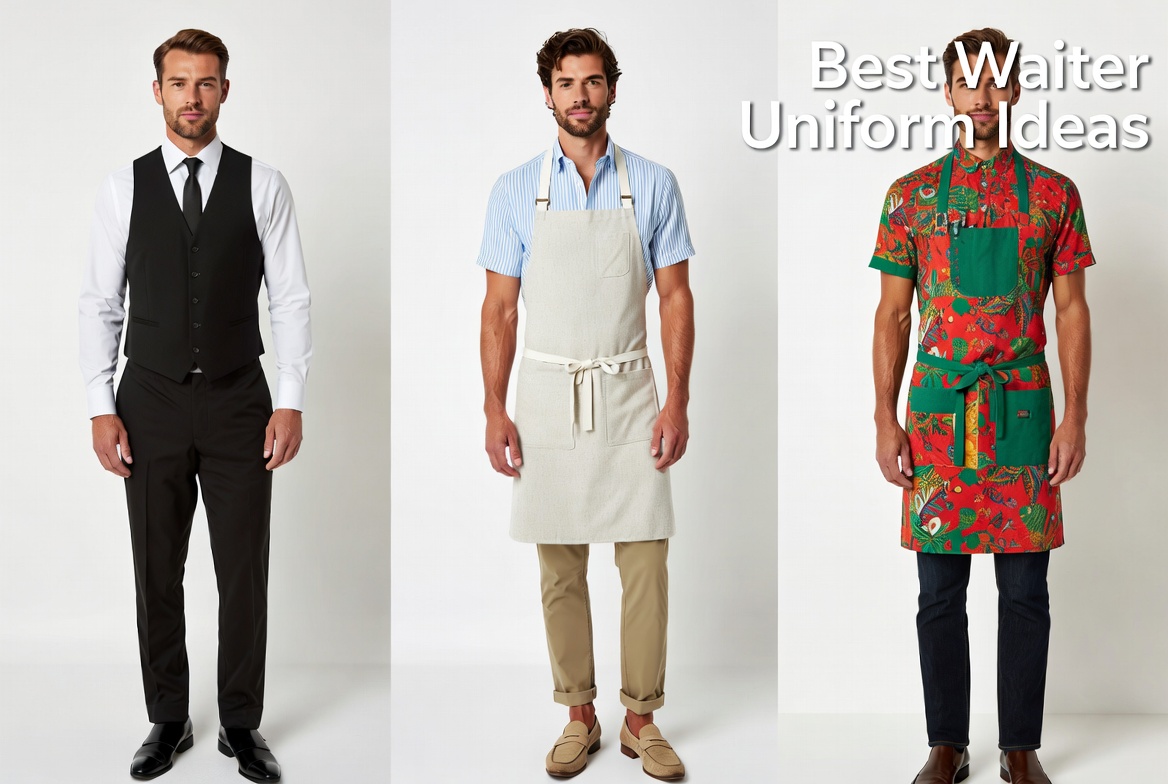
From reviewing top restaurant uniform programs worldwide and working on OEM projects, certain features consistently show up in the best-performing waiter uniforms. [youtube]
Look for fabrics that balance structure, comfort, and maintenance. For most front-of-house waiter uniforms, a poly–cotton or poly–cotton–spandex blend is ideal. [salt]
Non‑negotiable fabric attributes:
- Breathability – Essential for busy services in warm dining rooms. [wearunify]
- Wrinkle resistance – Reduces ironing and helps staff look polished throughout the shift. [salt]
- Stain resistance or dark tones – Makes everyday spills less noticeable. [stockmfgco]
- Colorfastness – Colors should not fade after dozens of washes in commercial laundries. [haiyuanworkclothes]
Premium restaurants sometimes use wool blends for jackets and vests, like the rich dark green wool/spandex blazer used at Tre Dita, which delivers a tailored look without restricting movement. [youtube]
Ill‑fitting uniforms are the fastest way to make staff look unprofessional and feel miserable. The best waiter uniforms are cut with: [youtube]
- Slight room through shoulders and thighs for reach and walking.
- A subtle taper that preserves a tailored visual line.
- Secure elements (cross‑back aprons, adjustable straps) to avoid neck strain.
For example, the cross‑back canvas aprons at Momotaro were specifically chosen to relieve neck pressure from all‑day wear while matching a minimal, Japanese-inspired aesthetic. [youtube]
Details often separate "nice photos for Instagram" from uniforms that staff truly love. Smart waiter uniforms typically include:
- Pockets placed for work – Pen, order pads, or handheld POS devices. [uniteduniforms-usa]
- Easy‑care closures – Buttons or snaps that are secure but quick to fasten.
- Reinforced stress points – Seams at shoulders, pockets, and side splits.
- Subtle branding – Woven labels, embroidered logos, or contrast stitching matching your visual identity. [youtube]
Parachute's linen smock apron, for example, integrates a branded woven label that mirrors the restaurant's napkin labels—small but powerful reinforcement of the brand. [youtube]
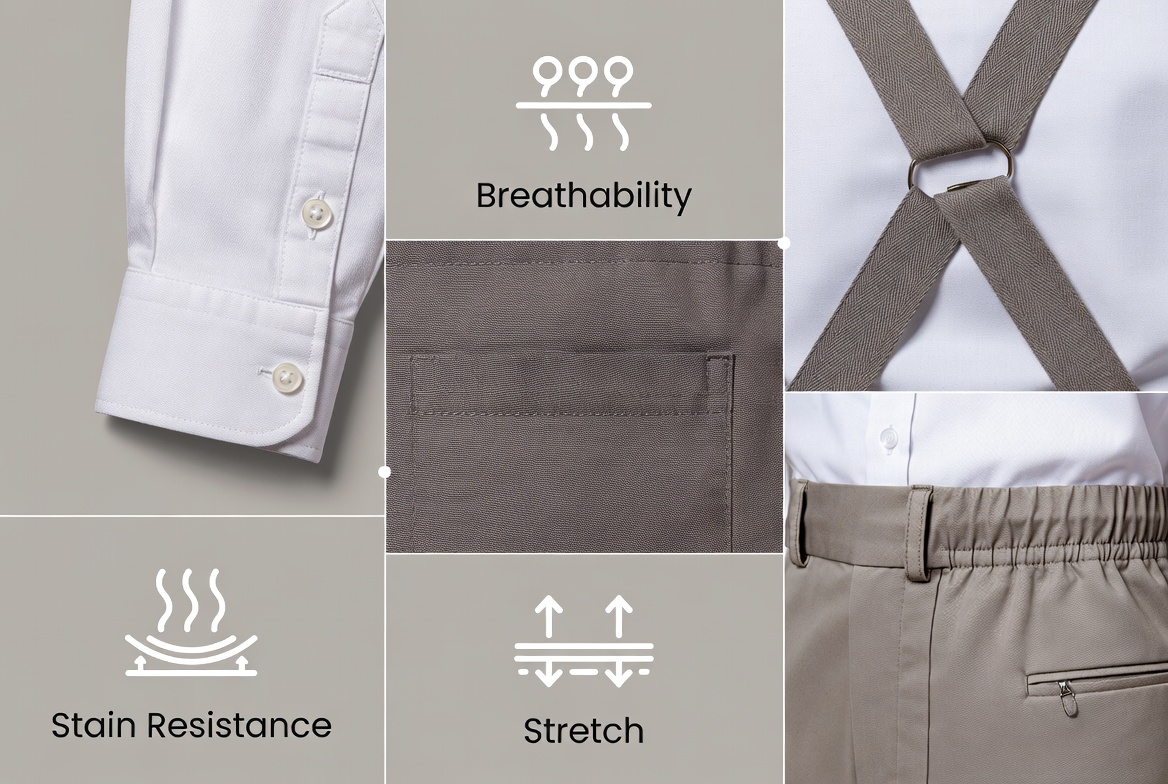
The original article you shared presents beautiful case studies, and many of them deserve to be kept as inspiration—but we'll look at them from a practical, buyer-focused angle. [youtube]
RPM uses a timeless combination of white shirts, black pants, black ties, and a lightweight, double‑vented coat for front-of-house staff. The result is a refined look that fits the classic Chicago steakhouse image while staying comfortable for long services. [youtube]
Jeff Ruby pushes formality further with double‑breasted vests, satin shawl collars, and velvet bow ties. This type of uniform is ideal if your guests expect a luxury, special-occasion experience and you want servers to feel almost like "hosts of a private club." [youtube]
Spring in London customizes uniforms to mirror its 19th‑century interiors—striped full‑sleeve shirts in playful colors, layered with cream vests and relaxed pants. The overall effect: classic, gentle, and seasonal, aligned with the restaurant's menu and design. [youtube]
Cherry Circle Room uses stripes and solids strategically so guests can instantly distinguish servers, bartenders, and managers. This is a clever uniform tactic that improves both brand storytelling and wayfinding for guests. [youtube]
Soho House opts for refined, English‑heritage inspired combinations: chambray or poplin shirts under double‑breasted waistcoats with tailored trousers. This shows how you can create a club‑like, premium feel without formal tuxedos. [youtube]
Parachute proves that navy aprons don't have to be boring: their linen smock‑style aprons plus terry‑cloth tees feel relaxed but fashion‑forward, ideal for modern neighborhood restaurants. [youtube]
The Hampton Social leans into a breezy, coastal aesthetic with striped linen‑cotton shirts, light joggers, and a green waist apron. The silhouette is sporty and easy‑going—perfect for high‑energy social brunch and bar environments. [youtube]
Maxwells Trading outfits FOH staff in black stretch jeans and wheat banded‑collar shirts, creating a neutral, contemporary look that flexes across dining, retail, and greenhouse spaces. [youtube]
Sketch in London is famously Instagrammable, and its waiters' pink suits, pink ties, and white hats match that whimsical, "everything is pink" environment. If your venue has a strong visual hook, don't be afraid to go bold with uniform color to amplify it. [youtube]
Elizabeth Street Café in Austin lets female servers choose among six bespoke tropical wrap dresses, so each dress is unique. That creative choice reinforces a playful, Southeast‑Asia‑inspired atmosphere and gives staff agency over what they wear—often a major morale booster. [youtube]
From an operator's perspective, the selection process should be systematic, not purely aesthetic. Here is a practical approach used by many successful hospitality groups. [cargocrew]
Answer these questions first:
1. Are you positioning as fine dining, casual dining, café, bar, or quick service?
2. Do guests primarily expect speed, comfort, or ceremony?
3. How do your interior colors and materials (wood, marble, metals) feel? Warm, cool, neutral, playful?
A steakhouse like RPM naturally leans toward classic tailoring and neutral colors, while a concept like Sketch or Elizabeth Street Café can justify bold colors and patterns. [youtube]
Next, translate your operations into uniform requirements:
- Average shift length and temperature in FOH.
- Whether servers carry hot plates, trays, or heavy wine bottles.
- Whether outdoor service or open kitchens are involved.
If staff are constantly bending, lifting, and moving, prioritize stretch fabrics, cross‑back aprons, and ventilated jackets similar to the double‑vented coat used at RPM. [youtube]
Most restaurants benefit from a simple structure such as:
- Top: Shirt, tee, or blouse (sleeve length based on climate).
- Layer: Vest, jacket, cardigan, or smock apron.
- Bottom: Tailored trousers, chinos, or dark jeans (for casual venues).
- Accessories: Apron, tie/bow tie, name badge, small branded elements.
Then decide which elements will stay constant (for brand recognition) and where you can allow controlled variation (e.g., multiple dress patterns or shirt colors, as seen at Elizabeth Street Café). [youtube]
Uniforms are an investment. Consider:
- How many sets each staff member needs.
- Expected lifetime before replacement (usually 12–24 months in busy venues).
- Total program cost vs. impact on brand perception.
A well‑made, custom OEM program can sometimes deliver higher quality at a better unit cost than buying small quantities of off‑the‑rack pieces, especially if you're outfitting multiple locations. [chilat]
Uniform trends in 2026 lean strongly toward comfort, sustainability, and brand storytelling. If you're designing a new program or refreshing an existing one, consider incorporating: [cargocrew]
- Lighter, technical fabrics – Moisture‑wicking, quick‑dry materials that still look refined. [wearunify]
- Earth tones and muted palettes – Sage green, clay, sand, and deep navy replacing stark black‑and‑white in many casual venues. [cargocrew]
- More aprons, fewer suits – Waist and bib aprons are replacing full suits and tuxedos in many modern concepts, even in upscale environments, to blend professionalism with approachability. [cargocrew]
- Sustainability stories – Organic cotton, recycled polyester, and transparent sourcing are increasingly used as part of a brand's marketing narrative. [centra]
For global restaurant brands, these trends need to be balanced with durability and availability of materials from manufacturing partners. [chilat]
If you operate a restaurant brand, hotel group, or franchise network, OEM uniforms can give you consistent quality, custom design, and better cost control. Here's how the process typically works with a professional Chinese supplier of uniforms and work clothes. [ohuniform]
1. Share Concept And Requirements
Provide your brand deck, restaurant photos, and rough ideas—formal, casual, color preferences, and any inspirational examples such as RPM or Hampton Social. [ohuniform]
2. Design And Material Proposal
The factory's design team will recommend fabrics, trims, and construction details based on your budget and performance needs, such as poly–cotton blends, wool/spandex for blazers, or linen blends for aprons. [chilat]
3. Sampling And Fit Testing
You receive physical samples in multiple sizes to test on your staff. This is where you check movement, comfort, and overall appearance in your real environment. [haiyuanworkclothes]
4. Refinement And Branding
You can add woven labels, embroidery, contrast piping, or buttons that echo your interior design or logo—similar to how Parachute and Cherry Circle Room use subtle branding. [youtube]
5. Bulk Production And Quality Control
Once samples are approved, the factory proceeds to bulk production with standardized quality checks on stitching, sizing, and color consistency. [ohuniform]
6. Shipping, Re‑orders, And Scale
For multi‑site operations, your OEM partner can store patterns and specifications, so re‑orders and new‑store rollouts are faster and more consistent. [chilat]
When choosing a supplier, especially overseas, focus on:
- Experience with hospitality and workwear – Different from fashion; needs higher durability and compliance. [haiyuanworkclothes]
- Fabric sourcing capability – Ability to offer performance blends, colorfast dyes, and sustainable options if required. [wearunify]
- Sampling speed and flexibility – Rapid sample iterations are critical when you're opening new locations.
- Communication and after‑sales support – Clear updates, sizing guidance, and help with future adjustments.
Leading Chinese uniform manufacturers highlight OEM and ODM services, one‑stop solutions, and support for detailed custom requirements including embroidery and printing. [ohuniform]

If your current waiter uniforms feel outdated, uncomfortable, or off‑brand, this is the right moment to rethink them. Use the examples above as a starting point, decide what your uniforms must communicate, and then translate that vision into a practical, durable, and scalable program.
If you want support from a Chinese OEM supplier specializing in uniforms and work clothes, you can prepare a short brief describing your concept, staff count, and preferred styles (e.g., classic steakhouse like RPM, coastal casual like The Hampton Social, or bold and playful like Sketch), and then request design proposals and samples. A professional OEM partner can help you move from inspiration to a complete, production‑ready uniform system. [chilat]
1. What is the most versatile waiter uniform style for mixed casual and formal service?
A combination of a crisp button‑down shirt, dark tailored trousers, and a waist or bib apron in a neutral tone (navy, charcoal, or black) works across lunch, dinner, and events. You can dial formality up or down with accessories like ties and jackets. [uniteduniforms-usa]
2. How many uniform sets should each waiter have?
Most operators issue 2–4 sets per staff member, depending on shift frequency and laundry arrangements. Heavier usage and high‑end venues typically justify more sets to ensure uniforms remain fresh and presentable. [uniteduniforms-usa]
3. Are sustainable fabrics practical for busy restaurants?
Yes, as long as you choose blends that balance eco‑friendly fibers with durability, such as organic cotton with a small percentage of recycled polyester. Many brands now use sustainability as part of their guest‑facing story without compromising performance. [wearunify]
4. How long does an OEM uniform project usually take?
A typical timeline from brief to final delivery can range from 6–12 weeks, including design, sampling, revisions, and bulk production. Larger, multi‑location rollouts may require more time for logistics and fit testing. [chilat]
5. What information should I prepare before contacting an OEM uniform manufacturer?
Prepare your brand guidelines, reference photos (including any restaurants whose uniforms you like), staff numbers by role, budget range, and a list of must‑have features such as fabric type, apron style, or logo placement. The clearer your brief, the faster your OEM partner can provide accurate samples and pricing. [ohuniform]
- Stock Mfg. "Best Waiter Uniforms." Accessed 2026. <https://stockmfgco.com/blogs/stories/best-waiter-uniforms> [youtube]
- United Uniforms USA. "Restaurant Server Uniforms: The Complete Style Guide for Front of House Teams." Accessed 2026. <https://uniteduniforms-usa.com/blogs/news/restaurant-server-uniforms-the-complete-style-guide-for-front-of-house-teams> [uniteduniforms-usa]
- SALT.agency. "SEO Strategies for the Fashion Industry." Accessed 2026. <https://salt.agency/blog/seo-strategies-for-the-fashion-industry/> [salt]
- OH Uniform. "Leading Custom Uniform Manufacturer & Factory China." Accessed 2026. <https://ohuniform.com> [ohuniform]
- HAIYUAN. "Safety Workwear Uniform Manufacturer in China." Accessed 2026. <https://haiyuanworkclothes.com> [haiyuanworkclothes]
- Chilat. "Top 5 Best Custom Uniform Manufacturers in China." Accessed 2026. <https://www.chilat.com/blog/2029855142813016066> [chilat]
- Cargo Crew. "Uniforms Trends of 2026." Accessed 2026. <https://www.cargocrew.com/journal/uniform-trends-2026/> [cargocrew]
- Unify / WearUnify. "5 Custom Uniform Trends Shaping 2026 — And How Your Business Can Stay Ahead." Accessed 2026. <https://wearunify.com/blogs/news/5-custom-uniform-trends-shaping-2026-and-how-your-business-can-stay-ahead-1> [wearunify]
- Centra. "SEO for Fashion Ecommerce: A Definitive Guide." 2026. <https://centra.com/news/seo-for-fashion-ecommerce-complete-guide> [centra]
- Shopify. "How to Make and Sell Merch in 2025." Accessed 2026. <https://www.shopify.com/zh/blog/make-sell-merch> [shopify]


