
Views: 222 Author: Youti Clothing Publish Time: 2026-06-05 Origin: Site


Content Menu
● Men's Custom Shirts – From Fit and Style to OEM Production
● Why Custom Shirts Matter for Modern Brands
● Core Types of Men's Custom Shirts and When to Use Them
>> Dress Shirts for Business and Formal Wear
>> Tuxedo Shirts for Black‑Tie and Ceremony
>> Button‑Down Shirts for Smart Casual
>> Popover Shirts for Elevated Casual Wear
>> Safari, Linen, and Western Shirts for Lifestyle Collections
● Collar Styles and How They Shape Your Brand Image
● Fit, Sizing, and Measurement – Where UX Meets Production
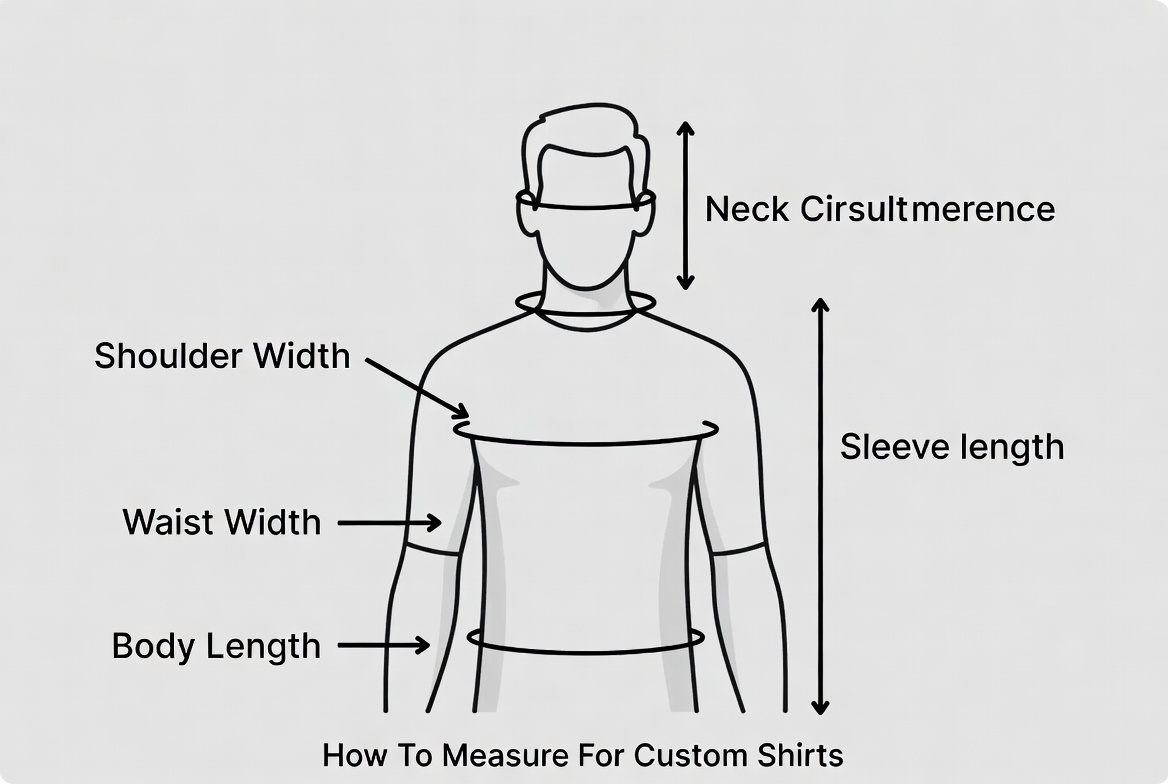
>> Essential Measurements to Standardize With Your OEM
● Fabric, Construction, and Quality Choices That Actually Matter
● Working With a China OEM Shirt Manufacturer
>> What Buyers Appreciate in a Long‑Term OEM Partner
● Clear Call to Action – Partner With a Professional OEM Shirt Supplier
● FAQ: Men's Custom Shirts and OEM Sourcing
Custom shirts are no longer just a luxury for executives; they are a strategic product category for fashion brands, wholesalers, and uniform buyers who want fit, consistency, and brand differentiation. This guide combines on-the-body experience with manufacturing expertise from Shanghai Youti Clothing Co., Ltd., a professional OEM shirt and uniform supplier based in China, to help you plan, specify, and source custom shirts that actually perform in real life. [zeitstitch]
Custom shirts sit at the intersection of personal style, comfort, and brand identity. For overseas buyers, the real challenge is not just choosing a collar or fabric, but building a reliable, scalable supply chain with an OEM partner who can translate a tech pack into consistent production at volume. In this article, we will walk through shirt styles, key measurement decisions, fabric and construction choices, and how to work with a China-based OEM factory to build a long-term, profitable shirt program. [ipcompany.en.alibaba]

Custom shirts add value far beyond a higher price tag. They can become your core product for businesswear, uniforms, and lifestyle collections. [eightohtwo]
- Better fit leads to higher repeat purchase rates and fewer returns.
- Consistent sizing and construction simplify inventory and merchandising.
- Custom details (collars, cuffs, labels, brand colors) strengthen brand recall.
- For uniforms, standardized shirts maintain a unified, professional image across locations. [shunity.en.alibaba]
For B2B buyers, these benefits translate into stronger branding, lower long-term cost per wear, and more predictable quality across multiple seasons.
Below is a more strategic look at the main shirt categories, based on how real customers wear them in business and daily life. [zeitstitch]
Dress shirts are designed to be worn with a suit or sport coat, usually with a tie. They are the backbone of corporate wardrobes and premium uniform programs. [zeitstitch]
Key uses:
- Board meetings, sales presentations, and corporate events
- Business travel and conferences
- Ceremony, wedding, and formal occasions
For brands and B2B distributors, dress shirts are a high-rotation item where quality and fit are visible in every photo, meeting, and event.
Tuxedo shirts are built for black‑tie dress codes and high-profile events. They usually feature: [zeitstitch]
- Wing, point, or spread collar
- French cuffs
- Stud front or fly front placket
Ideal for:
- Wedding and eveningwear brands
- Rental businesses and event uniform suppliers
- Luxury hospitality uniforms
Consistency is critical here – any slight mismatch in fabric tone, placket construction, or collar stiffness is easily noticed in photos and under strong lighting.
Button‑down collars are secured with small collar buttons and create a slightly sporty, relaxed look. [zeitstitch]
Typical use cases:
- Casual office days
- Business‑casual environments
- Weekend social gatherings
They pair well with chinos, denim, or under a blazer without a tie, making them a favorite for lifestyle brands and business‑casual uniform programs (e.g., retail staff, hospitality, tech companies).
A popover shirt has a short placket (about four buttons) that stops mid-chest and is pulled on over the head. It sits between a polo and a dress shirt: [zeitstitch]
- Relaxed fit, often in soft, breathable fabrics
- Great for warm weather or resort collections
- Ideal for casual office settings and weekend wear
For brands, popovers are a differentiation piece: lower volume but strong margin and storytelling potential in lookbooks and campaigns.
Safari, linen, and Western shirts add personality and storytelling to a collection. [zeitstitch]
- Safari shirts: Relaxed fit, multiple pockets, and a rugged aesthetic, suited for outdoor, travel, or heritage concepts.
- Linen shirts: High breathability, strong summer staple, ideal for beach weddings, resort wear, and hot-climate uniforms.
- Western snap shirts: Distinctive yoke and snap details, perfect for Americana, country, and casual outdoor segments.
These styles perform well in niche audiences and can be powerful signature items when paired with good imagery and clear positioning.
Well-chosen collars can quietly communicate whether your brand is classic, contemporary, or formal. [zeitstitch]
| Collar style | Visual impression | Best use cases |
|---|---|---|
| Traditional point | Conservative, elongates face | Classic business shirts, finance, legal, conservative corporate uniforms (zeitstitch) |
| Medium spread | Modern, balanced proportions | Versatile office shirts with or without a tie, mainstream businesswear (zeitstitch) |
| Wide spread | Formal, bold, European-inspired | Premium business, formal events, strong tie knots like full Windsor (zeitstitch) |
| Wing collar | Very formal, traditional | Black‑tie tuxedo shirts, evening events, rental tux programs (zeitstitch) |
| Button‑down | Relaxed, preppy, versatile | Casual and smart‑casual lines, lifestyle or campus‑inspired collections (zeitstitch) |
> Expert tip: For global B2B markets, medium spread collars are usually the safest default. They work for most face shapes and styling preferences and perform well across different regions. [zeitstitch]
From a user experience perspective, a shirt fails the moment the wearer feels tightness at the shoulders, pulling at the buttons, or excess fabric around the waist. As an OEM factory, we see that many fit problems come from vague or inconsistent measurement standards. [ipcompany.en.alibaba]
Most international brands build their blocks around three core fits:
- Classic fit: More room in chest, waist, and armhole; ideal for corporate uniforms and markets preferring comfort over sharp tailoring.
- Slim fit: Tapered waist and closer sleeve; popular with younger demographics and fashion-forward brands.
- Tailored/modern fit: Moderate taper, balancing comfort and shape; often the safest global default.
When working with a shirt factory, you should clearly define at least:
- Neck circumference
- Chest, waist, and hip width
- Shoulder width
- Sleeve length and bicep width
- Body length (front and back)
A well-built size chart should also reflect target body height ranges and regional differences (e.g., US vs EU vs Asian sizing). Clear measurement standards reduce returns and make online size selection easier for end customers. [eightohtwo]
Customer reviews in the shirt category often mention three things: fabric feel, collar stability, and durability after washing. [swagify]
Key variables:
- Fiber: 100% cotton for breathability and premium feel, blends for wrinkle resistance and durability. [swagify]
- Weave: Poplin for smooth dress shirts, oxford for casual, twill for a slight sheen and better drape.
- Weight: Lighter weights for summer and tropical markets; mid‑weight for all‑season business use.
From an OEM perspective, brands should align fabric choices with positioning: corporate programs may prioritize easy‑care finishes, while luxury lines may focus on high‑thread‑count cotton and long‑staple yarns. [ipcompany.en.alibaba]
Several invisible details strongly influence long‑term satisfaction:
- Stitch per inch (SPI) for clean seams
- Fused vs non‑fused collars and cuffs
- Button quality (resin vs corozo vs metal) and button sewing type
- Reinforcement at side seams and plackets
These decisions affect not only perceived quality but also production time and unit cost. An experienced OEM partner can advise on cost–benefit trade‑offs in each component for your target price point. [ipcompany.en.alibaba]
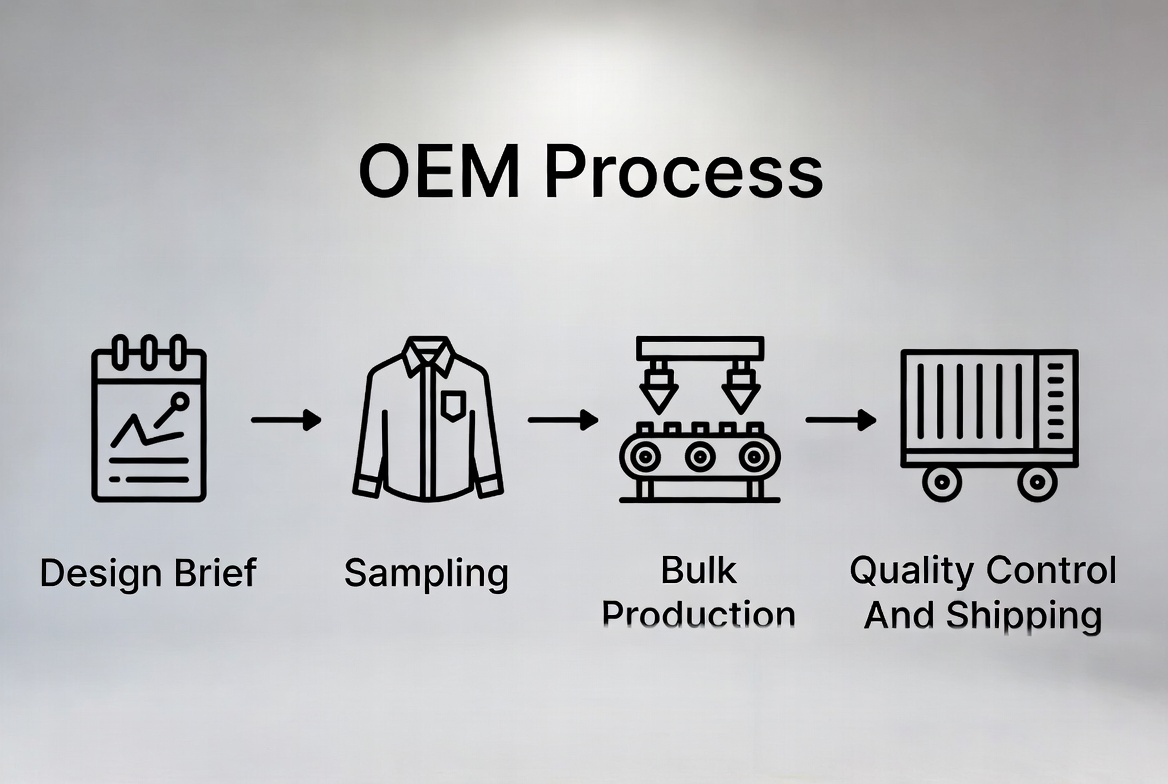
Shanghai Youti Clothing Co., Ltd. focuses on OEM and ODM services for shirts, suits, uniforms, aviation uniforms, and blazers for global buyers. Based on more than a decade of export experience, a smooth OEM collaboration usually follows these steps: [shunity.en.alibaba]
1. Requirement definition
- Target market, end‑user scenario (business, uniform, lifestyle)
- Expected annual volume and size range
2. Tech pack and sample development
- Provide reference samples or tech packs (measurements, construction, fabric specs).
- The factory develops fit samples and PP (pre‑production) samples for approval. [ipcompany.en.alibaba]
3. Fit testing and feedback
- Test samples on real users (staff, models, or fit customers).
- Collect comments on sleeve mobility, collar comfort, and length; update patterns accordingly.
4. Bulk production and quality control
- Confirm all details: fabric lot, trims, packaging, labeling.
- Implement inline and final AQL inspections to secure consistent quality. [ipcompany.en.alibaba]
5. Logistics and after‑sales
- Coordinate shipping (FOB, CIF, or DDP) and required documents for customs.
- Gather buyer and end-user feedback for the next production cycle.
In customer feedback shared with leading made‑to‑measure brands, clients often highlight how trusted clothiers save their time and reduce decision fatigue when updating wardrobes. In the OEM context, this translates to: [zeitstitch]
- Proactive advice on fabric selection and styling for target markets
- Ability to manage end‑to‑end: pattern making, grading, sampling, and production
- Stable quality across seasons and production batches
An OEM supplier that acts as a consultative partner, not just a factory, becomes a strategic extension of your brand.
If you are a brand owner, wholesaler, or uniform buyer looking for a reliable OEM partner for men's shirts, workwear, or aviation uniforms, Shanghai Youti Clothing Co., Ltd. can help you develop a tailored program for your market. [shunity.en.alibaba]
Whether you need classic business dress shirts, black‑tie tuxedo shirts, casual button‑downs, or standardized uniforms, we support you from initial design and sampling through full‑scale production. To discuss your project or request sample development, contact our team and share your target market, order volume, and style requirements – we will recommend fabric, fit, and construction options that match your brand positioning and budget. [ipcompany.en.alibaba]
Ready to build a reliable, scalable custom shirt line? Contact Shanghai Youti Clothing Co., Ltd. today to discuss your OEM men's shirt project and request fit samples for your next collection. [shunity.en.alibaba]
Q1: What is the minimum order quantity (MOQ) for custom men's shirts with an OEM factory?
A: MOQs vary by fabric and design complexity, but many OEM shirt factories in China can offer flexible MOQs for new programs, especially when using shared fabric bases or core blocks. It is best to discuss projected annual volume and future scaling plans when you first contact the supplier. [ipcompany.en.alibaba]
Q2: How long does it take to develop and approve a new custom shirt style?
A: A typical timeline includes 1–2 weeks for initial sampling, 1–2 weeks for fit testing and revisions, and 4–8 weeks for bulk production depending on capacity and order size. Planning at least one full season ahead is recommended for new buyers. [ipcompany.en.alibaba]
Q3: Which collar style is safest for a global men's shirt line?
A: For most markets, a medium spread collar is the most versatile option because it works with or without a tie, suits many face shapes, and feels modern without being too trendy. You can then add point and wide spread collars for more formal or conservative sub‑lines. [zeitstitch]
Q4: How can I improve SEO for my men's custom shirt product pages?
A: Focus on user‑centered copy that naturally integrates "men's custom shirts" and related long‑tail keywords, optimize page speed and mobile UX, and use descriptive titles, headings, and ALT text. Adding genuine reviews and FAQs on the page further supports both SEO and conversions. [developers.google]
Q5: What information should I prepare before contacting an OEM shirt manufacturer?
A: Clarify your end‑user scenario (businesswear, uniforms, lifestyle), target price range, size spread, preferred fabrics, and estimated order quantity. Providing reference shirts or tech packs will help the factory deliver accurate samples faster. [shunity.en.alibaba]
1. Tom James Company – "Men's Custom Shirts" (2024), product and style overview for men's custom shirts and collars. [https://www.tomjames.com/blog/mens-custom-shirts/] [zeitstitch]
2. Shanghai Youti Clothing Co., Ltd. – Company profile and OEM/ODM offering for shirts and apparel. [https://ipcompany.en.alibaba.com] [ipcompany.en.alibaba]
3. Shanghai Youti Clothing Co., Ltd. – Product scope including suits, uniforms, shirts, aviation uniforms, and blazers. [https://shunity.en.alibaba.com] [shunity.en.alibaba]
4. Google – SEO Starter Guide, best practices for high‑quality, user‑focused and structured content. [https://developers.google.com/search/docs/fundamentals/seo-starter-guide] [developers.google]
5. Printify – "T-shirt marketing: How to grow your t-shirt business (2026)", on‑page SEO and content guidance. [https://printify.com/blog/t-shirt-marketing/] [printify]
6. Swagify – "How to Make Custom T-Shirts: A Step-by-Step Guide", fabric and printing process insights. [https://www.swagify.com/blog/how-to-make-custom-t-shirts/] [swagify]
7. Eight Oh Two – "SEO Tips for Clothing & Apparel Brands", guidance on product copy and reviews. [https://eightohtwo.com/blog/seo-tips-for-clothing-and-apparel-brands/] [eightohtwo]
8. iResearch – "2026 GEO生成式引擎优化行业研究报告", notes on structured content and authority signals. [https://pdf.dfcfw.com/pdf/H3_AP202602111819871548_1.pdf] [pdf.dfcfw]
9. YouTube – "Perfect Shirt Prints Every Time: The Ultimate Guide to Print Placement", demonstration of shirt printing and placement. [https://www.youtube.com/watch?v=6WC6IgxWA7s] [youtube]
10. LinkedIn – Zhang Hanna, Sales Manager at Shanghai Youti Clothing Co., Ltd., company background. [https://www.linkedin.com/in/zhang-hanna-280b918b] [linkedin]


