
Views: 222 Author: Youti Clothing Publish Time: 2026-05-17 Origin: Site


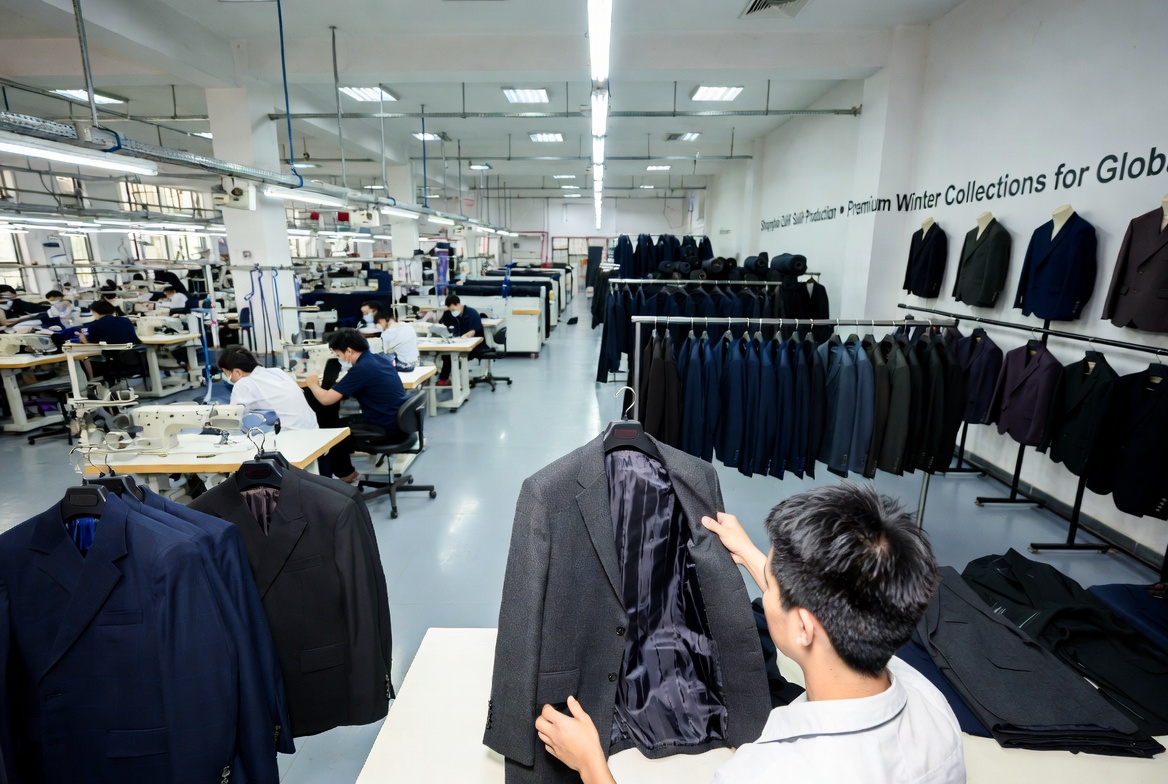
When temperatures drop, the wrong suit can leave you shivering on the platform or overheating in the boardroom. As an OEM suit manufacturer serving global brands from our factory in Shanghai, we've worked with buyers across North America and Europe who face snow, slush, and sub-zero commutes every year—and we see the same mistakes repeated in their winter tailoring decisions. [shanghaigarment]
In this expert guide, we'll walk you through how to choose a winter suit that actually works in real weather, from fabric weight and lining to layering strategy and customization options you can request from your manufacturer.
A suit that feels perfect in spring can be miserable in January. Winter changes three key variables:
- Ambient temperature: Cold air pulls heat away from your body, so thin tropical wool and half linings are often inadequate. [capitolhillclothiers]
- Moisture and wind: Snow, sleet, and wind chill require denser fabrics and tighter weaves to block drafts. [30seven]
- Outdoor–indoor transitions: You move between heated offices, trains, and cold streets, so your outfit must balance warmth with breathability. [thevaultuwmadison]
From an OEM manufacturer's perspective, this means selecting heavier base fabrics, more functional linings, and sometimes adjusting the pattern for layering. [white2labelmanufacturing]
A winter suit's performance is decided first by fabric. Our production data and client feedback consistently show these materials perform best in cold weather. [gq]
Medium- to heavyweight wool remains the most versatile and reliable winter suit fabric. [gq]
- Why it works: Wool traps air, providing natural insulation while still allowing moisture to escape. [gq]
- Recommended weight: For winter tailoring, many bespoke and high-end RTW houses recommend fabric weights around 300 g/m² and above for noticeable warmth. [capitolhillclothiers]
- Best use cases: Daily office wear, business travel, and formal occasions in cold climates. [executive-impressions]
From a production standpoint, we often recommend worsted wool for a clean business look, and wool flannel or tweed for clients who want a softer or more textured style. [gq]
Flannel is a woolen fabric with a soft, slightly brushed surface (the "nap") that feels almost like a blanket. [gq]
- Pros:
- Excellent warmth for autumn and winter
- Luxurious, soft hand-feel
- Works beautifully in grey, navy, and subtle checks [gq]
- Cons:
- Slightly less durable than worsted wool, more prone to pilling [gq]
When brands brief us for premium winter collections, flannel suits in mid- to dark grey are among the most requested options. [capitolhillclothiers]
Tweed and wool blends (often with a little cashmere or synthetic fibers) provide texture and extra insulation. [instagram]
- Tweed: Textured, rugged look, ideal for smart-casual or business-casual winter outfits. [instagram]
- Cashmere blends: Add softness and luxury, best used sparingly (e.g., 5–10%) to balance durability and cost. [gq]
Customers who commute in very cold climates often choose heavier tweeds for sport coats and slightly lighter worsted or flannel for business suits, then mix and match in a capsule wardrobe. [thevaultuwmadison]
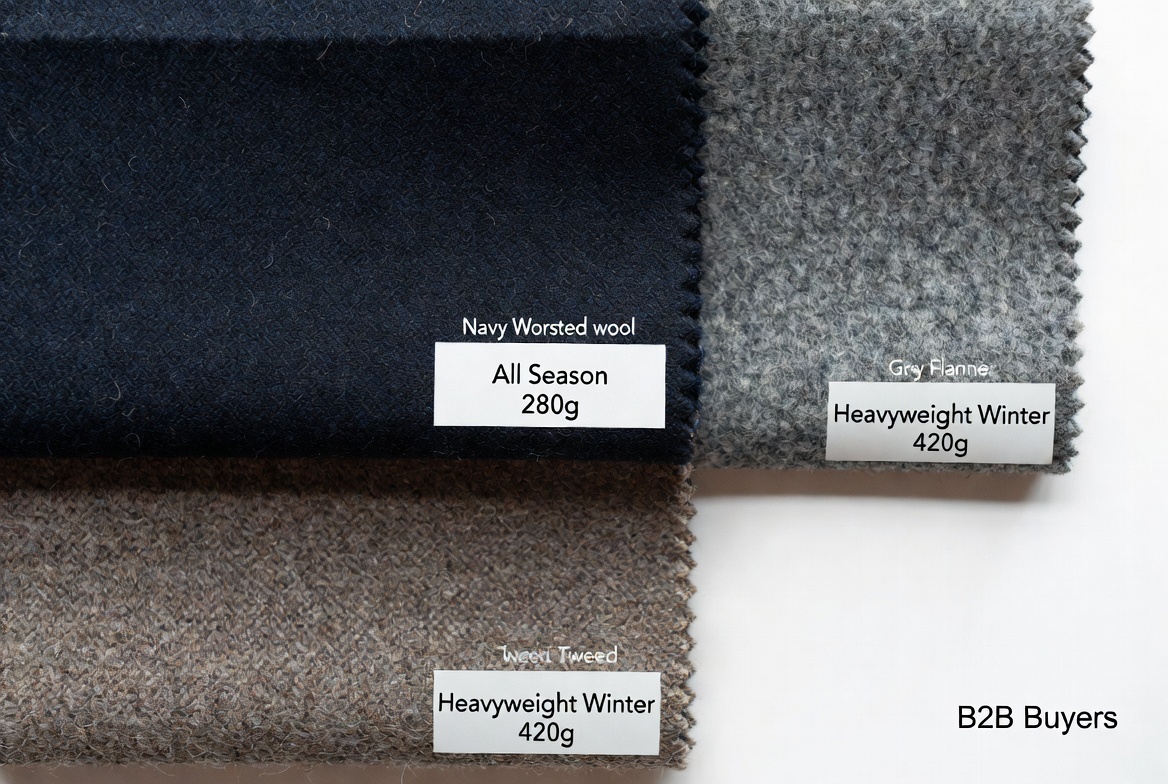
Many winter suit guides mention "heavy fabrics" but rarely explain what that means in real-life production. Here's how we look at it as an OEM partner. [capitolhillclothiers]
While there's no universal standard, a practical breakdown looks like this: [capitolhillclothiers]
- Under ~260 g/m²: Lightweight, better for summer and transitional weather
- 260–300 g/m²: All-season wool, can work in mild winters with good layering
- 300–350 g/m²: Solid winter range for most office workers in temperate cold climates
- 350 g/m² and above: Heavy winter fabrics for harsh climates or mostly outdoor work
When you brief a manufacturer, ask for the fabric weight and specify your main market's winter conditions (e.g., "urban commuter in Chicago" vs "mild coastal winter"). [seonational]
Lining and interlining can significantly affect warmth and breathability. [theglobeandmail]
- Full lining: Feels warmer, protects the fabric from friction, and makes the suit easier to slide on over layers.
- Half lining or buggy lining: More breathable, but better for transitional seasons than deep winter.
- Interlining: The internal structure (canvas, fusible interfacing) can add a bit of warmth and support, especially in the chest and lapel area.
For winter suits that still need to breathe in heated offices, we often recommend full lining with a breathable fiber (like viscose or a high-quality synthetic) rather than heavy, non-breathable polyester. [theglobeandmail]
Even the best winter suit won't work alone on a windy platform. Layering is the strategy that turns a suit into a winter system. [executive-impressions]
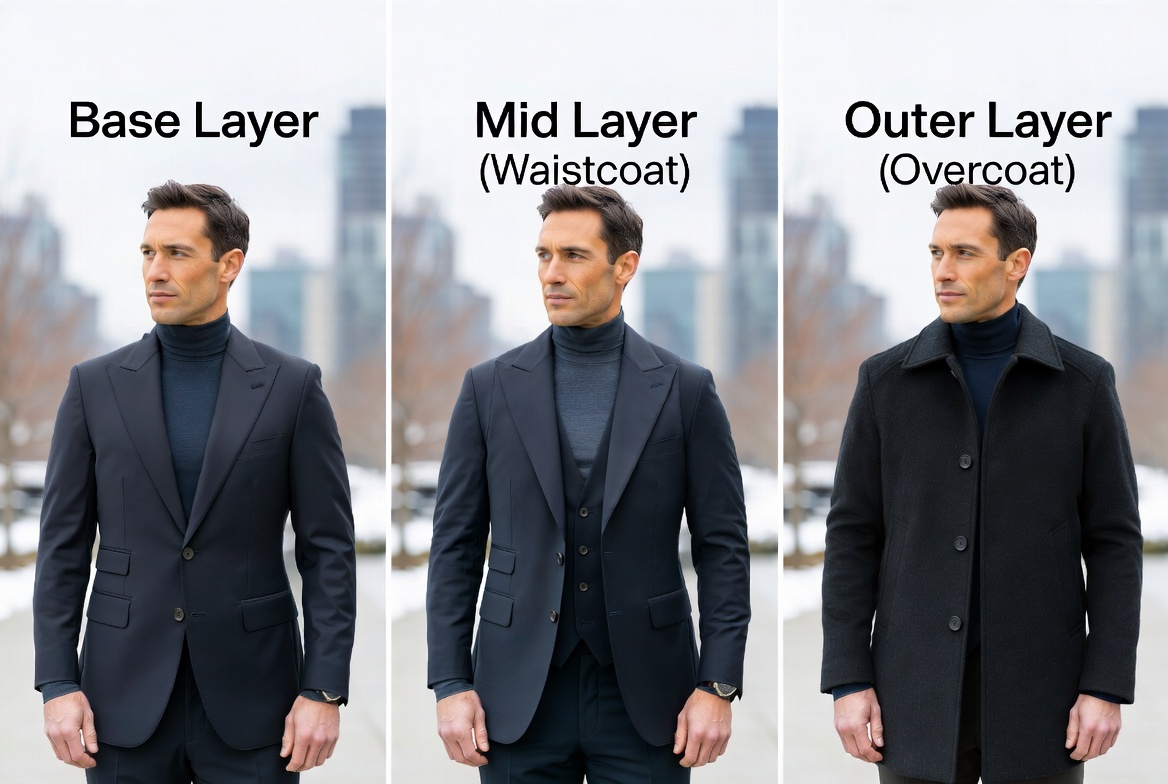
Borrowing from performance outerwear, a three-layer strategy works extremely well under tailoring: [thevaultuwmadison]
1. Base layer (next to skin)
- Moisture-wicking thermal or merino wool undershirt
- Thin, close-fitting, and ideally matching your skin tone if worn under light shirts [executive-impressions]
2. Mid-layer (insulation)
- Dress shirt plus optional waistcoat or light merino sweater
- For formal looks, a suit waistcoat in matching or contrasting fabric adds warmth without bulk [studiosuits]
3. Outer layer (weather protection)
- A tailored overcoat or topcoat in wool or a wool blend
- For heavy snow or rain, a coat with water-resistant treatment or an additional shell may be necessary [30seven]
This system lets you adapt to temperature changes by removing layers as you move indoors, rather than relying on one overly heavy suit that becomes uncomfortable in heated spaces. [thevaultuwmadison]
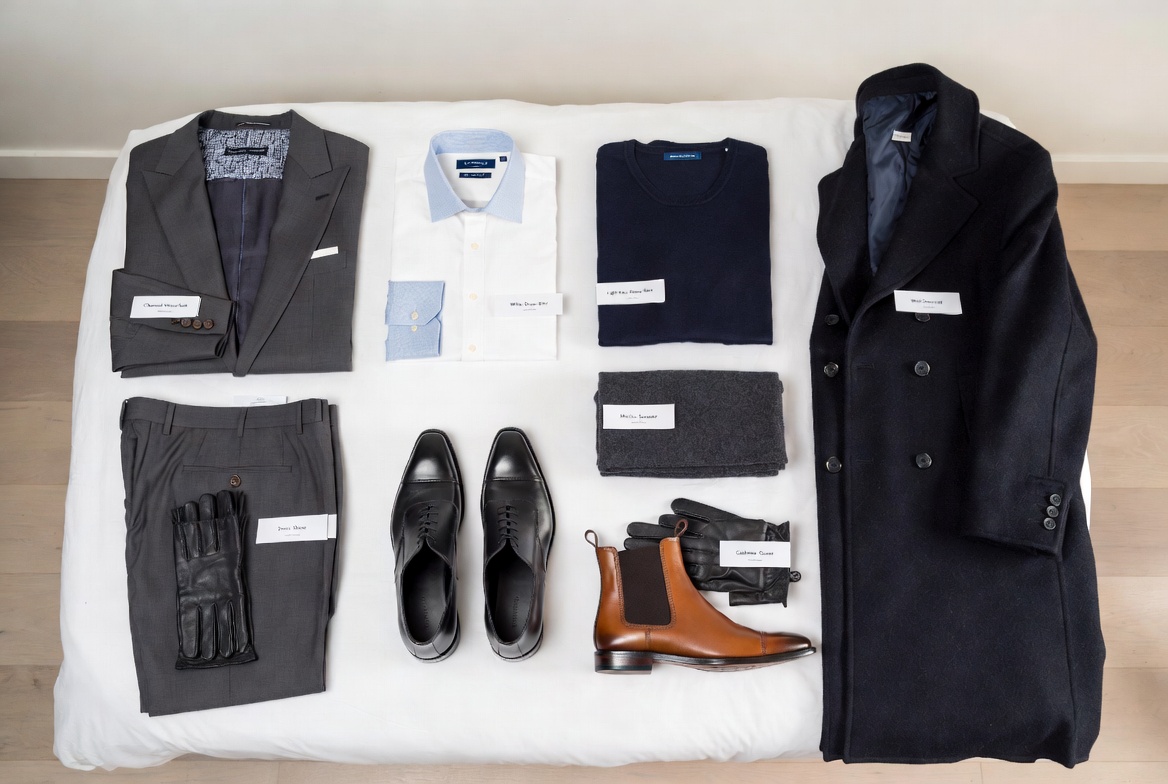
Many of our international customers wear suits for winter business trips and daily commuting, which creates practical constraints: suitcase space, wrinkling, and long days in mixed environments. [executive-impressions]
For a typical 3–4 day winter business trip, an efficient packing list might include: [thevaultuwmadison]
- One versatile wool or flannel suit in navy or charcoal
- Two to three dress shirts that coordinate with the suit
- One fine-gauge merino sweater or vest
- One wool overcoat in a neutral color
- One pair of formal shoes + one pair of weather-ready boots [executive-impressions]
Travel stylists often suggest using the suit color as a base and building the rest of the travel wardrobe around it so everything can be mixed and matched. [thevaultuwmadison]
Cold-weather accessories are not just style details—they directly affect comfort. [studiosuits]
- Leather or suede gloves in black or brown for warmth and professionalism [30seven]
- Wool or cashmere scarf that complements your coat and suit color [30seven]
- Leather boots (Chelsea or dress boots) in the same color family as your belt, ideally with grippy soles for snow and ice [studiosuits]
From a user-experience perspective, brands that show complete looks (suit + coat + boots + scarf) in their product photos help buyers understand how to wear winter suits in real life. [brandurbusiness]
A common mistake in winter suit design is cutting it too close to the body, leaving no room for layers. [theglobeandmail]
For winter tailoring, we often recommend slightly more ease in key areas:
- Shoulders and upper back (to accommodate a sweater)
- Sleeve width (for a thin knit under the jacket)
- Waist and hips (so the jacket doesn't pull when layered)
As with functional winter gear, the base layer should fit close to the body, while outer layers have a more relaxed fit to maintain mobility. [theglobeandmail]
Worsted wool suits with light canvassing maintain a crisp business silhouette, while flannel and tweed are naturally softer. For buyers who need both structure and comfort, we often recommend: [capitolhillclothiers]
- Slightly heavier worsted wool for the jacket
- Flannel trousers for extra warmth and comfort in seated positions
This combination is especially popular with clients who spend long hours in meetings but still commute on foot or by public transport. [capitolhillclothiers]
A winter suit should look like it belongs in cold weather, not like a summer suit with a scarf thrown on top. [sohu]
Classic winter suit choices include:
- Colors: Navy, charcoal, mid to dark grey, deep brown
- Patterns: Subtle checks, herringbone, or faint pinstripes
- Avoid overly light fabrics and pale colors for heavy slush or city grime
In many business environments, navy and grey remain the recommended colors for formal winter suits, with black often reserved for more ceremonial or evening wear. [sohu]
While these details are partly aesthetic, they can also affect how the suit behaves in winter:
- Slightly wider lapels can visually balance heavier fabrics
- Two- or three-button jackets in a classic configuration keep the chest better covered
- Double vents at the back give better movement, especially when layered over thicker shirts or sweaters
As an OEM supplier, we frequently customize these elements to match each client brand's target market and house style. [shanghaigarment]
If you are working with a manufacturer like Shanghai Youti Clothing Co., Ltd., you can request winter-specific spec changes instead of simply reusing your all-season suit tech pack. [white2labelmanufacturing]
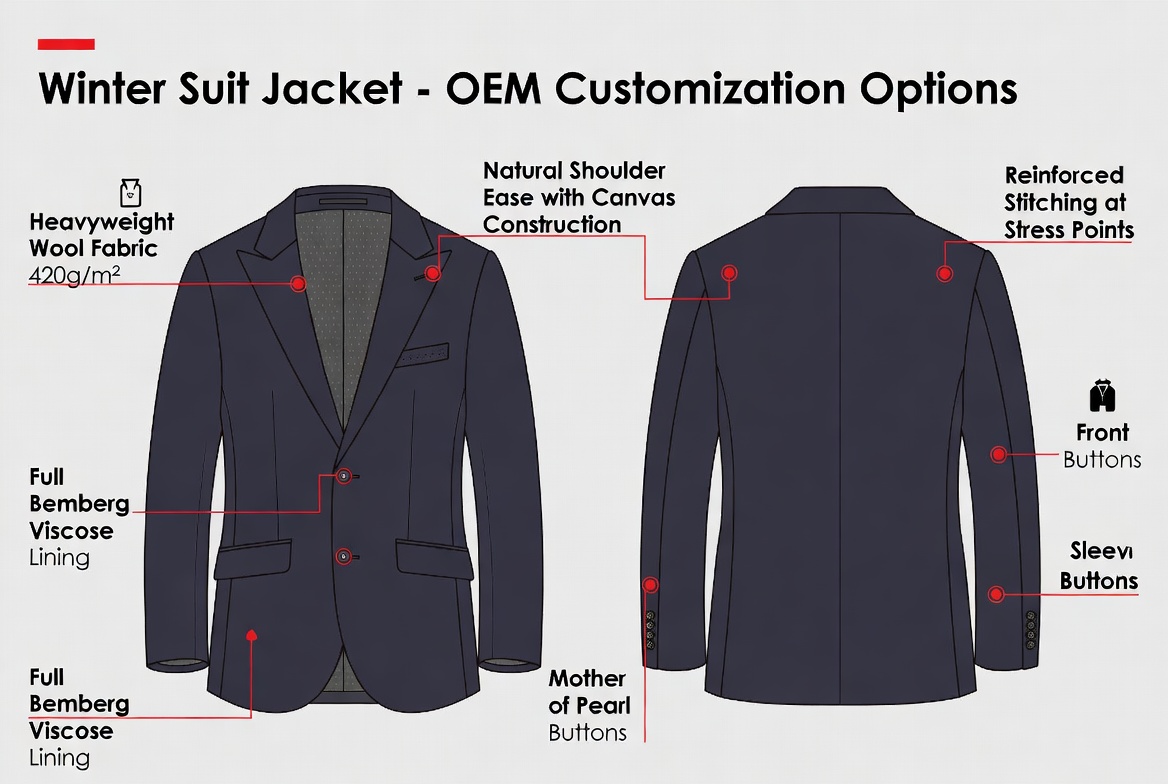
When you brief your OEM partner for a winter suit line, consider specifying:
- Fabric weight and composition (e.g., 320 g/m² wool flannel, 95% wool / 5% cashmere) [gq]
- Lining type (full lining with breathable fiber) [theglobeandmail]
- Slightly roomier pattern in shoulders and chest for layering [thevaultuwmadison]
- Reinforced stitching at stress points, since heavier fabrics and outerwear add more strain
- Button material that can handle cold and moisture (e.g., high-quality resin or horn)
A clear, detailed tech pack reduces sampling rounds, improves consistency, and shortens time to market for your winter collections. [shanghaigarment]
Modern buyers increasingly ask about sustainable wool sourcing and long-term durability. As an OEM partner, we recommend brands: [blockandtam]
- Highlight the longevity of heavier wool and flannel suits when properly cared for
- Communicate care instructions clearly (brushing, steaming, resting between wears)
- Consider certifications or traceability when possible
This not only improves user trust but also supports premium positioning. [productiveblogging]
To make all of this practical, here is a step-by-step checklist you can follow or adapt into your brand's product pages:
1. Define your climate and use-case
- Mild city winter, harsh continental climate, or frequent travel. [theglobeandmail]
2. Select the right fabric and weight
- Start around 300 g/m² wool or flannel for colder environments. [gq]
3. Decide on lining and structure
- Full lining with breathable materials for warmth and comfort. [theglobeandmail]
4. Plan for layering
- Ensure the pattern allows room for an undershirt and light knitwear. [thevaultuwmadison]
5. Finalize color and style details
- Navy or grey for business, tweed or textured fabrics for more casual markets. [sohu]
6. Brief your OEM manufacturer clearly
- Include fabric specs, measurements, and market conditions in your tech pack. [white2labelmanufacturing]
If you are a brand owner, wholesaler, or private label buyer planning your next winter collection, the difference between an "okay" winter suit and a truly high-performing winter-weather suit starts at the factory.
As a professional OEM supplier based in China, Shanghai Youti Clothing Co., Ltd. can help you:
- Select winter-appropriate fabrics and weights for your target markets
- Optimize patterns for layering, mobility, and comfort
- Develop custom tech packs and size runs tailored to your brand positioning
To discuss your upcoming winter suit project or request a customized sample, get in touch with our team and share your target market and preferred fabric direction—we'll help you engineer a winter suit line that keeps your customers warm, comfortable, and well-dressed all season.
1. What is the best fabric for a winter suit?
The best all-round choice is a medium- to heavyweight wool, often around or above 300 g/m², with flannel and tweed as excellent options for extra warmth and texture. [capitolhillclothiers]
2. How heavy should a winter suit fabric be?
For most urban winters, fabrics around 300–350 g/m² balance warmth and comfort, while harsher climates may benefit from heavier cloths above that range. [capitolhillclothiers]
3. Can I wear the same suit in winter and summer?
A true four-season suit is possible in moderate climates, but in colder regions you will be more comfortable with a dedicated winter suit and a lighter suit for summer. [theglobeandmail]
4. Do I really need an overcoat if I have a heavy suit?
Yes. Even a heavy suit is not designed to replace an outer layer. A wool overcoat or topcoat worn over your suit provides wind and moisture protection your tailoring alone cannot. [30seven]
5. What should I tell my OEM manufacturer when ordering winter suits?
Share your target climate, fabric weight, lining preference, and layering needs. Request fabric specs (weight and composition) and make sure your tech pack reflects winter-specific details like heavier cloth and full lining. [shanghaigarment]
- Capitol Hill Clothiers. "The Best Suit Fabrics for Winter in Washington, DC."
<https://www.capitolhillclothiers.com/style-guides/the-best-suit-fabrics-for-winter-in-washington-dc> [capitolhillclothiers]
- GQ. "These Are the Best Fabrics for a Suit, According to …"
<https://www.gq.com/story/tailoring-101-suit-fabrics-guide> [gq]
- The Globe and Mail. "A step-by-step guide to choosing the right winter clothes for cold weather."
<https://www.theglobeandmail.com/life/article-a-step-by-step-guide-to-choosing-the-right-winter-clothes-for-cold/> [theglobeandmail]
- Executive Impressions. "What to Pack for a Winter Business Trip for Men: 8 Ideas."
<https://www.executive-impressions.com/blog/what-to-pack-for-a-winter-business-trip-for-men> [executive-impressions]
- The Vault UWMadison. "Winter Travel Wardrobe: How to Pack Light for a Heavy Winter."
<https://www.thevaultuwmadison.com/blog/winter-travel-wardrobe-how-to-pack-light-for-a-heavy-winter> [thevaultuwmadison]
- Integrated SEO. "SEO Techniques for Variable Winter Traffic."
<https://integratedseo.com/blog/seo-techniques-for-variable-winter-traffic/> [integratedseo]
- Productive Blogging. "15 easy ways to improve your website's E-E-A-T."
<https://www.productiveblogging.com/eat/> [productiveblogging]
- Block & Tam. "E-E-A-T Guide: Creating Helpful Content For Luxury Brands."
<https://www.blockandtam.com/blog/e-e-a-t> [blockandtam]
- Shanghai Garment & related OEM resources on tech packs and custom clothing manufacturing.
<https://shanghaigarment.com/how-to-develop-a-tech-pack-for-custom-clothing-manufacturing/> [white2labelmanufacturing]
- SEO National. "Winter Season: SEO Strategies."
<https://www.seonational.com/winter-season-seo-strategies/> [seonational]


