
Views: 222 Author: Youti Clothing Publish Time: 2026-06-17 Origin: Site


Content Menu
● Understanding "Professional Casual" Today
● Why Your Outfit Still Matters for Performance
● From Strict Suits to Casual Offices
● The Core Challenge: Casual, But Still in Charge
● Principle 1: Fit Is Your Fastest Upgrade
● Principle 2: Simple, Coordinated Outfits Win
● How to Build a Professional Casual Capsule Wardrobe
● The Sport Coat: Your Professional Casual Secret Weapon
● Practical Outfit Formulas for Different Workplaces
● Common Casual Wardrobe Mistakes to Avoid
● How OEM Workwear and Uniforms Support a Professional Casual Culture
● Case Perspective: Consistent Image for Global Teams
● Why Choose a Chinese OEM Workwear Supplier
● How Shanghai Youti Clothing Co., Ltd. Can Support Your Brand
● Step‑by‑Step: Implementing a Professional Casual Uniform Program
● Expert Tips: Dressing for Leadership in a Casual Office
● Quick Do/Don't Table for Professional Casual
● FAQs
In today's casual offices, the way you dress still strongly shapes how colleagues see your professionalism, leadership potential, and attention to detail—even if no one wears a full suit anymore. [indeed]
Professional casual is not the same as "anything goes." It is a mix of classic business pieces and relaxed items that still look polished, intentional, and office‑appropriate. [ac-styles]
A typical professional casual outfit might combine tailored trousers or dark, clean jeans with a button‑down shirt or knit, and structured layers such as a blazer or sport coat, plus closed‑toe shoes. [indeed]
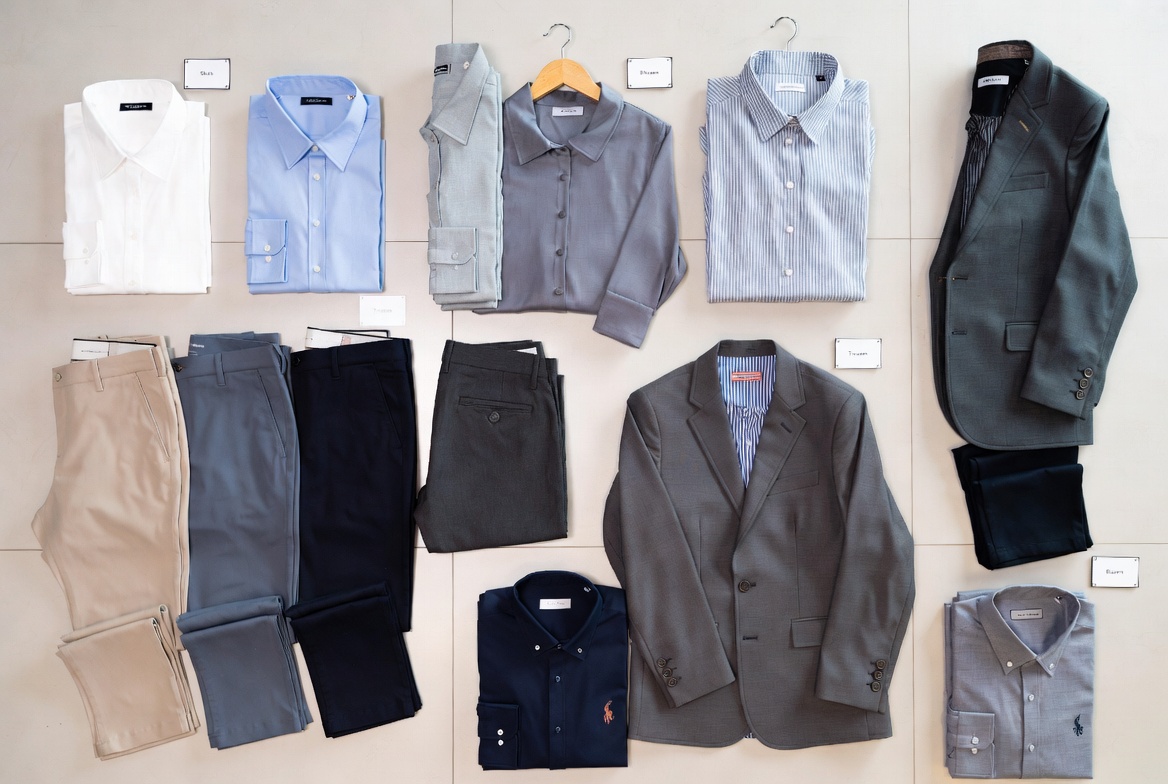
Research and workplace experience show that when you dress slightly better, you often feel more confident, focused, and ready to lead. [theessentialman]
Clients, managers, and teammates form a first impression in seconds, reading your clothing as a signal of your reliability, respect for others, and attention to detail. [theessentialman]
For decades, many offices followed a "uniform" of dark suit, white shirt, and dark tie, which made dressing simple but rigid.
With the rise of tech companies and entrepreneurship, dress codes relaxed sharply, leading to jeans and T‑shirts—even in roles that still carry high responsibility and client exposure. [whowhatwear]
When the "rules" disappear, you have to self‑manage your wardrobe instead of relying on a default suit.
Casual clothes are harder to get right because they expose your taste, your fit choices, and how seriously you take both your work and the people you work with. [theessentialman]
No matter how expensive a garment is, if it doesn't fit, it looks sloppy and unprofessional. [ac-styles]
Look for:
- Shoulder seams that sit neatly at the edge of your shoulder. [ac-styles]
- Sleeves and pants that do not bunch or drag.
- Shirts that are not pulling at buttons or ballooning at the waist. [theessentialman]
When garments are made or adjusted for your body—through custom shirts, tailored trousers, or fitted sport coats—your posture improves and you automatically look more confident and composed. [ac-styles]
In a casual workplace, it is easy to accumulate random pieces that don't work together—sale items, gifts, or trend experiments.
A better approach is to build a coordinated system: fewer items, but each one chosen to mix and match across your weekly outfits in a consistent color palette (navy, grey, black, beige, white). [whaelse]
Use the list below as a practical framework when upgrading your closet or planning a uniform program for your team. [indeed]
For Men (Office or Smart Casual Roles): [indeed]
- 2–3 neutral button‑down shirts (white, light blue, soft stripe)
- 1–2 polo shirts or knit tops (if permitted by your office)
- 2 pairs of chinos (navy, khaki, or charcoal)
- 1 pair of dark, clean jeans (no rips, minimal fading)
- 1–2 sport coats / blazers with soft construction for comfort
- 1 pair of leather shoes (Oxfords, derbies, loafers) and 1 pair of clean leather sneakers if your industry allows them
For Women (Office or Smart Casual Roles): [whowhatwear]
- 2–3 blouses or shirts in breathable fabrics
- 1–2 fine knits or cardigans for layering
- 1 blazer in a versatile color (black, navy, beige)
- 1–2 pairs of tailored pants or ankle trousers
- 1 knee‑length or midi dress suitable for the office
- 1 pair of closed‑toe flats or low heels, plus polished loafers or boots
Starting with these basics, you can add personality through accessories, subtle patterns, or color accents without losing professionalism. [whaelse]
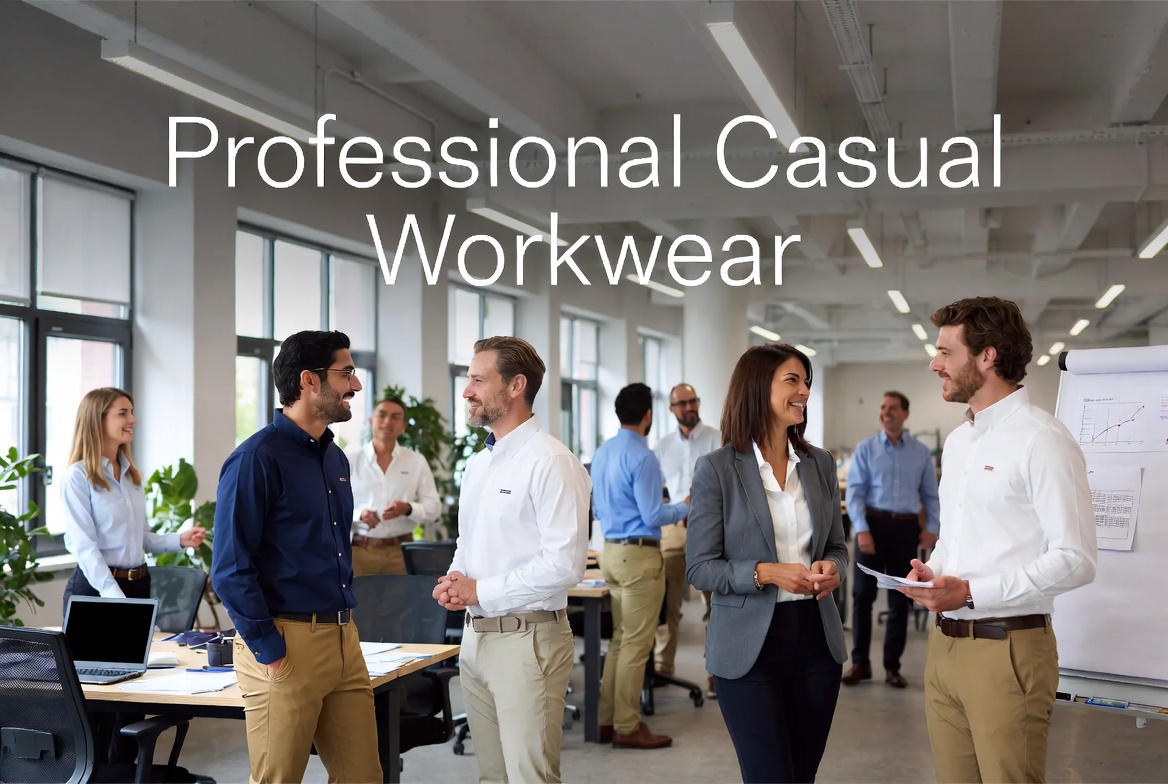
One of the most effective ways to bridge the gap between "too formal" and "too casual" is a sport coat or blazer.
If you wear khaki trousers and a simple shirt, adding a sport coat instantly sharpens your look, especially in client meetings, presentations, or visits to more traditional offices. [ac-styles]
The right level of casual varies by industry, so use these formulas as a starting point and adjust based on what leaders and clients wear. [indeed]
More Traditional Offices (Finance, Law, Corporate HQ) [indeed]
- Men: Button‑down shirt + chinos or wool trousers + leather belt + leather shoes + optional sport coat.
- Women: Blouse + tailored pants or pencil/midi skirt + blazer + closed‑toe flats or heels.
Creative / Tech / Startup Environments [whowhatwear]
- Men: Clean, dark jeans + oxford shirt or fine knit + minimalist sneakers or loafers + optional unstructured blazer.
- Women: Dark jeans or soft tailored pants + blouse or knit + light blazer or long cardigan + sleek sneakers or boots.
Client‑Facing Days
- Always move one notch more formal than your everyday baseline (add a jacket, upgrade shoes, or swap jeans for trousers). [theessentialman]
Even in relaxed workplaces, certain choices undermine your credibility immediately. [ac-styles]
Avoid:
- Wrinkled, stained, or faded garments
- Oversized hoodies, graphic T‑shirts, or slogan items
- Shorts, flip‑flops, or beach sandals
- Ripped or heavily distressed jeans
- Loud, distracting patterns or neon colors unless your industry clearly embraces them
These items read as careless and can create a disconnect between your skills and how seriously people take you. [indeed]
If you manage a team or brand, one of the most effective ways to control consistency and professionalism is through OEM uniforms and work clothing. [haiyuanworkclothes]
By partnering with a specialized manufacturer, you can design branded shirts, work jackets, and coordinated pants that match your company's dress code—whether that is clean business casual for an office, durable workwear for a factory, or a hybrid environment. [qzgarment]
Global companies often struggle to keep dress standards aligned across different regions and cultures. [haiyuanworkclothes]
OEM uniform programs let you define one clear, professional casual standard—for example, branded button‑down shirts for the office, durable work pants for the warehouse, and coordinated jackets for field service teams—so every employee looks on‑brand and ready to represent your business. [qzgarment]
China has become a core sourcing base for professional uniforms and work clothes thanks to its mature supply chain, fabric options, and flexible manufacturing capacity. [haiyuanworkclothes]
Many leading factories provide OEM/ODM services, meaning they can develop patterns, select fabric, add brand logos, and meet international standards (such as CE or ISO certifications for specific safety categories) when required. [haiyuanworkclothes]
Shanghai Youti Clothing Co., Ltd. is a Chinese supplier focused on Uniforms and Work Clothes, Shirts, and other professional apparel, providing OEM services for overseas brands, wholesalers, and manufacturers. [haiyuanworkclothes]
For business casual and workwear needs, this type of supplier can help you:
- Develop custom office shirts that align with your brand colors and logo placement.
- Design work uniforms for production, logistics, and technical teams with consistent styling and sizing.
- Coordinate mixed wardrobes (shirts, jackets, trousers) that keep your team looking professional from office to shop floor.
By centralizing design and production, you can reduce visual inconsistency, simplify procurement, and reinforce your company's professional image every day. [haiyuanworkclothes]
If you are responsible for HR, operations, or procurement, use this straightforward process to create a modern workwear program. [haiyuanworkclothes]
1. Define your dress code baseline
- Identify what "professional casual" looks like for your brand across office, field, and factory roles.
2. Map roles to clothing sets
- Example: office staff (shirts + chinos), sales (shirts + blazers), production (work jackets + work pants), warehouse (high‑mobility workwear).
3. Set fabric and performance requirements
- Decide on durability, breathability, stain resistance, safety features (if needed), and seasonal variations.
4. Choose an OEM supplier
- Look for proven export experience, OEM/ODM capability, and clear communication in English. [haiyuanworkclothes]
5. Request samples and size runs
- Test fabric comfort, colorfastness, fit grading, logo application, and wash performance before large orders. [haiyuanworkclothes]
6. Roll out gradually and collect feedback
- Launch with core teams, then refine sizing, details, and accessories based on real‑world wear and employee feedback.
This structure ensures you deliver clothing that feels good to wear, looks professional to clients, and is practical for daily use. [indeed]
Beyond meeting the minimum dress code, you can use clothing strategically to support your career growth and leadership presence. [theessentialman]
- Dress one step above the norm: If most colleagues are in T‑shirts and jeans, wear a collared shirt and structured pants; if they wear button‑downs, add a blazer. [theessentialman]
- Use consistency to build trust: Showing up polished every day signals reliability and self‑management.
- Lean on timeless pieces: Neutral colors, simple designs, and classic cuts age well and avoid looking dated or overly trendy. [whaelse]
| Aspect | Do (Professional Casual) | Don’t (Too Casual / Unprofessional) |
|---|---|---|
| Tops | Button‑down shirts, blouses, fine knits (indeed) | Graphic T‑shirts, old hoodies (indeed) |
| Bottoms | Chinos, tailored trousers, dark clean jeans (indeed) | Ripped jeans, shorts, joggers (indeed) |
| Layers | Blazers, sport coats, cardigans (whaelse) | Outdoor windbreakers, bulky sportswear (ac-styles) |
| Shoes | Leather shoes, loafers, sleek sneakers (indeed) | Flip‑flops, worn‑out trainers (indeed) |
| Overall styling | Neat, pressed, coordinated (theessentialman) | Wrinkled, mismatched, overly bright (indeed) |
If you are ready to elevate your team's image in a casual workplace, consider moving from "everybody dresses on their own" to a coordinated professional casual workwear program. [haiyuanworkclothes]
By partnering with a specialized Chinese OEM supplier such as Shanghai Youti Clothing Co., Ltd. for uniforms, work clothes, and shirts, you can provide employees with comfortable, modern garments that support your brand, simplify daily dressing, and keep your company looking professional in every meeting, factory tour, and client visit. [haiyuanworkclothes]
1. What is the difference between business casual and smart casual?
Business casual leans more professional, typically including collared shirts, chinos or dress pants, and closed‑toe shoes, while smart casual allows more variety such as dark jeans and minimalist sneakers, depending on the workplace. [ac-styles]
2. Can I wear jeans in a professional casual office?
Yes, if your company allows it and you choose dark, clean, non‑distressed jeans paired with polished pieces like a button‑down and blazer, they can fit into a professional casual dress code. [ac-styles]
3. How many work outfits do I really need?
A small capsule of 5–7 tops, 3–4 bottoms, and 1–2 jackets, coordinated in neutral colors, is usually enough to create a full week of distinct, professional casual outfits. [whaelse]
4. Why should a company invest in OEM uniforms instead of letting employees buy their own clothes?
Uniform programs create consistency, protect the brand image, simplify procurement, and reduce confusion about what is appropriate to wear, especially for client‑facing and industrial roles. [qzgarment]
5. What should I check before choosing a Chinese OEM workwear supplier?
Verify OEM/ODM capability, export experience, relevant certifications (for safety wear), communication quality, and always request samples to test fabric, fit, and workmanship. [haiyuanworkclothes]
1. Tom James – "How to Dress Professionally in the Casual Workplace" (2019) – original article providing core perspective on professional dressing in casual offices.
https://www.tomjames.com/blog/how-dress-professionally-casual-workplace/
2. Indeed – "What Is Business Casual Attire? (With Examples and Tips)" (2025).
https://www.indeed.com/career-advice/starting-new-job/guide-to-business-casual-attire [indeed]
3. AC Styles – "Business Casual For Men: Attires In 2026" (2026).
https://www.ac-styles.com/blog/business-casual-for-men-explained/ [ac-styles]
4. The Essential Man – "The Ultimate Guide to Business Casual Style for Men" (2022).
https://www.theessentialman.com/blog/business-casual-style-guide-men [theessentialman]
5. Whaelse – "Fashion Trends 2026: Business Looks Between Classic & Casual" (2026).
https://www.whaelse.com/en/fashion-trends-2026-business-looks-between-classic-casual/ [whaelse]
6. Who What Wear – "6 Office Outfit Trends That'll Define Workwear in 2026" (2026).
https://www.whowhatwear.com/fashion/office/office-outfit-trends-2026 [whowhatwear]
7. HAIYUAN Manufacturer – "China labor clothes brands – how to find and choose workwear suppliers" (2025).
https://haiyuanworkclothes.com/blog/china-labor-clothes-brands/ [haiyuanworkclothes]
8. QZ Garment – "China High-end Workwear Factory – Products List".
https://www.qzgarment.com/products-list.htm [qzgarment]


