
Views: 248 Author: Youti Clothing Publish Time: 2026-08-06 Origin: Site


Content Menu
● Why Suits Absorb Odors So Easily
● Wash and Clean the Suit Strategically
● Store Suits in a Dry, Breathable Environment
● Rub It With a Dryer Sheet Between Wears
● Wear an Undershirt as a Sweat Barrier
● Avoid Smoke and High-Odor Environments
● Use Natural Air Circulation as a Daily Habit
● What Fabric Choice Means for Long-Term Odor Resistance
● Quick-Reference Odor Prevention Checklist
● Take the Next Step With Fabric That Works for You
Suit odor prevention starts long before the smell appears — it begins with fabric choice, storage habits, and daily maintenance routines that most wearers overlook. This guide breaks down exactly how to keep a suit smelling fresh, backed by fabric science and real-world care practices used across the tailoring industry.

Wool and wool-blend suiting fabrics are porous by design, which gives them breathability and comfort — but the same trait makes them magnets for sweat, body oils, and environmental smells. Unlike cotton t-shirts that can be washed daily, suits are dry-clean-only garments, meaning odor-causing bacteria have more time to settle into the fibers between cleanings.
Synthetic linings and tightly woven interfacing can trap moisture even further, especially in humid climates or during long workdays. Understanding this absorption process is the first step toward preventing odor buildup rather than just masking it after the fact.
Frequent dry cleaning is not the answer — over-cleaning breaks down fibers and shortens the life of a suit. Instead, professionals recommend a 3-month dry-cleaning cycle for regular wear, supplemented with spot treatments in between.
- Dry clean only when necessary: reserve full cleanings for visible stains or roughly every 3 months of regular use.
- Spot-clean immediately: use a garment brush on seams, collars, and cuffs where odor tends to concentrate.
- Wash inside out when a garment does go through cleaning, since this helps lift trapped odor from the inner fibers.
Moisture is the single biggest driver of musty suit smells, so storage conditions matter as much as cleaning frequency. Damp basements or airtight plastic garment bags trap humidity against the fabric and accelerate bacterial growth.
- Choose breathable covers: swap plastic garment bags for cotton or muslin covers that allow airflow while still blocking dust.
- Use cedar hangers: cedar wood naturally repels moths and absorbs residual moisture while preserving the jacket's shape.
- Avoid overcrowded closets: give each suit enough space to prevent moisture transfer between garments and reduce wrinkling.
- Rotate storage locations: if a suit smells musty after storage, move it to a room with consistent airflow rather than an attic or basement.
A quick pass with a dryer sheet across the interior lining and underarm areas can neutralize light odors without a full cleaning. This is a fast, low-cost trick that works well for suits worn multiple times in a single week, buying time between professional cleanings.
An undershirt is one of the most effective preventative tools available, acting as a physical barrier between skin oils and the suit fabric itself. Natural fibers perform noticeably better than synthetics in this role.
| Undershirt Material | Odor Control | Breathability | Best For |
|---|---|---|---|
| Cotton | High | High | Everyday office wear |
| Bamboo | Very High | High | Humid climates, long days |
| Merino wool blend | High | Moderate | Cold-weather commuting |
| Polyester | Low | Low | Not recommended for odor control |
Choosing a breathable, moisture-wicking undershirt reduces the amount of sweat that ever reaches the suit lining, which directly cuts down on odor absorption over time.
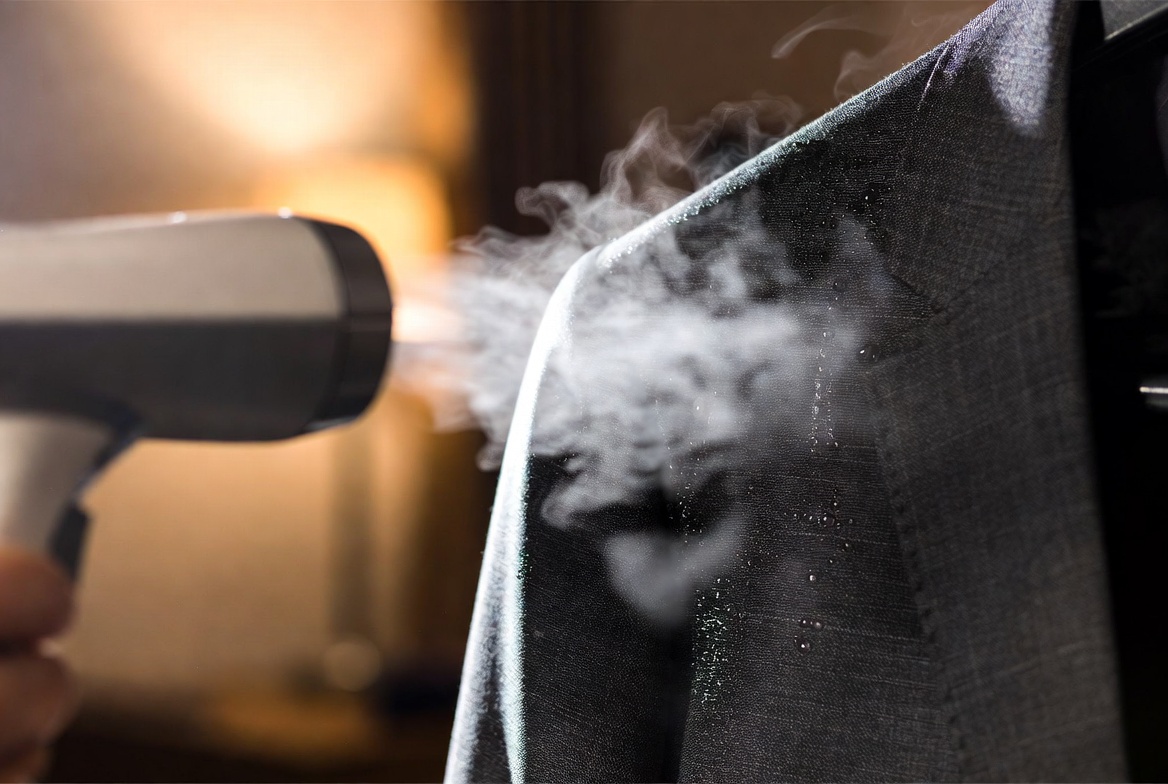
Steaming does double duty: it removes wrinkles and helps loosen trapped odor molecules from the fabric weave. A simple, no-cost method is hanging the jacket in the bathroom during a hot shower — the steam relaxes fibers and aerates the fabric without any special equipment.
For a slightly more targeted approach, a handheld garment steamer allows focused treatment on collar and underarm areas, which tend to hold the most odor.
Fabric fibers absorb ambient smells just as readily as they absorb sweat, which is why smoky bars, restaurants with heavy kitchen exhaust, or crowded transit can leave a lingering smell on a suit long after the event. When exposure is unavoidable, turning the jacket inside out or draping a scarf over the shoulders offers some protection against smoke absorption.
Beyond storage, active airing between wears is one of the most underused odor-prevention tools. Hanging a suit outdoors in a shaded, breezy spot for four to six hours allows trapped moisture and odor to dissipate naturally, without any chemical treatment. Indoors, positioning a fan near the hanging suit and opening a window to create cross-ventilation achieves a similar effect.
This is where sourcing decisions matter, and it's an angle most consumer-facing guides skip entirely. Not all suiting fabrics behave the same way under repeated wear:
- High-twist wool resists moisture retention better than loosely woven blends, making it a smarter pick for humid regions or daily commuters.
- Half-canvas and full-canvas construction allows better internal airflow compared to fused interlining, reducing the "trapped" feeling that worsens odor buildup.
- Blended fabrics with polyester tend to hold onto sweat odor longer than natural wool or wool-linen blends, since synthetic fibers don't wick moisture as effectively.
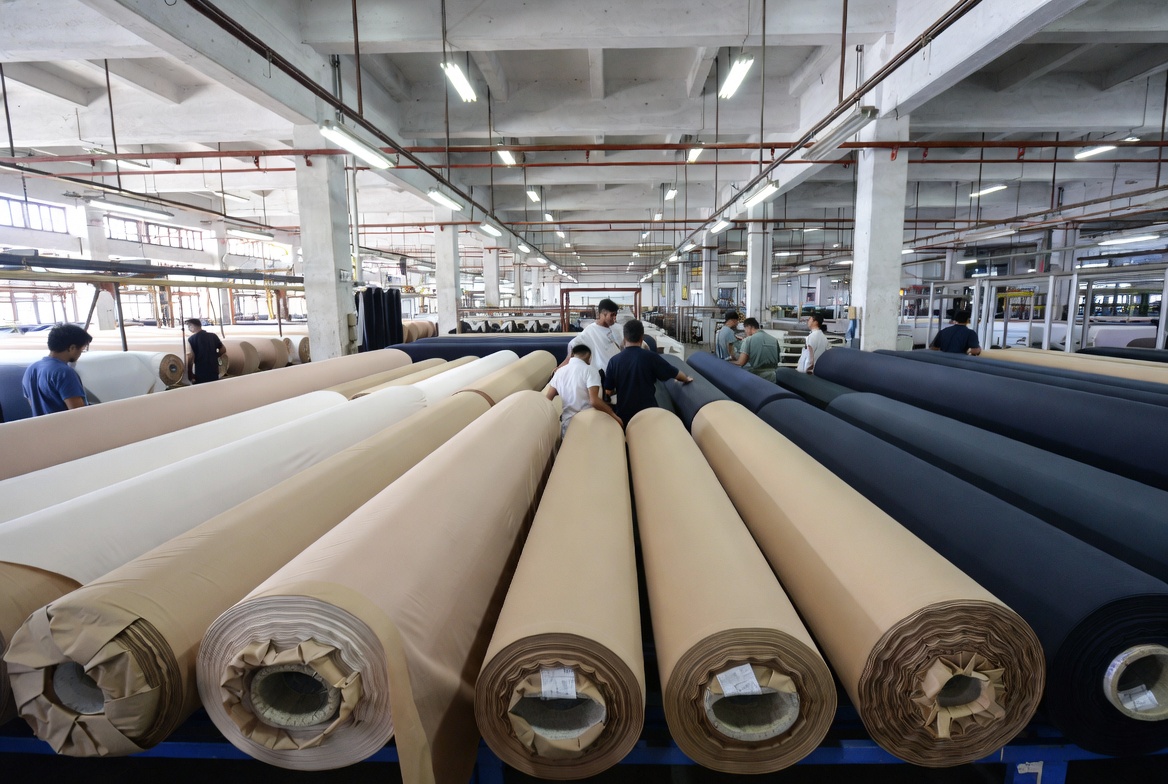
For brands and wholesalers sourcing suits at scale, specifying breathable lining materials and higher-twist wool blends at the manufacturing stage can meaningfully reduce the odor complaints that reach end customers — a detail that matters for OEM production planning as much as it does for the individual wearer.
1. Wear a breathable undershirt every time.
2. Brush the jacket after each wear to remove surface dust.
3. Steam or air the suit within 24 hours of wearing it.
4. Store on a cedar hanger inside a breathable cover.
5. Dry clean only every 3 months, or when visibly stained.
6. Avoid smoky or heavily humid environments when possible.
7. Rotate between at least two suits to allow full airing time.
Following this routine consistently prevents odor buildup far more effectively than any single fix applied after the smell has already set in.
Suit odor problems often trace back to the fabric itself, not just wearer habits. Shanghai Youti Clothing Co., Ltd. partners with international brands, wholesalers, and manufacturers to produce OEM suiting in breathable, high-performance fabrics engineered for long-wear freshness and durability. Reach out to discuss custom fabric specifications for your next production run.
How often should a suit be dry cleaned to avoid odor buildup?
Roughly every 3 months for regular wear is sufficient; more frequent cleaning can actually weaken the fibers and shorten the suit's lifespan.
Can baking soda be used to remove suit odor at home?
Yes, a light baking soda application on the interior lining can absorb odor, though it should be brushed out thoroughly before wearing to avoid residue on darker fabrics.
Does wearing an undershirt really make a difference?
Yes — natural-fiber undershirts significantly reduce how much sweat and oil reach the suit fabric, which is one of the most effective preventative steps available.
Is it safe to hang a suit outside to air it out?
Yes, hanging a suit in a shaded, breezy spot for 4 to 6 hours is an effective, damage-free way to remove trapped odor and moisture.
What fabric holds up best against odor for daily wear?
High-twist wool and wool-linen blends generally resist moisture retention and odor buildup better than polyester-heavy blends or loosely woven fabrics.
1. StudioSuits, "How to Protect Your Suit From Bad Odors" — https://www.studiosuits.com/blogs/articles/how-to-protect-your-suit-from-bad-odors
2. Suit Warehouse, "Tips for Removing Odors From Men's Suits" — https://suitwarehouse.com
3. Reddit r/malefashionadvice, "How do you make your suit smell nice?" — https://www.reddit.com/r/malefashionadvice/


