
Views: 272 Author: Youti Clothing Publish Time: 2026-07-22 Origin: Site


Content Menu
● How We Evaluate Business Shirt Manufacturers
● China’s Industrial Clusters for Business Shirts
● Selection Criteria for This Top 10 List
● Top 10 Business Shirts Manufacturers in China (2026)
>> Shanghai Youti Clothing Co., Ltd.
>> Suzhou Yunshabei Clothing Co., Ltd.
>> Chongqing Yagedan Dun Clothing Co., Ltd.
>> Hengjing Jinpeng Clothing Factory, Wuzhong District, Suzhou City
>> Sichuan Liseini Clothing Co., Ltd.
>> Hunan Wansheng Clothing Co., Ltd.
>> Sichuan Jiashite Clothing Co., Ltd.
>> Shenzhen Dainel Clothing Co., Ltd.
>> Beijing Yibaiyi Clothing Co., Ltd.
>> Fuzhou Xinrong Clothing Co., Ltd.
● Technical Considerations When Sourcing Business Shirts
>> Fabric Selection and Performance
>> Workmanship and Pattern Engineering
● Common Pitfalls When Sourcing Business Shirts
● An Insider Tip: Cross-Checking Real Capacity
● Comparison Table: Key Parameters of Selected Manufacturers
● Buyer’s Guide: From Shortlist to Stable Cooperation
>> Verifying Company Legitimacy and Certificates
>> Technical Pack and Sampling
>> Contracting and Quality Terms
● Logistics and Documentation Considerations
● Frequently Asked Questions from Procurement Teams
>> 1. How can I verify whether a factory’s quality certification is still valid?
>> 2. What minimum order quantities are typical for business shirts in China?
>> 3. How do I ensure that bulk fabric matches the approved sample fabric?
>> 5. How can I reduce the risk of late deliveries with a new supplier?
China remains one of the most important global hubs for business shirt production, with mature textile clusters, integrated supply chains, and a wide range of export-oriented factories servicing brands, wholesalers, and uniform programs worldwide. For procurement managers, the challenge is no longer finding suppliers, but filtering and verifying those who can genuinely deliver consistent quality, compliance, and delivery performance over multiple seasons.
This guide introduces ten notable business shirt manufacturers in China and explains how buyers can evaluate their capabilities, avoid common pitfalls, and build stable supply programs around clearly defined technical and commercial standards.
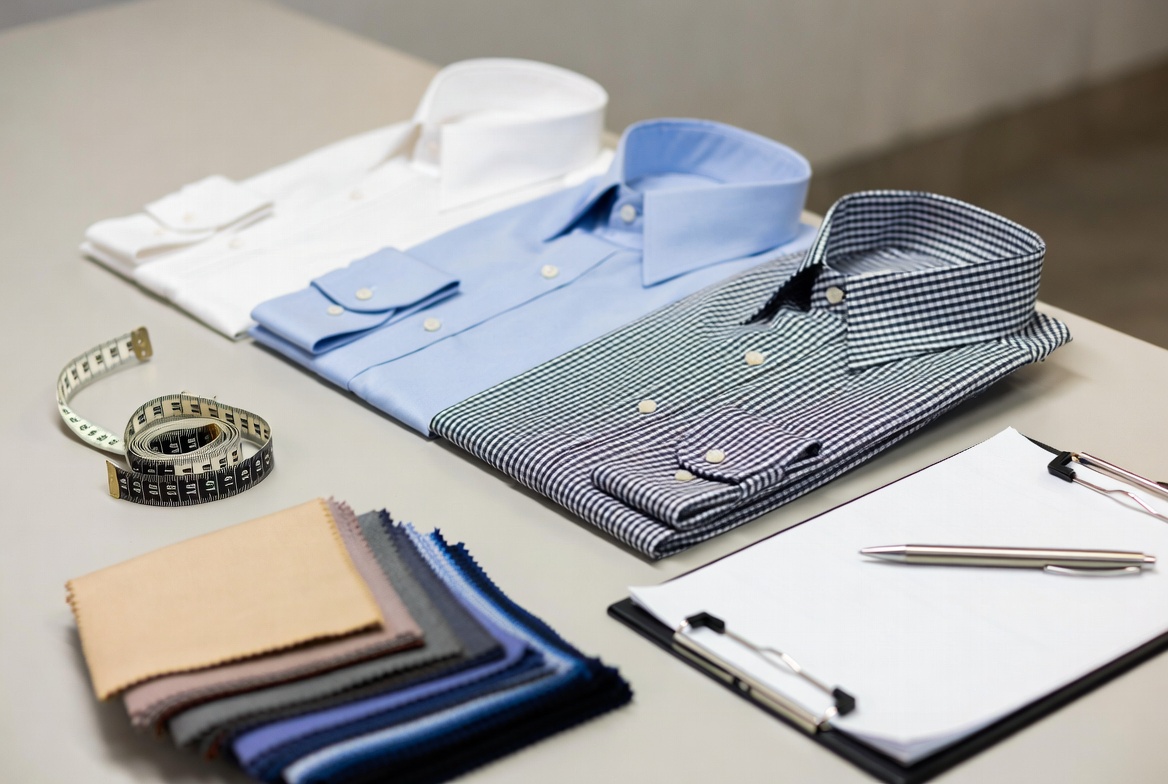
When selecting shirt factories in China, a structured evaluation framework is essential to avoid over-reliance on price or superficial marketing materials. Experienced buyers tend to combine verifiable data, on-site assessments, and pilot orders to build a realistic picture of a supplier’s capabilities.
The following dimensions underpin the selection and description of the manufacturers featured in this guide and can be reused as a checklist for other potential partners.
Compliance and certifications: A baseline expectation includes a documented quality management system and, for many importers, independently verifiable certifications such as ISO 9001. Depending on destination markets and channels, buyers may also expect social responsibility audits and product-related standards for specific categories, especially when uniforms or protective garments are involved.
R&D and pattern development: Business shirts require careful pattern engineering, with variations in fit for different regions and customer profiles. Factories with experienced pattern teams can adjust body and collar fits, grading, and styling to accommodate office wear, formalwear, and uniform requirements.
Quality control practices: A reliable manufacturer typically runs structured in-line and final inspections, supported by clear measurement specifications, sealing of reference samples, and defined tolerances. The ability to align sample quality with bulk production is a critical indicator of process discipline.
Capacity and line loading: Beyond headline capacity, buyers need to understand how many lines are dedicated to shirts, what the typical daily output per line is, and how seasonal peaks are managed. This helps align order volumes and calendar timelines with realistic production capability.
OEM/ODM flexibility: Some factories primarily work from fully detailed tech packs, while others can support concept development, fabric suggestions, and pattern creation. The level of support needed depends on whether the buyer is a mature brand with internal product teams or a growing label requiring more hands-on guidance.
China’s competitiveness in business shirts is rooted in regionally specialized clusters where spinning, weaving, dyeing, garment manufacturing, and accessory production are closely integrated. This clustering reduces lead time, simplifies coordination, and enables factories to source a variety of fabrics and trims locally.
Regions such as Jiangsu, Zhejiang, Fujian, Sichuan, Hunan, Guangdong, Beijing, and Shanghai host a dense network of shirt factories, fabric mills, and logistics providers. Within these clusters, suppliers can combine business shirts with related categories such as suits, jackets, uniforms, and workwear, making it easier for buyers to consolidate apparel programs under fewer vendors.
This list focuses on manufacturers with a clear presence in men’s shirts and related formalwear or uniforms, combined with verifiable company data and a certain level of export readiness. It includes a mix of higher-volume factories and flexible suppliers suited to small and medium brands.
Key criteria include:
Core product focus on men’s shirts or business wear, rather than generic fashion only.
Clear corporate registration information, including establishment date, registered capital, and business scope.
Demonstrated ability to support custom orders, including OEM and, where applicable, ODM capabilities.
Alignment with international buyers’ needs in terms of quality control, lead times, and communication.
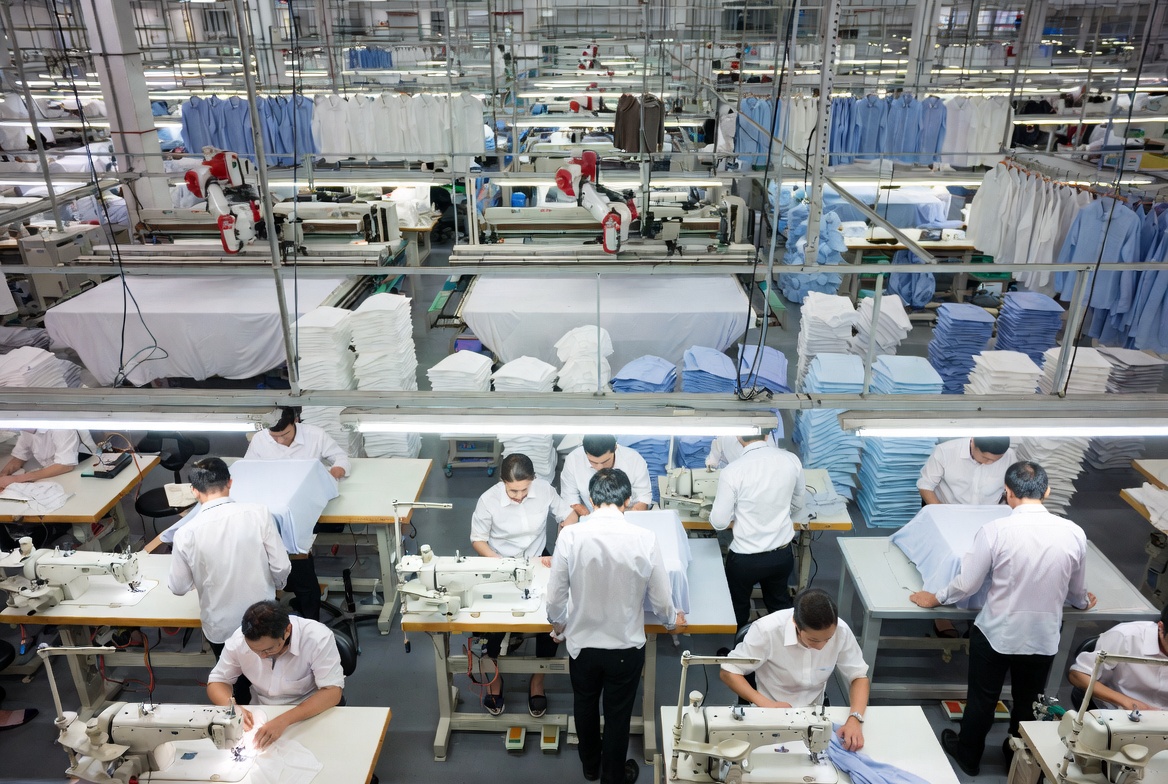
Shanghai Youti Clothing Co., Ltd., founded in 2018, operates 15 assembly lines and more than 30 automated machines, supported by six automated production chains and an annual output exceeding three million garments. The company maintains a clear product portfolio that covers business shirts, suits, uniforms, work clothes, trousers, and jackets, with exports primarily to Europe, North America, and Oceania and growing volumes in South America and Southeast Asia.
Youti is particularly suitable for small and medium brands, importers, and uniform programs seeking a high-value partner that combines flexibility with structured production management. The company supports customers who send technical packages, photos, or sample garments for customization, offers sampling lead times typically around 10–15 days and bulk production lead times in the range of 45–60 days, and provides more than 500 ready-made designs for rapid selection and adaptation. Its focus on coordinated business clothing and uniforms makes it especially strong for buyers wanting shirts integrated with suits, jackets, and broader group apparel projects.
Suzhou Yunshabei Clothing Co., Ltd. is based in Suzhou’s Wuzhong District, one of Jiangsu’s key apparel regions known for textile and garment production. The company focuses on men’s shirts and related styles such as spring and autumn shirts and long-sleeved silk shirts, serving both domestic and export markets.
For buyers, Suzhou Yunshabei is particularly relevant when sourcing classic office shirts and professional garments that need to balance style and practicality. Its product mix and location inside a mature garment cluster make it a solid candidate for programs requiring consistent replenishment and multiple colorways or patterns.
Chongqing Yagedan Dun Clothing Co., Ltd. operates from the municipality of Chongqing with a broad business scope that includes men’s shirts, T-shirts, customized lab coats, and other apparel categories. The company combines wholesale, custom development, and design services, which allows it to support a variety of clothing projects beyond pure shirt production.
Because of this versatility, Yagedan Dun can be a good option for buyers who need coordinated office wear and workwear, such as shirts paired with lab coats or other functional garments. Its structure is suitable for procurement teams wanting a single partner for multiple garment types within the same corporate or institutional program.
Hengjing Jinpeng Clothing Factory is located in Wuzhong Economic Development Zone in Suzhou and focuses on garment processing and sales, notably men’s shirts, summer short-sleeved shirts, and interchange jackets. This orientation towards both shirts and labor protection supplies suggests an emphasis on durable construction and practical design.
For organizations looking to combine office shirts with light-duty workwear or field uniforms, Hengjing Jinpeng offers a pragmatic mix of products. The factory’s placement within an established industrial zone also makes it easier to access nearby fabric and accessory suppliers, which can help stabilize lead times and material availability.
Sichuan Liseini Clothing Co., Ltd. is headquartered in Chengdu’s high-tech zone within a national-level pilot free trade area. The company’s registered capital is relatively high compared with many mid-sized garment factories, and its business scope includes production and sales of clothing, uniforms, suits, and professional attire.
This manufacturer is particularly attractive to buyers in education, administration, and corporate sectors who require coordinated solutions across shirts, suits, school uniforms, and park or company uniforms. Centralizing these categories under one vendor can simplify quality control and styling consistency while optimizing logistics and purchasing processes.
Hunan Wansheng Clothing Co., Ltd., based in Changsha, combines garment manufacturing with related textile products and accessories. Its portfolio includes men’s shirts, unisex cotton jackets, trench coats, and various textile items, often produced through dedicated branches.
For buyers with four-season apparel needs—such as corporations needing summer shirts, autumn jackets, and winter outer layers—Wansheng offers an integrated approach. Using one supplier for multiple seasons allows for consistent fit blocks, trims, and branding across different climate conditions and usage scenarios.
Sichuan Jiashite Clothing Co., Ltd. operates out of Chengdu and specializes in men’s shirts, men’s suits, and shirts for both men and women. The company’s operations cover production, sales, and design for clothing, accessories, leather products, textiles, and shoes, with an explicit focus on export-oriented business.
Buyers looking for a full professional wardrobe—combining business shirts with tailored suits and formal wear—may find Jiashite particularly suitable. Working with one partner on shirts and suits can streamline pattern alignment, fabric coordination, and color matching across entire office or hospitality programs.
Shenzhen Dainel Clothing Co., Ltd., located in Nanshan District of Shenzhen, focuses on men’s shirts, windbreaker jackets, and suits. In addition to clothing production, the company engages in garment design and domestic trade, leveraging the innovation-friendly environment and export infrastructure of the Shenzhen region.
This manufacturer is a good match for brands that value relatively quick sample iterations and flexible office-casual ranges that combine shirts with lightweight outerwear. Proximity to major southern ports and logistics hubs can also help reduce transit times to many global destinations.
Beijing Yibaiyi Clothing Co., Ltd. is based in Beijing’s Shunyi District and offers a wide portfolio that includes men’s shirts, work clothes, and packaging-related apparel solutions. The company also engages in clothing design and the sale of various consumer and office products.
For regional and national organizations centered around northern China, Yibaiyi can deliver business shirts and workwear that align with local distribution networks. Its dual focus on shirts and work clothes makes it suitable for customers needing both office-focused attire and more functional garments across different departments.
Fuzhou Xinrong Clothing Co., Ltd., located in Fujian province, produces men’s shirts, short-sleeved shirts, and security work uniforms, and is involved in wholesale, retail, and custom garment development. It also deals in labor protection equipment and textile products, indicating experience with uniform and protective categories.
Security providers, property management companies, and service contractors needing shirts alongside security uniforms can benefit from Xinrong’s ability to deliver coordinated sets. Combining shirts and security garments under one supplier reduces the risk of mismatched colors, fabrics, or branding elements between different staff roles.
Choosing the right factory is only part of the equation; specifying the business shirt itself with adequate technical detail is equally important. Many issues arise when specifications are vague or left to interpretation, especially for fabrics, fits, and performance tests.
Procurement managers and product developers can significantly reduce risk by standardizing core fabric and construction parameters and by aligning early with suppliers on how these parameters are measured and controlled during production.
Business shirts are typically built around woven fabrics such as poplin, broadcloth, Oxford, and twill, each offering different balances of drape, structure, and comfort. Common yarn count ranges for office shirts fall between 40s and 80s, with higher counts generally yielding finer, lighter fabrics but requiring more attention to handling and shrinkage.
Beyond base structures, many buyers now specify performance attributes such as easy-care or wrinkle-resistant finishes, shrinkage limits after washing, and color fastness thresholds. When shirts form part of uniforms or workwear, additional properties like anti-static behavior or resistance to heat and flame may be required in line with applicable standards.
The perceived quality of a business shirt is closely tied to pattern accuracy and workmanship. Critical elements include collar construction, balance between front and back panels, sleeve and armhole shapes, and consistent seam allowances. Seam density, neat top-stitching, and precise alignment at plackets and yokes contribute to both appearance and durability.
Correct grading across sizes is vital to ensure that collar, chest, waist, and sleeve measurements scale appropriately for different markets and body types. Buyers benefit from reviewing graded size sets and trying on multiple sizes during the development phase to catch fit issues before bulk production.
Even with experienced factories, certain issues occur frequently in shirt sourcing programs, especially when orders are placed in haste or specifications are incomplete. Recognizing these pitfalls early allows buyers to build better controls into their processes.
Typical issues include:
Fabric substitution between sample and bulk: A classic scenario is where the sampling fabric meets expectations in terms of handfeel, weight, and appearance, but the bulk fabric is lighter, less dense, or differently finished. Preventing this requires specifying yarn count, GSM, weave, and finishing, keeping sealed fabric swatches, and, when necessary, arranging third-party testing.
Color inconsistency across dye lots: Corporate uniforms and multi-store retail programs are especially sensitive to color variations. Detailed shade approvals, defined tolerance levels, and established fabric supplier relationships are key to maintaining consistency across multiple batches and reorders.
Pattern drift and measurement deviations: Without firm measurement control, bulk shirts can deviate from agreed size charts, leading to issues with collar fit, sleeve length, and body proportions. Sealed fit samples, measurement-based inspection checklists, and periodic re-measurement help keep patterns stable over time.
Unverified or outdated certifications: Relying on certificates without independent verification can be risky, as documents may be outdated or not actually cover the specific facility producing the goods. It is important to validate certificates directly with the relevant certification or accreditation bodies.
One practical tactic that seasoned buyers use, but that is rarely documented publicly, is to cross-check a factory’s stated capacity against its actual line loading and production calendar. Many factories present optimistic capacity figures during negotiation, but these may assume ideal conditions or ignore existing commitments.
A more grounded view can be gained by asking the factory to outline its line loading for the next two to three months, even at a high level, and indicating where new orders would be placed in that schedule. Buyers can also request examples of similar shirt programs—including style complexity and volumes—and discuss actual daily output per line and typical on-time delivery performance. Factories able to provide coherent answers and basic documentation in this area are generally better organized and more predictable partners.
| Manufacturer | Est. Year | Main Shirt Products | Registered Capital | Customization Focus |
|---|---|---|---|---|
| Shanghai Youti Clothing Co., Ltd. | 2018 | Business shirts, suits, uniforms, workwear | Internal data, multi-line factory | OEM/ODM with strong support for small and medium brands |
| Suzhou Yunshabei Clothing Co., Ltd. | 2011 | Men's business shirts, silk shirts | 1,000,000 CNY | OEM for professional and office shirts |
| Chongqing Yagedan Dun Clothing Co., Ltd. | 2020 | Men's shirts, T-shirts, customized lab coats | 5,000,000 CNY | OEM/ODM for mixed apparel programs |
| Hengjing Jinpeng Clothing Factory | 2012 | Men's shirts, summer short sleeves, jackets | Not disclosed | OEM for shirts and light workwear |
| Sichuan Liseini Clothing Co., Ltd. | 2016 | Shirts, uniforms, suits, professional attire | 50,010,000 CNY | OEM/ODM for corporate and school programs |
| Hunan Wansheng Clothing Co., Ltd. | 2018 | Men's shirts, jackets, trench coats | 2,000,000 CNY | OEM for all-season corporate wear |
| Sichuan Jiashite Clothing Co., Ltd. | 2012 | Men's shirts and suits | 12,600,000 CNY | OEM/ODM for professional wardrobe sets |
| Shenzhen Dainel Clothing Co., Ltd. | 2005 | Men's shirts, windbreaker jackets, suits | 500,000 CNY | OEM for office-casual and semi-formal wear |
| Beijing Yibaiyi Clothing Co., Ltd. | 2015 | Men's shirts, work clothes | 1,000,000 CNY | OEM/ODM for regional corporate apparel |
| Fuzhou Xinrong Clothing Co., Ltd. | 2022 | Men's shirts, short-sleeved shirts, security uniforms | 3,000,000 CNY | OEM for shirts and security uniforms |
After creating a shortlist of potential factories, the next steps involve structured verification, sampling, and contracting. A methodical approach helps convert initial conversations into reliable long-term relationships.
A typical process includes confirming company legitimacy and certifications, aligning on technical specifications, running pilot orders, and refining terms based on observed performance. Each step should be documented to ensure that learning from early orders informs future improvements.
Buyers should begin by checking official registration records to confirm basic information such as company name, registered address, legal representative, and registered capital. This can be done through national or regional corporate databases. Once this baseline is confirmed, attention can shift to certificates and audit reports.
For quality management and related certifications, the safest approach is to request full documents, then verify them directly with the issuing certification body or through official databases. It is important to check that the company name and address on the certificate match the actual production site, and that the scope of certification covers the products being ordered.
Clear documentation is essential before sampling. A comprehensive technical pack typically includes measurement charts with tolerances, fabric specifications, color and pattern references, trim details, labeling and packaging instructions, and any applicable performance or regulatory requirements.
During sampling, buyers should request size sets covering key sizes and evaluate fit, construction, and wash behavior. Issues identified at this stage can often be resolved through pattern adjustments, fabric changes, or updated instructions, which are far easier to address before bulk cutting begins.
Once a supplier passes verification and sampling stages, detailed contracts or purchase agreements should define quality levels and responsibilities. Common elements include acceptable quality limits, inspection responsibilities, handling of non-conforming products, and specific clauses relating to fabric substitution, color variance, and late delivery.
Clear documentation in this area provides a shared reference point during production and any future disputes. It also signals to the factory that the buyer has structured expectations and is likely to maintain a long-term, professional relationship.
Even when products meet technical and aesthetic requirements, shipments can face delays or rejections if documentation and labeling are not properly handled. Business shirts, especially when sold in regulated markets, require correct labeling for fiber content, care instructions, country of origin, and sometimes sizing or safety information.
Packaging specifications—such as whether shirts are packed on hangers or folded in polybags—also affect logistics and presentation. Optimizing carton dimensions, weight, and stacking patterns helps reduce transport costs and minimize damage, particularly for large uniform or retail programs. Coordination with freight forwarders and customs brokers should happen early in the planning phase, not at the point of shipment.

Request the full certificate with certificate number, issuing body, scope, and expiry date, then verify it directly through the issuing body’s database or official contact channels. It is important to ensure that the factory name and site address on the certificate match the facility producing your shirts and to confirm that the certificate is issued by an accredited body recognized in your target market.
Minimum order quantities vary by factory size and production model. Many mid-sized manufacturers are prepared to accept MOQs in the range of 300 to 500 pieces per color per style, particularly when fabrics and trims can be shared across multiple styles. Larger plants focused on high-volume programs may favor 1,000 pieces or more per color to maintain efficiency and reduce changeovers.
To minimize discrepancies, buyers should specify fabric parameters in writing, maintain sealed fabric swatches from the sampling stage, and identify the fabric supplier or mill when possible. During production, it can be useful to conduct lab tests on randomly selected bulk fabric rolls and to confirm that the dye house and finishing processes remain consistent with initial approvals.
Many export-oriented Chinese factories are familiar with stricter chemical and safety requirements and routinely supply to European and North American markets. However, compliance levels differ between suppliers, so buyers must clearly communicate applicable regulations, request relevant test reports, and periodically conduct independent testing on fabrics and trims to confirm ongoing conformity. Regular communication and documented requirements are essential to maintaining compliance over time.
Starting with smaller pilot orders allows buyers to observe a supplier’s actual performance on lead times, communication, and problem-solving. It is useful to ask for an outline of line loading and to agree on milestones such as fabric in-house dates, cutting start, sewing completion, and packaging schedules. Building incentives and consequences for on-time delivery into contracts can also help align expectations and encourage proactive planning.
1. Baidu B2B Data – 2026 Top 10 Men's Shirt Manufacturers in China (company rankings, profiles, and comparison data): https://b2bdata.baidu.com/en/rank/all-area/clothingunderwear/mens-tops/men-shirts
2. Shanghai Youti Clothing Co., Ltd. – Company profile, production capacity, product categories, and market coverage: https://www.work-jacket.com/aboutus.html
3. SourcingWill – How to Verify Factory Certifications in China (ISO, CE, etc.): https://www.sourcingwill.com/how-to-verify-factory-certifications-in-china-iso-ce-etc/
4. ISO – Certification: General guidance on certification bodies and verification: https://www.iso.org/certification.html
5. ChinaCheckup – Is There a China ISO Certificate Search Website?: https://www.chinacheckup.com/blog/china-iso-certificate-search-website


