
Views: 291 Author: Youti Clothing Publish Time: 2026-07-20 Origin: Site


Content Menu
● Introduction: China's Position in Wrinkle Free Dress Shirts
● How This Shortlist Was Selected
● Key Technical Factors in Wrinkle Free Dress Shirts
>> Materials and Fabric Structures
>> Finishing Processes and Performance
● Industrial Clusters and Their Advantages
● Top 10 Wrinkle Free Dress Shirts Manufacturers in China
>> 1. Shanghai Youti Clothing Co., Ltd.
>> 2. OMJ Apparel (Dongguan Xingmai Apparel Co., Ltd.)
>> 3. Yangtze River Delta Formal Shirt Factory
>> 4. Pearl River Delta OEM Shirt Specialist
>> 5. North China Uniform and Shirt Producer
>> 6. Hybrid Shirt and Workwear Factory
>> 7. Sustainable-Fabric-Oriented Shirt Manufacturer
>> 8. Online-Brand-Oriented Shirt Maker
>> 9. OEM Shirt Manufacturer for European Chain Stores
>> 10. Regional Specialist Serving Emerging Markets
● Comparison of Typical Capacity, MOQ, and Focus
● Buyer's Guide: From Verification to Long-Term Cooperation
>> Step 1: Verify Company Legitimacy and Certifications
>> Step 2: Technical Packs, Sampling, and Lab Tests
>> Step 3: On-Site Audits and Line Checks
>> Step 4: Clarify Lead Times, Capacity Allocation, and Logistics
● Common Pitfalls and an Internal "Red Flag" Checklist
>> Typical Issues in Wrinkle Free Shirt Sourcing
>> Insider Red Flag: Showroom vs Line Sample Gap
● Why Shanghai Youti Clothing Co., Ltd. Is a Strong Value-Oriented Partner
● Market Outlook for Wrinkle Free Dress Shirts
● FAQ: Advanced Questions from Professional Buyers
>> 1. How can I confirm whether a factory's ISO 9001 certificate is authentic and valid?
>> 2. What is the most practical way to ensure wrinkle free performance after multiple washes?
>> 3. How do I detect fabric downgrades between pre-production samples and bulk shipments?
>> 4. How can I manage quality consistency across multiple shirt styles and colors within one order?
>> 5. What is a realistic MOQ and lead time for compliant wrinkle free dress shirts from China?
China has developed a highly integrated apparel manufacturing ecosystem, with fabric mills, dyeing houses, accessory suppliers, and sewing factories concentrated in major industrial regions. For wrinkle free dress shirts, this ecosystem provides access to cotton and blended fabrics, finishing technologies, and experienced pattern rooms capable of serving both mass-market and premium brands.
In recent years, despite pressure from global demand fluctuations and trade policies, large-scale apparel enterprises in China have continued to upgrade equipment and production management. This ongoing investment supports more consistent quality, greater automation in cutting and sewing, and improved finishing for easy-care and non-iron shirts. For international buyers, the key challenge is narrowing down thousands of suppliers to a small set of reliable partners who can deliver stable quality, compliant products, and predictable lead times.
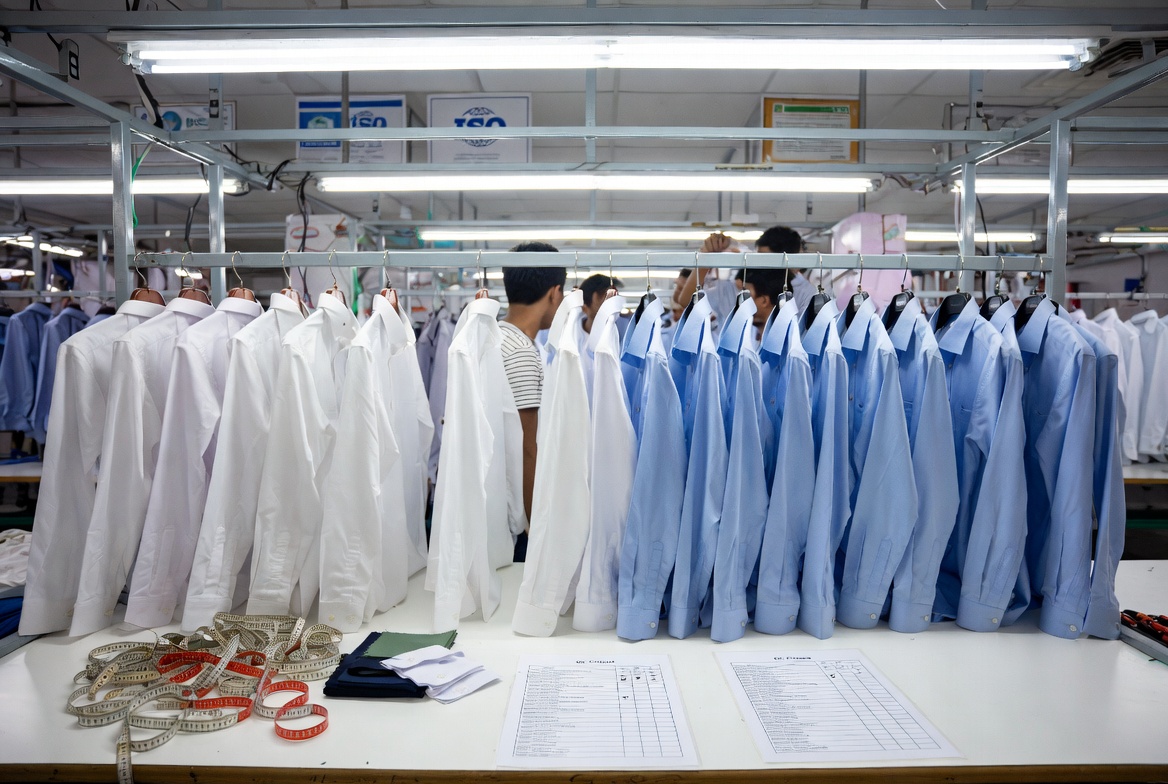
Professional buyers typically follow a structured framework when assessing potential suppliers for wrinkle free dress shirts. This shortlist is built on criteria that mirror that approach and is intended as a starting point for detailed due diligence, not as an exhaustive ranking of all factories in China.
Key evaluation dimensions include:
- Compliance and certification: Presence of quality management systems (such as ISO 9001), social compliance audits (such as BSCI or similar), and product safety or chemical-related documents (such as REACH testing, OEKO-TEX certified fabrics, or equivalent reports).
- Export track record: History of supplying regulated markets (for example Europe and North America), with verifiable shipments, references, or platform verifications that indicate long-term, stable cooperation with overseas buyers.
- Capacity and stability: Clear information on annual production volume, number of sewing lines, and standard lead times, combined with a history of continuous operation over several years.
- Technical capability: Experience with wrinkle free, easy-care, or non-iron finishing, as well as control over pattern grading, collar and cuff construction, and dimensional consistency across batches.
- OEM/ODM flexibility: Ability to work from technical packs, physical samples, or design briefs, and willingness to support mid-size or smaller brands with reasonable MOQs rather than focusing exclusively on very large buyers.
The ten manufacturers and profiles described below represent different segments of the market: high-compliance factories, cluster-based volume producers, flexible mid-MOQ suppliers, and specialized uniform and sustainable-focused factories.
Wrinkle free performance begins with the fabric. For dress shirts, common options include:
- Pure cotton with easy-care finishing: Often made from long-staple or combed cotton, treated with durable press or resin finishing to improve wrinkle recovery while preserving a natural hand feel.
- Polyester/cotton blends: Blends such as 60/40 or 65/35 balance comfort and crease resistance, providing better shape retention and shorter drying time than pure cotton in many usage scenarios.
- Blends with elastane: For stretch dress shirts, a small percentage of elastane improves comfort and allows the fabric to recover better after movement and washing.
A competent manufacturer should be able to explain fabric composition in detail, provide technical data (such as GSM and yarn count), and propose different combinations depending on your positioning: boardroom formal, corporate uniforms, business casual, or online fashion.
Finishing processes for wrinkle free shirts typically involve:
- Resin application or easy-care chemicals, targeted at improving crease recovery without overly stiffening the fabric.
- Controlled curing (temperature and time) to ensure the finish bonds correctly and remains effective after repeated washing.
- Post-finishing washing and softening, used to balance comfort, drape, and wrinkle resistance.
Performance can be evaluated by testing wrinkle recovery after multiple wash cycles, assessing how quickly creases appear during wear, and checking whether the shirt requires light ironing or remains largely smooth straight from the hanger.

China's apparel industry functions through regional clusters:
- Yangtze River Delta: Including areas around Shanghai, this region is strong in formal wear, dress shirts, and suits, supported by woven fabric mills and finishing houses.
- Pearl River Delta: Focused around cities like Dongguan and Guangzhou, this cluster has strong capabilities for fashion-forward shirts and blended fabrics, as well as fast sampling capabilities.
- North and Central China: Regions with strong uniform and workwear production, where wrinkle resistant shirts are used for corporate, industrial, and institutional clients.
These clusters provide advantages in sourcing speed, fabrication flexibility, and logistics. Buyers benefit from shorter development cycles for new shirt programs, easier access to alternative fabrics, and efficient export routes via major ports.
Note: The profiles below are designed to illustrate typical supplier types and capability ranges. Buyers should always conduct independent verification and site or third-party audits before committing to bulk orders.
Shanghai Youti Clothing Co., Ltd. was established in 2018 and operates 15 assembly lines with an annual output exceeding three million garments, including shirts, suits, uniforms, and jackets. The company maintains a structured organizational setup covering design and development, business management, sampling, and after-sales quality inspection, which helps control each stage from concept to shipment.
Shanghai Youti focuses on meticulously crafted formal wear and business shirts, offering both pure cotton and blended fabric options with easy-care or wrinkle resistant properties. The company supports customers who send technical packages, pictures, or physical samples, and it provides more than 500 ready-made designs that can be adapted with embroidered or printed logos. Typical sampling time ranges around 10–15 days, while mass production deliveries generally fall in the 45–60 day window, with shorter timelines for orders based on existing designs.
In terms of market coverage, Shanghai Youti exports primarily to Europe, with additional volumes going to North America and Oceania, and emerging growth in South America and Southeast Asia. Its positioning is oriented toward high value-for-money and service-oriented cooperation rather than purely low-price orders, making it particularly suitable for small and mid-sized brands that require flexibility, consistent communication, and support for long-term programs across multiple product groups.
OMJ Apparel is a long-established factory based in South China, with more than two decades of experience in custom clothing production. Its strengths lie in documented management and compliance systems, supported by recognized quality and social responsibility certifications. This profile makes it attractive for buyers who place a premium on documentation, traceability, and stable processes.
The company works across various apparel categories, including shirts, and is capable of handling wrinkle free or easy-care products for clients who sell into regulated markets. With experience in handling complex testing requirements and retailer-specific standards, OMJ is particularly well-suited to brands that need to demonstrate robust control over chemical and social compliance in their supply chains.
Formal shirt factories in the Yangtze River Delta region specialize in classic business shirts for European, Japanese, and domestic markets. These factories rely on nearby woven fabric mills, dyeing and finishing plants, and accessory suppliers, enabling them to deliver large programs of white and light-colored shirts with consistent quality.
These producers typically operate with automated or semi-automated cutting lines, pattern libraries optimized for different markets, and standardized collar and cuff constructions. They are suitable partners for large retailers, wholesalers, and catalog brands that need long-running programs with minimal design changes but strict fit and quality consistency. Typical MOQs are higher than those of online-focused factories, but they are balanced by economies of scale and stable capacity allocation.
In the Pearl River Delta region, a number of shirt factories focus on OEM services for international fashion and business-casual brands. These factories often combine formal silhouettes with updated details, such as contrast trims, contemporary fits, and blended fabrics that support wrinkle free properties.
They are known for relatively flexible MOQs and fast sampling, often servicing cross-border e-commerce brands and regional chains that require frequent introduction of new styles. Their capabilities include handling multiple fabric types within a single order, managing color assortments, and providing packaging options tailored to retail or direct-to-consumer distribution.
Uniform-focused factories in North China produce shirts for corporate, security, airline, and institutional clients. Wrinkle resistance is a functional requirement in these settings, as garments must maintain a neat appearance over long shifts and repeated wash cycles.
These suppliers emphasize durability, consistent sizing, and standardized fits across large populations of wearers. They are accustomed to working under tender conditions, with detailed specifications and performance tests. For buyers in the corporate and institutional segments, such factories can provide long-term programs with defined annual call-off volumes and repeated replenishments.
Hybrid factories that combine dress shirt and workwear production serve customers who want to source both formal and functional garments from a single partner. These suppliers often handle garments that must comply with technical standards and safety requirements, which in turn fosters more disciplined process control for all product lines.
For wrinkle free shirts, these factories typically focus on uniform-type applications: office staff, logistics teams, or engineering support roles where both appearance and durability matter. Their value proposition lies in their ability to synchronize specifications across shirts, jackets, trousers, and other garments, simplifying procurement and quality management for buyers running integrated uniform programs.
Some factories focus on sustainable material sourcing, working with organic cotton, recycled fibers, or fabrics certified under recognized schemes. For wrinkle free shirts, this means combining performance requirements with constraints on chemical usage and environmental impact.
These suppliers usually work with buyers who have strong internal guidelines on sustainability and transparent reporting obligations. While finishing options may be more limited than in conventional factories, they can deliver consistent easy-care performance within defined chemical thresholds and verified supply chains.
Factories specialized in serving online brands emphasize low to mid MOQs, fast sampling, and responsive style changes. They often maintain a library of ready-to-use patterns and fabrics, allowing them to quickly turn around new wrinkle free shirt designs for testing in e-commerce channels.
These suppliers may offer added-value services such as basic product photography, hangtag development, and branded packaging support. They are ideal partners for digital-native brands and marketplaces that rely on rapid iteration, frequent drops, and trend-driven assortments, while still needing basic easy-care performance in their shirts.
Certain factories focus on supplying private label programs for European hypermarkets, department stores, and specialty chains. Their emphasis is on volume, reliability, and adherence to detailed specifications covering measurements, color standards, shrinkage, and wrinkle recovery.
These suppliers often have internal testing labs and long-term fabric partnerships, allowing them to manage complex assortments across many stores and regions. They are best suited to buyers who can commit to significant volumes and longer planning cycles, and who require a partner experienced in coordinating deliveries across multiple distribution centers and markets.
Regional specialists whose primary markets include South America, Southeast Asia, and parts of Africa occupy an increasingly important niche. They adapt shirt designs to local climate and preferences, such as lighter-weight wrinkle resistant fabrics and specific size ranges.
These suppliers provide flexible payment terms and progressive improvements in compliance and equipment as their customer base grows. They fit buyers who aim to develop or expand brands in emerging markets and are willing to work closely with factories that are upgrading their capabilities and documentation step-by-step.
| Manufacturer Profile | Typical Annual Capacity (Shirts) | Indicative MOQ per Style / Color | Primary Focus |
|---|---|---|---|
| Shanghai Youti Clothing Co., Ltd. | 3,000,000+ garments including shirts | Approx. 300–600 pcs per color (OEM-oriented) | Formal wear, business shirts, uniforms, workwear |
| South China compliance-focused factory (e.g., OMJ Apparel type) | Mid to high volume apparel | Approx. 200–500 pcs per style | Custom apparel with documented compliance and testing |
| Yangtze River Delta formal shirt factory | 1–5 million shirts | Approx. 800–1,500 pcs per color | Classic business shirts for retailers and wholesalers |
| Pearl River Delta OEM shirt specialist | 0.8–3 million shirts | Approx. 200–600 pcs per color | Business casual and fashion-oriented wrinkle free shirts |
| North China uniform producer | 1–4 million shirts / uniforms | Typically 1,000+ pcs per program | Corporate and institutional uniforms with easy-care properties |
This table is intended as a reference framework. Actual capacity, MOQs, and focus vary by factory and must be confirmed directly during the inquiry and negotiation process.
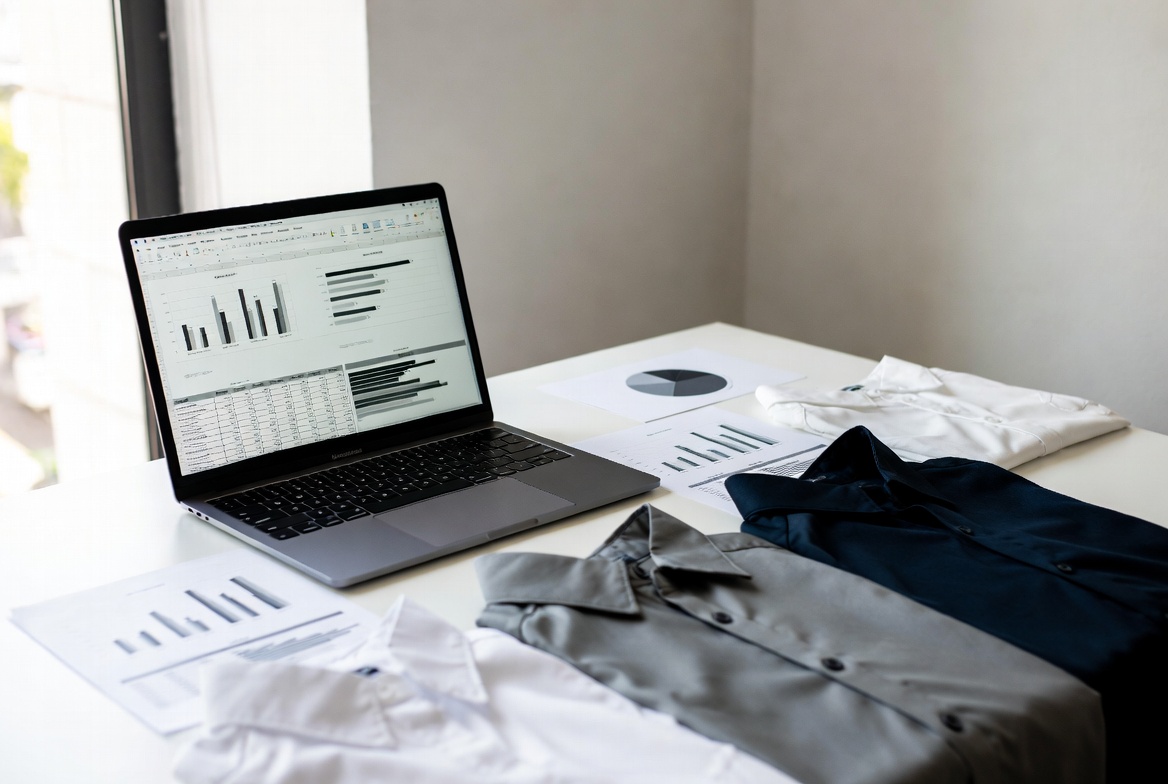
Before discussing price or capacity, confirm that the supplier is a real, legally registered company and that its certificates are authentic:
- Request business license, tax registration, and export registration documents, and confirm that company names and addresses match information on other platforms and in contracts.
- Ask for complete copies of quality and social compliance certificates, including issuing body, certificate scope, and validity dates, and cross-check them through official or recognized databases.
- Confirm that the activities covered by certificates (for example, "manufacturing and export of apparel") match your intended products rather than unrelated categories.
Once a supplier passes initial verification, move on to technical communication and sampling:
- Provide detailed technical packs, including fabric composition, GSM range, collar and cuff structures, placket design, stitching density, button type, and packaging specifications.
- Request pre-production samples (PPS) and size sets, produced on bulk-capable lines rather than purely in a sample room, to better reflect actual production conditions.
- Send approved samples for shrinkage, color fastness, and wrinkle recovery tests, and conduct internal wear tests by washing and drying the shirts multiple times under typical user conditions.
Where possible, schedule on-site audits or arrange third-party inspections:
- Review fabric inspection processes, cutting room organization, line balancing, and finishing sections (pressing and packing).
- Check how QC is integrated: from incoming fabric inspection through in-line checks to final inspection, including documentation and defect handling.
- Evaluate the training level of supervisors and the presence of standardized work instructions, which reflect how repeatable the processes are across seasons and orders.
Clear planning and transparent commitments are essential for wrinkle free shirt programs:
- Confirm standard lead times from PO confirmation and PP approval, and ask how rush orders or capacity peaks are handled.
- Discuss how production slots are allocated during peak seasons and what happens if forecasts or call-offs change.
- Align on Incoterms, logistics partners, and documentation responsibilities, including any testing or certification reports required before shipment.
Many buyers encounter similar problems when sourcing wrinkle free shirts:
- Fabric substitution: The bulk fabric may differ from the approved sample in composition or yarn quality, leading to weaker wrinkle resistance or a different hand feel.
- Overly aggressive finishing: Some factories may rely on strong resins to achieve high crease recovery at the expense of comfort, breathability, or compliance with chemical limits.
- Pattern and measurement drift: Inconsistent collars, cuffs, and body measurements across batches create customer complaints and returns, especially when shirts are sold under the same size label.
These problems are often linked to weak documentation, insufficient QA/QC control, and lack of alignment on test methods and tolerances.
A widely acknowledged but rarely documented insider warning is the mismatch between showroom samples and real production output. A clear red flag arises when showroom samples of a given shirt style exhibit noticeably better wrinkle resistance, smoother finishing, or cleaner stitching than shirts pulled directly from the packing line.
This can indicate that:
- The showroom sample was made from higher-grade fabric or was finished with extra care, while bulk production relies on downgraded fabric or less controlled processes.
- The sample room follows stricter procedures than the main production lines, leading to a gap between "selling" samples and actual delivered goods.
To detect this issue, buyers should:
- Request random shirts from ongoing production, ideally from sealed cartons, and compare them with the showroom sample under identical lighting and handling.
- Check fabric handle, thickness, sheen, creasing behavior, and stitching quality; document any differences and discuss them with the factory before approving bulk shipments.
- Include explicit clauses in contracts that link acceptance criteria to the PPS characteristics and define remedies if bulk goods deviate materially from approved samples.
Shanghai Youti Clothing Co., Ltd. embodies the profile of a factory designed to serve small and mid-sized brands looking for a combination of customization, compliance awareness, and practical flexibility. With 15 assembly lines and more than three million garments produced annually, the company has enough scale to support multi-market growth, while still being attentive to medium-sized orders and style diversification.
Its product portfolio spans formal shirts, suits, uniforms, workwear, trousers, and jackets, enabling buyers to consolidate multiple categories under one supplier. The internal structure—covering design and development, sampling, business management, and after-sales quality inspection—provides a clear process from initial concept and fabric selection through sampling, production, and after-shipment follow-up.
Shanghai Youti's global footprint, with Europe as its primary market and additional business in North America, Oceania, South America, and Southeast Asia, indicates familiarity with various size standards, compliance expectations, and lead-time requirements. For brands seeking a long-term partner capable of balancing cost efficiency with stable quality and responsive communication, this factory represents a practical and realistic option.
Recent industry data show that the Chinese apparel sector continues to operate under both external and internal pressures, such as changing trade policies and moderated domestic consumption. Even so, the number of large-scale enterprises remains significant, and capital investment in the sector has continued to grow, signaling ongoing attempts to upgrade technology and production.
For wrinkle free dress shirts, growth in shirt fabric markets and the continued importance of formal and business-casual attire, both offline and online, suggest that demand will remain stable in the medium term. Buyers who invest now in robust supplier relationships, clear technical standards, and verified compliance will be better positioned to maintain consistent product quality and adapt to evolving regulatory and consumer expectations.
Request a complete scanned copy of the certificate and check that the company name, address, and scope match the details on the business license and contract documents. Then, verify the certificate number and issuing body using either the issuing body's online database or recognized accreditation databases. If the issuing body cannot be found in official lists, or if the certificate details do not match, treat this as a major warning sign and request clarification or additional evidence.
Define clear performance requirements in your technical documents, such as target wrinkle recovery assessments after a specific number of home laundering cycles. Ask the factory to provide internal test reports based on these criteria and send approved samples to independent laboratories for confirmation. Additionally, conduct in-house wear tests by washing the shirts under realistic conditions and assessing how easily they return to a neat appearance after drying and light ironing.
At the approval stage, record the GSM, fiber composition, and visual parameters (such as color and sheen) of the pre-production sample. During production and before shipment, commission inspections that include unannounced fabric checks, and compare bulk fabric against the approved sample based on weight, appearance, and laboratory analysis. If discrepancies are found, negotiate corrective measures such as rework, discounts, or replacement, and update contracts to include stronger fabric control clauses.
Set up style- and color-specific quality plans and require separate pre-production sample approvals for each fabric and major color group. Ensure the factory's QC team logs defects by style and color so that recurring issues can be traced to particular combinations of fabric, pattern, or production line. For larger programs, consider assigning different styles to specific lines to reduce complexity and improve repeatability.
For mid-sized programs targeting formal or business-casual markets, typical MOQs range from roughly 300 to 1,000 pieces per color per style. Lead times commonly fall between 45 and 60 days after pre-production sample approval, with additional time required for fabric development, testing, and shipping. Online-focused factories may support smaller MOQs, but usually at higher unit costs and with a stronger emphasis on fast-moving styles rather than long-running, standardized shirt programs.
1. Shanghai Youti Clothing Co., Ltd. – About Us and company information https://www.work-jacket.com/aboutus.html
2. Economic Operation of China's Apparel Industry from January to November, 2025 https://www.texleader.com.cn/en/news-35338.html
3. China Shirt Fabric Market – Market size, share, and growth outlook https://deepmarketinsights.com/vista/insights/shirt-fabric-market/china
4. ISO 9001 Certification for Traditional Chinese Clothing – Guidance for apparel manufacturers https://seller.alibaba.com/blogs/2026/southeast-asia/traditional-chinese-clothing/iso-9001-certification-guide-alibaba-b2b
5. Clothing manufacturer certifications – Overview of common certifications for apparel factories https://www.omj-apparel.com/clothing-manufacturer-certifications/
6. Verifying business licenses and certifications for apparel suppliers https://www.ninghowapparel.com/blog/verifying-business-licenses-certifications-iso-wrap-gots/
7. Guidance and databases for verifying ISO certificates of Chinese suppliers https://www.chinacheckup.com/blog/china-iso-certificate-search-website


