
Views: 222 Author: Youti Clothing Publish Time: 2026-06-19 Origin: Site


Content Menu
● What Is a Power Suit in 2026?
● Why the Power Suit Still Matters for Professionals
● How Confidence in a Suit Really Works (Beyond the Fabric)
>> Nail the Fit: Your Suit as a Second Skin
>> Get Comfortable by Wearing Your Suit More Often
>> Align Your Suit With Your Personal Style
>> Reframe the Suit as a Tool, Not a Restriction
● Key Elements of a High‑Impact Power Suit
>> Fabric and Construction Choices That Matter
>> Color, Pattern, and Details for Authority
>> The Power of Accessories and Grooming
● How Busy Professionals Actually Use Power Suits Today
● OEM Manufacturer Insights – What Makes a Suit Line Successful?
● Practical Checklist – How to Choose Your Next Power Suit
● Case‑Style Example – From First Order to Stable OEM Partnership
● Power Suit Options Overview for Different Users
● How Our OEM Suit Service Supports Your Brand
● Call to Action: Build Your Next Power Suit Line With Us
● FAQ: Power Suits and OEM Manufacturing
A power suit is more than a sharp outfit – it is a strategic tool to project credibility, confidence, and professionalism in any international business setting. As a Chinese OEM suit manufacturer working with global brands, I have seen how the right suit design, fabric, and fit can completely change how a client's customers show up in the boardroom, at trade shows, and in high‑stakes negotiations. [marketveep]

A power suit is a tailored two‑piece or three‑piece suit designed to signal authority, competence, and modern style in professional environments. While the idea originated in traditional corporate offices, today's power suit appears in tech start‑ups, finance, consulting, and even creative industries. [embryo]
Key characteristics of a modern power suit include: [moz]
- Strong but comfortable shoulder line
- Clean, tailored waist suppression
- High‑quality wool or wool‑blend fabrics
- Professional colors such as navy, charcoal, mid‑grey, and deep black
- Subtle, business‑appropriate patterns (pinstripes, windowpane, micro‑checks)
From an OEM perspective, we see more overseas buyers requesting suits that balance boardroom authority with real comfort: stretch blends, breathable linings, and pattern engineering for all‑day wear. [embryo]
In an era of business‑casual and remote work, some professionals underestimate how powerful a well‑cut suit still is. Yet research in business psychology continues to show that formal clothing can increase perceived competence, negotiation performance, and self‑confidence. [developers.google]
When you step into a properly tailored power suit:
- Colleagues and clients immediately read you as more prepared and trustworthy
- You feel more focused, decisive, and ready to lead meetings
- Your personal brand appears more premium and consistent
For B2B brands, this effect translates directly into sales meetings, trade fairs, and investor presentations, where each interaction is a chance to communicate value in seconds. [tapstitch]
Confidence in a suit does not come from the price tag; it comes from fit, familiarity, and alignment with your identity. In our OEM work, we consistently observe that even mid‑priced suits can look expensive when these factors are correct. [marketveep]
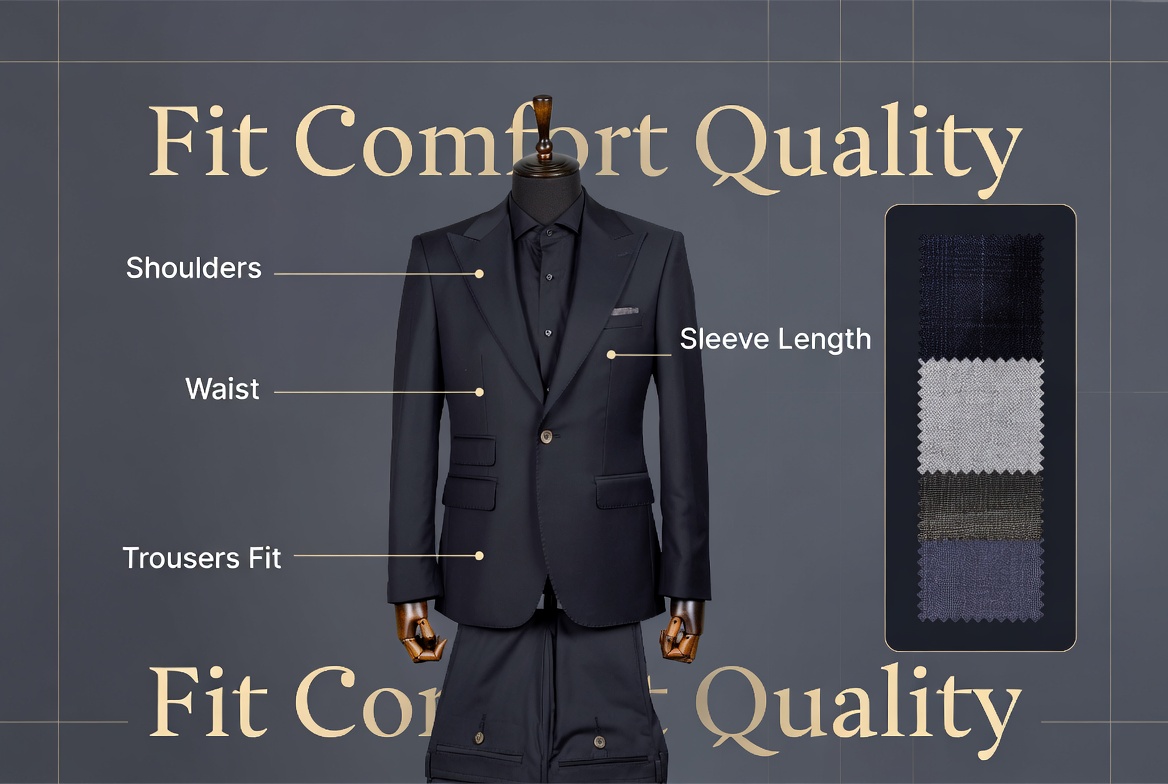
Nothing destroys confidence faster than a suit that pulls at the shoulders or collapses at the chest. A good power suit should move with you, almost like a second skin, not a costume.
Core fit checkpoints:
- Shoulders: Seam ends where your shoulder ends – no dents or divots
- Jacket length: Covers the seat but does not extend too far down the thigh
- Sleeves: Show about 0.5–1.0 cm of shirt cuff when arms are relaxed
- Trousers: Smooth drape with minimal break at the shoe
From the factory side, we achieve this by refining block patterns, adjusting size grading for different markets, and offering made‑to‑measure options through our brand partners. [marketveep]
If you only wear a suit for interviews, weddings, and once‑a‑year conferences, it will always feel stiff and unnatural. The original Tom James article makes an important point: wearing your suit more often in low‑pressure situations helps you relax into it.
Practical ways to build comfort:
1. Wear your suit while working from home before a big presentation.
2. Use it for a casual client lunch instead of saving it only for "big days."
3. Practice basic movements (sitting, presenting, walking stairs) at home to identify any tightness or pulling.
As OEM manufacturers, we also test movement ranges (arm lift, sitting crease, lap comfort) in sample fittings to ensure the finished garment supports natural movement. [responsify]
A power suit should feel like an extension of who you are, not a character you are playing. When the design matches your personality, you stop thinking about your outfit and focus on the conversation. [moz]
Style alignment examples:
- For bold personalities: Structured shoulders, peak lapels, windowpane checks
- For understated professionals: Soft shoulders, notch lapels, solid navy or charcoal
- For creative leaders: Textured fabrics, slightly wider lapels, unique lining colors
As a manufacturing partner, we help overseas brands build cohesive collections that match different buyer personas: founders, sales leaders, analysts, and executives all need slightly different visual signals. [marketveep]
Many younger professionals associate suits with strict dress codes and discomfort. A powerful mindset shift is to see your suit as equipment that supports your goals: closing deals, winning promotions, or leading teams.
When you think of the suit as a tool: [moz]
- You become more intentional about when and how you wear it
- You treat tailoring, pressing, and maintenance as part of professional preparation
- You invest in better fabric and construction because you see the return on confidence and perception
For brands we work with, this reframing is also a marketing opportunity: positioning the suit as "performance gear for leadership" resonates more than simply "formalwear." [embryo]
Not all suits can be called power suits. Specific design and quality decisions determine whether a suit truly performs in business contexts. [embryo]
High‑quality fabric is non‑negotiable for a professional suit you wear frequently. Wool and wool‑blend fabrics offer the best balance of drape, breathability, and durability for business usage. [embryo]
Important fabric features:
- Super 100s–130s wool: Ideal for everyday business wear
- Blends with elastane: Add stretch for comfort without losing shape
- Twill or serge weaves: Offer smooth finish and strong recovery
On the construction side, half‑canvas or full‑canvas jackets hold their shape better over time compared with cheaper fused constructions, which can bubble or warp. As an OEM vendor, we align construction methods with each brand's price point and market expectations. [embryo]
Color and pattern communicate more quickly than words in a meeting room. For power suits, classic business colors still dominate, but fine patterns add personality without breaking dress codes.
Recommended color strategy:
- Primary suits: Navy, charcoal, and mid‑grey for maximum versatility
- Secondary options: Deep black for formal settings; subtle pinstripes for senior‑level presence
- Patterns: Thin pinstripe, small check, or restrained windowpane to add visual interest
Detailing that supports a professional image:
- Lapels: Notch lapels for most business roles; peak lapels for more authority
- Pockets: Flap pockets for traditional business; ticket pocket for subtle flair
- Buttons: Dark horn or refined resin buttons to avoid a cheap look
Accessories can elevate or undermine an otherwise great suit. A clean, intentional approach works best for professional environments. [orbitmedia]
Choose accessories that support your message:
- Ties: Solid or simple patterns in deep tones; avoid overly shiny or novelty prints
- Pocket squares: Add contrast but keep patterns controlled
- Shoes: Clean, polished leather in black or dark brown; no heavy casual soles
- Watch: Classic, slim profile rather than oversized statement pieces
From the perspective of OEM production, we often collaborate with brand partners on coordinated accessory programs to ensure their customers can build complete outfits from a single collection. [marketveep]
The original article focuses on personal tailoring service, meeting clients at home or office to optimize their wardrobe. This reflects a broader global trend: busy executives want convenience, consistency, and expert guidance instead of shopping around. [tapstitch]
In our collaboration with overseas suit brands and wholesalers, we see three main usage patterns: [responsify]
- Executive capsule wardrobes: 3–5 suits rotated across seasons, all coordinated
- Event‑specific suits: Dark, sharp suits for conferences, pitches, and media appearances
- Hybrid work wardrobes: Suits that pair with knitwear, polos, or dress shirts for different formality levels
By integrating OEM manufacturing with brand design teams, we help them deliver these wardrobe solutions at scale, maintaining consistent sizing, fabric quality, and color standards across multiple seasons. [marketveep]
From years of OEM collaboration with foreign brands, we have learned that a successful power suit program is not only about individual garments; it is about systematic design and quality management. [marketveep]
Key success factors we see in top‑performing suit brands: [responsify]
- Clear positioning: "Power suits for investment bankers," "Tailored suits for tech founders," or "Affordable executive suiting for SMEs"
- Consistent fit blocks: Regular fit, slim fit, and athletic fit patterns that stay consistent season to season
- Reliable size grading: Adjusted for local markets (e.g., US, EU, or Japanese body types)
- Strong sampling and testing: Multiple fitting rounds before bulk production
As Shanghai Youti Clothing Co., Ltd., we support brands by offering pattern development, fabric sourcing, and flexible MOQs, so they can test power suit concepts in the market quickly and scale winning designs with confidence. [marketveep]
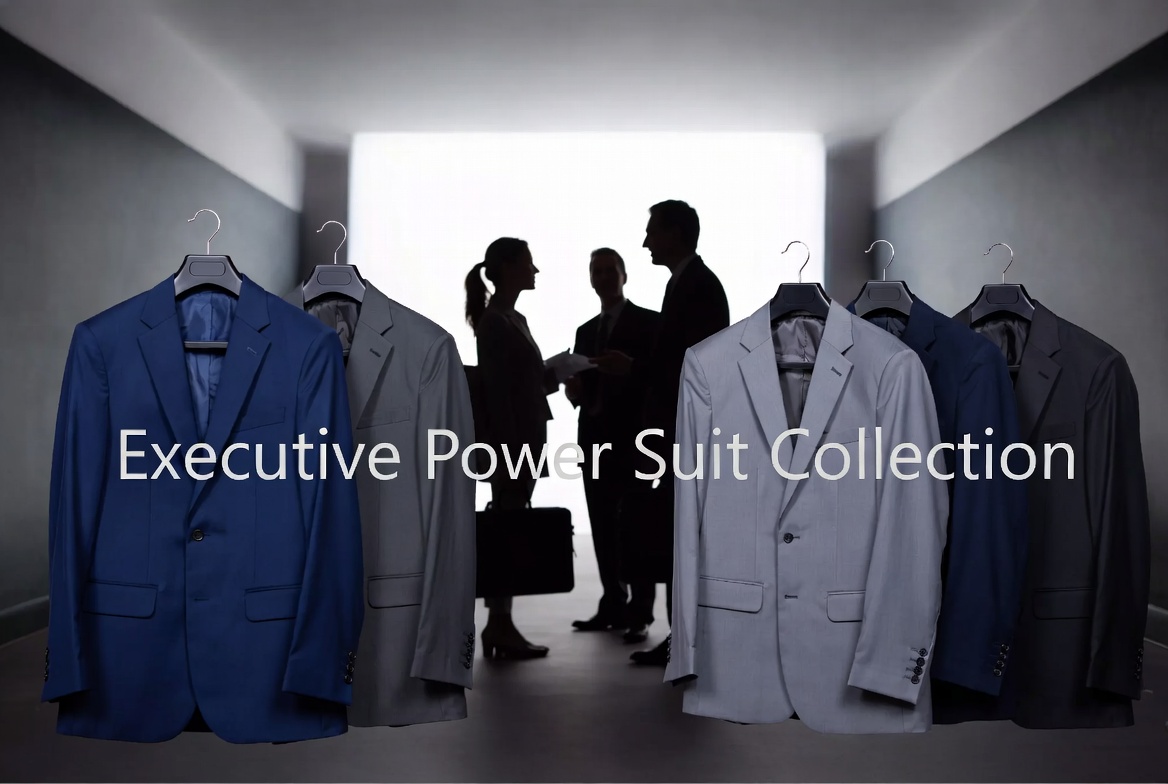
Whether you are a buyer for a brand or an individual professional, you can evaluate a power suit systematically. [orbitmedia]
Use this quick checklist before you buy:
1. Look at the shoulder line – clean and aligned with your natural shoulder.
2. Button the jacket – no pulling lines around the button or chest.
3. Raise your arms – the jacket should not cut into your shoulders.
4. Sit down – the trousers should not feel tight across the thighs.
5. Check the fabric – does it spring back after squeezing it in your hand?
6. Confirm the lining – breathable and smoothly sewn, no bubbling.
7. Inspect stitching – straight, even seams and neat buttonholes.
For B2B buyers, you can also request factory spec sheets, lab test reports, and production samples to ensure each bulk order meets your standard. [responsify]
To illustrate how a power suit concept becomes a stable business line, consider a typical international client journey with a professional OEM supplier. [marketveep]
A mid‑size European menswear brand decided to upgrade its business suit collection to target senior managers. They partnered with a Chinese OEM manufacturer to: [marketveep]
- Redesign blocks for a cleaner, more modern shoulder and narrowed waist
- Switch from mid‑level fused construction to half‑canvas for top styles
- Standardize three core colors and two seasonal fabrics per year
Within two seasons, they reported stronger repeat purchase rates and higher average order values in the power suit segment. From the manufacturing side, stable patterns and fabric programs also reduced defects and simplified quality control. [marketveep]
| User type | Recommended suit style | Key fabric choice | Primary colors |
|---|---|---|---|
| Young professionals | Slim fit, notch lapel, minimal pattern | Durable wool blend | Navy, mid‑grey |
| Senior executives | Structured shoulder, peak lapel | Super 110s–130s wool | Navy, charcoal, pinstripe |
| Creative directors | Soft shoulder, textured fabric | Wool‑linen or wool‑silk | Grey, blue, subtle checks |
| Sales & client‑facing roles | Versatile two‑piece with strong drape | Wrinkle‑resistant wool | Navy, deep blue |
| Event speakers | Statement lapel, refined pattern or black suit | High‑twist wool | Black, navy, charcoal |
This kind of structured offering is exactly what we help overseas brands design and manufacture so their customers can choose confidently across multiple roles and occasions. [marketveep]
As a Chinese OEM manufacturer, Shanghai Youti Clothing Co., Ltd. specializes in professional suiting for international brands, wholesalers, and private‑label producers. We combine pattern expertise, fabric sourcing, and quality control to help you bring competitive power suits to your target market. [marketveep]
Working with us, you can: [responsify]
- Develop exclusive power suit blocks tailored to your audience
- Select fabrics aligned with your price point and branding
- Customize details such as lapels, linings, buttons, and brand labels
- Scale from small test runs to large, repeatable orders
Instead of having to coordinate multiple factories, you can rely on a single partner focused on professional, business‑ready suiting.
If you are a fashion brand, wholesaler, or professional apparel company planning your next power suit collection, now is the time to refine both style and supply chain. We invite you to discuss your concepts, target markets, and technical requirements with our team so we can help you design, sample, and manufacture power suits that truly support your customers' professional success. [marketveep]
Reach out to our OEM team at Shanghai Youti Clothing Co., Ltd. to explore fabrics, patterns, and production options tailored to your brand positioning and growth goals. [marketveep]
Q1: What is the main difference between a regular suit and a power suit?
A power suit is designed specifically to project authority and confidence in professional environments, with stronger shoulders, clean lines, and carefully selected colors and fabrics.
Q2: Which colors are safest for a first power suit?
Navy and charcoal are the most versatile, business‑appropriate colors for a first power suit, suitable for interviews, meetings, and formal presentations.
Q3: How often should professionals replace their power suits?
With proper care and quality fabric, a well‑made power suit can stay in rotation for 3–5 years of regular professional use before signs of wear become noticeable. [embryo]
Q4: What information should a brand prepare before contacting an OEM suit supplier?
It helps to have target price range, preferred fabric levels, fit ideas (slim, regular, athletic), core colors, and expected seasonal volumes ready before engaging an OEM partner. [responsify]
Q5: Can an OEM supplier support both men's and women's power suits?
Yes, experienced OEM manufacturers can develop parallel pattern systems for men's and women's suiting, ensuring consistent quality, fabric, and design language across both lines. [marketveep]
1. Tom James Blog – "Mastering The Power Suit With Confidence." (Accessed 2026) [tomjames]
2. Moz – "What is Google E‑E‑A‑T? Guidelines and SEO Benefits." [https://moz.com/learn/seo/google-eat] [moz]
3. Google Search Central – "Creating Helpful, Reliable, People‑First Content." [https://developers.google.com/search/docs/fundamentals/creating-helpful-content] [developers.google]
4. Market Veep – "Best Practices for Your Content SEO Strategy in Manufacturing." [https://www.marketveep.com/blog/4-best-practices-for-your-content-seo-strategy-in-manufacturing] [marketveep]
5. Embryo – "SEO for Fashion Brands: 10 Essential Tips." [https://embryo.com/blog/seo-for-fashion-brands/] [embryo]
6. Orbit Media – "Blogging SEO: How to Optimize Your Blog Post to Rank." [https://www.orbitmedia.com/blog/blog-optimization/] [orbitmedia]
7. Responsify – "How to Do a Competitor Blog Analysis to Gain Traction." [https://www.responsify.com/competitor-blog-analysis] [responsify]
8. Tapstitch – "Beginner's Guide to SEO for Fashion Brands." [https://www.tapstitch.com/blog/post/fashion-brand-seo-strategy-guide] [tapstitch]


