
Views: 236 Author: Youti Clothing Publish Time: 2026-08-18 Origin: Site


Content Menu
● Cotton Shirt vs Polyester Shirt: Quick Comparison
● Cotton Shirts for Industrial Work
>> Where Cotton Shirts Perform Well
● Polyester Shirts for Industrial Work
>> Where Polyester Shirts Perform Well
>> Polyester Shirt Limitations
● Industrial Safety Comes First
● Cotton vs Polyester in Real Industrial Conditions
>> Humid, Rainy, or High-Sweat Workplaces
>> Abrasive or High-Contact Jobs
>> Customer-Facing Industrial Teams
● Why Polyester-Cotton Blends Are Often the Practical Middle Ground
● A Practical Fabric Selection Checklist
● FAQ
>> Is cotton better than polyester for work shirts?
>> Does polyester make workers feel hotter?
>> Is 100% cotton safe for welding work?
>> Which fabric lasts longer in industrial uniforms?
>> What is the best polyester-cotton ratio for work shirts?
>> Can polyester work shirts be customized with logos?
>> What should buyers request from an OEM shirt supplier?
For industrial uniforms, choosing between a cotton shirt and a polyester shirt affects far more than appearance. It influences worker comfort, garment life, wash performance, safety suitability, and the total cost of supplying uniforms at scale.
From our experience supporting overseas brands, wholesalers, and workwear manufacturers, there is no universal winner. Cotton shirts generally prioritize comfort and natural breathability, while polyester shirts are often selected for durability, fast drying, wrinkle resistance, and easier maintenance. The best industrial work shirt depends on the jobsite hazard assessment, climate, shift length, laundering method, and required garment specification.
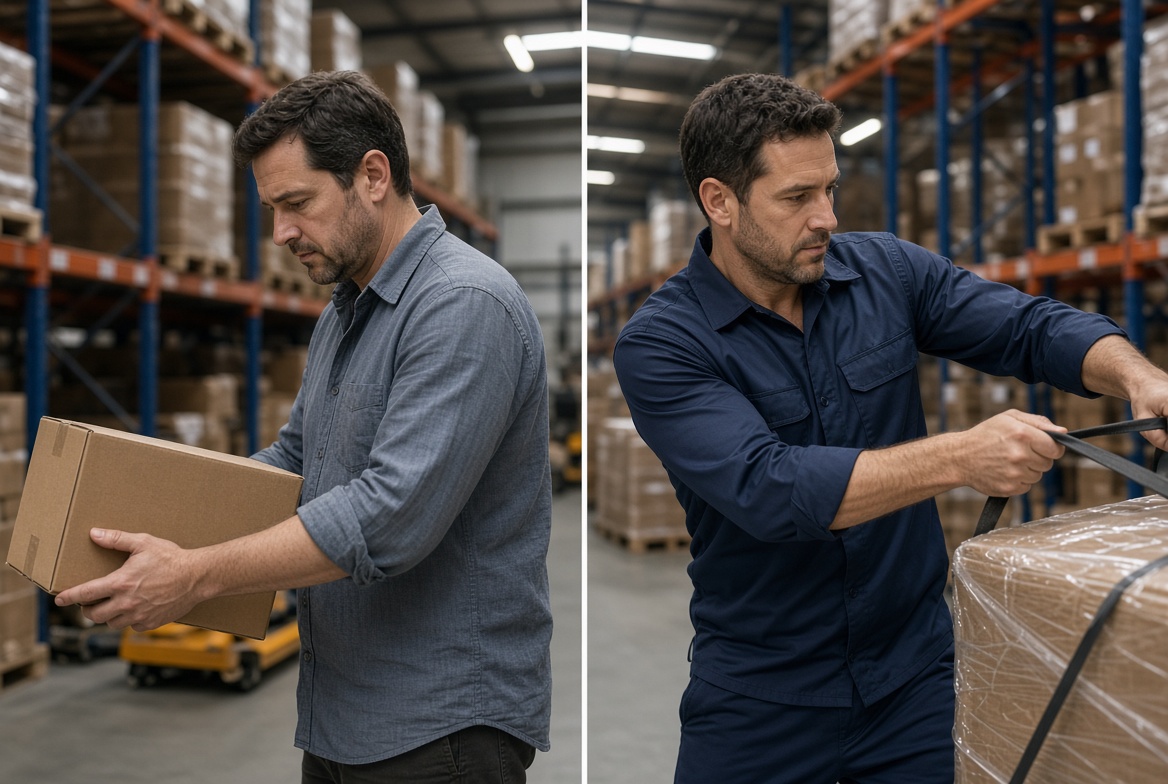
| Performance factor | Cotton shirt | Polyester shirt | Better choice for |
|---|---|---|---|
| Skin feel | Soft, natural, comfortable | Can feel smoother but less natural | Long shifts and direct skin contact: cotton |
| Moisture behavior | Absorbs sweat but can stay wet | Absorbs little water and dries quickly | Humid, wet, or high-sweat work: polyester |
| Breathability | Often strong, depending on weave and weight | Depends heavily on construction and finish | Hot, low-hazard work: cotton or engineered polyester |
| Durability | Can wear, shrink, and fade over repeated laundering | Strong, abrasion-resistant, shape-retentive | Warehouse, logistics, maintenance: polyester |
| Wrinkle resistance | Wrinkles easily | Naturally wrinkle-resistant | Customer-facing teams and easy-care uniforms: polyester |
| Heat and flame exposure | Does not melt, but can ignite | May melt and adhere to skin if not purpose-designed | Heat, sparks, and arc-related hazards: certified protective fabric only |
| Odor retention | Generally less odor-retentive | Can retain body oils and odors without suitable finishing | High-contact or repeated-wear programs: cotton or treated polyester |
| Print and color retention | Good, but may fade over time | Excellent for vivid colors and repeated washing | Branded uniforms and color-coded teams: polyester |
| Typical maintenance | May need ironing and controlled shrinkage management | Lower-maintenance and faster drying | Large-scale uniform programs: polyester |
The table gives a practical starting point, but fiber content is only one part of the decision. Fabric weight, yarn construction, weave, finishing, garment fit, seam strength, and care instructions can change the final performance significantly.
A cotton work shirt is valued because it feels familiar, breathable, and comfortable during extended wear. Cotton fibers absorb moisture, which can reduce the immediate sticky sensation caused by perspiration. For workers performing light-to-medium-duty tasks in warm conditions, this natural hand feel remains a major reason brands specify cotton.
Cotton industrial shirts can be a good fit for:
- General assembly and packaging
- Low-risk warehouse tasks
- Light maintenance work
- Agricultural operations
- Indoor production areas with moderate temperatures
- Service, inspection, and supervisory uniforms
- Branded staff apparel that needs a more premium natural feel
A well-designed cotton shirt can feel more comfortable over a full shift, especially when the fabric has an appropriate weight and a relaxed fit that allows air circulation.
Comfort close to the skin: Cotton is widely preferred for its soft and natural touch.
Moisture absorption: Cotton can take in perspiration rather than leaving it immediately on the skin surface.
Lower melting concern: Unlike ordinary polyester, cotton does not melt when exposed to heat. This does not make regular cotton protective clothing, but it is an important material distinction.
Easy customization: Cotton fabrics work well with embroidery, screen printing, woven labels, patches, contrast panels, and garment washing effects.
Professional appearance: Oxford cotton, cotton twill, poplin, and canvas constructions can create different looks, from smart corporate work shirts to rugged overshirts.
The main drawback is that cotton can become heavy and slow-drying after absorbing sweat or water. In high humidity, rainy environments, or physically demanding work, a wet cotton shirt may feel uncomfortable for a long period.
Cotton shirts may also:
- Shrink if fabric pre-treatment and wash control are inadequate
- Wrinkle during wear and after laundering
- Fade more quickly than polyester in certain dyeing systems
- Lose shape faster in intensive commercial laundering
- Require more drying time between shifts
For a buyer, this means that a low-cost cotton shirt is not automatically economical. If the uniform is washed frequently, replacement cycles and ironing requirements can raise the operational cost.
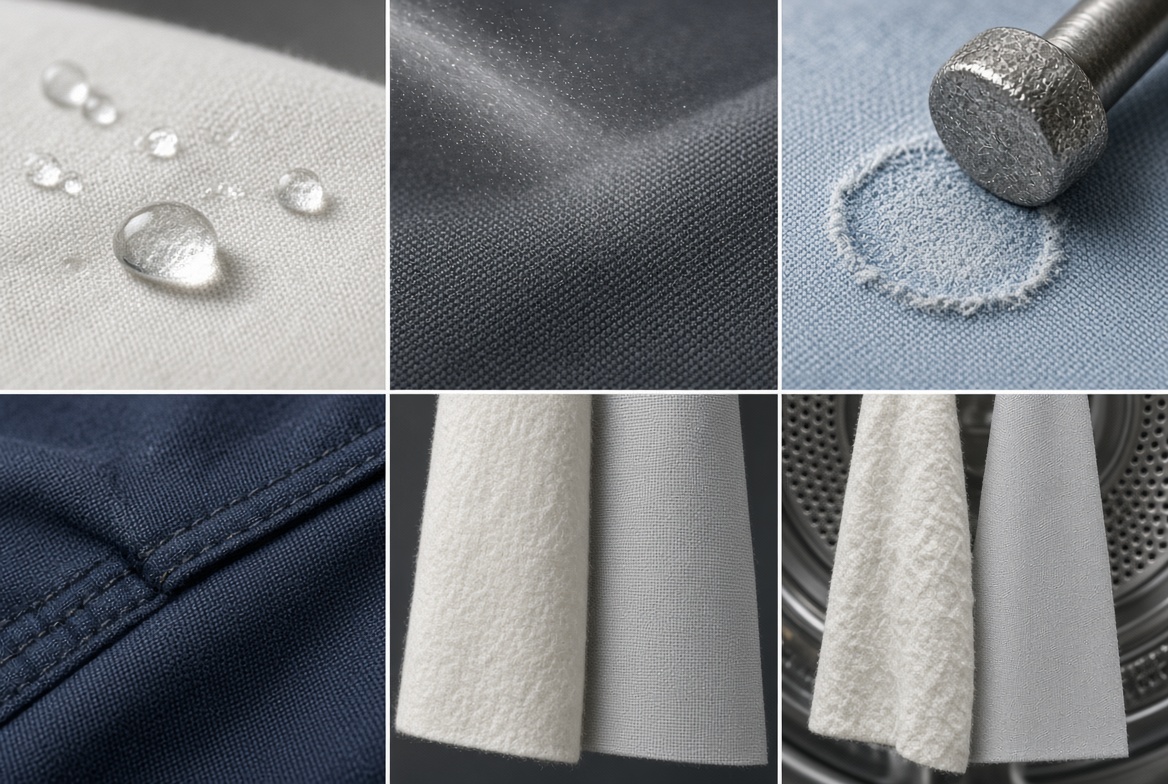
A polyester shirt is often the practical choice for organizations that need uniforms to withstand repeated wear, repeated laundering, and demanding logistics. Polyester fibers are strong, lightweight, and hydrophobic, meaning they do not absorb much water. This is why polyester work shirts usually dry more quickly than cotton alternatives.
In industrial uniform programs, polyester is commonly used for warehouse teams, transportation personnel, delivery crews, machine operators, facility staff, cleaning teams, and outdoor service personnel.
Polyester industrial shirts are especially suitable for:
- Logistics and distribution centers
- Construction support roles without heat or flame exposure
- Delivery and field-service teams
- Warehousing and inventory work
- Automotive service reception and non-hot-work roles
- Manufacturing lines with frequent washing requirements
- Teams requiring color consistency across large repeat orders
- Workwear programs with fast turnaround between shifts
Fast drying: Polyester absorbs very little water, so garments tend to dry much faster after washing, sweating, or light rain exposure.
Strong shape retention: Polyester generally resists wrinkles, shrinking, and stretching better than untreated cotton.
High color durability: It can maintain strong colors and branding visibility through repeated laundering.
Abrasion resistance: Polyester handles rubbing, friction, and daily contact with equipment better than many lightweight cotton fabrics.
Lower-maintenance uniforms: Quick drying and wrinkle resistance can reduce ironing and laundry handling time.
Reliable production consistency: For bulk OEM programs, polyester fabrics can support stable color matching, repeatable specifications, and scalable production.
Recent textile research also shows that moisture and thermal performance are strongly influenced by fiber structure and fabric engineering, not simply by a cotton-versus-polyester label. Hydrophilic cotton combined with specially structured polyester can improve wicking, moisture management, and thermal comfort compared with basic constructions.
Ordinary polyester should not be treated as a default option for every industrial workplace. Under high heat, flame, arc, molten-metal, or welding-spark exposure, polyester can melt. Melted synthetic material can adhere to skin and worsen an injury.
For this reason, organizations must not select a standard polyester shirt simply because it is durable or inexpensive. OSHA guidance notes restrictions on polyester and similar fibers in certain electric-arc and flame-exposure circumstances unless the fabric is appropriately treated or the hazard is otherwise eliminated.
Polyester may also retain odors when oils and perspiration build up in the fabric. This can be improved through suitable yarn selection, antimicrobial or odor-control finishes, moisture-management finishes, and appropriate wash procedures.
The most important rule is simple: do not choose workwear fabric based on comfort or cost before evaluating workplace hazards.
A cotton shirt and a polyester shirt are both general apparel unless they have been developed, tested, and specified for the relevant protective application. A shirt that looks rugged is not necessarily suitable for welding, electrical arc exposure, petrochemical work, hot-metal operations, or chemical splash conditions.
For hazardous jobs, the buyer should confirm:
1. The workplace hazard type, including flame, heat, arc, chemical splash, static, sharp abrasion, or biological exposure.
2. The applicable regional safety rules and customer requirements.
3. The required garment standard, test method, and protective classification.
4. Whether the protection is inherent in the fiber or created through a durable finish.
5. How many wash cycles the protective performance must withstand.
6. Whether the complete garment, including trims, thread, buttons, reflective tape, labels, and closures, meets the specification.
For example, a work shirt used around sparks may require a certified flame-resistant construction rather than a standard 100% cotton shirt. Likewise, polyester may be appropriate in a low-heat warehouse operation but unsuitable for unprotected hot-work environments.
In hot, dry conditions with low fire risk, cotton can deliver excellent comfort because of its natural feel and airflow. However, a lightweight performance polyester with a wicking finish can also work well, especially for workers who sweat heavily or need a shirt to dry quickly.
Choose cotton when the priority is a softer, more traditional uniform experience.
Choose polyester when the priority is quick drying, color retention, and low-maintenance care.
For outdoor logistics, delivery operations, tropical climates, and high-activity shifts, polyester often has the practical advantage. It dries faster and does not become as heavy after moisture exposure.
However, the ideal solution may be a fabric engineered for moisture transport rather than plain polyester. Studies of cotton/polyester structures show that the blend design, yarn profile, and fabric construction can improve moisture transfer and cooling behavior.
Polyester is usually more resistant to abrasion and repeated friction. It can be preferable for workers who repeatedly contact cartons, vehicle interiors, shelving, equipment surfaces, and tools.
For a stronger industrial shirt, buyers should look beyond fiber composition and specify:
- Fabric weight in GSM
- Tear strength
- Tensile strength
- Seam construction
- Reinforced stress points
- Bartacks at pockets and side seams
- Double-needle stitching where appropriate
- Pre-shrinking requirements
- Colorfastness requirements
A 65% polyester and 35% cotton work shirt, for example, can combine polyester's durability with cotton's comfort. But the final outcome still depends on the fabric quality and garment engineering.
For technicians, installers, supervisors, showroom staff, and service teams, appearance matters. Polyester shirts maintain a cleaner, smoother look throughout the day and often support sharper logo presentation.
Cotton shirts, particularly Oxford or poplin styles, can create a more premium and approachable image. The decision should reflect the brand identity: rugged and functional, polished and corporate, or a balance of both.
In many industrial uniform programs, the strongest answer is neither 100% cotton nor 100% polyester. It is a carefully selected polyester-cotton blend.
Common ratios include:
| Blend ratio | Typical performance profile | Suitable applications |
|---|---|---|
| 65% polyester / 35% cotton | Durable, fast drying, low shrinkage, easier care | Logistics, warehousing, maintenance, general industrial uniforms |
| 60% cotton / 40% polyester | Softer hand feel with improved durability | Service uniforms, light manufacturing, outdoor teams |
| 50% cotton / 50% polyester | Balanced feel and performance | General-purpose branded work shirts |
| 100% cotton | Natural comfort and breathability | Low-risk, comfort-led, traditional workwear |
| 100% polyester | Fast drying, durable, color-stable | Active logistics, promotional uniforms, non-heat-risk operations |
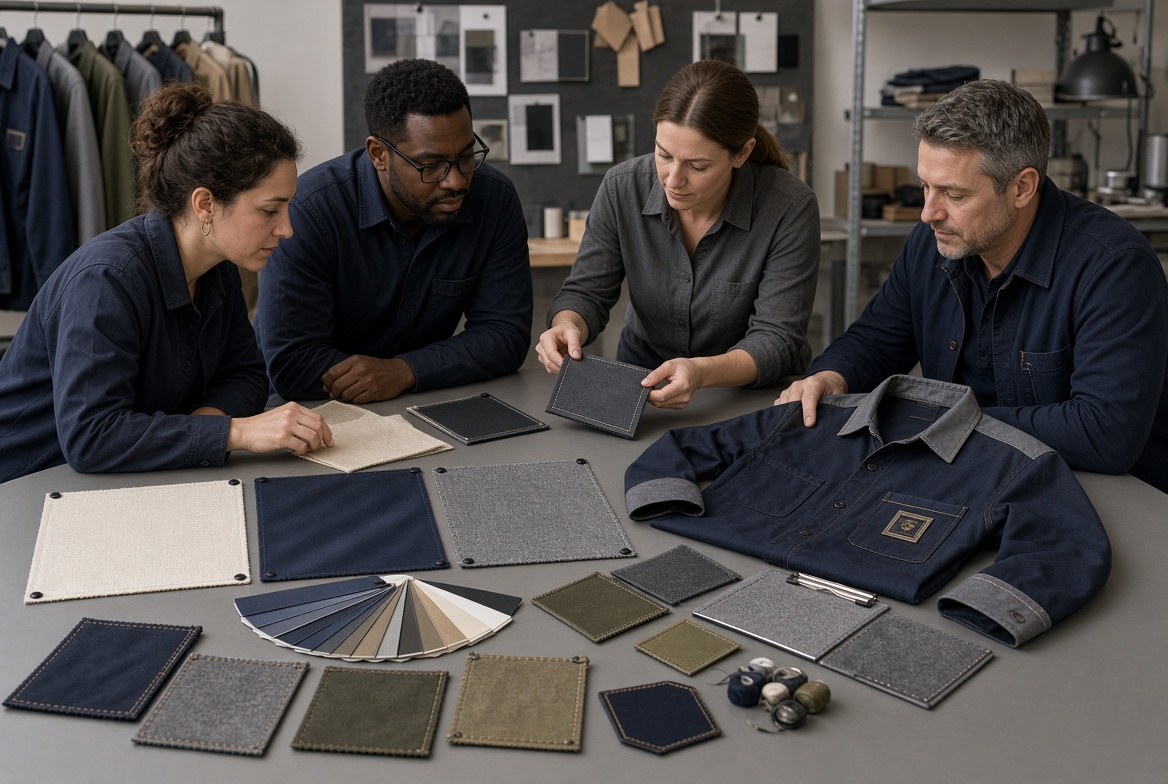
A blend should not be chosen merely by percentage. The buyer should request fabric swatches, wash-test results, shrinkage data, colorfastness information, and a pre-production sample.
Before developing an OEM industrial shirt, use this decision process:
1. Define the work environment. Identify heat, flame, moisture, dust, abrasion, chemical, static, and weather exposure.
2. Identify the wearer's activity level. A desk-based supervisor, forklift operator, field engineer, and loading worker need different fabric behavior.
3. Set the laundering system. Confirm whether shirts will be home-washed, commercially laundered, or replaced on a scheduled cycle.
4. Choose the required fabric weight. Lightweight fabrics improve mobility; heavier fabrics can improve durability and structure.
5. Specify performance targets. Define shrinkage limits, colorfastness, pilling, tear strength, tensile strength, and wash-cycle expectations.
6. Build the garment correctly. Add reinforced pockets, secure closures, ergonomic fit, adequate ease, and branding placements that do not compromise function.
7. Approve samples in real conditions. Wear-test samples with actual workers before committing to bulk production.
At Shanghai Youti Clothing Co., Ltd., we recommend discussing the work scenario before selecting fabric. A shirt's success is measured not only by its appearance at delivery, but by how it performs after months of work, movement, laundering, and brand exposure.
A cotton shirt performs better when natural comfort, softness, and traditional breathability are the highest priorities in a low-hazard workplace. A polyester shirt performs better when fast drying, wrinkle resistance, abrasion resistance, color retention, and easy care are more important.
For many industrial buyers, a well-constructed polyester-cotton shirt provides the most balanced solution. It can improve uniform durability while preserving a more comfortable feel than a fully synthetic garment.
But safety requirements override every fabric preference. Where flame, electrical arc, heat, molten material, or other serious hazards exist, select properly specified protective clothing rather than relying on standard cotton or polyester work shirts.
Need a custom industrial shirt program? Share your target market, work environment, fabric preference, logo method, size range, and expected order quantity with Shanghai Youti Clothing Co., Ltd. Our team can help develop an OEM shirt specification, sample plan, and bulk production solution for your brand.
Cotton is generally better for soft, natural comfort and moisture absorption. Polyester is generally better for quick drying, wrinkle resistance, strength, and repeated-wash performance. The right choice depends on the working environment.
Not always. Basic polyester can feel less comfortable in humid conditions if it traps heat or manages sweat poorly. However, lightweight, breathable polyester fabrics with moisture-wicking construction can perform well during active work.
Not automatically. Cotton does not melt like standard polyester, but ordinary cotton can still ignite and burn. Welding and heat-exposure work requires clothing selected according to the actual hazard and applicable protective requirements.
Polyester typically has better resistance to abrasion, wrinkles, shrinkage, and color fading. A polyester-cotton blend often offers a strong balance between durability and wearer comfort.
A 65% polyester and 35% cotton blend is common for durable, easy-care industrial uniforms. A 50/50 or 60/40 cotton-rich blend may be better when a softer hand feel is more important.
Yes. Polyester shirts are highly suitable for embroidery, heat-transfer decoration, patches, and certain printing methods. The best logo method depends on fabric weight, color, artwork, order quantity, and wash requirements.
Buyers should request fabric composition, GSM, color options, shrinkage data, colorfastness performance, construction details, sizing chart, branding options, samples, and quality-control requirements. For protective applications, request relevant test documentation and garment specifications.
5. [University of Nebraska–Lincoln — Personal Protective Equipment: Body Protection]
6. [GlobalSpec — Safety Clothing Specifications and Material Considerations]


