
Views: 261 Author: Youti Clothing Publish Time: 2026-08-17 Origin: Site


Content Menu
● Top Manufacturers at a Glance
● 1. Shanghai Youti Clothing Co., Ltd.
>> Best fit
>> What to confirm before ordering
>> Best fit
>> Best fit
● 4. Dongguan Humen Women's Apparel Suppliers
>> Best fit
● 5. KuanYang Textile / Apparel
>> Best fit
● 6. Ningbo Woven Apparel Manufacturers
>> Best fit
● 7. Hangzhou Women's Apparel OEM Suppliers
>> Best fit
● 8. Shishi Garment Manufacturers
>> Best fit
● 9. Jinjiang and Quanzhou Functional Apparel Suppliers
>> Best fit
● 10. Qingdao Workwear and Uniform Suppliers
>> Best fit
● China's Manufacturing Advantages
● Technical Requirements Buyers Should Specify
>> 1. Fabric substitution after sample approval
>> 2. The "same composition" trap
>> 3. Women's fit is copied from a men's pattern
>> 4. Certification claims cannot be verified
>> 5. Quoted price excludes essential production items
● An Often-Missed Internal Check
>> Step 1: Start with a technical brief
>> Step 2: Verify the supplier identity
>> Step 3: Follow a controlled sample process
>> Step 4: Use measurable quality requirements
>> Step 5: Plan logistics early
>> 2. What MOQ should I expect for custom womens casual work clothes?
>> 3. How do I prevent the bulk order from using a different fabric than the approved sample?
>> 4. Can a supplier claim EN ISO 11612 or EN 1149-5 compliance for any workwear garment?
>> 5. What is the most reliable way to assess a factory before placing a large order?
China remains a major sourcing base for womens casual work clothes because it combines fabric sourcing, pattern development, sewing capacity, trim supply, printing and embroidery, and export logistics in one supply chain. In 2025, China exported approximately US$151.12 billion in apparel, while total textile and apparel exports reached US$293.77 billion.
For buyers of womens casual work clothes, the sourcing objective is not simply to find the lowest unit price. A dependable long-term manufacturer should be able to reproduce fit consistently, control fabric quality across repeat orders, manage branding details, document compliance requirements, and communicate accurately from tech pack through final inspection.
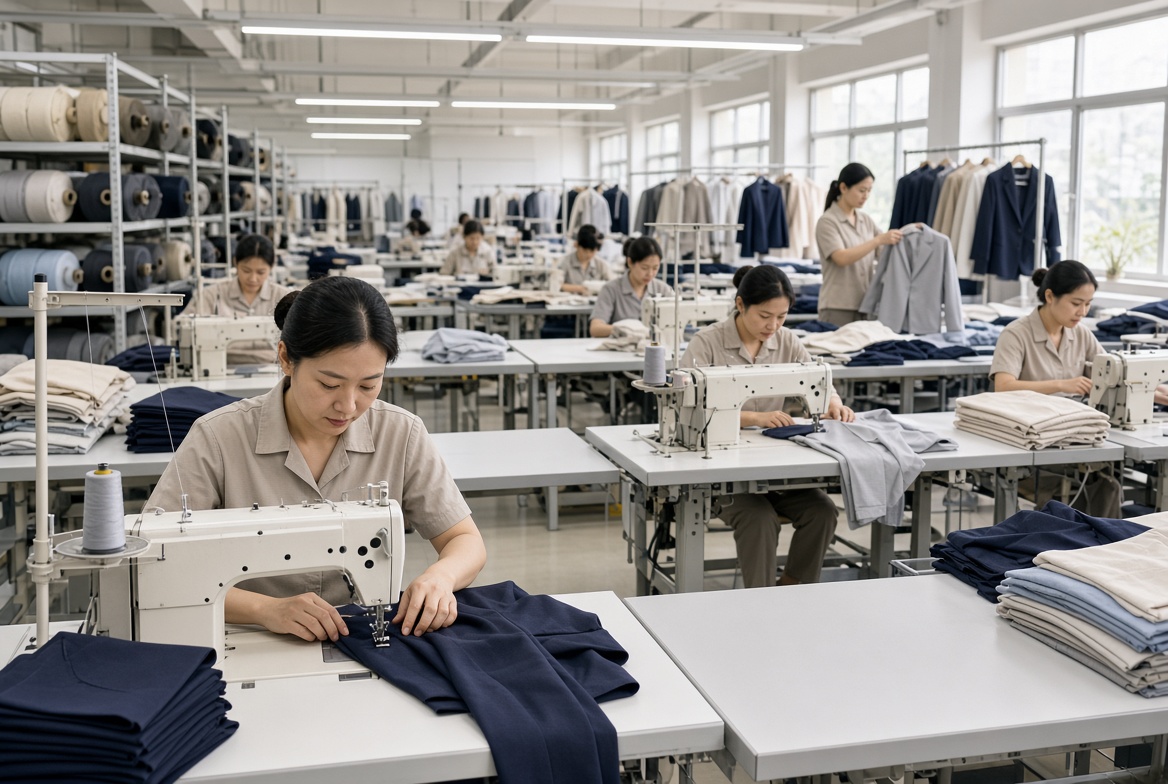
This is a practical shortlist for brand owners, wholesalers, uniform distributors, and corporate-apparel buyers. It is not a ranking based solely on factory size or marketing visibility.
The manufacturers below were assessed using the following factors:
- Manufacturing relevance: Capability in women's shirts, trousers, blazers, dresses, knit tops, jackets, uniforms, or coordinated workwear.
- OEM/ODM depth: Ability to work from a buyer's tech pack, reference sample, artwork, size chart, or concept rather than only selling ready-made catalog styles.
- Quality-control visibility: Evidence of structured sampling, inline inspection, final inspection, production management, or recognized management systems.
- Compliance readiness: Publicly disclosed certifications, testing familiarity, chemical-control awareness, or experience serving Europe, North America, Australia, and other regulated markets.
- Order flexibility: Suitability for either emerging brands needing manageable MOQs or established buyers requiring repeatable volume.
- Supply-chain location: Access to China's major garment clusters, especially Shanghai/Jiangsu/Zhejiang for tailored and woven apparel; Guangdong for rapid fashion development; and Fujian for functional knits and performance fabrics.
Global demand is also becoming more specific. Buyers increasingly request gender-inclusive sizing, recycled or lower-impact materials, durable construction, and office-to-field versatility. One 2026 market report estimates the global workwear market at US$24.05 billion in 2026, following US$22.39 billion in 2025.
| Manufacturer | Location | Established | Main Strength | Typical Order Fit | Publicly Disclosed Certifications / Compliance |
|---|---|---|---|---|---|
| Shanghai Youti Clothing Co., Ltd. | Shanghai | 2018 | Tailored workwear, uniforms, suits, shirts, trousers and jackets | Small-to-mid-sized brands; repeat OEM programs | ISO 9001, BSCI, REACH, EN 1149-5, EN ISO 11612 |
| Appareify | Guangzhou | 2017 | Private-label fashion and apparel development | Startups and fashion brands | Verify order-specific documentation |
| H&Fourwing | Dongguan | 2014 | Women's fashion, dresses, blouses and private-label development | Boutique and fashion-led brands | Verify order-specific documentation |
| Dongguan Humen Yihao Clothing | Dongguan | Varies by entity | Fast-response women's apparel manufacturing | Trend-led buyers and wholesalers | Verify factory-specific records |
| KuanYang Textile / Apparel | Zhejiang | 1995 | Fabric-to-garment integration and knitwear | Brands requiring fabric customization | Verify product and material certifications |
| Jinjiang / Quanzhou apparel OEM cluster suppliers | Fujian | Varies by factory | Performance fabrics, polos, active-inspired workwear | Functional corporate collections | Verify factory-specific records |
| Ningbo-based woven garment manufacturers | Ningbo, Zhejiang | Varies by factory | Shirts, blazers, trousers and woven separates | Officewear and uniform programs | Verify factory-specific records |
| Hangzhou women's apparel OEM suppliers | Hangzhou, Zhejiang | Varies by factory | Trend-sensitive women's woven and knit styles | Private-label brands | Verify factory-specific records |
| Shishi garment manufacturers | Fujian | Varies by factory | Casualwear, jackets, uniforms and knitwear | Volume buyers and distributors | Verify factory-specific records |
| Qingdao workwear and uniform suppliers | Shandong | Varies by factory | Outerwear, functional uniforms and export packing | Industrial and corporate uniform buyers | Verify factory-specific records |
Why some entries are cluster-based: China's garment sector includes many independently owned factories whose certifications, capacity, and ownership structures vary substantially. Buyers should validate the legal entity and actual production site before issuing a purchase order; do not assume that a trading company, showroom, and factory are the same business.
Shanghai Youti Clothing Co., Ltd. is a suitable option for buyers seeking a practical balance of customization support, workwear knowledge, and manageable order execution. Founded in 2018, the company produces suits, shirts, uniforms, work clothes, trousers, and jackets, making it relevant for womens casual work clothes collections that combine professional presentation with day-to-day comfort.
The company states that it operates 15 assembly lines, six automated production chains, more than 30 automated machines, and an annual output of more than 3 million pieces. It also states that its sampling lead time is 10–15 days and bulk production typically takes 45–60 days; for more than 500 ready-made designs, stated delivery can be 15–20 days depending on the order requirements.
- Can support customization from tech packs, photos, and physical samples.
- Relevant product range for office uniforms, retail uniforms, business shirts, trousers, blazers, jackets, and coordinated staff apparel.
- Supports logo embroidery and printing.
- Maintains dedicated functions for design and development, sampling, business management, and after-sales quality inspection.
- Publicly lists ISO 9001, BSCI, REACH, EN 1149-5, and EN ISO 11612 certifications.
- Reports Europe as its largest market, with North America and Oceania as core markets.
Youti is particularly relevant for small and medium-sized overseas brands, uniform distributors, and corporate buyers that need deeper OEM participation than a catalog-only supplier can provide. For example, a buyer can develop a women's stretch blazer, tapered trousers, branded polo, and lightweight jacket as a coordinated staff uniform program, using one factory for pattern adaptation, logos, labeling, packaging, and repeat production.
The practical advantage is flexibility: buyers can begin with an existing silhouette for faster validation, then move toward custom fabric, fit blocks, trims, labels, or color standards as demand becomes more predictable.
- MOQ by style, color, fabric, and size range.
- Whether the requested fabric is stocked, custom-developed, or sourced from a nominated mill.
- Whether the listed certification covers the production facility and remains valid for the required product category.
- Whether protective-performance claims apply to the final garment construction, not only to a base fabric.
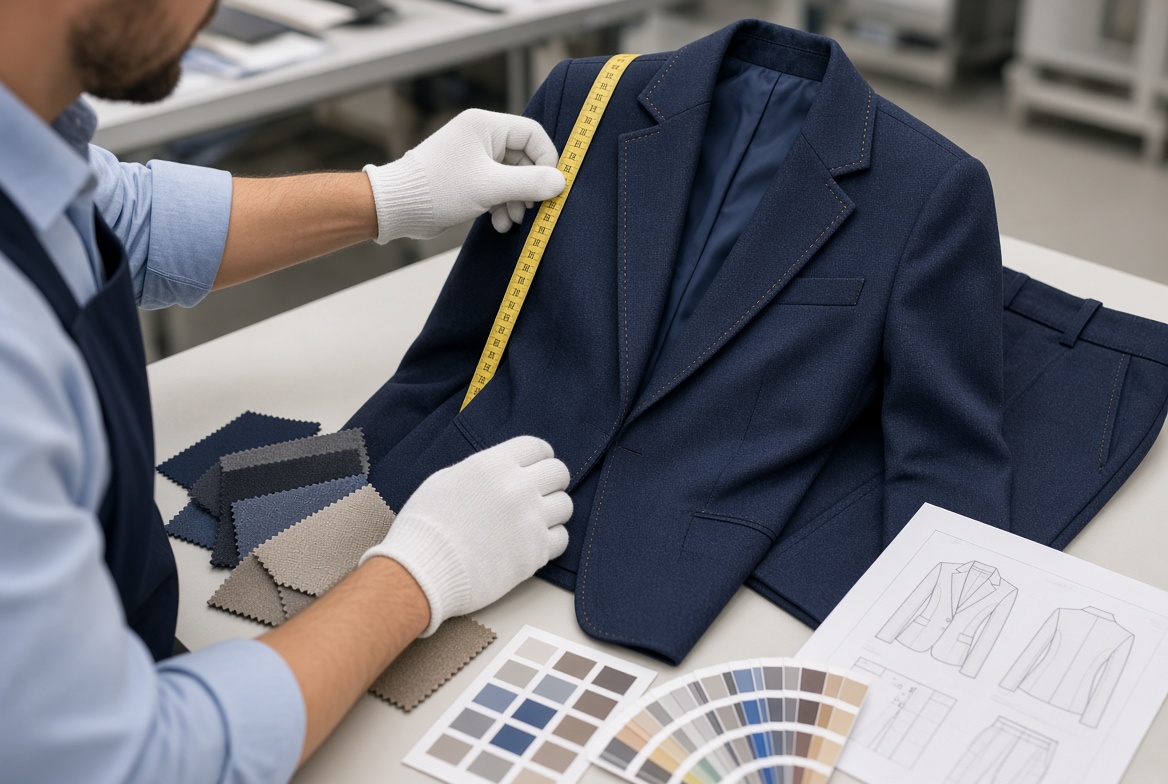
Appareify is a Guangzhou-based apparel manufacturing and private-label supplier positioned toward brands that need product development, labeling, packaging, and fashion-oriented production support.
- Relevant for women's casual apparel, branded collections, and private-label programs.
- Guangzhou location provides access to a dense network of fabric markets, trims, sample rooms, dyeing resources, and fashion-oriented labor.
- Often considered by newer brands that need help translating design concepts into production-ready garments.
This type of supplier can be appropriate for a women's business-casual collection that includes blouse-and-trouser sets, knit tops, overshirts, dresses, and lightweight outerwear.
Ask whether pattern making, grading, and bulk production are performed in-house or outsourced. This matters because handoffs between separate sampling rooms and sewing factories can create fit drift between the approved sample and bulk production.
H&Fourwing is associated with women's fashion manufacturing in Dongguan, with a focus on private-label apparel development.
- Suitable for fashion-led women's categories such as blouses, dresses, skirts, casual jackets, and trend-sensitive woven garments.
- Dongguan sits within the Pearl River Delta manufacturing ecosystem, where buyers can access fast sampling, accessory suppliers, washing facilities, and a large pool of apparel production specialists.
- Potentially useful where visual design, drape, color, and seasonal development are as important as basic uniform durability.
Fashion-forward officewear brands, boutique retailers, and buyers developing seasonal womens casual work clothes capsules.
For workplace apparel, request garment-performance tests in addition to appearance approval. A visually strong sample can still fail in pilling resistance, seam slippage, colorfastness to perspiration, or shrinkage after industrial or repeated home laundering.
Humen, Dongguan is a well-known women's apparel production and trading area. Manufacturers in this cluster commonly work on blouses, dresses, trousers, skirts, blazers, knit tops, and trend-driven collections.
- Strong speed-to-market potential.
- Broad choice of fabric and trim suppliers.
- Suitable for brands requiring frequent style updates.
- Often capable of handling lower-to-medium production runs than highly automated mass-production factories.
Wholesale buyers, online brands, and retailers needing business-casual designs with fast seasonal turnover.
"Humen supplier" is not a quality classification. Some businesses are factories, some are trading companies, and some operate hybrid models. Require a real-time video factory walkthrough showing cutting, sewing, QC, packing, and the production order currently running.
KuanYang is known in the Zhejiang textile and apparel supply chain and is relevant to buyers seeking greater integration between fabric development and finished-garment production.
- Potential fabric-development capability for custom colors, fiber blends, prints, and functional finishes.
- Relevant for knitwear or soft workwear programs where fabric handfeel and performance differentiate the collection.
- Zhejiang offers proximity to fabric markets and textile manufacturing resources, including Keqiao.
Buyers developing branded knit blazers, ponte trousers, stretch overshirts, polished jersey tops, or recycled-fiber workwear.
Fabric integration is valuable only if the buyer receives measurable specifications. Require a fabric specification sheet containing composition, weight in GSM, usable width, color standard, shrinkage tolerance, pilling grade, colorfastness requirements, and test method.
Ningbo is a useful sourcing location for buyers of shirts, woven blouses, trousers, jackets, and structured business-casual garments. The wider Zhejiang supply chain is especially relevant for garments requiring stable woven fabrics, clean tailoring, and export-oriented production.
- Strong fit for woven shirts, uniforms, trousers, and lightweight outerwear.
- Practical location for buyers requiring reliable access to ports and mature export operations.
- Potentially suitable for longer-running corporate uniform programs where the same style must be reordered over multiple seasons.
Corporate apparel distributors, hotel groups, retail chains, and workwear brands requiring shirt-and-trouser sets or structured jackets.
Ask the factory to identify the exact fabric mill and dye lot process. For repeat uniform orders, a color mismatch between the original production lot and the re-order lot can be more costly than a small price difference.
Hangzhou has a strong women's apparel ecosystem with access to design talent, e-commerce operations, fabric sourcing, and manufacturing partners.
- Suitable for contemporary women's officewear and smart-casual collections.
- Strong visual merchandising and fashion-development environment.
- Often appropriate for buyers that need branded packaging, e-commerce-ready presentation, and smaller style-batch development.
Women's workwear brands targeting modern office, retail, service, and hybrid-work consumers.
Clarify whether quoted prices include all brand components: neck labels, care labels, hangtags, polybags, cartons, barcode stickers, tissue paper, and size stickers. These details can materially alter the landed cost.
Shishi, Fujian is a large garment-production area with strengths across casualwear, jackets, knitwear, sports-influenced apparel, and export manufacturing.
- Useful for practical casual workwear, uniform jackets, polo shirts, overshirts, and utility-inspired garments.
- Access to suppliers experienced with active and functional fabrics.
- Potentially suitable for larger programs with repeat demand.
Service uniforms, retail staff collections, logistics apparel, casual corporate workwear, and promotional clothing programs.
For garments with moisture management, water resistance, stretch recovery, anti-static performance, or flame-related claims, ask whether the claimed feature is durable after washing and request the applicable test report.
Jinjiang and Quanzhou are widely associated with sportswear, footwear, performance textiles, and functional apparel supply chains. For womens casual work clothes, their relevance is strongest where mobility, moisture management, stretch, easy-care performance, and active-inspired styling are priorities.
- Access to polyester, nylon, stretch fabrics, mesh, bonded fabrics, and functional finishes.
- Suitable for uniforms requiring movement and repeated laundering.
- Useful for hospitality, retail, healthcare-support, light-industrial, and field-service clothing.
Buyers creating comfort-focused uniforms, stretch work trousers, branded polos, softshell jackets, or moisture-wicking women's work tops.
Do not approve a garment based only on a one-time "handfeel" sample. Test wash durability. Some finishes feel effective before washing but deteriorate rapidly if the treatment, curing process, or fabric construction is inadequate.
Qingdao and the wider Shandong manufacturing base are relevant for buyers needing more functional uniform programs, outerwear, work jackets, and export-oriented packing standards.
- Relevant to workwear, jackets, utility garments, and corporate uniform programs.
- Often suitable for buyers needing stronger construction, multi-pocket designs, lining, padding, or weather-resistant features.
- Good fit for uniform distributors combining women's and men's size ranges.
Industrial distributors, facility-management contractors, security-service suppliers, transport companies, and buyers needing coordinated workwear collections.
Women's fit should not be treated as a smaller version of a men's pattern. Ask whether the factory uses a dedicated women's block with appropriate shoulder slope, bust shaping, waist position, hip ease, rise, and inseam grading.
China's strength is not one single factory type. It is the ability to combine specialized regional supply chains.
| Industrial Area | Typical Advantage for Womens Casual Work Clothes | Most Relevant Products |
|---|---|---|
| Shanghai and Jiangsu | Tailoring, shirts, uniforms, export coordination | Blazers, trousers, shirts, office uniforms |
| Zhejiang: Ningbo, Hangzhou, Keqiao | Woven garments, women's fashion, fabric access | Blouses, dresses, trousers, knit businesswear |
| Guangdong: Guangzhou, Dongguan, Humen | Rapid development and fashion responsiveness | Trend-led officewear, casual sets, dresses |
| Fujian: Shishi, Jinjiang, Quanzhou | Knits, performance fabrics, functional casualwear | Polos, jackets, stretch trousers, utility workwear |
| Shandong: Qingdao | Outerwear and practical workwear programs | Jackets, uniforms, functional layers |
China's textile and apparel exports totaled US$293.77 billion in 2025, with textile exports rising 0.5% while apparel exports declined 5.0%. This indicates a more competitive environment for finished-garment buyers, but it also makes supplier selection and production control more important than simply requesting lower prices.
A professional women's workwear brief should not stop at "65% polyester / 35% cotton" or "stretch fabric." It should define the production standard clearly.
For womens casual work clothes, buyers should specify:
- Fiber composition and tolerance.
- Fabric weight in GSM.
- Construction: twill, poplin, oxford, ponte, double knit, stretch woven, pique, or jersey.
- Yarn-dyed, piece-dyed, garment-dyed, or printed construction.
- Required stretch direction and recovery standard.
- Shrinkage limit after laundering.
- Pilling grade requirement.
- Colorfastness requirements for washing, rubbing, perspiration, and light exposure.
- Formaldehyde, azo dye, and restricted-substance requirements where applicable.
For workwear designed for regular use, confirm:
- Stitch density and seam type.
- Reinforcement at pockets, side seams, crotch seams, and stress points.
- Bartacks at pocket corners or belt loops when needed.
- Button attachment strength.
- Zipper brand, puller design, and cycle requirements.
- Interlining quality for collars, cuffs, waistbands, and blazer fronts.
- Size grading rules for women's body proportions.
- Tolerance table for chest, waist, hip, length, sleeve, and inseam measurements.
Buyers often confuse a factory-management certification with a product-performance certification.
- ISO 9001 generally concerns quality-management systems; it does not automatically certify every garment's safety or performance.
- BSCI is commonly used in social-compliance auditing; buyers should confirm audit scope, location, validity, and rating directly with the relevant platform or auditor.
- REACH concerns chemical substance restrictions applicable in the EU; a supplier's statement should be supported by material declarations or laboratory testing when required.
- EN 1149-5 relates to electrostatic properties for protective clothing and must be assessed as part of a compliant garment system.
- EN ISO 11612 concerns protective clothing against heat and flame; it is not a general-purpose label for officewear and should only be used when the final garment and intended application meet the relevant requirements.
A factory may use a high-quality fabric for the approval sample but substitute a lower-weight or lower-grade bulk fabric to protect margin.
How to reduce risk: Seal an approved fabric swatch with a signed specification sheet. Include composition, GSM, color code, finish, supplier, shrinkage result, and test requirements in the purchase order. Require pre-production fabric inspection before cutting.
Two fabrics can both be listed as 65% polyester / 35% cotton but differ sharply in yarn quality, weave density, weight, colorfastness, pilling, breathability, and handfeel.
How to reduce risk: Define fabric by construction and measurable performance, not only fiber content.
Some suppliers reduce a men's block rather than using a women's pattern. The result can be poor bust, hip, shoulder, and rise proportions.
How to reduce risk: Submit a detailed size chart and fitting comments based on a real target customer. Request fit samples in at least two women's sizes, not one single sample size.
Certificates may belong to another production site, may have expired, or may not cover the requested product.
How to reduce risk: Request the certificate number, issuing organization, legal entity name, factory address, issue date, expiry date, and scope. Verify it with the issuing body rather than relying on a PDF alone.
A low FOB quote can exclude labels, embroidery digitizing, packaging, carton marks, testing, inspection, or local transport.
How to reduce risk: Use a cost sheet that separates fabric, trims, labor, print/embroidery, packaging, testing, inspection, and shipping terms.
One of the least-discussed risks in women's workwear sourcing is marker efficiency pressure.
Factories calculate fabric consumption through marker making—the arrangement of pattern pieces on fabric before cutting. When a buyer adds sizes, changes fabric width, introduces directional prints, uses plaid matching, or requests larger hems and seam allowances, fabric consumption can rise materially.
A supplier may attempt to preserve the original quoted price by narrowing hem allowances, reducing pocket size, changing placement, or using a less efficient but lower-quality cutting plan.
Before bulk production, ask for:
- The confirmed fabric width.
- Fabric consumption per size.
- Marker consumption for the full size ratio.
- Directional-print or plaid-matching allowance.
- Cutting-loss assumption.
- Whether the approved quote changes if fabric width differs from the original estimate.
This check is especially important for striped shirts, checked blazers, patterned dresses, large-logo placements, and inclusive women's size ranges.
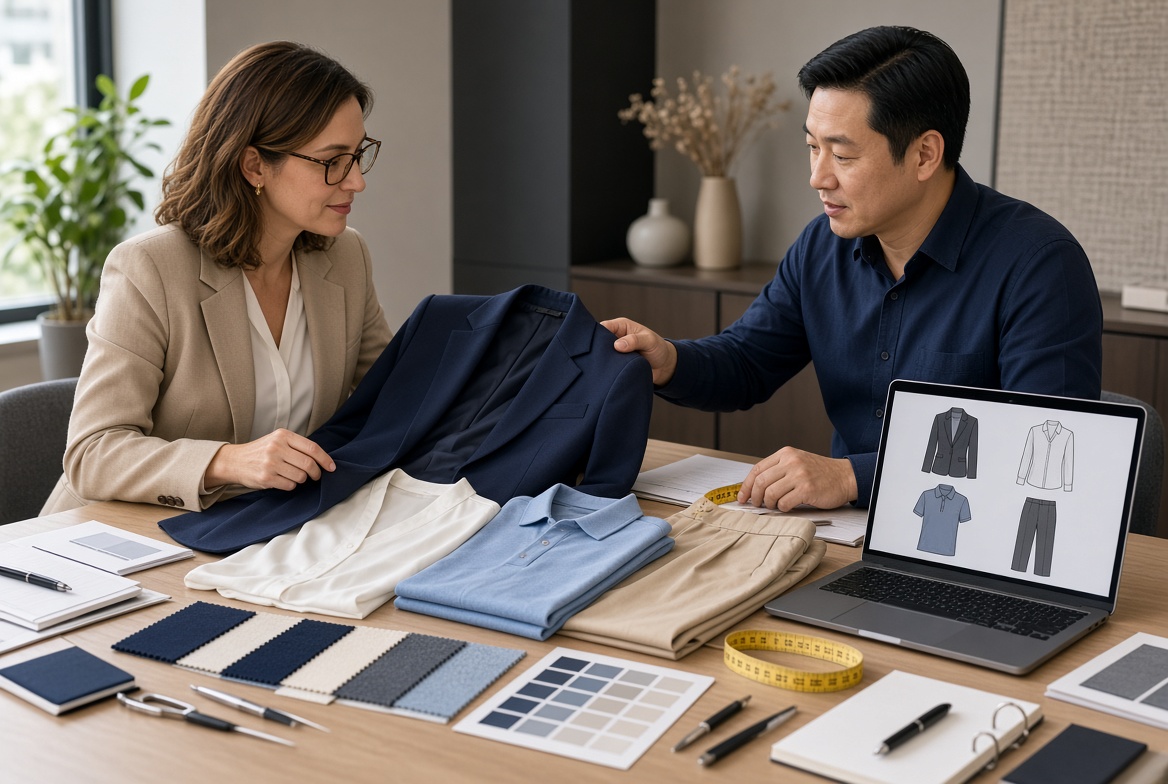
Provide more than inspiration photos. Your brief should include:
- Tech pack and measurement chart.
- Target fabric composition, weight, color, and finish.
- Artwork files for embroidery, print, labels, and packaging.
- Expected order volume by style and color.
- Target market and required regulations.
- Target delivery date and Incoterm, such as FOB Shanghai, FOB Ningbo, or CIF destination port.
Ask for:
- Chinese business license.
- Factory address and legal entity name.
- Live video factory tour.
- Production-line photos or videos tied to current dates.
- Export references where confidentiality permits.
- Certification files and verification details.
- A clear explanation of which processes are in-house and which are subcontracted.
China's National Enterprise Credit Information Publicity System can be used to cross-check a company's legal registration details.
A disciplined sampling process normally follows this sequence:
1. Quotation and material proposal.
2. Development sample.
3. Fit review and pattern revision.
4. Size-set sample.
5. Pre-production sample in bulk-approved fabric and trims.
6. Bulk fabric inspection.
7. Inline inspection.
8. Final random inspection before shipment.
Do not approve bulk production based only on photographs. Request physical samples for fit, fabric, sewing quality, color, label placement, and wash performance.
For a recurring women's uniform program, include:
- AQL inspection level and acceptable defect limits.
- Measurement tolerances.
- Color approval method, such as Pantone reference or approved lab dip.
- Shrinkage and colorfastness expectations.
- Carton packing ratio.
- Barcode and shipping-mark requirements.
- Re-order color and fabric continuity requirements.
For apparel imports, confirm:
- HS code classification with your customs broker.
- Country-of-origin marking requirements.
- Packaging regulations for the destination market.
- Container loading plan for larger orders.
- Whether shipping dates refer to "goods ready," "cargo handed to forwarder," or "on-board vessel departure."
- Buffer time for testing, rework, booking, customs clearance, and peak-season congestion.
The right womens casual work clothes manufacturer depends on whether your priority is tailored officewear, fashionable women's apparel, functional uniforms, fabric development, or repeatable volume production.
Shanghai Youti Clothing Co., Ltd. is a practical starting point for buyers who need a responsive OEM partner for uniforms, shirts, suits, trousers, jackets, and coordinated business-casual workwear. Its publicly stated 10–15-day sampling timeline, stated 45–60-day bulk-production window, flexible customization support, and listed quality and compliance credentials make it particularly relevant for brands and distributors building long-term programs rather than making one-off purchases.
Before selecting any supplier, send the same technical brief to several qualified manufacturers, compare not just price but fabric specification discipline, sample execution, communication speed, compliance evidence, and willingness to document quality standards.
Request the full certificate, including certificate number, legal entity, site address, scope, issuing organization, issue date, and expiry date. Then verify it through the certifier's official database or by contacting the certification body directly. Also ensure that the production address on the certificate matches the actual site producing your goods.
MOQ depends on fabric availability, number of colors, printing or embroidery complexity, and whether a new pattern is required. A stock-fabric logo program may accept lower quantities than a fully custom garment with custom-dyed fabric. Request MOQ separately for each style, color, and size ratio rather than accepting one total order MOQ.
Create a sealed "golden swatch" package signed by both parties. The package should identify composition, GSM, color, finish, width, supplier, and test results. Require the factory to submit bulk fabric inspection results before cutting and retain a bulk cutting swatch for comparison.
No. These standards apply to specific protective-performance contexts and depend on the complete garment design, materials, construction, labeling, and intended use. Confirm whether the finished product—not merely a fabric—has been tested and documented for the required standard.
Use a combination of legal-entity verification, live or third-party factory audit, sample approval, independent fabric or garment testing, pre-production sample approval, and third-party final inspection. No single document can replace this combined process.
- [General Administration of Customs of the People's Republic of China]
- [China National Textile and Apparel Council]
- [National Enterprise Credit Information Publicity System]


