
Views: 243 Author: Youti Clothing Publish Time: 2026-08-19 Origin: Site


Content Menu
● What Is a Regular Fit Shirt?
● Regular Fit vs Slim Fit: The Main Differences
● How Should a Regular Fit Shirt Fit?
● How Should a Slim Fit Shirt Fit?
● Which Body Types Suit Regular and Slim Fits?
● Choosing the Right Shirt Fit for Different Occasions
>> Formal Events and Dress Shirts
>> Uniform and Workwear Shirts
● A Better Way to Build Shirt Size Charts
● Manufacturing Insight: Fit Depends on More Than the Pattern
● Common Fit Problems and Solutions
● Develop Your Custom Shirt Collection
● FAQ
>> What is the biggest difference between regular fit and slim fit shirts?
>> Is a regular fit shirt the same as an oversized shirt?
>> Can larger men wear slim fit shirts?
>> Which fit is better for office uniforms?
>> Should brands use the same size chart for regular fit and slim fit shirts?
>> Does stretch fabric make slim fit shirts more comfortable?
>> How can an OEM supplier help reduce fit-related returns?
Choosing between a regular fit vs slim fit shirt is not simply a style decision. It affects comfort, movement, appearance, sizing consistency, return rates, and how a shirt collection performs across different customer groups.
For buyers, wholesalers, private-label brands, and uniform suppliers, the best shirt fit is the one that matches the wearer's body shape, wearing occasion, fabric behavior, and regional market expectations. As an experienced shirt OEM manufacturer, Shanghai Youti Clothing Co., Ltd. helps brands turn these fit requirements into repeatable production specifications—from sample development to bulk delivery.
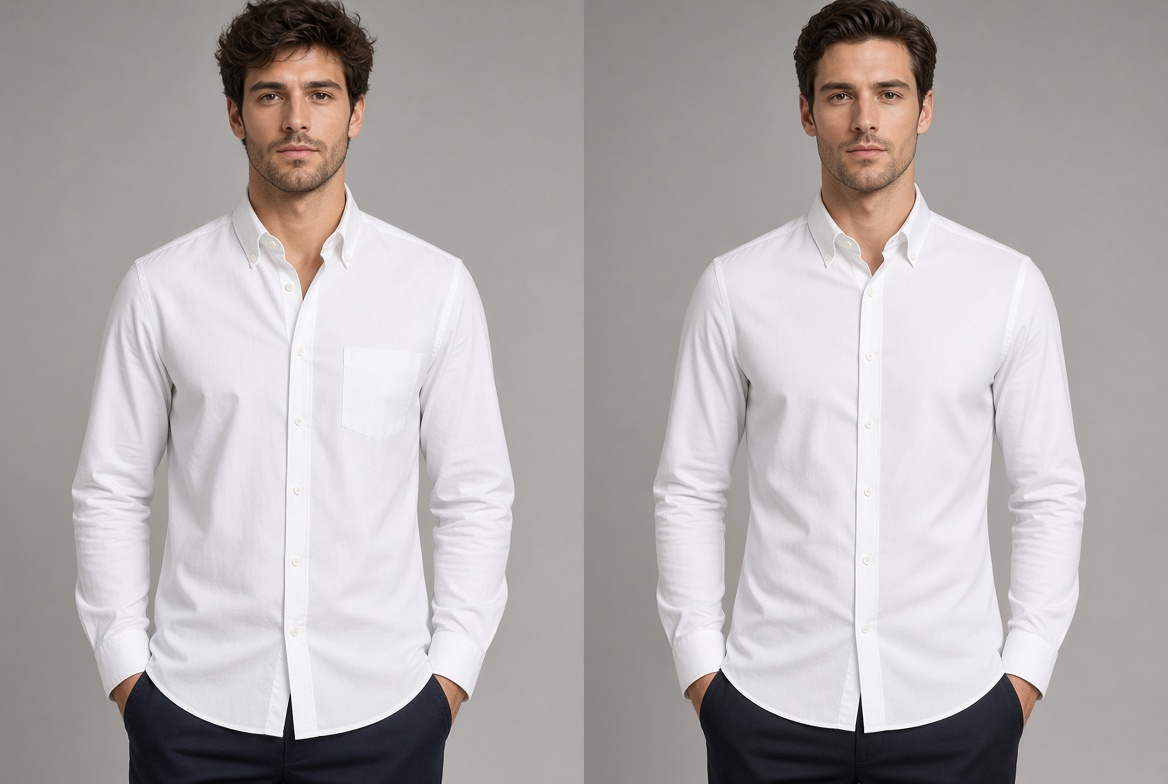
A regular fit shirt, often called a classic fit or standard fit shirt, has more room through the chest, waist, armhole, and sleeves than a slim fit shirt. It is designed to follow the body without closely tracing every contour.
The goal is balanced comfort: the shirt should look clean and structured while allowing the wearer to sit, reach, drive, work, or layer garments underneath without excessive pulling.
A well-developed regular fit shirt normally features:
- More chest and waist ease than a slim fit
- A straighter body silhouette
- More space through the upper arm and bicep
- A more forgiving fit around the midsection
- Better comfort for long workdays and frequent movement
- Greater suitability for a wider range of body types
Regular fit does not mean oversized. A shirt becomes oversized when shoulder seams drop too far down the arm, the chest collapses excessively, sleeves look disproportionately wide, or the body length creates a baggy appearance.
For brands serving officewear, corporate uniforms, workwear, mature customers, or broad international size ranges, regular fit is often a dependable core offering.
A slim fit shirt is cut closer to the body. It has less extra fabric around the chest, waist, armholes, and sleeves, creating a sharper and more tailored silhouette.
The key purpose of slim fit is visual definition. It can make the torso look cleaner under a blazer, suit jacket, knitwear, or casual overshirt. However, the shirt must still permit normal movement and comfortable breathing.
A quality slim fit shirt usually includes:
- A more tapered waist
- Reduced chest and back width
- Higher or more shaped armholes
- Narrower sleeves and cuffs
- Less fabric at the lower back
- A closer body profile under tailoring
Slim fit is particularly popular in fashion-led menswear, contemporary officewear, dress shirts, and younger-oriented casual collections. Yet the fit needs careful pattern control. If the chest, shoulder, sleeve, or waist measurement is too small, buttons may pull open and the wearer may feel restricted.
A slim fit should look close-fitting, not strained.
The most important difference between slim fit and regular fit shirts is the amount and placement of ease. Ease is the extra room added to a garment beyond body measurements so the wearer can breathe, move, sit, and wear the shirt naturally.
| Feature | Regular Fit Shirt | Slim Fit Shirt |
|---|---|---|
| Overall silhouette | Straight, balanced, comfortable | Closer, more shaped, modern |
| Chest room | More room for movement | Reduced room for a neat profile |
| Waist shape | Straighter body line | More tapered waist |
| Sleeve width | More relaxed around bicep and forearm | Narrower and closer to the arm |
| Armhole | Usually lower and roomier | Often higher and more shaped |
| Layering ability | Good for undershirts and light layering | Best with minimal layering |
| Best use cases | Workwear, uniforms, everyday officewear, casual shirts | Dress shirts, tailored looks, modern business wear |
| Fit risk | May look loose if shoulders are too wide | May pull at buttons if too tight |
| Suitable customer base | Broad body-type coverage | Lean, athletic, or fit-conscious customers |
In production, fit names alone are not enough. One brand's "slim fit" may be another brand's "tailored fit," while one regular fit may be much roomier than another. That is why brands should work from a clear specification sheet rather than relying only on fit labels.
A regular fit shirt should feel easy without appearing shapeless. The wearer should be able to move both arms forward, sit down, and button the collar without tension around the chest or neck.
Use these checkpoints when evaluating a regular fit sample:
- Shoulders: The shoulder seam should end near the natural shoulder point. If it falls noticeably onto the upper arm, the shirt may be too large.
- Collar: A properly sized collar should button comfortably with room for approximately two fingers between the neck and collar.
- Chest: The shirt should remain smooth when standing naturally. Minor fabric movement is normal, but buttons should not pull apart.
- Waist: The body should hang cleanly without clinging to the stomach or creating excessive folds.
- Sleeves: The sleeve should allow free arm movement and should not bind at the bicep.
- Length: A dress-oriented regular fit should generally stay tucked during normal movement. A casual shirt may be shorter for untucked wear.
For workplace collections, a regular fit can reduce discomfort during long shifts and provide a more inclusive option for employees with varied builds. This is particularly relevant for hospitality uniforms, retail uniforms, logistics teams, and corporate apparel programs.
A slim fit shirt should shape the body while leaving enough room for natural movement. It should never require the wearer to hold a rigid posture to prevent button pulling.
Check the following before approving a slim fit shirt:
1. Check the shoulder first. The shoulder seam should align with the wearer's natural shoulder edge. A narrow shoulder cannot be corrected by adding chest width.
2. Button the shirt fully. Look for tension lines across the chest, back, or waist. Horizontal pulling between buttons is a strong sign that the fit is too tight.
3. Raise both arms forward. If the hem rises dramatically or the back becomes restrictive, the armhole, sleeve pitch, or back width may need adjustment.
4. Sit down naturally. A slim fit should remain comfortable while seated. Tightness around the stomach, chest, or upper back suggests insufficient ease.
5. Examine the waist taper. The waist should follow the torso without clinging. Excessive suppression may make the wearer look constrained rather than well dressed.
A common mistake is reducing every measurement by the same amount to create a slim fit. Professional pattern development is more precise. The chest, waist, armhole, sleeve width, back shape, and body length should be adjusted as a system.
Neither fit is universally better. The right option depends on the customer's proportions, preferred styling, and daily use.
| Wearer Profile | Recommended Starting Point | Why |
|---|---|---|
| Broad shoulders with a larger chest | Regular fit or tailored regular fit | Allows space in the chest and upper back |
| Athletic torso with a narrower waist | Slim fit or tailored fit | Creates a clean silhouette without excess fabric |
| Fuller midsection | Regular fit | Offers comfort and avoids button pulling |
| Lean build | Slim fit | Reduces loose fabric around the waist and sleeves |
| Larger biceps or active work role | Regular fit with adjusted sleeve width | Improves mobility and reduces sleeve restriction |
| Mixed-size work team | Regular fit as the core option | Gives more reliable coverage across body shapes |
For private-label brands, a practical range may include both a regular fit and slim fit in the same fabric, color, collar, and cuff design. This lets customers choose their preferred silhouette without changing the overall collection identity.
The occasion matters because the wearer's movement level, layering needs, and styling expectations can change significantly.
Regular fit shirts work well for all-day office comfort, especially in traditional business settings. They pair easily with trousers, knitwear, and jackets.
Slim fit shirts are suitable for modern office wardrobes and suit-focused styling. They offer a cleaner appearance under a blazer, provided the wearer has enough room through the shoulders and chest.
A slim or tailored fit shirt can create a sharper profile for weddings, dinners, presentations, and formal occasions. The shirt should sit smoothly under a jacket and avoid bulky folds at the waist.
However, regular fit remains a strong choice for formal customers who prioritize comfort, have a fuller build, or prefer a classic silhouette.
Casual shirts offer more flexibility. A regular fit cotton shirt can create an easy weekend look, while a slim fit Oxford or poplin shirt can look polished with chinos or denim.
For resortwear, overshirts, and relaxed vacation collections, brands may choose a separate relaxed fit rather than enlarging their standard regular fit.
For uniforms, movement and repeatability are essential. A regular fit often performs better because it provides space for reaching, bending, lifting, and wearing an undershirt.
Brands should also consider fabric stretch, sleeve mobility, chest-pocket placement, shrinkage control, and the expected working environment before confirming a final fit.
Size charts should not be copied blindly from another brand. International customers compare sizes differently, and the same labeled size can vary between regions and product categories.
A more reliable development process includes:
- Defining the target customer and market before pattern development
- Measuring both body dimensions and finished garment dimensions
- Setting clear tolerance limits for bulk production
- Creating a graded size range rather than scaling every point equally
- Testing samples on more than one fit model
- Washing and re-measuring samples when using cotton, linen, viscose, or blended fabrics
- Recording approved measurements in a detailed technical package
Neck, chest, waist, shoulder width, sleeve length, bicep width, cuff circumference, body length, and hem shape should all be clearly documented. Measurement methods must also be specified—for example, whether chest width is measured flat from underarm to underarm or as garment circumference.
Industry sizing guides commonly recommend measuring the neck at the collar position, chest at its fullest point, and sleeve length from the center back neck area over the shoulder toward the wrist. These consistent reference points help brands build clearer specifications and reduce size-related confusion.
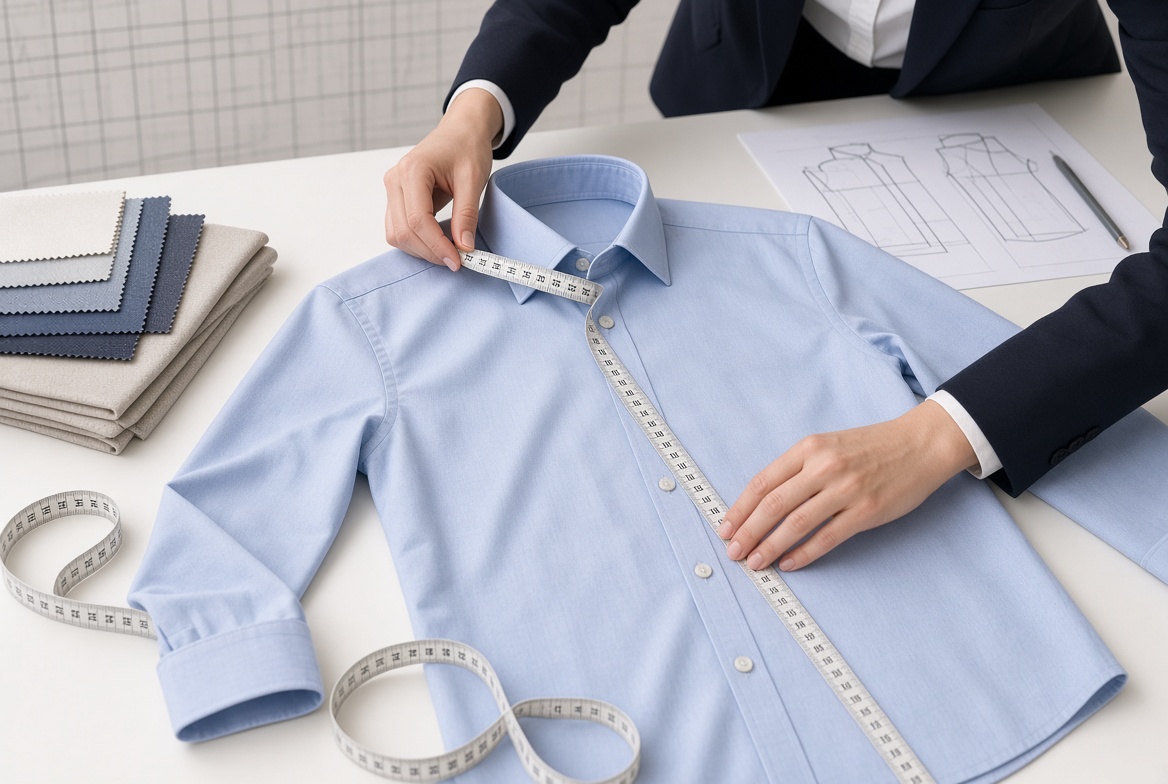
A shirt's final fit is affected by material and production choices, not only by the base pattern.
For example:
- 100% cotton poplin can feel crisp and structured but may need shrinkage testing before bulk approval.
- Oxford fabric often feels more substantial and may create a slightly more casual appearance.
- Stretch cotton blends can make a slimmer silhouette easier to wear, but recovery performance should be tested.
- Linen and linen blends create a relaxed visual effect and naturally show more texture and wrinkles.
- Fabric weight influences drape, sleeve shape, and how closely the shirt appears to follow the body.
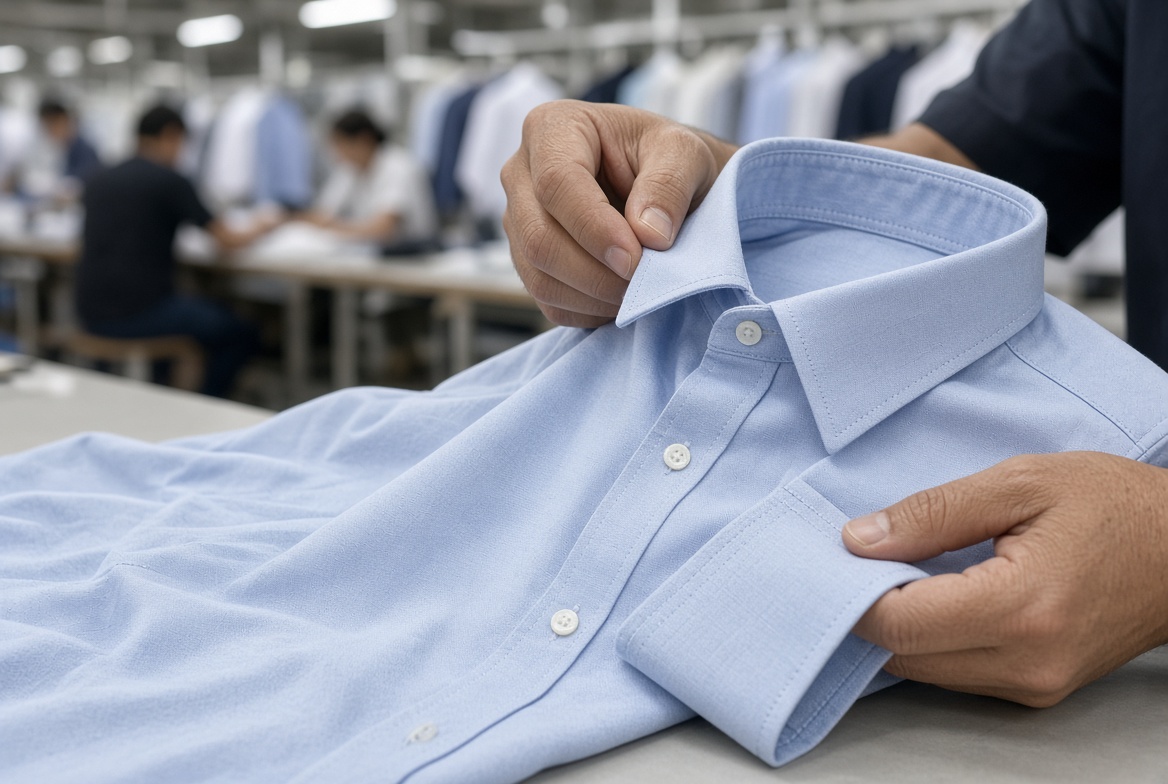
From an OEM perspective, the most effective process is to approve the fabric before finalizing fit, then evaluate a completed sample after washing or finishing. A pattern that works in one fabric may require adjustment in another.
| Common Problem | Likely Cause | Development Solution |
|---|---|---|
| Buttons pull across chest | Insufficient chest ease | Add chest width or revise grading |
| Shoulder seam drops down arm | Shoulder width is too wide | Reduce shoulder measurement |
| Shirt rises when arms lift | Low armhole or poor sleeve pitch | Rework armhole and sleeve pattern |
| Excess fabric at lower back | Body too straight for target customer | Add moderate waist shaping |
| Sleeve feels tight at bicep | Bicep width too narrow | Increase sleeve circumference |
| Collar feels restrictive | Neck measurement or collar construction too tight | Add collar ease and test button closure |
| Shirt becomes too small after washing | Uncontrolled shrinkage | Conduct shrinkage tests and allow for fabric movement |
The best regular fit or slim fit shirt begins with a clear customer profile and a tested specification—not a generic size label. Whether you are building office shirts, fashion dress shirts, retail collections, work uniforms, or private-label essentials, the right fit can improve customer confidence and reduce avoidable size complaints.
Shanghai Youti Clothing Co., Ltd. provides OEM shirt development for international brands, wholesalers, and manufacturers. Share your tech pack, reference sample, target measurements, fabric requirements, and order plan with our team to discuss custom shirt patterns, fit development, sampling, labeling, and bulk production.
Regular fit shirts provide more room through the chest, waist, and sleeves. Slim fit shirts are more tapered and sit closer to the body.
No. A regular fit should look balanced and allow comfortable movement. An oversized shirt intentionally uses extra width, dropped shoulders, or longer proportions for a looser style.
Yes, if the pattern has enough room in the shoulders, chest, waist, and sleeves. The key is avoiding pulling buttons, restricted movement, and overly tight fabric.
Regular fit is often the safer base option for uniforms because it accommodates more body shapes and supports movement during long workdays. Some brands also offer a slim fit alternative for employees who prefer a closer silhouette.
No. Each fit needs its own finished-garment measurements. A slim fit typically has less chest, waist, sleeve, and body ease than a regular fit in the same labeled size.
Often, yes. A well-chosen stretch fabric can improve mobility in a close-fitting shirt. However, fabric recovery, shrinkage, durability, and hand feel should be tested before bulk production.
An experienced supplier can support fit development through pattern adjustments, graded size specifications, pre-production samples, fabric shrinkage testing, measurement tolerances, and clear quality-control procedures.
1. [Bombay Shirt Company — Men's Shirts: Regular Fit vs Slim Fit]
2. [Marks & Spencer — Men's Shirt Fit Guide]
3. [Cutter & Buck — Shirt Size Charts and Measurement Tips]
4. [Cargo Crew — Men's Size Guide]
5. [The Tie Bar — Men's Dress Shirt and Casual Shirt Size Guide]


