
Views: 277 Author: Youti Clothing Publish Time: 2026-08-16 Origin: Site


Content Menu
● Start With the Right Shirt Fit
● Choose Fabric According to the Occasion
● How to Wear Long-Sleeve Shirts for Business Casual
>> Reliable business-casual combinations
● Smart Casual Long-Sleeve Shirt Outfits
>> Use colour and pattern strategically
● Long-Sleeve Shirts for Parties and Evenings
● Special Events: Weddings, Graduations, and Ceremonies
>> Match the collar to the outfit
● Product Development Insights for Shirt Brands
● A Pre-Production Checklist for OEM Shirt Orders
>> 1. What is the most versatile long-sleeve shirt colour?
>> 2. Can a long-sleeve shirt be worn untucked?
>> 3. How should a long-sleeve shirt fit at the shoulders?
>> 4. Which fabric is best for summer long-sleeve shirts?
>> 5. Are button-down collars suitable for formal events?
>> 6. What should brands provide to begin an OEM shirt project?
>> 7. How can an apparel buyer reduce long-sleeve shirt returns?
A well-made long-sleeve shirt is one of the most adaptable pieces in a modern wardrobe. The same shirt can look precise for a client meeting, relaxed for dinner, or polished for a wedding—if the fit, fabric, colour, and finishing details match the occasion.
For buyers developing shirt collections, this versatility matters commercially. A thoughtful range of long-sleeve shirts gives brands, wholesalers, and private-label programs a strong foundation: classic enough for repeat demand, yet flexible enough to support seasonal colours, textures, and styling directions.
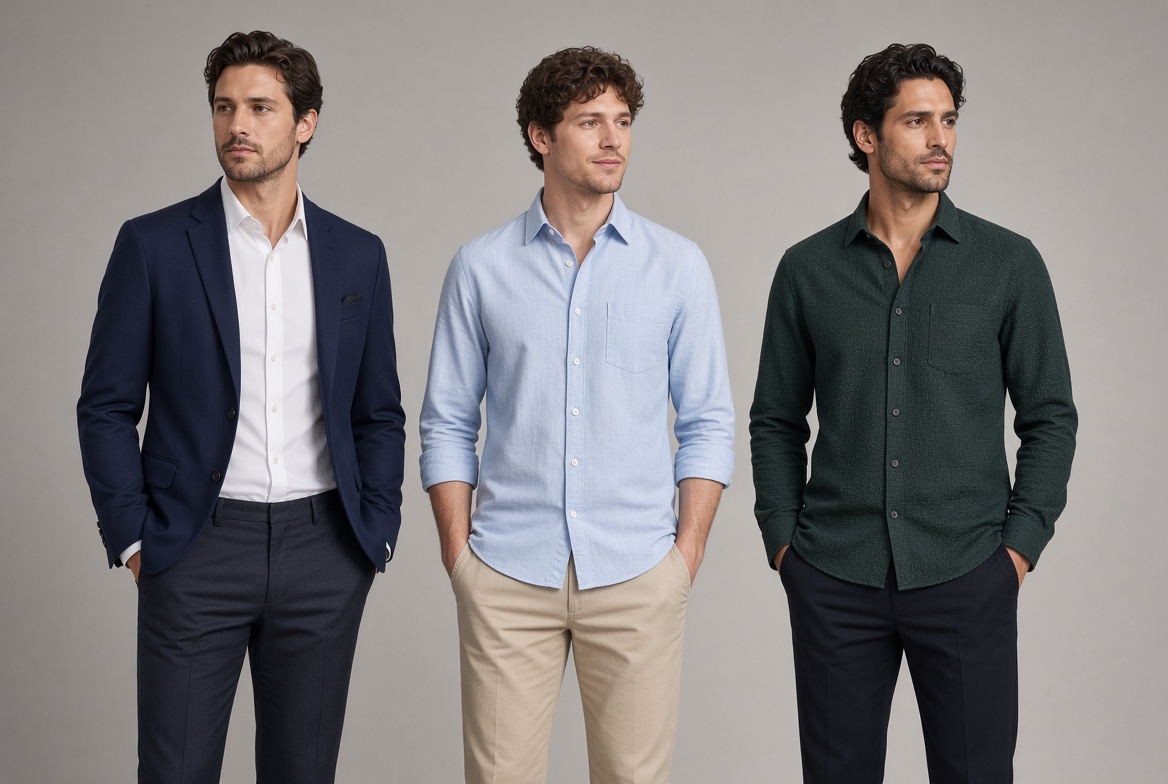
Styling begins before the shirt is paired with trousers or a jacket. Fit determines whether a shirt looks intentional. Even premium fabric can appear untidy when the shoulder, collar, sleeve, or body balance is wrong.
A practical fit check should cover five areas:
1. Collar: When buttoned, the collar should sit comfortably around the neck. A common tailoring check is enough room for two fingers—not tight, but not visibly loose.
2. Shoulders: The shoulder seam should sit close to the wearer's natural shoulder edge. A seam that falls down the upper arm makes the shirt look oversized.
3. Chest and waist: The front placket should lie flat. Pulling between buttons suggests insufficient ease, while excess fabric can look unstructured.
4. Sleeves and cuffs: Cuffs should finish around the wrist area and allow natural arm movement. Under a tailored jacket, a small amount of cuff should remain visible.
5. Shirt length: A formal shirt needs sufficient length to stay tucked in during normal movement. A casual overshirt may be shorter and designed to be worn untucked.
From a manufacturing perspective, shirt fit is not only a sizing issue. It is the result of coordinated pattern development, shrinkage control, sleeve pitch, collar construction, and finishing tolerances. For an OEM program, these details should be confirmed before bulk production—not discovered after garments reach the end customer.
Fabric affects more than comfort. It shapes drape, breathability, wrinkle appearance, surface texture, and the perceived price level of a shirt.
| Occasion | Recommended fabric direction | Why it works |
|---|---|---|
| Business and formalwear | Poplin, pinpoint oxford, fine twill | Clean surface, crisp appearance, easy pairing with tailoring |
| Smart casual settings | Oxford, brushed cotton, chambray, cotton-linen | Offers texture and a more relaxed visual character |
| Warm-weather events | Linen, cotton-linen, lightweight cotton | Helps create an airy, less formal look |
| Evening and celebrations | Satin-finish cotton, dobby, subtle jacquard | Adds depth and light reflection without relying on loud prints |
| Layering and casual wear | Denim, overshirt-weight twill, flannel | Provides structure and works well as an open layer |
Cotton remains a valuable choice for shirting because consumers frequently associate it with comfort and quality. However, fabric selection should be tied to the intended use case. For example, a crisp poplin may suit a formal collection, while an enzyme-washed oxford can support a more casual, lived-in brand aesthetic.
A useful product-development rule: the more formal the setting, the cleaner and finer the fabric surface should be. The more casual the setting, the more room there is for texture, softness, washes, and visible weave character.
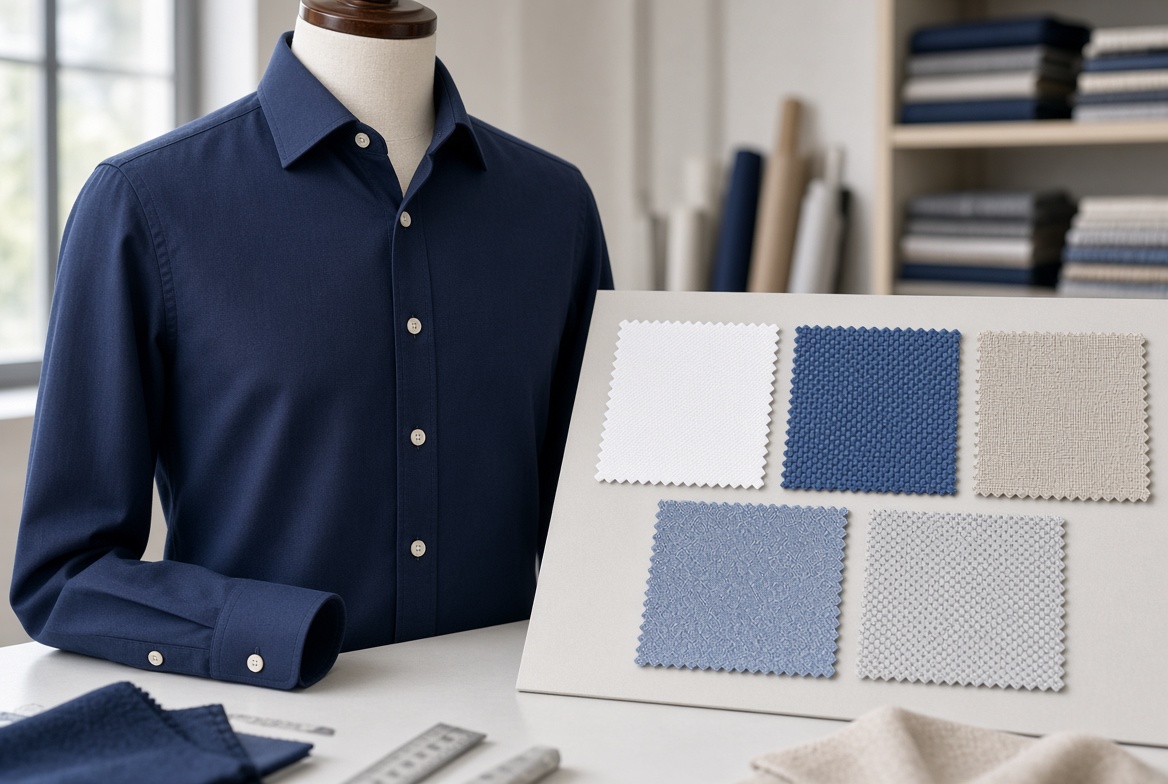
Business casual is about controlled contrast: the outfit should look professional without appearing overly formal. A long-sleeve shirt provides the structure, while chinos, dark denim, knitwear, or an unstructured blazer reduce the formality.
- White or pale-blue oxford shirt + navy chinos + brown leather shoes
- Fine striped shirt + charcoal trousers + lightweight blazer
- Soft twill shirt + dark indigo jeans + clean loafers
- Light-blue poplin shirt + stone chinos + suede shoes
- Neutral overshirt + plain crew-neck T-shirt + tailored trousers
For most workplaces, blue, white, grey, navy, olive, stone, and muted brown are dependable colour foundations. These shades work across seasons and make it easier to build a coherent shirt range for wholesale customers.
Avoid heavily distressed jeans, aggressive logos, overly shiny fabrics, or overly tight silhouettes when the setting still requires professional credibility. If denim is permitted, choose a dark, clean wash with a straight or tapered shape.
Rolling the sleeves can make a business-casual outfit feel more approachable, particularly after work or in warmer environments. The result should still be neat:
1. Unbutton the cuff and gauntlet button.
2. Fold the cuff back once, creating a clean wide band.
3. Fold the lower sleeve upward again, leaving part of the cuff edge visible.
4. Stop around the mid-forearm rather than pushing the fold too high.
This approach looks more deliberate than repeated narrow folds and helps preserve the shirt's shape throughout the day.
Smart casual offers more freedom in fabric, colour, and layering. It is the ideal setting for shirts with character: garment washes, textured weaves, muted patterns, denim effects, or contrast details.
A simple formula is:
Textured shirt + clean trousers or denim + restrained footwear
For example, pair a washed chambray shirt with ecru jeans and leather sneakers. Or wear a sage-green cotton-linen shirt with tailored drawstring trousers and loafers. The outfit stays relaxed, but the shirt keeps the overall look sharp.
A smart-casual shirt can carry more visual interest than a formal shirt. Still, balance matters.
- Pair a patterned shirt with solid trousers.
- Keep accessories quieter when the shirt has bold stripes, checks, or prints.
- Choose smaller-scale patterns for versatile, repeat-wear products.
- Use larger prints for resort, holiday, or fashion-led capsules.
- Match warm shirt tones with cream, brown, khaki, or faded blue bottoms.
- Match cool shirt tones with charcoal, navy, white, or grey bottoms.
For brands designing a collection, offering a balance of solids, stripes, checks, and texture-led fabrics creates more styling possibilities without making the range feel fragmented.
A party outfit should reflect the venue, time, dress expectation, and climate. A rooftop event, beach gathering, restaurant dinner, and nightclub all call for different shirt choices.
For evening occasions, the long-sleeve shirt can become the visual focus. Consider deeper colours such as black, espresso, burgundy, dark green, midnight blue, or charcoal. Dobby fabrics, brushed finishes, subtle sheen, and tonal patterns can add interest without looking costume-like.
| Event setting | Shirt styling approach | Suggested pairing |
|---|---|---|
| Indoor dinner or cocktail event | Dark fitted shirt with a refined surface | Tailored trousers and leather loafers |
| Casual night out | Shirt worn open over a quality T-shirt | Dark jeans and minimal sneakers or boots |
| Beach or resort party | Breathable cotton-linen shirt with sleeves rolled | Shorts or relaxed trousers and sandals |
| Creative social event | Textured overshirt or printed long-sleeve shirt | Plain tee, straight-leg trousers, and clean footwear |
An open long-sleeve shirt over a T-shirt is particularly useful for casual gatherings. It creates depth, allows temperature adjustment, and gives brands a strong opportunity to develop coordinated shirt-and-tee colour stories.
For weddings, interviews, graduations, and formal celebrations, simplicity generally creates the strongest impression. The shirt should support the jacket, tie, trousers, and event colour palette rather than compete with them.
A white shirt is the most reliable option for formal suiting, especially with a navy, charcoal, or black suit. Pale blue is another classic choice. For less formal weddings or daytime celebrations, soft pink, light sage, subtle stripes, and fine texture can work well.
- Spread collar: A versatile choice for ties, blazers, and contemporary tailoring.
- Semi-spread collar: Works well for most formal and business settings.
- Button-down collar: Best for business casual and relaxed tailoring; less suited to highly formal ceremonies.
- Band collar: A modern option for warm-weather events, creative dress codes, and minimal styling.
- Cutaway collar: Creates a stronger statement and accommodates wider tie knots.
Do not overlook sleeve and cuff construction. A standard button cuff is broadly versatile, while a French cuff can elevate an evening or formalwear program when paired with appropriate accessories.
For private-label buyers, a successful long-sleeve shirt program needs more than attractive designs. It needs clarity around target wearer, price point, fit block, fabric performance, and repeat-order potential.
A practical core collection may include:
- A white poplin formal shirt
- A pale-blue business shirt
- A striped office shirt
- A classic oxford button-down
- A washed chambray or denim-look shirt
- A cotton-linen warm-weather shirt
- A textured evening shirt
- A seasonal patterned statement shirt
This structure lets brands serve multiple occasions while sharing selected components, fit blocks, and production methods across styles. That can improve range consistency and support more efficient sourcing.
Fit concerns also deserve commercial attention. Cotton Incorporated reported that 44% of consumers identified at least one area of poor fit in clothing. Clear measurement specifications, graded size charts, wear testing, shrinkage testing, and pre-production sample approval are therefore essential to reducing quality issues and avoidable returns.
Before confirming a shirt order, brand teams should align on the following items:
1. Target customer and occasion: Is the shirt for office, casual, resort, formalwear, or a mixed-use collection?
2. Fit block: Confirm slim, regular, relaxed, or oversized proportions with a physical sample.
3. Fabric specification: Define composition, weight, weave, finish, colour standard, and shrinkage expectation.
4. Construction details: Confirm collar type, cuff shape, placket, pocket, hem, buttons, seam finish, and labels.
5. Size and grading: Review measurement charts and grading rules across all requested sizes.
6. Quality checkpoints: Approve fabric, lab dip, trim card, fit sample, pre-production sample, and packing requirements.
7. Packaging and branding: Confirm hangtags, woven labels, care labels, folding method, polybags, cartons, and barcode needs.
Shanghai Youti Clothing Co., Ltd. supports overseas brands, wholesalers, and apparel businesses with OEM shirt development and production. From classic long-sleeve formal shirts to casual oxford, linen-blend, patterned, and fashion-focused styles, the objective should be the same: produce shirts that fit the target market, support the intended retail positioning, and remain consistent from approved sample to bulk delivery.
Planning a long-sleeve shirt collection? Share your target market, reference designs, fabric requirements, size range, and expected order quantity to start a focused OEM development discussion.
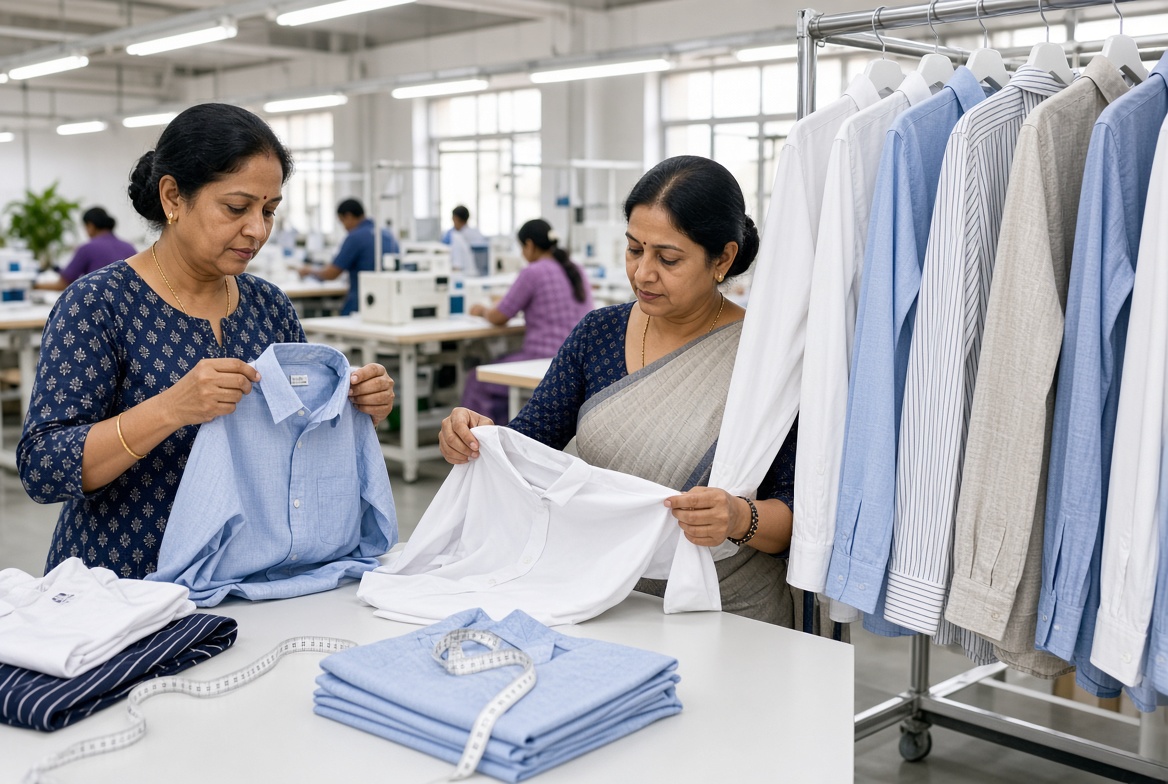
White and light blue are the most versatile choices for formal and business-casual wardrobes. For casual collections, navy, olive, chambray blue, and off-white also offer broad styling potential.
Yes. Casual shirts, oxford shirts, linen shirts, and overshirts can be worn untucked when the hem length is appropriate. Formal dress shirts are usually longer and generally look better tucked in.
The shoulder seam should sit at or very close to the natural edge of the shoulder. If it sits too far inward, the shirt may feel restrictive; if it falls noticeably down the arm, the shirt may appear too large.
Linen, cotton-linen blends, lightweight cotton poplin, and breathable oxford fabrics are popular warm-weather directions. The best choice depends on the desired balance between crispness, texture, wrinkle appearance, and softness.
Button-down collars work well for business casual outfits and relaxed tailoring. For highly formal occasions, a spread or semi-spread collar is usually a more traditional and flexible choice.
Brands should ideally provide tech packs or reference samples, measurement charts, artwork, fabric preferences, colour references, branding requirements, target quantity, and delivery expectations. If some items are not finalized, an experienced manufacturer can help turn the concept into production-ready specifications.
Prioritize fit approval, measurement tolerance control, fabric shrinkage testing, accurate size charts, clear care instructions, and pre-shipment inspections. These steps reduce the gap between the approved sample and the delivered product.
1. [Bombay Shirt Company — How to Style Long-sleeved Shirts For Any Occasion]
2. [Cotton Incorporated — Sizing up Consumer Preferences]
3. [New & Lingwood — How Men's Shirts Should Fit]
4. [Real Men Real Style — How a Men's Dress Shirt Should Fit]


