
Views: 226 Author: Youti Clothing Publish Time: 2026-09-01 Origin: Site


Content Menu
● What Is the Difference Between Coveralls and Separate Work Clothes?
● Why Garment Design Matters for Workshop Safety
● When Coveralls Improve Workshop Safety
>> Better Protection From Dust and Surface Contaminants
>> Reduced Waist Gaps During Dynamic Work
>> Easier Uniform Control in Controlled Areas
>> Useful for Oil, Grease, and Repair Work
● When Separate Work Clothes Are the Safer Choice
>> Better Individual Fit for Diverse Workforces
>> Improved Comfort in Hot Workshops
>> Faster Replacement After Damage or Contamination
>> Better Layering With Task-Specific Protection
● Coveralls vs Separate Work Clothes: A Detailed Safety Comparison
● The Critical Factor: Fit, Closures, and Worker Behavior
● A Practical Selection Process for Buyers
>> Step 1: Map the Actual Workshop Hazards
>> Step 2: Decide Whether the Risk Requires Continuous Coverage
>> Step 3: Specify Functional Construction Details
>> Step 4: Conduct Wear Trials Before Mass Production
>> Step 5: Build a Replacement and Care Program
● OEM Workwear Development for Global Buyers
● FAQ
>> 1. Are coveralls safer than separate work clothes?
>> 2. When should workers wear coveralls in a workshop?
>> 3. Can a work jacket and trousers provide enough protection?
>> 4. What fabric is best for industrial coveralls?
>> 5. How should an OEM buyer choose coverall sizes?
>> 6. What features should industrial work trousers include?
>> 7. How often should workwear be replaced?
Choosing between coveralls and separate work clothes is not simply a uniform decision. In workshops, factories, maintenance areas, and industrial production environments, the garment design can affect exposure control, freedom of movement, worker compliance, productivity, and the practical ability to layer additional protective equipment.
For overseas brands, wholesalers, and industrial buyers sourcing OEM workwear from China, the better option depends on the real workshop hazard, the worker's task, climate, laundering process, and required protection level. Coveralls can reduce exposed gaps between the upper and lower body, while separate work clothes can improve flexibility, fit accuracy, ventilation, and replacement efficiency. The correct choice is the one that matches the hazard assessment—not the one that merely looks more protective.
At Shanghai Youti Clothing Co., Ltd., we work with buyers developing uniforms and work clothes for different industrial applications. From an apparel-development perspective, the most reliable safety program starts with garment architecture: fabric, fit, closures, pocket placement, reinforced zones, reflective details, and compatibility with gloves, boots, helmets, harnesses, and other personal protective equipment.
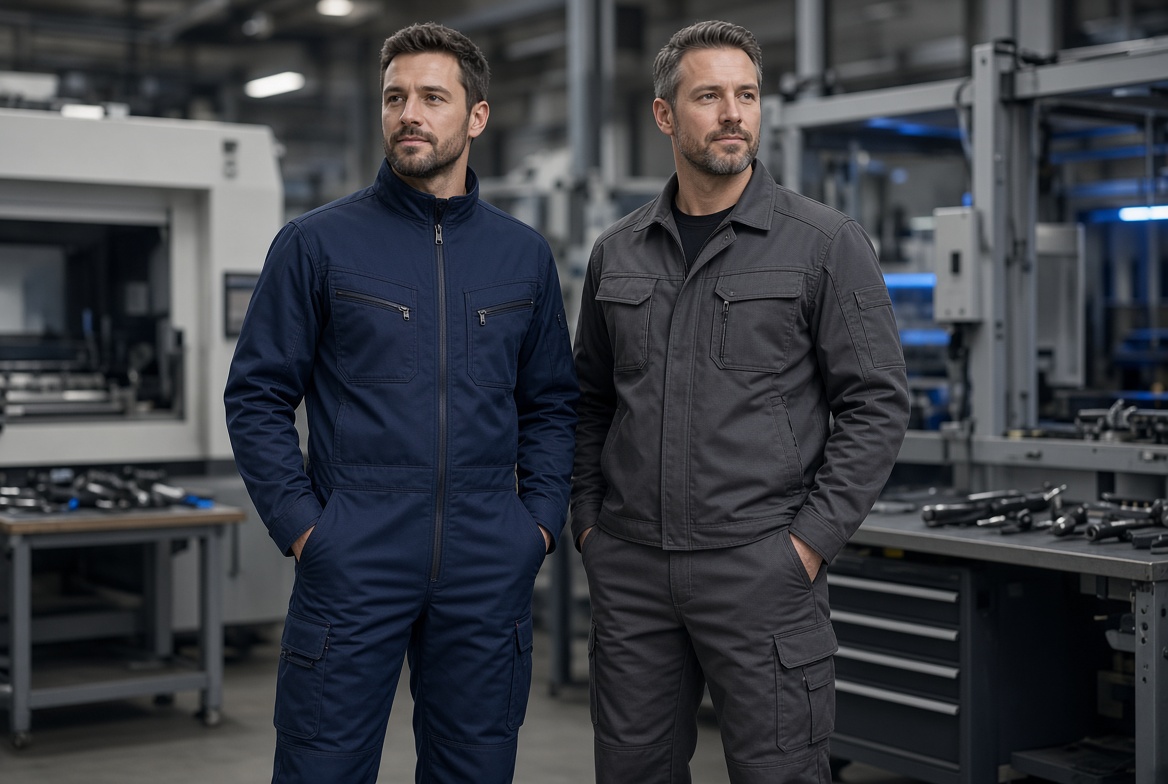
Coveralls, also called boiler suits or one-piece workwear, combine the upper-body garment and trousers into a single piece. They commonly include a front zipper or button closure, sleeves, a full-length leg design, and multiple utility pockets.
Separate work clothes usually consist of a work jacket, work shirt, sweatshirt, vest, or softshell worn with work trousers, cargo pants, bib pants, or shorts. This two-piece system gives workers the ability to select different sizes and garment layers for the upper and lower body.
Both options can be engineered for industrial use. Either can be made from cotton, polyester-cotton blends, stretch woven fabric, canvas, ripstop, flame-resistant fabric, anti-static fabric, high-visibility materials, or coated technical textiles. The garment style alone does not determine protection. The material, construction, fit, closure system, and intended work environment matter just as much.
| Factor | Coveralls | Separate Work Clothes |
|---|---|---|
| Garment format | One-piece upper and lower body garment | Jacket/shirt and trousers as separate garments |
| Waist exposure | No ordinary waist opening when fully closed | Potential gap between jacket and trousers |
| Sizing flexibility | One size must fit torso, arms, waist, hips, and inseam | Top and bottom can be sized independently |
| Layering flexibility | More limited, especially in hot conditions | Easier to add or remove outer layers |
| Changing convenience | Usually slower to put on or remove | Faster for routine changes and breaks |
| Contamination control | Useful when broad body coverage is required | Useful when only certain body areas need protection |
| Replacement cost | May require replacing the full garment | Damaged jacket or trouser can be replaced separately |
| Best-fit applications | Dirty maintenance, painting, dusty jobs, controlled areas | Assembly, logistics, machine operation, general manufacturing |
Protective clothing is intended to reduce exposure to workplace hazards, including physical, chemical, mechanical, electrical, radiological, and airborne risks. Coveralls are specifically included among the forms of personal protective equipment used in appropriate circumstances.
A workwear program should not begin with color, logo position, or pocket quantity. It should begin with a practical review of the work being performed.
A garment that protects against one hazard can create difficulty in another situation. For example, a loose sleeve may allow better comfort but could create a snagging risk near rotating equipment. A fully enclosed coverall can reduce dust entry, but an overly heavy fabric may increase heat stress in a warm workshop. A jacket-and-trouser combination may be comfortable for warehouse movement, but a short jacket that rides up during overhead work can expose the lower back.
A well-designed workwear system should help the worker perform safely without creating avoidable restrictions.
Key workshop factors include:
- Type of hazard, such as dust, oil, grease, sparks, splashes, abrasion, sharp edges, static electricity, or low visibility.
- Body areas exposed during the actual task, not only while standing still.
- Worker movement, including bending, kneeling, climbing, reaching, lifting, squatting, and entering confined spaces.
- Machine interaction, especially the potential for snagging around rotating or moving parts.
- Ambient temperature and humidity, which affect comfort and consistent garment use.
- Compatibility with other equipment, including gloves, safety footwear, helmets, eye protection, harnesses, and respiratory equipment.
- Cleaning and replacement process, particularly where contamination or heavy soil is common.
Employers are expected to assess workplace hazards, apply engineering and work-practice controls where feasible, and select protective equipment for hazards that cannot otherwise be eliminated or sufficiently controlled. Proper fit, inspection, training, care, and replacement are also central to an effective protective-clothing program.
Coveralls can offer a meaningful safety advantage when the main goal is continuous body coverage. Because the garment connects the torso and legs, it removes the conventional waist opening created by a separate jacket and trouser system.
This feature becomes important when workers frequently bend, crawl, reach above shoulder level, or work in positions where a jacket may lift away from the waistband.
In dusty workshops, sanding areas, maintenance bays, paint-preparation rooms, agricultural facilities, and cleaning operations, a coverall can reduce the number of clothing openings through which dust and loose contaminants may enter.
The benefit is especially practical when the coverall includes:
- A covered front zipper or storm flap.
- Elasticated or adjustable cuffs.
- An adjustable waist.
- A stand collar or fitted collar closure.
- Reinforced knees for kneeling work.
- Secure pockets with flaps or zippers.
- Elasticated ankles or boot-compatible leg openings.
For dry particulate work, the garment should be selected according to the specific exposure and applicable product requirements. A standard cotton coverall is not automatically suitable for fine dust, chemical particles, asbestos-related exposure, or hazardous substances. The clothing system must match the hazard rather than rely on a generic "protective" label.
In practical workshop observation, the waist is one of the most overlooked areas of workwear design. Workers bend to pick up materials, stretch to reach fixtures, kneel during assembly, and lean across machines. A two-piece outfit can separate at the waist during these movements.
A coverall keeps the torso and trouser sections connected. This may reduce skin or undergarment exposure where broad coverage is valuable.
This does not mean every coverall is safer. A coverall that is too tight can restrict reach and crouching. A coverall that is too loose can catch on equipment, snag on protrusions, or create a tripping concern. The safety advantage comes from correct coverage plus correct fit.
One-piece garments can simplify visual control in workplaces where workers must enter designated dirty, maintenance, repair, or controlled zones.
For example, a facility may use a color-coded coverall system:
- Navy coveralls for maintenance technicians.
- Grey coveralls for mechanical assembly.
- Orange high-visibility coveralls for yard and traffic-area work.
- White disposable or reusable protective coveralls for paint-preparation or cleanliness-sensitive areas.
A uniform garment standard can make it easier for supervisors to confirm that the assigned clothing is being worn. It can also simplify branding for industrial service teams and improve a professional appearance for customer-facing technical staff.
Vehicle service, equipment maintenance, hydraulic repair, metalworking support, and field servicing often involve grease, oil, dirt, and close contact with machinery surfaces. A durable coverall can protect the worker's personal clothing while offering convenient storage for small tools, pens, inspection lights, and work documents.
For this type of garment, buyers should consider:
- Heavy-duty poly-cotton or cotton-rich fabric.
- Reinforced knees, elbows, and stress points.
- Bartack reinforcement at pocket corners.
- Two-way front zippers for practical access.
- Concealed metal hardware where scratch prevention matters.
- Tool loops, ruler pockets, and secure chest pockets.
- Industrial-wash durability.
- Branding areas for embroidery, woven labels, or heat-transfer logos.
However, in machinery environments, pocket and loop design must be carefully controlled. External hanging features can be unsuitable where rotating equipment or moving machine parts present an entanglement hazard.
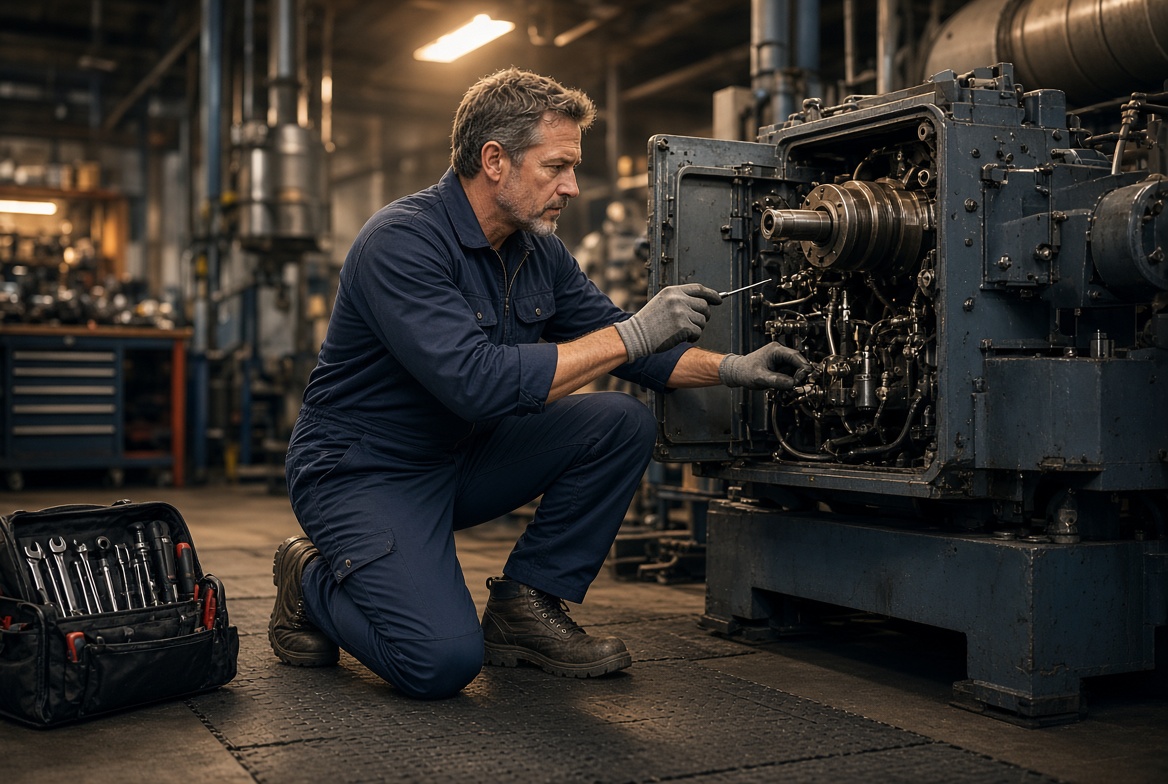
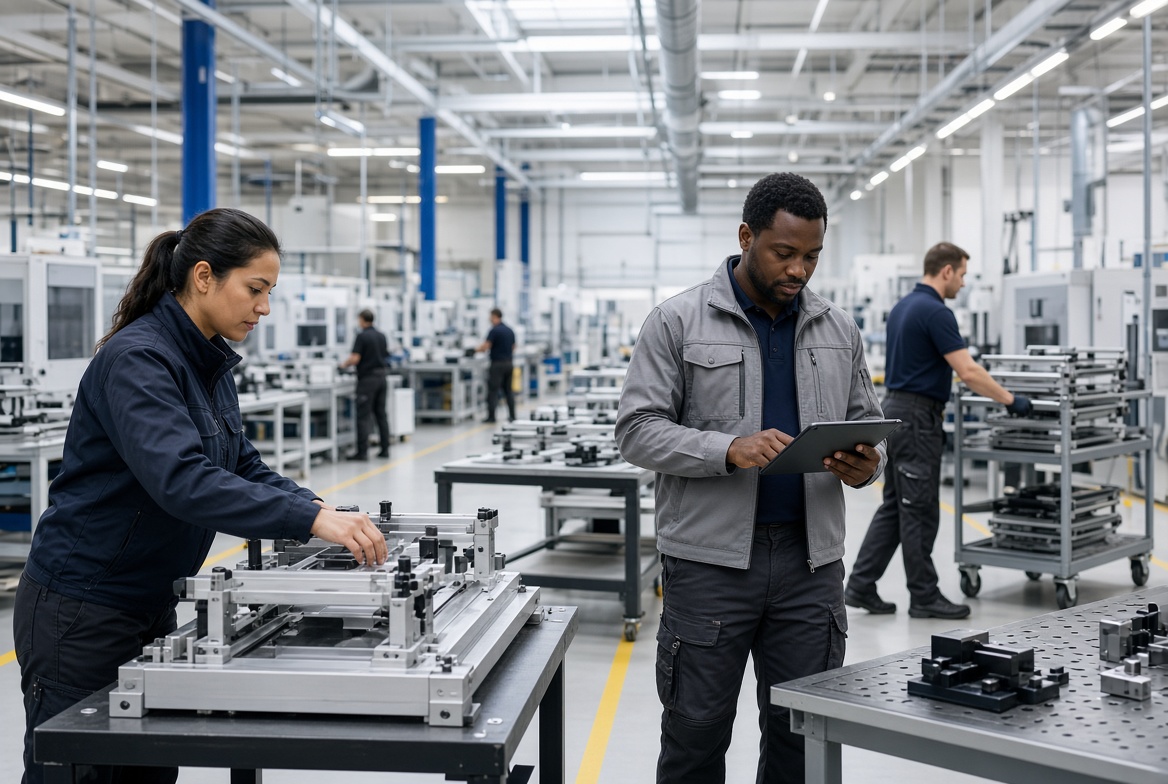
Separate work clothes are often the better solution for general manufacturing, assembly, warehousing, logistics, machine operation, and mixed indoor-outdoor work. Their strongest advantages are fit precision, flexibility, thermal comfort, and easier replacement.
Human body proportions vary widely. One employee may need a large jacket with medium-waist trousers. Another may need a medium jacket with a longer inseam. A coverall must accommodate the torso, shoulder width, waist, hip width, and leg length in one size.
That can lead to compromises.
If the coverall is selected for sufficient torso length, the legs may be too long. If it is selected for the correct leg length, the worker may feel pulling across the shoulders when reaching overhead. Poor fit can encourage workers to leave zippers partially open, roll sleeves, alter hems improperly, or avoid wearing the garment altogether.
Separate work clothes allow independent sizing. This is particularly valuable for brands building inclusive size ranges, multinational workforces, female-fit programs, and jobs requiring frequent movement.
General requirements for protective clothing address ergonomics, sizing, compatibility, aging, marking, and the information supplied by manufacturers. Proper design should account for the work task, environmental conditions, wearer activity level, and expected duration of use.
Thermal comfort affects whether workers wear garments correctly throughout a shift. In a hot production area, workers may prefer removing a jacket during low-risk tasks while retaining durable work trousers. They can add a jacket, vest, rain layer, or insulated outer layer when conditions change.
This adaptability can support consistent use when the workplace has changing temperatures, outdoor loading activity, or high physical exertion.
A practical two-piece workwear system can include:
- Lightweight short-sleeve work shirts for hot indoor areas.
- Long-sleeve work shirts for abrasion, dust, or sun exposure.
- Durable cargo trousers with knee-pad pockets.
- Softshell jackets for mobile field teams.
- Insulated work jackets for cold storage or outdoor work.
- High-visibility vests for loading yards and traffic zones.
The safety benefit is indirect but important: workers are more likely to use garments properly when they can move, regulate body temperature, and select layers that suit the task.
Work trousers often wear out faster than jackets because of kneeling, abrasion, contact with pallets, climbing, and repeated laundering. In a separate uniform system, a buyer can replace only the damaged item.
This lowers inventory waste and can help ensure workers do not continue wearing damaged clothing because replacement is inconvenient. It also allows a business to stock commonly needed trouser sizes separately from upper-body garments.
For a large workwear program, this can improve cost control without sacrificing safety. A buyer may keep extra trousers, replacement shirts, and seasonal jackets while maintaining a consistent brand appearance.
Separate work clothes can work effectively with additional protective layers. A worker may wear a base layer, work shirt, work jacket, and task-specific apron or sleeve protection. This approach can be more efficient than issuing a highly protective full-body garment for every activity.
For example, a fabrication workshop may use durable work trousers and a flame-resistant shirt for routine work, then add certified task-specific outer protection when the hazard assessment requires it. The garment system should be selected for the exact risk, including potential heat, flame, arc, splash, or particulate exposure.
For heat and flame protection, a one-piece suit or a two-piece jacket-and-trouser ensemble may both be used, provided the garment configuration provides the necessary body coverage. In the two-piece format, the jacket should overlap the trousers sufficiently to maintain coverage during normal movement.
| Safety Criterion | Coveralls | Separate Work Clothes | Best Choice |
|---|---|---|---|
| Full-body coverage | Excellent when correctly fastened | Good, but depends on jacket length and overlap | Coveralls for broad, continuous coverage |
| Waist-gap control | Strong because upper and lower sections are connected | Requires sufficient jacket length and proper overlap | Coveralls |
| Fit customization | More difficult across mixed body proportions | Excellent because tops and trousers are sized separately | Separate work clothes |
| Ease of movement | Good with gussets, stretch panels, and correct sizing | Often very good because garments move independently | Separate work clothes |
| Heat management | Can be less flexible in hot conditions | Better layer adjustment and ventilation options | Separate work clothes |
| Dirty maintenance tasks | Highly practical for oil, grease, and general grime | Effective when paired with aprons or task-specific outerwear | Coveralls |
| Machine-operation environments | Must be close-fitting and free of loose features | Can be close-fitting and adjusted by garment type | Depends on fit and machinery risk |
| Contaminated-area entry | Convenient for consistent full-body garment control | Suitable when the two-piece system provides correct coverage | Coveralls in many controlled settings |
| Replacement management | Entire garment may need replacement | Replace top or bottom independently | Separate work clothes |
| Brand uniform flexibility | Strong for technical and service teams | Strong for layered, multi-season collections | Depends on program needs |
The safest workwear is not necessarily the thickest, heaviest, or most expensive garment. It is the garment workers can wear correctly for the full task.
A coverall should allow the wearer to:
- Reach overhead without severe tension at the crotch, shoulders, or back.
- Bend and squat without pulling at the zipper or side seams.
- Wear gloves without sleeve cuffs riding excessively upward.
- Wear safety boots without the legs dragging on the floor.
- Close all required front and cuff closures comfortably.
- Move without loose fabric catching on machinery or work surfaces.
A two-piece uniform should allow the wearer to:
- Maintain sufficient overlap between the jacket and trousers during bending.
- Keep sleeves and jacket hems secure around moving equipment.
- Adjust layers without compromising required protection.
- Wear trousers with a stable waistband and secure closures.
- Avoid loose drawcords, hanging straps, unprotected zippers, or oversized pockets where snagging is possible.
A simple fitting test can reveal many workwear problems before a bulk order is approved. Ask sample wearers to perform five movements: overhead reach, deep squat, kneel, forward bend, and stair climb. Inspect the garment for exposed gaps, pulling seams, restricted movement, excessively loose fabric, pocket interference, and hem contact with the floor.
For brands, wholesalers, and industrial distributors, the most effective sourcing decision is based on a structured garment brief rather than a catalog photo.
Document each task and identify where exposure occurs. Consider dust, oils, sparks, sharp surfaces, heat, rain, static, chemical splash, traffic visibility, and mechanical entanglement.
Do not use clothing as the first or only control. Reduce hazards through equipment design, guarding, ventilation, process changes, and safe work methods before relying on garments.
Choose coveralls when continuous torso-to-leg coverage is genuinely useful, such as dirty repair work, dust-generating work, paint preparation, broad surface contamination, or tasks involving frequent bending and crawling.
Choose separate work clothes when independent sizing, temperature management, frequent layering, and rapid replacement are more important.
For coveralls, specify the zipper type, storm flap, cuff adjustment, action back, elasticated waist, knee reinforcement, and pocket configuration.
For separate work clothes, specify jacket length, trouser rise, waistband construction, knee-pad pockets, cuff closures, garment overlap, and compatible outer layers.
A sample may look correct on a mannequin but fail in real work. Run a wear trial with workers of different body types and job roles.
Collect feedback on:
- Shoulder movement.
- Crotch comfort.
- Waist coverage.
- Fabric breathability.
- Pocket access while wearing gloves.
- Zipper and button usability.
- Knee durability.
- Laundering shrinkage.
- Color retention.
- Logo visibility.
- Compatibility with safety equipment.
Protective performance can decline when garments are torn, contaminated, heavily worn, or incorrectly laundered. Establish clear inspection, cleaning, repair, storage, and replacement rules.
Work clothing that becomes wet or significantly contaminated should be removed and replaced when the substance creates a relevant hazard.
An experienced OEM supplier should help transform a basic workwear idea into a consistent, production-ready program. For a custom coverall or separate work clothes order, buyers should provide the target industry, seasonal requirements, technical risks, expected wash frequency, size range, branding method, fabric preference, target price range, and destination-market requirements.
Shanghai Youti Clothing Co., Ltd. can support OEM development for industrial uniforms, workwear collections, coveralls, work jackets, work trousers, shirts, and related professional apparel. A well-prepared development process should include fabric selection, construction recommendations, size grading, trim confirmation, logo placement, sample approval, packaging requirements, and quality-control checkpoints.
For example, a European maintenance-workwear brand may choose a navy poly-cotton coverall with concealed front fastening, reinforced knee panels, a two-way zipper, adjustable cuffs, reflective piping, and embroidered chest branding. A logistics client may instead develop a separate system with lightweight stretch cargo trousers, breathable work polos, and high-visibility outer vests. Both programs can be appropriate—but they solve different operational problems.
Coveralls improve workshop safety when continuous body coverage, waist-gap reduction, dirty-task control, and simple garment identification are the main priorities. They are especially useful for maintenance, repair, dusty work, painting support, and grime-intensive operations.
Separate work clothes improve workshop safety when fit accuracy, mobility, thermal comfort, layering, and economical replacement are the main priorities. They are often the stronger choice for assembly, logistics, warehousing, general manufacturing, and workplaces with diverse body types or changing temperatures.
The right answer is rarely "coveralls are always safer" or "two-piece workwear is always more practical." Start with the task, evaluate the exposure, test the garment in real movement, and select the design that workers can wear correctly every day.
Looking for a custom coverall or two-piece workwear program for your market? Contact Shanghai Youti Clothing Co., Ltd. with your target application, technical specifications, branding needs, and estimated order quantity to develop an OEM solution that balances safety, durability, comfort, and commercial value.
Coveralls can be safer when a worker needs broad, continuous coverage because they reduce the ordinary gap between a jacket and trousers. However, separate work clothes can be safer when independent sizing, better movement, heat management, or task-specific layering improves correct daily use.
Workers may benefit from coveralls during dirty maintenance, mechanical repair, dusty tasks, paint preparation, cleaning operations, and jobs involving frequent bending, crawling, or contact with grease and contaminated surfaces. The garment should still be selected according to the exact hazard.
Yes. A properly designed jacket-and-trouser system can provide effective protection when it is suitable for the workplace risk, fits correctly, maintains adequate overlap during movement, and works with the necessary additional protective equipment. For thermal hazards, the required garment performance and coverage must be verified for the specific exposure.
The best fabric depends on the task. Poly-cotton blends are common for durable general workwear, cotton-rich fabrics may support comfort in some applications, ripstop fabrics help with tear resistance, and specialist flame-resistant, anti-static, high-visibility, chemical-resistant, or particulate-protection fabrics may be needed for defined hazards.
Use body measurement charts, target-market grading rules, and wear trials with real users. Check chest, waist, hip, inseam, sleeve length, torso length, and movement allowance. Buyers should not approve sizing from flat garment measurements alone.
Useful options include reinforced knees, knee-pad pockets, triple-needle seams, bartack reinforcement, adjustable waist tabs, secure cargo pockets, ruler pockets, utility loops designed for the application, and durable zipper or button closures. Avoid loose external features where machinery entanglement is a concern.
Replace workwear when it is torn, heavily worn, no longer fits correctly, contaminated beyond safe cleaning, or no longer provides the intended protective performance. The replacement schedule should reflect the garment's task, laundering process, and inspection findings.
1. [Occupational Safety and Health Administration — Personal Protective Equipment Overview]
2. [Occupational Safety and Health Administration — 29 CFR 1910.132 General Requirements]
3. [Occupational Safety and Health Administration — PPE Hazard Assessment]
5. [National Institute for Occupational Safety and Health — Personal Protection and Sanitation Codes]
8. [National Fire Protection Association — NFPA 2112 Standard Development]


