
Views: 253 Author: Youti Clothing Publish Time: 2026-09-02 Origin: Site


Content Menu
● Main Types of Jackets at a Glance
● Bomber Jackets: A Reliable Streetwear and Casualwear Choice
● Denim Jackets: A Core Layering Product
● Leather and Biker Jackets: Premium Appearance, Higher Development Control
● Field Jackets and Chore Jackets: Utility Styling With Commercial Flexibility
● Varsity Jackets: Strong Branding Potential
● Puffer Jackets and Quilted Jackets: Built Around Insulation
● Windbreakers and Rain Jackets: Performance Starts With Construction
● How to Choose the Right Jacket Type for Your Brand
● OEM Jacket Development: Details That Protect Product Quality
● Jacket Care and Product Longevity
● Build a Jacket Collection With Shanghai Youti Clothing Co., Ltd.
>> What are the most popular types of jackets?
>> What is the difference between a puffer jacket and a quilted jacket?
>> Which jacket fabric is best for OEM production?
>> Can I customize jackets with my own logo?
>> What should I prepare before requesting a jacket quotation?
>> What is the difference between water-resistant and waterproof jackets?
>> How can a brand reduce quality issues in jacket production?
Jackets are no longer just seasonal clothing. For fashion brands, wholesalers, and private-label buyers, the right types of jackets can define a collection's commercial identity, target customer, price position, and repeat-order potential. From lightweight bomber jackets and heritage denim styles to insulated puffers, functional field jackets, and technical rainwear, every jacket category requires different choices in fabric, fit, trims, construction, and quality control.
At Shanghai Youti Clothing Co., Ltd., we work with overseas apparel brands, wholesalers, and manufacturers on OEM jacket development. In practice, successful outerwear sourcing starts with more than selecting a popular silhouette. Buyers need to match a jacket type with the intended climate, end use, retail channel, target price, size range, and brand aesthetic.
This guide explains the most important jacket styles, how they differ, and how to select the right direction for an OEM outerwear program.

A jacket is generally a shorter outer garment designed to cover the upper body and usually ends at the waist, hip, or upper thigh. Unlike longer coats, jackets are often built for layering, movement, transitional weather, workwear, sport, casual dressing, or fashion styling.
However, the term covers a wide product range. A lightweight windbreaker, a leather biker jacket, a quilted puffer, and a tailored blazer may all be described as jackets, but they have very different requirements.
For product development, a jacket can be evaluated through five practical elements:
- Silhouette: Cropped, waist-length, hip-length, oversized, fitted, boxy, or longline.
- Weather performance: Wind resistance, water resistance, waterproofing, warmth, breathability, or quick drying.
- Shell material: Denim, cotton twill, nylon, polyester, leather, wool, fleece, canvas, or blended fabrics.
- Internal construction: Unlined, mesh-lined, padded, quilted, bonded, fleece-lined, or insulated.
- Functional details: Hood, zip closure, placket, pockets, drawcords, rib trims, reflective elements, adjustable cuffs, or ventilation.
For buyers, this means a jacket category should never be selected only because it looks good in a reference image. The commercial version must also be engineered for its intended use.
The following table gives a practical overview of major jacket types commonly used in fashion, outdoor, workwear, and promotional apparel collections.
| Jacket Type | Key Design Features | Typical Materials | Best Use |
|---|---|---|---|
| Bomber jacket | Short body, front zipper, ribbed cuffs and hem | Nylon, polyester, satin, cotton, PU leather | Casualwear, streetwear, uniforms |
| Denim jacket | Button front, chest pockets, structured shape | Cotton denim, stretch denim | Casual collections, layering |
| Leather jacket | Durable shell, fitted or relaxed cut, zip details | Genuine leather, PU, vegan leather | Premium fashion, biker-inspired lines |
| Puffer jacket | Quilted sections with insulation | Nylon or polyester shell, down or synthetic fill | Cold-weather collections |
| Field jacket | Multi-pocket design, utility styling | Cotton twill, canvas, ripstop, nylon | Workwear, military-inspired fashion |
| Varsity jacket | Contrast sleeves, rib trims, patches | Wool blend, polyester, PU sleeves | Youth fashion, schoolwear, streetwear |
| Windbreaker | Lightweight, packable, wind-focused construction | Nylon, polyester, recycled synthetics | Outdoor, sportswear, promotions |
| Rain jacket | Waterproof or water-resistant construction | Coated polyester, PU, TPU laminate | Wet-weather and outdoor apparel |
| Fleece jacket | Soft insulating pile surface | Polyester fleece, recycled fleece | Mid-layers, outdoor and casualwear |
| Harrington jacket | Short length, stand collar, elastic hem | Cotton, poly-cotton, nylon | Smart casual, heritage collections |
| Chore jacket | Simple workwear shape, patch pockets | Canvas, drill, denim, cotton twill | Utility fashion and uniforms |
| Quilted jacket | Stitched insulation pattern, light warmth | Nylon, polyester, cotton blends | Transitional outerwear |
| Parka | Longer body, hood, weather protection | Nylon, polyester, cotton blends | Winter and outdoor ranges |
| Biker jacket | Asymmetric or front zip, structured attitude | Leather, PU, suede-look materials | Fashion, motorcycle-inspired styles |
| Shacket | Shirt-jacket hybrid, relaxed layering piece | Flannel, twill, brushed cotton | Transitional fashion collections |
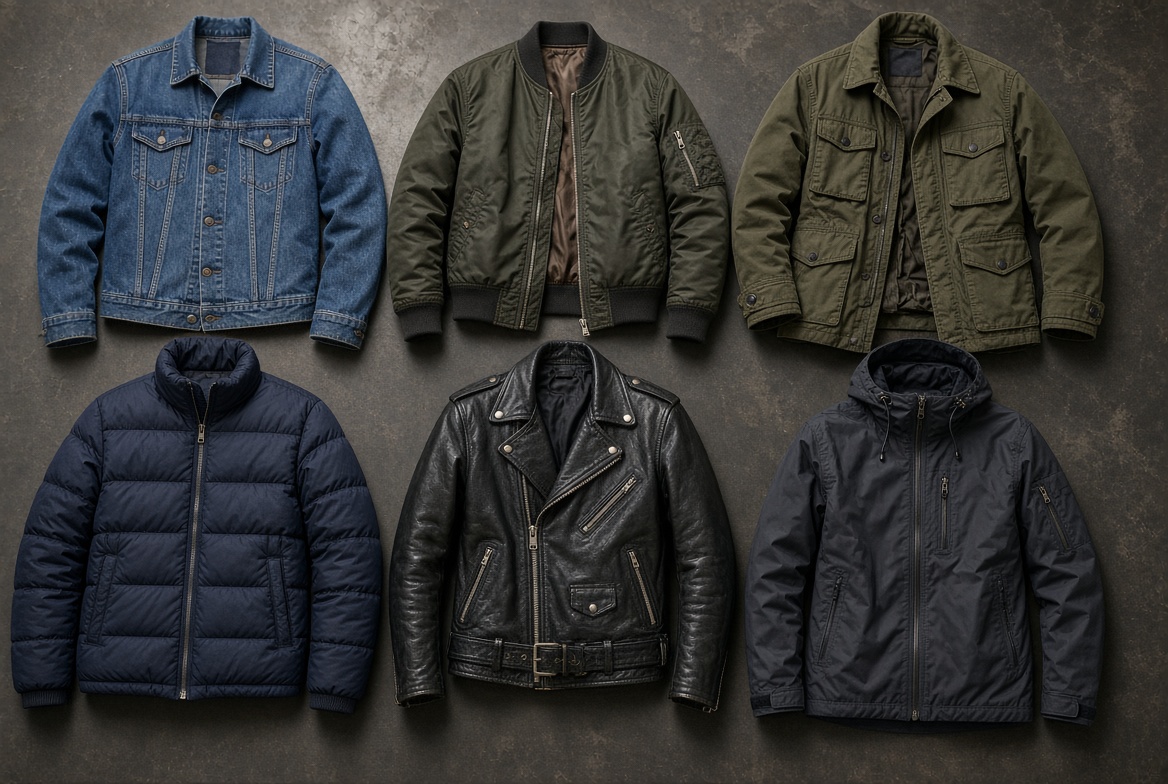
The bomber jacket remains one of the most adaptable outerwear styles for global markets. Its classic features include a short body, zip-front closure, rib-knit collar, rib cuffs, and rib hem. The silhouette originally developed from aviation clothing, but it has evolved into a major fashion category.
For OEM buyers, the bomber is valuable because it can be adapted across many price points.
A basic promotional bomber may use lightweight polyester with simple rib trims. A premium fashion bomber may use nylon twill, satin, wool blend fabric, leather sleeves, embroidered patches, contrast lining, or custom metal hardware.
Key development options include:
- MA-1-style bomber jackets with nylon shell fabric and sleeve utility pockets.
- Baseball bomber jackets with striped rib trims and snap-button closures.
- Padded bomber jackets for autumn and winter assortments.
- Oversized bombers for contemporary streetwear collections.
- Custom logo bomber jackets using embroidery, chenille patches, woven labels, or screen printing.
A common production issue is rib quality. Poor rib trims can stretch out, lose recovery, or show inconsistent color after washing. For a stronger finished product, buyers should confirm the rib composition, weight, colorfastness, and recovery performance before bulk production.
Denim jackets are among the most recognizable casual jacket styles. They typically feature a button front, chest flap pockets, side pockets, adjustable sleeve cuffs, and a structured denim body.
The classic denim jacket is a useful product category because it can work across genders, age groups, and seasons. It also supports many visual treatments without changing the core construction.
Popular denim jacket variations include:
- Classic indigo trucker jackets.
- Black or grey washed denim jackets.
- Oversized women's denim jackets.
- Cropped denim jackets.
- Sherpa-lined denim jackets.
- Distressed or vintage-washed styles.
- Embroidered and printed denim jackets.
- Workwear-inspired denim chore jackets.
For commercial development, fabric weight matters. Lightweight denim is more suitable for spring layering, while heavier denim or lined denim works better for cooler weather. Wash development also deserves early attention because stone washing, enzyme washing, bleach treatments, tinting, whiskers, grinding, and distressing can all change the final hand feel, shade, and cost.
Brands should approve a wash sample before confirming production. A reference image alone is not enough to control the final appearance of washed denim.
Leather jackets bring a strong visual identity to a collection. They are commonly associated with biker culture, rock-inspired styling, premium casualwear, and contemporary fashion.
The most recognizable styles include the asymmetrical biker jacket, café racer jacket, moto jacket, leather bomber, and leather blazer. Genuine leather offers natural variation, durability, and a premium hand feel. PU and other leather-look materials offer a lower-cost and more uniform alternative.
When sourcing a leather or faux-leather jacket, buyers should clarify:
- The exact material composition.
- Shell thickness or weight.
- Backing fabric for synthetic leather.
- Surface finish, such as matte, glossy, waxed, distressed, or suede-look.
- Lining composition.
- Hardware finish and corrosion resistance.
- Seam reinforcement and pocket construction.
- Odor, color migration, and abrasion expectations.
Material selection should follow the product's retail promise. A premium genuine-leather jacket and a fashion PU biker jacket can share a similar silhouette, but they need different factory capabilities, production timelines, testing standards, and pricing structures.
Field jackets and chore jackets are highly relevant for brands that want a rugged, practical, workwear-inspired look.
A field jacket usually has a hip-length body, multiple utility pockets, a front zip with snap placket, and sometimes a concealed hood or adjustable waist. It often draws inspiration from military field garments, especially styles with four front flap pockets.
A chore jacket is simpler. It usually has a straight, relaxed fit, a button or snap front, and large patch pockets. Originally linked to workshop and labor clothing, it has become popular in lifestyle, heritage, and modern workwear collections.
These jacket types work well in materials such as:
- Cotton canvas.
- Cotton twill.
- Organic cotton drill.
- Cotton-polyester blends.
- Ripstop.
- Waxed-look fabrics.
- Denim.
- Recycled nylon.
For a brand buyer, the strength of utility jackets is customization. Pocket placement, branded snaps, contrast bar tacks, woven labels, elbow patches, inner pockets, garment dyeing, and embroidery can create a distinctive product without requiring a completely new base pattern.
Varsity jackets, also called letterman jackets, combine sporty heritage with a youthful, collectible appearance. Traditional versions often use a wool or wool-blend body, contrast leather sleeves, striped ribbed trims, snap buttons, and chenille letter patches.
Today, varsity jackets are frequently developed in lighter and more accessible constructions, including polyester, fleece, sweat fabric, nylon, or PU leather. This helps brands create products for different climates and target price points.
Varsity jackets are particularly suitable for:
- Streetwear brands.
- School and university merchandise.
- Sports clubs.
- Music merchandise.
- Team uniforms.
- Corporate gifting programs.
- Fashion collections with embroidery or patch storytelling.
The decoration plan should be finalized early. Large chenille patches, dense embroidery, appliqué, and sleeve artwork can affect sewing order, labor time, fabric stability, and minimum order requirements.
Puffer jackets are designed primarily for warmth. They use stitched channels or baffles to hold insulation, creating the recognizable padded appearance. Depending on the target market, insulation may be down, feather blend, polyester wadding, recycled polyester fill, or other synthetic alternatives.
A quilted jacket may be lighter and flatter than a puffer. It can use diamond quilting, onion quilting, horizontal channels, vertical quilting, or custom stitch patterns. These styles are popular for transitional weather, commuting, layering, and lifestyle outerwear.
When developing insulated jackets, brands should specify more than just "padding."
Important questions include:
1. What is the fill material and composition?
2. What is the fill weight in grams for each size?
3. Is the jacket intended for light, medium, or cold-weather warmth?
4. Is the filling evenly distributed after washing?
5. Does the shell fabric prevent fiber migration?
6. Are the quilt lines decorative, sewn-through, or built as insulated baffles?
7. Will the garment include a hood, storm flap, inner cuffs, or adjustable hem?
Warmth is not determined by thickness alone. Shell fabric, lining, fill type, fill weight, construction, fit, and wind exposure all influence how a jacket performs in real wear.
Windbreakers and rain jackets may look similar, but they serve different purposes.
A windbreaker is usually lightweight and designed to reduce wind exposure. It may offer light water resistance, but it is not automatically suitable for sustained rain.
A rain jacket is built for wet-weather protection. Depending on the product specification, it may use coated fabric, taped seams, a waterproof membrane, water-resistant zippers, storm flaps, and adjustable hoods.
For buyers, the most important distinction is clear product communication. Do not market a jacket as waterproof if it only has a water-repellent surface treatment.
A strong rainwear development brief should cover:
- Fabric composition and weight.
- Waterproof performance target.
- Breathability target, if required.
- Seam construction and tape specification.
- Hood shape and adjustability.
- Zipper type.
- Pocket closure method.
- Packability requirement.
- Reflective details.
- Intended activity level.
Technical outerwear construction can use layered systems. A two-layer garment normally combines an outer fabric and protective membrane, with a separate hanging lining. A three-layer design bonds the face fabric, membrane, and inner backing into one composite material. The right choice depends on intended performance, comfort, durability, and cost.
Before asking an OEM supplier for a quotation, define the product role clearly. This will reduce revisions and help the factory recommend appropriate materials and construction.
Use this practical selection process.
1. Define the customer and occasion.
Is the jacket for urban commuting, outdoor activity, workwear, school merchandise, fashion retail, promotional use, or cold-weather travel?
2. Set the seasonal performance target.
Decide whether the product is for spring, autumn, winter, rainy weather, or multi-season layering.
3. Choose a silhouette that matches the brand.
A cropped denim jacket, oversized bomber, tailored Harrington, utility field jacket, and long parka appeal to different customers.
4. Match materials to the required function.
Cotton twill suits utility styling. Nylon suits lightweight technical products. Denim supports casual heritage. Polyester fleece provides soft insulation. Leather or PU creates a fashion-led premium appearance.
5. Plan decoration before production.
Embroidery, patches, printing, labels, reflective tapes, and custom hardware should be included in the original tech pack whenever possible.
6. Confirm fit and grading.
Fit is one of the main causes of returns and customer dissatisfaction. Review the base size, measurement chart, ease allowance, sleeve length, shoulder width, and grading rules before bulk approval.
7. Approve a complete pre-production sample.
The sample should confirm fabric, color, trims, measurements, branding, workmanship, packing, and wash appearance.
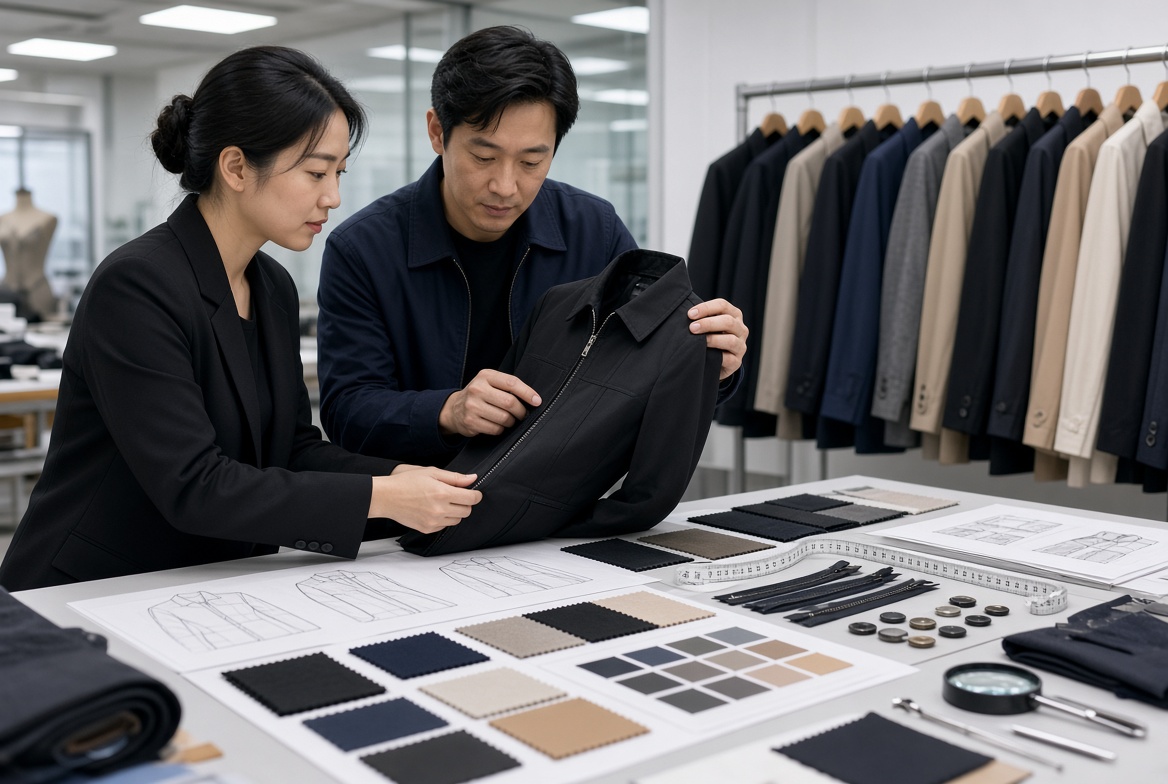
From an OEM perspective, a jacket is a combination of many components. Even a simple-looking product may include shell fabric, lining, interlining, zippers, labels, rib trims, drawcords, elastic, pocket bags, snaps, padding, thread, packaging, and decoration.
The most reliable buyers provide a clear tech pack containing:
- Front, back, and detail drawings.
- Measurement specification.
- Fabric and lining requirements.
- Color standards.
- Trim list.
- Logo artwork files.
- Label and packaging instructions.
- Construction details.
- Required testing standards.
- Quantity by color and size.
- Target delivery date.
If a complete tech pack is not available, an experienced OEM supplier can help convert reference images and product ideas into a workable development package. However, buyers should expect the process to include fabric confirmation, pattern creation, sample review, revision, and final approval.
Care instructions should be matched to the material and construction. Incorrect care can shorten a jacket's usable life, damage coatings, affect insulation, or alter the surface finish.
For example, waxed jackets should not be routinely machine washed or dry cleaned because these processes can remove the protective wax finish. Spot cleaning with cold water is a more suitable approach for this material category.
General care guidance for brands to consider includes:
- Turn denim and printed jackets inside out before washing.
- Follow care instructions for insulated jackets to avoid uneven filling.
- Use specialist cleaning methods for leather garments.
- Avoid excessive heat for coated or laminated rainwear.
- Check whether fleece needs gentle washing to reduce pilling.
- Include clear care labels that match the actual fabric and trim composition.
Care-label systems vary by market, so brands should ensure the final label format is suitable for the countries where the product will be sold.
The best jacket collections do not rely on a single trend. They combine strong silhouettes with clear product purpose, reliable fabric selection, consistent fit, and details that make the garment recognizably yours.
Whether you are developing custom bomber jackets, denim jackets, field jackets, varsity jackets, padded puffers, workwear styles, or lightweight technical outerwear, Shanghai Youti Clothing Co., Ltd. can support OEM development from concept and sampling through bulk production.
Send us your jacket reference images, tech pack, target quantity, fabric preference, logo artwork, and delivery market. Our team can help evaluate the construction, recommend suitable materials, and develop an outerwear solution aligned with your brand and commercial requirements.
Some of the most popular jacket types include bomber jackets, denim jackets, leather jackets, puffer jackets, varsity jackets, field jackets, windbreakers, rain jackets, fleece jackets, chore jackets, Harrington jackets, and parkas. The right choice depends on the customer, season, and intended use.
A puffer jacket usually has thicker insulation and a more voluminous appearance. A quilted jacket is often lighter, flatter, and suitable for transitional weather. Both use stitched patterns, but a puffer is generally designed for greater warmth.
There is no single best fabric. Cotton twill and canvas work well for field and chore jackets. Denim is suitable for casual jackets. Nylon and polyester are widely used for windbreakers, puffers, and rainwear. Wool blends, leather, and PU materials are often selected for more premium fashion styles.
Yes. Common customization methods include embroidery, screen printing, heat transfer printing, chenille patches, woven labels, rubber badges, metal badges, custom zipper pullers, neck labels, care labels, and branded packaging. The best method depends on the jacket fabric, logo design, quantity, and budget.
Prepare product reference images or technical drawings, fabric requirements, color options, size chart, branding details, quantity, target market, packing requirements, and preferred delivery date. A detailed tech pack generally leads to a more accurate quotation and smoother sampling process.
A water-resistant jacket can resist light moisture for a limited time. A waterproof jacket is designed to block water penetration under more demanding conditions and often includes waterproof fabric construction, protected seams, and more secure closures. Product claims should always match the actual material and construction.
Start with a clear tech pack, approve fabric and trim samples, confirm measurements, review a complete pre-production sample, establish inspection standards, and check packaging before shipment. For washed, padded, coated, or highly decorated jackets, additional testing and approval steps are especially important.
1. [ZSO Garment — What Are the Different Types of Jackets?]
2. [Coats — Care Labels and Fabric Performance Codes] [coats]
3. [Evo — Outerwear Fabric, Features and Construction Guide] [evo]
4. [Drake's — Coats and Jackets Care Guide] [us.drakes]
5. [American Cleaning Institute — Fabric Care] [cleaninginstitute]
6. [Primer Magazine — Types of Jackets Photo Guide] [primermagazine]
7. [ApparelBus — Types of Jackets: Names, Styles, and When to Wear Them] [apparelbus]


