
Views: 222 Author: Youti Clothing Publish Time: 2026-06-12 Origin: Site


Content Menu
● Why Hotel Uniforms Matter More Than You Think
● Core Principles of Hotel Uniform Design
● Front Desk & Reception Uniforms
>> Typical Front Desk Uniform Components
● Concierge, Bell, and Guest Relations Uniforms
>> Design Ideas
● Restaurant, Bar, and F&B Service Uniforms
>> Priorities for F&B Uniforms
>> Typical F&B Uniform Components
● Housekeeping and Maintenance Uniforms
● Spa, Wellness, and Leisure Staff Uniforms
>> Common Spa Uniform Elements
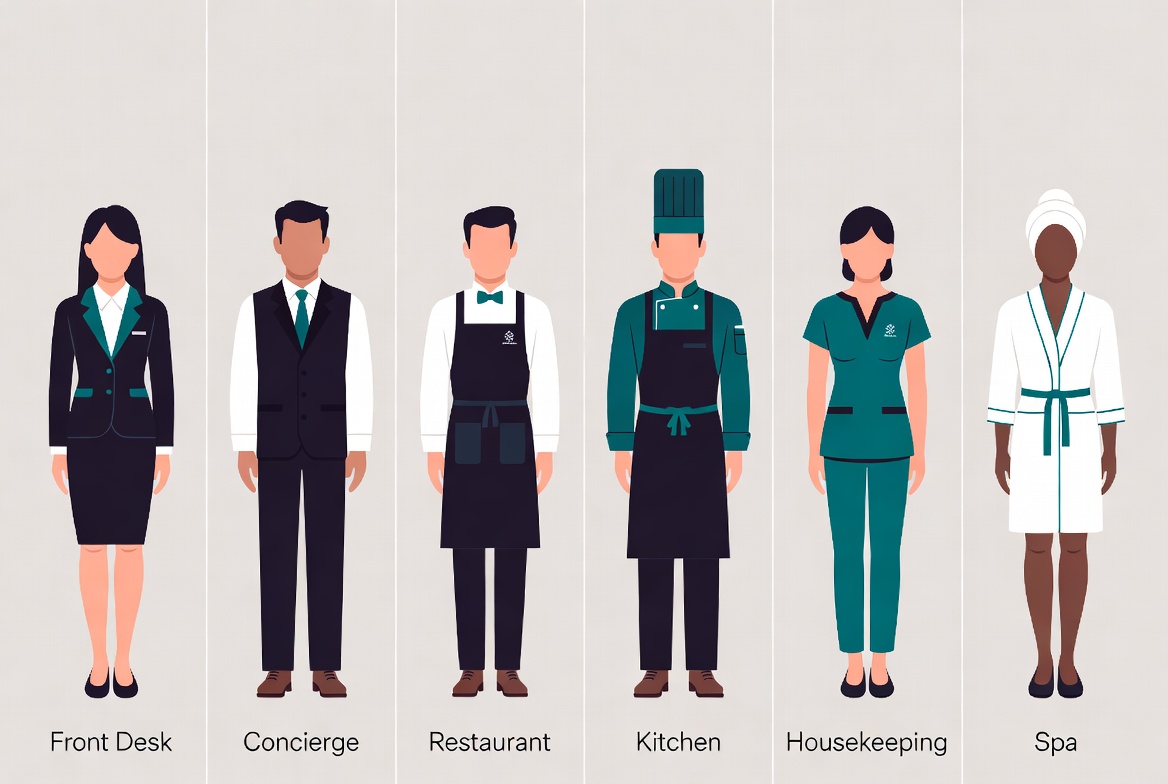
● Hotel Uniform Types by Department (Quick Reference)
● How to Choose Hotel Uniforms Step‑by‑Step (From an OEM Perspective)
● Working With a Chinese OEM Hotel Uniform Supplier
● Call to Action: Plan Your Next Hotel Uniform Upgrade
● FAQs About Hotel Staff Uniforms
Designing hotel staff uniforms is no longer just about "looking neat." It is about branding, guest experience, staff comfort, and long‑term procurement efficiency. As an OEM hotel uniform supplier based in China, working with overseas brands every day, I'll walk you through how to choose the right uniforms for every department—and how to translate those ideas into real, manufacturable garments that fit your budget and positioning. [stockmfgco]
- Primary keyword focus: hotel staff uniforms, types of uniforms in the hotel industry
- Secondary long‑tail keywords: front desk hotel uniforms, hotel housekeeping uniforms, chef and kitchen uniforms, hotel restaurant staff uniforms, hotel uniform supplier, OEM hotel uniforms China
You can use this as a blueprint whether you are a boutique hotel owner, a procurement manager for an international chain, or a distributor looking for a stable OEM partner.
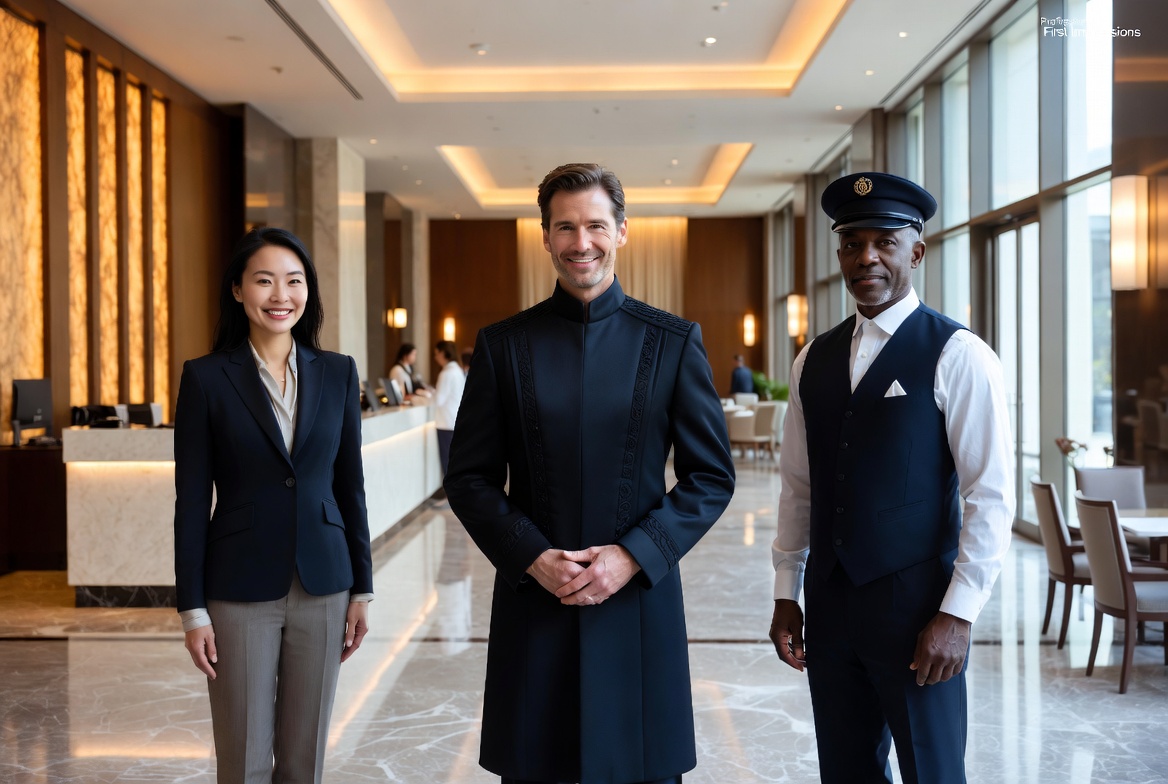
Uniforms in the hospitality industry are a visual contract between your brand, your staff, and your guests. They directly influence first impressions, perceived service quality, and even online reviews. [heartofthehouse]
From years of working with hotel buyers, I see four reasons hotels invest seriously in uniforms:
- Brand storytelling: Colors, cuts, and details communicate your brand's personality faster than any brochure. [stockmfgco]
- Guest confidence: Clear, consistent uniforms help guests immediately recognize staff roles and feel safe asking for help. [sszfsj]
- Staff performance: Comfortable, breathable, and functional uniforms reduce fatigue and improve mobility, especially in back‑of‑house roles. [attirecorp]
- Operational consistency: A defined uniform program simplifies onboarding, procurement, and quality control across multiple locations. [cargocrew]
A simple example: a seafront resort we worked with upgraded to wrinkle‑resistant, quick‑dry fabrics for front‑desk staff. Complaints about "messy appearance" in reviews dropped, and staff reported they could move more confidently in a humid, high‑traffic lobby.
Before diving into specific roles, align on a few non‑negotiable principles.
- Fit for purpose: Every department has different movement patterns, cleaning requirements, and safety constraints; uniforms must support, not restrict, that work. [linenfinder]
- Fabric selection: Choose breathable, durable, wrinkle‑resistant fabrics that can withstand frequent industrial washing. Cotton‑rich blends and technical synthetics are common choices. [attirecorp]
- Brand alignment: Colors, trims, and silhouettes should echo your logo, interior design, and overall positioning (luxury, lifestyle, budget, etc.). [zgzyzxh]
- Series consistency: While each department can look distinct, the hotel's uniforms should still feel like a family—shared palette, branded elements, and coherent styling. [zgzyzxh]
When we design for overseas clients, we typically start with a core color story (for example, deep navy + warm beige + one accent color) and then adjust details by department.
Front desk employees are the face of your hotel. Their uniforms must send a clear message of trust, professionalism, and warmth. [stockmfgco]
- Polished but approachable: Tailored blazers, crisp shirts, and coordinated trousers or skirts are common for mid‑ to high‑end properties. [vesbhusha]
- Brand‑aligned colors: Many hotels mirror lobby colors (e.g., marble tones, wood accents, or brand primary color) for seamless brand experience. [cargocrew]
- Comfort and movement: Stretch fabrics, under‑arm gussets, and breathable linings are critical for staff who stand for long shifts. [attirecorp]
- Tailored blazer or vest with subtle logo embroidery
- Dress shirt or blouse (often white or light tone)
- Dress trousers or pencil skirt
- Optional scarf or tie in brand colors
- Closed‑toe, polishable dress shoes with non‑slip soles [cargocrew]
When sourcing OEM uniforms, request graded size sets and fit samples for both male and female silhouettes to ensure real‑world comfort rather than mannequin perfection.
Concierge, bell staff, and guest relations teams often act as the "hosts" of the hotel experience, guiding guests and managing special requests. [linenfinder]
- High visibility: Guests in large lobbies or busy entrances must recognize these roles instantly. Strong colors, epaulets, or distinctive trims help. [sszfsj]
- Weather‑ready options: For bell staff who step outside, consider outerwear (trench coats, raincoats, or winter jackets) in matching designs. [linenfinder]
- Longer jackets or distinctive coats for a "doorman" style in luxury hotels
- Smart vests with contrast piping for modern lifestyle properties
- Branded caps or hats where appropriate
- Name badges placed at eye level and coordinated with the uniform palette
In OEM projects, these pieces often require small production runs but higher detail, so it's important to work with a supplier experienced in low‑MOQ, high‑complexity styles.
Food & beverage staff operate in a dynamic environment where style, hygiene, and functionality must co‑exist. [everyday-uniforms]
- Easy to clean: Frequent washing and exposure to food stains mean you should choose stain‑resistant, colorfast fabrics. [attirecorp]
- Freedom of movement: Service staff carry trays, bend, and reach; uniforms must stretch and breathe. [cargocrew]
- Concept alignment: A rooftop bar, all‑day café, and fine‑dining restaurant may all need distinct looks under one hotel roof. [vesbhusha]
- Tailored shirt or blouse (solid or subtle pattern)
- Service apron (bib or waist style) with functional pockets
- Slim, comfortable trousers or skirts
- Optional vests for elevated settings
- Slip‑resistant shoes [linenfinder]
For casual venues, some hotels now request "smart casual" uniforms, such as premium T‑shirts or chambray shirts with branded aprons, which we can easily produce with custom colors and screen printing.
Kitchen uniforms are safety equipment as much as they are clothing. They must protect against heat, spills, and contamination, while still representing the hotel's culinary identity. [stockmfgco]
- Double‑breasted chef coat: For heat resistance and the ability to reverse front panels to hide stains mid‑shift. [attirecorp]
- Durable chef pants: Typically in checkered or dark fabrics to hide stains, with elastic or drawstring waist for comfort. [attirecorp]
- Aprons: Bib aprons in water‑resistant fabrics offer extra protection from splashes and hot liquids. [linenfinder]
- Headwear: Chef hats, skull caps, or bandanas to maintain hygiene standards. [attirecorp]
- Non‑slip shoes: Critical for wet, high‑risk kitchen floors. [linenfinder]
In OEM projects, we frequently engineer ventilation panels (mesh inserts at the back or underarms) and moisture‑wicking fabrics to handle high kitchen temperatures.
Housekeeping and maintenance teams often have the most physically demanding roles in the hotel. They need uniforms that maximize practicality and safety. [stockmfgco]
- Mobility: Tunic tops or polos with side vents and elastic waist pants are common. [linenfinder]
- Pockets everywhere: Multiple pockets are essential for room keys, cloths, and small tools. [cargocrew]
- Durability: Fabrics must withstand frequent washing, exposure to chemicals, and friction from cleaning tasks. [attirecorp]
- Safety: Non‑slip, closed‑toe footwear is essential, especially where floors may be wet. [linenfinder]
Typical housekeeping sets include:
- Tunic or polo shirt with subtle branding
- Comfortable straight‑leg pants
- Lightweight cardigan or jacket for cooler climates
- Practical apron or utility belt, depending on workflow
When designing as a manufacturer, we often suggest reinforced seams, bar‑tacks on high‑stress points, and darker lower garments to extend life span and reduce visible wear.
Spa and leisure areas demand a softer visual language, often leaning into calm, wellness‑oriented aesthetics. [cargocrew]
- Relaxed‑fit tunics or wrap tops
- Soft, breathable fabrics such as cotton‑rich or bamboo blends
- Neutral, nature‑inspired colors (white, beige, sage, soft grey)
- Minimalist branding and details to avoid visual noise
We often incorporate stretch and easy‑care finishes, because spa staff need to move freely during treatments but still look composed after multiple sessions.
| Department | Typical Uniform Elements |
|---|---|
| Front Desk / Reception | Blazer, shirt/blouse, trousers or skirt, tie/scarf, dress shoes (vesbhusha) |
| Concierge / Bell Staff | Distinctive coat or vest, tailored pants, optional hat, name badge (cargocrew) |
| Restaurant / Bar (F&B) | Shirt or blouse, apron with pockets, trousers/skirt, slip‑resistant shoes (everyday-uniforms) |
| Kitchen / Chef | Chef coat, pants, apron, hat, non‑slip shoes (attirecorp) |
| Housekeeping | Tunic or polo, pants, pockets, practical shoes (attirecorp) |
| Spa / Wellness | Relaxed tunic, soft pants, neutral colors, minimalist branding (cargocrew) |
Based on many international hotel projects, here is a practical, repeatable process you can follow with your supplier:
1. Clarify brand and positioning
Define your target guest, star rating, and brand story. Collect photos of your lobby, rooms, and existing marketing materials for reference. [heartofthehouse]
2. Map all staff roles
List every guest‑facing and back‑of‑house role, then group them by function and exposure (front of house, F&B, kitchen, housekeeping, security, etc.). [stockmfgco]
3. Decide on a color and design framework
Choose 2–3 base colors and 1–2 accent colors that will run through all departments, with variations in cuts and details. [zgzyzxh]
4. Define functional requirements per role
For each department, specify fabric preferences, pocket needs, mobility requirements, and safety constraints (heat, chemicals, weather). [cargocrew]
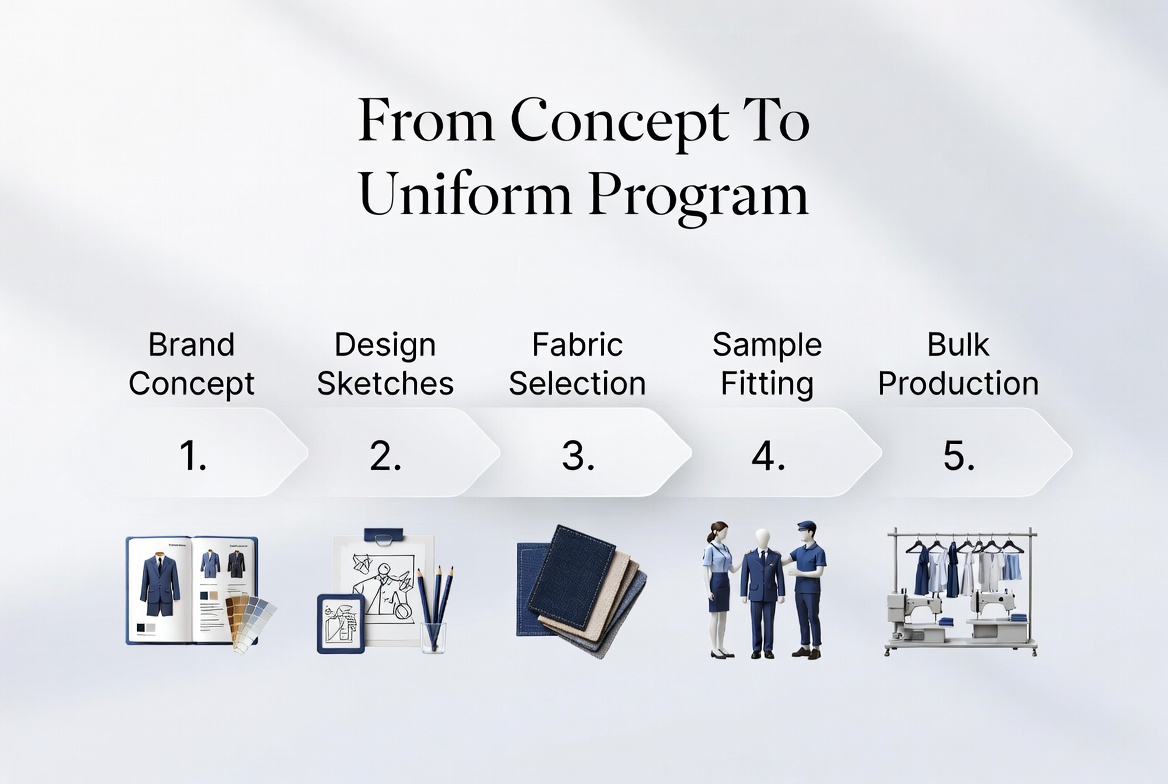
5. Work with your OEM supplier on samples
Share your brief, mood boards, and sizing data. Your supplier should propose fabric options, technical drawings, and then pre‑production samples. [sellerscommerce]
6. Test in real operations
Have staff wear samples during actual shifts, gather feedback on comfort, mobility, and maintenance, and refine designs accordingly. [heartofthehouse]
7. Finalize specs and standardize
Once approved, lock in detailed tech packs, grading rules, QC standards, and packaging requirements to ensure consistency across reorders. [uniformmarket]
This process ensures you don't just get "nice designs" but a scalable, maintainable uniform program.
As a Chinese supplier (e.g., Shanghai‑based OEM factories like ours), we regularly support brands, wholesalers, and distributors in North America, Europe, and the Middle East with private‑label hotel uniforms.
When you evaluate or onboard an OEM partner, focus on:
- Industrial experience in hospitality uniforms rather than generic fashion only. [uniformbucket]
- Fabric sourcing capabilities (breathable blends, technical finishes, stain‑resistant, flame‑retardant where needed). [cargocrew]
- Flexible MOQs and size runs so you can cover full staff but still test new concepts. [uniformbucket]
- Sampling efficiency: Ability to develop patterns, samples, and revisions quickly based on your feedback. [uniformmarket]
- Export support: Familiarity with export documentation, labeling requirements, and logistics for your target markets. [sellerscommerce]
A good OEM partner should not only "take orders" but also provide proactive suggestions on fabrics, pattern engineering, and cost‑effective alternatives when your original idea is hard to produce at scale.
If you are planning a renovation, rebranding, or new hotel opening, this is the ideal moment to upgrade your hotel staff uniforms. Aligning your uniforms with your interiors, brand story, and operational needs will improve both guest perception and staff morale. [stockmfgco]
Work with an experienced OEM supplier in China who understands hospitality operations, export requirements, and branding, so you can move from idea to production with fewer iterations and more predictable costs. [sellerscommerce]
1. How often should hotels update their staff uniforms?
Most hotels refresh their uniform program every 3–5 years, or when they undergo a major rebranding, renovation, or target market shift. [heartofthehouse]
2. What fabrics work best for hot and humid climates?
Breathable cotton‑rich blends, moisture‑wicking technical fabrics, and lightweight, wrinkle‑resistant materials are best suited for tropical or coastal properties. [attirecorp]
3. How can I keep uniform costs under control for a new hotel opening?
Standardize base styles across multiple roles, use similar fabrics for different departments, and work with an OEM that can optimize patterns and lay‑plans to reduce fabric waste. [uniformbucket]
4. Are sustainable hotel uniforms really feasible in large operations?
Yes. Many hotels now adopt recycled polyester, organic cotton, or certified blends, combined with durable construction to extend garment life and reduce total environmental impact. [eightohtwo]
5. What information should I prepare before contacting an OEM hotel uniform supplier?
Prepare your brand guidelines, staff role list, estimated quantities, target budget range, color preferences, and any specific performance needs (stain‑resistant, flame‑retardant, quick‑dry, etc.). [uniformmarket]
1. Stock Mfg Co. "Types of Uniforms in the Hotel Industry." [stockmfgco]
2. Cargo Crew. "Your Ultimate Guide to Hotel Uniforms." [cargocrew]
3. AttireCorp. "Types of Uniforms in the Hotel Industry." [attirecorp]
4. Heart of the House. "The Impact of Hotel Uniforms on Guest Satisfaction." [heartofthehouse]
5. Linen Finder. "The Different Kinds of Hotel Uniforms You Need." [linenfinder]
6. Vesbhusha. "Types of uniforms in the hotel industry: A complete guide." [vesbhusha]
7. SellersCommerce. "The Unique Opportunities For SEO In The Uniform Industry." [sellerscommerce]
8. Uniform Market. "SEO & Content for Uniform Companies: Are Keyword Lists…" [uniformmarket]
9. 中国职业装协会. "【酒店制服】酒店制服设计原则选购酒店制服注意事项." [zgzyzxh]
10. 中国时尚制服设计网. "酒店制服的重要性." [sszfsj]


