
Views: 222 Author: Youti Clothing Publish Time: 2026-06-11 Origin: Site


Content Menu
● Restaurant Uniform Ideas That Boost Brand, Comfort, and Operations
● Why Restaurant Uniforms Matter More Than Ever
● Core Principles of Effective Restaurant Uniform Design
>> Align Every Piece With Your Concept
>> Prioritize Comfort and Mobility
>> Design for Function and Longevity
● 10 Restaurant Uniform Ideas Inspired by Real-World Concepts
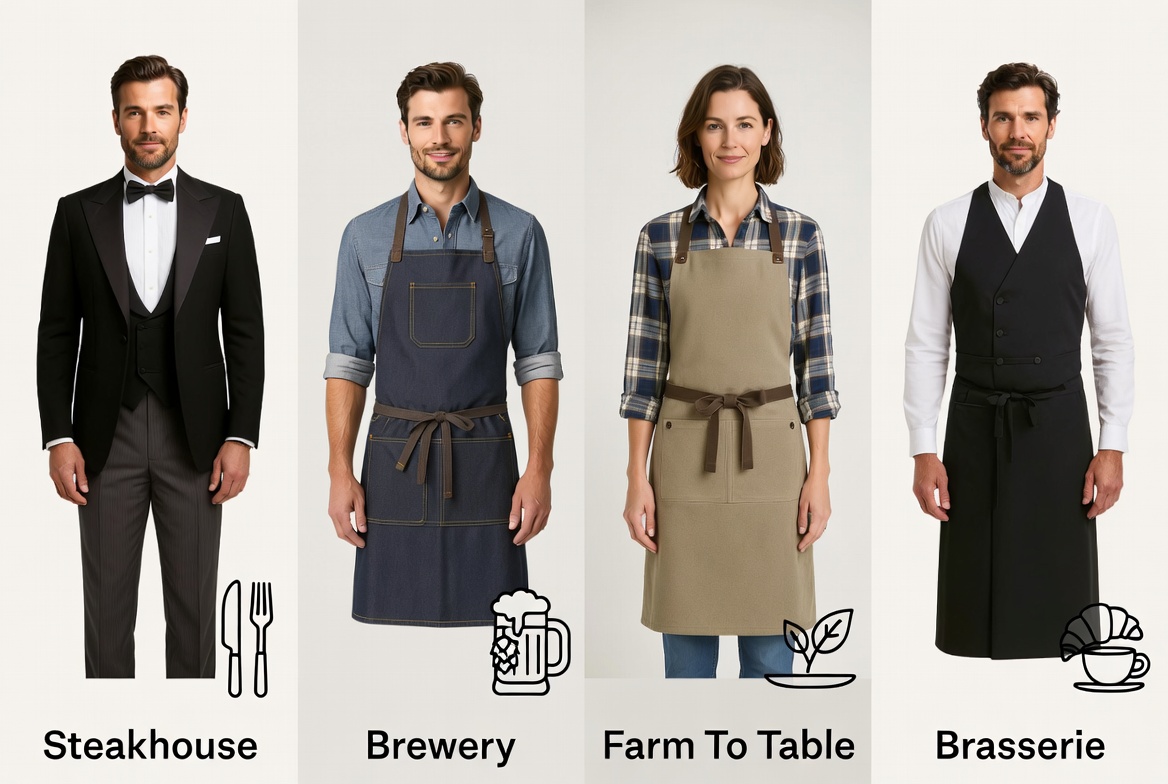
>> 1. Upscale Steakhouse: Tuxedo-Inspired, Service-Ready
>> 2. Industrial Brewery: Denim, Chambray, and Branded Polos
>> 3. Farm-to-Table Bistro: Rustic Textures, Earth Tones
>> 4. Korean or Asian-Fusion Concepts: Minimal With Cultural Notes
>> 5. Rustic Italian Trattoria: Classic Colors, Long Aprons
>> 6. High-End Hotel Restaurant: Tailored and Consistent
>> 7. Museum or Gallery Café: "Wearable Branding"
>> 8. Parisian Brasserie: Crisp, Iconic, Photogenic
>> 9. Southwestern Cantina: Color, Embroidery, and Attitude
>> 10. Heritage or Fine-Dining Concepts: Cultural Dress, Modern Fit
● Trends, Fabric Choices, and OEM Best Practices
>> 2026–2027 Restaurant Uniform Trends You Should Care About
>> How to Choose Fabrics for Restaurant Workwear
>> Step-by-Step: Building a Restaurant Uniform Program With an OEM Partner
● Quick Uniform Idea Matrix by Concept and Role
● Practical UX Tips for Rolling Out New Uniforms
>> Plan for Care, Storage, and Replacement
● About Shanghai Youti Clothing Co., Ltd. – Your OEM Partner for Uniforms and Work Clothes
● Call to Action – Turn Your Restaurant Uniform Ideas Into a Scalable Program
● FAQ: Restaurant Uniforms and OEM Production
Designing restaurant uniforms is no longer just about "looking neat." It is about brand storytelling, staff comfort, safety, and operational efficiency—especially when you plan to scale or work with an overseas OEM partner. In this guide, we'll combine real-world restaurant uniform ideas with the practical lens of a Chinese OEM supplier (Shanghai Youti Clothing Co., Ltd.) to help you create uniforms that look great, perform well, and are realistic to manufacture at scale.

A well-planned restaurant uniform system reinforces your concept, supports staff performance, and strengthens the guest experience from the moment customers walk in. Whether you run a fine-dining brasserie or a casual brewery, your uniforms should be a strategic asset, not an afterthought. [apparelnbags]
From an OEM manufacturer's perspective, the best restaurant uniforms balance four pillars: brand fit, function, comfort, and manufacturability. The examples below illustrate how successful venues around the world use uniforms to tell their story—and what you should pay attention to when you move from "idea" to "production." [stockmfgco]
Modern uniforms must work across branding, HR, and operations. [linkedin]
- Brand signal: Uniforms communicate concept, price point, and service style before a guest sees the menu. [allseasonsuniforms]
- Employee experience: Comfortable, breathable, and practical garments reduce fatigue and turnover risk. [tilitnyc]
- Operational efficiency: Easy-care fabrics, smart pocket placement, and stain-resistance save time and cost over the life of the garment. [clothing.taobao]
- Compliance and safety: Materials and cuts should consider heat, stains, and local safety standards. [clothing.taobao]
For international brands, working with an OEM partner who understands restaurant workflows—from host stand to hot line—is critical to translating style concepts into durable workwear. [taianbowinsgarment]
Uniforms should look like a natural extension of your interiors, logo, and menu. [allseasonsuniforms]
- Upscale spaces often use structured silhouettes, dark palettes, and premium trims. [stockmfgco]
- Casual concepts lean on denim, breathable knits, and relaxed fits. [apparelnbags]
- The goal is a coherent "team look" that guests can instantly recognize. [cargocrew]
Restaurant work is physically demanding. Uniforms that restrict movement or trap heat will quickly become a pain point. [linkedin]
- Use lightweight, breathable fabrics in kitchens and fast-casual environments. [tilitnyc]
- Allow room in shoulders, arms, and knees to bend, carry, and reach comfortably. [tilitnyc]
- Consider moisture-wicking finishes and soft hand-feel for long shifts. [linkedin]
Functional details keep your team efficient and your garments in rotation longer. [clothing.taobao]
- Pocket strategy: Pens, order pads, handheld POS devices, and openers all need homes.
- Stain strategy: Darker colors for high-spill roles; stain-release finishes for aprons. [tilitnyc]
- Durability: Reinforced seams, bar-tacks at stress points, and abrasion-resistant fabrics extend life. [taianbowinsgarment]
Below are re-framed versions of popular restaurant uniform directions, updated with practical manufacturing considerations.
High-end steakhouses often favor tuxedo jackets, satin shawl collars, and velvet bowties for a luxurious front-of-house presence. To make this work operationally, specify wrinkle-resistant blends and allow for breathability under hot service conditions. [cargocrew]
OEM tip: Choose a poly–viscose blend with a small elastane content for jackets to balance structure, comfort, and ease of care in large-laundry environments. [taianbowinsgarment]
Trendy breweries often combine dark denim aprons, branded black polos, and grey chambray shirts for managers. These looks feel casual and approachable, but still professional enough for brewery tours and tastings. [stockmfgco]
OEM tip: Use enzyme-washed denim for softness and colorfastness, and work with your supplier on embroidery or woven labels that withstand frequent washing. [taianbowinsgarment]
Farm-focused venues lean on plaid flannel shirts, duck canvas aprons, dark jeans, and leather straps to communicate authenticity and warmth. Simple white shirts with chambray aprons can also create a clean farm-fresh aesthetic.
OEM tip: Consider cotton-rich blends with a small synthetic percentage for easier stain removal and reduced shrinkage, especially for heavier aprons. [clothing.taobao]
Fusion restaurants increasingly use minimal silhouettes with subtle cultural motifs, such as linen smock aprons, short-sleeve tees, and understated patterns. Monochrome bases with sharp accents keep the look contemporary and Instagram-friendly. [linkedin]
OEM tip: Many motifs can be achieved with digital prints or woven labels, which scale better than complex embroidery for large rollouts. [taianbowinsgarment]
Italian restaurants often dress staff in burgundy shirts, black vests, long black bistro aprons, and dark trousers, sometimes accented with red or green ties. This creates a timeless identity that guests immediately associate with Italian dining. [stockmfgco]
OEM tip: Long aprons should use durable, slightly heavier-weight twill to hang nicely and resist wrinkling. [taianbowinsgarment]
Hotel restaurants typically require uniforms that work from breakfast to late-night room service. Think white dress shirts, black tailored vests and trousers, and coordinated aprons, sometimes in grey or navy to match the hotel brand. [cargocrew]
OEM tip: Ask your supplier to grade patterns carefully across sizes and genders to keep a consistent, tailored silhouette on a diverse team. [linkedin]
Art-driven venues often use all-black bases with bold, single-color aprons or tops featuring graphic prints tied to exhibitions or the venue's identity. This converts uniforms into "moving signage" that reinforces the visual theme. [bk.taobao]
OEM tip: Plan a graphics system with your OEM early—screen printing, heat transfer, or digital print—so color accuracy and wash durability are tested before rollout. [taianbowinsgarment]
Classic brasseries lean heavily on white dress shirts, black bowties, long white bistro aprons, and dark vests or waistcoats. The overall effect is clean, photogenic, and easy for guests to recognize across large dining rooms. [stockmfgco]
OEM tip: White garments need higher-quality fabrics and tighter QC because any opacity or stitching issues are instantly visible. [taianbowinsgarment]
Cantinas and Tex-Mex concepts may embrace embroidered Western shirts, bandanas, dark denim, and cowboy boots, adding color and pattern through embroidery or printed shirts. This creates a lively energy that supports themed décor and vibrant menus. [apparelnbags]
OEM tip: Multi-color embroidery increases unit cost; plan your logo and motif hierarchy so the most visible elements get the most detail. [taianbowinsgarment]
Fine-dining Japanese or Indian restaurants sometimes adapt traditional garments—kimono-inspired wraps, kurtas, sherwanis—into modern service uniforms. Rich fabrics and jewel tones convey luxury, while simplified cuts keep movement practical.
OEM tip: Ask your OEM about fabric sourcing for specialty looks (e.g., jacquards, brocade, or textured weaves) and test for colorfastness with spices, oils, and wine. [clothing.taobao]
To go beyond inspiration and help you actually execute, the following sections add up-to-date trends and actionable steps from both a branding and manufacturing standpoint.
Current uniform trends across hospitality and corporate sectors show a clear shift in several directions. [cargocrew]
- Comfort-first design: Stretch fabrics, softer waistbands, and breathable blends are becoming standard, even in formal venues. [linkedin]
- Sustainability: More brands are requesting recycled fibers, organic cotton, and lower-impact dyes to align with ESG goals. [cargocrew]
- Inclusive sizing and fits: Gender-neutral cuts and extended size ranges ensure every staff member can wear the same concept confidently. [linkedin]
- Subtle tech integration: Easy-care finishes and performance properties (moisture management, odor control) are rising in demand. [cargocrew]
When you brief an OEM like Shanghai Youti Clothing Co., Ltd., clearly indicate which of these factors are "must-have" versus "nice-to-have" so the cost and lead time can be managed realistically. [shanghaigarment]
Fabric decisions affect comfort, durability, and cost more than any other design choice. [tilitnyc]
- Front-of-house shirts: Cotton–poly blends (e.g., 60/40) balance breathability with easier ironing and reduced shrinkage. [tilitnyc]
- Aprons: Medium- to heavy-weight twill or canvas, potentially with water-repellent or stain-release finishes for high-spill roles. [clothing.taobao]
- Chef coats: High-temperature environments favor breathable cotton-rich fabrics, sometimes with mesh vent panels. [tilitnyc]
- Sustainable options: Recycled polyester and organic cotton blends are increasingly feasible at scale with the right supply chain. [linkedin]
A strong OEM partner will help you test wash performance, colorfastness, and shrinkage before mass production so you avoid expensive surprises later. [taianbowinsgarment]
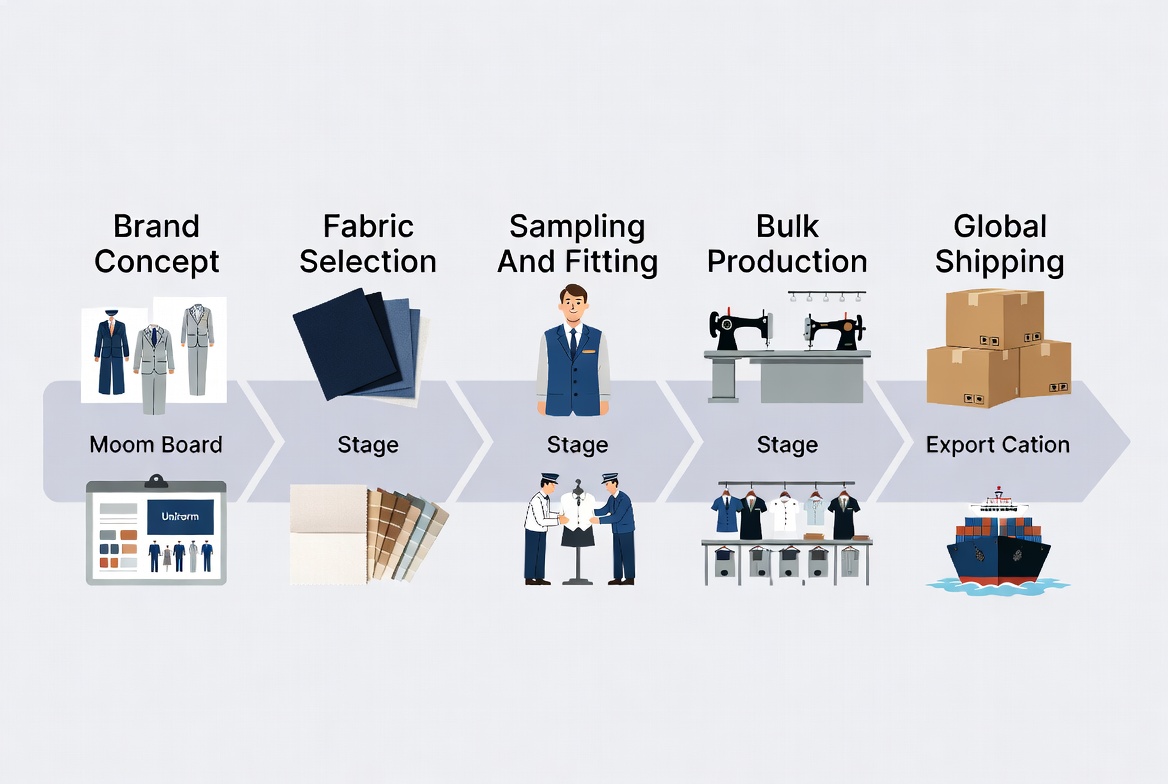
Here is a practical, manufacturer-informed process you can follow when working with a supplier in China:
1. Define roles and scenarios. List all positions (host, server, bar, runner, chef, manager) and note climate, shift length, and task intensity for each. [clothing.taobao]
2. Create mood boards. Collect reference images from restaurants with a similar vibe to align your internal team and your OEM on the aesthetic. [stockmfgco]
3. Specify fabrics and finishes. Decide on fabric weights, blends, and performance features with input from your supplier. [tilitnyc]
4. Prototype and wear test. Request size sets and have staff test garments during real shifts, gathering structured feedback on comfort and functionality. [allseasonsuniforms]
5. Refine details. Adjust lengths, pocket placement, closures, and trims based on staff and management input. [allseasonsuniforms]
6. Confirm labeling and branding. Finalize embroidery, logo placement, care labels, and size labels for consistent branding. [taianbowinsgarment]
7. Scale and standardize. Lock in final tech packs, size specs, and QC standards before placing your main orders. [taianbowinsgarment]
An OEM supplier like Shanghai Youti Clothing Co., Ltd. can add value at each step by advising on MOQ, lead times, cost tiers, and feasible customizations for uniforms and work clothes. [shanghaigarment]
Use this simplified table as a starting point when planning your restaurant uniform system.
| Concept Type | Front-of-House Look | Back-of-House / Kitchen | Key Fabric Choices |
|---|---|---|---|
| Upscale steakhouse | Tuxedo-style jacket, vest, bowtie, dark trousers | Classic chef coats, black aprons | Poly–viscose suiting, cotton-rich shirts (taianbowinsgarment) |
| Industrial brewery | Branded polo, denim or chambray shirt, denim apron | Short-sleeve chef coat, utility apron | Enzyme-washed denim, cotton–poly knits (taianbowinsgarment) |
| Farm-to-table bistro | Plaid or white shirts, canvas apron, jeans | Lightweight chef wear, cross-back apron | Cotton-rich canvas, breathable twill (taianbowinsgarment) |
| Parisian brasserie | White shirt, bowtie, white bistro apron, vest | Traditional chef whites, long aprons | High-opacity cotton blends, durable twill (taianbowinsgarment) |
| Museum/gallery café | Black base, bold color aprons, graphic prints | Simple black chefwear, branded apron | Cotton–poly poplin, print-ready fabrics (taianbowinsgarment) |
| Southwestern cantina | Embroidered Western shirts, dark jeans | Chef coats with color accents | Embroidery-ready cotton blends, sturdy denim (taianbowinsgarment) |
One of the most underestimated success factors is employee buy-in. [allseasonsuniforms]
- Invite staff to rate comfort, pocket usefulness, and ease of movement during trials. [allseasonsuniforms]
- Use that data to choose final fabrics and cuts, not just your initial mood board. [allseasonsuniforms]
This not only improves the end result; it also increases pride in wearing the uniform.
Uniforms live or die in the daily grind of laundry and storage. [clothing.taobao]
- Provide at least two sets per staff member to ensure a clean outfit each shift.
- Clarify whether the restaurant or staff handle washing and choose fabrics accordingly. [tilitnyc]
- Set a replacement schedule for heavily used pieces (especially aprons) based on realistic wear-and-tear. [clothing.taobao]
As a China-based OEM supplier for uniforms and work clothes, Shanghai Youti Clothing Co., Ltd. works with overseas brands, wholesalers, and manufacturers to turn uniform concepts into scalable products. (Company positioning as provided by user.)
From an OEM standpoint, the company's role is to:
- Translate design concepts, references, and tech packs into production-ready samples. [taianbowinsgarment]
- Source appropriate fabrics, trims, and accessories that meet your performance and budget requirements. [taianbowinsgarment]
- Manage bulk production, quality control, and export logistics, so you can focus on brand-building and operations. [shanghaigarment]
For restaurant clients, this means you can combine the creative inspiration above with a manufacturing partner who understands the specific demands of uniforms and workwear—across restaurants, hotels, cafés, and wider hospitality projects. [cargocrew]
If you are planning a new restaurant concept or updating an existing uniform system, now is the right time to move from mood board to sampling. Use the frameworks in this article to clarify your brand story, role requirements, and fabric strategy, then collaborate with an experienced OEM like Shanghai Youti Clothing Co., Ltd. to develop samples, refine fits, and build a sustainable supply system at scale. [shanghaigarment]
A consistent, well-designed uniform program will help your team look professional, feel comfortable, and embody your brand—shift after shift, location after location. [linkedin]
Q1: How many uniform sets should each restaurant employee have?
Most operators provide at least two complete sets per employee so there is always one clean outfit ready, especially in high-volume venues or multi-shift operations. [tilitnyc]
Q2: What fabrics work best for hot kitchen environments?
For kitchens, choose lightweight, cotton-rich fabrics with good breathability, potentially with mesh ventilation panels in high-heat zones like the back and underarms. [linkedin]
Q3: How can I keep uniforms on-brand across multiple locations?
Define a simple uniform system with base colors, key silhouettes, and logo placement rules, then document these in tech packs to share with your OEM and all locations. [taianbowinsgarment]
Q4: Are sustainable restaurant uniforms realistic with OEM production in China?
Yes, many Chinese manufacturers now offer recycled polyester, organic cotton, and low-impact dye options, provided you clarify sustainability requirements early in the sourcing process. [linkedin]
Q5: How long does it take to go from uniform idea to first delivery?
Typical timelines include 1–4 weeks for sampling and 20–60 days for bulk production, depending on complexity, quantity, and fabric availability. [taianbowinsgarment]
1. Stock Mfg Co. "Restaurant Uniform Ideas."
[https://stockmfgco.com/blogs/stories/restaurant-uniform-ideas]
2. All Seasons Uniforms. "How to Build a Trendy Restaurant Uniform Layout for Your Hip Crew."
[https://www.allseasonsuniforms.com/blog/how-to-build-a-trendy-restaurant-uniform-layout-for-your-hip-crew] [allseasonsuniforms]
3. Tilit NYC. "Four Tips for Choosing a Restaurant Uniform."
[https://www.tilitnyc.com/blogs/chef-life/four-tips-for-choosing-a-restaurant-uniform] [tilitnyc]
4. UniformMarket. "Search Engine Success: SEO Basics For Uniform Retailers."
[https://www.uniformmarket.com/blog/seo-basics-for-uniform-retailers] [uniformmarket]
5. Taian Bowins Garment. "The 10 Best China Clothing Manufacturers."
[https://taianbowinsgarment.com/the-10-best-china-clothing-manufacturers/] [taianbowinsgarment]
6. LinkedIn. "2026 Uniform Trends: Modern Corporate Identity Meets Comfort."
[https://www.linkedin.com/pulse/2026-uniform-trends-modern-corporate-identity-meets-comfort-8kkff] [linkedin]
7. Cargo Crew. "Uniforms Trends of 2026."
[https://www.cargocrew.com/journal/uniform-trends-2026/] [cargocrew]
8. ApparelnBags. "Top 10 Best Restaurant Uniform Ideas for 2026."
[https://www.apparelnbags.com/blog/best-restaurant-uniform-ideas/] [apparelnbags]
9. Taobao Article. "特色餐厅工服怎么选?2025年最新趋势和避坑指南来了!"
[https://clothing.taobao.com/topic/gongfu_765/20fc2edc69da2e6711277542c09245fe] [clothing.taobao]
10. Perth Museum uniform coverage and related café examples cited in Stock Mfg Co. and museum communications. [bk.taobao]


