
Views: 289 Author: Youti Clothing Publish Time: 2026-10-02 Origin: Site


Content Menu
● Why Suit Trousers Wear Out Faster Than Suit Jackets
● Start With the Right Trouser Construction
>> Choose Fabric for the Intended Wearing Frequency
>> Reinforce High-Stress Areas
>> Fit Is a Durability Feature
● The Daily Routine That Extends Trouser Life
>> Air Trousers After Every Wear
>> Brush Away Dust and Surface Dirt
● Clean Suit Trousers Without Over-Cleaning Them
>> Use Spot Cleaning for Small Fresh Marks
>> Dry Clean by Condition, Not Habit
● Press, Steam, and Restore the Trouser Crease Safely
● Store Suit Trousers Correctly Between Wears
>> Keep the Closet Cool, Dry, and Uncrowded
● Repair Small Problems Before They Become Major Damage
● Why Longer-Lasting Trousers Matter
● Build Longer-Lasting Suit Programs With Youti Clothing
● FAQ About Making Suit Trousers Last
>> How often should suit trousers be dry cleaned?
>> Can I wash suit trousers in a washing machine?
>> Why do suit trousers wear out at the inner thigh?
>> Should I buy an extra pair of trousers with a suit?
>> How can I stop suit trousers from becoming shiny?
>> What is the best way to hang suit trousers?
>> Can a tailor repair holes in suit trousers?
A well-made pair of suit trousers should become a dependable part of a wardrobe—not the first component of a suit to show wear. Yet trouser seats, inner thighs, hems, pockets, and creases face more friction, pressure, moisture, and movement than most other tailored garments.
For brands, wholesalers, and uniform buyers, helping customers understand how to make suit trousers last is also a way to protect product value, reduce premature replacement, and build confidence in garment quality. For wearers, the practical goal is simple: preserve fabric appearance, maintain fit, avoid avoidable damage, and keep trousers looking sharp across repeated business, formal, and everyday use.
At Shanghai Youti Clothing Co., Ltd., we work with professional apparel buyers on OEM suit production. From our experience with tailored garments, longevity depends on two connected factors: how the trousers are made and how they are worn, cleaned, pressed, stored, and repaired after purchase.
This guide explains the most effective ways to extend the life of suit trousers, whether they are wool, wool-blend, polyester-viscose, cotton, linen-blend, or performance suiting styles.
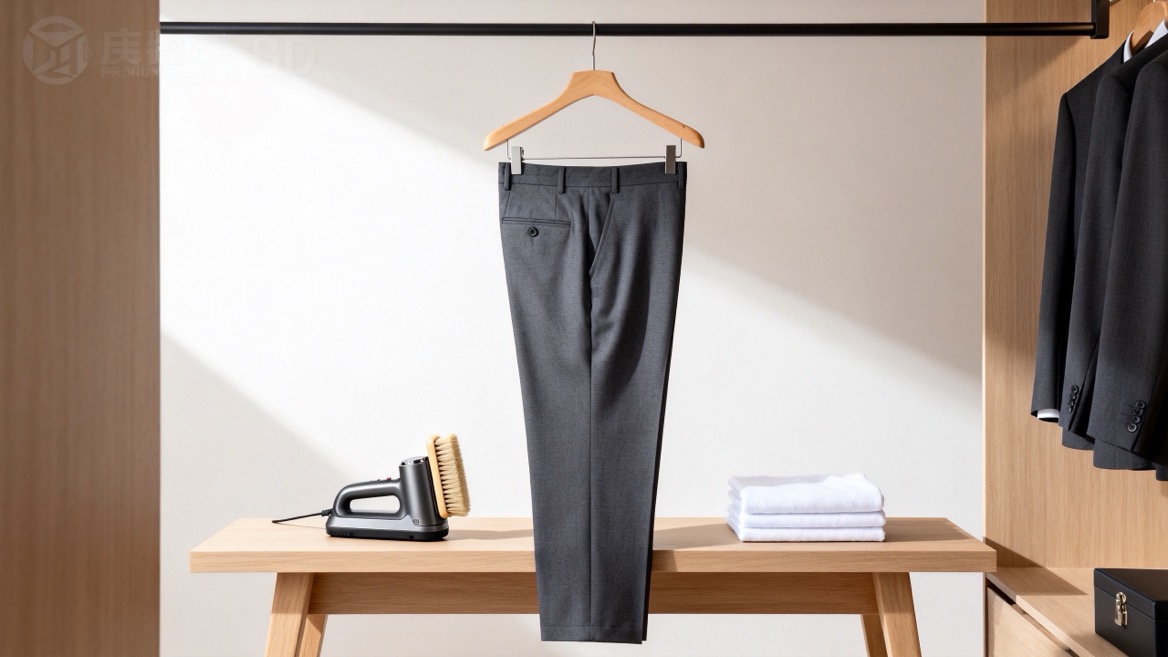
Suit trousers typically experience more physical stress than matching jackets. A jacket may be worn for meetings, travel, and events, but trousers take constant friction from walking, sitting, commuting, crossing legs, and contact with office chairs or vehicle seats.
The most vulnerable areas usually include:
- The seat, where repeated sitting can flatten fibers and strain seams
- The inner thighs, where friction can cause pilling, thinning, or eventual holes
- The crotch seam, which receives stretching pressure during movement
- The hems, which may rub against shoes, sidewalks, rainwater, and dirt
- The pockets, which can sag or tear when overloaded
- The waistband, which can lose shape when trousers are pulled, stretched, or hung incorrectly
- The front crease, which can disappear after improper washing or overly aggressive pressing
The key lesson is that durability is not only about fabric weight. A heavier fabric may resist abrasion better, but poor fit, poor seam construction, careless cleaning, or daily repeated wear can still shorten its useful life.
For this reason, brands sourcing tailored trousers should evaluate fabric, reinforcement, stitching, fitting allowance, and finishing as one system—not as isolated specifications.
A long-lasting garment begins before the wearer ever puts it on. For OEM suit trouser projects, the construction details below can make a meaningful difference to daily performance and customer satisfaction.
Fabric selection should match the wearer's climate, work routine, and expected frequency of use.
| Fabric Type | Main Advantage | Main Care Consideration | Best Use |
|---|---|---|---|
| Wool | Breathable, resilient, refined appearance | Requires gentle brushing, airing, and careful cleaning | Business suits and formal tailoring |
| Wool blend | Balances natural feel with added durability | Blend ratio affects hand feel and recovery | Corporate wear and frequent-use suits |
| Polyester-viscose | Durable, crease-resistant, cost-effective | Can develop shine if pressed incorrectly | Uniforms, workwear, and value suit programs |
| Cotton | Comfortable and breathable | May wrinkle and can wear at stress points | Casual tailoring and summer trousers |
| Linen blend | Cool and lightweight | Wrinkles naturally and needs careful pressing | Resort, summer, and relaxed suiting |
| Stretch suiting | Improves mobility and comfort | Excessive heat can affect elastic fibers | Travel suits and active office wear |
For a frequently worn business suit, a durable wool blend or high-quality polyester-viscose construction may be more practical than an ultra-light luxury fabric. By contrast, a premium lightweight wool may be ideal for formal occasions but should be rotated rather than worn on consecutive days.
Professional trouser construction often includes hidden details that improve service life without changing the clean outer appearance.
Useful reinforcement options include:
- Bar tacks at pocket openings and other stress points
- Reinforced crotch seams to reduce seam splitting
- Quality pocket bags that resist tearing from keys, phones, or wallets
- Secure waistband stitching to prevent separation during repeated wear
- Proper seam allowance, allowing minor alterations without weakening the garment
- Durable lining or knee lining to reduce friction and improve drape
- Hem guards or heel tape to reduce abrasion at the back hem
- High-quality hook-and-bar, button, or zipper components
For brands developing private-label suits, these details are especially important because customers may not notice them immediately—but they will notice when a pocket tears, a seam opens, or a hem frays after only limited use.
A correct fit does more than improve appearance. It prevents unnecessary strain.
Trousers that are too tight across the hips, seat, thighs, or crotch place continuous pressure on seams and fabric. Trousers that are too long can drag against shoes and floors, damaging the hem. Trousers that are too loose may sag at the seat, rub excessively at the inner thigh, or develop distorted creases.
A well-fitted pair should allow the wearer to:
- Sit comfortably without pulling at the crotch or seat
- Walk up stairs without strong tension lines across the thighs
- Keep the waistband in position without over-tightening a belt
- Maintain a clean break or slight break at the shoe, depending on the style
- Move naturally without the trouser legs twisting or catching
Comfort and durability are closely connected. When the fabric is constantly under tension, wear appears faster.
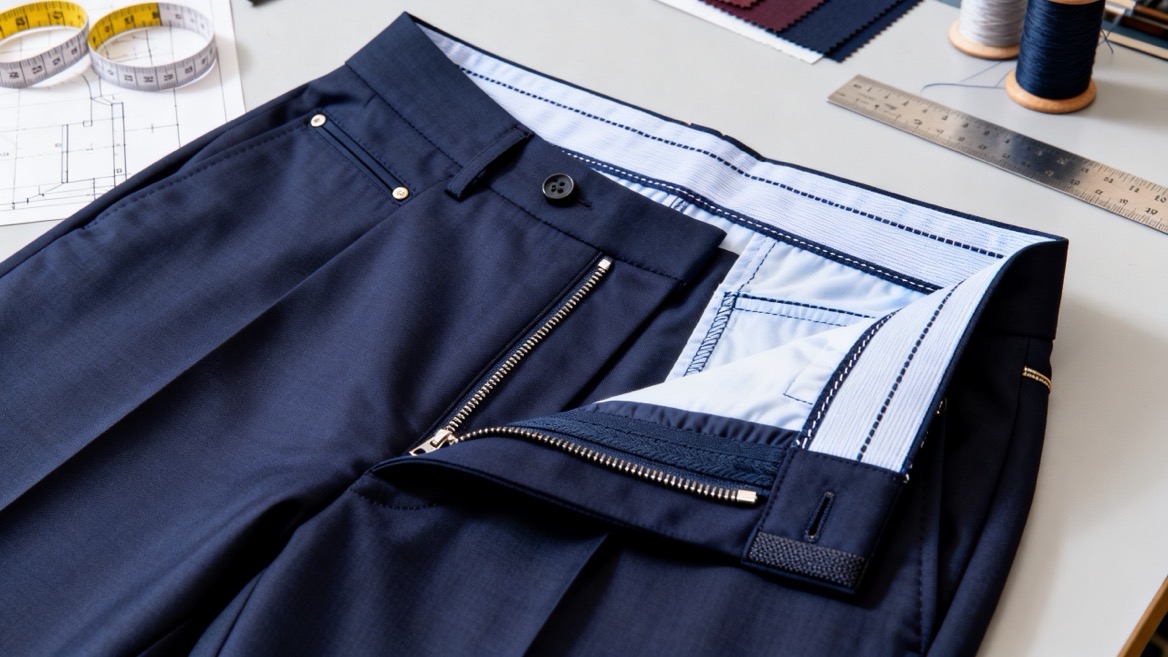
The most effective care habits are simple, inexpensive, and easy to repeat. Most suit trousers do not need intensive cleaning after each wear. Instead, they benefit from a short maintenance routine that removes surface dust, allows moisture to evaporate, and restores shape.
After wearing suit trousers, do not fold them immediately into a drawer or leave them on a chair. Hang them in an open, well-ventilated area for several hours, ideally overnight.
This helps release moisture, body heat, light odors, and minor wrinkles. It also gives wool and other resilient fibers time to recover their shape.
A practical routine is:
1. Empty the pockets completely.
2. Check for visible marks, lint, or food particles.
3. Hang the trousers properly.
4. Let them air for at least 12 to 24 hours before returning them to a crowded closet.
5. Rotate with another pair when possible.
Avoid putting freshly worn trousers directly into a sealed plastic garment bag. Plastic can trap moisture and odors, especially in humid climates.
A soft clothes brush is one of the most useful accessories for tailored garments. Regular brushing helps remove dust, lint, dry soil, hair, and particles that can settle into the fabric over time.
Brush lightly from top to bottom and follow the natural direction of the fabric surface. Focus on areas that collect dust and friction:
- Waistband and pocket openings
- Seat area
- Inner thighs
- Front crease
- Cuffs and hems
Do not scrub aggressively. The purpose is to lift loose surface particles, not to polish or abrade the cloth.
For delicate wool trousers, use a soft natural-bristle brush. For quick lint removal, a lint roller can help, but it should not replace brushing because it only addresses the top surface.
Wearing the same trousers every day is one of the fastest ways to shorten their lifespan. Even when trousers look clean, the fibers need time to recover from moisture, stretching, and friction.
A simple rotation system can make a major difference:
| Wearing Pattern | Recommended Rotation |
|---|---|
| Office wear 5 days per week | Own at least 2–3 pairs of compatible trousers |
| Daily uniform program | Build a rotation with spare trousers per wearer |
| Travel or business trips | Pack at least one alternate trouser option |
| Frequent formal events | Rotate matching suits rather than repeating one pair |
For brands selling suits as separates or offering made-to-order programs, an additional trouser option can be a valuable recommendation. The jacket often outlasts the trousers, so a spare pair allows customers to keep the full suit usable for longer.
Cleaning is essential when trousers are visibly dirty, stained, or carrying persistent odor. However, unnecessary frequent cleaning can gradually affect fabric finish, color, texture, and garment shape.
The safest rule is: follow the care label first. Fabric composition, lining, interlining, trims, and finishing methods all influence the correct care process.
For minor stains, act quickly. The longer a stain remains in the fibers, the harder it may be to remove.
Use this approach:
1. Blot the stain gently with a clean, white cloth.
2. Do not rub, because rubbing can spread the stain and roughen the fabric.
3. Use cold or lukewarm water only when appropriate for the fabric.
4. Test any cleaning method in a hidden area first.
5. Let the fabric dry naturally before brushing lightly.
Avoid using bleach, strong stain removers, or random household cleaners on tailored trousers. They can cause color loss, water marks, fabric stiffness, or permanent damage.
Oil-based stains, ink, wine, heavy soil, and unknown stains are better handled by an experienced professional cleaner. When taking trousers for cleaning, explain what caused the stain and how long it has been present.
Many people believe that a suit must be cleaned after every few wears. In reality, trousers usually benefit more from regular airing, brushing, and careful spot treatment than from automatic cleaning.
Professional cleaning becomes appropriate when:
- There is a stubborn stain
- The fabric has visible grime
- Odor remains after airing
- The garment has absorbed smoke, food odor, or heavy perspiration
- Trousers are being stored for a long season
- The care label specifically requires professional care
If your suit is made from delicate wool, silk blends, or structured tailoring fabric, choose a cleaner with experience in tailored garments. Ask them to inspect stains before processing and to press the trousers carefully.
When cleaning a matching suit, consider cleaning the jacket and trousers together when they have received similar wear. This can help maintain a more consistent color and finish over time.
A sharp crease gives suit trousers their professional appearance. But excessive direct heat can create shine, flatten texture, damage fibers, or leave permanent marks—especially on dark wool, synthetic blends, and smooth worsted fabrics.
Steam is often the safer first option for light wrinkles. Hang the trousers and allow steam to relax the fibers without pressing the iron directly onto the cloth.
For home steaming:
- Keep the steamer moving
- Maintain a small distance from the fabric
- Avoid soaking the cloth
- Let trousers dry fully before wearing or storing
- Use extra care around waistbands, pockets, and seams
For light creasing after travel, hanging trousers in a humid bathroom while showering may help relax wrinkles. However, this should not replace proper pressing when a crisp finish is required.
When ironing is necessary, use a pressing cloth between the iron and the trousers. A clean cotton cloth, muslin, or thin white pillowcase can help reduce the risk of shine.
Follow these steps:
1. Check the care label for the correct heat setting.
2. Turn the trousers inside out when possible.
3. Use a pressing cloth.
4. Press rather than drag the iron across the fabric.
5. Work in short sections.
6. Let the trousers cool on a hanger before wearing.
Do not press directly over pocket edges, thick seams, or the waistband without protection. These areas can leave visible impressions on the outer fabric.
Good storage protects the garment from wrinkles, dust, moisture, insects, fading, and accidental damage.
The best hanger depends on the trouser design and available closet space.
Two effective options are:
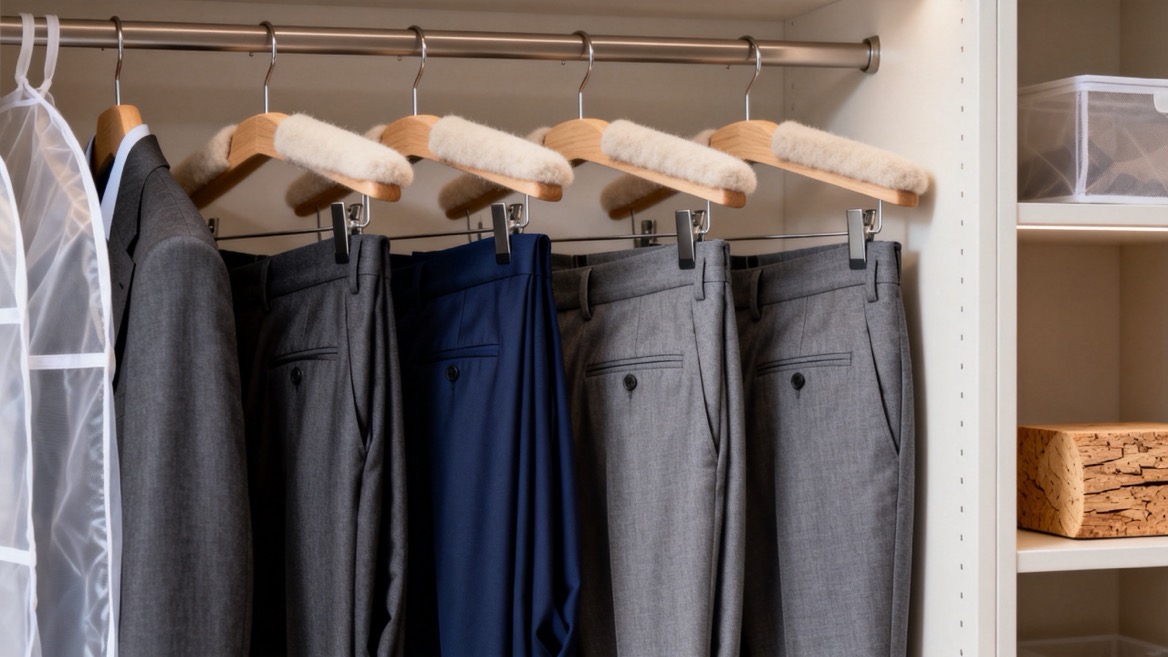
- Clip hangers, used carefully at the waistband or hem
- Felted bar hangers, which allow trousers to be folded neatly along the crease
If using clips, ensure they have soft protective pads. Sharp metal clips can leave dents or marks, especially on delicate fabrics.
Fold trousers along their original crease before hanging them over a bar. This preserves the front line and minimizes random wrinkles.
Crowded storage creates wrinkles and can distort the shape of trousers. Leave enough room between garments for air circulation.
Protect trousers from:
- Direct sunlight, which can fade color
- Damp conditions, which can encourage mildew
- Prolonged plastic storage, which can trap moisture
- Heavy objects in pockets
- Rough surfaces that may snag the cloth
- Untreated moth activity during long-term storage
For seasonal storage, make sure trousers are clean and fully dry before placing them in a breathable garment cover or storage container. Natural fibers such as wool are particularly vulnerable to moth damage when stored with food residue, body oils, or unseen stains.
Many trouser failures begin as minor issues: a loose hem, a small opening at the seam, a weakening pocket edge, or early thinning at the inner thigh.
Addressing these problems early is usually faster and less expensive than waiting until the damage becomes severe.
Check trousers regularly for:
- Loose buttons, hooks, or waistband stitching
- Seams beginning to open
- Fraying at the hem
- Fabric thinning between the thighs
- Pilling around the seat or thighs
- Loose pocket lining
- Broken zipper teeth or a failing zipper pull
A tailor can often reinforce a weak seam, replace a zipper, repair a hem, add discreet patches, or restore a waistband closure. For trousers showing inner-thigh abrasion, repair may be possible before a hole forms.
Early repair is part of professional garment care. It preserves both the garment and the polished image it is meant to support.
Extending the usable life of a suit is not only practical for the wearer. It also reduces unnecessary replacement and textile disposal.
The U.S. Environmental Protection Agency estimated that 17 million tons of textiles were generated in the United States in 2018. Of that total, 11.3 million tons entered landfills, while the recycling rate for all textiles was 14.7 percent. These figures highlight why better product construction, responsible purchasing, maintenance, repair, and longer garment use all matter.
For apparel brands, product durability can support stronger customer relationships. A customer who sees that a suit retains its shape, color, and usability is more likely to return for additional purchases, recommend the brand, and view the product as a worthwhile investment.
For OEM buyers, this creates a practical sourcing principle: choose a manufacturing partner that understands not only styling and price, but also fabric performance, fit stability, workmanship, reinforcement, and quality control.
A durable suit trouser is the result of thoughtful material selection, precise patternmaking, reliable construction, careful quality control, and correct wearer care. Whether you are developing corporate uniforms, wholesale suit collections, private-label tailoring, or made-to-measure programs, the right manufacturing decisions can improve product longevity from the start.
Shanghai Youti Clothing Co., Ltd. provides OEM support for professional suit and tailored apparel projects. We can work with international brands, wholesalers, and manufacturers on fabric sourcing, customized fit specifications, branded trims, reinforced construction details, sampling, and bulk production.
Contact Shanghai Youti Clothing Co., Ltd. to discuss your next OEM suit trouser or tailored apparel collection and create products designed for lasting performance.
Dry clean suit trousers when they are visibly dirty, stained, or retain odor after airing. Avoid sending them for cleaning simply because they have been worn a certain number of times. Regular brushing, airing, and spot care can reduce the need for frequent professional cleaning.
Only if the care label clearly allows machine washing. Many tailored trousers, especially wool and structured suit trousers, require professional cleaning or delicate hand care. Machine washing may shrink fabric, damage shape, fade color, or affect linings and trims.
Inner-thigh wear is usually caused by repeated friction during walking and sitting. Tight fit, rough fabric, frequent wear without rotation, and thin fabric construction can accelerate the problem. Selecting the correct fit and rotating trousers can help reduce abrasion.
Yes, especially for business suits worn frequently. Trousers usually wear faster than jackets. An extra matching pair can extend the useful life of the entire suit and provide more flexibility for workwear rotation.
Avoid excessive direct ironing, high heat, and aggressive pressing. Use steam first when possible, place a pressing cloth between the iron and fabric, and press lightly rather than dragging the iron across the surface.
Use a padded clip hanger at the waistband or hem, or fold the trousers along their crease over a felted hanger bar. Avoid thin wire hangers, as they can create marks, distort the waistband, and fail to support the garment properly.
In many cases, yes. A tailor may reinforce thinning fabric, repair seams, patch small holes, replace zippers, restore hems, or repair pocket linings. The repair is generally more successful when the problem is treated before the fabric becomes severely worn.
- [StudioSuits — How to Make Your Suit Trousers Last]
- [U.S. Environmental Protection Agency — Textiles: Material-Specific Data]
- [Put This On — How Should I Take Care of My Suit?]
- [Jos. A. Bank — Men's Guide to Dry Cleaning]
- [Henry A. Davidsen — How to Care for a Suit]
- [Gentleman's Gazette — Dry Cleaning 101 and Why It Can Be Damaging]


