
Views: 277 Author: Youti Clothing Publish Time: 2026-09-30 Origin: Site


Content Menu
● What Makes a Men's Suit Truly Good?
● Best Suit Styles for Different Occasions
>> The Professional Charcoal Gray Suit
● How a Suit Should Fit: The Essential Checkpoints
>> 1. Shoulder Fit Comes First
>> 2. Chest and Button Closure
● Choosing the Best Suit Fabric
>> Wool: The Most Versatile Suit Fabric
>> Linen: Best for Warm Weather and Relaxed Events
>> Cotton: Comfortable and Smart-Casual
>> Polyester and Performance Blends
● Suit Construction: Why Internal Details Matter
● How Brands Can Develop a Successful OEM Suit Collection
>> Step 1: Define the Customer and Use Case
>> Step 2: Select the Fit Block
>> Step 3: Build the Design Details
>> Step 4: Approve Fabric and Color Standards
● Common Suit Buying Mistakes to Avoid
>> Buying the Wrong Shoulder Size
>> Choosing Fabric Only by Appearance
>> Ignoring Movement During Fitting
>> Overdesigning the Collection
● Build a Suit Collection That Represents Your Brand
>> What is the best all-around suit color for men?
>> What fabric is best for a business suit?
>> How should a men's suit jacket fit in the shoulders?
>> Is a slim-fit suit better than a classic-fit suit?
>> What is the difference between a made-to-measure suit and an OEM suit?
>> Can suits be customized for weddings or corporate uniforms?
>> What should a brand prepare before requesting an OEM suit quotation?
The best suits for men are not defined by a logo alone. They are defined by a balanced combination of correct fit, appropriate fabric, reliable construction, and a design that matches the wearer's occasion, climate, and personal identity.
For retailers, menswear brands, wholesalers, and uniform buyers, the same rule applies at a larger scale: a successful suit collection must look refined on the rack, fit consistently across sizes, meet the intended price point, and deliver dependable repeat quality. From a sharp navy business suit to a breathable linen wedding suit, the right choice begins with understanding what makes a suit perform well in real life.
This guide explains how to choose men's suits with the practical eye of a tailoring professional and the commercial perspective of an experienced suit manufacturer.
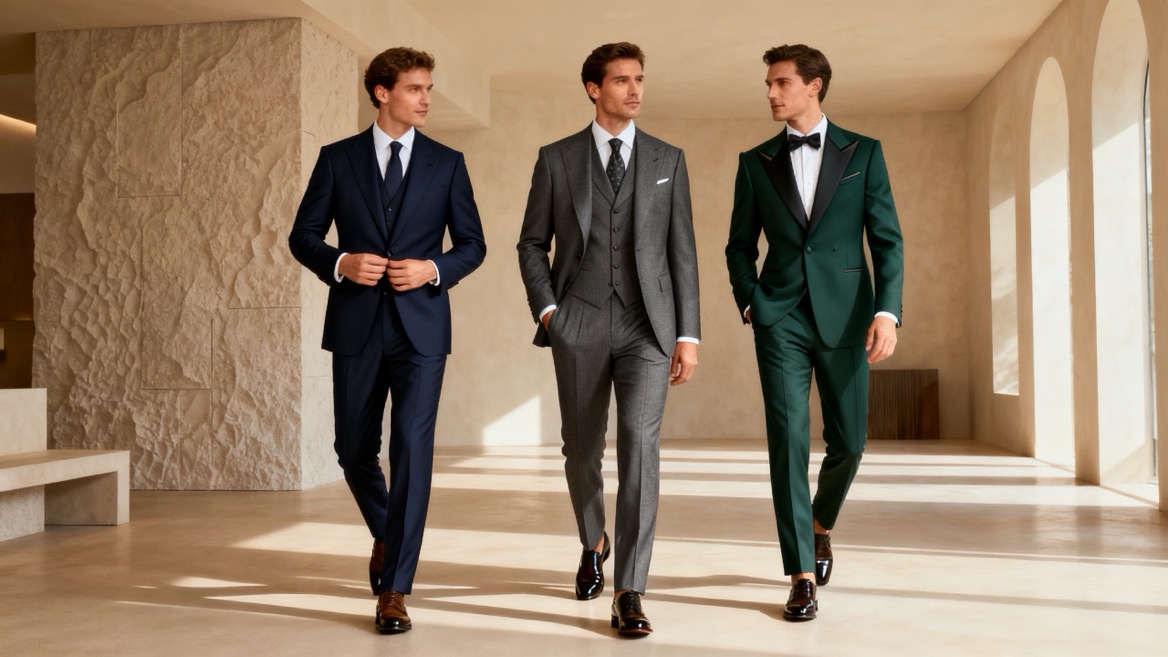
A good suit should do more than look formal. It should create a clean silhouette, allow comfortable movement, hold its shape through repeated wear, and help the wearer feel confident.
The most important factors are:
- Fit: The jacket must sit correctly on the shoulders, chest, waist, sleeves, and trouser line.
- Fabric: The material determines breathability, drape, wrinkle resistance, durability, and seasonal comfort.
- Construction: Stitching, pressing, lining, fusing, canvas, buttons, and internal structure affect the garment's appearance and life span.
- Purpose: A wedding suit, corporate uniform, business suit, and evening suit should not be developed in exactly the same way.
- Personalization: Color, lapel style, pockets, lining, buttons, and embroidery can transform a standard suit into a recognizable branded product.
From years of garment production experience, we have seen a simple truth: fit is the first thing people notice, while fabric and construction are what they remember after wearing the suit.
A premium-looking suit does not always require the most expensive material. It requires sensible material selection, a suitable pattern, careful workmanship, and quality control that matches the intended market.
Not every suit should serve every purpose. Choosing the correct style helps the wearer look intentional rather than overdressed or underdressed.
| Occasion | Recommended Suit | Best Colors | Recommended Details |
|---|---|---|---|
| Business meetings | Two-piece business suit | Navy, charcoal, medium gray | Notch lapel, two buttons, simple pockets |
| Job interviews | Classic or modern-fit suit | Navy, charcoal gray | Conservative shirt and tie combination |
| Weddings | Two-piece, three-piece, or tuxedo-style suit | Navy, deep green, beige, black, burgundy | Peak lapel, waistcoat, contrast lining, satin trim |
| Summer events | Linen or lightweight wool-blend suit | Light gray, beige, sand, light blue | Minimal lining, relaxed construction |
| Evening events | Dark formal suit or tuxedo | Black, midnight blue, deep charcoal | Peak lapel or shawl collar |
| Corporate uniforms | Durable business suit set | Navy, gray, black | Brand embroidery, consistent sizing, easy-care fabric |
| Travel and frequent wear | Wrinkle-resistant wool blend | Navy, charcoal, dark gray | Stretch component, practical pockets, robust lining |
For most men, a navy suit is the safest and most useful first purchase. It works for business meetings, interviews, weddings, conferences, dinners, and many formal daytime occasions.
A navy suit can be paired with:
- A white shirt and dark tie for formal business settings
- A light blue shirt for everyday office wear
- A pale pink or soft gray shirt for social events
- Brown leather shoes for a classic contrast
- Black shoes for a more formal and restrained appearance
For brands developing a core menswear collection, navy is often an essential color because it has broad appeal across age groups, regions, and dress codes.
A charcoal gray suit is another wardrobe foundation. It is quieter than black but more formal than light gray. It works especially well in corporate environments and is often preferred for financial, legal, consulting, and executive settings.
Charcoal gray creates a polished, authoritative impression without looking overly severe.
For private-label collections, charcoal can be offered in plain weave, subtle birdseye, sharkskin, or fine texture. These small surface differences allow brands to create distinct products while retaining a commercially reliable color.
A wedding suit should reflect the setting, season, and formality of the event. A formal evening wedding may call for a black tuxedo or a midnight-blue dinner suit. A garden, beach, destination, or daytime wedding often allows softer colors and lighter materials.
Popular wedding suit directions include:
- Three-piece navy suits for classic ceremonies
- Beige linen suits for destination weddings
- Deep green suits for autumn and winter events
- Burgundy suits for statement evening looks
- Black tuxedos with satin lapels for formal receptions
- Ivory or white dinner jackets for tropical or resort weddings
A wedding suit collection benefits from customization options. Satin lapels, contrast piping, printed linings, embroidered dates, special buttons, and coordinated waistcoats can turn a standard formal suit into a memorable occasion garment.
The most expensive fabric cannot compensate for poor fit. A well-fitting suit makes the wearer look more proportioned, more confident, and more refined.
When evaluating a suit, begin with the shoulders. The shoulder area is difficult and costly to alter, so it should be correct from the start.
The jacket shoulder seam should end near the natural edge of the wearer's shoulder. It should not extend far down the upper arm, and it should not pull inward toward the neck.
Signs of a good shoulder fit include:
- A smooth shoulder line
- No visible dents at the sleeve head
- No pulling across the upper back
- Natural arm movement
- A clean transition from shoulder to sleeve
If the shoulders are wrong, the jacket is usually the wrong base size or cut.
When the jacket is buttoned, the chest should look clean and comfortable. The lapels should lie flat rather than pulling away from the body.
A properly fitted jacket should allow the wearer to move, sit, breathe, and gesture without obvious tension lines.
Watch for these common issues:
- An "X" shape around the button means the jacket is too tight.
- Open lapels or a visible chest gap can indicate insufficient room.
- Excess fabric across the chest can make the jacket appear too large.
- A button positioned too low or too high can affect the overall balance of the torso.
For most two-button jackets, the top button is intended to be fastened while standing. The lower button is normally left open.
A suit jacket sleeve should generally end around the wrist bone. A small amount of shirt cuff should remain visible beyond the jacket sleeve.
A practical guideline is to show approximately 0.5 inch to 0.75 inch of shirt cuff. This creates a polished layered effect and prevents the jacket sleeves from looking too long.
A traditional business jacket should usually cover the seat. The front length should visually balance the body rather than making the torso appear too short or the legs appear disproportionately long.
Modern shorter jackets can look fashionable, but they should be used carefully. For formal businesswear, a very short jacket may reduce the garment's versatility and longevity.
Suit trousers should sit comfortably at the waist or upper hip, depending on the intended cut. The seat should be smooth, the thigh should allow movement, and the leg should fall cleanly.
The trouser "break" refers to the fold created where the hem meets the shoe.
| Trouser Break | Appearance | Suitable For |
|---|---|---|
| No break | Clean hem sitting above or lightly touching the shoe | Modern, slim, fashion-forward suits |
| Slight break | A small natural fold at the front | Most business and wedding suits |
| Full break | More fabric resting on the shoe | Traditional or relaxed cuts |
For commercial suit programs, a slight break is often the most widely accepted option because it balances comfort, practicality, and a polished appearance.
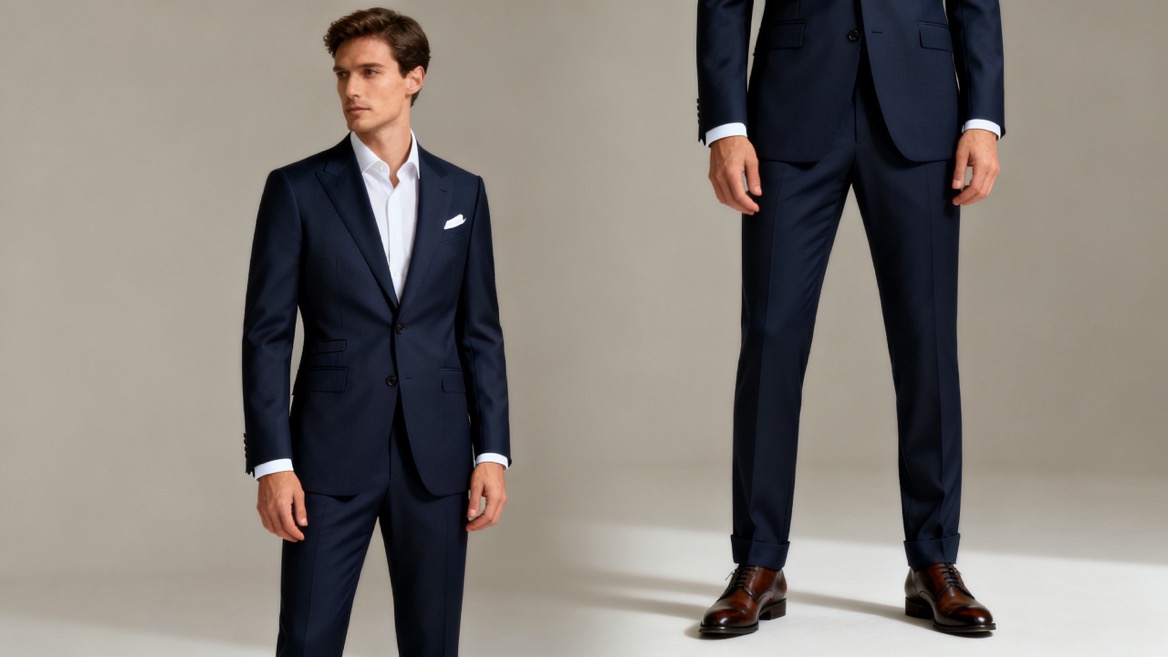
Fabric selection determines whether a suit feels comfortable, drapes elegantly, travels well, or becomes difficult to maintain. It also affects the retail positioning of the final product.
Wool remains the most versatile fabric for men's suits. It can be woven in different weights and finishes, allowing it to work across seasons and occasions.
Quality wool is valued for its ability to:
- Drape cleanly over the body
- Recover from light creasing
- Provide structure without excessive stiffness
- Help regulate body temperature
- Perform well in business and formal tailoring
For a core business suit collection, medium-weight worsted wool or a wool-rich blend is often a practical choice. It provides a refined look while offering better year-round wearability than heavy seasonal fabrics.
Linen suits are popular for summer weddings, resort wear, beach events, and warm-climate business travel. Linen feels light and breathable, but it wrinkles more easily than wool.
That natural wrinkling is part of linen's character. It creates a relaxed, lived-in look rather than a perfectly smooth formal appearance.
Linen is especially suitable for:
- Destination wedding collections
- Mediterranean-inspired menswear
- Summer eventwear
- Resort uniforms
- Casual tailoring programs
For buyers who want a more structured look, a wool-linen or linen-cotton blend can offer improved shape retention while maintaining a lighter feel.
Cotton suits are softer and more casual than traditional wool suits. They work well for spring and summer, creative workplaces, casual weddings, and lifestyle-oriented brands.
A cotton suit is often less formal than a worsted wool business suit, but it can be highly effective when styled with a knit polo, open-collar shirt, loafers, or clean leather sneakers.
For corporate uniforms, hospitality teams, airline ground staff, retail teams, and high-volume business programs, performance blends can be highly practical.
A carefully developed wool-polyester, polyester-viscose, or polyester-rayon blend can provide:
- Better wrinkle resistance
- Easier maintenance
- Faster drying
- Improved color consistency
- More stable bulk production costs
- Better durability for frequent wear
The key is not to treat synthetic content as automatically low quality. The right blend should be selected according to the garment's end use, performance expectations, and price range.
Two suits can look similar on a hanger but perform very differently after months of wear. The reason is often inside the jacket.
Important construction elements include:
- Chest canvas or fused chest structure
- Shoulder padding and sleeve-head design
- Lining quality and lining coverage
- Lapel roll and pressing
- Stitch density and seam strength
- Button attachment
- Pocket reinforcement
- Trouser waistband construction
- Hem finishing
A fully structured jacket can create a strong, formal silhouette, while a softer construction may feel more comfortable and contemporary. Neither approach is automatically better. The correct choice depends on the brand aesthetic and intended wearer.
For example:
- A formal business collection may use a cleaner shoulder and more structured chest.
- A summer wedding line may use reduced lining and lightweight internal materials.
- A modern casual tailoring range may use a softer shoulder for natural movement.
- A uniform collection may prioritize reinforcement, repeatable sizing, and easy-care construction.
Developing a private-label suit is not simply a matter of adding a logo to an existing sample. Strong product development begins with a clear brief.
At Shanghai Youti Clothing Co., Ltd., we recommend that brand buyers define the following details before sampling begins.
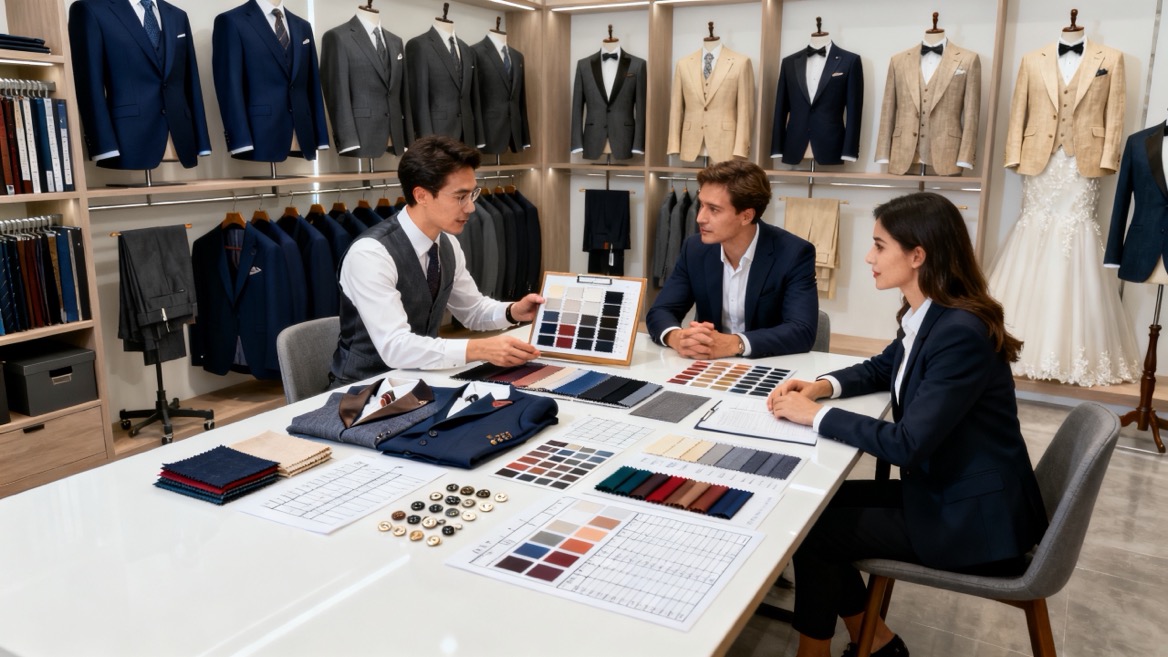
First, identify who will wear the suit and where they will wear it.
Ask questions such as:
- Is the target customer a business professional, groom, hotel employee, retailer, or fashion-conscious consumer?
- Will the suit be worn in hot, cold, or mixed climates?
- Is the product intended for daily use, occasional events, or uniform programs?
- Does the customer prioritize comfort, formal structure, fashion, or easy maintenance?
- What retail price level is the brand targeting?
These answers influence fabric selection, fit, lining, construction, and packaging.
A fit block is the base pattern used to create a size range. It determines the suit's overall proportion.
Common options include:
- Slim fit
- Modern fit
- Classic fit
- Relaxed fit
- Athletic fit
- Big and tall fit
A strong private-label program should not rely only on generic sizing. Buyers should review a sample on a representative fit model, provide measurement feedback, and confirm the size specification before bulk production.
The visual details of a suit can communicate the entire identity of a brand.
Customizable components may include:
- Notch, peak, or shawl lapels
- One-button, two-button, or three-button fronts
- Single vent, double vent, or ventless backs
- Flap pockets, jetted pockets, or patch pockets
- Contrast buttonholes
- Branded buttons
- Custom printed lining
- Embroidered labels
- Waistcoats
- Trouser side adjusters
- Satin trim for formalwear
- Branded packaging and hangtags
A recognizable collection usually combines a commercially safe base design with one or two distinctive brand signatures.
Before bulk production, confirm fabric quality, composition, weight, hand feel, color, and shrinkage expectations. For repeat orders, color continuity is especially important.
A reliable approval process typically includes:
1. Fabric swatch confirmation
2. Color approval
3. Size specification review
4. Pre-production sample review
5. Bulk production inspection
6. Final packing and shipment confirmation
This process helps reduce preventable misunderstandings and supports consistent reorder quality.
Many suit problems can be prevented with better planning before purchase or production.
A jacket that is too wide at the shoulders may look slouched and shapeless. A jacket that is too narrow can restrict movement and create pulling across the upper back.
Always prioritize shoulder fit before adjusting smaller details.
A fabric may look attractive in a swatch but be unsuitable for its intended use. For example, a very lightweight fabric may not be ideal for a structured uniform program, while a heavy fabric may be uncomfortable in a tropical market.
Consider climate, wear frequency, care requirements, and expected garment life.
A suit should be tested while standing, sitting, walking, lifting the arms, and fastening the button. A garment that looks good only when standing still may not work for real daily wear.
Too many contrast details, patterns, colors, and trims can make a collection difficult to merchandise. For most brands, a focused assortment often performs better:
- One or two core business colors
- One wedding or occasion color story
- One seasonal lightweight option
- A limited number of signature details
A clear product identity is usually stronger than too many competing design ideas.
The best men's suit is one that makes the wearer feel composed, comfortable, and appropriately dressed for the moment. For brands and wholesalers, the best suit program is one that combines consistent fit, suitable fabric, thoughtful construction, controlled quality, and design details that customers recognize as uniquely yours.
Shanghai Youti Clothing Co., Ltd. supports OEM suit development for international brands, wholesalers, and professional apparel buyers. From business suits and wedding suits to uniforms and customized formalwear, our team can work from your tech pack, sample, measurement chart, design reference, or product concept.
Contact our team to discuss your next private-label suit collection, request a sample, or develop a tailored OEM solution for your market.
Navy is widely considered the most versatile suit color. It works for business meetings, interviews, weddings, dinners, and many formal occasions. It can also be paired easily with white, light blue, gray, and soft pastel shirts.
Wool or a wool-rich blend is often the best choice for a business suit. It offers a refined appearance, good drape, practical durability, and year-round versatility. For uniforms or frequent travel, a performance blend may offer easier maintenance and better wrinkle resistance.
The shoulder seam should sit close to the natural edge of the shoulder. It should not hang down the upper arm or pull inward. The shoulder line should look smooth, with no obvious dents, wrinkles, or tension.
Neither is automatically better. A slim-fit suit creates a close, contemporary silhouette and often suits lean or athletic builds. A classic-fit suit provides more room through the chest, waist, seat, and thigh, making it a practical option for those who prioritize comfort or prefer traditional proportions.
A made-to-measure suit is usually produced for an individual wearer using personal measurements and style choices. An OEM suit is developed for a brand, wholesaler, retailer, or organization according to its own specifications, including fabric, fit block, size range, labels, design features, and packaging.
Yes. Suit customization can include fabric selection, colors, lapels, buttons, lining, embroidered names or logos, waistcoats, branded labels, and packaging. Wedding suits may use satin lapels or personalized linings, while corporate uniforms often focus on durability, consistent sizing, and logo integration.
A brand should ideally prepare product photos or sketches, fabric preferences, target quantity, target market, size range, fit requirements, desired customization details, and expected delivery timeline. A tech pack or physical sample can make communication more precise and speed up development.
1. [Studio Suits — Best Suits for Men]
2. [Men's Wearhouse — Men's Suit Fit Guide]
3. [Moss — The Suit Fit Guide]
4. [The Black Tux — Complete Guide to Suit Fabrics]
5. [Oliver Wicks — How a Suit Should Fit]
6. [Hockerty — How Should a Suit Fit?]


