
Views: 217 Author: Youti Clothing Publish Time: 2026-09-12 Origin: Site


Content Menu
● Quick Answer: Which Shirt Is Better?
● Why Sleeve Length Is Only One Part of Heat Comfort
>> The Fabric Can Matter More Than the Sleeve
● Short Sleeve Dress Shirts for Hot Workplaces
>> Main Advantages of Short Sleeve Dress Shirts
>> Limitations of Short Sleeve Dress Shirts
>> Best Uses for Short Sleeve Dress Shirts
● Long Sleeve Dress Shirts in Hot Climates
>> Main Advantages of Long Sleeve Dress Shirts
>> Limitations of Long Sleeve Dress Shirts
>> Best Uses for Long Sleeve Dress Shirts
● Hot Climate Workplace Scenarios
>> Scenario 1: Air-Conditioned Corporate Office
>> Scenario 2: Hotel, Resort, or Restaurant
>> Scenario 3: Outdoor Sales and Field Service
>> Scenario 4: Warehouse, Logistics, and Mixed Indoor-Outdoor Work
>> Scenario 5: High-Humidity Markets
● How to Choose the Right Shirt for Your Uniform Program
>> Step 1: Map the Employee's Actual Workday
>> Step 2: Select the Right Fabric Weight
>> Step 3: Choose a Fit That Supports Airflow
>> Step 4: Use Color Strategically
>> Step 5: Test Before Bulk Production
● Expert Insight: Build a Two-Sleeve Uniform Strategy
● Short Sleeve vs Long Sleeve: Final Recommendation
● FAQ
>> Are short sleeve dress shirts more comfortable in hot weather?
>> Are long sleeve dress shirts suitable for summer uniforms?
>> Do long sleeves make workers hotter outdoors?
>> What fabric is best for hot-climate work shirts?
>> Should hospitality uniforms use short sleeves or long sleeves?
>> Can a company offer both short sleeve and long sleeve uniform shirts?
>> What should buyers check before ordering OEM dress shirts?
For hot climate workplaces, short sleeve dress shirts are usually the most practical choice for indoor, customer-facing, and low-risk work where maximum airflow and a relaxed professional appearance matter most. However, long sleeve dress shirts can be the better option for outdoor teams, sun-exposed employees, formal business settings, and roles that require greater arm coverage.
For uniform buyers, brand owners, wholesalers, and workwear distributors, the right answer is not simply "short sleeves are cooler." A well-designed long sleeve shirt made with lightweight, breathable fabric may protect workers from direct sunlight and still feel comfortable. The best choice depends on workplace temperature, humidity, sun exposure, job risk, dress-code expectations, fabric construction, and employee movement.
Shanghai Youti Clothing Co., Ltd. supports overseas brands, wholesalers, and garment businesses with OEM shirt manufacturing. From a product-development perspective, the sleeve length is only one part of heat-comfort performance. Fabric weight, yarn quality, weave structure, fit, finishing, color, collar design, and customization details often determine whether a shirt is truly suitable for hot-weather work.
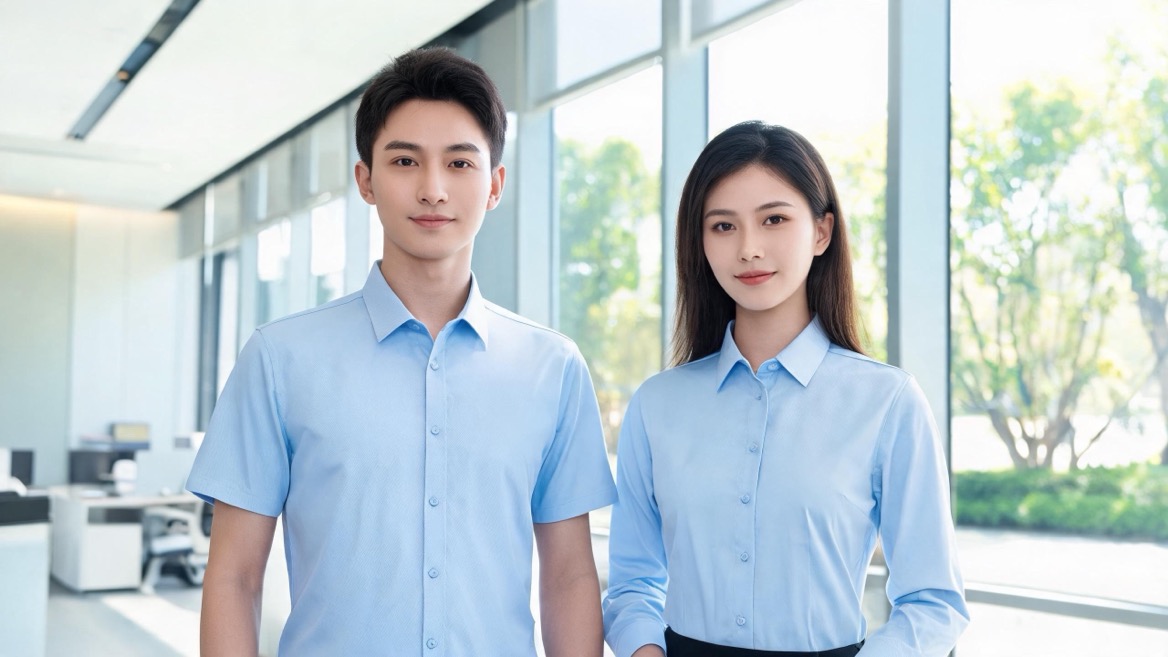
If employees work mainly in air-conditioned offices, retail stores, restaurants, hotels, reception areas, or indoor service environments, short sleeve dress shirts are usually the better hot-climate uniform solution.
If employees work outdoors, commute between buildings, stand in direct sunshine, perform inspections, visit construction sites, or need a more formal business image, long sleeve dress shirts may provide stronger overall protection and versatility.
| Factor | Short Sleeve Dress Shirts | Long Sleeve Dress Shirts |
|---|---|---|
| Airflow around arms | Excellent | Moderate |
| Direct sun coverage | Limited | Strong |
| Formal business appearance | Good in relaxed workplaces | Excellent |
| Outdoor suitability | Moderate | Strong when fabric is lightweight |
| Indoor hot workplace comfort | Excellent | Good with breathable fabric |
| Layering flexibility | Limited | Strong |
| Sunburn prevention | Lower | Higher |
| Ease of movement | Very good | Very good with proper pattern design |
| Year-round uniform use | Moderate | Excellent |
| Best for | Indoor teams, hospitality, retail, casual offices | Sales teams, outdoor staff, formal uniforms, travel-intensive roles |
The key point is simple: a poorly designed short sleeve shirt can still feel hot, while a lightweight long sleeve dress shirt can remain comfortable in warm conditions.
When comparing short sleeve dress shirts vs long sleeve dress shirts, many buyers focus only on the amount of skin covered. This is understandable, but it can lead to weak purchasing decisions.
Human comfort in hot workplaces depends on how efficiently the body can release heat. Clothing affects this process in several ways:
- Air circulation through and around the garment
- Moisture transfer from the skin to the outer fabric surface
- Sweat evaporation, which supports natural cooling
- Solar radiation exposure, especially for outdoor workers
- Fabric weight and density
- Fit and ease allowance
- Color and heat absorption
- Physical activity level
- Humidity, which can reduce evaporation efficiency
Occupational heat guidance commonly recommends light-colored, loose-fitting, and breathable garments. It also recognizes that long sleeves can help cover the skin and reduce sunburn risk, particularly where workers face direct sunlight.
This means a uniform program should not choose sleeve length in isolation. Buyers should evaluate the complete shirt specification.
A lightweight shirt with a breathable weave can feel significantly cooler than a heavier shirt with shorter sleeves. For example, a 100% cotton poplin shirt at an appropriate lightweight construction may feel crisp and breathable, while a dense polyester-rich fabric may trap heat and dry slowly depending on its structure and finish.
For hot-climate workwear programs, manufacturers and buyers often evaluate these fabric directions:
| Fabric Option | Hot-Climate Strength | Potential Limitation | Best Use |
|---|---|---|---|
| Lightweight cotton poplin | Breathable, natural hand feel, professional appearance | May wrinkle more easily | Office, hospitality, retail |
| Cotton-polyester blend | Better wrinkle resistance and durability | Blend ratio and fabric density are critical | Corporate uniforms, service teams |
| Cotton stretch fabric | Better mobility and fit retention | Excessive elastane can affect breathability | Sales, travel, active office roles |
| Mechanical-stretch woven fabric | Mobility without high elastane content | Requires controlled fabric development | Modern uniforms, mobility-focused teams |
| Moisture-management fabric | Helps move moisture away from skin | Performance claims should be tested | Outdoor service, high-movement roles |
| Lightweight UV-protective fabric | Supports sun-exposed workwear needs | Coverage and construction still matter | Field teams and outdoor staff |
A professional OEM supplier should help the buyer match fabric performance with the intended use. A shirt for hotel reception staff does not need the same construction as one for outdoor property-management teams or delivery supervisors.
Short sleeve dress shirts offer a practical balance between professional appearance and warm-weather comfort. They are particularly popular for companies operating in tropical, subtropical, coastal, and high-humidity markets.
Improved perceived coolness. Exposed forearms can feel more comfortable in hot indoor conditions, especially when workers sit, stand, or move frequently in spaces with limited air conditioning.
More casual and approachable appearance. Short sleeves can make a uniform feel less rigid. This is useful for café staff, retail associates, restaurant teams, tourism employees, event crews, and casual corporate workplaces.
Easy daily wear. Employees often find short sleeve shirts easier to put on, wash, iron, and wear throughout a busy shift.
Suitable for high-turnover uniforms. In hospitality and service industries, short sleeve work shirts can be a cost-effective choice for large staff teams, particularly when companies need multiple colorways, embroidery, printed logos, name labels, or different size ranges.
Less material consumption. Short sleeve shirts generally use less fabric than comparable long sleeve styles. For volume uniform programs, this may help control material use and total garment cost, although pricing still depends heavily on fabric quality, trims, order quantity, embroidery, packaging, and construction requirements.
The main trade-off is reduced protection.
Short sleeves leave the forearms exposed to direct sunlight, UV radiation, dust, minor surface contact, and temperature changes. Employees who move between indoor and outdoor environments may feel comfortable inside but become exposed during deliveries, site visits, transit, or outdoor customer service.
Short sleeve styles can also be less appropriate for highly formal industries. Financial services, luxury hospitality, premium retail, corporate sales, and executive-facing service roles may still prefer long sleeves because they create a more polished appearance.
In addition, short sleeves do not automatically solve heat discomfort. If the shirt is too tight across the chest, made from dense fabric, finished with a non-breathable coating, or paired with a heavy undershirt, employees may still feel hot.
Short sleeve dress shirts are especially suitable for:
- Hotel housekeeping supervisors and front-of-house teams in relaxed properties
- Retail associates and showroom staff
- Restaurant, café, and food-service employees
- Call-center and office teams in warm regions
- Event staff and brand-promotion teams
- Tourism, transport, and customer-service uniforms
- Casual corporate workwear programs
- Indoor warehouse administration teams
- School, club, and community uniforms
For these applications, a clean short sleeve shirt with a structured collar, refined placket, durable buttons, and professional logo embroidery can look polished without appearing overdressed.
Long sleeve dress shirts are often misunderstood in hot-weather uniform planning. Many buyers assume they are automatically less comfortable than short sleeves. In reality, a lightweight, loose-fitting long sleeve shirt can be an effective solution for sun-exposed work.
Long sleeves provide a physical barrier between the skin and sunlight. This can reduce sunburn risk and protect employees from direct radiant heat, especially when the shirt is light-colored and made with breathable material. Workplace heat guidance notes the importance of light, loose, breathable clothing and identifies long sleeves as a way to cover the body and help avoid sunburn.
Better sun coverage. This is the clearest advantage. Workers with repeated outdoor exposure can benefit from covered arms, especially in hot regions with strong sunlight.
More formal appearance. A long sleeve dress shirt remains the standard choice for many professional environments. It works well for client meetings, trade-show staff, sales representatives, hotel managers, real-estate teams, and business-development employees.
Greater versatility. Employees can wear sleeves down for formal meetings or sun protection, then roll them up in a more relaxed setting if the company dress policy permits it.
Improved uniform consistency. Long sleeve shirts create a consistent look across different seasons, job roles, and client-facing situations. For global brands operating across multiple countries, one adaptable style can simplify purchasing and brand presentation.
Additional protection from workplace exposure. Long sleeves can provide limited coverage from dust, light abrasion, splashes, and surface contact. They are not a substitute for certified protective garments where safety standards apply, but they can offer useful everyday coverage in low-risk roles.
A long sleeve dress shirt can increase discomfort if the garment is poorly engineered. Common problems include:
- Fabric that is too heavy or tightly woven
- Tight cuffs that restrict air circulation
- Narrow armholes that reduce mobility
- Excessively slim fits that hold fabric against the body
- Dark colors that absorb more heat
- Thick collar interlining and heavy fused components
- Non-breathable logo patches or large heat-transfer prints
Long sleeves also require more attention during product development. The sleeve cap, armhole shape, cuff width, placket construction, and fabric drape all affect comfort. A long sleeve shirt for active work should not simply be a short sleeve body with added sleeves.
Long sleeve dress shirts are often the stronger choice for:
- Outdoor sales teams and field representatives
- Property-management and facility-inspection staff
- Construction-office and site-management personnel
- Landscaping supervisors and project coordinators
- Transport, logistics, and fleet-management teams
- Luxury hospitality and premium retail teams
- Corporate service staff who attend meetings
- Trade-show personnel and brand ambassadors
- Utility, energy, and infrastructure support teams
- Employees who travel between air-conditioned offices and outdoor locations
For outdoor work, buyers should consider a light-colored long sleeve shirt with lightweight fabric, a relaxed but professional fit, breathable underarm construction, and practical sleeve-adjustment details.

The best uniform decision changes by work environment. A useful buying strategy is to define the workplace before selecting the style.
For office teams working primarily indoors, short sleeve dress shirts are usually more comfortable and easier to accept among employees. Choose a refined fabric with wrinkle resistance and a clean collar shape.
Recommended direction: Short sleeve cotton-polyester poplin or lightweight stretch woven shirt.
Hospitality employees need comfort, visual consistency, and easy care. Short sleeves work well for food service, housekeeping coordination, concierge support, and casual resort uniforms. Long sleeves can be reserved for supervisors, front-desk executives, or fine-dining teams.
Recommended direction: Short sleeve shirts for operational teams; long sleeve shirts for management or premium guest-facing roles.
For workers exposed to the sun, long sleeve dress shirts are often more practical. The garment should be light in color, breathable, and sufficiently loose to support air movement. Long sleeves can reduce direct skin exposure while retaining a business-ready image.
Recommended direction: Lightweight long sleeve shirt with UV-conscious fabric selection, roll-tab sleeves, and moisture-management finishing where appropriate.
This environment requires a balance of movement, durability, and fluctuating temperatures. The decision depends on whether the role is mostly indoors or includes loading areas, delivery yards, and outdoor inspections.
Recommended direction: Short sleeves for indoor workers; long sleeves for supervisors, drivers, and outdoor-facing personnel.
Humidity reduces the body's ability to cool itself through sweat evaporation. In these markets, breathability and moisture management are especially important. A short sleeve shirt may feel more comfortable, but fabric testing and fit remain essential.
Recommended direction: Use lightweight woven fabrics, avoid overly tight fits, and prioritize quick-drying performance.
A successful hot-weather shirt program starts with a structured product brief. Before requesting samples, buyers should answer the following questions.
Do not base the uniform only on job title. A "sales representative" may spend six hours indoors, while another may travel between customer sites in direct sun.
Ask:
- How many hours are spent outdoors?
- Is the workplace air-conditioned?
- Are employees standing, walking, lifting, or sitting?
- Is there frequent movement between indoor and outdoor areas?
- Are employees exposed to sunlight, dust, or light abrasion?
- Is a tie, jacket, apron, or vest required?
- Is the workplace customer-facing or operational?
Fabric weight should match the climate and intended use. A lighter construction is generally more suitable for hot conditions, but it must still provide sufficient opacity, durability, and professional appearance.
During sampling, assess:
- Breathability
- Opacity under strong light
- Wrinkle recovery
- Moisture visibility
- Shrinkage after washing
- Colorfastness
- Pilling resistance
- Seam durability
- Comfort during arm movement
A shirt that looks excellent on a hanger may fail in real working conditions. Wear trials are essential.
An overly slim shirt can restrict movement and reduce air circulation. For workwear, a modern regular fit often offers the best balance between appearance and comfort.
Key design areas include:
- Chest ease
- Back width
- Armhole depth
- Bicep circumference
- Sleeve opening
- Cuff circumference
- Side-seam shaping
- Back pleat or action-back construction
For long sleeve shirts, a slightly roomier sleeve and a functional cuff can improve comfort significantly.
Light-colored work shirts generally reflect more heat than dark garments. White, light blue, pale gray, beige, sand, soft khaki, and light stone are common hot-climate uniform colors.
However, color selection must also consider stain visibility, brand identity, laundering conditions, and employee preference. In hospitality or logistics environments, a mid-tone color may offer a more practical balance than bright white.
For OEM uniform orders, samples should be tested in realistic conditions before production approval.
A practical sample-review checklist includes:
1. Wear the shirt during a normal work shift.
2. Test movement while sitting, reaching, walking, and lifting.
3. Check collar comfort after several hours.
4. Evaluate sweat visibility under indoor and outdoor light.
5. Wash and dry the garment according to the planned care label.
6. Measure shrinkage and check seam appearance.
7. Review logo placement, embroidery density, and backing comfort.
8. Confirm size grading across the full required range.
This process reduces costly revisions after bulk production and improves employee adoption.
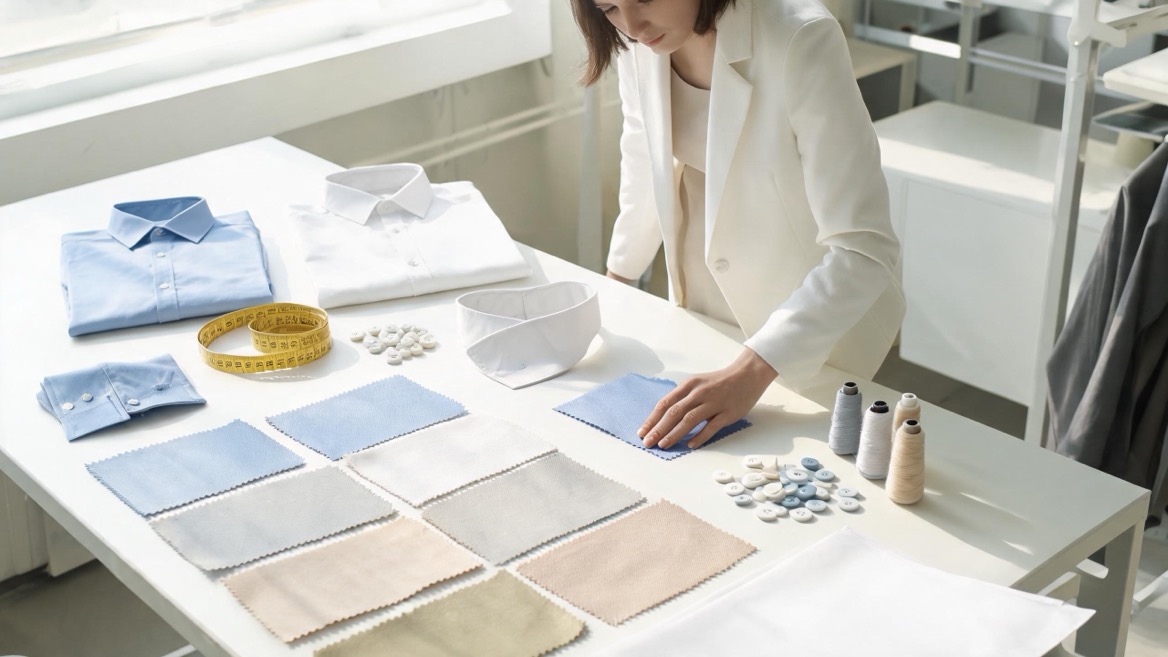
For many international brands, the strongest answer is not choosing only short sleeve or only long sleeve dress shirts. It is creating a coordinated two-sleeve uniform system.
For example, a company can develop:
- A short sleeve dress shirt for indoor summer operations
- A long sleeve dress shirt in the same fabric family and color
- Matching embroidery placement and button color
- A consistent collar and placket design
- Shared size grading and brand-label standards
- Optional seasonal rollout by market or department
This approach improves brand consistency while giving managers flexibility. Employees can receive the right style for their role, season, and work location without making the uniform look fragmented.
For OEM buyers, using the same base fabric and trim package for both styles can also simplify color matching, approval processes, and repeat ordering.
Short sleeve dress shirts are generally better for indoor hot climate workplaces where comfort, airflow, and a relaxed professional appearance are the top priorities.
Long sleeve dress shirts are generally better for outdoor, sun-exposed, highly formal, and mixed-location workplaces where arm coverage, sun protection, versatility, and professional presentation matter more.
The most effective solution is to select sleeve length based on the employee's actual exposure and job function—not based on climate alone.
For a hot-weather shirt program, focus on these priorities:
- Choose lightweight, breathable, and durable fabric
- Use a comfortable regular or modern fit
- Select light or mid-light colors where appropriate
- Avoid overly heavy interlinings, dense prints, and restrictive cuts
- Conduct wear trials before bulk production
- Consider offering both short sleeve and long sleeve options under one uniform design system
Shanghai Youti Clothing Co., Ltd. can support OEM shirt development for overseas brands, wholesalers, and workwear buyers. From fabric sourcing and pattern development to logo embroidery, private labeling, size grading, packaging, and bulk production, a professional supplier can help turn a hot-climate uniform idea into a reliable commercial product.
Contact Shanghai Youti Clothing Co., Ltd. to develop custom short sleeve and long sleeve dress shirts designed for your target climate, brand image, employee needs, and order requirements.
Usually, yes. Short sleeve dress shirts allow more direct airflow around the arms and often feel cooler in indoor workplaces. However, fabric weight, weave, fit, and humidity can have as much influence on comfort as sleeve length.
Yes. Lightweight, breathable long sleeve dress shirts can work well for summer uniforms, especially for employees exposed to direct sunlight. The sleeves provide skin coverage, while proper fabric and fit help maintain comfort.
Not always. Long sleeves may reduce direct sun exposure and help prevent sunburn. In outdoor work, a light-colored, loose-fitting, breathable long sleeve shirt can be more practical than a heavy short sleeve shirt.
Lightweight cotton poplin, carefully engineered cotton-polyester blends, and moisture-management woven fabrics are common choices. The best material depends on the desired balance of breathability, wrinkle resistance, durability, opacity, care requirements, and budget.
Both can work. Short sleeves are often suitable for casual hospitality, resort staff, housekeeping coordination, restaurants, and cafés. Long sleeves are often preferred for luxury hotels, formal reception teams, managers, and fine-dining environments.
Yes. A two-sleeve program is often the most flexible approach. Using matching fabric, color, buttons, logo placement, and fit standards allows different teams to wear the appropriate sleeve length while maintaining one unified brand image.
Buyers should confirm fabric composition, weight, color, shrinkage tolerance, size chart, grading rules, stitching standards, collar construction, logo method, label requirements, packaging, minimum order quantity, sample approval, and bulk-production quality-control procedures.
- California Department of Industrial Relations. [Heat Illness Prevention: Clothing and Protective Equipment]
- Occupational Safety and Health Administration. [Prevent Heat Illness at Work]
- Canadian Centre for Occupational Health and Safety. [Hot Environments: Assessment and Control Measures]
- WorkSafeBC. [Heat Stress]
- National Safety Council. [FR/AR Clothing and Heat]
- Occupational Safety and Health Administration. [Heat Stress Guide]


