
Views: 241 Author: Youti Clothing Publish Time: 2026-09-13 Origin: Site


Content Menu
● Why a Well-Fitted Suit Makes the Difference
● Start With the Suit Jacket Fit
>> Make Sure the Chest Is Comfortable
● Get Shirt and Sleeve Length Right
>> Show a Small Amount of Shirt Cuff
● Choose Trousers That Look Sharp and Feel Comfortable
>> Focus on the Waist and Seat
>> Select the Right Trouser Break
● Follow Simple Suit Button Rules
● Match Fabric to Climate and Occasion
● Build a Balanced Color and Accessory Combination
>> Reliable Suit Color Combinations
>> Use Accessories With Restraint
● A Five-Minute Suit Check Before You Leave
● Common Suit Mistakes to Avoid
>> Wearing the Wrong Size to Chase a Trend
>> Leaving Temporary Stitching in Place
>> Wearing Poorly Maintained Shoes
● Expert Perspective: What Makes a Suit Feel Premium
● Create a Suit Collection Your Customers Want to Wear
● FAQ
>> 1. How should a suit jacket fit in the shoulders?
>> 2. How much shirt cuff should show under a suit jacket?
>> 3. Should suit trousers touch the shoes?
>> 4. Should I button my suit jacket when sitting?
>> 5. What is the most versatile suit color?
>> 6. Can a tailor fix any suit fit problem?
>> 7. Should a tie and pocket square match exactly?
A suit can make a powerful first impression—but only when it fits correctly, suits the occasion, and is worn with intention. Whether you are dressing for a business meeting, wedding, formal dinner, trade show, interview, or client presentation, the details of how to wear a suit well matter far more than the price tag alone.
For brands, wholesalers, and professional buyers, this is also an important product lesson: a successful suit is not simply a jacket and trousers. It is a balance of pattern engineering, fabric selection, construction, body proportion, comfort, and finishing. At Shanghai Youti Clothing Co., Ltd., we work with international apparel brands and manufacturers on OEM suit production, where these practical wearing principles directly inform product development, sizing, and quality control.

A suit should enhance the wearer's natural shape without restricting movement. It should look clean when standing, remain comfortable when sitting, and retain its structure throughout a long day.
Many people assume that a slim suit automatically looks better. That is not always true. A suit that is too tight can create pulling lines across the chest, shoulders, seat, and thighs. A suit that is too large can make the wearer appear shorter, less polished, or less confident.
The goal is not "tight." The goal is balanced fit.
A properly fitted suit typically has:
- Shoulders that end at the wearer's natural shoulder point
- A jacket chest that closes without strain or a sharp X-shaped pull
- Lapels that lie flat against the chest
- Jacket sleeves that reveal a small amount of shirt cuff
- Trousers that sit securely at the waist without needing to be pulled up constantly
- A trouser hem that meets the shoe cleanly without excessive fabric pooling
The shoulder fit is especially important. Jacket sleeves, trouser hems, and waist areas can often be adjusted. Shoulder reconstruction is much more difficult, more expensive, and less predictable. For this reason, buyers and wearers should prioritize the shoulder line before making other fit decisions.
The jacket is the visual center of the outfit. If the jacket fits well, even a simple navy or charcoal suit can look refined. If it fits poorly, expensive fabric and accessories will not fully solve the problem.
The shoulder seam should sit close to the point where the wearer's shoulder ends and the upper arm begins. It should not extend far past the shoulder, and it should not pull inward.
A shoulder that is too wide often creates a dropped, oversized appearance. A shoulder that is too narrow may create tension, dimpling, or restricted movement across the upper back.
Use this simple fitting test:
1. Stand naturally with arms relaxed.
2. Look at the seam between the sleeve and the jacket shoulder.
3. Confirm that it ends at the natural shoulder edge.
4. Check for dents, raised padding, wrinkles, or hanging fabric.
A clean shoulder creates the framework for the entire jacket.
Button the jacket while standing. The front should close smoothly, with enough room to breathe and move.
A small amount of shaping at the waist is desirable. However, strong pulling lines around the button area mean the jacket is too tight. This is often called an "X" pull because the fabric forms diagonal lines from the button toward the chest and hips.
A useful practical check is to place one flat hand inside the buttoned jacket at chest level. You should have room for the hand without excessive pressure or loose empty space.
Jacket length affects visual proportion. A very short jacket can make the torso look compressed, while an overly long jacket can look dated or oversized.
For many classic suit silhouettes, the jacket should broadly cover the seat and create a balanced division between the upper and lower body. This does not mean every customer needs the same length. Contemporary cropped styles, relaxed tailoring, and fashion-forward designs may intentionally use different proportions.
For commercial suit collections, brands should define jacket length standards clearly by fit block:
| Suit Style | Typical Visual Effect | Best Consideration |
|---|---|---|
| Classic fit | Balanced and timeless | Suitable for business, formalwear, and broad size ranges |
| Slim fit | Cleaner, closer silhouette | Requires careful chest, bicep, thigh, and mobility allowance |
| Modern fit | Moderate shaping | Works well for versatile office-to-event dressing |
| Relaxed fit | Softer and more fashion-led | Needs controlled shoulder and sleeve proportions to avoid looking oversized |
The key is consistency. A suit should reflect the intended silhouette rather than accidentally appearing too short or too large.
A well-chosen dress shirt supports the suit rather than competing with it. The collar should sit comfortably around the neck, and the shirt should remain tucked when the wearer raises their arms or sits down.
One of the easiest ways to improve a suit outfit is to check the sleeves. With arms resting naturally at the sides, a small amount of shirt cuff should be visible below the jacket sleeve.
A common guide is around one-quarter to one-half inch of visible shirt cuff. This creates a purposeful transition between the jacket and the hand. If the jacket sleeve covers the entire shirt cuff, it may look too long. If a large amount of shirt cuff shows, the jacket sleeve may be too short.
This small detail is particularly important in business portraits, wedding photographs, client meetings, and formal events, where the hands and sleeves are frequently visible.
The shirt collar should work with the tie knot and lapel shape.
- A standard point collar is versatile for business suits.
- A spread collar usually works well with medium or wider tie knots.
- A cutaway collar can create a more fashion-led, European-inspired appearance.
- A button-down collar is generally more relaxed and is better suited to smart-casual tailoring than highly formal occasions.
When sourcing suits and shirts as a coordinated collection, brands should test collar height, collar spread, lapel width, and tie proportions together. A good suit can look less refined if the collar collapses or the tie knot is too small for the collar opening.
Suit trousers should allow the wearer to sit, walk, climb stairs, and move through a full day without discomfort. A clean trouser line depends on waist placement, seat fit, thigh allowance, taper, and hem length.
The waistband should sit securely without feeling tight. A belt can refine the appearance, but it should not be used to rescue trousers that are too loose.
At the seat, the fabric should lie smoothly. Excess fabric may create a sagging appearance, while tight fabric can pull horizontally across the back and become uncomfortable when sitting.
For OEM suit development, this is where fit samples matter. A pattern that works on a static mannequin may perform poorly on a moving body. Fitting should include standing, sitting, walking, bending, and reaching movements.
The "break" is the fold created when the trouser hem meets the shoe. It influences how formal, modern, and tidy the suit looks.
| Trouser Break | Appearance | Best Use |
|---|---|---|
| No break | Hem just touches the shoe | Clean, modern, dressier silhouette |
| Slight or half break | One small fold at the front | Versatile choice for most business and formal settings |
| Full break | Noticeable fold and more fabric | Traditional look; can appear heavy if not controlled |
For most wearers, a slight break offers the safest balance. The trouser hem should not drag on the ground or bunch heavily around the ankle. Excess stacking can make even a well-made suit look untidy.
Always try suit trousers with the shoes you intend to wear. The heel height and shoe shape affect the final trouser length.
Button etiquette is a small habit with a large visual impact. It also helps the jacket drape correctly.
- Button the top button when standing.
- Leave the bottom button undone.
- Unbutton the jacket before sitting.
- Fasten the top button again when you stand.
- The middle button is normally fastened.
- The top button may be fastened depending on the jacket cut and personal preference.
- The bottom button is generally left undone.
- Unbutton the jacket when sitting.
Double-breasted jackets are designed to remain more structured when closed. In most formal and business situations, they are worn buttoned while standing. Their wider overlap and stronger visual shape can make them especially effective for formalwear, premium corporate wardrobes, and fashion collections.
The reason for these rules is practical as well as visual. A buttoned jacket needs room to move when the wearer sits. Leaving the bottom button open helps preserve the intended line of the jacket.
Fabric selection affects comfort, drape, durability, seasonality, and perceived quality. A suit may look excellent in a showroom but disappoint the wearer if the fabric does not match local weather or expected usage.
| Fabric | Key Benefits | Suitable Uses |
|---|---|---|
| Wool | Breathable, resilient, refined drape | Business suits, formalwear, year-round collections |
| Wool blend | Can improve durability and price flexibility | Corporate uniforms, value-focused tailoring |
| Linen | Lightweight and breathable | Summer suits, destination weddings, resort collections |
| Cotton | Soft, structured, more casual | Smart-casual suits and seasonal collections |
| Polyester blend | Durable and easy to care for | Uniform programs and high-volume commercial use |
| Wool-cashmere blend | Soft hand feel and elevated appearance | Premium autumn and winter collections |
For international brands, fabric planning should begin with the end market. A lightweight suit that works in Singapore, Dubai, or southern Europe may not serve the same need as a structured wool suit developed for colder climates.
It is also important to distinguish fabric weight from fabric quality. Heavier does not always mean better. The best choice depends on climate, use frequency, target retail price, and desired silhouette.
A suit should create a coherent outfit, not a collection of unrelated pieces. Start with the suit color, then coordinate the shirt, tie, shoes, belt, and pocket square.
| Suit Color | Shirt Options | Tie Direction | Shoe Choice |
|---|---|---|---|
| Navy | White, light blue, pale pink | Burgundy, navy, green, subtle pattern | Dark brown or black |
| Charcoal | White, light blue, soft grey | Navy, burgundy, silver, dark green | Black or dark brown |
| Medium grey | White, blue, light lavender | Navy, burgundy, textured grey | Brown, oxblood, or black |
| Black | White or black for formal styling | Black, dark silver, restrained tones | Black |
| Beige or light tan | White, sky blue, cream | Navy, brown, muted green | Brown, suede, or tan |
For first-time suit buyers, navy and charcoal are usually the most flexible choices. They work across business, travel, presentations, weddings, and evening dinners with different shirt and tie combinations.
Accessories should add personality without overwhelming the suit.
A pocket square is decorative rather than functional. It can introduce contrast, texture, or a subtle accent color. For conservative business settings, a plain white square in a simple straight fold is a reliable option. For weddings and social events, a more expressive fold or pattern can work well.
Avoid making the tie and pocket square identical in color and pattern. Coordinated is better than perfectly matched.
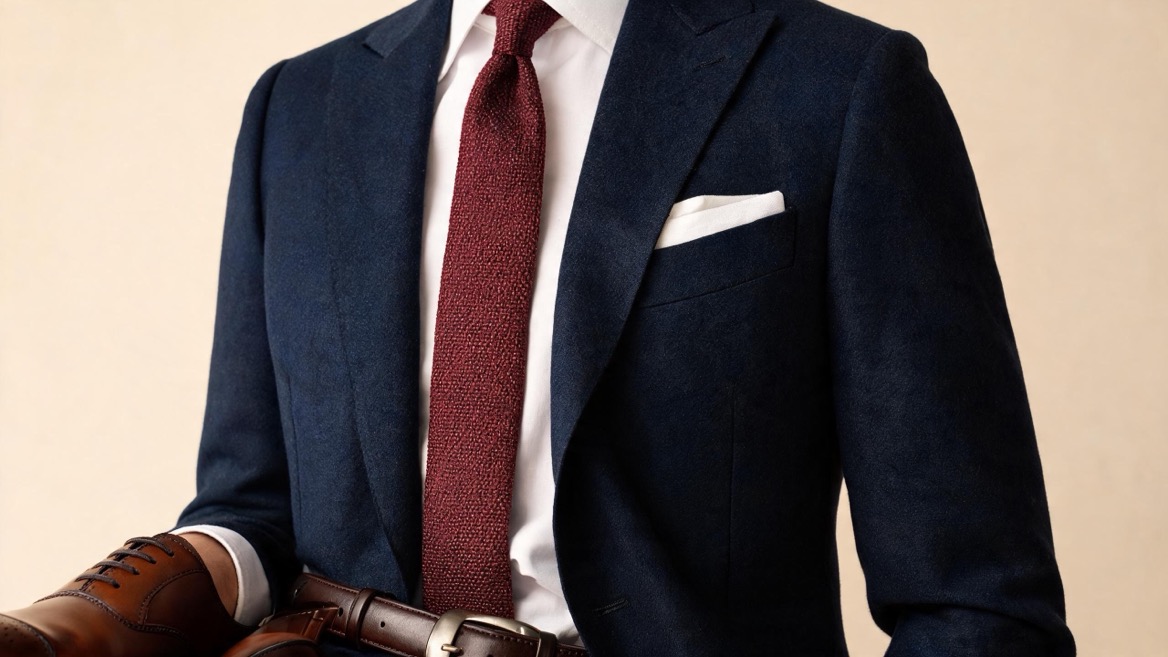
The most useful styling advice is often the easiest to apply. Before leaving for an event, meeting, or photo session, use this quick checklist.
1. Check your shoulders. The jacket should sit at the natural shoulder edge without overhang or pulling.
2. Button correctly. Fasten the appropriate button while standing and unbutton before sitting.
3. Look at your sleeves. Show a small amount of shirt cuff.
4. Inspect the collar. Your shirt collar should sit neatly under the jacket collar without gaps.
5. Check your trouser hem. Remove excessive bunching around the shoe.
6. Match leather accessories. Your belt should generally coordinate with your shoes.
7. Empty bulky pockets. Phones, keys, and wallets can distort the jacket line.
8. Use a lint roller. Dust, hair, and loose threads are highly visible on dark tailoring.
9. Stand naturally. Good posture improves the appearance of every suit.
10. Choose confidence over over-styling. A clean, comfortable outfit is usually more effective than excessive accessories.
Even a high-quality garment can look less polished when basic details are overlooked.
A very tight suit may look fashionable in a mirror for a moment, but it often restricts movement and produces visible pulling lines. A wearer should be able to sit, shake hands, reach for a bag, and move comfortably.
Off-the-rack sizing is a starting point, not always the final answer. Trouser hems, sleeve length, waist suppression, and trouser taper are among the adjustments that can often improve the finished appearance. Shoulder corrections, however, are generally more difficult and may not be worthwhile.
New suits may include temporary stitches at vents, pockets, sleeve labels, or jacket areas intended to keep the garment neat during shipping. These should be removed carefully before wearing. The exception is functional construction stitching that is part of the garment itself.
For brands and suppliers, clear hangtags or care cards can reduce customer confusion and prevent avoidable returns.
Shoes sit at the visual endpoint of the outfit. Scuffed leather, worn heels, or dusty footwear can undermine an otherwise excellent suit. Keep shoes clean, polished when appropriate, and matched to the level of formality.
From an apparel production perspective, a premium suit experience comes from multiple small decisions rather than one visible feature.
The wearer notices whether the jacket moves comfortably through the shoulders, whether the lapel rolls naturally, whether the lining feels smooth, and whether the trousers maintain their shape after hours of wear. These outcomes depend on fabric testing, pattern accuracy, seam allowance, pressing quality, fusible selection, lining choice, and production consistency.
For a brand developing an OEM suit program, the most effective process usually includes:
- Defining the target customer, climate, retail position, and wearing occasions.
- Selecting the intended fit block: classic, slim, modern, relaxed, or custom.
- Creating size specifications based on actual target-market body data.
- Reviewing a first sample for balance, mobility, drape, and finishing.
- Conducting wear tests rather than relying only on measurement checks.
- Approving a sealed production sample before bulk manufacturing.
- Using clear inspection standards for measurements, stitching, pressing, symmetry, and packaging.
A well-designed suit is therefore both a style product and a technical garment. The best results happen when designers, pattern makers, fabric suppliers, and production teams work from the same fit and quality expectations.
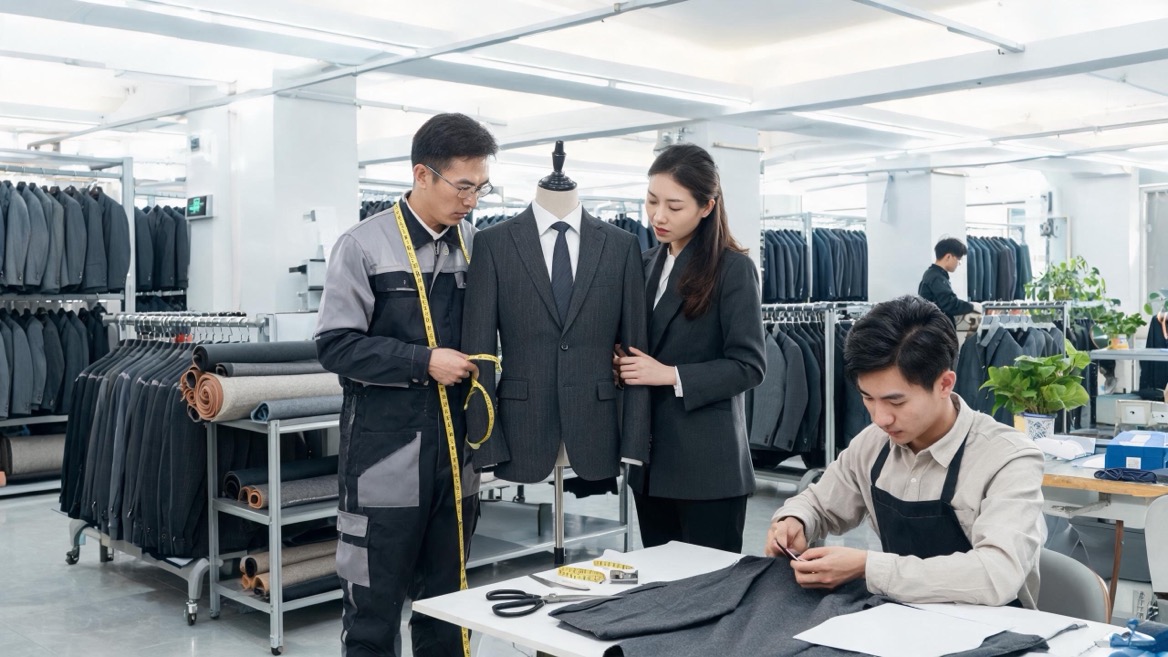
Looking good in a suit begins with fit, but it ends with confidence. Choose a jacket that fits the shoulders, trousers that move comfortably, a shirt that supports the neckline, and accessories that reinforce the occasion rather than distract from it.
For fashion brands, wholesalers, corporatewear buyers, and private-label businesses, the same principle applies at product level: build suit collections around real customer needs. Consider climate, body shape, local style expectations, price range, movement requirements, and garment-care preferences from the beginning.
Shanghai Youti Clothing Co., Ltd. supports international partners with OEM suit manufacturing for professional menswear, formalwear, business tailoring, and customized apparel programs. If you are developing a suit collection or searching for a reliable China suit manufacturer, contact our team to discuss fabric options, fit development, sampling, private labeling, and bulk production requirements.
The shoulder seam should end close to the point where your natural shoulder meets your upper arm. It should not hang beyond the shoulder or pull inward. Correct shoulders are especially important because they are difficult to alter successfully after production.
A small amount is ideal—commonly around one-quarter to one-half inch. This gives the outfit a clean and intentional finish without making the jacket sleeves appear too short.
Yes, but they should not bunch excessively. A slight or half break, with one small fold where the trousers meet the shoe, is a versatile choice for many business and formal situations.
No. Unbutton your jacket before sitting to reduce pulling and preserve the garment's shape. Refasten it when you stand.
Navy and charcoal are often the most versatile suit colors because they work for business, formal events, travel, interviews, and many social occasions. They also coordinate easily with white and light-blue shirts.
No. Tailors can often adjust sleeve length, trouser length, trouser waist, taper, and some jacket shaping. Shoulder alterations are more complex, more costly, and often less reliable, so it is best to purchase a jacket with the right shoulders from the start.
Usually, no. They should complement each other through shared colors or a similar overall tone, but identical fabric and pattern combinations can look overly coordinated. A white pocket square is a simple and flexible option for formal or business settings.
1. [StudioSuits: 10 Tips to Look Your Best When Wearing a Suit]
2. [H.M. Cole: How to Wear a Suit—The Complete Rules for Men]
3. [The VOU: Men's Fit Guide—How Clothes Should Fit and What a Tailor Can Alter]
4. [Westwood Hart: How a Suit Should Fit—Shoulders, Sleeves, and Trousers]
5. [Rampley & Co: Pocket Square Rules and Etiquette]
6. [Nathan Tailors: How Should a Suit Fit? Complete Visual Guide]
7. [MensFashioner: Men's Tailoring and Alterations Guide]
8. [TieMart: Pocket Square Guide—How to Wear, Fold, and Match]
9. [Daniel George: How to Wear a Suit—Etiquette and Styling Tips]


