
Views: 257 Author: Youti Clothing Publish Time: 2026-09-16 Origin: Site


Content Menu
● 3 Piece Suit vs 2 Piece Suit: Key Differences
● How Should a 3 Piece Suit Fit?
● Choosing the Right Fabric for a 3 Piece Suit
>> Fabric Options by Season and Occasion
● Building a Commercial 3 Piece Suit Collection
>> Step 1: Define the Customer and Occasion
>> Step 2: Select a Reliable Core Fit Block
>> Step 3: Control Construction and Finishing
● Three Piece Suit Styling Rules
>> Essential Styling Principles
● Common 3 Piece Suit Mistakes to Avoid
>> Wearing a Waistcoat That Is Too Short
>> Choosing Fabric That Is Too Heavy
>> Treating All Three Pieces as Separate Products
>> Ignoring the Sampling Process
● OEM 3 Piece Suit Development With Shanghai Youti Clothing
>> What is included in a 3 piece suit?
>> Is a 3 piece suit more formal than a 2 piece suit?
>> Should the bottom waistcoat button be fastened?
>> Can a 3 piece suit be worn in summer?
>> Should a waistcoat match the jacket and trousers?
>> Can a 3 piece suit work for business?
>> What should brands prepare before requesting an OEM suit quotation?
A 3 piece suit is one of the most versatile and distinctive forms of tailored menswear. Built from a matching jacket, trousers, and waistcoat, it offers brands, wholesalers, and professional buyers a higher-value suit category that can move from business occasions to weddings, formal events, and premium lifestyle collections.
For apparel labels developing tailored menswear, a successful men's three piece suit is not defined by the extra waistcoat alone. Its commercial value comes from proportion, fabric selection, reliable sizing, construction consistency, and the ability to adapt the design to a target market. At Shanghai Youti Clothing Co., Ltd., we help overseas brands, wholesalers, and manufacturers develop OEM suit programs that balance classic tailoring with practical production requirements.
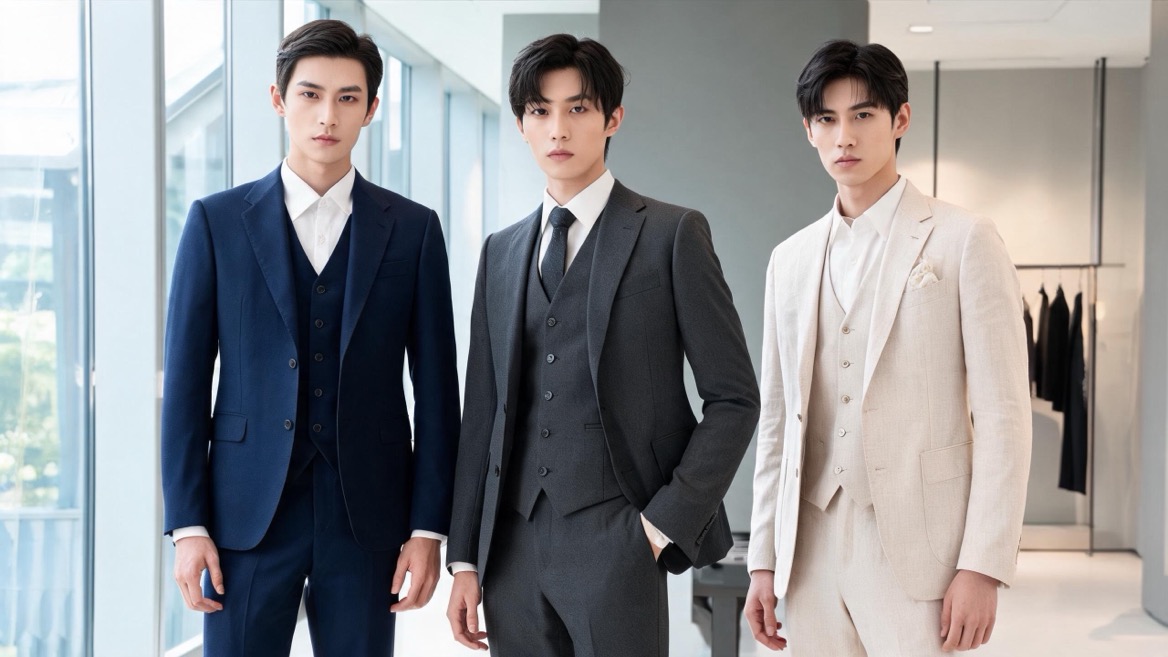
A traditional three piece suit includes three coordinated garments:
- A suit jacket
- Matching trousers
- A waistcoat, also called a vest in many markets
The waistcoat is worn over the dress shirt and beneath the jacket. It creates a more complete front profile, adds visual structure, and allows the wearer to look polished even when the jacket is removed.
Compared with a standard two-piece suit, a 3 piece suit typically feels more formal and intentional. However, modern styling has made it suitable for far more than ceremonial wear. A lightweight three-piece design can work for summer weddings, a business-focused wool suit can support executive dressing, and a textured tweed version can become a strong seasonal product for autumn and winter collections.
For brands, the three-piece category also creates useful merchandising opportunities. The jacket, trousers, and waistcoat can be sold as a coordinated set, while selected components may also be styled separately for additional content, cross-selling, and collection flexibility.
The key difference is straightforward: a two-piece suit contains a jacket and trousers, while a 3 piece suit adds a matching waistcoat. Yet that additional layer changes the product's appearance, wearability, and perceived value.
| Feature | 2 Piece Suit | 3 Piece Suit |
|---|---|---|
| Components | Jacket and trousers | Jacket, trousers, and waistcoat |
| Formality | Professional and versatile | More refined and ceremonial |
| Visual effect | Clean, simple silhouette | Structured, layered silhouette |
| Jacket-off appearance | Shirt and trousers remain visible | Waistcoat maintains a dressed appearance |
| Fabric requirement | Standard suiting consumption | Higher fabric and trim consumption |
| Ideal product role | Everyday business wardrobe | Weddings, formal events, premium businesswear |
| Development complexity | Relatively simple | Requires coordinated fit across three garments |
A three-piece suit for a wedding remains one of the most popular use cases because the waistcoat gives the groom or guest a more elevated look without requiring a tuxedo. At the same time, brands should not treat three-piece tailoring as wedding-only apparel. A navy, charcoal, or deep brown three-piece suit can also work well for business leaders, formal hospitality uniforms, luxury travel wardrobes, and seasonal fashion collections.
The waistcoat is the defining feature of a 3 piece suit. It is not merely an added layer. When developed correctly, it improves visual balance, covers the trouser waistband, and keeps the wearer looking composed after the jacket comes off.
A well-proportioned waistcoat should:
- Sit close to the torso without pulling across the chest or stomach
- Cover the trouser waistband, avoiding a visible shirt gap
- End around the top of the trouser waistband rather than extending too low
- Provide enough room for breathing, sitting, and movement
- Match the jacket and trousers in fabric, shade, and finishing quality
- Maintain a clean front shape without button strain
For a conventional single-breasted waistcoat, the bottom button is commonly left unfastened. This supports comfort while seated and reduces tension across the lower front. The rule should be applied with judgment: design details, button placement, waistcoat shape, and the customer's intended styling all matter.
The jacket can usually be worn open when a waistcoat is visible. This is one reason the three-piece silhouette works so well in formal settings. The wearer retains structure and polish without needing to remain fully buttoned throughout the day.
Fit determines whether a three-piece suit looks sharp or restrictive. Because the wearer has an extra garment between shirt and jacket, poor measurements become more obvious than they do in many two-piece designs.
A jacket should follow the wearer's body without collapsing, pulling, or looking oversized.
Check the following areas:
- Shoulders: The shoulder seam should finish close to the natural shoulder point. Drooping seams can make the entire jacket appear too large.
- Chest: The front should close comfortably. Strong horizontal pulling or an "X" shape around the button area indicates that the jacket is too tight.
- Waist: The jacket should shape the torso without restricting sitting, driving, or arm movement.
- Sleeves: Sleeve length should generally allow a small amount of shirt cuff to show.
- Jacket length: A traditional jacket commonly covers the seat, though contemporary cuts may vary depending on the market and design direction.
The waistcoat must look neat both with and without the jacket.
- It should lie flat over the shirt.
- It should fully cover the waistband.
- It should not expose a belt or shirt fabric when the wearer moves naturally.
- The armholes should allow movement without cutting into the chest.
- The back adjustment strap should fine-tune the fit, not compensate for an incorrectly sized front.
- The front buttons should close without tension or spreading.
Trousers need to support the full three-piece silhouette. A well-made waistcoat cannot compensate for trousers that sit too low or fit poorly through the seat and thigh.
- The waistband should sit at the intended rise.
- The seat should be smooth, without excess fabric or tight pulling.
- The thigh should allow comfortable walking and sitting.
- The leg shape should match the collection's target customer: slim, tailored, straight, or relaxed.
- The hem should create the desired break over the shoe, whether no break, slight break, or fuller break.
Practical development advice: For a three-piece program, specify jacket, waistcoat, and trouser measurements as one connected system. Do not develop the waistcoat as an afterthought. The jacket waist, waistcoat length, trouser rise, and waistband position must work together.
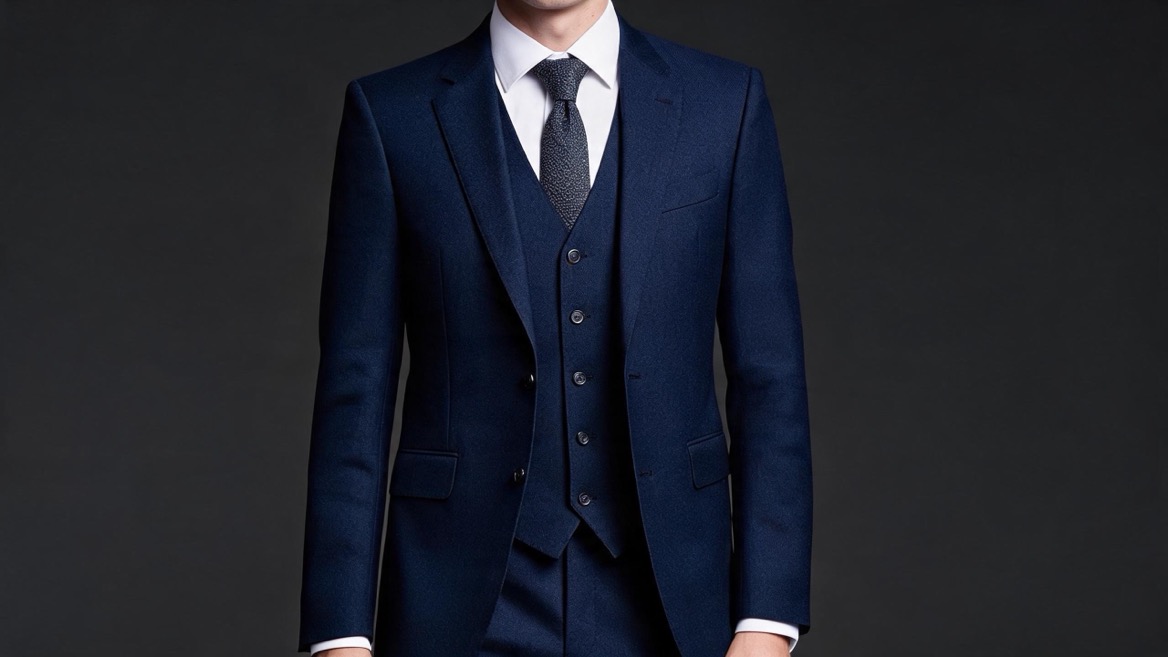
Fabric has an even greater impact on a three-piece suit than on a two-piece suit because the waistcoat adds insulation. A material that feels acceptable in a two-piece design may feel too warm once the third layer is added.
For most commercial suit collections, fabric selection should begin with four questions:
1. What climate will the customer wear it in?
2. Is the suit designed for business, weddings, travel, or fashion retail?
3. What price level and quality expectation does the brand target?
4. Is the suit intended for one season or year-round selling?
| Fabric Type | Best Use | Main Advantages | Development Considerations |
|---|---|---|---|
| Lightweight tropical wool | Warm climates, destination weddings, summer businesswear | Breathable, clean drape, professional appearance | Use breathable lining and avoid overly heavy canvas |
| Wool or wool blend | Businesswear and versatile formalwear | Durable, refined, broad market acceptance | Midweight qualities work well for many markets |
| High-twist wool | Travel and warm-weather tailoring | Better crease recovery and airflow | Suitable for structured but lighter suits |
| Linen or linen blends | Resort, summer events, relaxed tailoring | Distinct texture, breathable feel | Creasing is part of the natural character |
| Tweed | Autumn and winter collections | Texture, warmth, strong seasonal identity | Heavier fabric can require fit ease adjustments |
| Flannel wool | Cool-weather businesswear and formalwear | Soft hand feel, warmth, classic appearance | Best for colder markets and autumn/winter drops |
| Velvet | Eveningwear and festive occasions | Strong visual impact and premium appearance | Requires careful shade consistency and pressing control |
As a practical guide, lightweight suit cloth is commonly used for hot weather, midweight cloth suits many year-round programs, and heavier flannel or tweed performs better in colder environments. For a three-piece suit, it is wise to consider not only fabric weight but also weave openness, lining, shoulder construction, and the customer's typical activity level.
A strong three-piece suit collection should not start with color alone. It should begin with a clear product brief that connects the target consumer, intended channel, price range, and seasonal demand.
Different buyers need different suit solutions.
- Wedding brands may prioritize elegant colors, coordinated waistcoats, slim proportions, and optional accessories.
- Businesswear brands may focus on navy, charcoal, grey, wrinkle recovery, and dependable repeat sizing.
- Fashion retailers may seek wider lapels, double-breasted options, textured fabrics, or statement checks.
- Uniform buyers may need durability, repeatability, size grading, and easier-care fabric options.
- Wholesalers may need flexible colorways, lower-risk core styles, and reliable replenishment capacity.
A suit that works for a coastal destination wedding will not necessarily work for a cold-climate corporate uniform program. The fabric, lining, structure, color, and fit block should reflect the actual customer use case.
For OEM suit manufacturing, consistent fit is a commercial asset. Before expanding into multiple fabrics and colors, establish a dependable base pattern.
Key decisions include:
- Single-breasted or double-breasted jacket
- Two-button, three-button, or one-button front
- Notch lapel, peak lapel, or shawl collar
- Slim, tailored, regular, or relaxed block
- Flat-front or pleated trousers
- Side adjusters, belt loops, or suspender-button options
- Five-button, six-button, single-breasted, or double-breasted waistcoat
- Back strap, full lining, half lining, or unlined waistcoat construction
For most broad-market collections, a single-breasted, two-button jacket with a matching five- or six-button waistcoat offers a commercially accessible starting point. More directional brands may choose peak lapels, double-breasted jackets, contrast waistcoat backs, or wider trouser silhouettes.
A premium-looking suit can be weakened by inconsistent finishing. During sampling and bulk production, buyers should inspect the details that customers notice first:
- Lapel roll and collar shape
- Shoulder symmetry
- Button alignment
- Pocket placement
- Matching checks or stripes across key seams
- Waistcoat button spacing
- Trouser crease quality
- Lining cleanliness
- Hem consistency
- Shade variation between jacket, waistcoat, and trousers
For patterned fabrics, alignment is especially important. A plaid or windowpane design should look intentional across the front panels, pockets, and waistcoat. This requires careful marker planning and fabric cutting control.
A three-piece suit does not need excessive accessories. The best styling is controlled, comfortable, and suited to the occasion.
- Choose a shirt collar that works with the lapel and tie proportion.
- Keep the tie inside the waistcoat, not over it.
- Leave the bottom button of a traditional single-breasted waistcoat open.
- Ensure the waistcoat covers the trouser waistband.
- Avoid letting the shirt show between the waistcoat and trousers.
- Select shoes appropriate to the formality of the fabric and event.
- Use a pocket square carefully; it should complement the outfit rather than match the tie exactly.
- Consider side adjusters or suspenders for a cleaner waistline, particularly when the waistcoat is fitted.
A navy 3 piece suit with a white shirt, textured burgundy tie, brown leather shoes, and a restrained pocket square creates a reliable look for formal business events and many weddings. For a more contemporary summer version, a light grey or muted beige suit in breathable wool or linen blend can be paired with an open-collar shirt and loafers, depending on the event dress code.
Many fit and styling issues are easy to prevent during product development and customer education.
If the waistcoat stops above the trouser waistband, a visible strip of shirt can break the silhouette. This is one of the most common problems in ready-to-wear three-piece suits.
Three layers can become uncomfortable quickly. For warm markets, favor breathable wool, high-twist fabric, open weaves, lighter linings, and appropriate internal construction.
The jacket, waistcoat, and trousers must be developed as one outfit. If their proportions do not align, the suit can look unbalanced even if each garment fits reasonably well on its own.
Strong patterns, shiny fabrics, contrast trims, bold linings, and oversized accessories can compete with one another. A clear design direction usually produces a more premium result.
A size chart is important, but a physical sample reveals issues that measurements alone cannot show: lapel behavior, waistcoat balance, pocket angle, drape, color matching, and movement comfort.
Shanghai Youti Clothing Co., Ltd. supports overseas brands, wholesalers, and apparel businesses seeking professional OEM solutions for custom 3 piece suits, business suits, wedding suits, and tailored menswear collections.
An effective OEM project begins with clear communication around the following points:
- Target market and end-use occasion
- Fabric composition, weight, color, and pattern
- Jacket, waistcoat, and trouser design specifications
- Measurement chart and grading requirements
- Logo, label, packaging, and hangtag needs
- Sample approval standards
- Quantity, delivery schedule, and quality-control expectations
Our production approach is built around the principle that suit quality is cumulative. Fabric selection affects drape. Pattern accuracy affects fit. Sewing standards affect durability. Pressing affects presentation. And consistent inspection protects the final customer experience.
Whether you are launching a weddingwear line, expanding a wholesale suiting range, or developing a private-label menswear collection, a well-engineered three-piece suit can create a distinctive and profitable category.
Contact Shanghai Youti Clothing Co., Ltd. to discuss your OEM 3 piece suit project, fabric options, sample development, private-label requirements, and bulk production plan.
A 3 piece suit includes a matching jacket, trousers, and waistcoat. The waistcoat is worn over the shirt and under the jacket.
Usually, yes. The waistcoat adds visual structure and makes the outfit feel more polished. However, fabric, color, shirt, shoes, and accessories also affect how formal the final look appears.
For a traditional single-breasted waistcoat, the bottom button is generally left unfastened. This improves comfort and helps the waistcoat sit more naturally, especially when seated.
Yes. Choose breathable materials such as lightweight wool, high-twist wool, tropical wool, linen, or suitable blends. Consider half lining or lighter internal construction to reduce heat retention.
For a classic three-piece suit, the waistcoat usually matches the jacket and trousers in fabric and color. Contrast waistcoats can work for weddingwear or fashion-focused collections, but they should be chosen deliberately.
Yes. Navy, charcoal, and medium-grey three-piece suits can work well for formal business environments, presentations, client meetings, and executive occasions. A restrained fabric and clean fit are usually more important than decorative details.
Prepare a tech pack or reference images, target fabric requirements, size chart, preferred construction details, branding requirements, expected order quantity, target delivery date, and quality expectations. A clear brief helps reduce sampling revisions and supports more accurate costing.
- [StudioSuits — What Is a 3 Piece Suit? Here's What You Should Know]
- [The Black Tux — Three-Piece Suit Guide: How to Wear It With Style]
- [Westwood Hart — Guide to Wool Suit Fabrics: Choosing the Right Weight and Weave]
- [Selvane — The Complete Guide to Wool Suits: Fabric, Construction, and Fit]
- [The Suit Doctor — Suit Fabric Weight Guide: Ounces, Seasons, and Comfort]
- [He Spoke Style — The Ultimate Guide to the Three-Piece Suit]


