
Views: 220 Author: Youti Clothing Publish Time: 2026-09-15 Origin: Site


Content Menu
● Quick Answer: Which Shirt Costs Less to Maintain?
● Wrinkle-Free Dress Shirts vs Traditional Dress Shirts at a Glance
● What Makes a Wrinkle-Free Dress Shirt Different?
● Why Traditional Dress Shirts Need More Maintenance
● The Real Cost Equation: More Than the Shirt Price
>> 3. Replacement and Durability Cost
● Maintenance Cost by Buyer Type
● Fabric Choices That Affect Maintenance Costs
>> 100% Cotton
>> Premium Cotton Constructions
● A Practical Cost-Saving Model for Buyers
>> Example for a Corporate Uniform Program
● How to Choose a Wrinkle-Free Shirt for Private Label Production
>> Recommended OEM Development Requirements
● Care Instructions That Protect Wrinkle-Free Performance
● Quality Risks Buyers Should Watch For
● Expert Perspective: The Best Choice Is Usually a Product Mix
● FAQ
>> Are wrinkle-free dress shirts really non-iron?
>> Do wrinkle-free dress shirts cost more than traditional dress shirts?
>> Can wrinkle-free shirts be made from 100% cotton?
>> Are cotton-polyester shirts better for uniforms?
>> How long does wrinkle-free performance last?
>> Can a wrinkle-free shirt still be steamed?
>> What should an OEM buyer test before placing a bulk shirt order?
>> Which dress shirt is best for business travelers?
For brands, uniform programs, wholesalers, and business travelers, the choice between wrinkle-free dress shirts and traditional dress shirts is not simply about appearance. It is a decision about labor, laundering routines, replacement rates, customer satisfaction, and the long-term cost of ownership.
A wrinkle-free dress shirt is designed to recover from creasing more effectively after washing, drying, packing, and daily wear. A traditional dress shirt—often made from untreated cotton—can offer a more natural hand feel and premium appearance, but usually requires more frequent ironing or professional pressing. In most high-volume or time-sensitive use cases, wrinkle-free dress shirts can lower maintenance costs, provided the fabric, construction, finishing process, and care instructions are selected correctly.
For international apparel brands and wholesale buyers, Shanghai Youti Clothing Co., Ltd. helps turn this decision into a practical OEM product strategy: matching fabric performance, fit, finishing, label instructions, packaging, and quality controls to the intended market.

Wrinkle-free dress shirts usually save more maintenance cost when the wearer, retailer, employer, or laundry provider values reduced ironing time, faster turnaround, easier travel, and a consistently neat appearance.
However, traditional dress shirts can remain the better option when a brand prioritizes:
- A highly natural cotton hand feel
- Luxury shirting traditions
- Bespoke or premium formalwear positioning
- Lower initial garment cost
- Customers who already use professional laundry and pressing services
- Fabrics such as fine poplin, twill, Oxford, or premium long-staple cotton that are chosen mainly for their natural texture
The best decision is not "wrinkle-free is always better." The better question is:
Will the reduced ironing and handling effort outweigh the added sourcing cost and potential performance trade-offs over the shirt's usable life?
For corporate uniforms, hospitality workwear, airline uniforms, retail staff apparel, schoolwear, travel-focused collections, and business-casual programs, the answer is often yes.
| Comparison Point | Wrinkle-Free Dress Shirts | Traditional Dress Shirts |
|---|---|---|
| Wrinkle recovery | High; designed to look smoother after washing and wearing | Lower; creases develop more easily |
| Ironing requirement | Often reduced to light touch-ups or occasional pressing | Usually requires regular ironing for a crisp look |
| Daily convenience | High, especially for travel and busy work schedules | Lower, particularly after laundering or packing |
| Initial sourcing cost | Often higher due to fabric treatment and process control | Often lower when using untreated fabric |
| Care sensitivity | Requires correct washing and heat settings to protect the finish | Requires careful ironing and laundering to control wrinkles |
| Natural hand feel | May vary depending on fabric composition and finishing method | Often has a more natural cotton feel |
| Best for | Uniforms, commuter shirts, travel collections, business basics | Luxury collections, classic formal shirts, artisanal or heritage positioning |
| Long-term maintenance cost | Often lower when ironing labor is a meaningful cost | Can become higher because pressing time is more frequent |
| Brand positioning | Functional, performance-led, easy-care | Traditional, premium, natural, craftsmanship-led |
A wrinkle-free dress shirt may also be described as non-iron, easy-care, wrinkle-resistant, or crease-resistant. These terms are often used differently by brands, so buyers should define the desired performance standard before bulk production.
In general, wrinkle resistance is created through a combination of fabric selection, yarn quality, weave construction, garment pattern design, and finishing treatment. Cotton fibers naturally crease because their internal bonds shift when the fabric is bent, compressed, washed, or dried. Wrinkle-resistant finishing helps the fabric recover its shape more effectively after those stresses.
A typical wrinkle-free shirt program may include:
- Cotton-rich or cotton-blend fabric
- Resin or cross-linking technology designed to improve crease recovery
- Controlled curing during fabric finishing
- Low-shrinkage processing
- Pattern engineering that reduces unnecessary fabric tension
- Collar, cuff, placket, and seam construction suited to repeated laundering
- Clear care-label guidance for temperature, drying, and ironing
The result is not necessarily a shirt that will never wrinkle. Even the best wrinkle-free dress shirt can crease after being packed tightly in a suitcase, worn under a jacket for a full day, or left in a washing machine after the cycle finishes.
The commercial advantage is that it usually needs less recovery work. Instead of a full ironing session, the wearer may only need to hang it immediately, smooth it by hand, use light steam, or press key areas such as the collar, cuffs, and front placket.
Traditional dress shirts are commonly made from untreated cotton fabrics. Cotton is breathable, versatile, comfortable, and widely accepted in premium shirting. But it also wrinkles easily.
The same quality that gives natural cotton its soft, refined, and breathable character can make it less convenient after laundering. A traditional cotton shirt may require ironing across several areas:
- Collar
- Collar stand
- Cuffs
- Sleeve plackets
- Sleeves
- Front panels
- Back yoke
- Back body
- Hem and side seams
For a single shirt, this task may seem minor. For a household, hotel laundry room, uniform program, or professional laundry operation handling hundreds of shirts each week, the time adds up quickly.
Traditional shirts also require more care discipline. If they remain damp and compressed after washing, wrinkles can set deeply. If drying is poorly controlled, the shirt can become difficult to smooth. If ironing temperature is too high, shine marks, scorch risk, or fiber damage may occur.
That does not make traditional dress shirts inferior. It simply means they are more dependent on careful handling to deliver their best appearance.
Many buyers compare only the factory price. That can be misleading.
The total maintenance cost of a dress shirt includes several components:
Total Ownership Cost=Purchase Cost+Laundry Cost+Ironing Labor+Energy Use+Replacement Cost+Appearance-Related Cost
The final category matters more than many buyers expect. A shirt that looks visibly creased can affect staff presentation, customer confidence, dress-code compliance, product reviews, return rates, and the perceived value of a brand.
Ironing is usually the largest maintenance difference between wrinkle-free and traditional dress shirts.
A traditional cotton dress shirt may require a complete press after most washes. A wrinkle-free shirt may require no ironing after proper hang drying, or only a brief touch-up before use.
For individual consumers, the cost may be personal time. For hotels, retailers, facility managers, uniform suppliers, or laundry contractors, it becomes a direct labor expense.
Consider a simple example:
| Item | Traditional Dress Shirt | Wrinkle-Free Dress Shirt |
|---|---|---|
| Average ironing time per wash | 6–10 minutes | 0–3 minutes |
| Shirts handled per week | 100 | 100 |
| Weekly ironing time | 10–16.7 hours | 0–5 hours |
| Operational impact | Higher staffing or longer turnaround | Faster handling and lower labor demand |
These figures are illustrative rather than a universal industry benchmark. Actual results depend on fabric weight, weave, laundry process, desired appearance standard, and whether pressing is performed manually or with commercial equipment.
Still, the pattern is clear: when ironing is required at scale, small time savings per shirt become meaningful.
A wrinkle-free shirt does not eliminate laundering. It still needs washing according to its care instructions. But it can reduce the need for heavy pressing, repeated steaming, and high-heat ironing.
Traditional shirts may require:
- Washing
- Drying or line drying
- Moisture conditioning before ironing
- Full ironing
- Occasional re-ironing before wear
- Extra steaming after travel or storage
Wrinkle-free shirts can often be washed on a gentle or normal cycle, removed promptly, shaken out, hung on a suitable hanger, and worn with little additional work.
For a commercial buyer, lower pressing demand can reduce energy consumption from irons, steamers, pressing equipment, and climate-controlled laundry environments. The exact savings depend on local electricity costs, equipment efficiency, labor rates, and operating volume.
A wrinkle-free finish can offer good long-term value, but performance must be validated—not assumed.
A poor-quality easy-care finish may gradually lose effectiveness after repeated washing. It may also make fabric feel overly stiff, reduce tear strength, create color changes, or produce uneven performance between production lots. These problems can increase returns, complaints, and replacement costs.
For this reason, buyers should request pre-production testing that addresses:
- Dimensional stability after laundering
- Colorfastness to washing and perspiration
- Fabric pilling resistance
- Seam slippage
- Tensile and tear strength
- Crease recovery performance
- Collar and cuff appearance after repeated laundering
- Finishing consistency across fabric lots
- Residual chemical compliance for the destination market
A traditional shirt may be simpler to produce, but a well-developed wrinkle-free program can be more durable in practical use because users may subject it to less aggressive ironing and fewer repeated pressing cycles.
The critical point is that the finish must be balanced with fabric strength and comfort.
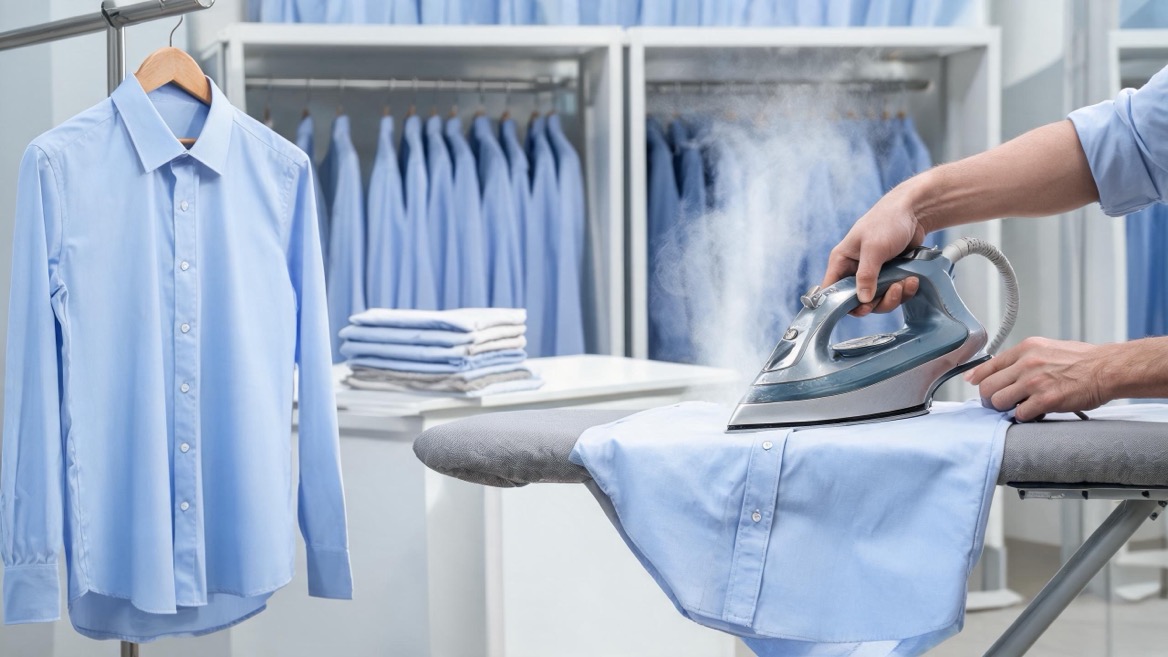
The financial winner changes depending on who pays for care.
| Buyer Type | Better Choice in Most Cases | Why |
|---|---|---|
| Business traveler | Wrinkle-free dress shirts | Less pressing after packing and long travel days |
| Corporate uniform buyer | Wrinkle-free dress shirts | Better staff consistency and lower maintenance burden |
| Hotel or restaurant staff program | Wrinkle-free dress shirts | Faster laundering and presentation benefits |
| Premium menswear brand | Depends on brand position | Traditional cotton may support a more luxurious product story |
| Mass-market retailer | Wrinkle-free dress shirts | Strong convenience message and lower customer effort |
| Formalwear specialist | Traditional dress shirts | Crisp, traditional finishing may be expected by core customers |
| Workwear distributor | Wrinkle-free dress shirts | Practicality and repeat-wash performance often matter most |
| Boutique shirtmaker | Traditional or low-treatment fabrics | Natural hand feel and fabric authenticity can be more important |
Fabric selection can change maintenance needs as much as the wrinkle-resistant treatment itself.
100% cotton dress shirts remain popular because they are breathable, comfortable, and familiar to consumers. They can look highly refined, especially in poplin, twill, pinpoint Oxford, dobby, and herringbone constructions.
But untreated cotton wrinkles relatively easily. A 100% cotton traditional dress shirt is often best for brands that want a natural, classic product and accept regular pressing as part of the ownership experience.
A wrinkle-free finish can improve cotton's crease recovery significantly, but brands should review hand feel and durability after repeated washes before finalizing bulk orders.
Cotton-polyester blends are widely used for easy-care dress shirts, uniforms, and work shirts. Polyester can improve wrinkle resistance, drying speed, dimensional stability, and durability.
The trade-off is that the shirt may feel less like premium natural cotton, depending on the blend ratio and fabric quality.
A blend may be especially suitable when the product requirement is:
- Frequent laundering
- High-volume uniform use
- Fast drying
- Reduced ironing
- Budget-conscious sourcing
- Consistent appearance across staff teams
Adding elastane or mechanical stretch can improve movement and comfort. However, stretch alone does not guarantee wrinkle resistance.
A stretch dress shirt should be developed with attention to recovery, fabric weight, heat sensitivity, and garment shape retention. Poor fabric selection can lead to bagging at the elbows, collar deformation, or reduced long-term neatness.
A high-quality traditional shirt made from premium cotton can still be a compelling option. Fine yarns, dense weaving, good garment construction, and professional finishing can create a refined look that many luxury buyers prefer.
The maintenance requirement remains higher, but the customer may consider the extra care part of the product's value.
Before choosing a shirt construction, calculate the likely cost over the product's intended use cycle.
Use this practical checklist:
1. Estimate the expected number of washes per shirt.
2. Measure average ironing or steaming time for the current shirt.
3. Calculate labor cost per minute or per hour.
4. Add energy and equipment use where relevant.
5. Compare expected replacement frequency.
6. Estimate the commercial cost of poor presentation, such as customer complaints, uniform inconsistency, or store staff appearance.
7. Test a wrinkle-free sample and a traditional sample through the same laundering process.
8. Make the decision based on total operating cost, not only FOB price.
Imagine a company supplying 500 office employees with five shirts each. That creates a working rotation of 2,500 shirts.
If a wrinkle-free program saves only four minutes of pressing per wash compared with a traditional program, the annual labor impact can be substantial. The exact calculation will depend on wash frequency and who performs the pressing, but the operational value becomes much greater than the small difference in factory price.
For uniform buyers, this is why a higher initial garment cost can still produce a lower total cost of ownership.
Not all wrinkle-free dress shirts perform equally. A buyer should avoid selecting a supplier only because the product is labeled "non-iron."
Instead, use a product-development brief that defines measurable expectations.
- Target fabric composition, such as 100% cotton, cotton-rich blend, or stretch blend
- Fabric weight in GSM
- Preferred weave, such as poplin, twill, Oxford, dobby, or herringbone
- Desired fit, including slim, regular, relaxed, or custom sizing
- Collar construction and collar height
- Cuff style, placket type, and button specification
- Expected wash-care conditions
- Wrinkle recovery expectation after washing and hanging
- Maximum shrinkage tolerance
- Colorfastness requirements
- Restricted-substance and destination-market compliance requirements
- Packaging method for retail, wholesale, or uniform distribution
- Required sample approval and bulk inspection process
For brands serving travelers or corporate users, include a packing test. Fold or pack the shirt for a realistic period, then assess collar shape, front-panel creasing, sleeve creasing, and recovery after hanging.
That test better reflects real customer experience than a simple factory table inspection.
A wrinkle-free finish can reduce maintenance, but incorrect care can reduce its benefits. Clear labeling protects both the garment and the brand.
Recommended care guidance often includes:
- Wash with similar colors.
- Use cold or moderate-temperature water where the fabric specification allows.
- Avoid overloading the washing machine.
- Remove shirts promptly after the wash cycle.
- Shake the shirt gently before hanging.
- Use a shaped hanger to support the shoulder line.
- Dry on low heat if tumble drying is permitted.
- Avoid excessive heat, especially for cotton blends and stretch fabrics.
- Use low to medium ironing temperature only when necessary.
- Press collar, cuffs, and placket lightly for a sharper formal appearance.
- Avoid leaving the garment wet and compressed in a laundry basket.
A well-written care label is not a small detail. It is a maintenance-cost tool. It helps customers achieve the promised easy-care benefit and can reduce avoidable quality complaints.
Wrinkle-free shirts should not be evaluated only by their smooth appearance when first removed from packaging. The important question is how they perform after repeated wear and laundering.
Watch for these common issues:
- Finish loss after washing: The shirt performs well initially but wrinkles heavily after several washes.
- Stiff hand feel: Excessive finishing can reduce the soft, comfortable feel buyers expect.
- Color variation: Fabric finishing may affect shade consistency, especially across repeated lots.
- Reduced strength: An aggressive process can affect fabric durability.
- Collar and cuff distortion: Poor interlining selection can create bubbling, curling, or loss of shape.
- Shrinkage: Insufficient fabric stabilization can cause fit changes after washing.
- Chemical compliance risk: Buyers should request relevant testing and documentation for their target market.
- Overpromised claims: "Wrinkle-free" should not imply that no care is ever needed under every wearing condition.
The strongest product claims are specific and realistic. For example, "easy-care cotton shirt designed to reduce ironing after wash-and-hang drying" is more credible than promising a garment will remain perfectly smooth in every situation.
From an apparel-development perspective, the strongest commercial strategy is often not choosing only one category.
A brand can build a focused shirt collection with different maintenance profiles:
| Product Line | Recommended Direction | Customer Need |
|---|---|---|
| Business travel collection | Wrinkle-free cotton or cotton-rich blend | Packability and reduced ironing |
| Corporate uniform program | Durable easy-care fabric | Repeat laundering and consistent presentation |
| Premium formal collection | Traditional premium cotton | Natural hand feel and luxury appearance |
| Smart-casual office shirts | Easy-care stretch or wrinkle-resistant cotton | Comfort and weekday convenience |
| Hospitality or retail uniforms | Wrinkle-resistant blend | Fast maintenance and dependable appearance |
This approach helps a brand serve different customer priorities without forcing a single fabric solution into every use case.
For OEM buyers, Shanghai Youti Clothing Co., Ltd. can support this type of range development through custom fabric selection, fit specification, branded trims, private-label packaging, sampling, and bulk-production quality control.

Wrinkle-free dress shirts generally save more maintenance costs when ironing time, laundry labor, travel convenience, and consistent presentation matter. They are especially valuable for uniforms, business-travel collections, wholesale programs, and practical officewear.
Traditional dress shirts can still be the right commercial choice for premium or heritage-led collections where natural fabric character, luxurious hand feel, and a classic pressed finish are central to the brand experience.
The most profitable decision comes from evaluating the full ownership cycle—not only the unit cost. Buyers should compare samples after repeated laundering, define measurable quality standards, and choose the fabric-and-finish combination that fits the actual end user.
Looking for a dependable OEM shirt manufacturer in China? Share your target fabric, fit block, sizing chart, color requirements, order quantity, destination market, and desired wrinkle-resistance level with Shanghai Youti Clothing Co., Ltd. We can help develop dress shirt samples that balance appearance, comfort, wash durability, and maintenance efficiency for your brand.
Not always. Most wrinkle-free dress shirts are better described as reduced-iron or easy-care shirts. They can look smooth after proper wash-and-hang drying, but collars, cuffs, plackets, and travel creases may still need a quick touch-up.
They often have a higher initial sourcing cost because of specialized fabric finishing, process control, and testing. However, they may cost less over time when reduced ironing labor, faster handling, and easier maintenance are important.
Yes. Many wrinkle-free dress shirts use 100% cotton with a crease-recovery treatment. The quality depends on the cotton, weave, finishing technology, curing control, garment construction, and expected wash performance.
In many uniform applications, cotton-polyester blends are practical because they can dry quickly, resist wrinkles, retain shape, and handle frequent laundering. The ideal blend ratio depends on the desired balance of comfort, durability, breathability, and cost.
It varies by finishing method, fabric quality, washing temperature, drying method, ironing heat, detergent choice, and number of wash cycles. Buyers should ask suppliers for repeated-laundering test data and approve samples based on the intended care conditions.
Yes. Light steaming is an effective way to refresh a wrinkle-free dress shirt after travel or prolonged wear. Use moderate heat and avoid excessive exposure, especially on stretch fabrics, bonded components, collars, and printed labels.
Buyers should test fit, shrinkage, colorfastness, seam strength, pilling, collar and cuff performance, wrinkle recovery after washing, appearance after packing, and compliance with destination-market chemical requirements.
A wrinkle-free or easy-care dress shirt is generally the better option for business travelers because it reduces visible creasing after packing and requires less pressing in hotels or during short trips.
1. [U.S. Government Publishing Office — Formaldehyde in Textiles and Consumer Safety]
2. [ScienceDirect — The Environmental Impacts of Clothing: Evidence From United Nations]
3. [MDPI Sustainability — Is Price an Indicator of Garment Durability and Longevity?]
4. [Textile Learner — Wrinkle Resistant Finishing Process of Cotton Fabric]
5. [Banana Republic — Standard-Fit Wrinkle-Resistant Dress Shirt Product Information]
6. [OTAA — How to Keep Dress Shirts Wrinkle Free: A Complete Guide]
7. [Ripstop Fabric — Wrinkle-Free Cotton Fabric: Non-Iron Finishing and Liquid Ammonia Finishing]


