
Views: 233 Author: Youti Clothing Publish Time: 2026-10-21 Origin: Site


Content Menu
● Welding Workwear vs General Work Clothes: A Practical Comparison
● Which Welding Hazards Require Different Clothing?
>> Sparks and Molten Metal Spatter
>> Brief Flame Contact and Continued Burning
>> Radiant Heat and Welding Radiation
● Fabric Differences: Cotton, Protective Blends, and Leather
>> Is Ordinary Cotton Suitable for Welding?
>> Why Ordinary Polyester Work Clothes Can Be Problematic
● Welding Clothing Standards: What Buyers Should Check
>> ISO 11611 and Welding-Specific Protection
>> Welding Protection Is Not an Electrical Arc-Flash Rating
>> A Fabric Report Is Not the Entire Garment Assessment
● Garment Construction: Small Details That Matter
>> Coverage Must Survive Real Working Movements
>> Pockets, Cuffs, and Closures Can Create Spark Traps
● Practical Buyer Insight: Compare Protection by Task, Not Job Title
● A Six-Step OEM Welding Workwear Procurement Process
>> 1. Describe the Intended Exposure
>> 2. Define the Market and Required Evidence
>> 3. Specify the Complete Material System
>> 4. Evaluate Samples in Working Positions
>> 5. Establish Care and Replacement Rules
>> 6. Control Production Changes
● Maintenance and Total Cost: The Overlooked Protection Differences
>> Cleaning Is Part of the Protective System
>> Compare Cost per Wear, Not Purchase Price Alone
● Build an OEM Brief Around the Protection Requirement
>> Can General Work Clothes Be Used for Welding?
>> Is All Flame-Resistant Clothing Suitable for Welding?
>> Is Class 2 Always Better Than Class 1?
>> Can a Brand Add Embroidery or Printed Logos?
>> Does Welding Workwear Replace Other Protective Equipment?
>> How Often Should Welding Clothing Be Replaced?
Welding workwear and general work clothes can look remarkably similar. Both may feature reinforced seams, practical pockets, and durable fabrics. However, their protective purposes differ. General work clothes primarily support everyday wear, movement, and presentation. Welding workwear must address sparks, molten metal spatter, brief flame contact, and radiant heat associated with welding operations.
For overseas brands, wholesalers, and manufacturers sourcing OEM uniforms, the important question is not simply which garment looks tougher. It is whether the finished clothing provides protection appropriate to the intended task—and whether documentation supports that claim.
From our OEM sourcing perspective at Shanghai Youti Clothing Co., Ltd., that distinction should shape the purchasing specification before fabric, styling, or price is finalized.
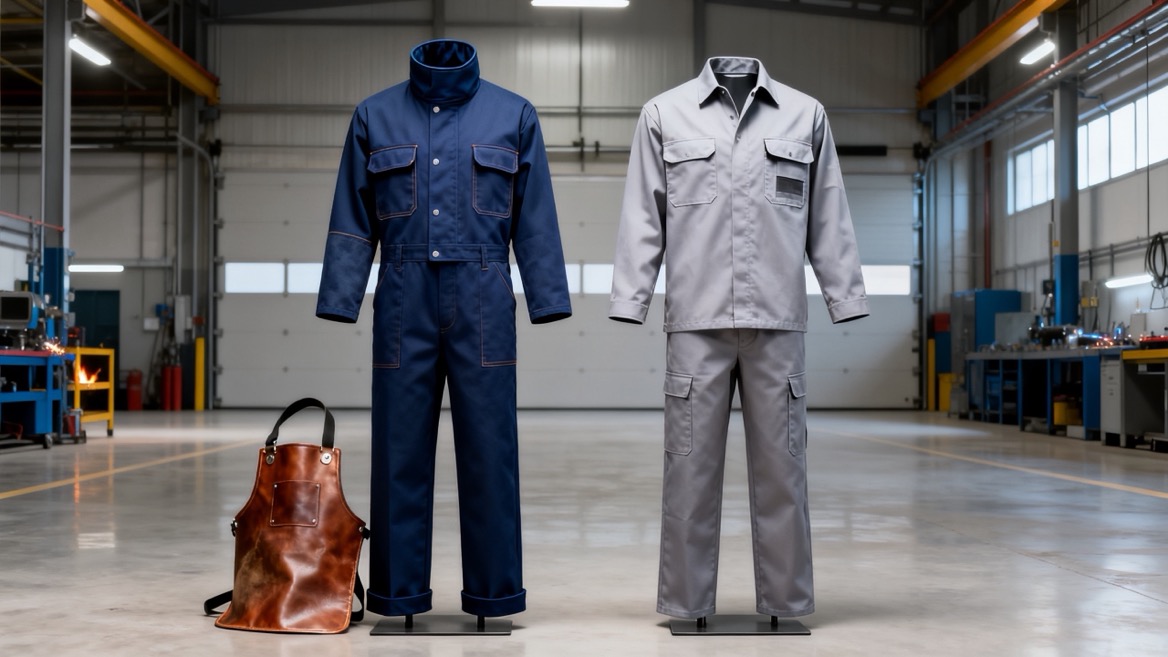
"General work clothes" is a broad commercial category, not a defined protection rating. Some industrial uniforms carry additional protective certifications, but an ordinary work shirt or coverall should not be assumed suitable for welding.
| Comparison point | Welding workwear | General work clothes |
|---|---|---|
| Primary purpose | Address specified welding-related thermal hazards | Support routine work, comfort, durability, and identification |
| Fabric selection | Chosen for documented protective performance | Often selected for cost, appearance, and easy care |
| Flame exposure | Limited flame-spread performance must match the specification | Ordinary fabric may ignite or continue burning |
| Molten metal spatter | Materials and construction help manage small hot droplets | No welding-spatter performance should be assumed |
| Garment design | Coverage and details help prevent sparks entering or becoming trapped | Open pockets, exposed fasteners, and cuffs may prioritize convenience |
| Evidence | Relevant testing, marking, and garment documentation | Usually purchasing specifications and quality records |
| Maintenance | Care must preserve protective performance | Care usually prioritizes cleanliness and appearance |
A rugged uniform is not automatically welding protective clothing. Likewise, "flame-resistant" does not establish suitability for every welding environment.
Small droplets of molten metal can lodge in pockets, trouser cuffs, or gaps between garments. Clothing selection therefore involves both fabric performance and the routes through which hot material can reach the skin.
Welding garments should help shed spatter rather than collect it. Covered pockets, appropriate closures, and cuff-free trousers matter alongside the fabric itself.
General work clothes may offer useful abrasion resistance while still allowing sparks to enter an open chest pocket. Mechanical durability and thermal protection are different properties.
A spark can ignite unsuitable clothing. The resulting burn may become more serious if the garment continues burning after the original ignition source disappears.
Flame-resistant welding clothing is intended to limit this behavior under its specified test conditions. It is not fireproof, and it does not make prolonged exposure to flame safe.
Buyers should avoid treating "FR" as a complete purchasing specification. The relevant hazard, test method, garment configuration, and care conditions still need definition.
A welding arc produces intense radiation. Clothing must cover exposed skin, while suitable helmets and other equipment protect the face and eyes.
Long sleeves and full-length trousers are important, but coverage must remain effective during movement. A shirt that exposes the lower back when the wearer reaches overhead creates a weakness regardless of fabric quality.
Clothing also cannot replace ventilation, respiratory protection where required, or properly selected eye protection.
Heavyweight, tightly woven cotton can offer advantages over ordinary meltable synthetic fabrics, and occupational safety guidance identifies cotton and wool as useful materials in welding clothing.
However, untreated cotton is not automatically flame-resistant or certified welding workwear. It can ignite, and its suitability depends on the exposure and workplace assessment.
The procurement mistake is equating a fiber-content statement with a protective-performance result. "100% cotton" tells buyers what the material contains, not everything it can withstand.
Conventional polyester and other meltable synthetic fabrics may burn or melt under welding heat exposure. An everyday polyester-cotton uniform should therefore not be accepted for welding merely because it is durable or easy to wash.
Nevertheless, fiber names alone do not tell the whole story. Purpose-engineered protective fabrics may contain specialized fibers or blends with documented performance.
The practical distinction is between an ordinary commercial fabric and a protective material evaluated for the intended use. Never approve a blend solely from its marketing description.
Leather aprons, sleeves, and jackets can provide additional protection in areas exposed to sparks and hot metal. They may be useful where the task requires localized reinforcement.
The trade-off is comfort. Leather welding jackets can be less breathable, making the overall clothing system harder to tolerate in hot conditions.
Additional coverage should follow the hazard assessment. More material is not automatically the best answer when heat stress, movement, and correct wearing must also be managed.
ISO 11611 addresses protective clothing used in welding and allied processes. Its scope includes garments and items such as aprons, sleeves, hoods, and gaiters.
ISO 11611:2024 replaced the withdrawn 2015 edition. Buyers preparing new specifications should identify the applicable edition rather than copying an old reference without checking it.
However, an international standard's publication date does not automatically establish every destination market's legal requirements. Applicable national adoption, conformity procedures, and customer requirements also need review.
For class-based specifications, Class 1 generally addresses lower welding-spatter and radiant-heat exposure, while Class 2 addresses higher exposure. Selection should consider the process, working position, and environment—not the class number alone.
Radiant heat from a welding arc and an electrical arc-flash event are not interchangeable purchasing categories.
A garment's welding classification does not, by itself, establish an electrical arc rating. Similarly, electrical arc-rated clothing should not automatically be accepted for welding-spatter protection.
For mixed-hazard workplaces, buyers need evidence addressing each relevant hazard. One familiar logo or standard number is not a substitute for that review.
A fabric test report is valuable, but the finished garment also includes seams, closures, pocket structures, labels, and decorative components.
Ask whether the documentation covers the proposed garment configuration. Confirm that materials, construction, and identification match the product being supplied.
Changing a zipper, adding a logo, or replacing a pocket fabric may require technical review. Protective clothing should not be treated as an ordinary uniform with unrestricted customization.
A welding jacket and trousers should maintain overlap when the wearer stretches, bends, or crouches.
During sample evaluation, check:
- Neck coverage with the collar secured.
- Sleeve and glove overlap.
- Jacket and trouser overlap during reaching.
- Trouser coverage over boot tops.
- Closure security during repeated movement.
These checks reveal weaknesses that a flat product photograph cannot show.
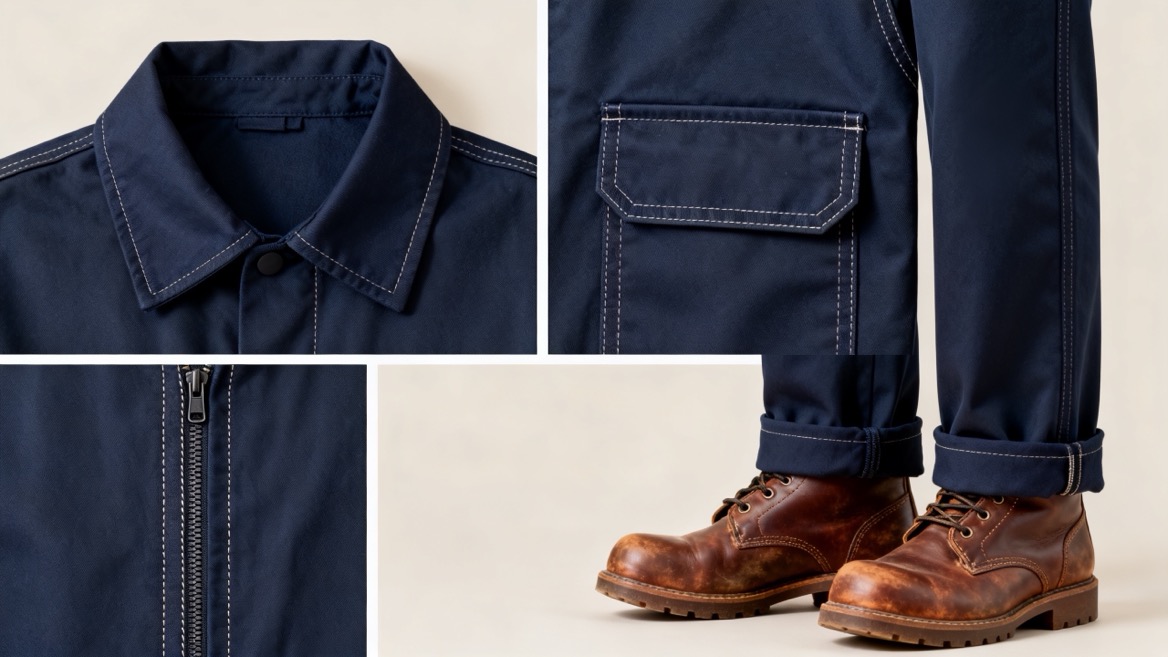
General work clothes often emphasize accessible storage. Welding workwear requires a different design review.
Pocket flaps should close effectively. Trouser turn-ups should be avoided because they can collect sparks. Front closures should maintain coverage in the intended wearing configuration.
From a purchasing standpoint, these are functional details, not optional styling preferences. A protective fabric cannot compensate for every opening in the garment.
Consider a hypothetical fabrication business with warehouse staff, machine operators, and welders.
Buying one identical uniform for everyone may simplify ordering. However, it can produce either inadequate welding protection or unnecessary discomfort and cost for workers with different exposures.
A more useful approach separates:
1. Routine work outside welding exposure.
2. Tasks involving welding or comparable hot-work hazards.
3. Higher-exposure work requiring additional protective items.
This is an illustrative purchasing scenario, not a reported customer case. Its lesson is that task-based specifications are more informative than labels such as "factory worker."
Nearby helpers and observers also need assessment. Exposure does not disappear simply because someone is not holding the welding torch.
Record the welding processes, working positions, frequency, surrounding conditions, and foreseeable contact with sparks or hot material.
Include additional hazards where relevant. Do not ask the supplier to infer these from a product photograph.
Identify the destination country, customer requirements, applicable standards, and required conformity documentation.
Separate mandatory requirements from preferred features. This prevents a visually attractive sample from being approved before its protective basis is clear.
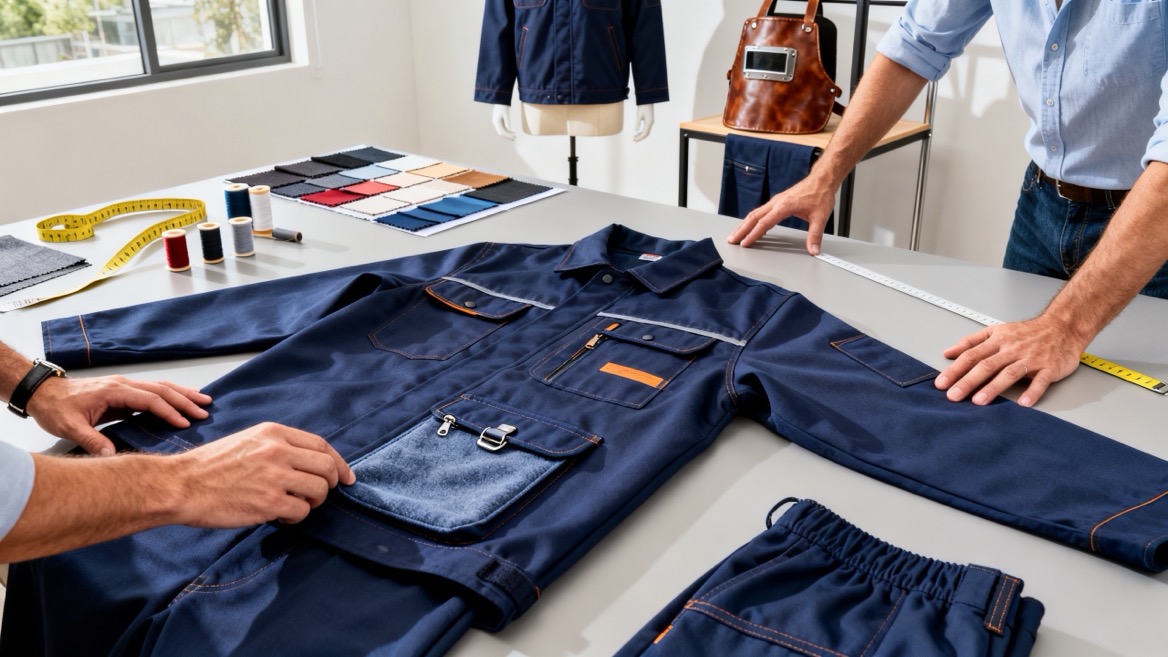
Define the main fabric, reinforcement materials, thread, closures, pocket components, labels, and decoration method.
Request traceable documentation. A generic report for a similar fabric should not be treated as evidence for the exact material supplied.
Review fit while reaching, kneeling, and bending. Check compatibility with gloves, boots, helmets, and any additional protective garments.
Comfort feedback is useful, but it does not replace protective testing. Both belong in the approval process.
Confirm the permitted washing method, drying conditions, repair approach, and any documented service limitations.
Avoid inventing a universal wash-cycle guarantee. Performance after laundering must follow the evidence for the particular product.
Keep approved materials and construction details identifiable throughout production.
Substitutions should trigger review before shipment. For protective workwear, an apparently minor cost-saving change can affect the basis of the original approval.
Oil, grease, and other combustible contamination can compromise clothing performance. Damaged areas and worn closures can also reduce effective coverage.
Follow the manufacturer's care instructions. Some bleaching agents and other laundry chemicals may damage protective materials or treatments.
Before use, inspect for:
- Holes, tears, and frayed edges.
- Damaged seams or closures.
- Persistent contamination.
- Missing or unreadable identification.
- Changes in fit that create exposed gaps.
Repair or replacement decisions should follow the garment instructions and workplace procedures. There is no universal retirement date for every welding garment.
A lower unit price may become less attractive when laundering, repairs, premature replacement, and stock availability are considered.
A useful commercial measure is:
Cost per wear=(Purchase + cleaning + repair + replacement costs)/Actual wears delivered
This is a purchasing calculation, not a safety rating. Compare costs only after confirming that the options meet the same required protection level.
For brands, wholesalers, and manufacturers, the best comparison between welding workwear and general work clothes begins with intended use—not appearance.
Shanghai Youti Clothing Co., Ltd. is a China-based OEM supplier of uniforms and work clothes. To discuss a welding-workwear project, send us your target market, intended welding tasks, required standards, size range, branding brief, and order quantity.
Ask for a proposal that identifies the materials, garment construction, and documentation required for your specification. Confirm the exact compliance scope before approving protective claims or bulk production.
Do not assume so. Suitability depends on the assessed exposure, material behavior, construction, and supporting evidence. Ordinary uniforms should not be selected for welding merely because they look heavy-duty.
No. Flame resistance addresses only part of the hazard picture. Welding clothing may also need suitable spatter protection, radiant-heat performance, coverage, and construction.
Class 2 addresses higher specified welding exposures, but garment selection still depends on the task. Fit, comfort, additional hazards, and compatibility with other equipment also matter.
Potentially, but customization needs review. Decoration materials, placement, and application methods should remain consistent with the garment's protective specification and applicable assessment.
No. Welding operations may require suitable eye and face protection, gloves, footwear, hearing protection, and respiratory controls or equipment. Clothing protects only part of the body and hazard system.
There is no single interval. Inspect regularly and follow manufacturer instructions. Damage, contamination, failed closures, or loss of effective coverage may require repair or replacement.
1. International Organization for Standardization. *ISO 11611:2024—Protective clothing for use in welding and allied processes*. Third edition, published June 2024. Official scope and publication information: [https://www.iso.org/standard/74040.html]. [iso]
2. International Organization for Standardization. *ISO 11611:2015—Protective clothing for use in welding and allied processes*. Official record identifying the withdrawn edition and its replacement: [https://www.iso.org/standard/57455.html]. [iso]
3. Canadian Centre for Occupational Health and Safety. *Welding—Personal Protective Equipment and Clothing*. Guidance on fabrics, coverage, pockets, cuffs, contamination, and complementary equipment: [https://www.ccohs.ca/oshanswers/safety_haz/welding/ppe.html]. [ccohs]
4. Occupational Safety and Health Administration. *Clarification of OSHA's position on FR Clothing for welders*. January 12, 2012. Interpretation discussing task-dependent protective clothing, flame exposure, and heat-stress considerations: [https://www.osha.gov/laws-regs/standardinterpretations/2012-01-12]. [osha]
5. Canadian Centre for Occupational Health and Safety. *Flame- and Heat-Protective Clothing*. Guidance on protective materials, underlayers, contamination, and manufacturer-directed cleaning: [https://www.ccohs.ca/oshanswers/prevention/ppe/flame-and-heat-protective-clothing.html]. [ccohs]
6. ASTM International. *ASTM F1506-22—Standard Performance Specification for Flame Resistant and Electric Arc Rated Protective Clothing Worn by Workers Exposed to Flames and Electric Arcs*. Scope covering arc ratings, construction, durability, and labeling: [https://store.astm.org/f1506-22.html]. [store.astm]
7. Bierbaum-Proenen. *EN ISO 11611—Protective Clothing*. Supplementary industry explanation of welding-protection classes and exposure differences: [https://www.bp-online.com/en-gb/work-protection/norms/en-iso-11611/]. [bp-online]


