
Views: 210 Author: Youti Clothing Publish Time: 2026-10-18 Origin: Site


Content Menu
● Flame Resistant Jacket vs Standard Work Jacket: Key Differences
● What Is a Flame Resistant Jacket?
>> Inherently Flame Resistant vs Treated FR Fabrics
>> Flame Resistant Does Not Automatically Mean Arc-Rated
● What Is a Standard Work Jacket?
>> Why Heavy Cotton Is Not Automatically Protective
● Which Jacket Protects Workers Better in Different Industries?
>> Oil, Gas, and Petrochemical Operations
>> Electrical Utilities and Maintenance
>> Warehousing and General Manufacturing
● Standards Buyers Should Understand Before Ordering
● Comfort, Fit, and Weather Protection: Safety in Everyday Use
>> Heat Stress and Breathability
>> Rain and Cold-Weather Layers
● Expert Procurement Insight: Specify the Whole Jacket, Not Just Its Fabric
>> Build a Controlled Bill of Materials
>> Control Changes After Sample Approval
● Illustrative Case: A Cold-Weather Jacket Creates a Hidden Gap
● A Six-Step OEM Work Jacket Selection Process
>> 2. Establish Applicable Requirements
>> 3. Translate Requirements into a Product Brief
>> 6. Approve Production and Maintenance Controls
● Care, Contamination, and Replacement
● Develop the Right OEM Work Jacket Specification
>> Is a Flame Resistant Jacket Better Than a Standard Work Jacket?
>> Can a Standard Cotton Jacket Replace an FR Jacket?
>> Is Every Flame Resistant Jacket Suitable for Arc Flash?
>> Can Workers Wear a Standard Jacket Over FR Clothing?
>> Can Flame Resistant Jackets Be Washed at Home?
>> What Should OEM Buyers Request Before Ordering?
A flame resistant jacket protects workers better when their jobs involve identified flame or flash-fire hazards. For electrical arc exposure, the jacket also needs an appropriate arc rating. A standard work jacket can be suitable for routine work without these thermal hazards, but durability, thickness, and weather resistance do not make it protective against fire.
For brands, wholesalers, and manufacturers sourcing OEM uniforms, this comparison starts with the workplace—not the fabric catalog. A jacket should match the actual exposure, the destination market's requirements, and the complete clothing system.
At Shanghai Youti Clothing Co., Ltd., our supplier-side perspective is straightforward: define the required protection before finalizing materials, styling, or price. This guide explains the differences and provides a practical framework for developing a more reliable workwear specification.
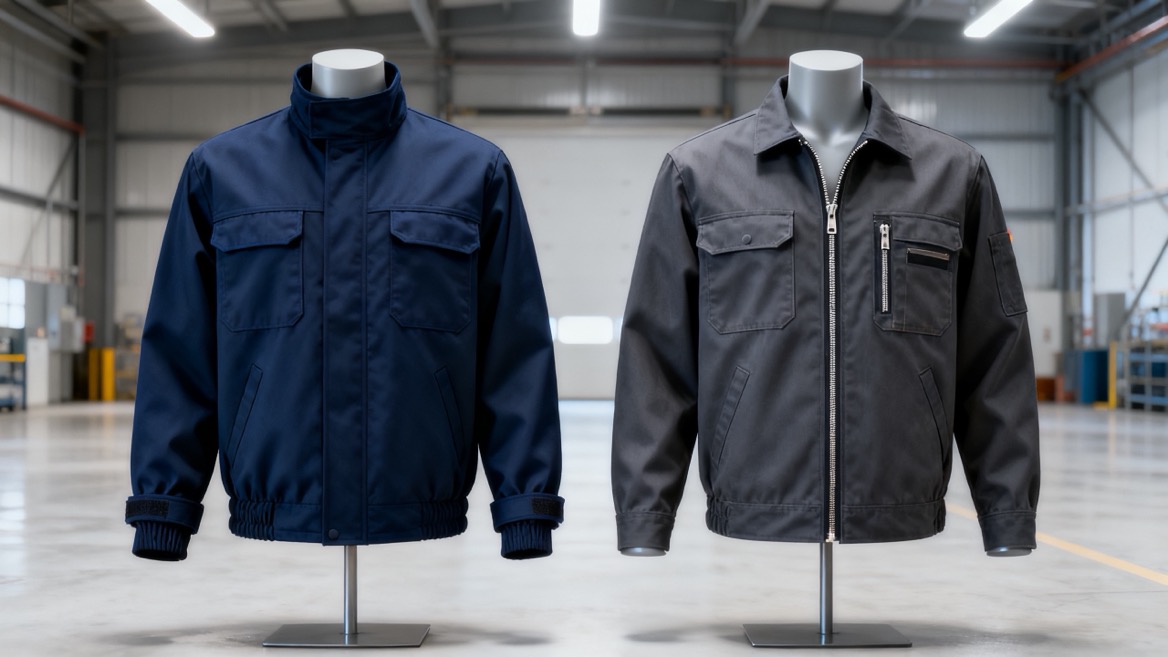
The table below compares the two categories. Actual performance depends on the individual garment and its documented testing.
| Comparison point | Flame resistant jacket | Standard work jacket |
|---|---|---|
| Primary purpose | Reduce injury associated with specified thermal hazards | Provide everyday coverage, durability, and practical comfort |
| Flame behavior | Designed to resist ignition and limit continued burning under defined conditions | May ignite and continue burning |
| Electrical arc protection | Requires a documented arc rating when selected for arc hazards | No arc protection should be assumed |
| Materials | Engineered FR fabrics, including suitable treated or inherently resistant constructions | Cotton, polyester, nylon, and conventional blends |
| Weather protection | Available in suitable insulated or weather-resistant constructions | Widely available, but weather performance does not establish flame resistance |
| Verification | Relevant test reports, ratings, and certification where required | General workwear specifications unless additional protection is documented |
| Maintenance | Care procedures must preserve protective performance | Care primarily addresses cleanliness, appearance, and durability |
| Purchasing priority | Hazard suitability and evidence before styling | Function, comfort, durability, and branding |
The central distinction is not "premium versus basic." These jackets serve different purposes.
A flame resistant jacket is protective clothing designed to resist ignition and limit continued combustion under specified test conditions. By limiting clothing-related burning, it can reduce injury severity during certain thermal incidents.
However, flame resistant does not mean fireproof. A worker can still suffer burns, and the jacket does not make entry into a dangerous environment safe.
Inherently flame resistant fabrics obtain their resistance from the properties of their fibers. Treated FR fabrics obtain it through an applied treatment or engineered finishing process.
Neither description proves that a finished jacket meets a particular requirement. Procurement teams should evaluate:
- The relevant performance standard.
- The tested material construction.
- Finished-garment requirements.
- Care instructions and service-life limitations.
- Evidence supporting the exact product offered.
A fabric description is a starting point, not a substitute for product verification.
All arc-rated clothing is flame resistant, but not all flame resistant clothing is arc-rated.
Arc-rated materials undergo specific electrical arc testing. Their ratings are expressed in calories per square centimeter, or cal/cm², and may be reported as ATPV or EBT.
These ratings describe tested thermal performance—not a guarantee that burns cannot occur. A jacket intended for electrical work must have protection appropriate to the assessed incident energy, rather than simply carry an "FR" description.
A standard work jacket is designed primarily for ordinary workplace demands. Typical priorities include abrasion resistance, freedom of movement, pocket organization, insulation, and a consistent uniform appearance.
These qualities can make it useful for logistics, general assembly, or outdoor duties where a hazard assessment identifies no need for thermal protective clothing.
A thick cotton jacket may feel substantial, but thickness alone does not establish flame resistance. Ordinary cotton can ignite and continue burning.
Conventional synthetic fabrics introduce another concern: some can melt during thermal exposure. Nevertheless, fabric names alone are insufficient for selection. Engineered blends may have documented protective performance, while visually similar conventional blends may not.
Specify tested performance instead of relying on "heavy-duty," "industrial," or "100% cotton" marketing language.
Where a workplace assessment identifies flash-fire exposure, a suitable flame resistant jacket is the relevant choice.
NFPA 2112 addresses flame-resistant clothing intended to protect industrial personnel against short-duration thermal exposure from fire. Buyers should verify the relevant garment certification rather than accept a general statement that its fabric is flame resistant.
A standard work jacket should not be substituted merely because the exposure is considered infrequent.
Electrical arc hazards require arc-rated protection selected through an appropriate assessment.
For work covered by OSHA's electrical power generation, transmission, and distribution requirements, protective clothing and equipment generally need an arc rating at least equal to the estimated incident heat energy, subject to the rule's provisions and exceptions.
This distinction matters commercially: an FR jacket developed for flash-fire protection is not automatically suitable for electrical arc exposure.
Welding presents hazards such as spatter, short flame contact, and radiant heat. ISO 11611 addresses protective clothing for welding and allied processes.
Do not treat "FR," "welding jacket," and "arc-rated jacket" as interchangeable descriptions. The exposure and applicable requirements differ.
A welding jacket also does not replace suitable eye, face, hand, and foot protection.
A standard work jacket may be appropriate when the task requires ordinary coverage and durability without identified flame or electrical arc exposure.
However, job titles are unreliable shortcuts. A warehouse employee entering a hazardous maintenance area may need different clothing from an employee performing routine picking operations.
Select clothing by task and exposure, not department name alone.
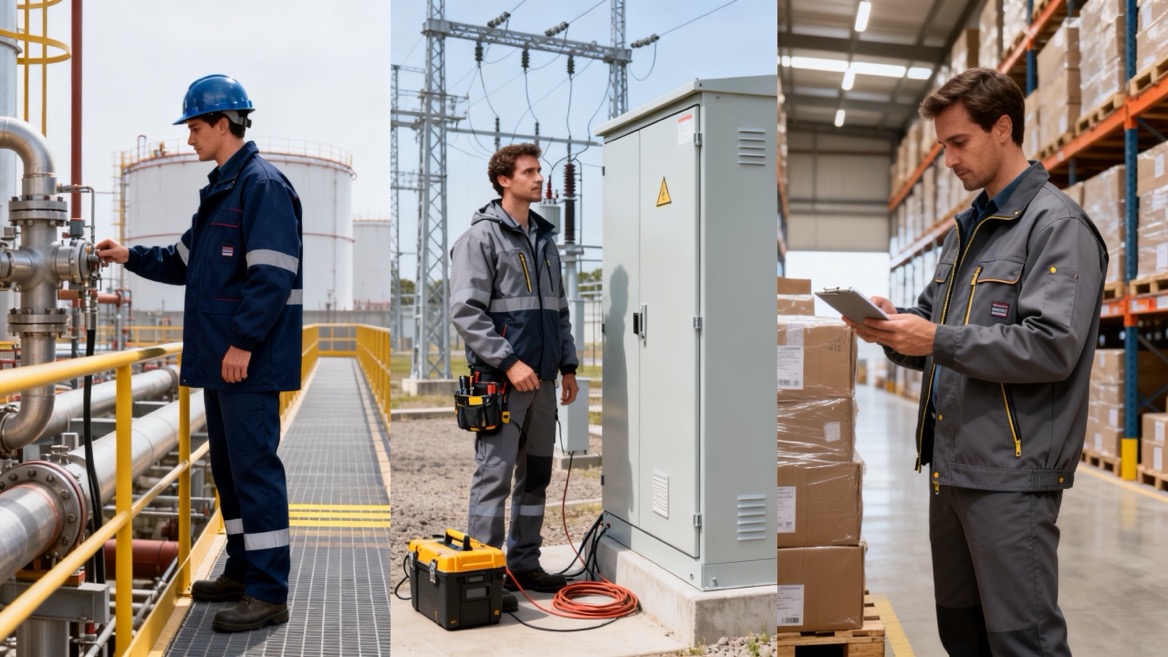
Different standards address different hazards. Passing one does not establish protection against every workplace risk.
| Standard or requirement | Main relevance | Procurement question |
|---|---|---|
| NFPA 2112 | Flame-resistant clothing for short-duration thermal exposure from fire | Is the offered garment appropriately certified? |
| ASTM F1506 | Flame-resistant and electric arc-rated protective clothing | What documented arc performance supports this product? |
| OSHA 1910.269 | Relevant US electrical power work | Does the clothing system meet the assessed exposure and applicable rule? |
| ISO 11611 | Welding and allied processes | Does the documented classification match the welding task? |
| ISO 11612 | Protection against specified heat and flame exposures | Which performance levels apply to the intended use? |
Standards are not interchangeable purchasing labels. Confirm the required edition, applicable performance levels, and destination-market obligations before production approval.
No certification or protective rating should be attributed to Shanghai Youti Clothing Co., Ltd. or a proposed product without supporting documentation.
Protective performance matters only when workers can wear the clothing correctly throughout the task.
Evaluate samples while workers reach, bend, climb, and operate equipment. Check whether sleeves pull back, hems lift, or closures become uncomfortable.
A practical fitting trial should assess:
- Coverage during realistic movement.
- Compatibility with gloves and other equipment.
- Space for the intended underlayers.
- Closure accessibility.
- Snagging risks from loose features.
Fit should support both coverage and mobility.
Clothing and protective equipment contribute to occupational heat stress alongside workload and environmental conditions.
A heavier jacket is therefore not automatically a better overall solution. Compare suitable protective options for breathability, weight, and movement, while maintaining the required thermal performance.
Heat management may also require acclimatization, hydration, and appropriate work-rest arrangements. Removing required protection is not an acceptable substitute for managing heat exposure.
A standard raincoat or winter jacket can introduce hazards when worn over protective clothing.
Evaluate the entire ensemble, including insulation, linings, waterproof layers, reflective components, and accessories. An FR shirt underneath does not automatically make a conventional outer jacket suitable for flame or arc exposure.
From an OEM sourcing perspective, a common specification weakness is concentrating on the shell fabric while leaving construction details undefined.
The finished jacket includes thread, closures, linings, labels, reflective materials, and decorative components. These must be assessed under the applicable garment requirements.
Before approving production, identify:
1. Shell fabric composition, weight, and reference.
2. Lining and insulation materials.
3. Thread and seam construction.
4. Zippers, snaps, and other closures.
5. Reflective trim and branding.
6. Labels, care information, and product identification.
Connect this specification to the supporting evidence. A report for one fabric should not be presented as proof for a different construction.
Material substitutions can create a gap between the approved sample and delivered goods.
Use a documented change-control process covering replacement fabrics, trims, treatments, and suppliers. Require technical review before accepting changes that could affect protective performance.
For international buyers, this is a practical way to turn a promising sample into a repeatable purchasing specification.
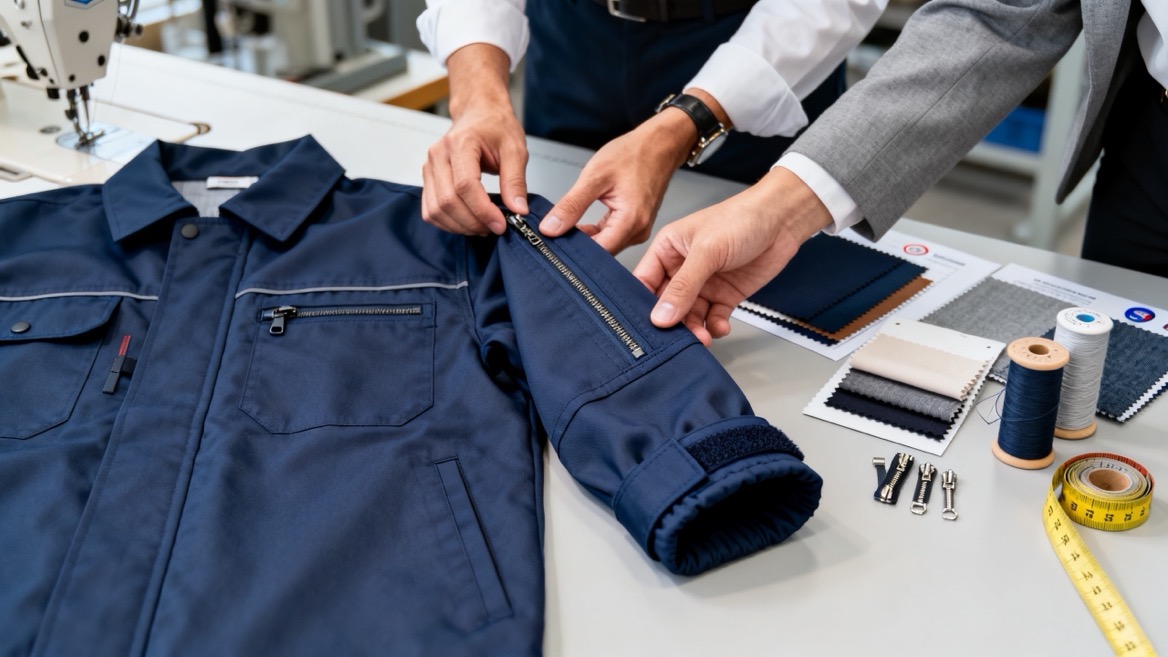
Consider an electrical maintenance team wearing arc-rated shirts. During winter, workers add conventional insulated jackets.
The purchasing decision appears sensible: the outer jacket is warm, durable, and branded. Yet it lacks documented arc performance and may introduce unsuitable materials.
The lesson is that protection cannot be assessed one garment at a time. The outer layer and overall clothing system must suit the exposure.
This is an illustrative procurement scenario, not a reported customer incident. It shows why seasonal uniform changes deserve the same technical review as the original protective clothing.
Record the actual exposure: flash fire, electrical arc, welding, weather, abrasion, or a combination.
Have the buyer's qualified safety team determine the relevant standards, performance levels, and regulatory obligations.
Specify materials, construction, sizes, labels, care requirements, branding, and necessary evidence.
Check that reports and certification apply to the offered material or garment. Clarify scope, identification, and limitations.
Test mobility, coverage, closures, pocket access, and compatibility with the complete equipment ensemble.
Confirm inspection criteria, material traceability, change approval, care procedures, and replacement guidance.
This sequence prevents price or styling decisions from defining the protective specification.
Flame resistant clothing needs appropriate maintenance throughout its service life.
Oil, grease, and other flammable contamination can compromise protection. Follow the garment manufacturer's cleaning instructions and confirm that the process removes relevant workplace contaminants.
OSHA's laundering interpretation also emphasizes employer responsibility for maintaining protective clothing in reliable condition. Where home laundering is permitted, training and regular inspection remain important.
Inspect jackets for:
- Holes, tears, and damaged seams.
- Persistent contamination.
- Failed closures.
- Unapproved repairs.
- Shrinkage affecting coverage.
- Missing or unreadable identification.
Do not invent a universal replacement interval. Replacement should reflect condition, exposure, manufacturer guidance, and the organization's protective-clothing program.
Choosing between a flame resistant jacket and a standard work jacket begins with a clear hazard assessment. The best purchasing decision connects that assessment to verified performance, usable design, and controlled production.
For brands, wholesalers, and manufacturers planning an OEM program, contact Shanghai Youti Clothing Co., Ltd. with your destination market, workplace hazards, required standards, size range, and branding brief. Ask for a project-specific proposal and supporting documentation before approving any protective-performance claim.
For identified flame hazards, an appropriately verified FR jacket provides relevant protection that ordinary workwear does not. For routine work without these hazards, a standard jacket may be suitable.
No. Cotton content, thickness, and durability do not establish flame resistance or compliance with a protective-clothing requirement.
No. Electrical arc exposure requires documented arc-rated protection appropriate to the assessment. An FR label alone is insufficient.
Do not assume this is safe. The outer garment may ignite or melt. Review the complete clothing system against the actual hazard and applicable requirements.
Sometimes, where the employer permits it and the manufacturer's instructions support it. The cleaning process must maintain protection and adequately remove contamination.
Request the product specification, applicable reports and certification, material identification, care instructions, sample approval criteria, and procedures controlling production changes.
1. [Occupational Safety and Health Administration — 1910.269 Appendix E: Protection From Flames and Electric Arcs]. Primary guidance supporting the discussion of ignition, melting, outer layers, and electrical arc protection. [osha]
2. [Occupational Safety and Health Administration — Flame-Resistant Clothing and Arc-Rated Protection, April 2, 2015]. Clarifies relevant requirements for electrical power work and matching arc ratings to estimated exposure. [osha]
3. [National Fire Protection Association — NFPA 2112 Standard Development]. Official description of the standard's scope and its 2023 edition. [nfpa]
4. [Westex — FR vs. Arc-Rated Clothing: What's the Difference?]. Industry explanation of FR versus arc-rated materials, ASTM F1959 testing, ATPV, and EBT. [westex]
5. [International Organization for Standardization — ISO 11611:2015]. Official description of welding-clothing hazards and limitations. Buyers should verify the required edition when ordering. [iso]
6. [International Organization for Standardization — Protective Clothing Against Heat and Flame]. Describes ISO 11612's heat-and-flame protection scope. [iso]
7. [CDC/NIOSH — Heat Stress and Workers]. Supports the relationship between environmental heat, workload, clothing, and occupational heat stress. [cdc]
8. [CDC/NIOSH — PPE Heat Burden]. Explains how some clothing ensembles affect heat loss and work-rest planning. [cdc]
9. [Occupational Safety and Health Administration — Laundering Responsibilities for FR Clothing, June 1, 2015]. Clarifies employer responsibilities, home laundering, training, contamination, and inspection. [osha]
10. [ASTM International — ASTM F2757-20: Home Laundering Care and Maintenance of Flame Resistant or Arc Rated Clothing]. Supports cleaning compatibility, contamination removal, and following garment care instructions. [astm]


