
Views: 263 Author: Youti Clothing Publish Time: 2026-09-20 Origin: Site


Content Menu
● 1. The Tuxedo Began as a Less Formal Alternative to White Tie
● 2. "Tuxedo" Became an American Name Through Tuxedo Park
● 3. Satin or Grosgrain Lapels Separate a Tuxedo From a Standard Suit
>> Peak Lapels
>> Shawl Lapels
>> Notch Lapels
● 4. Tuxedo Trousers Traditionally Avoid Belt Loops
● 5. A Bow Tie Is the Traditional Choice for Black Tie
● 6. Fabric Selection Changes the Tuxedo's Comfort, Appearance, and Price
● 7. Fit Is the Most Important Tuxedo Feature
>> A Practical Fit-Check Process
● How Brands Can Build a Strong Tuxedo Collection
● Final Thoughts: A Tuxedo Is a System, Not Just a Jacket
● FAQs
>> 1. What is the main difference between a tuxedo and a suit?
>> 2. Can a tuxedo have notch lapels?
>> 3. Should tuxedo trousers have belt loops?
>> 4. What fabric is best for a black tuxedo?
>> 5. Is midnight blue better than black for a tuxedo?
>> 6. Can a groom wear an ivory dinner jacket?
>> 7. What should brands prepare before ordering OEM tuxedos?
A tuxedo is more than a dark suit worn for a formal occasion. It is a carefully built evening ensemble defined by contrast, proportion, fabric finish, and fit. For brands, wholesalers, weddingwear retailers, and uniform programs, understanding these details is essential when developing a tuxedo collection that looks credible, wears comfortably, and meets customer expectations.
At Shanghai Youti Clothing Co., Ltd., we work with international apparel buyers on OEM formalwear production, including tuxedo jackets, matching trousers, waistcoats, dress shirts, and coordinated accessories. This guide explains seven important tuxedo facts, then goes further with practical construction and sourcing knowledge for anyone planning to buy, design, or develop formalwear.
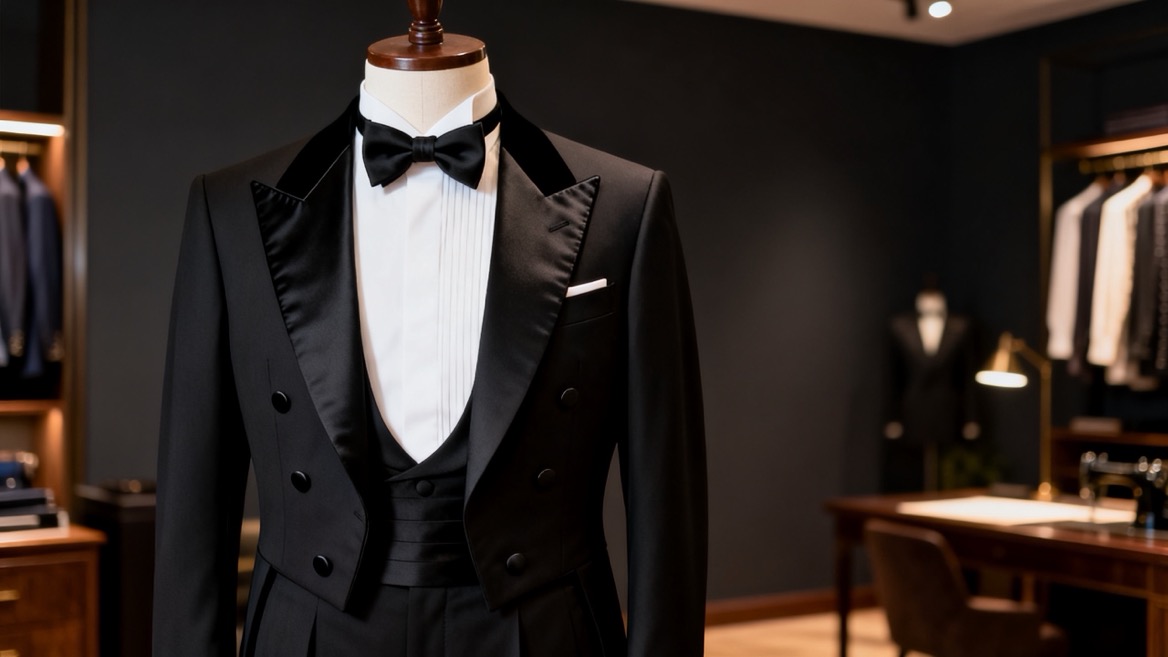
A tuxedo—often called a dinner jacket or dinner suit in the United Kingdom—is a formal evening outfit traditionally worn for black-tie occasions. Although it resembles a suit at first glance, the tuxedo is distinguished by contrasting trim and more formal styling conventions.
A classic tuxedo generally includes:
- A black or midnight-blue jacket
- Satin or grosgrain lapel facings
- Matching trousers, often with a side stripe
- A white formal shirt
- A black bow tie
- Formal leather shoes or velvet evening slippers
- Optional waist covering, such as a cummerbund or low-cut waistcoat
For apparel brands, the tuxedo category offers an opportunity to combine timeless tailoring with commercial variations: slim fits, extended sizing, wedding colorways, breathable fabrics, rental-ready construction, and private-label detailing.
The modern tuxedo did not begin as the most formal form of menswear. It was originally a more relaxed alternative to the tailcoat, which was the established evening standard in the nineteenth century.
In 1865, the Prince of Wales—later King Edward VII—asked Savile Row tailor Henry Poole & Co. to create a shorter evening jacket for informal dinners at Sandringham. The result was a tailless dinner jacket, originally made in midnight blue. It retained the refinement of evening dress while allowing greater comfort and freedom of movement than a long tailcoat.
This origin remains relevant to contemporary product development. The tuxedo was born from a practical customer need: formal clothing that felt less restrictive.
For modern brands, that same principle can guide collection planning:
- Use lighter canvas or half-canvas construction for comfort
- Add controlled stretch where appropriate
- Choose breathable wool blends for destination weddings
- Improve sleeve mobility through better armhole shaping
- Offer made-to-measure or custom-size programs for a cleaner fit
Expert manufacturing insight: A tuxedo should appear sharp when the wearer is standing, sitting, walking, and raising a glass. A jacket that looks good only in a fitting-room pose is not production-ready formalwear.
The word "tuxedo" is closely linked to Tuxedo Park, New York, an elite resort community and private social club. During the 1880s, the tailless dinner jacket became fashionable among American society figures connected with the club.
One well-known version of the story centers on James Brown Potter, who reportedly encountered the dinner jacket style in England and later introduced it to the social scene at Tuxedo Park. In 1886, Griswold Lorillard wore a tailless black evening jacket at the Tuxedo Club's Autumn Ball. The style attracted attention and eventually became identified with the location.
That is why terminology differs across markets:
| Market | Common Term | Typical Meaning |
|---|---|---|
| United States | Tuxedo | Formal evening suit with contrasting details |
| United Kingdom | Dinner jacket or dinner suit | The same formal evening garment |
| International wedding market | Tuxedo suit | Often used commercially for wedding and eventwear |
| Fashion retail | Black-tie suit | A broad term that may include traditional or modern styles |
For global clothing businesses, accurate product naming matters. A retailer targeting the U.S. market may use "men's tuxedo" as a primary product term, while a UK-focused collection may perform better with "dinner jacket," "dinner suit," or "black-tie tailoring" in product descriptions.
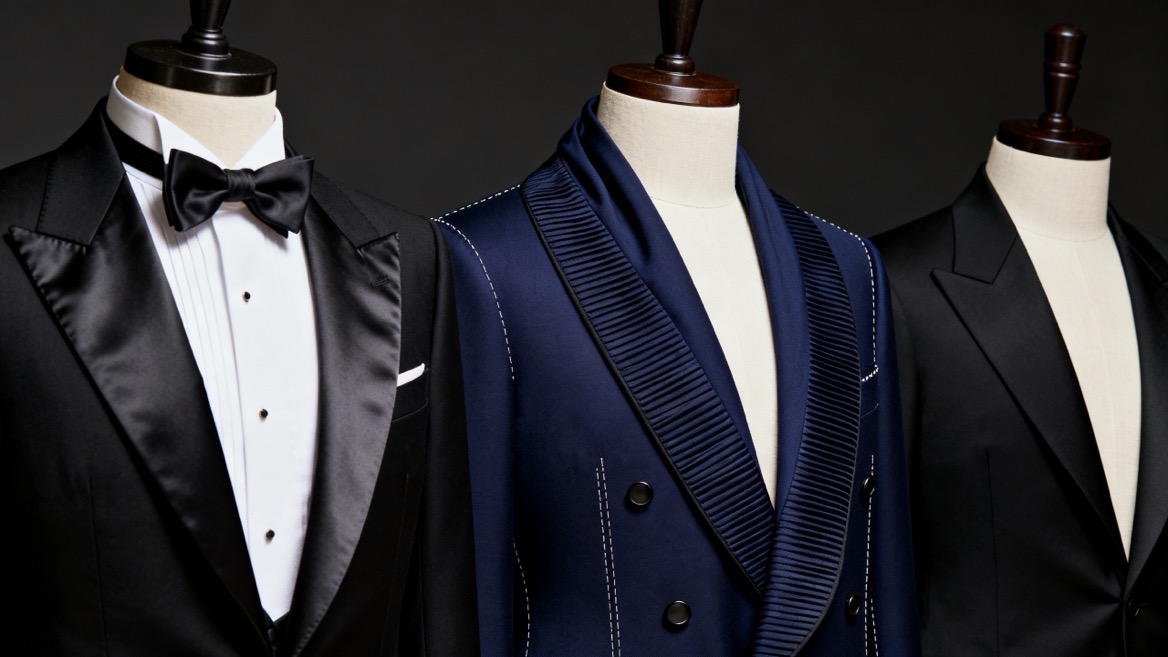
The most recognizable tuxedo detail is the lapel facing. Traditional tuxedo lapels use either satin or grosgrain, creating a contrast between the lapel and the main jacket fabric.
A conventional business suit usually uses the same cloth across the lapel, jacket body, and trouser surface. A tuxedo introduces a different texture or sheen to make the outfit suitable for evening occasions.
The two most common lapel finishes are:
| Lapel Finish | Appearance | Best Use |
|---|---|---|
| Satin | Smooth, glossy, reflective | Weddings, gala events, contemporary formalwear |
| Grosgrain | Ribbed, matte, understated | Traditional black tie, luxury classic styling |
Peak lapels point upward toward the shoulders. They create a stronger V-shaped chest line and are often chosen for formal weddings, gala uniforms, and traditional black-tie styling.
They can also make the upper body appear more structured, which is useful for customers seeking a sharper silhouette.
A shawl lapel is a continuous curved lapel without notches or pointed peaks. It is clean, elegant, and particularly associated with dinner jackets, velvet evening jackets, and classic black-tie looks.
A shawl lapel can be an efficient choice for brands developing minimalist formalwear because its smooth line makes the jacket look refined without relying on extra design elements.
Notch lapels are common on business suits. They are frequently used in fashion-oriented tuxedo designs, especially for promwear, rental programs, or younger wedding customers.
However, for a highly traditional black-tie garment, peak and shawl lapels generally communicate stronger formal credibility.
Development tip: The lapel facing, bow tie, trouser stripe, and jacket-covered buttons should use coordinated materials. A satin lapel paired with a visibly different satin bow tie or low-quality button covering can weaken the finished appearance.
Traditional tuxedo trousers are designed without belt loops. Instead, they are held in place by proper waist sizing, side adjusters, braces, or suspenders.
This detail is functional as well as aesthetic. A belt creates a horizontal break at the waist and can interfere with the clean line created by a cummerbund or waistcoat. Formal trousers are intended to sit neatly at the natural waist or slightly below it, depending on the cut.
Common tuxedo trouser details include:
- A satin or grosgrain stripe along the outer seam
- Flat-front construction
- Side adjusters instead of belt loops
- Slanted side pockets
- Jetted back pockets
- A higher rise than many casual trousers
- Uncuffed hems for a cleaner formal line
For a commercial collection, brands may choose between traditional and modern specifications.
| Buyer Segment | Recommended Trouser Direction |
|---|---|
| Classic black-tie customer | High-rise trousers, no belt loops, side adjusters, satin stripe |
| Wedding customer | Mid-rise trousers, optional side tabs, comfortable waistband |
| Rental or eventwear operator | Reinforced waistband, durable seam finishing, adjustable sizing |
| Fashion retailer | Slim or tapered fit, elastic comfort panel if appropriate |
| Hotel or hospitality uniform buyer | Easy-care fabric, stable color, mobility-focused construction |
The best choice depends on the customer's expectations. A formalwear specialist may prioritize authenticity, while a wedding retailer may prioritize ease of fit and broad customer appeal.
A black bow tie remains the defining neckwear choice for classic tuxedo styling. It balances the formal shirt front and prevents the long vertical line of a necktie from disrupting the compact proportions of the evening ensemble.
A self-tie bow tie is usually preferred for traditional black tie because it has a softer, more natural shape. Pre-tied bow ties can still be commercially practical, particularly for uniforms, rentals, event teams, and first-time formalwear buyers.
When designing a coordinated tuxedo package, buyers should consider:
- Bow tie fabric finish
- Neck-size adjustability
- Matching lapel material
- Closure strength
- Color consistency across production lots
- Packaging for retail display or e-commerce fulfillment
The safest classic option is a black silk or silk-look bow tie that matches the lapel finish. If the jacket uses grosgrain lapels, a grosgrain bow tie will typically create a more unified result than glossy satin.
A necktie can work with a tuxedo-inspired suit, especially for fashion weddings, evening receptions, or less formal celebrations. However, it changes the visual language of the outfit.
A necktie with a black suit creates a polished formal look. A bow tie with a correctly built tuxedo creates a more recognizably black-tie look.
For brands, this distinction helps create clearer product categories:
- Black-tie tuxedo: Bow tie, formal shirt, lapel facing, matching trousers
- Wedding suit: Necktie or bow tie, more color flexibility, softer rules
- Fashion tuxedo: May use unconventional colors, trims, and accessories
- Uniform tuxedo: Simplified styling for performance, durability, and consistency
Fabric selection is one of the most important decisions in tuxedo manufacturing. It affects drape, breathability, sheen, durability, hand feel, maintenance requirements, and the final retail position of the garment.
A tuxedo should look elegant under indoor lighting, in photographs, and during long events. It must resist excessive wrinkling while maintaining a clean silhouette.
| Fabric Type | Key Advantages | Considerations |
|---|---|---|
| Wool | Excellent drape, breathability, refined surface | Higher cost; quality varies by yarn and finishing |
| Wool-polyester blend | Durable, stable, cost-efficient | Can feel less breathable than high-wool cloth |
| Polyester-viscose blend | Accessible price, good color consistency | Requires careful finishing to avoid a low-end appearance |
| Linen blend | Breathable and ideal for warm climates | Wrinkles easily; better for relaxed summer formalwear |
| Velvet | Rich texture for dinner jackets | Better for statement pieces than full tuxedo suits |
| Stretch blend | Increased mobility and comfort | Stretch content should not compromise drape or recovery |
For a core black-tie collection, black and midnight blue remain the strongest options. Midnight blue is especially interesting because it can appear deeper than black under artificial evening light.
For weddingwear and fashion retail, brands often expand into:
- Ivory or off-white dinner jackets
- Burgundy
- Emerald green
- Deep navy
- Chocolate brown
- Dusty blue
- Jacquard or textured evening fabrics
These options can create differentiation, but they should be used strategically. A colorful dinner jacket often works best when paired with black trousers, black formal shoes, and restrained accessories.
A tuxedo's visual impact depends heavily on fit. Expensive fabric and attractive lapels cannot compensate for a shoulder line that collapses, sleeves that are too long, or trousers that bunch excessively at the ankle.
A well-fitting tuxedo jacket should:
- Sit smoothly at the shoulders without divots or overhang
- Close comfortably without pulling across the chest
- Allow natural movement through the upper back
- Cover the seat without appearing too long
- Show approximately 0.25 to 0.5 inches of shirt cuff
- Create a clean chest shape without excess fabric
- Maintain a balanced relationship between jacket length and trouser rise
A well-fitting tuxedo trouser should:
- Sit securely without requiring a belt
- Fall cleanly from the hip
- Avoid excessive fabric at the seat and thigh
- Break lightly over the shoe or sit with minimal break
- Allow comfortable sitting and dancing
Before approving production samples, use a structured fit review.
1. Check the shoulder line first. Shoulder alterations are difficult and costly, so this area must be correct from the beginning.
2. Close the jacket. The front should lie cleanly without a pronounced X-shaped pull pattern.
3. Raise both arms. The jacket should allow movement without exposing too much shirt or pulling sharply across the back.
4. Sit down. The waist, thigh, and back areas should remain comfortable.
5. Photograph the sample under indoor lighting. Tuxedos are often worn at evening events, so fabric sheen and lapel contrast should be reviewed under realistic conditions.
6. Compare the sample against the approved measurement specification. Visual approval alone is not enough for repeatable bulk production.
OEM perspective: For wholesale and private-label orders, technical packs, graded size charts, approved trims, and pre-production samples are essential. Small differences in lapel width, button placement, sleeve pitch, or trouser rise can materially change the fit and perceived quality of a tuxedo.
A commercially successful tuxedo collection should not rely on one generic black jacket. Buyers usually need a balanced assortment that addresses different price points, body types, formality levels, and event occasions.
A practical starting range may include:
- Classic black peak-lapel tuxedo
- Midnight-blue shawl-lapel tuxedo
- Black slim-fit wedding tuxedo
- Ivory or white dinner jacket with black trousers
- Velvet dinner jacket for festive events
- Coordinated waistcoat and trouser options
- Formal shirts, bow ties, cummerbunds, and pocket squares
For private-label companies, small details create brand identity:
- Custom woven labels
- Branded garment bags
- Engraved or logo-backed buttons
- Personalized size labels
- Retail-ready packaging
- Customized lining
- Special lapel colors or contrast piping
- Matching groomsmen programs
The best collections offer variety without losing clarity. Customers should immediately understand which products are classic black-tie garments, which are wedding options, and which are fashion-forward evening pieces.
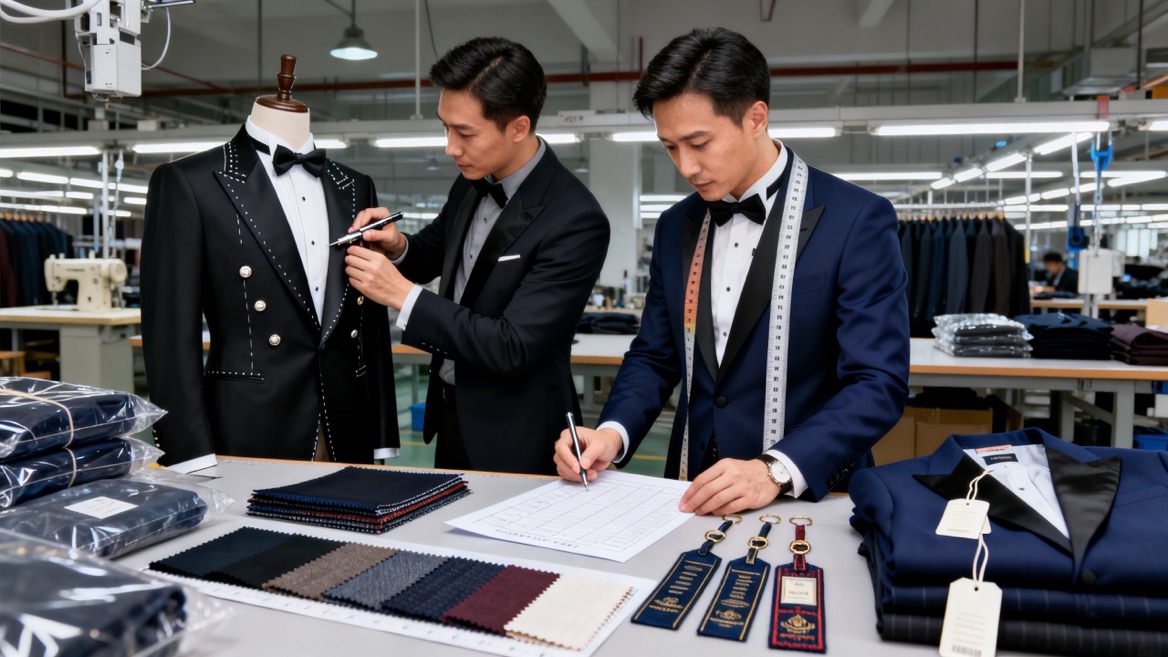
The tuxedo has lasted for more than a century because it combines tradition with adaptability. Its basic language remains clear: refined fabric, contrasting lapels, careful tailoring, formal accessories, and an intentional fit.
For consumers, a tuxedo makes an occasion feel meaningful. For apparel brands, it is a category where product knowledge and construction quality strongly influence customer confidence. For wholesalers and retailers, it offers repeat demand across weddings, black-tie events, hospitality, entertainment, formal uniforms, and special celebrations.
Shanghai Youti Clothing Co., Ltd. supports overseas brands, wholesalers, and apparel businesses with OEM tuxedo and suit manufacturing. From classic black-tie tailoring to modern weddingwear programs, we can help develop customized formalwear collections with selected fabrics, private labeling, fit specifications, and production support.
Contact our team to discuss your tuxedo OEM project, request fabric options, develop a sample, or build a custom formalwear collection for your market.
A tuxedo usually includes satin or grosgrain lapel facings, covered buttons, and trousers with a contrasting side stripe. A standard suit normally uses the same fabric throughout and is less formal.
Yes, many modern tuxedos use notch lapels, particularly in weddingwear and fashion-focused collections. However, peak lapels and shawl lapels are generally considered more traditional for black-tie occasions.
Traditional tuxedo trousers typically do not have belt loops. They may use side adjusters or suspenders instead. Modern commercial tuxedos can include belt loops when customer preference or market demand makes them practical.
Wool is widely preferred because it drapes well, breathes better than many synthetics, and creates a refined appearance. Wool blends can offer a more affordable and durable alternative for uniforms, rentals, and large-scale retail programs.
Both colors are appropriate. Midnight blue can appear especially rich under artificial evening light, while black remains the most versatile and familiar choice for formal events.
Yes. An ivory or off-white dinner jacket paired with black tuxedo trousers is a popular choice for warm-weather weddings, destination weddings, receptions, and evening celebrations.
Brands should prepare a tech pack, size chart, fabric requirements, color standards, quantity forecast, trim details, label artwork, packaging requirements, and reference images. An approved sample is strongly recommended before bulk production.
- [StudioSuits: 7 Fun Facts About Tuxedos]
- [Henry Poole & Co.: The Dinner Suit and the Origins of the Tuxedo]
- [Tuxedo Park, New York: The Tuxedo Story]
- [Charles Tyrwhitt: Black-Tie Dress Code Explained]
- [Gentleman's Gazette: Tuxedo and Black-Tie Guide]


