
Views: 233 Author: Youti Clothing Publish Time: 2026-08-12 Origin: Site


Content Menu
● What Is a Button-Down Shirt?
● Button-Up vs. Button-Down: The Key Difference
● Why Collar Construction Matters
● When to Choose a Button-Up Shirt
● When to Choose a Button-Down Shirt
● The Fabric Changes the Final Look
● A Buyer's Shirt Development Checklist
● Build a Stronger Shirt Collection
>> Is every button-down shirt a button-up shirt?
>> Can a button-down shirt be worn with a tie?
>> Are button-down shirts less formal?
>> Does a button-up shirt always need to be tucked in?
>> Is a chest pocket only for button-down shirts?
>> What fabric is best for a button-down shirt?
>> What should an OEM buyer specify for a shirt collar?
A button-up vs. button-down shirt comparison may sound like a small question, but the distinction matters in product development, merchandising, and everyday styling. For a clothing brand, retailer, or wholesale buyer, the collar construction affects the shirt's visual character, target customer, fabric choice, and intended occasion.
The simplest rule is this: every button-down is a button-up, but not every button-up is a button-down. A button-up describes the front closure. A button-down describes a specific collar construction.
From a shirt manufacturing perspective, this distinction should never be treated as a minor naming detail. The collar is one of the first things a customer notices. It can make a shirt feel formal, relaxed, heritage-inspired, modern, or utility-focused before the wearer even considers the fabric or fit.
This guide explains the real difference between button-up and button-down shirts, how to choose the right style, and what brands should specify when developing shirts with an OEM manufacturer.
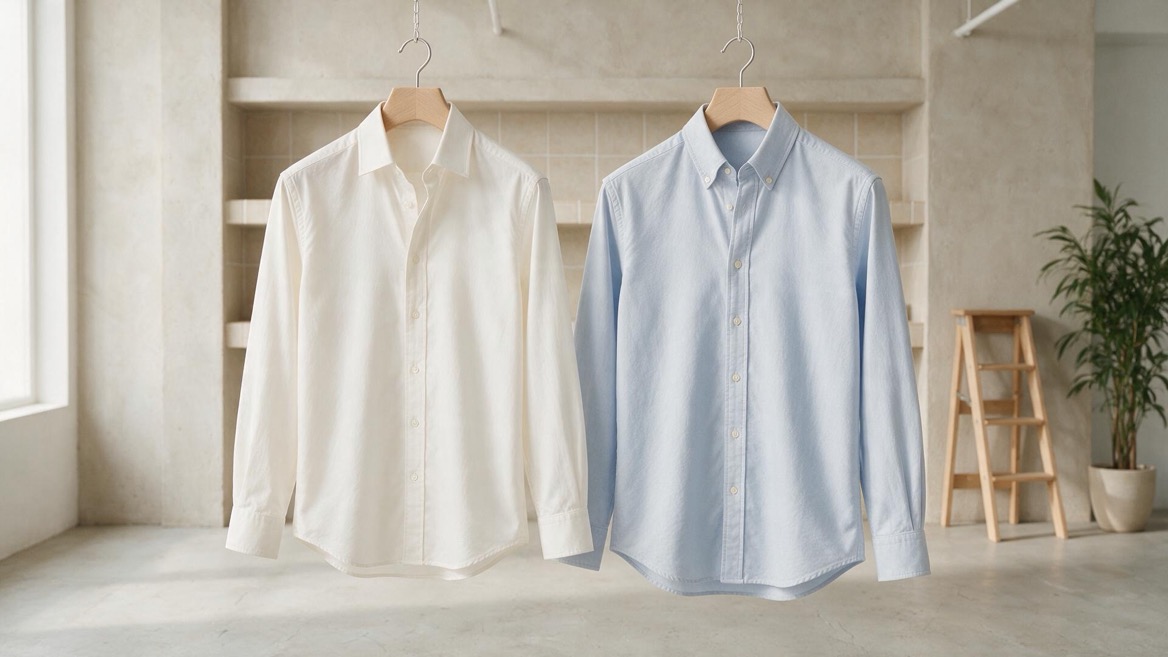
A button-up shirt is a shirt with a front opening that closes with buttons. The buttons normally run from the neck area to the hem along a center-front placket.
The phrase "button-up" refers to the way the shirt closes. It does not define the collar type. A button-up shirt can have a point collar, spread collar, cutaway collar, band collar, camp collar, or button-down collar.
In practical terms, button-up is the broader product category.
Common button-up shirt features include:
- A full-length front placket with buttons and buttonholes
- A collar, collar band, or collarless neckline
- Long sleeves, short sleeves, or rolled sleeves
- Cuffs, sleeve plackets, and optional cuff buttons
- A back yoke for structure and mobility
- Optional chest pockets, depending on the design
- Different hem shapes for tucked or untucked wear
A button-up shirt may be a sharp formal dress shirt, a casual linen overshirt, a work shirt, or a lightweight resort shirt. The front buttons alone do not determine whether the shirt looks dressy or casual.
The collar, fabric, fit, finishing, and styling determine the final level of formality.
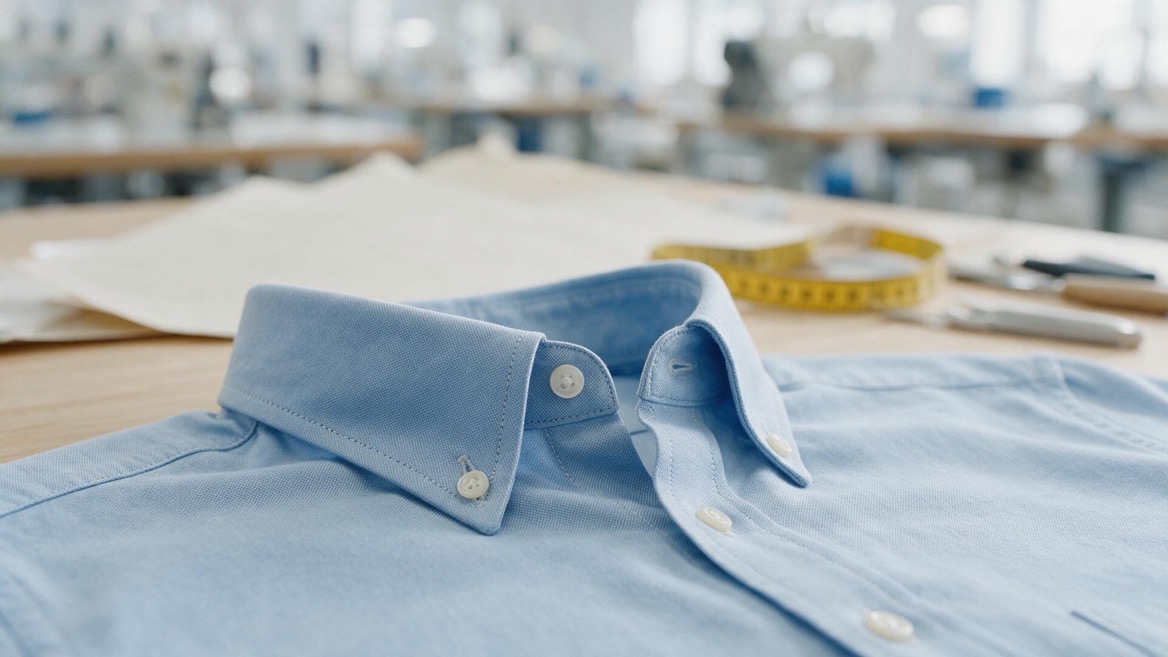
A button-down shirt is a type of button-up shirt with two small buttons that secure the collar points to the shirt body.
Those collar buttons are the defining feature. They keep the collar points from lifting, spreading outward, or moving excessively when the wearer walks or works.
A button-down shirt still has the same front-button construction as a typical button-up. However, its collar has extra components:
- Buttonholes at the collar points
- Small buttons placed on the shirt front beneath the collar
- Collar points designed to sit neatly when fastened
- A collar shape that usually appears softer and more relaxed than a dress collar
The original concept was inspired by polo players who needed their collars to stay in place during movement. The design later became closely associated with classic Oxford shirts and smart-casual wardrobes.
For modern brands, button-down collars remain popular because they offer a useful balance: they look organized enough for professional settings while feeling less rigid than a traditional formal shirt collar.
The difference is easy to identify once you know where to look: check the collar points, not the front placket.
| Feature | Button-Up Shirt | Button-Down Shirt |
|---|---|---|
| Front closure | Buttons running down the front | Buttons running down the front |
| Collar buttons | Optional; often absent | Required at both collar points |
| Definition | A broad shirt category | A specific collar style within the category |
| Typical appearance | Can range from formal to casual | Usually smart-casual to business-casual |
| Tie compatibility | Excellent with the right collar | Possible, but generally less traditional |
| Common fabrics | Poplin, twill, pinpoint, linen, denim, flannel | Oxford, chambray, brushed cotton, linen blends |
| Best-known visual effect | Clean and adaptable | Relaxed, stable, collegiate, heritage-inspired |
The most important point is that a button-down collar is not automatically a lower-quality or less refined option. It is simply designed for a different visual purpose.
A well-made button-down can look polished under a blazer. A poorly developed one, however, can look bulky, uneven, or overly casual. The outcome depends on collar proportions, interlining, stitching, and fabric behavior.
In shirt development, collar construction has an outsized influence on product quality. A small pattern or sewing decision can change the way a collar performs after repeated washing and wearing.
For example, a collar that is too soft may collapse under a jacket. A collar that is too stiff may feel uncomfortable and appear unnatural on a casual shirt. A button-down collar with poorly positioned buttons can pull the collar points inward or create visible tension across the chest.
A reliable shirt factory evaluates more than the collar shape. It also considers:
- Collar point length: Longer points create a more traditional look; shorter points feel cleaner and more contemporary
- Collar spread: The distance between collar points changes how open or narrow the neckline appears
- Interlining: Fused, semi-fused, and unfused constructions create different levels of structure
- Button placement: Collar buttons must align accurately with buttonholes and sit evenly on both sides
- Stitch density: Consistent stitches help the collar maintain a neat edge
- Fabric weight: Heavy Oxford cloth and lightweight poplin require different collar solutions
- Shrinkage allowance: The collar must remain balanced after laundering
For brands, this means the tech pack should specify more than "button-down collar." It should state the collar point length, collar stand height, interlining preference, topstitch width, button size, and acceptable measurement tolerances.
Choose a standard button-up shirt when the collection needs versatility or a more formal appearance. A free collar allows a brand to use several collar styles and create clearer segmentation between dress, business, casual, and seasonal products.
A point-collar or spread-collar button-up is often a strong choice for:
- Corporate uniforms and officewear
- Formal events and occasion dressing
- Suit-and-tie styling
- Premium dress shirt collections
- Hotel, hospitality, and service uniforms
- Customers who prefer a sharper neckline
For a formal shirt, fabric selection is especially important. Fine poplin provides a clean, smooth surface. Twill offers more visual texture and usually feels more substantial. Pinpoint Oxford can bridge the gap between dressy and casual, depending on the collar and finishing.
A formal-looking shirt should also receive disciplined finishing. This may include a balanced collar, clean placket alignment, matched pattern placement, secure button attachment, and carefully pressed seams.
Choose a button-down shirt when the collection is designed around smart-casual, casual business, collegiate, outdoor-inspired, or heritage aesthetics.
The button-down collar is particularly effective when the wearer wants the shirt to retain shape without wearing a tie. It also works well for people who move frequently throughout the day and do not want loose collar points shifting under a knitwear layer or jacket.
Button-down shirts are a practical option for:
- Business-casual collections
- Oxford shirt programs
- Casual uniforms
- Travel and commuter apparel
- Weekend shirts and overshirts
- Preppy, American heritage, or workwear-inspired ranges
- Brands targeting relaxed but polished dressing
A button-down collar is often paired with Oxford cloth because the fabric's texture and slightly casual character complement the construction. Still, the combination is not mandatory. Fine cotton, cotton-linen blends, chambray, Tencel blends, and stretch woven fabrics can also work when the collar is engineered appropriately.
Avoid treating collar buttons as decoration. Their placement, tension, and proportion must support the collar's natural roll and shape.
The same collar design can look completely different when made in different fabrics. This is one of the most important lessons for buyers who are building a shirt collection.
A button-down collar in heavy Oxford cloth usually feels traditional and durable. The same collar in lightweight linen can feel relaxed and summer-focused. In contrast, a spread-collar button-up in crisp poplin is often more suitable for formal or office settings.
| Fabric | Typical Character | Best Collar Direction |
|---|---|---|
| Poplin | Smooth, crisp, lightweight | Point collar or spread collar |
| Oxford | Textured, durable, classic | Button-down collar |
| Twill | Soft, diagonal texture, substantial | Spread collar or point collar |
| Linen | Breathable, naturally relaxed | Button-down, camp, or soft point collar |
| Chambray | Casual, denim-like appearance | Button-down or soft point collar |
| Stretch cotton | Flexible, performance-oriented | Structured point or button-down collar |
| Flannel | Warm, soft, casual | Button-down or workwear-style collar |
When developing a shirt range, evaluate fabric and collar together rather than selecting them independently. The objective is not simply to make a collar stand up. The objective is to make the entire shirt feel coherent.
For international brands, wholesalers, and private-label programs, a strong product brief prevents costly sampling revisions. Before requesting a quotation, clarify the product direction and measurable specifications.
Use this checklist when developing button-up or button-down shirts:
1. Define the end use. Is the shirt intended for officewear, uniforms, retail, travel, resort, or casual daily use?
2. Choose the collar construction. Specify button-down, point, spread, cutaway, band, or another collar type.
3. Confirm fabric composition and weight. Include fiber content, weave, GSM, color, print method, and target hand feel.
4. Set the fit block. State whether the fit is slim, regular, relaxed, oversized, or customized for a regional market.
5. Provide a measurement chart. Include chest, waist, hem, shoulder, sleeve, cuff, collar, and shirt length measurements.
6. Select trims carefully. Specify button material, size, thickness, color, logo engraving, thread color, labels, and packaging.
7. Define workmanship standards. Confirm seam type, stitch count, pattern matching, thread trimming, button security, and pressing requirements.
8. Plan testing requirements. Ask for relevant checks related to color change, color transfer, dimensional change, and garment appearance after laundering.
9. Review pre-production samples. Never rely solely on digital renderings or a first sample for final approval.
10. Build a clear approval process. Confirm the approved sample, grading rules, packing method, inspection standard, lead time, and shipment terms before bulk production begins.
This approach helps prevent common issues such as collar imbalance, fit inconsistency, fabric substitution, mismatched buttons, or shrinkage surprises after delivery.
The most common mistake is using "button-up" and "button-down" as interchangeable descriptions. This creates confusion for shoppers and can cause product listing errors for retailers.
Other avoidable mistakes include:
- Calling every collared shirt a button-down
- Using a button-down collar with an overly formal tuxedo or ceremonial shirt concept
- Choosing collar buttons that are too large or too close to the collar edge
- Using excessive interlining in a casual shirt
- Ignoring fabric shrinkage during collar pattern development
- Failing to test whether the collar remains symmetrical after laundering
- Designing a formal shirt with a collar roll that is too soft for its intended use
- Treating chest pockets as the defining difference between the two styles
A chest pocket may be included or omitted on either style. It is a design decision, not a technical rule for distinguishing button-up from button-down shirts.
A button-up shirt with a point or spread collar is generally the more flexible choice for formal styling. Pair it with tailored trousers, a blazer, or a suit when the occasion calls for a sharper appearance.
A button-down shirt is often strongest when styled without a tie. It works naturally with chinos, denim, knitwear, casual blazers, and clean sneakers or loafers.
Here is a simple decision guide:
- Formal meeting or ceremony: Choose a crisp button-up with a point or spread collar
- Business-casual office: Choose either style; select a button-down for a more relaxed tone
- Travel day: Choose a comfortable button-down in cotton stretch or a breathable blend
- Weekend outing: Choose Oxford, chambray, linen, or brushed cotton with a button-down collar
- Uniform program: Select based on role, branding needs, laundering frequency, and required appearance
The right shirt is not only about looking appropriate on day one. It should also continue to fit well, hold its shape, and remain presentable after repeated wear and care.
For brands, the best button-up or button-down shirt program begins with a clear customer profile. Do they want a sharp business shirt, a refined casual shirt, a uniform-ready style, or a practical travel essential?
Once that is clear, the collar, fabric, fit, finishing, and quality-control requirements can work together instead of competing with one another.
Shanghai Youti Clothing Co., Ltd. supports international brands, wholesalers, and manufacturers with OEM shirt development. Share your design concept, tech pack, target market, fabric requirements, and order plan to discuss a customized shirt solution—from sampling and fit development to bulk production and packaging.
Yes. A button-down shirt has a buttoned front placket, so it belongs to the button-up shirt category. Its extra collar buttons make it a button-down.
Yes, but it usually creates a more relaxed look than a spread-collar or point-collar dress shirt. It is best suited to smart-casual or business-casual environments.
In most situations, yes. The collar buttons create a more casual visual effect. However, fabric quality, fit, color, and styling can still make a button-down shirt look polished.
No. Whether to tuck it in depends on the shirt length, hem shape, fabric, and intended style. Formal dress shirts are usually tucked in, while casual shirts may be designed to be worn untucked.
No. Chest pockets can appear on both button-up and button-down shirts. A pocket is a design feature, not a defining construction difference.
Oxford cloth is a classic choice because its texture complements the relaxed collar. Linen, chambray, brushed cotton, and cotton blends can also work well depending on the season and product concept.
At minimum, specify collar type, point length, collar stand height, interlining, button size, button position, stitch details, fabric, shrinkage expectation, and approved sample standard.
- [Bombay Shirt Company — "Men's Button Down Vs Button Up Shirts"] [bombayshirts]
- [Brooks Brothers — "Celebrating 125 Years of the Button-Down Collar Shirt"] [brooksbrothers]
- [AATCC — Testing and Standards] [aatcc]
- [AATCC — Textile Testing Overview] [aatcc]
- [The Tie Bar — "Button-Up vs. Button-Down Shirt: What's the Difference?"] [thetiebar]


