
Views: 243 Author: Youti Clothing Publish Time: 2026-10-04 Origin: Site


Content Menu
● Why a Good Suit Choice Matters for First Impressions
● How to Choose a Business Suit for the Occasion
>> Begin with the Setting, Not a Rule About Status
>> Choose Suit Colors That Support Versatility
● Suit Fit Guide: Check These Details Before Buying
>> Jacket Shoulders, Collar, and Chest
>> Jacket Length, Sleeves, and Trousers
● Best Suit Fabrics: Match Material to Real Use
● Suit Construction: Look Beyond the Outer Fabric
● A Practical Five-Step Suit Evaluation
● OEM Suit Manufacturing: Turn Style Decisions into Specifications
>> Build a Clear Technical Brief
>> Review Fit Beyond One Sample Size
>> Agree on Quality Checks Before Production
● Use Customer Feedback Without Inventing Evidence
● Discuss Your OEM Suit Project with Shanghai Youti
>> What is the most important factor when choosing a good suit?
>> Is a custom suit always better than a ready-to-wear suit?
>> Which suit color should a business collection include first?
>> What should overseas buyers prepare before requesting an OEM quotation?
>> How can a brand evaluate suit quality before a bulk order?
>> Can a supplier guarantee that a suit creates a powerful impression?
A good suit choice begins with fit, fabric, and purpose—not a higher price tag or a louder design. Whether you are selecting a business suit for yourself or developing an OEM suit collection for your brand, the goal is the same: clothing that looks appropriate, feels comfortable, and performs consistently.
At Shanghai Youti Clothing Co., Ltd., we approach this subject from the perspective of a Chinese supplier providing OEM services for overseas brands, wholesalers, and manufacturers. That perspective connects individual preferences with practical product decisions.
This guide explains how to choose a good suit, evaluate its construction, and translate a convincing sample into a clearer production brief.

Clothing provides visual information before a conversation begins. A suit's proportions, condition, and appropriateness can influence how someone interprets the wearer, but they cannot establish competence or character.
A 2013 study involving 274 participants examined reactions to images of a faceless male model wearing two subtly different suits. Participants viewed the images for up to five seconds. The more tailored version received more positive ratings for several attributes, including confidence and success, but not trustworthiness.
The useful lesson is limited: small clothing differences can affect impressions. The study does not prove that an expensive suit wins business or that every ready-to-wear suit performs poorly.
My practical starting point is therefore simple: judge the garment before judging the label. Does it hang cleanly? Can the wearer move naturally? Does it belong in the intended setting?
A client presentation, wedding, trade exhibition, and evening reception may require different clothing. Consider the invitation, local expectations, company culture, and likely temperature.
A single-breasted, two-button suit with notch lapels offers a straightforward starting point for many business wardrobes. However, it is not a universal requirement. A double-breasted jacket can also look professional when its proportions and styling suit the wearer.
For brands, define the customer's use case before choosing design details. "Professional clothing" is too broad to guide a reliable collection.
A more useful brief describes the customer's working environment, preferred silhouette, climate, price position, and expected frequency of wear.
Navy and charcoal are practical starting options because they can anchor a restrained business wardrobe. Mid-gray offers another route when a lighter appearance fits the setting.
Black should not be dismissed automatically. It may be appropriate for particular uniforms, events, or customer preferences. Likewise, lighter shades can suit seasonal collections without becoming the right answer for every workplace.
Evaluate color as part of the complete outfit:
- Compare it with likely shirts and footwear.
- Check fabric swatches under different lighting.
- Consider whether patterns limit outfit combinations.
- Confirm that the shade fits the brand's existing collection.
Color should support the customer's needs rather than promise authority or success.
A well-fitting suit should look balanced while allowing ordinary movement. Slimness alone is not evidence of good tailoring, and a relaxed silhouette is not automatically oversized.
Use fit as the first inspection priority.
Start with the shoulders because they establish the jacket's upper shape. Look for unintended overhang, pronounced dents, or distortion.
Next, inspect the collar. It should sit neatly against the shirt collar rather than leave a distracting gap. Check the chest and lapels while standing naturally.
Warning signs include:
- Lapels lifting away from the chest.
- Strong pulling around the fastening button.
- Horizontal strain across the upper back.
- Excess fabric collapsing around the chest.
These signs identify areas to review; they do not establish the cause without a proper fitting assessment.
Assess jacket length in relation to the wearer's proportions and the intended style. A shorter jacket may suit one collection but look unbalanced in another.
Sleeves should work with the shirt and allow practical movement. Trousers should sit securely without requiring the belt to compensate for an unsuitable waist measurement.
Check the seat, thigh, and hem together. A clean trouser line depends on more than waist size.
Finally, sit down, walk, and reach forward. A suit that looks convincing only in a still photograph has not passed a complete fit check.
Fabric selection affects appearance, comfort, care, and product positioning. Fiber content matters, but it does not explain everything. Weave, weight, finishing, and garment construction also influence the result.
| Fabric option | Potential role | What to assess |
|---|---|---|
| Wool | Business and formal collections | Drape, weight, surface, and care requirements |
| Wool blends | Collections balancing several performance and cost goals | Actual composition and tested performance |
| Linen or linen blends | Warm-weather and relaxed tailoring | Creasing, transparency, and customer expectations |
| Cotton | Less formal tailored collections | Structure, movement, and crease appearance |
| Synthetic blends | Price-sensitive or specific performance briefs | Comfort, appearance, care, and durability |
Woolmark identifies breathability, drape, and wrinkle recovery as useful properties of wool suiting. Those benefits still depend on the finished fabric and garment; "wool" alone is not a complete quality specification.
For buyers, request swatches and examine them alongside the proposed lining. For individual customers, feel the finished suit rather than relying exclusively on the composition label.
Avoid assuming that a higher fabric price guarantees a better product for every market.
Two jackets made from similar cloth can behave differently because of their internal structure.
Fused construction uses bonded interlining in relevant areas. Half-canvas and full-canvas approaches incorporate sewn canvas structures to different extents. These categories help describe construction, but they are not substitutes for inspecting execution.
For an OEM project, clarify:
- The intended front construction.
- Lining material and coverage.
- Shoulder structure.
- Pocket design and reinforcement.
- Buttons, closures, and spare components.
- Finishing and pressing requirements.
Then examine the sample for unintended bubbling, puckering, uneven seams, and inconsistent shaping.
Choose construction according to the product brief. A premium label should not be the only reason for adding complexity, and a lower-cost construction should not excuse poor workmanship.
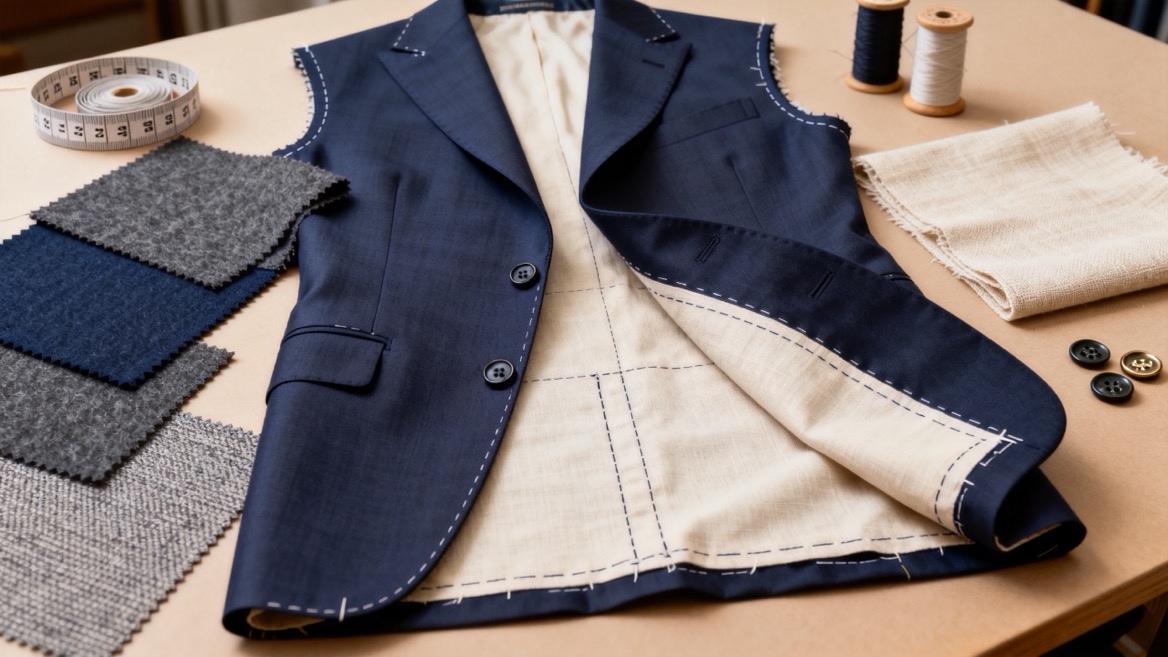
Before approving a purchase or sample, follow the same sequence each time.
1. Define the purpose. Record the occasion, climate, intended customer, and preferred silhouette.
2. Inspect the garment standing naturally. Examine front, side, and back views.
3. Test movement. Sit, walk, reach, and check whether pulling or restriction appears.
4. Review materials and finishing. Compare the garment with the agreed fabric, trims, and construction.
5. Record decisions. Separate acceptable features from issues requiring alteration or redevelopment.
Photographs help document visible differences, but they should accompany measurements and written observations.
For personal purchases, this process makes comparison easier. For brands, it creates a repeatable approval method instead of relying on "this sample feels better."
For overseas brands, wholesalers, and manufacturers, the central challenge is not simply choosing an attractive suit. It is defining a product that can be reproduced with acceptable consistency.
A useful technical pack should identify the style and describe how it will be assessed.
Include:
- Design drawings and reference images.
- Fabric and trim specifications.
- Measurement points and measuring methods.
- Size charts and grading requirements.
- Construction and stitching details.
- Labels, care information, and packaging.
- Agreed tolerances and sample approval stages.
Avoid ambiguous instructions such as "premium fit" or "European quality" without measurable definitions.
If a photograph shows the desired silhouette, explain which features matter. The image alone may not reveal fabric weight, internal construction, or ease allowances.
A successful sample in one size does not establish that the entire size range works.
When developing a collection, assess representative sizes and relevant body proportions. Review how shoulder width, chest, waist, sleeve length, and trouser rise change across the range.
Use a consistent feedback format:
| Review area | Observation | Required action |
|---|---|---|
| Shoulder | Unintended overhang | Review width and sleeve setting |
| Chest | Pulling at closure | Review ease and pattern balance |
| Trousers | Restricted seated movement | Review rise, seat, and thigh |
| Finishing | Uneven visible stitching | Clarify workmanship criteria |
These are illustrative review examples, not customer complaints or verified factory findings.

Intertek's apparel inspection framework includes workmanship, construction, fasteners, shading, pattern matching, tapes, and linings. These categories provide a useful starting point for an inspection checklist.
Testing needs should match the product. Colorfastness testing can evaluate resistance to fading or color transfer during rubbing, perspiration, cleaning, or light exposure.
Specify which tests are needed and what acceptance criteria apply. Do not describe a suit as tested or compliant without relevant documentation.
Customer feedback becomes valuable when it identifies a repeatable product issue. A general comment such as "great quality" is less actionable than a clear description of restricted movement or inconsistent sizing.
When genuine reviews are available, group them by:
- Fit and sizing.
- Fabric feel and comfort.
- Appearance after wear.
- Care and durability.
- Packaging and presentation.
Then connect each recurring issue to a review step. For example, repeated concerns about seated comfort justify closer assessment of trouser measurements and movement.
Track the number of relevant comments as well as their wording. One complaint may require investigation, but it does not establish a widespread defect.
Publish testimonials only with appropriate permission and attribution. Until verified feedback is available, use transparent buying guidance rather than invented customer stories.
A good suit choice connects appearance with practical performance. For a brand, that connection must also extend to specifications, sample approval, and production consistency.
Shanghai Youti Clothing Co., Ltd. provides OEM services for overseas brands, wholesalers, and manufacturers seeking suits and professional clothing.
Contact our team with your design references, target customer, expected quantity, size range, and fabric requirements. Request an initial discussion of sample development, construction options, quotation assumptions, and the quality checks relevant to your project.
Start with a clear brief, and make each approval decision easier to verify.
Start with fit and suitability for the intended occasion. Fabric and construction matter, but neither compensates for a garment that restricts movement or looks unbalanced on the wearer.
No. The finished result matters more than the category. A ready-to-wear suit may work well with suitable proportions and alterations, while a custom garment still requires accurate measurements and competent execution.
Navy or charcoal can provide a practical foundation. Choose according to the target market, existing assortment, workplace expectations, and customer preferences rather than treating either color as universally superior.
Prepare the design brief, expected quantity, target market, size range, fabric preferences, construction requirements, packaging details, and delivery expectations. Clearly identify unresolved decisions so suppliers can distinguish assumptions from confirmed specifications.
Review the sample against written requirements. Check measurements, movement, construction, materials, and workmanship. Agree on relevant testing and inspection criteria before production rather than introducing new expectations after completion.
No. Perception depends on the wearer, setting, observer, and wider context. A supplier can help define and assess garment characteristics, but clothing cannot guarantee credibility, confidence, or commercial results.
1. StudioSuits. "The Powerful Influence of a Good Suit Choice." Original article supplied for restructuring; used as the starting topic, not as evidence for its absolute claims about status, first impressions, or ready-to-wear clothing. [studiosuits]
2. Howlett, N., Pine, K. J., Orakçıoğlu, I., and Fletcher, B. (2013). "The influence of clothing on first impressions: Rapid and positive responses to minor changes in male attire." *Journal of Fashion Marketing and Management*, 17(1), 38–48. Source for the 274-participant study, viewing conditions, and reported impression differences. [emerald]
3. "Dress is a Fundamental Component of Person Perception." (2023). Scholarly review available through PubMed Central. Provides broader context on clothing and person perception, including discussion of tailored suits. [pmc.ncbi.nlm.nih]
4. The Woolmark Company. "Wool tailoring and suiting." Source for wool suiting characteristics, including breathability, drape, and wrinkle recovery. [woolmark]
5. Intertek. "Textile and Apparel Inspection." Source for inspection categories covering workmanship, construction, fasteners, shading, pattern matching, and linings. [intertek]
6. Intertek. "Colorfastness Testing." Source for testing categories involving washing, light, rubbing, perspiration, and dry cleaning. [intertek]


