
Views: 242 Author: Youti Clothing Publish Time: 2026-06-28 Origin: Site


Content Menu
● Introduction: Why Suit Cleaning Method Matters
● "Clean a Suit Without Dry Cleaning" – Scope and Limits
● "Dry Cleaning" – Professional Solvent‑Based Care
● Key Differences: Home Cleaning vs. Professional Dry Cleaning
>> Fabric Safety and Structural Integrity
>> Cleaning Depth and Type of Soil
>> Cost, Frequency and Lifecycle Management
● A Practical Comparison Table for Suit Owners
● Expert OEM Insight: How Brands Should Position Suit Care
>> Why Suit Care Is a Brand Strategy Decision
>> Matching Fabric to Recommended Cleaning Method
● Non‑Dry‑Cleaning Methods: What Actually Works
>> Steam Cleaning for Everyday Refresh
>> Spot Cleaning and Fabric Sprays
● When Professional Dry Cleaning Is Non‑Negotiable
>> High‑Value Tailoring and Critical Stains
>> Selecting a Reliable Cleaner
● OEM Perspective: How Shanghai Youti Clothing Supports Brand‑Level Suit Care
>> Integrating Care Instructions into OEM Documentation
>> Quality Control and Fabric Testing for Care Claims
● Practical Cleaning Scenarios: OEM Expert Recommendations
>> Scenario 1 – Office Suit Worn Weekly
>> Scenario 2 – Event Suit Stored Long‑Term
● Sustainability and Brand Storytelling Around Suit Care
>> Reducing Chemical Use Without Compromising Quality
>> Turning Care Guidance into Value‑Added Content
● Why Brands Should Partner with a Professional OEM Suit Supplier
>> OEM Expertise Beyond Production
>> Aligning Care Strategy with Brand Positioning
● Clear Action Call: Partner With an OEM Suit Expert
● FAQ
Keeping a suit sharp is not just about style – it's about protecting your fabric investment and brand reputation. As a China-based OEM suit supplier, Shanghai Youti Clothing Co., Ltd. works with international brands that expect both premium tailoring and practical garment care guidance for their customers. Choosing between home cleaning methods and professional dry cleaning is a strategic decision that affects fabric longevity, cost, and sustainability. [finetexglobal]
From our daily experience with wool blends, high‑twist yarns and structured jackets, we see how different cleaning approaches change the way a suit drapes, ages and performs over time. This article compares "clean a suit without dry cleaning" methods against professional dry cleaning, blending personal, hands‑on insight with industry‑level OEM expertise so brands and buyers can choose the right approach for each suit and use case. [sinofinetex]
When people search "how to clean a suit without dry cleaning", they're usually looking for low‑cost, at‑home solutions that avoid harsh chemicals and frequent trips to the cleaner. These methods focus on refreshing, deodorising and minor stain management rather than full, deep cleaning. [bigcitydrycleaners]
Typical non‑dry‑clean methods include steam cleaning, brushing, spot cleaning, airing, using home dry‑cleaning kits and occasional hand washing for robust fabrics. Each of these has a specific role: steam and brushing are ideal for everyday maintenance, while spot cleaning and kits help deal with localised stains and odours. [inthewash.co]

In contrast, "dry cleaning" refers to professional cleaning using solvent chemicals instead of water, plus specialist machinery designed to protect structured garments like suits. This process can remove oxidised stains, body oils and deep‑embedded dirt in a way that home methods cannot match. [inthewash.co]
For high‑end wool, silk blends and canvassed jackets, reputable dry cleaners become part of the suit's lifecycle plan. Used smartly and not excessively, dry cleaning helps maintain shape and colour while extending the life of premium tailoring. [bigcitydrycleaners]
From an OEM manufacturer's perspective, the biggest risk in home cleaning is fabric distortion and damage to internal structures (canvas, padding, interfacing). For suits labelled "dry clean only", machine washing can cause shrinkage, puckering and loss of silhouette. [inthewash.co]
Professional dry cleaning equipment controls solvent temperature, mechanical action and drying cycles with far greater precision than a household machine. This matters for fully‑lined jackets, shoulder construction and crease lines, where uncontrolled moisture and heat can quickly ruin the garment's engineered shape. [bigcitydrycleaners]
Non‑dry‑clean methods excel at surface maintenance: removing dust, light odour, minor creases and small fresh stains. Techniques like steaming and brushing can keep a suit looking "presentation ready" between formal events or workdays. [bigcitydrycleaners]
Dry cleaning is better when dealing with embedded oils, old stains, smoke odours and heavy city pollution. Solvents penetrate fibres differently than water and standard detergents, making them more effective for complex soils that build up over months of wear. [inthewash.co]
At‑home suit care is usually lower direct cost per session but relies heavily on user skill and discipline. Steaming, brushing and airing work best when done consistently after each wear. [youtube]
Professional dry cleaning costs more per visit, so expert tailors typically recommend strategic scheduling, such as once or twice per season for heavily worn suits, combined with regular home maintenance in between. This hybrid strategy balances cost, fabric safety and long‑term appearance. [bigcitydrycleaners]
| Aspect | Clean Without Dry Cleaning | Professional Dry Cleaning |
|---|---|---|
| Main purpose | Refresh, de‑odorise, maintain between wears (bigcitydrycleaners) | Deep soil removal and stain treatment (inthewash.co) |
| Typical methods | Steaming, brushing, spot cleaning, home kits, airing (bigcitydrycleaners) | Solvent cleaning with specialist machines (inthewash.co) |
| Best for | Regular office use, travel, light soil (bigcitydrycleaners) | Occasion suits, heavily soiled garments (inthewash.co) |
| Fabric risk | Higher if misused on "dry clean only" suits (inthewash.co) | Lower with skilled cleaners and correct solvents (inthewash.co) |
| Cost profile | Low per session, time‑intensive (bigcitydrycleaners) | Higher per session, less frequent (inthewash.co) |
| Environmental impact | Potentially lower with gentle, water‑based options (bigcitydrycleaners) | Depends on solvent; modern systems can reduce impact (bigcitydrycleaners) |
As a China OEM suit manufacturer, we see care instructions as part of the product strategy, not an afterthought. Garment labels, brand websites and post‑purchase content all influence how long a suit stays in rotation and how satisfied customers feel after multiple wears. [accio]
Well‑designed care guidance reduces returns, customer complaints and negative reviews. Many global brands now integrate specific advice on steaming, brushing and dry‑cleaning frequency into product pages and packaging to support a premium positioning and justify pricing. [sinofinetex]
For each fabric cluster, we advise partner brands to align care messaging with real‑world performance:
- High‑twist wool and wool‑blend business suits: Recommend regular brushing and airing, occasional steaming, and professional dry cleaning every 10–20 wears depending on climate and sweat level. [inthewash.co]
- Cotton and linen suits: More tolerant of gentle wet methods in some cases, but structure and lining still need protection. Emphasise steaming, spot cleaning and only carefully controlled hand washing where labels permit. [bigcitydrycleaners]
- Polyester blends: More resilient, but can develop odour build‑up; suggest fabric refreshing sprays, steaming and periodic professional cleaning to restore drape. [inthewash.co]
From our OEM vantage point, brands that give clear, fabric‑specific instructions see better long‑term customer satisfaction and fewer post‑purchase issues. [accio]
Steam cleaning is one of the most effective alternatives to frequent dry cleaning. Handheld garment steamers or steam cabinets can remove wrinkles, refresh fibres and reduce odours without immersing the suit in water. [youtube]
The key is to maintain distance between the steamer head and fabric, move continuously and avoid saturating the cloth to prevent water spots. For brands, recommending steaming as a first‑line maintenance method helps customers keep suits sharp while minimising chemical exposure. [youtube]
A garment brush is a simple but powerful tool. Brushing along the fabric weave removes dust, pollen and light surface dirt, keeping the suit clean‑looking and preventing particles from working deeper into the fibres. [bigcitydrycleaners]
Used after each wear, brushing reduces the need for both wet cleaning and dry cleaning. OEM manufacturers like us often test how fabrics respond to brushing and specify recommended brush types for retailers' care guides. [sinofinetex]
For small stains, targeted spot cleaning with a mild detergent solution or specialist fabric cleaner can be effective, particularly on cotton or robust synthetics. The golden rule is to blot, not rub, and always test a hidden area first. [bigcitydrycleaners]
Fabric refreshing sprays and light vinegar‑or‑vodka solutions can help manage odours, provided they are applied sparingly and allowed to dry quickly, especially on "dry clean only" suits. [inthewash.co]
Modern home dry‑cleaning kits use bags and dryer‑activated cloths to gently steam garments with added scents. These kits refresh suits and remove light odours, but they are not equivalent to full professional dry cleaning for serious stains or very delicate fabrics. [inthewash.co]
We generally recommend that brands present kits as a supplement to professional care, not a replacement. Users should check that the specific kit is marked safe for tailored suits. [inthewash.co]
For high‑value suits with canvassed construction, bespoke fits or speciality fabrics (such as fine wool and silk blends), professional dry cleaning is the safest option for serious stains. Machine washing or aggressive home methods can collapse the internal structure and permanently distort the garment. [inthewash.co]
Stubborn oil‑based or protein‑type stains often need targeted solvent treatment. Attempting to fix them with household chemicals risks setting the stain or damaging dyes, particularly on dark suits. [bigcitydrycleaners]
From an OEM standpoint, we advise brands to curate local cleaner recommendations where possible. Reputable cleaners should understand tailored garments, use appropriate solvents and have experience working with wool suits. [inthewash.co]
Some cleaners now offer professional wet cleaning using water and biodegradable detergents designed to be more environmentally friendly than traditional dry cleaning, which is worth mentioning in brand sustainability communications. [bigcitydrycleaners]
Shanghai Youti Clothing Co., Ltd. provides partner brands with bilingual tech packs and care recommendations aligned to each fabric and construction type. This includes suggested dry‑cleaning intervals, safe steaming parameters and warnings against unsuitable home methods. [finetexglobal]
By embedding care logic into OEM documentation, we help overseas brands build consistent messaging across labels, e‑commerce product pages and after‑sales content. This approach reduces misinterpretation and improves user experience for international customers. [accio]
Before bulk production, we work with fabric mills and test houses to validate shrinkage, colorfastness and behaviour under steam or gentle washing, using recognised standards for apparel quality. These tests inform realistic care claims that can be communicated to end users. [finetexglobal]
For example, fabrics that show unacceptable distortion under wet conditions are clearly marked as "dry clean only", and our OEM team recommends specific non‑dry‑clean maintenance strategies (brushing, steaming, airing) so brands can still offer practical home care tips. [sinofinetex]
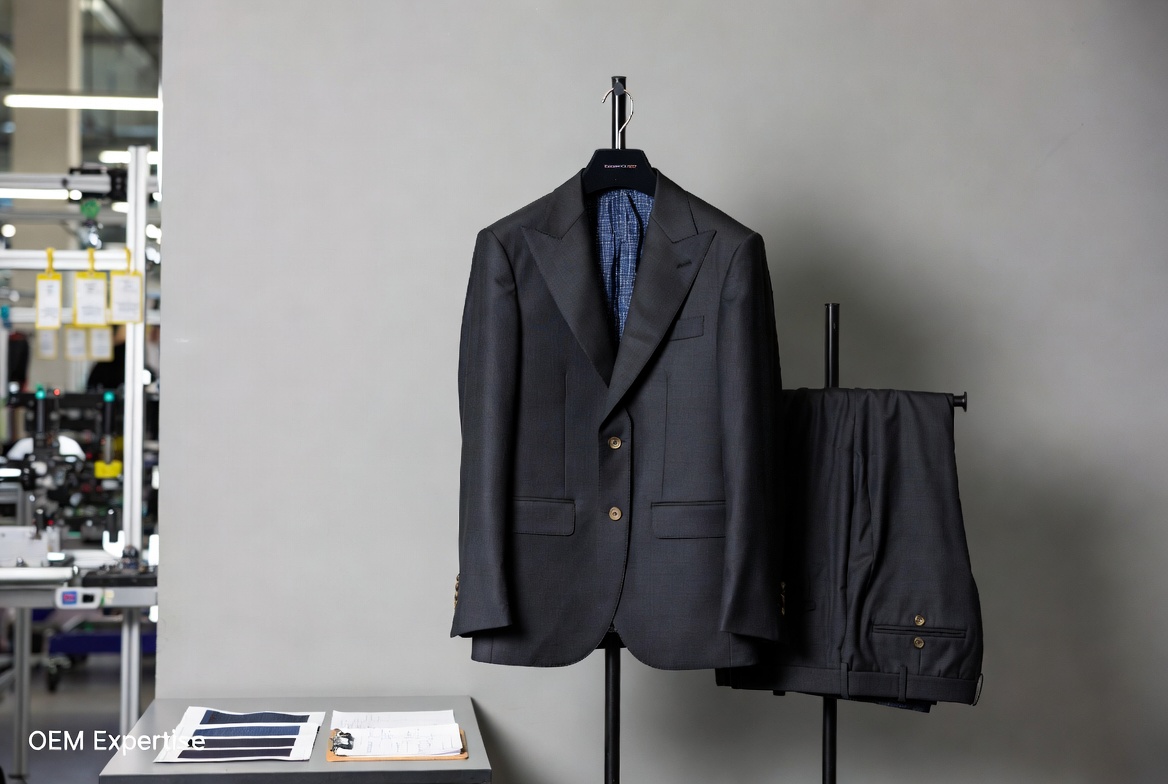
For a standard wool‑blend office suit worn one or two times per week:
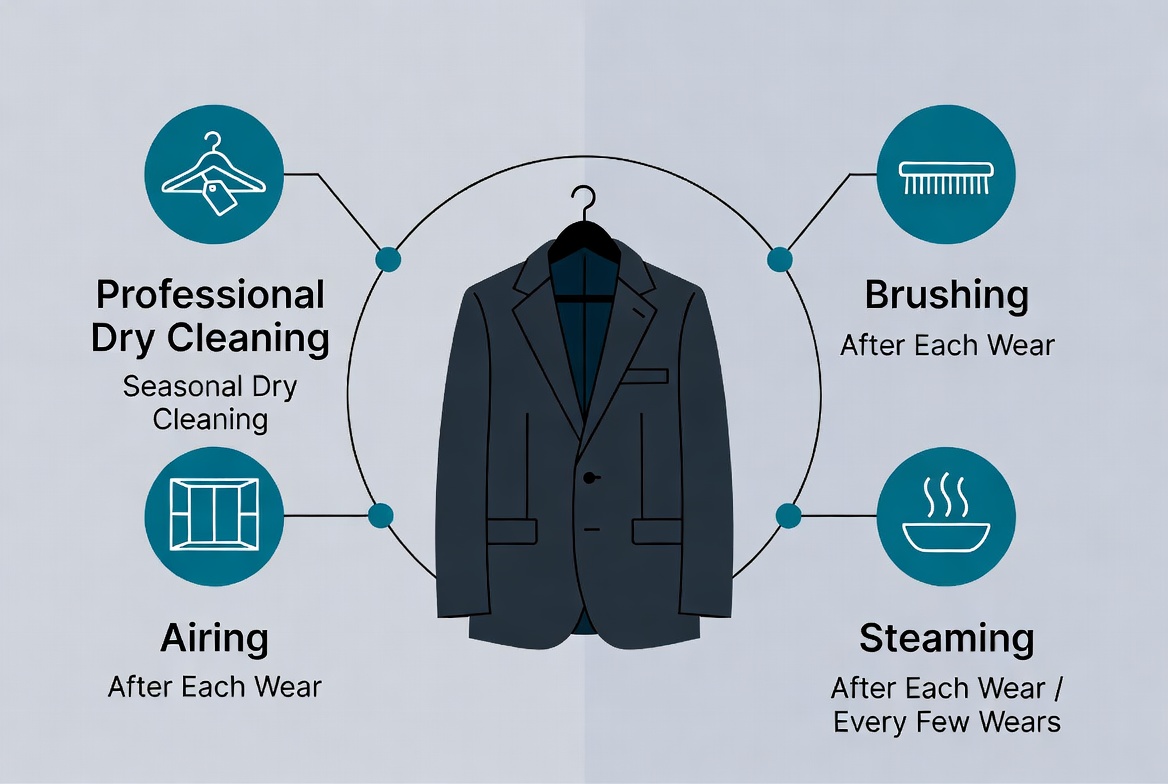
1. After each wear: Brush lightly and hang on a wide, shaped hanger; air in a ventilated space. [bigcitydrycleaners]
2. Every few wears: Use a garment steamer to remove creases and refresh odours, keeping contact light and controlled. [youtube]
3. Every 10–20 wears: Schedule professional dry cleaning, assuming moderate climate and perspiration levels. [inthewash.co]
This routine keeps the suit presentable, limits fabric stress and spreads dry‑cleaning cost across months of use. [bigcitydrycleaners]
For a special‑occasion suit worn infrequently:
1. Before storage: Ensure the suit is clean and fully dry; use brushing and a final steam for presentation. [bigcitydrycleaners]
2. Storage: Use a breathable garment bag and padded hanger, avoiding cramped wardrobes. [bigcitydrycleaners]
3. Before next wear: Quick steam and inspection for any marks; professional dry cleaning only if visible soil or odour appears. [inthewash.co]
This approach preserves fabric and shape over long intervals while minimising unnecessary solvent exposure. [inthewash.co]
Modern buyers increasingly care about sustainable garment care. Brands can leverage non‑dry‑clean techniques – especially steaming, brushing and occasional professional wet cleaning – to reduce chemical use while maintaining suit standards. [bigcitydrycleaners]
OEM partners in China, including Shanghai Youti Clothing, now align production decisions (fabric choice, linings, finishes) with these care expectations, helping retailers offer suits that perform well under more eco‑friendly cleaning routines. [finetexglobal]
For international brands, detailed online guidance on suit cleaning is not just support – it's content marketing. Articles, videos and downloadable care guides increase website dwell time and reinforce a premium, expert image. [youtube]
By collaborating with OEM manufacturers on technical details, marketing teams can publish care content that is both user‑friendly and technically accurate, strengthening E‑E‑A‑T signals in search while helping customers make smarter cleaning decisions. [finetexglobal]
Working with an experienced China OEM clothing manufacturer does more than solve production capacity; it connects brands to a full ecosystem of fabric testing, compliance, care guidance and quality control. [accio]
At Shanghai Youti Clothing Co., Ltd., we support overseas brands with pattern development, material sourcing, care label strategy and post‑purchase documentation, ensuring that every suit is engineered and communicated for real‑world wear and cleaning. [sinofinetex]
For value‑driven brands, communication might emphasise easy, low‑cost non‑dry‑clean routines. Premium tailoring labels, on the other hand, usually highlight professional care, fabric heritage and careful cleaning protocols. [accio]
An OEM partner that understands both garment construction and global buyer expectations helps brands balance these angles, aligning care strategy with price point, target audience and sustainability commitments. [finetexglobal]
If your brand wants suits that look sharp after dozens of wears, you need both robust construction and honest, practical care guidance. Shanghai Youti Clothing Co., Ltd. can help you design, produce and communicate suits optimised for balanced cleaning routines—combining smart non‑dry‑clean methods with targeted professional care—so your customers enjoy long‑lasting performance and your brand earns long‑term trust. [sinofinetex]
To explore OEM suit programs, fabric options and customised care strategies for your market, connect with our team and start building a suit collection designed for real‑world use and cleaning.
Q1: Can I put a "dry clean only" suit in the washing machine?
In most cases, no. Machine washing can cause fading, shrinkage and structural damage, especially to wool and tailored jackets, so professional care is strongly recommended. [inthewash.co]
Q2: How often should a business suit be professionally dry cleaned?
For regular office wear, many experts suggest every 10–20 wears, combined with brushing, airing and steaming between visits to minimise fabric stress. [bigcitydrycleaners]
Q3: Is steaming safe for all suits?
Steaming is generally safe when done correctly, but it should be light and controlled, with care taken to avoid over‑saturating delicate fibres or glued interfacings. Always check the care label first. [youtube]
Q4: Are home dry‑cleaning kits a full replacement for professional cleaners?
No. Kits help refresh suits and address light odours, but they cannot match deep stain removal and solvent‑based treatment from skilled professional dry cleaners. [inthewash.co]
Q5: How can OEM manufacturers help improve brand suit care instructions?
Experienced OEM suppliers test fabric behaviour, validate care claims and provide detailed guidance that brands can use in labels, product pages and content, improving user trust and garment longevity. [accio]
1. [Big City Cleaners – 7 Alternatives to Dry Cleaning Your Suit]
2. [In The Wash – How to Dry Clean a Suit at Home]
4. [FineTex Global – How To Start An Apparel Brand With A China OEM Factory]
5. [Accio – OEM Clothing Manufacturer China]
6. [YouTube – Your Suit Doesn't Need Dry Cleaning (These Are Usually Better)]


