
Views: 208 Author: Youti Clothing Publish Time: 2026-08-14 Origin: Site


Content Menu
● When Should You Roll Up Shirt Sleeves?
● Prepare the Shirt Before Rolling
>> Start With These Four Checks
● Method 1: The Basic Shirt Sleeve Roll
>> Best For
● Method 2: The Casual Forearm Roll
>> Best For
● Method 3: The Master Roll With Cuff Detail Showing
>> Best For
● Choose the Right Roll for the Shirt
>> Fabric and Construction Notes
● Common Sleeve-Rolling Mistakes
>> Rolling Over Buttoned Cuffs
>> Making Each Fold a Different Width
>> Pushing Sleeves Up Instead of Folding
>> Rolling Too High for the Occasion
>> Wearing Rolled Sleeves Under a Jacket
>> Leaving Sleeves Rolled After Wear
● Quality Checks for OEM Shirt Buyers
● Care Tips After Rolling Sleeves
● Work With a Professional Shirt OEM Partner
● FAQ
>> 1. Is it acceptable to roll up dress shirt sleeves?
>> 2. What is the best way to roll shirt sleeves without wrinkles?
>> 3. Should the cuff show when rolling sleeves?
>> 4. Why do rolled shirt sleeves keep falling down?
>> 5. Can you roll sleeves on a linen shirt?
>> 6. How high should shirt sleeves be rolled?
>> 7. Can French-cuff shirts be rolled up?
Knowing how to roll up shirt sleeves is a small styling skill with a practical payoff. A clean sleeve roll keeps cuffs away from water, dust, food, and production work while turning a long-sleeve shirt into a more relaxed, intentional look.
For shirt buyers, designers, and brand teams, sleeve rolling also reveals something important about garment construction. A roll that stays in place, looks balanced, and unfolds with minimal creasing depends on thoughtful sleeve length, cuff proportion, fabric weight, placket construction, and fit. At Shanghai Youti Clothing Co., Ltd., we view this as a useful real-world test of whether an OEM shirt is designed for daily wear—not merely for a product photo.
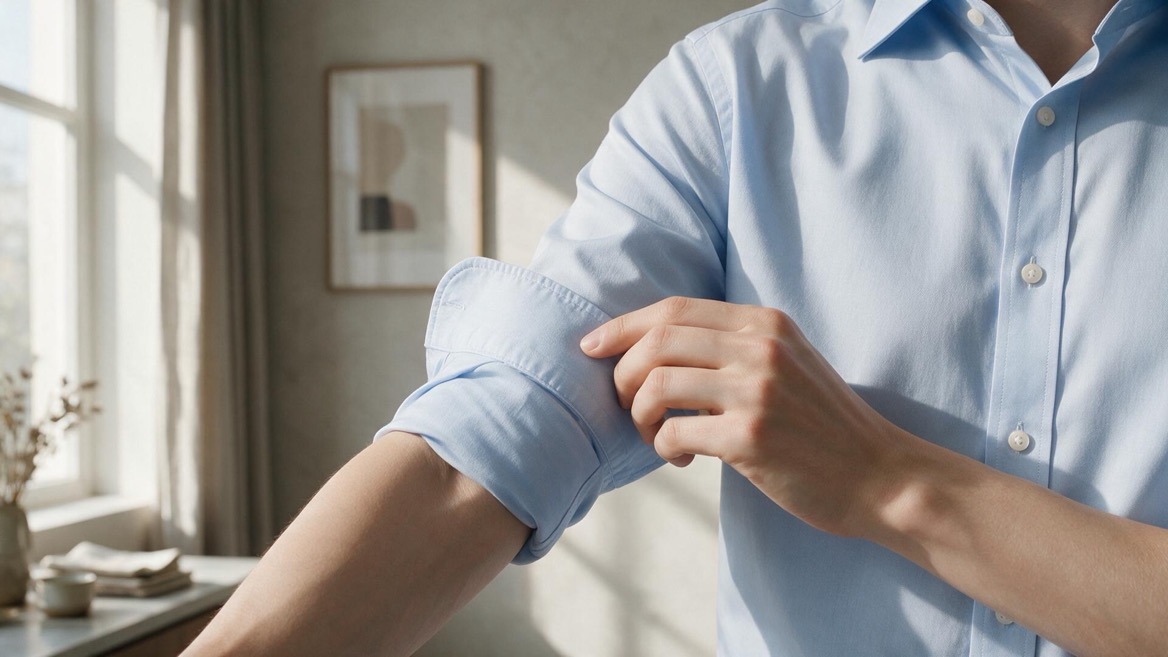
A rolled sleeve signals a change in purpose. It can make a shirt more practical, more comfortable, or less formal. The right moment matters as much as the technique.
Roll your sleeves when you are:
- Washing hands, handling samples, packing products, cooking, or doing hands-on work
- Moving between warm outdoor conditions and air-conditioned indoor spaces
- Transitioning from an office or showroom to a casual dinner or social setting
- Wearing a smart casual shirt without a jacket
- Working in a creative, production, retail, hospitality, or relaxed office environment
Keep sleeves down when the setting calls for full formality. That generally includes weddings, memorial services, formal presentations, client meetings in conservative industries, and occasions involving a suit jacket, waistcoat, or formal tailoring.
A useful rule is simple: roll for function or deliberate informality. Do not roll sleeves merely to compensate for sleeves that are too long. If a shirt needs rolling every time you wear it, revisit the sleeve measurement and cuff position.
The most polished results begin before the first fold. A rushed sleeve roll often twists the sleeve seam, traps a button, or creates a bulky band around the forearm.
1. Unbutton the cuff and gauntlet button.
The gauntlet button is the small button on the sleeve placket above the cuff. Leaving it fastened restricts movement and can distort the roll.
2. Remove cufflinks first.
Never attempt to fold a French cuff with cufflinks still attached. This can pull the fabric, strain the buttonhole area, and damage the accessory.
3. Smooth the sleeve flat.
Run your palm from the upper arm toward the cuff. Remove twists before rolling, not after.
4. Check both sleeve lengths.
The cuff should normally sit at the wrist bone when buttoned. Uneven sleeve lengths make symmetrical rolling difficult and may indicate a production or fit issue.
For brands developing private-label shirts, these details deserve attention during sampling. Sleeve rolls expose the inside cuff, sleeve placket, seam alignment, and fabric recovery—all areas that influence perceived quality.
The basic sleeve roll is the most practical choice for physical work, warm weather, or a casual shirt with a standard cuff. It creates a compact, secure roll that can sit at or above the elbow.
- Oxford shirts and cotton poplin shirts
- Flannel shirts and overshirts
- Factory visits, warehouse work, events, and travel
- Casual uniforms and workwear-inspired collections
- Situations where the cuff should remain fully covered
1. Unbutton the cuff and the gauntlet button.
2. Turn the cuff upward at the cuff seam, so the inside of the cuff faces outward.
3. Smooth the fold from front to back.
4. Fold the sleeve upward again using the original cuff height as your guide.
5. Continue in equal-width folds until the roll sits just below the elbow.
6. If you need additional arm clearance for hands-on work, make one more fold above the elbow.
7. Repeat on the other sleeve, using the first roll as a height reference.
The key is consistent fold width. Each fold should be approximately the height of the cuff. Narrow, uneven folds tend to look accidental and are more likely to loosen.
Avoid pulling the sleeve tightly around the upper arm. A roll should stay put without restricting circulation or bending at the elbow.
The casual forearm roll is the fastest method for daily wear. It keeps more of the arm covered than a high roll and is easy to undo when you need a more polished appearance again.
This is a practical option for a shirt worn under a lightweight knit, an open overshirt, or a relaxed blazer-free outfit.
- Smart casual shirts
- Light cotton and cotton-linen fabrics
- Long meetings in warm environments
- Quick handwashing, lunch, and commuting
- Slim arms or shirts with a clean, fitted sleeve
1. Release the cuff and gauntlet buttons.
2. Turn the cuff inside out once.
3. Fold the sleeve upward over the cuff, covering it completely.
4. Tuck the cuff corners neatly inside the new fold.
5. Stop around the middle of the forearm.
6. Compare both arms and make small adjustments from the sides.
This method uses fewer folds, which can help reduce visible crease lines after the sleeve is returned to full length. It also creates a controlled, low-profile result rather than a bulky roll.
For the best appearance, leave several inches of wrist visible. A roll that sits too close to the cuff can make the shirt look oversized, while a roll pushed unevenly toward the elbow can look unfinished.
The master roll is the strongest choice when a shirt has a contrast inner cuff, printed trim, chambray facing, or a distinctive lining detail. It creates a layered finish and allows part of the cuff to remain visible.
For fashion brands, this technique is especially useful in product styling because it presents construction details without making the shirt look excessively casual.
- Shirts with contrast cuffs or patterned inner cuffs
- Resort shirts and premium casual collections
- Casual Fridays, creative workplaces, and social settings
- Made-to-order shirts with personalized cuff details
- Editorial and e-commerce photography
1. Open the cuff and gauntlet buttons completely.
2. Turn the cuff inside out.
3. Pull the inverted cuff upward to just below the elbow.
4. Keep the cuff flat and smooth rather than rolling it into a narrow tube.
5. Fold the lower sleeve upward over the bottom part of the cuff.
6. Leave a narrow strip of the cuff visible above the fold.
7. Adjust the visible cuff edge so it appears even around the arm.
8. Repeat on the other sleeve at the same height.
The master roll should look relaxed but controlled. The visible cuff is not an accident; it is a design feature. Keep the exposed area narrow enough to look refined and wide enough to show the intended contrast.
This technique is also easier to release than repeated narrow folds. Pull the outer sleeve downward, smooth the fabric with your hand, and re-button the cuff when needed.
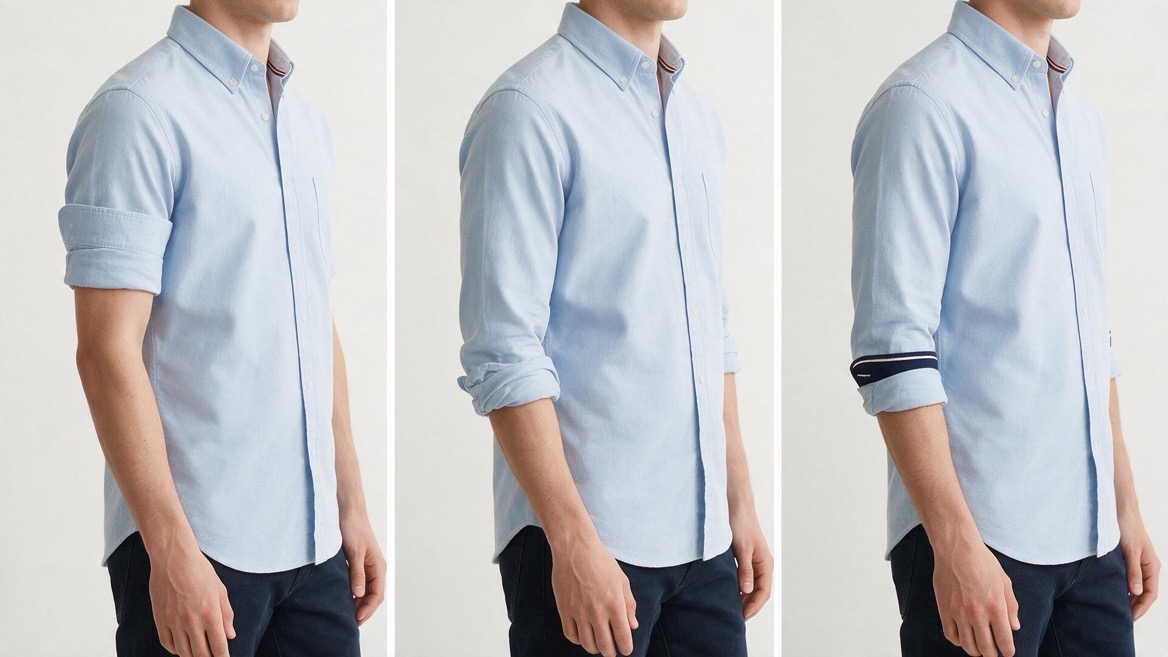
Not every shirt should be rolled in the same way. Fabric density, cuff construction, sleeve volume, and intended use all affect the result.
| Shirt Type | Recommended Method | Why It Works |
|---|---|---|
| Cotton poplin dress shirt | Casual forearm roll or master roll | Keeps a neat silhouette and limits excess bulk |
| Oxford button-down | Basic roll | The firmer fabric holds repeated folds well |
| Linen shirt | Casual forearm roll | Reduces compression and respects linen's natural texture |
| Flannel shirt | Basic roll | The heavier fabric creates a stable, substantial roll |
| Contrast-cuff shirt | Master roll | Shows the cuff detail intentionally |
| Work shirt or utility shirt | Basic roll above elbow | Offers maximum practical clearance |
| French-cuff shirt | Avoid rolling when possible | Formal construction and cufflinks are not designed for frequent rolling |
A sleeve roll reveals more than style. It highlights whether the shirt has been engineered for regular movement.
Firm fabrics such as Oxford cloth often stay rolled more easily because the material has body. Softer or lighter fabrics can slide down, especially when the sleeve is wide or the fabric surface is smooth.
Sleeve plackets should lie flat. A poorly positioned placket can create a diagonal pull once the sleeve is folded. During garment development, check whether the gauntlet opening remains comfortable and whether the placket edge is concealed cleanly in a standard roll.
Cuff height also matters. An oversized cuff can make a basic roll too thick, while a very shallow cuff may create folds that lack structure. For most classic shirts, a balanced cuff proportion supports both buttoned wear and rolled styling.
A good shirt can still look careless if the sleeve roll is poorly executed. These are the most common problems—and how to correct them.
Keeping buttons fastened creates tension and an uneven shape. Always release cuff and placket buttons before folding.
Uneven layers create a crooked roll and make the two arms look mismatched. Use the cuff height as a repeatable guide.
Simply shoving sleeves toward the elbow causes random bunching. The fabric may slide down, press uncomfortably into the elbow, and appear untidy.
For casual business settings, stop below or around the elbow. Rolls far above the elbow are best reserved for manual work, outdoor activity, or strongly casual outfits.
A jacket over rolled shirt sleeves creates bulk and wrinkles. Roll the sleeves down before putting on tailoring.
Unroll the sleeves before hanging, laundering, pressing, or packing the shirt. This reduces deep fold memory and makes the next wear easier to prepare.
For apparel brands sourcing long-sleeve shirts, sleeve rolling can be added to the sample review process. It is a simple wear test that exposes several production details at once.
Ask the factory or product development team to assess the following:
- Does the sleeve remain balanced after two or three folds?
- Does the fabric recover reasonably after the sleeve is unfolded?
- Does the placket stay aligned rather than twisting toward the front or back?
- Are the cuff corners sharp and evenly constructed?
- Is the inside cuff finish clean enough to be visible in a master roll?
- Does the sleeve feel restrictive when the wearer bends the arm?
- Do both sleeves roll to the same position?
This test is particularly valuable for shirts positioned as business casual, travel, resort, uniform, utility, or premium casualwear. Customers may not describe these construction points in technical language, but they notice when a sleeve roll slips, twists, or looks bulky.
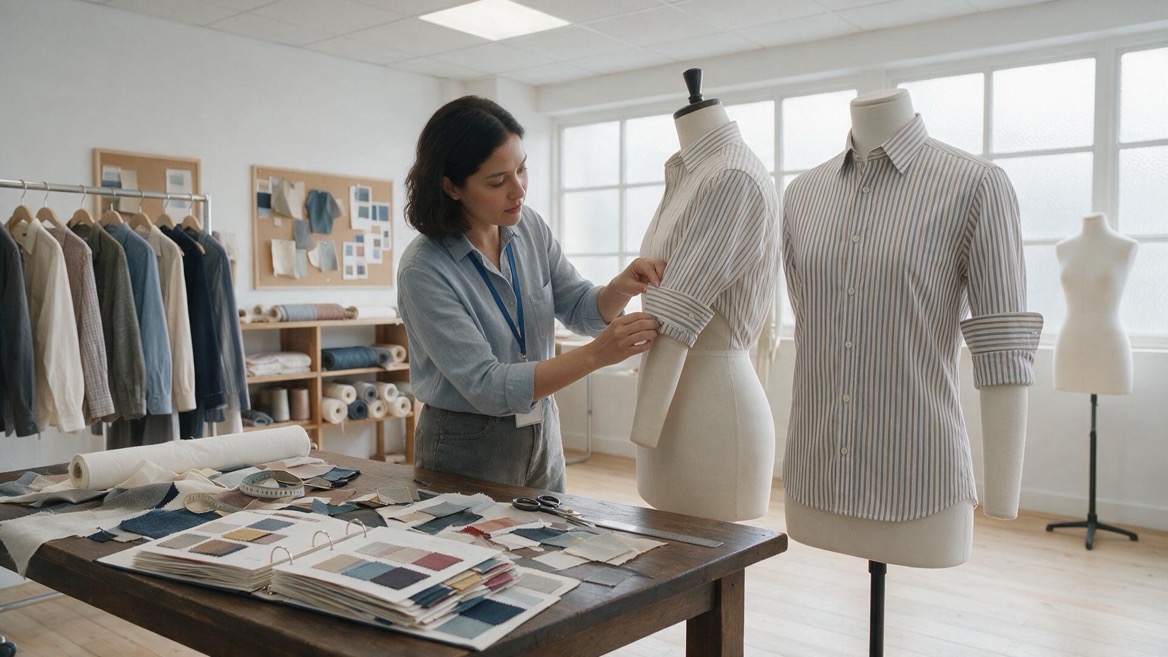
Rolling does not automatically damage a shirt, but frequent tight folding can create wrinkles—especially in fine cotton, linen, and fabrics with a crisp finish.
To keep the shirt looking sharp:
- Unroll sleeves as soon as practical
- Smooth the sleeve with your hand before hanging it up
- Steam or lightly press persistent fold lines
- Avoid storing shirts with sleeves rolled
- Do not roll tightly over buttons, cufflinks, or thick bracelets
- Use the lightest secure fold rather than compressing the fabric
A shirt that is properly fitted, well pressed, and carefully rolled will look purposeful from the first meeting to the last task of the day.
A well-designed shirt should perform beyond the fitting room. Whether your collection needs classic dress shirts, casual button-downs, work shirts, flannel overshirts, or shirts with contrast cuff details, construction decisions influence how the garment looks and feels in real use.
Shanghai Youti Clothing Co., Ltd. supports overseas brands, wholesalers, and manufacturers with OEM shirt development and production. Share your target market, fabric direction, fit requirements, cuff style, branding needs, and expected order volume to begin building a shirt collection designed for daily wear.
Yes, in casual or practical situations. Keep the roll neat, balanced, and generally at or below the elbow. Avoid it for formal events, conservative client meetings, or when wearing a suit jacket.
Use the casual forearm roll because it requires fewer folds. Start with a smooth sleeve, keep folds broad and even, and unroll the sleeve soon after wearing it.
It depends on the shirt and the desired look. Hide the cuff for a clean, classic result. Leave a narrow cuff edge visible when the shirt has a contrast lining or decorative inner cuff.
The sleeve may be too wide, the fabric may be very smooth or lightweight, or the folds may be too narrow. Try broader folds, stop just below the elbow, and choose a method suited to the fabric weight.
Yes. Use a lighter casual forearm roll rather than many tight folds. Linen naturally creases, so avoid compressing it tightly and smooth the sleeve when you unroll it.
For most smart casual settings, roll to the forearm or just below the elbow. Roll above the elbow only when you need practical arm clearance for hands-on work.
It is not ideal. French cuffs are designed for cufflinks and formal wear. If the situation requires rolled sleeves, a standard button-cuff shirt is usually the better choice.
- Bombay Shirt Company. "[How to Perfectly Roll Up Your Shirt Sleeves]." [bombayshirts]
- Art of Manliness. "[The Complete Guide to Rolling Up Your Shirt Sleeves]." [artofmanliness]
- Gentleman's Gazette. "[How to Roll Up Your Shirt Sleeves]." [gentlemansgazette]
- bugatti fashion. "[Roll Up Shirt Sleeves Neatly]." [bugatti-fashion]
- wikiHow. "[How to Roll Up Shirt Sleeves]." [wikihow]


