
Views: 264 Author: Youti Clothing Publish Time: 2026-10-10 Origin: Site


Content Menu
● Reflective Workwear vs High Visibility Clothing: What Is the Difference?
>> What Is Reflective Workwear?
>> What Is High Visibility Clothing?
● Side-by-Side Comparison for Night Operations
● How Reflective and Fluorescent Materials Work After Dark
>> Retroreflective Tape Needs External Light
>> Fluorescent Fabric Does Not Replace Nighttime Reflection
● Which High Visibility Clothing Standards Should Buyers Specify?
>> United States: ANSI/ISEA 107 and Workplace Requirements
>> European and International Programs: ISO 20471
● A Five-Step Method for Choosing Night Workwear
>> 1. Map Vehicle Exposure and Lighting
>> 2. Define the Required Classification
>> 3. Evaluate the Complete Clothing System
>> 4. Trial Fit and Visibility During Real Tasks
>> 5. Set Inspection and Replacement Rules
● Three Illustrative Night-Operation Scenarios
>> Road Maintenance With Passing Traffic
>> Distribution Yard With Reversing Vehicles
>> Controlled Maintenance Area With Limited Vehicle Access
● OEM Design Details That Can Undermine Visibility
>> Logos and Color Blocking Reduce Usable Area
>> Smaller Sizes Need Separate Attention
>> Other Hazards Require Separate Protection
● What Overseas Buyers Should Request From an OEM Supplier
● Compare Lifetime Value, Not Just Unit Price
● Build Your Night Workwear Program Around a Verified Specification
>> Is reflective workwear the same as high visibility clothing?
>> Is fluorescent yellow enough for night operations?
>> Does every night worker need Class 3 clothing?
>> Can we add our brand logo to high visibility uniforms?
>> Can reflective tape be added to an ordinary uniform to make it compliant?
>> How often should high visibility clothing be replaced?
Choosing between reflective workwear and high visibility clothing for night operations starts with one important distinction: these are overlapping categories, not competing technologies. Reflective workwear uses materials that return light toward its source. Standards-compliant high visibility clothing combines specified materials, coverage, and garment design to help workers stand out.
For workers exposed to moving vehicles after dark, the right solution is usually visibility that has been assessed for the task—not simply a dark uniform with reflective trim.
At Shanghai Youti Clothing Co., Ltd., we approach this comparison from an OEM sourcing perspective for overseas brands, wholesalers, and manufacturers. The purchasing question is not just "Which garment looks brighter?" It is "Which specification suits the workplace, target market, and entire service life?"
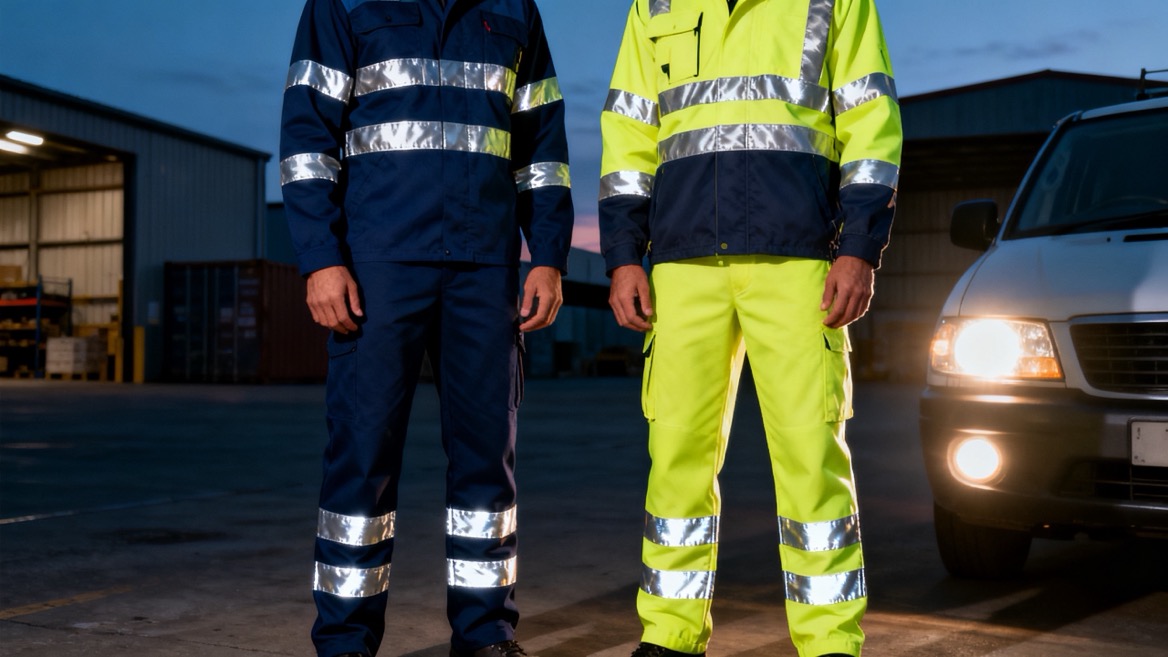
Reflective workwear is a broad commercial description for clothing incorporating reflective elements. Examples include navy coveralls with silver tape, work trousers with reflective bands, and jackets with reflective piping.
For nighttime occupational use, the relevant technology is usually retroreflection. Unlike ordinary reflection, retroreflective material sends much of the incoming light back toward its source, such as vehicle headlights.
However, reflective detailing alone does not establish that a garment meets a high-visibility safety standard. Tape performance, placement, background material, and the finished design all matter.
High visibility clothing is designed to make the wearer conspicuous against the surrounding environment.
Standards-compliant garments typically combine:
- Fluorescent background material for daytime conspicuity.
- Retroreflective material for visibility under headlights after dark.
- Defined material areas and placement.
- Garment construction appropriate to the claimed classification.
A fluorescent vest without suitable retroreflective material is not automatically adequate for nighttime vehicle exposure. Equally, a dark jacket with reflective stripes is not automatically compliant high-visibility protective clothing.
| Comparison point | Reflective workwear | Standards-compliant high visibility clothing |
|---|---|---|
| Main purpose | Adds reflective visibility to work clothing | Provides defined conspicuity performance |
| Typical appearance | Often dark or brand-colored fabric with reflective details | Specified background colors and retroreflective layouts |
| Daytime performance | Depends on background color and contrast | Fluorescent material supports daytime conspicuity |
| Nighttime performance | Depends on illumination, material quality, and coverage | Retroreflective performance and design follow the applicable standard |
| Compliance status | Cannot be inferred from the product name | Requires evidence matching the finished garment |
| Branding flexibility | Often greater freedom over colors and panels | Branding must preserve required visible areas |
| Purchasing priority | Establish whether it satisfies the assessed risk | Verify classification, documentation, fit, and durability |
The practical takeaway is straightforward: compare documented garment performance, not marketing terminology.
Retroreflective workwear does not generate its own light. Its nighttime benefit depends on illumination reaching the material and being returned toward an observer near the source.
This explains why a garment may appear striking in a flash photograph but behave differently when a vehicle approaches from another angle.
Material coverage can also be obscured by equipment, carried loads, open jackets, or an unsuitable outer layer. A garment should therefore be assessed as worn, not only laid flat.
Fluorescent fabric improves conspicuity in daylight by enhancing visible color contrast. It should not be confused with self-illuminating material.
For a shift starting before sunset and finishing after midnight, fluorescent and retroreflective components serve complementary purposes.
Neither eliminates the need for suitable lighting, traffic separation, controlled vehicle movements, and clear operating procedures. Clothing is one protective measure within a wider safety system.
ANSI/ISEA 107 addresses high-visibility safety apparel materials, design, and performance.
Its garment types distinguish intended operating environments:
- Type O: off-road settings.
- Type R: roadway and temporary traffic control settings.
- Type P: public safety activities.
Performance classes describe different material-area and design requirements. Type and class should be specified together where applicable.
Do not assume every nighttime task automatically requires the same class. For example, the federal traffic-control manual recommends Class 3 apparel for nighttime flaggers, but that recommendation should not be rewritten as a universal rule for every night worker.
Confirm the applicable workplace rules, contract specification, and adopted standard edition before ordering.
ISO 20471 addresses high visibility clothing intended to signal the wearer's presence during daylight and under headlights in darkness.
Its requirements cover color, retroreflection, minimum material areas, and placement. It uses three garment classes, with Class 3 providing the highest classification within that system.
For European procurement, specify the applicable EN ISO 20471 requirements and supporting conformity documentation.
An ANSI classification and an ISO classification are not interchangeable labels. A product marketed for both systems needs evidence supporting both claims.
Document where workers and moving vehicles interact.
Consider:
- Public roads versus controlled private premises.
- Vehicle routes, reversing movements, and approach directions.
- Ambient lighting and headlight illumination.
- Visual clutter, weather, and obstructions.
- Whether workers regularly bend, kneel, or carry large objects.
A well-lit loading bay and an unlit roadside maintenance area should not automatically receive the same garment specification.
Have the responsible safety professional or customer identify the applicable standard, garment type, and class.
Our procurement recommendation is to settle this before discussing fabric colors or logo dimensions. Otherwise, a visually attractive sample may require extensive redesign.
Assess the jacket, trousers, vest, rainwear, and other equipment together.
A compliant inner garment offers limited benefit when hidden by an unsuitable coat. Likewise, a harness, backpack, or tool belt may cover important material.
Do not assume two garments create a higher class simply because they are worn together. Verify the claimed ensemble configuration.
Arrange a controlled trial representing actual working conditions.
Ask wearers to walk, bend, reach, climb, and handle equipment. Review visibility from relevant directions without exposing anyone to live traffic.
A site trial helps identify practical weaknesses, but it does not replace standardized testing or conformity assessment.
Specify who checks garments, how laundering is controlled, and when items leave service.
Replacement decisions should consider contamination, fading, damaged tape, missing sections, and loss of the intended fit or coverage—not only whether the garment remains wearable.
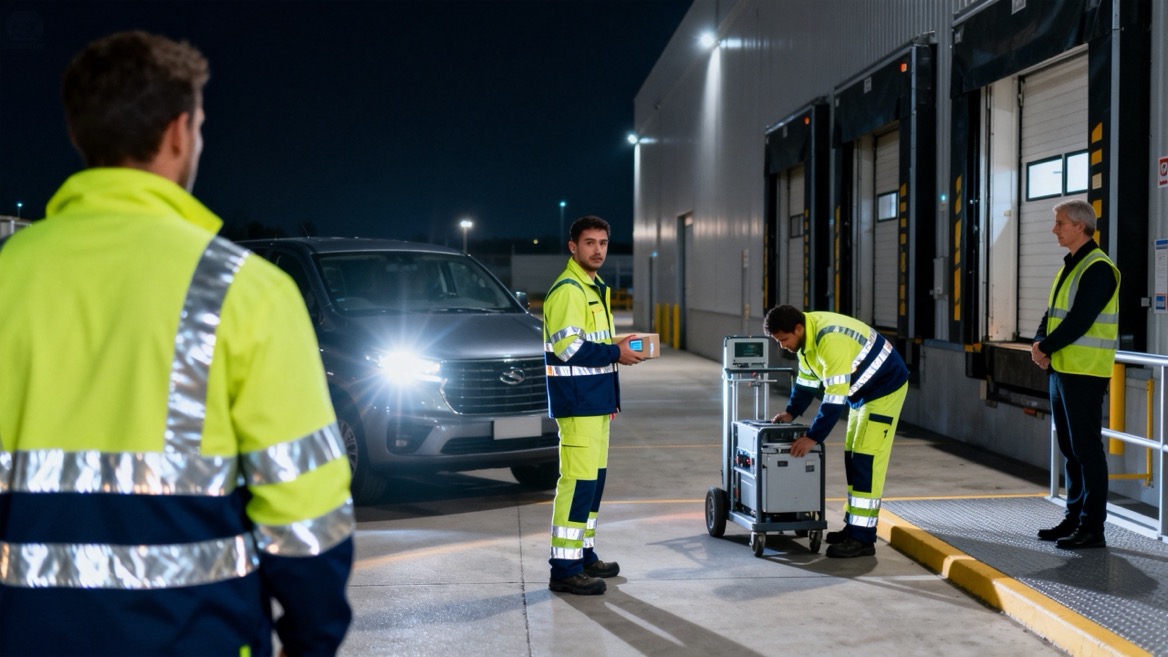
These examples demonstrate a decision process; they are not reported customer projects.
Workers face changing headlights, complex backgrounds, and vehicles outside their direct control.
Begin with the applicable roadway requirements. Select the appropriate classified garment or ensemble, then check visibility when workers crouch beside equipment or wear rain protection.
Dark reflective uniforms should not be substituted merely because they look bright in a sample photograph.
A private yard may include parked trailers, shadows, and frequent changes in worker direction.
The specification should account for obstructed sightlines and whether garments remain visible during handling tasks. Traffic segregation and reversing controls remain essential.
"Off-road" does not mean "low risk," and it should not become a shortcut for selecting the lowest classification.
Reflective detailing may be suitable as an additional feature where a documented assessment does not require classified high-visibility apparel.
However, that conclusion must come from the actual exposure. It should not be inferred from the building being indoors or from the job title alone.
Large back logos, contrast panels, pockets, and decorative inserts can reduce the visible background material available for compliance.
For custom high visibility workwear, approve branding and protective design together. A production logo should not be added after the compliance layout has been finalized without review.
A design that works in a large size may not retain enough qualifying material in the smallest size.
Ask for a size-range review rather than assuming every graded version inherits the same classification.
High visibility clothing is not automatically flame resistant, arc rated, waterproof, or chemically protective.
Where hazards overlap, specify the complete protection package and verify the compatibility of fabrics, reflective components, and garment construction.
Stretch, breathability, and pocket design also deserve attention. Comfortable clothing is easier to wear correctly throughout a long shift.
A useful technical pack should include:
1. Target market and applicable standard edition.
2. Required garment type, class, and intended use.
3. Fabric and retroreflective material specifications.
4. Drawings showing tape placement and branding.
5. Size-range and ensemble requirements.
6. Relevant test reports and conformity documents.
7. Care instructions and declared cleaning limits.
8. An approved sample and production inspection criteria.
A reflective-tape report is not the same as evidence for the finished garment.
Check that documentation identifies the actual style, materials, construction, and configuration being purchased. Establish a change-control process for substitutions: a different tape, fabric, logo size, or panel arrangement may require technical reassessment.
From an OEM purchasing standpoint, traceable specifications are more valuable than a general promise that a garment is "safety approved."
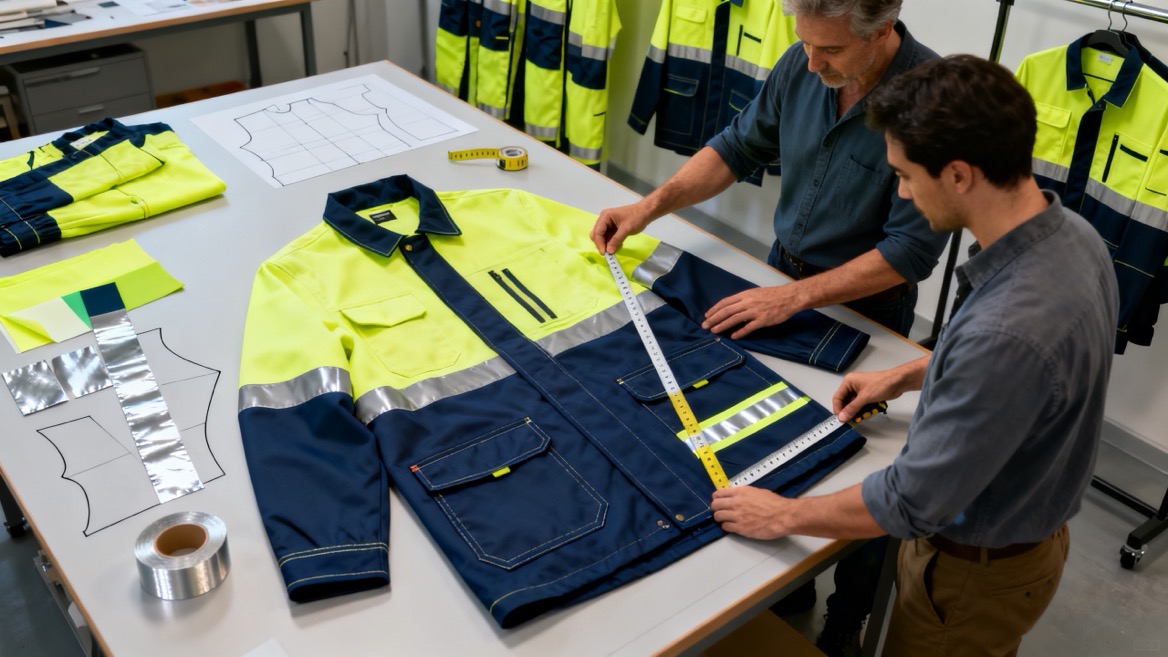
The cheapest reflective work jacket may become expensive if it requires early replacement or cannot support the customer's documentation requirements.
Evaluate:
- Initial garment cost.
- Laundering compatibility.
- Inspection and replacement workload.
- Branding durability.
- Availability of repeat-order materials.
- Consistency between approved samples and bulk production.
Avoid treating a stated wash count as a guaranteed calendar lifespan. Real use includes abrasion, contamination, sunlight, and maintenance conditions that vary between workplaces.
Follow the care label and retire garments when their condition no longer supports the intended protective function.
For night operations, the best choice is not "reflective versus bright." It is a garment system matched to exposure, supported by documentation, and maintained throughout use.
Shanghai Youti Clothing Co., Ltd. provides OEM uniforms and work clothes for overseas brands, wholesalers, and manufacturers. Send us your target market, intended operations, required standard and classification, size range, branding artwork, and order quantities to start a specification-led discussion. Agree on testing responsibilities and approval criteria before bulk production.
No. Reflective workwear describes clothing with reflective features. High visibility clothing may meet a defined protective standard, but that status requires supporting evidence. The categories overlap when a garment incorporates reflective material and satisfies the relevant requirements.
Not by itself. Fluorescent color supports daytime conspicuity. For workers exposed to vehicle headlights after dark, appropriate retroreflective performance and garment design are important.
No universal rule covers every job and jurisdiction. The required classification depends on applicable regulations, site requirements, and risk assessment. Some activities, including nighttime flagging, have specific guidance.
Yes, provided the finished design preserves the required material areas and layout. Review logo dimensions, placement, and production methods before approving the garment specification.
Adding tape does not automatically establish compliance. Background material, coverage, layout, performance testing, and the finished garment all need consideration.
There is no universal replacement interval. Inspect garments according to workplace procedures and manufacturer instructions. Replace items when damage, contamination, fading, or worn reflective components compromise their intended function.
1. International Organization for Standardization — "ISO 20471:2013: High visibility clothing — Test methods and requirements." Describes the standard's scope, including daytime and headlight-illuminated conspicuity, material performance, minimum areas, and placement. [iso]
2. International Safety Equipment Association — "High Visibility Products." Explains fluorescent and retroreflective materials, performance criteria, and the relationship between garment classes and working conditions. [safetyequipment]
3. American National Standards Institute — "ANSI/ISEA 107-2020: High-Visibility Safety Apparel." Summarizes requirements addressing color, retroreflection, and material configuration. Published November 2, 2020. [blog.ansi]
4. Federal Highway Administration — "Manual on Uniform Traffic Control Devices, 11th Edition, Part 6: Temporary Traffic Control." Provides worker apparel requirements and guidance recommending Class 3 apparel for nighttime flaggers. [mutcd.fhwa.dot]
5. Health and Safety Executive — "High visibility clothing." Provides selection guidance concerning lighting, weather, workplace exposure, fit, and garment use. Its older standard references should not be treated as the current procurement specification. [hse.gov]


