
Views: 246 Author: Youti Clothing Publish Time: 2026-08-11 Origin: Site


Content Menu
● Slim Fit Shirt vs Regular Fit Shirt: Quick Answer
>> Slim Fit Shirt Limitations for Long Hours
● What Is a Regular Fit Shirt?
>> Regular Fit Shirt Advantages
>> Regular Fit Shirt Limitations
● Slim Fit vs Regular Fit Shirt Comparison
● Why Shirt Fit Matters During Long Office Hours
● The Long-Office-Hours Movement Test
● Fabric Can Change the Fit Experience
● Which Fit Is Best for Different Office Roles?
● OEM Development Advice for Shirt Buyers
● How to Choose Between Slim Fit and Regular Fit
● FAQ
>> 1. Is a slim fit shirt suitable for all-day office wear?
>> 2. Is regular fit the same as loose fit?
>> 3. Which shirt fit is better for corporate uniforms?
>> 4. Does stretch fabric make a slim fit shirt more comfortable?
>> 5. How should buyers compare shirt fits from different suppliers?
>> 6. What is the best shirt fabric for long office hours?
Choosing between a slim fit shirt and a regular fit shirt is not only a style decision. For professionals who commute, sit through meetings, work at a desk, travel between clients, and stay presentable late into the day, shirt fit directly affects comfort, mobility, confidence, and the perceived quality of a uniform or apparel collection.
From our experience developing business shirts for international brands, wholesalers, and corporate-wear programs, the best choice for long office hours is usually not simply "slim" or "regular." It is the fit that balances a clean silhouette with enough room for natural movement. For many all-day office settings, a well-developed regular fit shirt is the safer and more versatile choice. However, a properly engineered slim fit shirt can be an excellent option for lean wearers, formal teams, and climate-controlled workplaces.
This guide compares slim fit vs regular fit shirts from the perspective of wearers, buyers, designers, and apparel brands planning an OEM shirt collection.

A slim fit shirt follows the body more closely through the chest, waist, sleeves, and armholes. It creates a sharper, more contemporary appearance but allows less margin for body movement, size variation, and heat buildup.
A regular fit shirt offers more ease through the torso and sleeves. It is typically more comfortable for extended sitting, reaching, commuting, layering, and diverse body shapes.
For long office hours, regular fit usually performs better when:
- Employees sit for long periods
- The workplace is warm, humid, or not consistently air-conditioned
- The shirt is part of a corporate uniform program
- The wearer has a broader chest, fuller waist, or muscular arms
- The role includes commuting, client visits, or frequent movement
Slim fit works especially well when:
- The wearer has a lean or athletic frame
- The office dress code is highly polished and formal
- The shirt is worn mainly in air-conditioned spaces
- The pattern includes stretch fabric or carefully controlled ease
- The wearer prioritizes a close, tailored visual profile
A slim fit shirt is designed to sit closer to the wearer's body. It normally has a more tapered waist, narrower sleeves, a cleaner chest profile, and less extra fabric at the back and sides.
The purpose is visual: create a neat outline under a blazer, reduce excess fabric around the waist, and make the wearer appear more streamlined.
A good slim fit shirt should skim the body rather than squeeze it. The buttons should remain flat, the collar should close comfortably, and the wearer should be able to sit, raise both arms, turn the torso, and reach forward without strain.
A poor slim fit shirt often shows visible warning signs:
- Horizontal pulling lines across the chest
- Button gaps at the chest or abdomen
- Tightness around the biceps
- A back panel that pulls when reaching forward
- A hem that rises too high when sitting
- Collar pressure after the top button is fastened
These problems may seem minor during a short fitting session. After eight or more hours, however, they can become a constant distraction.
A slim fit business shirt offers several clear benefits for the right wearer and application.
- Sharper silhouette for formal offices, sales teams, hospitality staff, and executive uniforms
- Cleaner appearance under tailored jackets
- Less loose fabric bunching at the waist when tucked in
- More modern styling for fashion-focused brands
- Strong visual consistency in professional photography and customer-facing environments
For a brand, slim fit shirts can help create a recognizable positioning. A crisp tapered shirt can communicate precision, youthfulness, and contemporary business style.
The main challenge is that a slim fit pattern has less tolerance for variation. People do not hold the same posture all day. The chest expands when breathing, shoulders rotate while typing, and the waist changes position while sitting.
If the shirt does not include adequate functional ease, a slim fit can restrict movement around the upper back, armholes, chest, and waist. It can also feel warmer because less air circulates between the fabric and the body.
This does not mean slim fit is unsuitable for all-day office wear. It means the pattern, fabric, grading, and wearer profile must be selected more carefully.
A regular fit shirt has a straighter, more balanced shape from chest to hem. It provides more space through the torso, sleeves, and back than a slim fit shirt, without becoming oversized.
The term "regular fit" is not standardized across every brand. One supplier's regular fit may feel close-fitting, while another may feel substantially roomier. That is why apparel buyers should review finished garment measurements rather than rely on fit names alone.
In a well-designed regular fit shirt, the wearer should feel composed rather than constrained. The shirt should look professional when tucked in but still allow comfortable movement through the workday.
Regular fit is widely used for office shirts, business uniforms, hospitality apparel, and workwear-inspired corporate collections because it serves a broader group of wearers.
Its key benefits include:
- Mobility during sitting, walking, driving, and reaching
- Greater comfort across different body shapes
- Improved airflow in warm offices and commuting conditions
- Easier layering under knitwear, jackets, or outerwear
- Better tolerance for small size fluctuations
- Lower risk of chest pulling and button stress
- More practical fit for large staff uniform orders
For buyers, regular fit also reduces the risk of size-related complaints. It is often more forgiving when teams include different age groups, body types, and daily activity levels.
A regular fit shirt can look less sculpted than a slim fit. If the chest, waist, sleeves, or body length are too generous, the shirt may appear boxy rather than refined.
The solution is not automatically moving to slim fit. Instead, brands can improve the regular fit pattern through details such as:
- Slight waist shaping rather than a completely straight body
- A clean shoulder line
- Correct sleeve circumference
- Back darts or subtle side shaping
- Proper shirt length for tucking
- A collar proportion that suits the intended market
A modern regular fit shirt should deliver room to move while still looking intentional.
| Feature | Slim Fit Shirt | Regular Fit Shirt |
|---|---|---|
| Body shape | Tapered through chest and waist | Straighter, with more body room |
| Sleeve fit | Narrower and closer to the arm | Fuller and more accommodating |
| Visual effect | Sharp, fitted, contemporary | Balanced, classic, versatile |
| Sitting comfort | Can feel restrictive if too close | Usually more comfortable |
| Air circulation | Lower because fabric sits closer to the body | Better due to added ease |
| Layering | Best under tailored jackets | Better for knitwear and variable conditions |
| Best body types | Lean or athletic builds | Broad range of body types |
| Uniform suitability | Best for controlled, image-led teams | Best for diverse employee groups |
| Main risk | Pulling, tightness, button strain | Excess fabric if pattern is too loose |
| Long office hours | Suitable with careful pattern and fabric choices | Usually the stronger all-day option |
Office work may look physically light, but the body repeats small movements throughout the day. Employees sit at a desk, lean forward toward a laptop, reach for documents, take calls, walk to meetings, commute, and sometimes wear the same shirt from morning until evening.
Research on work-clothing design identifies comfort, movement, thermal conditions, fit, and garment design as important factors in how wearers experience clothing at work. Prolonged seated posture can also create discomfort around areas such as the shoulders, waist, lower back, hips, and thighs. A shirt should not add unnecessary pressure to these everyday physical demands.
For office shirts, the most important fit zones are:
The shoulder seam should sit near the wearer's natural shoulder point. If it falls too far inward, arm movement becomes restricted. If it falls too far outward, the shirt can look untidy and create excess fabric at the upper arm.
The chest and upper back require enough ease for breathing, reaching, and forward arm movement. This is particularly important for employees who type, drive, or carry laptops during the day.
High armholes can create a clean appearance, but they must be patterned accurately. An armhole that is too tight can pull the entire shirt upward when the wearer lifts an arm. Sleeve circumference must also suit the target customer's arm shape.
A shirt may feel acceptable while standing but become tight at the waist while sitting. For tucked-in office shirts, sufficient body length and a stable curved hem help keep the shirt in place through movement.
Brands should not approve office shirts based only on a standing fit model. A useful sample review should simulate a real workday.
Ask the wearer to complete this simple five-step test:
1. Sit for 15 minutes with the shirt tucked in and the top button fastened.
2. Type or reach forward as if using a laptop.
3. Raise both arms to shoulder height and then overhead.
4. Turn the torso left and right while seated.
5. Wear a blazer or cardigan over the shirt and repeat the arm movements.
During the test, look for button pulling, hem rise, sleeve binding, collar pressure, restricted shoulder movement, and uncomfortable fabric bunching.
This process often reveals whether a shirt is genuinely suitable for long office hours. It also gives an OEM buyer clear, practical feedback that can be converted into pattern revisions before bulk production.

Fit is not determined by pattern alone. The same slim fit shirt can feel very different when made with different fabrics.
For example, a crisp 100% cotton poplin may look clean and formal, but it generally has limited mechanical give. A cotton blend with elastane can provide more recovery and flexibility. A lightweight cotton-polyester blend may offer easier care and quicker drying, which can be valuable for uniform programs.
When planning an office shirt collection, consider these fabric directions:
| Fabric Option | Suitable Fit | Main Benefit | Consideration |
|---|---|---|---|
| 100% cotton poplin | Regular or carefully sized slim fit | Crisp hand feel and classic appearance | Requires more attention to wrinkling and shrinkage |
| Cotton stretch blend | Slim fit | Better movement and recovery | Stretch percentage must be controlled |
| Cotton-polyester blend | Regular fit and uniforms | Easy care and durability | Fabric quality affects breathability |
| Oxford fabric | Regular fit | Durable, textured, business-casual look | Can feel heavier in hot climates |
| Lightweight performance blend | Slim or regular fit | Moisture management and easy maintenance | Must still feel professional and not overly synthetic |
For long office hours, fabric weight, breathability, wrinkle performance, and stretch recovery matter as much as the shirt's visual cut.
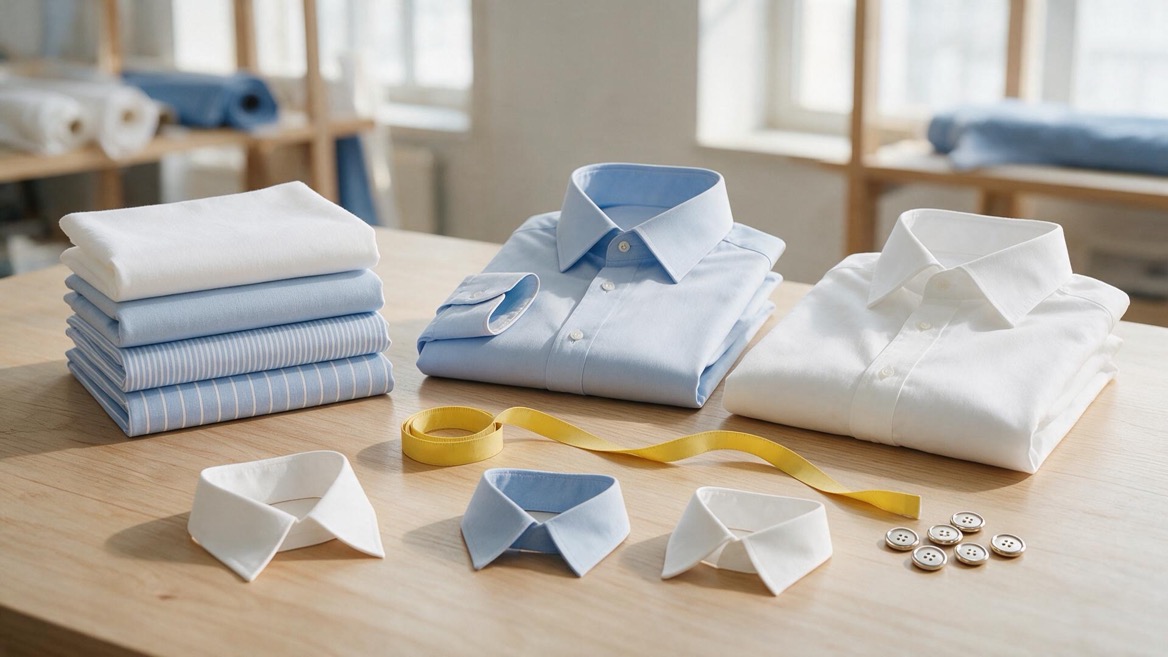
The best fit should match the wearer's routine, environment, and brand image.
| Office Situation | Better Starting Point | Why |
|---|---|---|
| Executive meetings and formal client presentations | Slim fit or tailored regular fit | Creates a precise, polished line |
| Daily desk work | Regular fit | Supports seated comfort and natural movement |
| Sales teams and showroom staff | Slim fit with stretch or shaped regular fit | Balances appearance with active movement |
| Corporate uniform programs | Regular fit | Accommodates more body types and reduces fitting risk |
| Warm-climate offices | Regular fit | Provides more airflow and comfort |
| Airport, hotel, and service staff | Regular fit | Better for movement, standing, and long shifts |
| Lean professionals in air-conditioned offices | Slim fit | Can remain comfortable with correct sizing |
The most successful brands do not force every customer into one fit. They build a clear fit architecture, such as slim fit, regular fit, and optional relaxed fit, with consistent measurement logic across the collection.
For brands, wholesalers, and uniform buyers, the phrase "slim fit" is not enough for a production order. A supplier needs measurable specifications.
A strong shirt tech pack should include:
- Target chest, waist, hem, shoulder, sleeve, and bicep measurements
- Finished garment measurements for each size
- Permitted measurement tolerances
- Collar style and collar stand height
- Cuff construction and button placement
- Back yoke, pleat, dart, or panel requirements
- Fabric composition, weight, color, and performance expectations
- Shrinkage standards after washing
- Label, embroidery, packaging, and carton requirements
At Shanghai Youti Clothing Co., Ltd., we recommend approving fit samples on more than one body type whenever a shirt is intended for a broad office audience. This is particularly important for regular fit uniform shirts, where the objective is not merely an attractive sample but reliable comfort across a full size range.
Use this practical decision framework before selecting the final fit.
Choose a slim fit shirt if the collection needs a contemporary, close-to-body appearance and the target wearer is likely to have a lean or athletic build. Use a stretch fabric where appropriate, and test the sample in seated and active positions.
Choose a regular fit shirt if the collection must work for varied body shapes, warm conditions, long shifts, and daily business wear. Refine the pattern with subtle shaping so that comfort does not become bulkiness.
If there is uncertainty, develop both fits from the same fabric and collar platform. This allows the brand to serve different customer preferences while keeping the collection visually consistent.
For most professionals working long office hours, a regular fit shirt offers the better balance of comfort, movement, airflow, and size inclusivity. It is especially suitable for corporate uniforms, daily business wear, and mixed work environments.
A slim fit shirt remains a strong choice for image-led offices and leaner wearers, provided it includes enough functional ease and is tested beyond a standing fitting session.
The best office shirt is not the tightest or the loosest option. It is the one that continues to look sharp at 6 p.m. while still allowing the wearer to breathe, sit, move, and work comfortably.
Need custom office shirts for your brand or uniform project? Share your reference design, size chart, fabric direction, and target market with Shanghai Youti Clothing Co., Ltd. Our team can support shirt pattern development, sample-making, private labeling, and bulk OEM production for slim fit, regular fit, and customized business-shirt programs.
Yes, but only when the fit is not overly tight. A slim fit shirt should allow comfortable breathing, seated movement, arm lifting, and natural shoulder rotation. Stretch fabric and correct grading can improve all-day performance.
No. A regular fit shirt provides moderate ease, while a loose or relaxed fit has substantially more room through the torso and sleeves. A well-designed regular fit should look neat and professional rather than oversized.
Regular fit is usually the most practical choice for corporate uniforms because it suits a wider range of body types and provides better movement during long shifts. A shaped regular fit can retain a polished appearance.
Often, yes. A small percentage of elastane or another stretch component can improve mobility and recovery. However, stretch fabric cannot fully correct an overly tight pattern, poor shoulder balance, or insufficient chest ease.
Request a finished garment measurement chart, not only labels such as "slim" or "regular." Compare chest, waist, hem, shoulder, sleeve length, bicep circumference, and shirt length across equivalent sizes.
The best option depends on climate and usage. Cotton poplin offers a classic crisp look, cotton-stretch blends support movement, and quality cotton-polyester blends can offer easy care for uniforms. Fabric testing should consider comfort, wrinkle resistance, shrinkage, and color durability.
1. [The Impact of Work Clothing Design on Workers' Comfort] — research discussing the relationship between workwear design, comfort, mobility, and thermal factors. [dspace.mit]
2. [Observational Study on Prolonged Sitting and Garment Comfort] — study describing discomfort associated with prolonged seated postures and wearer preference for medium-fit garments. [ijfmr]
3. [How to Choose the Right Shirt Fit] — practical reference on fit ease, body shape, climate, and office-use considerations. [theformalclub]
4. [Slim Fit vs. Regular Fit Shirts: Key Differences] — overview of differences in torso shape, sleeve profile, mobility, and visual effect. [activecoolfashion]
5. [Shanghai Youti Clothing Co., Ltd. Company Overview] — company information on businesswear, shirts, uniforms, OEM capability, and production resources. [work-jacket]


