
Views: 268 Author: Youti Clothing Publish Time: 2026-09-04 Origin: Site


Content Menu
● The Main Advantages of Suit Separates
● The Potential Drawbacks of Suit Separates
>> They Are Less Formal Than a Matching Suit
>> Coordination Requires More Knowledge
>> Quality Differences Can Be Noticeable
● How to Match Jacket and Trousers Successfully
>> Start With Contrast, Not Near-Matching Colors
>> Match Fabric Weight and Surface Texture
>> Keep the Silhouette Consistent
● A Practical Buying Checklist for Brands
>> 1. Define the Customer and Dress Code
>> 2. Build a Core Color Architecture
>> 3. Standardize Fit Across Categories
>> 4. Develop Clear Merchandising Guidance
● Expert Styling Rules That Prevent Mistakes
● Suit Separates for OEM and Private-Label Collections
>> What is the difference between a suit and suit separates?
>> Can I wear a suit jacket with different trousers?
>> Are suit separates appropriate for a wedding?
>> What trousers go best with a navy blazer?
>> Should jacket and trouser fabrics match exactly?
>> Can I mix a linen jacket with wool trousers?
>> Are suit separates more suitable for business-casual dress codes?
>> What should an OEM buyer check before ordering suit separates?
Suit separates give modern professionals, retailers, and private-label clothing brands a more flexible alternative to the traditional matching two-piece suit. By selecting a tailored jacket and trousers individually, wearers can improve fit, create more outfit combinations, and adapt their wardrobe to business-casual, smart-casual, cocktail, and many wedding settings.
A well-executed separates outfit looks deliberate—not like a suit whose matching trousers have been lost. The difference comes down to fit, fabric weight, color contrast, construction, and occasion. For brands developing tailored collections, this category also creates an opportunity to offer customers greater size flexibility and more practical wardrobe value.
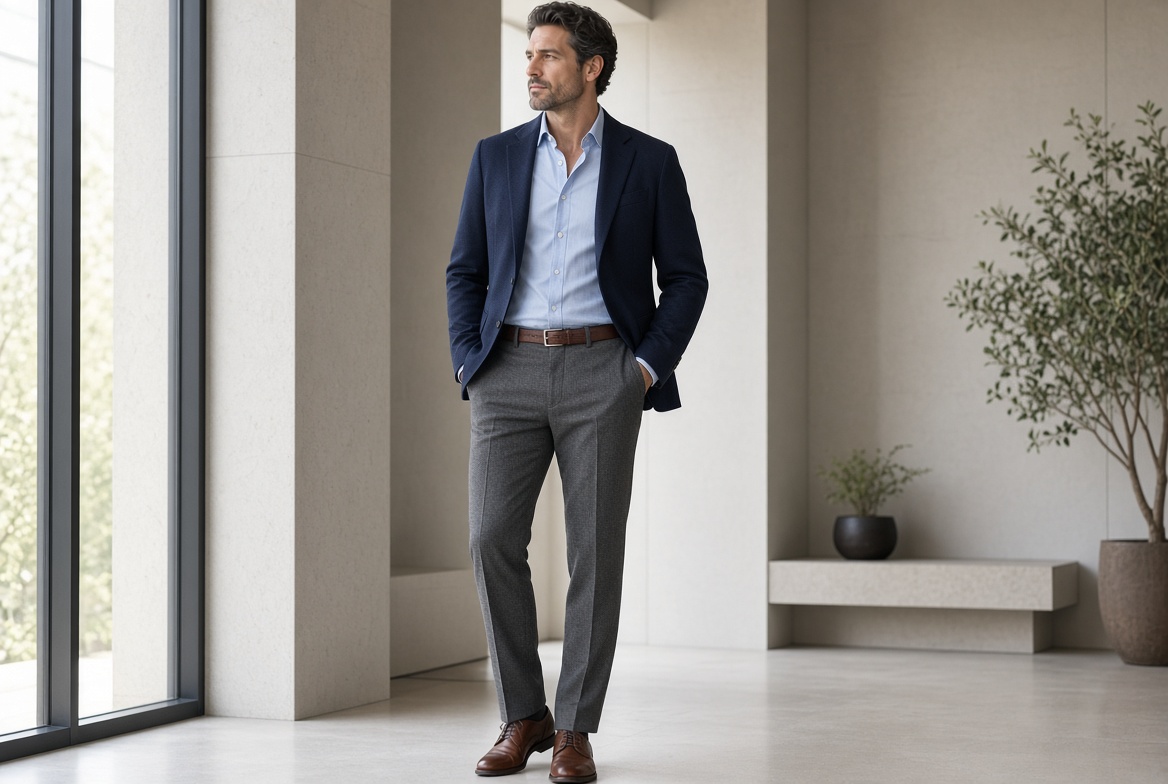
Suit separates are tailored garments—usually a jacket and trousers—that are purchased and worn as individual items rather than as a jacket-and-trouser set cut from exactly the same cloth.
A traditional suit uses the same fabric, color, weave, and finish for both pieces. In contrast, separates combine intentionally different garments. A navy wool blazer with medium-grey wool trousers, for example, is a classic separates combination. It is coordinated tailoring, but it is not technically a matching suit.
This distinction matters. A separates outfit should show a clear and confident contrast between the jacket and trousers. Trying to pair a dark navy suit jacket with nearly identical but non-matching navy trousers often looks accidental because the fabrics are close enough to appear as though they were meant to match—but do not.
For buyers, brands, and wholesalers, separates can be developed as a modular collection:
- A navy blazer in multiple chest sizes and lengths
- Grey, charcoal, olive, beige, and black tailored trousers
- Seasonal linen or cotton-blend jackets
- Optional waistcoats, overshirts, and lightweight outer layers
- Coordinating shirts, knitwear, belts, and accessories
This approach allows a customer to build a smaller wardrobe with more usable combinations.
One of the strongest benefits of suit separates is that jackets and trousers can be selected in different sizes. This matters because many customers do not fit a standard suit drop.
For example, a man may require a 42 regular jacket but a 36-inch waist trouser. Another may need a short jacket length with a larger trouser waist, or a slim jacket with more room through the thigh. When a suit is sold only as a fixed set, the buyer may have to compromise on one part of the fit or pay for alterations.
Separates make it easier to create a more balanced silhouette:
- The jacket sits cleanly at the shoulder.
- The chest has enough comfort for movement.
- The sleeve length shows a small amount of shirt cuff.
- The trouser waist fits without excessive tightening.
- The seat and thigh remain smooth rather than strained.
- The trouser break matches the wearer's preferred style.
For apparel brands, offering multiple jacket and trouser sizes independently can reduce the frustration caused by fixed suit sizing. It also supports a broader range of body types without changing the visual identity of the collection.
A matching suit typically creates one main formal outfit. Separates can create several.
Consider a compact wardrobe containing:
- One navy tailored jacket
- One mid-grey tailored jacket
- One pair of grey wool trousers
- One pair of navy wool trousers
- One pair of stone cotton trousers
Those five items can create several distinct looks for work, travel, dinners, and less formal events. The wearer gets more use from each garment, while the brand can encourage coordinated multi-item purchases rather than selling only one fixed suit set.
A navy jacket and grey trousers remain one of the safest combinations because the contrast is clear, professional, and easy to style with white or pale-blue shirts. A grey jacket with navy trousers is similarly reliable. In warmer weather, a tobacco, olive, or beige jacket can work well with cream, stone, or dark-brown trousers.
The important principle is simple: create visible contrast without creating visual conflict.
Suit separates allow brands and wearers to adjust fabrics according to climate and season. A matching suit is often designed as a unified garment for a particular use case. A separates wardrobe can be more adaptable.
For spring and summer, suitable options include:
- Linen or linen-blend jackets
- Lightweight cotton trousers
- Tropical wool trousers
- Unstructured cotton blazers
- Breathable wool-blend tailoring
For autumn and winter, stronger combinations may include:
- Wool flannel trousers
- Brushed wool jackets
- Tweed-style tailoring
- Corduroy trousers
- Heavier wool-blend blazers
The jacket and trousers should still feel seasonally compatible. A very light linen jacket with dense winter flannel trousers can appear disconnected. Likewise, a heavy tweed jacket with thin, smooth summer trousers may make the outfit feel unbalanced.
Separates can offer better long-term value because individual pieces can be replaced, updated, or reordered. If trousers wear out faster than a jacket—as often happens through regular office use—the customer may only need to replace the trousers.
This is also valuable for uniform programs, corporate clothing collections, and retailer replenishment planning. A buyer can reorder fast-moving trousers without needing to purchase a full jacket-and-trouser set. A brand can also offer core colors year-round while introducing seasonal jackets in limited quantities.
For private-label programs, this modular structure may support:
- Lower-risk seasonal assortment planning
- More flexible color merchandising
- Easier replenishment of bestselling trouser sizes
- Better cross-selling opportunities
- More relevant options for business-casual consumers
A matching suit remains the safer choice for highly formal settings. Black-tie events, very conservative business meetings, formal ceremonies, certain job interviews, and occasions with an explicitly formal dress code usually call for a complete matching suit or tuxedo.
Separates can still look refined, but they naturally communicate a more relaxed level of tailoring. The contrast between jacket and trousers reduces the uniform, formal effect created by a matching suit.
As a practical rule:
| Occasion | Suit Separates Suitable? | Better Choice |
|---|---|---|
| Business-casual office | Yes | Blazer with tailored trousers |
| Client lunch or networking event | Yes | Navy, grey, or textured separates |
| Cocktail event | Usually | Refined jacket, trousers, shirt, polished shoes |
| Daytime wedding | Often | Seasonal separates or a matching suit |
| Evening formal wedding | Depends on invitation | Matching dark suit if formality is unclear |
| Black-tie event | No | Tuxedo or dinner suit |
| Conservative job interview | Usually not | Matching navy or charcoal suit |
When in doubt, it is generally safer to wear a matching suit. Separates work best when the dress code allows personality, texture, or business-casual polish.
Separates are flexible, but that flexibility can make styling more difficult. Customers sometimes focus only on color and overlook fabric texture, garment structure, or formality level.
A refined outfit needs the pieces to feel as though they belong in the same visual environment. A highly structured, shiny worsted-wool jacket may not work well with casual chinos. A rough tweed sports jacket may look overly heavy with sleek, lightweight formal trousers.
The goal is not perfect uniformity. It is intentional compatibility.
When a jacket and trousers are sourced from unrelated collections or different manufacturers, differences in quality may become obvious. The jacket may have a clean shoulder line and durable lining, while the trousers may have poor drape, weak seam finishing, or inconsistent sizing.
For a professional clothing brand, the solution is to build separates as a coordinated product system rather than as random individual garments. Key details should be aligned across the collection:
- Fabric quality and weight
- Color palette
- Fit block and silhouette
- Stitching standards
- Lining and pocket construction
- Waistband structure
- Button quality
- Care-label information
- Size grading and tolerance standards
A navy blazer and grey trousers do not need to use the same fabric, but they should have comparable quality and a similar level of refinement.
The most common mistake is choosing colors that are almost identical. If a jacket and trouser are both dark navy but made from different fabrics, the outfit may look like a mismatched suit rather than deliberate separates.
Instead, create enough contrast for each garment to stand on its own.
Reliable combinations include:
| Jacket | Trousers | Suitable Settings |
|---|---|---|
| Navy | Medium grey | Office, meetings, dinners, weddings |
| Medium grey | Navy | Business-casual, travel, client events |
| Charcoal | Light grey | Smart office and evening occasions |
| Brown | Cream or stone | Spring, summer, daytime weddings |
| Olive | Beige or tobacco | Smart-casual and creative workplaces |
| Blue check | Solid grey | Business-casual and social events |
| Beige linen | Navy | Warm-weather events and resort settings |
The shirt should support rather than compete with the jacket and trousers. White and pale blue remain dependable choices. A subtle stripe can work, but if the jacket already has a visible check or texture, a solid shirt usually creates a cleaner result.
Fabric compatibility is often more important than customers realize. The garments do not need to be identical, but they should have similar visual weight.
Good examples include:
- Wool blazer with wool or wool-blend trousers
- Linen jacket with linen, cotton, or lightweight wool trousers
- Cotton blazer with chinos or cotton trousers
- Tweed-style jacket with flannel, corduroy, or heavier wool trousers
- Soft-shouldered jacket with relaxed tailored trousers
Avoid extreme combinations, such as a summer linen jacket with heavy winter wool trousers. Also avoid pairing highly formal, smooth suit fabric with visibly casual trousers unless the desired style is intentionally relaxed.
For manufacturers, fabric development should consider how materials perform across a full separates range. Weight, drape, wrinkle recovery, colorfastness, abrasion resistance, and seasonal comfort all influence whether the finished collection feels coherent.
A jacket and trousers should belong to the same style language.
A slim, sharply tailored jacket paired with wide, baggy trousers can look unbalanced unless the proportions are deliberately fashion-led. Similarly, a relaxed unstructured jacket may look disconnected from extremely tapered formal trousers.
For a broadly commercial collection, a balanced modern silhouette is often the easiest to sell:
- Natural or lightly padded shoulders
- Moderate lapel width
- Clean chest and waist suppression
- Mid-rise trousers
- Comfortable thigh allowance
- Tapered but not restrictive leg shape
- Adjustable waistband or side tabs where appropriate
Fit should prioritize movement. A customer should be able to sit, walk, reach, and wear the garments for a full day without pulling across the jacket back or excessive tension at the trouser thigh.
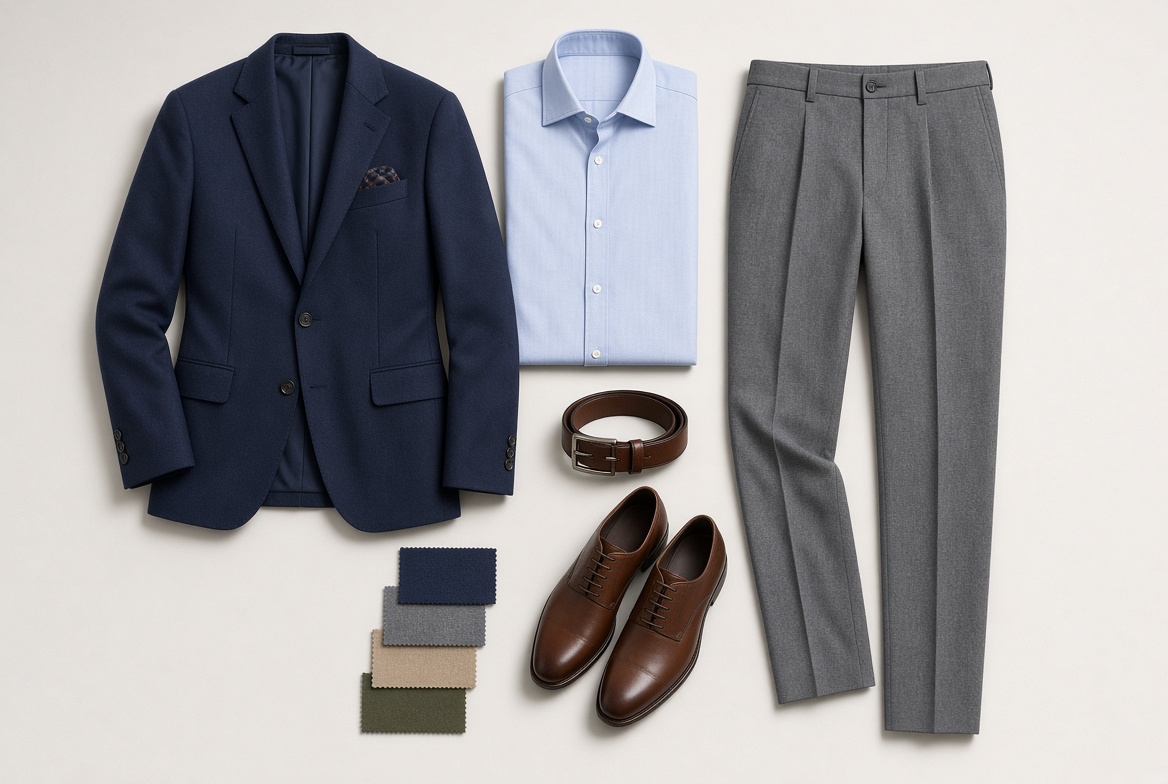
When developing a private-label suit separates program, purchasing decisions should go beyond selecting fashionable colors. A successful collection needs consistency across product design, production, sizing, and replenishment.
Clarify whether the collection serves corporate professionals, wedding guests, hospitality teams, fashion retailers, uniform buyers, or premium casual consumers.
A corporate customer may favor navy, charcoal, and grey wool-blend options. A resort or destination-wedding brand may prioritize linen, cotton-linen, sand, tobacco, sage, and pale blue.
Start with commercially reliable colors before adding seasonal statements.
A practical opening range could include:
- Navy tailored jacket
- Mid-grey tailored jacket
- Grey trousers
- Navy trousers
- Charcoal trousers
- Stone or beige cotton trousers
- Seasonal textured or checked jacket
This gives customers enough variety while keeping inventory planning manageable.
The jacket and trouser do not need the same size label, but the fit should feel consistent. If the jackets are designed with a contemporary slim profile, the trousers should not be cut excessively loose. If the collection targets comfort tailoring, both categories should reflect that direction.
Before bulk production, evaluate:
- Sample measurements
- Grading between sizes
- Shoulder balance
- Sleeve pitch
- Trouser rise and thigh room
- Seat and knee comfort
- Hem opening
- Shrinkage after care testing
- Fabric shade consistency between production lots
Retailers and buyers should not need to guess how to style each item. Use product photography, lookbooks, swatch cards, and simple pairing guidance to show complete outfits.
For example, a product page for a navy jacket can recommend grey trousers, pale-blue shirts, brown leather belts, and brown derby shoes. This makes the purchase decision easier and increases the likelihood of multi-item orders.
Before leaving the house—or approving a sample for a collection—use these five checks:
1. Check the contrast. The jacket and trousers should look intentionally different, not almost identical.
2. Check fabric weight. Both garments should look appropriate for the same season and level of formality.
3. Check the silhouette. Jacket shape, trouser volume, and hem width should feel balanced together.
4. Check the occasion. Choose a matching suit for black-tie events, strict formal occasions, and conservative professional situations.
5. Check the finish. Shoes, belt, shirt, and accessories should complete the outfit without introducing too many colors or patterns.
A simple navy jacket, grey trousers, pale-blue shirt, brown belt, and brown leather shoes remain a strong benchmark. It works because every element has a purpose, the colors are balanced, and the look feels polished without appearing overly formal.
For fashion brands, wholesalers, and uniform buyers, suit separates are more than a styling trend. They are a practical category that can improve customer choice, increase repeat purchasing, and support a more flexible inventory strategy.
Shanghai Youti Clothing Co., Ltd. supports OEM development for professional clothing, including tailored jackets, trousers, waistcoats, suits, and coordinated businesswear. From fabric selection and fit development to labeling, color customization, and production planning, a well-structured separates program can help a brand offer customers polished clothing that fits more naturally into everyday life.
The strongest collections are built around versatile core pieces, dependable fit blocks, carefully coordinated fabrics, and clear styling direction. Rather than treating jackets and trousers as isolated products, develop them as a connected wardrobe system.
Looking for an OEM partner for suits, blazers, trousers, or coordinated professional apparel? Contact Shanghai Youti Clothing Co., Ltd. to discuss your target market, design requirements, fabric preferences, sizing strategy, private-label details, and production plan.
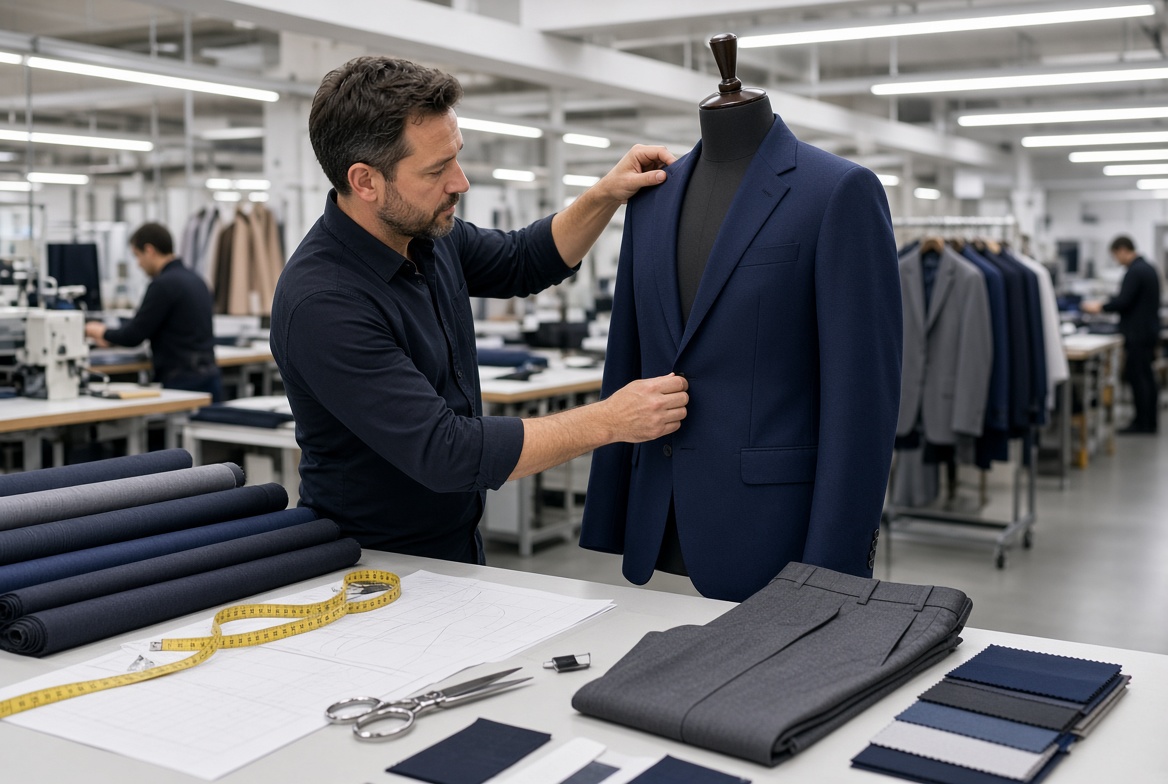
A suit includes a jacket and trousers made from the same fabric, color, and weave. Suit separates are individually selected tailored pieces, such as a navy blazer and grey trousers, that are intentionally coordinated but do not match exactly.
Yes, but it works best when the jacket was designed to function as a blazer or sports jacket. Avoid pairing a highly formal suit jacket with unrelated trousers, especially when the colors are very similar but the fabrics do not match.
They can be appropriate for daytime weddings, outdoor weddings, destination weddings, cocktail settings, and smart dress codes. For a formal evening wedding or an invitation that requests formal attire, a matching dark suit is usually the safer choice.
Medium-grey trousers are the most versatile choice. Stone, beige, olive, and carefully selected brown trousers can also work, depending on the season, fabric, and formality of the occasion.
No. They should not match exactly, because that can make the outfit look like an incomplete suit. However, their fabric weight, texture, and level of formality should be compatible.
Yes, if the wool trousers are lightweight and suitable for warm weather. Avoid combining a lightweight linen jacket with heavy flannel or thick winter wool trousers, as the contrast in seasonal weight will look unbalanced.
Yes. Suit separates are especially useful for business-casual offices, client lunches, networking events, creative workplaces, travel, and occasions where a full matching suit would feel too formal.
An OEM buyer should review fabric quality, color consistency, size grading, fit samples, construction details, shrinkage performance, production tolerances, labeling, packaging, minimum order requirements, and the supplier's ability to replenish individual jacket and trouser styles.
- [StudioSuits: Pros and Cons of Wearing Suit Separates]
- [Men's Wearhouse: What Are Suit Separates? How They Work and When to Wear Them]
- [Ape to Gentleman: Suit Separates—Blazer and Trouser Combinations]
- [Gentleman's Gazette: Spezzato—Breaking Up Suits for Casual Menswear Looks]
- [Check My Fit: Mixing Suit Jackets and Pants Guide]
- [Andrew Brookes: How to Mix and Match Men's Suits]
- [MensUSA: How to Mix and Match Suit Separates for a Custom Look]


