
Views: 218 Author: Youti Clothing Publish Time: 2026-08-28 Origin: Site


Content Menu
● The Quick Difference: Suit, Blazer, and Tuxedo
>> When Should You Wear a Suit?
>> Blazer Features That Matter
>> Blazer vs. Suit Jacket: The Main Sourcing Rule
>> Tuxedo Details That Define Formalwear
>> Is a Tuxedo More Formal Than a Suit?
● How to Choose the Right Garment for the Occasion
>> Choose a Suit When You Need Versatility
>> Choose a Blazer When You Need Styling Flexibility
>> Choose a Tuxedo When the Dress Code Is Black Tie
● The Manufacturing Perspective: Why Construction Changes by Category
>> Blazer Production Priorities
>> Tuxedo Production Priorities
● How Brands Can Build a Strong Tailoring Collection
>> 1. What is the main difference between a suit and a blazer?
>> 2. Can I wear a blazer with suit trousers?
>> 3. Can a black suit be worn instead of a tuxedo?
>> 4. Why do tuxedo trousers usually not have belt loops?
>> 5. Are blazers suitable for weddings?
>> 6. What fabrics are best for OEM suits and blazers?
>> 7. What should a brand prepare before requesting a tuxedo sample?
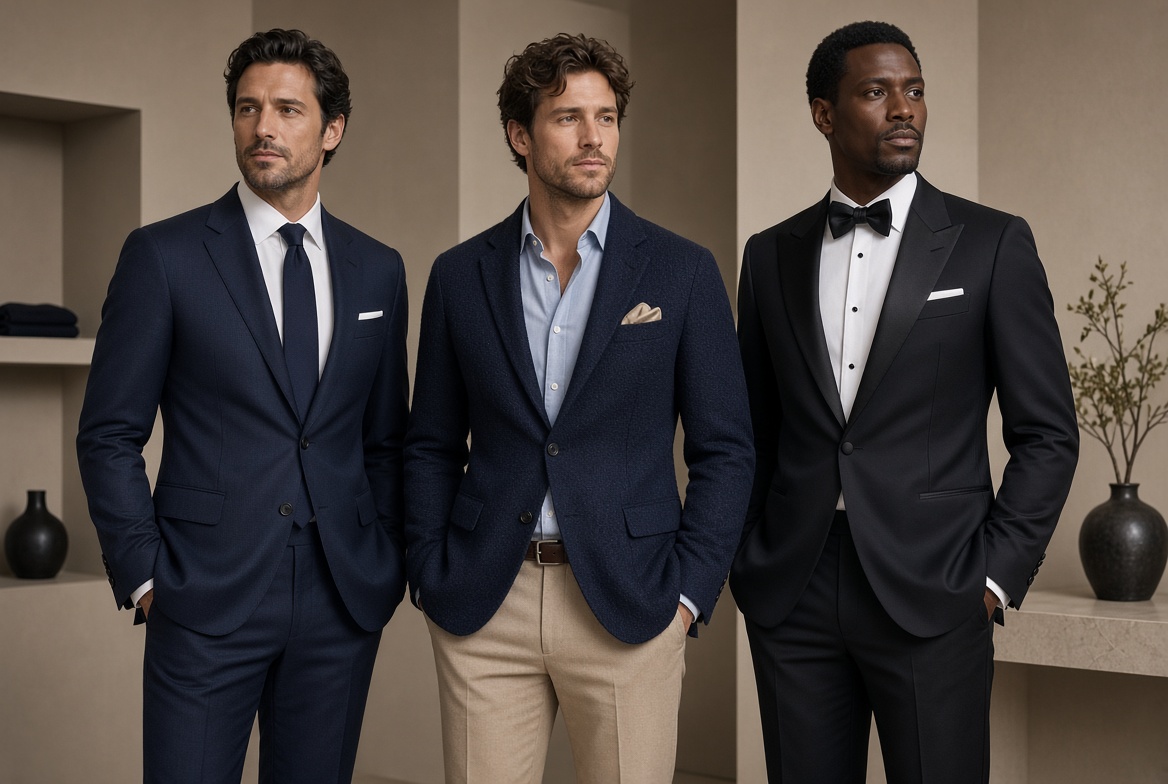
A suit, blazer, and tuxedo may share a tailored silhouette, but they are built for very different occasions, styling systems, and product requirements. For clothing brands, wholesalers, and buyers developing formalwear collections, understanding the difference between a suit, a blazer, and a tuxedo is essential for making the right design, fabric, fit, and production decisions.
At Shanghai Youti Clothing Co., Ltd., we work with international brands and wholesale clients on OEM tailored clothing. In practice, the most common sourcing mistake is treating these three categories as interchangeable. They are not. A matching suit is a coordinated outfit, a blazer is a separate jacket designed for versatility, and a tuxedo is ceremonial eveningwear defined by specific formal details.
| Feature | Suit | Blazer | Tuxedo |
|---|---|---|---|
| Core definition | Jacket and trousers made from the same fabric | Standalone tailored jacket | Formal evening suit with distinctive trim |
| Trouser requirement | Matching trousers are expected | Worn with contrasting trousers | Matching tuxedo trousers are required |
| Formality | Business to formal social wear | Smart casual to business casual | Formal evening and black-tie occasions |
| Lapel finish | Same fabric as jacket body | Usually same fabric as jacket body | Satin or grosgrain-faced lapels |
| Typical buttons | Horn, resin, corozo, or metal | Metal, horn, resin, or decorative buttons | Satin-covered or fabric-covered buttons |
| Best occasions | Business, weddings, meetings, events | Travel, office, dinners, smart-casual events | Galas, black-tie weddings, formal dinners |
| Styling flexibility | Moderate | High | Limited but highly formal |
The simplest way to remember the difference is this:
- A suit is a matching jacket-and-trouser set.
- A blazer is a tailored jacket intended to be mixed with other trousers.
- A tuxedo is formal eveningwear, usually identified by satin or grosgrain detailing and traditional black-tie accessories.
A suit is a coordinated outfit made from a tailored jacket and matching trousers cut from the same fabric. The jacket and trousers normally share the same color, weave, texture, and finish.
For example, a navy wool jacket paired with navy wool trousers from the same production batch is a suit. If the same navy jacket is worn with beige chinos, it becomes a separates-based look rather than a conventional full suit.
A well-developed suit collection generally includes:
- A matching jacket and trouser fabric
- A structured or semi-structured shoulder
- Notch lapels or peak lapels
- Standard flap pockets, jetted pockets, or ticket pockets
- Matching trousers with belt loops
- A dress shirt and necktie as common styling options
- Wool, wool blends, polyester-viscose blends, linen blends, cotton, or stretch fabrics
Most suits use the same main fabric across the lapels, buttons, jacket body, and trousers. This creates a restrained, coordinated appearance suitable for business, weddings, corporate uniforms, and formal daywear.
A suit is the most adaptable category of tailored clothing. It works across both professional and social settings, particularly when fit and fabric suit the season.
Common uses include:
- Business meetings and office uniforms
- Corporate events and conferences
- Interviews and presentations
- Weddings and receptions
- Church, memorial, and formal daytime events
- Hospitality and luxury retail uniforms
- Professional headshots and brand events
For brands, the suit category often offers the broadest commercial opportunity because it can be segmented by price point, fabric performance, fit profile, and end use.
A travel-focused label may develop wrinkle-resistant stretch suits. A weddingwear brand may prioritize slim-fit three-piece suits. A corporate uniform supplier may need washable, color-consistent polyester-wool suits produced across many sizes.
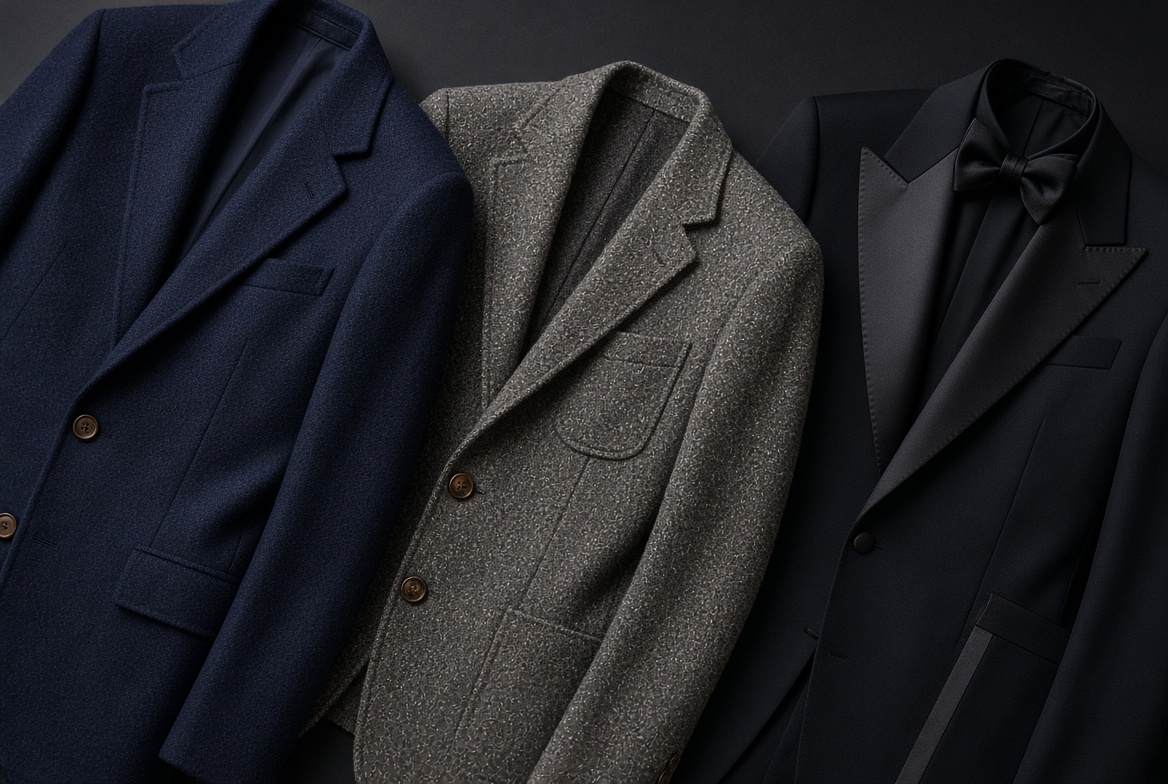
A blazer is a tailored jacket designed to be worn separately from its trousers. Unlike a suit jacket, it is not dependent on a matching trouser made from the same fabric.
A blazer can look polished and structured, but it is generally more relaxed and more versatile than a suit jacket. It can be paired with wool trousers, chinos, denim, cotton pants, or even tailored shorts in warm-weather collections.
Blazers vary widely by market, but many use recognizable details such as:
- Navy, black, grey, green, burgundy, beige, or seasonal colors
- Patch pockets or flap pockets
- Metal, horn-style, resin, or contrast buttons
- Softer shoulder construction than business suits
- Half lining, unlined construction, or lightweight lining
- Textured fabrics such as hopsack, tweed, cotton twill, linen, corduroy, or knit blends
- A more relaxed body shape than a conventional suit jacket
A blazer may have a notch lapel or peak lapel. Some formal blazers use sharper tailoring, while casual versions may feature unstructured shoulders and patch pockets.
The biggest distinction is not only the jacket itself. It is how the garment is intended to be sold and worn.
A suit jacket is developed as part of a matching set. A blazer is developed as an independent garment.
This difference affects product development. When producing suits, fabric shade consistency between the jacket and trousers is critical. When producing blazers, the priority shifts toward versatility, styling details, fabric texture, and compatibility with multiple bottoms.
For OEM buyers, this means the product brief should clearly state whether the jacket is:
- A matching suit jacket
- A standalone blazer
- A coordinated separates jacket
- A uniform jacket
- A dinner jacket for formalwear
Calling every tailored jacket a "blazer" can lead to sampling confusion, inaccurate product pages, and inconsistent customer expectations.
A tuxedo is a formal evening outfit designed for black-tie occasions. In the United Kingdom and many international markets, it is also called a dinner suit or dinner jacket.
A tuxedo has a similar overall structure to a suit, but its signature details make it more formal. The most recognizable feature is the use of satin or grosgrain trim on the lapels. The trousers may also include a matching stripe along the outer seam.
Traditional tuxedos are usually black or midnight blue, although ivory dinner jackets and fashion-led seasonal interpretations are also common in wedding and eventwear collections.
A conventional tuxedo commonly includes:
- Satin or grosgrain-faced peak lapels or shawl lapels
- Satin-covered buttons
- Jetted pockets rather than flap pockets
- Matching trousers without belt loops
- Side adjusters, braces buttons, or a formal waistband
- Satin or grosgrain trouser side stripes
- A white formal shirt
- A black bow tie
- Patent leather shoes or polished black formal shoes
- Optional waistcoat or cummerbund
Not every tuxedo uses every traditional detail, especially in modern fashion collections. However, removing too many defining elements may create a suit that merely looks formal rather than a genuine tuxedo.
Yes. A tuxedo is traditionally more formal than a suit because it is designed specifically for evening ceremonies, gala events, black-tie functions, and formal weddings. Satin or grosgrain lapels, formal shirt construction, bow ties, and waist coverings create a more ceremonial appearance than conventional business suiting.
A dark suit can be elegant, but it does not fully replace a tuxedo when an invitation specifies black tie. For brands selling into the wedding, prom, gala, and luxury-event categories, communicating this distinction clearly can reduce returns and improve customer confidence.
The right choice starts with the dress code, time of day, event formality, and customer profile.
A suit is the practical choice when the wearer needs one tailored outfit for multiple settings. A navy, charcoal, or medium-grey suit can transition from a business meeting to a wedding reception with changes in shirt, tie, shoes, and accessories.
Choose a suit for:
- Business and professional environments
- Daytime weddings
- Client meetings
- Graduation ceremonies
- Semi-formal celebrations
- Corporate uniforms
- Travel-friendly tailored collections
A blazer is ideal when the goal is polished but not fully matched tailoring. It gives customers more outfit combinations and works particularly well in smart-casual wardrobes.
Choose a blazer for:
- Business-casual offices
- Restaurant, hotel, and retail uniforms
- Smart travel outfits
- Resort and cruise collections
- Weekend events
- Casual weddings
- Layered autumn and winter looks
A tuxedo is the appropriate choice for formal evening events, especially where the dress code explicitly says "black tie." A black bow tie, white formal shirt, and polished black footwear complete the traditional look.
Choose a tuxedo for:
- Black-tie galas
- Formal charity dinners
- Evening weddings
- Award ceremonies
- Opera and formal performances
- Luxury hospitality events
- Prom and formalwear rental collections
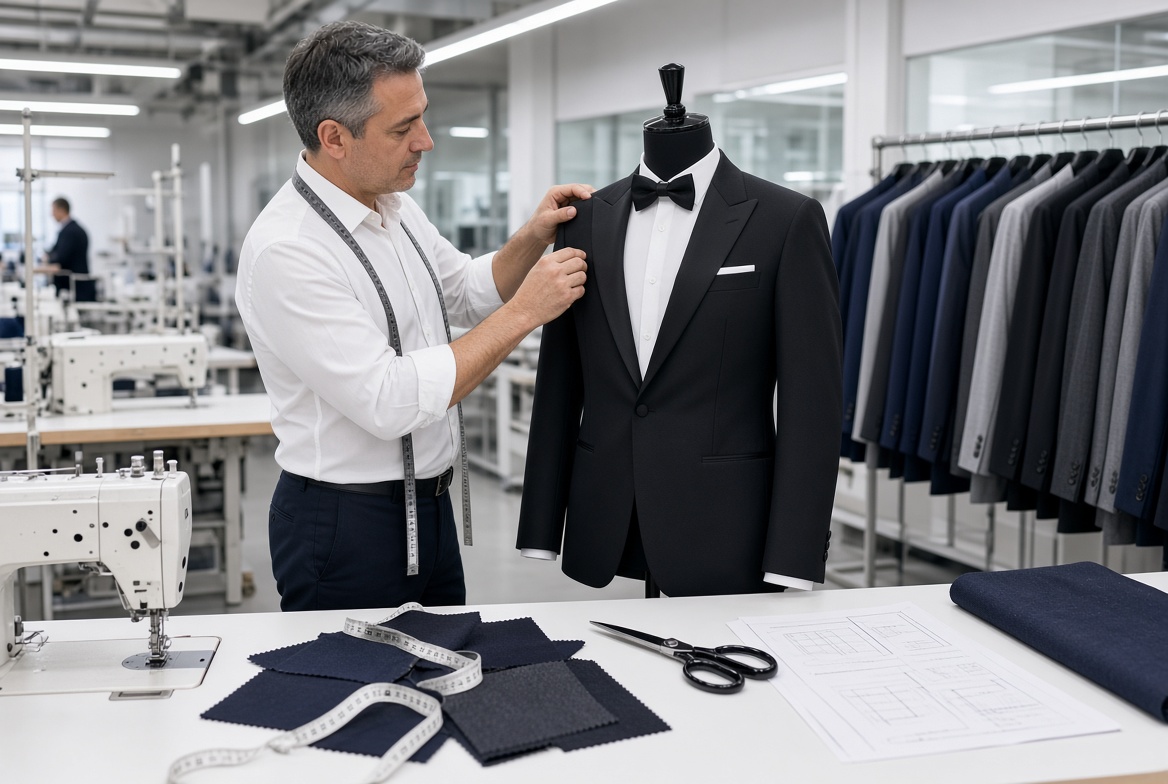
From an OEM production perspective, suits, blazers, and tuxedos require different development decisions. The visible differences are only part of the process. Fabric selection, interlining, shoulder construction, pocket style, lining, trims, and quality-control standards must align with the garment category.
Suit manufacturing requires strong control of fabric matching. The jacket and trousers should maintain consistent shade, texture, and performance after pressing, washing tests, and repeated wear.
Important specifications include:
- Fabric composition and weight
- Shade consistency across production lots
- Jacket-trouser fabric matching
- Canvas, half-canvas, or fused construction
- Shoulder padding level
- Lapel width and shape
- Fit block and size grading
- Lining quality and breathability
- Trouser rise, leg shape, and waistband construction
Blazers give brands more room for seasonal differentiation. Fabric texture, pocket design, button choice, and relaxed construction can help build a recognizable product identity.
For example, a summer blazer may use linen-cotton fabric, a half lining, patch pockets, and natural horn-style buttons. A winter blazer may use brushed wool, tweed, or corduroy with fuller lining and stronger shoulder structure.
Tuxedo development requires precision because formalwear customers notice small finishing details. Satin quality, lapel application, button covering, trouser stripe alignment, and jetted-pocket construction all affect perceived value.
For tuxedo programs, brands should define:
1. Lapel facing material: Satin or grosgrain, with approved color and sheen.
2. Lapel shape: Peak, shawl, or another approved silhouette.
3. Button construction: Covered buttons, button count, and button placement.
4. Trouser design: Side stripe, side adjusters, waist finish, and belt-loop policy.
5. Formal accessories: Shirt, bow tie, waistcoat, cummerbund, and packaging requirements.
6. Fit standard: Slim, regular, contemporary, plus-size, or rental-oriented fit blocks.
Many product pages and buyer briefs create confusion because they use suit, blazer, and tuxedo as if they mean the same thing. Clear terminology protects both the brand and the end customer.
Avoid these common mistakes:
- Selling a suit jacket separately and calling it a blazer without explaining its matching trousers.
- Advertising a regular black suit as a tuxedo when it has no formal lapel facing or tuxedo-specific styling.
- Pairing a tuxedo with belt-loop trousers, casual footwear, or an ordinary business shirt.
- Using a blazer for strict black-tie events.
- Developing tuxedo lapels without confirming the satin or grosgrain color and sheen.
- Ignoring jacket-and-trouser shade variation in suit production.
- Choosing a fashionable fit without testing movement, seat comfort, sleeve mobility, and grading.
The best collections balance appearance with wearability. A sharp lapel and narrow waist may look strong in a campaign image, but a garment must also sit properly when the wearer walks, sits, raises their arms, or wears it for several hours.
For a new or expanding formalwear brand, a focused product architecture is usually more effective than launching too many similar jacket styles.
A practical starting range may include:
- One navy or charcoal business suit
- One black or midnight-blue formal suit
- One seasonal blazer in textured fabric
- One double-breasted blazer or suit option
- One black or midnight-blue tuxedo
- Coordinated trousers and waistcoats
- Optional shirts, bow ties, and accessories
This approach gives customers clear use cases while allowing the brand to create outfit combinations across businesswear, weddingwear, and eveningwear.
At Shanghai Youti Clothing Co., Ltd., we support OEM development for suits, blazers, tuxedos, jackets, trousers, and coordinated formalwear programs. Whether you are developing a private-label collection, a wholesale line, a uniform project, or a weddingwear range, our team can help translate your concept into production-ready specifications.
Looking for an OEM suit, blazer, or tuxedo manufacturer in China? Contact Shanghai Youti Clothing Co., Ltd. to discuss your fabric requirements, target price, sizing, logo application, sampling needs, and bulk-order plan.
A suit includes a jacket and matching trousers made from the same fabric. A blazer is a standalone tailored jacket designed to be worn with different trousers, such as chinos, wool pants, jeans, or contrasting dress trousers.
Yes, but the colors, fabrics, and textures should look intentionally different. Avoid pairing a blazer with trousers that almost match but differ slightly in shade, as this can look like a mismatched suit.
A black suit can work for many formal events, but it is not the traditional choice for a strict black-tie dress code. A tuxedo is distinguished by formal elements such as satin or grosgrain lapels, formal trousers, and a bow tie.
Traditional tuxedo trousers are designed to create a clean, uninterrupted waistline. They are commonly held up with side adjusters or braces rather than a belt, which is generally considered less formal with black-tie attire.
Yes. A blazer can be suitable for casual, destination, daytime, or smart-casual weddings. For highly formal weddings, especially those with a black-tie dress code, a suit or tuxedo is usually the better choice.
The right fabric depends on market positioning and season. Wool and wool blends are common for premium suits, polyester-viscose blends support accessible pricing and uniform programs, while linen, cotton, corduroy, and textured wool work well for blazers.
Prepare a tech pack or clear brief covering fabric, lapel shape, satin or grosgrain trim, button style, pocket style, trouser stripe, fit block, size chart, logo or label details, target quantity, packaging, and required delivery date.
- [Men's Wearhouse — Tuxedo vs. Suit: Which Should You Pick?]
- [GQ — Black Tie Attire, Explained by Menswear Experts]
- [GQ — What's the Difference Between a Suit Jacket, a Sport Coat, and a Blazer?]
- [Joseph Abboud — What's the Difference Between a Blazer and a Suit Jacket?]
- [Hockerty — Tuxedo vs. Suit: Key Differences Explained]
- [Gentleman's Gazette — Tuxedo and Black-Tie Guide]
- [The Artefact London — Tuxedo for Men: Complete Style Guide]


