
Views: 202 Author: Youti Clothing Publish Time: 2026-07-18 Origin: Site


Content Menu
● What Counts as a Business Suit Today?
>> Jacket Structure and Comfort
● Business Suits vs Traditional Formal Suits
● Key Fabrics for Business Suits
>> Linen, Wool, Cotton, and Blends
● Choosing the Right Color for Professional Contexts
● Why Fit Matters More Than Anything Else
>> Standard Sizing vs Made‑to‑Measure
● How to Wear a Business Suit Correctly
>> Buttoning and Basic Styling Rules
>> Shirts, Shoes, and Accessories
● Emerging Business Suit Trends for 2025–2026
>> Sustainability and Performance
● Simple Checklist for Selecting a Business Suit
A modern business suit today is more than formal clothing; it is a strategic tool for confidence, credibility, and brand image in professional life. For international buyers and professionals alike, understanding how suits are designed, manufactured, and styled makes it much easier to choose garments that look sharp, feel comfortable, and perform well in real workplaces.
A business suit combines fabric, structure, and fit into a single, coherent system that signals seriousness and reliability. When these elements work together, the suit supports long days of meetings, travel, and presentations without distracting the wearer or the people they interact with.
For international brands sourcing from Chinese manufacturers, a clear understanding of modern suiting standards—fabrics, measurements, and finishing details—also improves communication with production partners and results in collections that match the expectations of demanding end users. This guide integrates foundational tailoring principles with up‑to‑date trends for 2025–2026 so that both buyers and wearers can make confident, informed decisions.

A business suit is typically a matching jacket and trousers, worn with a collared shirt and often a tie, designed primarily for offices, boardrooms, and professional events. The cut is clean and structured, emphasizing sharp shoulders, a defined waist, and a balanced silhouette that works in both formal meetings and day‑to‑day office environments.
Compared with purely ceremonial or fashion‑driven suits, business suits lean toward refined understatement. The focus is on versatility: one well‑designed suit should be appropriate for client presentations, internal reviews, conferences, and after‑work business dinners with only small adjustments in shirt and accessory choices.
A key early decision is whether to choose a 2‑piece or 3‑piece configuration. Both are widely accepted in professional settings, but they create slightly different impressions and levels of formality.
- A 2‑piece business suit (jacket and trousers) is streamlined and practical for most offices, especially where dress codes allow some flexibility in shirts and shoes.
- A 3‑piece business suit (jacket, trousers, and waistcoat) adds a layer of structure and visual depth, making it ideal for high‑level meetings, formal events, or roles that require a more traditional presence.
When deciding between the two, it helps to consider how often extremely formal situations occur and how warm the working environment is, since an extra layer affects both appearance and comfort.
Beyond the number of pieces, the internal structure of the jacket plays a major role in how it feels. Modern tailoring increasingly favors lighter canvassing and softer shoulders that maintain clear lines without the rigid feeling associated with older, heavily padded designs.
This softer construction mirrors broader workplace changes, where professionals move between desks, meeting rooms, co‑working spaces, and travel more frequently. A well‑balanced jacket supports movement while still looking precise in photographs, video calls, and across a full workday.
Business suits and traditional formal suits share core elements such as lapels, structured jackets, and matching trousers, but the expected context differs. Business suits are designed for regular use in professional environments where reliability, consistency, and discretion are the priorities.
Traditional formal suits often appear at weddings, galas, or evening events where the wearer can prioritize personal style or thematic dressing. In those situations, bolder colors, unusual patterns, or distinctive lapel shapes may be welcome, while business settings usually favor more restrained palettes and time‑tested silhouettes.
Fabric determines how a suit drapes, breathes, and ages over time. Choosing the right material ensures that the suit remains comfortable during commutes, meetings, and business trips without quickly losing its shape.
- Linen is light and breathable, making it an excellent choice for warm climates and summer months. It naturally creases, which gives it a relaxed character better suited to modern offices with more flexible dress codes.
- Wool remains the classic business suiting fabric thanks to its structure, resilience, and ability to regulate temperature across different seasons. High‑twist and tropical wool weaves can provide increased breathability and wrinkle resistance for frequent travelers.
- Cotton offers a slightly more casual feel with good comfort and a clean look, especially in medium‑weight weaves that work across multiple seasons. It is well‑suited to creative or less formal industries where a sharp yet approachable image is valued.
- Performance blends that include stretch fibers or moisture‑managing yarns are steadily gaining popularity, allowing suits to maintain a neat appearance while accommodating movement and long wear times.
For international brands and wholesalers, aligning fabric choices with the target climate and typical work environments of end customers is crucial. A suit line designed for hot coastal cities needs different fabric weights and compositions than one intended for cooler, temperate regions.
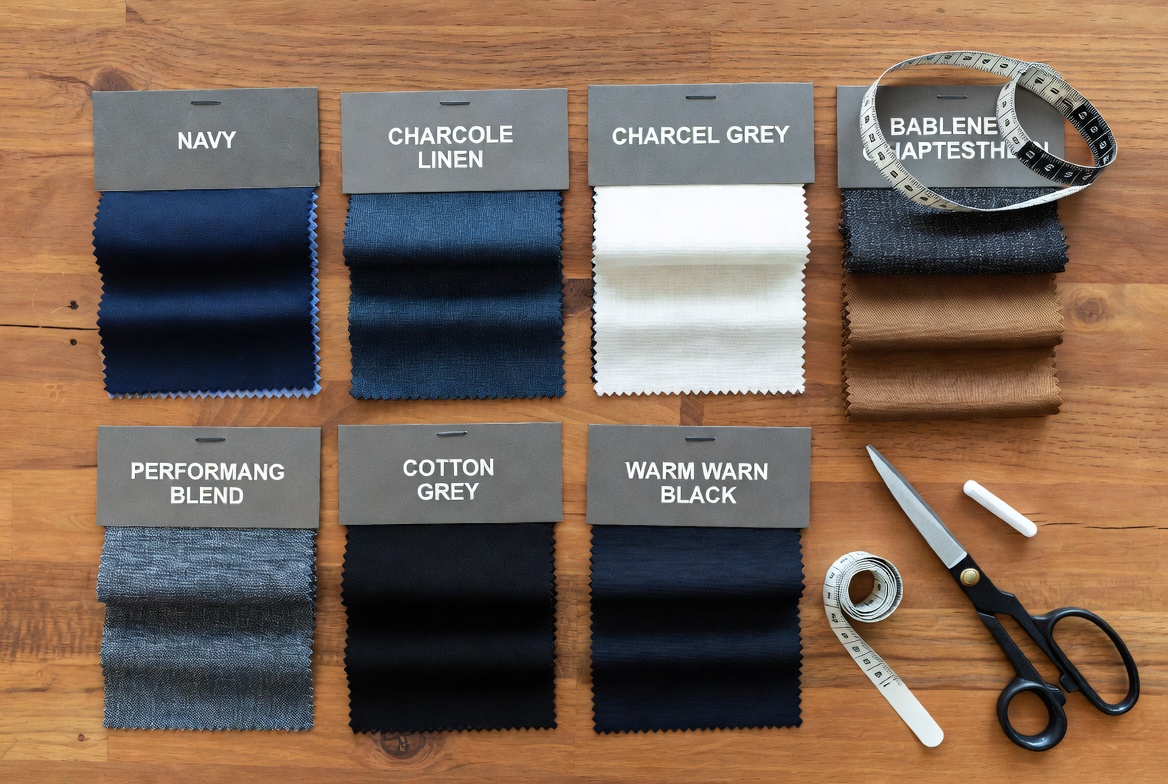
Color is one of the first details people notice, and it strongly influences how formal and authoritative a suit appears. For business environments, classic colors consistently perform well because they coordinate easily with shirts, ties, and footwear.
- Navy is often considered the most versatile color for modern professionals, projecting stability and professionalism while working across interviews, office days, and presentations.
- Grey ranges from light to charcoal tones and offers incredible flexibility, pairing well with many shirt and tie combinations and transitioning smoothly between day and evening engagements.
- Black leans toward higher formality and is frequently used for evening events, high‑profile meetings, or environments with very traditional dress expectations.
- Brown and earth tones are increasingly present in workwear, offering a warm, approachable look that fits especially well in creative and less conservative industries.
Recent style directions for 2025 emphasize neutral and muted palettes, with subtle textures and patterns such as fine checks or pinstripes that add depth while maintaining a professional impression.
Even the best fabric and color cannot compensate for poor fit. A suit that is too tight or too loose can restrict movement, create unflattering lines, and erode the wearer's confidence in important situations.
A well‑fitted business suit allows the jacket to close comfortably without pulling at the button or gaping at the chest, while the wearer can raise their arms and sit down without excessive wrinkling across the back. Trousers should follow the body's natural line with enough ease at the thigh and hip to walk and sit comfortably, finishing with a small, clean break over the shoes.
Off‑the‑rack sizing relies on average body proportions, which work for many people but not all. Made‑to‑measure options use a standard pattern adjusted to individual measurements, offering more precise control over shoulder width, jacket length, waist suppression, and trouser taper.
For international buyers working with manufacturing partners, detailed measurement charts and clear fit standards help ensure that the final product matches the expectations of the target market. Consistent grading between sizes is essential so that customers can move between size ranges without sudden changes in proportion or comfort.

Owning a good business suit is only part of the story; wearing it correctly completes the professional image. Simple rules for buttoning, combining garments, and selecting accessories make a noticeable difference with minimal effort.
Traditional buttoning guidelines keep the jacket sitting cleanly and preserve its construction.
- On a single‑button jacket, fastening the button while standing creates a long, uninterrupted line; many people open it when sitting for comfort.
- On a two‑button jacket, fastening only the top button balances the proportions and allows the skirt of the jacket to drape naturally.
- On a three‑button jacket, fastening the middle button is standard, with the top button as an option and the bottom button usually left undone.
These habits prevent pulling and distortion at the front of the jacket, allowing fabric and internal structure to work as intended.
Pairing the suit with crisp shirts, polished leather shoes, and restrained accessories reinforces a coherent, professional appearance. White and light blue shirts remain foundational because they coordinate easily with most suit colors and ties.
Classic black or dark brown lace‑up shoes complement the majority of business suits, while well‑chosen belts, watches, and subtle pocket squares add personality without overshadowing the overall look. In many offices, fine‑gauge knitwear and understated knit polos under tailoring are also increasingly accepted, especially when the overall color palette remains muted.
Workwear continues to evolve, and business suits now balance tradition with comfort and individuality. Understanding current trends helps brands, wholesalers, and professionals create wardrobes and product lines that feel current yet timeless.
Current tailoring trends show a move away from extremely slim cuts toward more relaxed silhouettes. Jackets often keep a defined waist but feature softer shoulders and slightly wider lapels, while trousers gain a bit more room in the thigh and sometimes include front pleats for extra comfort.
These changes support longer days of wear and suit a wider range of body types, without sacrificing elegance. Three‑piece suits, double‑breasted jackets, and retro‑inspired details are also reappearing, but interpreted with cleaner lines and updated fabrics.
Conscious material choices are increasingly important. Eco‑focused suiting fabrics may include organic fibers, recycled polyester content, or production methods that reduce resource usage.
At the same time, performance properties such as stretch, crease resistance, and improved breathability are becoming standard expectations in many markets. This combination of sustainability and practicality is particularly attractive to professionals who travel frequently or spend long hours in climate‑controlled environments.
For professionals, buyers, and brand managers, a structured checklist makes suit selection more efficient and reduces costly mistakes.
1. Clarify the main purpose: identify whether the suit is primarily for daily office wear, interviews, presentations, travel, or special corporate events.
2. Decide on structure: choose between a 2‑piece or 3‑piece configuration based on formality requirements and climate.
3. Select fabric by season and environment: lightweight wool, blends, or linen for warm conditions; medium or heavier wool for cooler environments; cotton and blends for flexible, semi‑formal workplaces.
4. Choose core colors first: start with navy and grey before adding black or brown and more experimental tones.
5. Check fit carefully: review shoulders, chest, waist, jacket length, sleeve length, and trouser break, and consider adjustments or made‑to‑measure if necessary.
6. Plan shirts and accessories: ensure existing shirts, shoes, and belts coordinate with the new suit or factor replacements into the overall investment.
7. Review care requirements: confirm how often the suit will need professional cleaning and whether the fabric and construction can withstand the planned frequency of wear.
This systematic approach helps both individual buyers and international sourcing teams build focused, coherent collections rather than accumulating random pieces that are difficult to combine.
Q1: What is the most versatile color for a first business suit?
Navy is typically the most adaptable choice for a first suit because it works for interviews, daily office wear, and formal meetings while pairing easily with classic shirt and tie combinations.
Q2: How many suits does a typical office professional need?
Many professionals find that three to five well‑chosen suits are enough to rotate through a working week, allowing garments to rest between wears while still providing variety.
Q3: Is linen appropriate for conservative workplaces?
A well‑cut linen or linen‑blend suit in a restrained color can be appropriate in warm climates, especially when paired with crisp shirts and formal shoes; however, very traditional offices may still prefer wool for its sharper look.
Q4: What is the main difference between off‑the‑rack and made‑to‑measure suits?
Off‑the‑rack suits rely on standard sizes, while made‑to‑measure garments adapt a base pattern to the wearer's measurements, usually providing better balance in the shoulders, chest, waist, and trouser line.
Q5: How often should a business suit be cleaned?
Most suits do not need frequent dry cleaning; airing the garment after wear, using a clothes brush, and rotating between multiple suits is usually sufficient, with professional cleaning reserved for visible dirt, odors, or specific stains.
1. StudioSuits – The Beginner's Guide to Business Suits. https://www.studiosuits.com/blogs/articles/the-beginners-guide-to-business-suits
2. Sartoro – Suit Trends 2025: What's In and What's Out. https://sartoro.co/blogs/sartorial/suit-trends
3. MensUSA – Business Suit Ideas for Men 2026: The Ultimate Guide to Styles, Fit, Colors, and Occasions. https://www.mensusa.com/en-ca/blogs/news/business-suit-ideas-for-men-2026-the-ultimate-guide-to-styles-fit-colors-and-occasions
4. Oscar Hunt – 2025 Trends in Business Suits: Modern Tailoring for Today's Professionals. https://www.oscarhunt.com.au/blogs/journal/2025-trends-in-business-suits-modern-tailoring-for-today-s-professionals
5. Lux Life – The Top 8 Work Suit Trends for 2025. https://lux-life.digital/the-top-8-work-suit-trends-for-2025/
6. Ningbo MH – Essential Guide to Choosing the Best Suiting Fabric. https://www.mh-chine.com/blog/products/suiting-fabrics
7. Fashion Soul – 2025 Business Uniform Trends: Style Guide for Professionals. https://fashionsoulintl.com/blog/business-uniform/
8. Portugal Textile – Premium Menswear Manufacturer Portugal. https://portugaltextile.com/menswear-manufacturer-portugal/
9. Europages – Men Clothes Manufacturing – B2B Companies & Suppliers. https://www.europages.co.uk/companies/men%20clothes%20manufacturing.html
10. Lux‑Life Digital – The Top 8 Work Suit Trends for 2025 (extended content on styling and individuality). https://lux-life.digital/the-top-8-work-suit-trends-for-2025/


