
Views: 289 Author: Youti Clothing Publish Time: 2026-09-25 Origin: Site


Content Menu
● The Essential Men's Suit Accessories
>> 1. The Tie: The Strongest Formal Style Signal
>> 2. The Pocket Square: A Small Detail With Major Impact
>> 3. The Watch: Choose Proportion and Formality
>> 4. The Belt: Match It to Your Shoes
>> 5. Shoes: The Foundation of a Finished Suit
>> 6. Cufflinks: A Formal Detail for French Cuffs
>> 7. Tie Clips and Collar Accessories
>> 8. Sunglasses: Function First, Then Style
>> 9. Bags: Carry Business Essentials With Intention
>> 10. Scarves and Outerwear Accessories
>> 11. Jewelry and Lapel Details
● How to Match Accessories With a Suit
>> Start With the Suit's Formality
>> Use the Three-Color Guideline
● A Practical Accessory Checklist by Occasion
● Common Suit Accessory Mistakes to Avoid
● Build a Better Accessory Program for Your Brand
● FAQ
>> What are the most important accessories to wear with a suit?
>> Should a pocket square match a tie?
>> Can I wear brown shoes with a navy suit?
>> Is it acceptable to wear a suit without a belt?
>> What watch should I wear with a formal suit?
>> How many accessories should a man wear with a suit?
>> What sunglasses are best for men wearing suits?
The best men's suit accessories do more than decorate an outfit. A well-chosen watch, tie, pocket square, belt, pair of shoes, or cufflinks can make a suit look intentional, balanced, and appropriate for the occasion.
For business leaders, wedding guests, retailers, and modern professionals, accessories are often the difference between simply wearing a suit and presenting a complete personal image. The goal is not to wear every possible item. It is to select a few pieces that support the suit's fabric, color, formality, and purpose.
As a professional suit manufacturing team working with international brands, wholesalers, and custom clothing programs, we see one principle remain true across markets: the best accessories create harmony, not distraction.
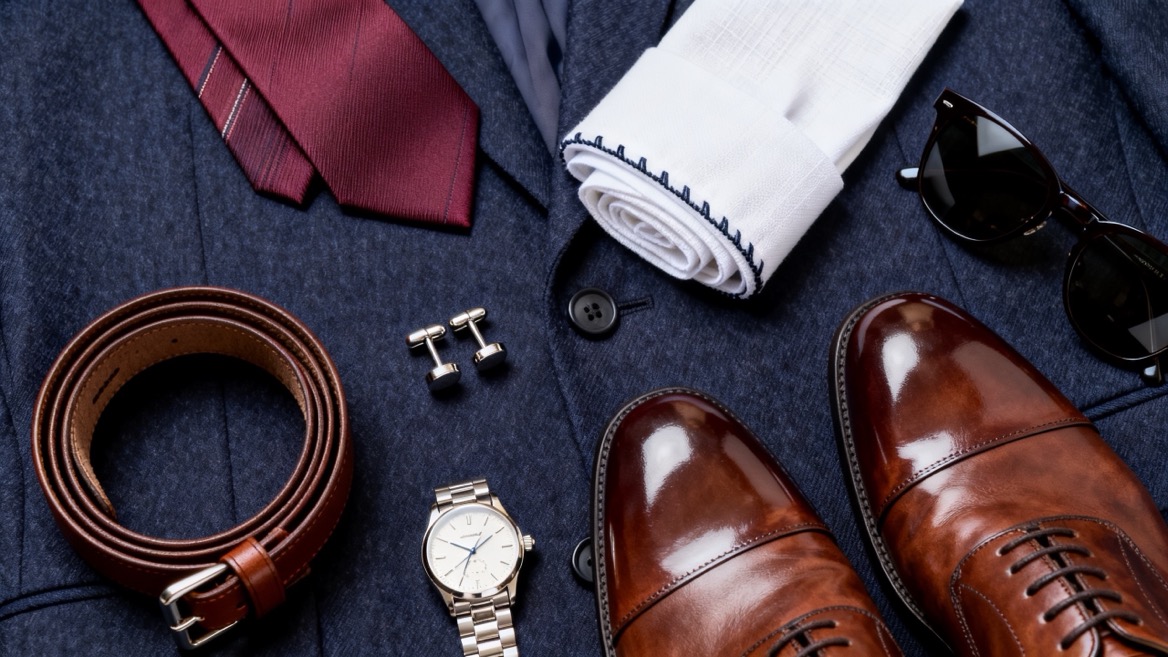
A suit establishes the foundation of a formal or smart-casual outfit. Accessories provide the finishing details. They can introduce color, texture, practicality, and personality without changing the suit itself.
The right accessories can help a wearer:
- Make a navy, grey, black, or brown suit feel more individual
- Adapt one suit for business, weddings, dinners, travel, and celebrations
- Communicate attention to detail in professional settings
- Create visual balance between the jacket, shirt, trousers, and footwear
- Improve practical comfort through useful items such as sunglasses, bags, scarves, and watches
- Build a more versatile wardrobe with fewer clothing purchases
This approach also supports longer product use. In the United States, textiles generated an estimated 17 million tons of municipal solid waste in 2018, while the overall textile recycling rate was 14.7 percent. Choosing durable, versatile suits and accessories that can be reworn across occasions is therefore a practical wardrobe decision as well as a more responsible one.
Not every suit requires the same accessories. A boardroom presentation, formal wedding, outdoor summer event, and relaxed business dinner have different dress codes. Start with the core pieces below, then adjust according to the setting.
A tie is one of the most visible men's suit accessories. It sits near the face, so its color, pattern, texture, and knot shape have an immediate effect on the overall look.
For a business suit, a silk tie in navy, burgundy, dark green, charcoal, or subtle blue is a reliable choice. For weddings and social events, small-scale patterns, textured silk, grenadine, knitted silk, or seasonal colors can add more personality.
A tie should complement the shirt and suit rather than exactly match them.
For example:
| Suit | Shirt | Strong Tie Choices | Avoid |
|---|---|---|---|
| Navy suit | White or light blue | Burgundy, silver-grey, forest green, navy pattern | Bright neon colors |
| Charcoal suit | White, pale blue, soft pink | Deep blue, burgundy, muted purple | Overly casual knit styles for formal events |
| Light grey suit | White, blue, pale lavender | Navy, brown, soft blue, dusty rose | Very dark black tie for daytime events |
| Black suit | White | Black silk, dark grey, deep burgundy | Loud patterns in highly formal settings |
A simple formula is to vary the scale of patterns. If the shirt has stripes, choose a tie with a smaller or differently scaled pattern. If the suit, shirt, and tie all use large patterns, the result can look crowded.
A pocket square gives a suit jacket depth and personality. Unlike a tie, it should not be an identical match. Instead, it should pick up one secondary color from the tie, shirt, or jacket.
A crisp white linen pocket square is one of the most useful options for business, formal occasions, and weddings. It works with nearly every suit color and creates a clean, refined contrast.
Popular folds include:
- Presidential fold: A flat, straight fold for formal businesswear, black-tie events, and conservative weddings
- Puff fold: A relaxed, rounded fold suitable for social occasions and softer tailoring
- Three-point fold: A more decorative choice for celebrations and fashion-focused events
- Casual fold: A slightly irregular fold that works well with textured jackets and smart-casual tailoring
Do not push too much fabric out of the breast pocket. About 1 to 2 centimeters above the pocket line is usually enough. The pocket square should look effortless rather than overly engineered.
A watch is both functional and expressive. With a suit, the most versatile choice is usually a slim dress watch with a simple dial and a leather strap.
For formal business settings, choose a watch that fits comfortably beneath the shirt cuff. Large, thick sports watches can disrupt the clean silhouette of a tailored jacket.
Useful options include:
- Classic dress watch: Slim case, leather strap, clean dial; best for business, weddings, and formal dinners
- Metal bracelet watch: Suitable for daily office wear and modern business styling
- Minimalist watch: A flexible choice for younger professionals and contemporary brands
- Smartwatch: Best for travel, commuting, or less formal workplaces; choose a simple face and restrained strap
Match metal finishes where possible. A silver watch case works naturally with silver cufflinks, a silver tie clip, and a silver belt buckle. Gold-toned details can also work together, especially with brown leather accessories and warmer suit shades.
A belt may seem like a small practical item, but it has a major effect on visual continuity. The traditional guideline remains useful: match the belt color to the shoes as closely as possible.
- Black leather shoes pair best with a black leather belt
- Dark brown shoes pair best with a dark brown belt
- Medium brown shoes work with medium brown or tan belts
- Burgundy shoes can pair with dark brown or oxblood belts
- Suede shoes look best with a belt that has a similar texture or color family
For suits, choose a slim leather belt with a plain buckle. Avoid large logos, oversized buckles, canvas belts, and heavily distressed leather in formal environments.
One important exception: trousers with side adjusters or a clean, beltless waistband often look better without a belt. Adding one can interrupt the intended line of the trousers.
Shoes anchor the entire outfit. A premium suit can still look unfinished if the shoes are poorly maintained, too casual, or incorrectly matched to the event.
For a compact and practical dress-shoe collection, consider these styles:
| Shoe Style | Best For | Works With |
|---|---|---|
| Black Oxford | Formal business, ceremonies, evening events | Black, charcoal, navy suits |
| Dark brown Oxford | Business and weddings | Navy, grey, brown suits |
| Derby shoe | Business and smart-casual settings | Navy, grey, textured suits |
| Loafer | Summer events, travel, relaxed tailoring | Light grey, beige, blue suits |
| Monk strap | Fashion-forward businesswear | Navy, charcoal, medium-grey suits |
| Clean leather sneaker | Modern smart-casual styling | Unstructured suits, casual blazers |
Polish leather shoes regularly and use shoe trees after wear. Proper care maintains shape, reduces creasing, and helps a well-made pair last longer.
Cufflinks are worn with French-cuff shirts. They are appropriate for formal business events, weddings, gala dinners, and special celebrations.
For maximum versatility, start with understated metal cufflinks in silver, gunmetal, or gold-tone finishes. Simple geometric designs are more adaptable than novelty designs.
Cufflinks should coordinate with other metal details, including:
- Watch case
- Belt buckle
- Tie clip
- Wedding ring
- Lapel pin, if worn
A formal outfit rarely needs more than one or two small metal accents. If you wear cufflinks, a watch, a belt buckle, a tie clip, and a large lapel pin together, the result may feel excessive.
A tie clip can keep a tie in place and add a disciplined detail to a business outfit. It should sit between the third and fourth shirt buttons, attaching the tie to the shirt placket.
The correct tie clip length is important. It should be shorter than the width of the tie. A clip that reaches the edge of the tie, or extends beyond it, appears poorly proportioned.
Collar bars, collar pins, and collar chains can create a vintage-inspired look. They are best reserved for people who are comfortable with more expressive tailoring. For most professional environments, a neat tie knot and well-fitted collar are enough.
Sunglasses can complete a daytime suit look, especially for travel, outdoor weddings, summer events, and business commuting. However, they should be removed indoors and during formal introductions.
Classic frame styles include:
- Aviator frames for a confident, versatile appearance
- Wayfarer-style frames for business-casual and travel looks
- Round frames for creative or vintage-inspired dressing
- Rectangular frames for a sharp, contemporary effect
When selecting sunglasses, prioritize verified eye protection over lens darkness or brand image. The American Academy of Ophthalmology recommends choosing sunglasses that provide 100 percent UV protection or UV400 protection, which blocks both UVA and UVB rays. Dark lenses alone do not guarantee sufficient ultraviolet protection.
For formal tailoring, choose clean frames in black, tortoiseshell, dark brown, or restrained metal finishes. Bright mirrored lenses and highly sporty wraparound designs are usually better reserved for casual wear.
A professional bag should support the suit, not compete with it. For office wear, business travel, and client meetings, leather or high-quality structured materials usually create the strongest impression.
Choose based on your daily requirements:
- Leather briefcase: Best for formal meetings, legal documents, and executive businesswear
- Slim leather portfolio: Ideal for meetings when only a tablet, notebook, and documents are needed
- Structured backpack: Practical for commuting and travel; choose minimal branding and clean lines
- Weekender bag: Useful for short business trips and weekend weddings
- Messenger bag: Suitable for creative workplaces and smart-casual dressing
Black bags are the most formal and versatile. Brown leather bags pair especially well with navy, grey, olive, and brown tailoring. Keep the bag clean, structured, and free from visible wear.
A scarf is useful in colder weather and can make a coat-and-suit combination look more considered. Wool, cashmere, merino wool, and wool-silk blends are excellent materials for formal outerwear.
For business dressing, choose solid colors or subtle patterns such as herringbone, small checks, or restrained stripes. Navy, charcoal, camel, burgundy, deep green, and soft grey are versatile choices.
Avoid wrapping a thick scarf too tightly around the neck when wearing a suit jacket and overcoat. A loose once-around wrap or an elegant drape often maintains a cleaner silhouette.
Jewelry should be deliberate and restrained when worn with a suit. A wedding band, classic signet ring, slim bracelet, or subtle necklace can work well, but too many visible pieces can pull attention away from the tailoring.
A lapel pin can be appropriate for weddings, brand events, and formal celebrations. A small floral pin, metal pin, or fabric boutonniere can add distinction without overwhelming the jacket.
A simple rule helps: let one accessory be the focal point.
If the tie is bold, use a simple pocket square. If the pocket square has a strong pattern, choose a quieter tie. If cufflinks are decorative, keep the watch and lapel pin restrained.
The most polished combinations are built around color, texture, scale, and occasion. Rather than selecting items independently, view the outfit as one complete system.
A sharply tailored dark navy suit is highly adaptable. It can work with a silk tie, white pocket square, black Oxford shoes, and a leather briefcase for business. The same suit can become less formal with a textured tie, brown loafers, and no pocket square for an evening dinner.
A lightweight linen or cotton suit naturally works better with relaxed accessories, such as suede loafers, a woven belt, a soft pocket square, or understated sunglasses.
A reliable outfit often contains three main color groups:
1. The suit color
2. The shirt color
3. The accessory color family
For example, a navy suit, white shirt, burgundy tie, brown shoes, brown belt, and white pocket square feels cohesive because the accessories are coordinated without being identical.
Texture creates interest, especially when the color palette is quiet.
Consider these combinations:
- Smooth worsted wool suit with a grenadine silk tie
- Flannel suit with a matte wool tie
- Linen suit with a knitted silk tie
- Tweed jacket with a wool pocket square
- Velvet dinner jacket with a satin bow tie
When the suit fabric is highly textured, accessories should generally become simpler. When the suit is smooth and plain, accessories can introduce controlled texture.
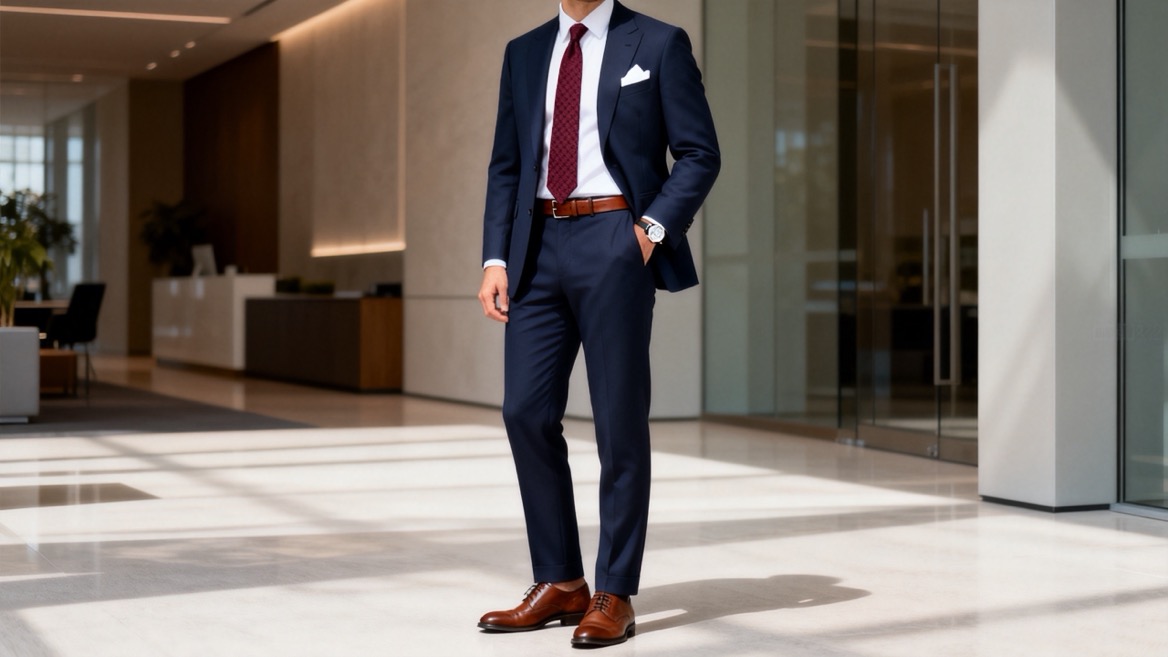
- Navy or charcoal suit
- White or light-blue shirt
- Silk tie in a muted color
- Leather belt matching the shoes
- Black or dark brown Oxford or Derby shoes
- Slim watch
- Optional white pocket square
- Structured briefcase or leather portfolio
- Suit appropriate to the invitation and season
- Tie or bow tie, depending on the dress code
- Pocket square in a complementary color
- Polished leather shoes
- Cufflinks if wearing a French-cuff shirt
- Small lapel flower only if it does not compete with the wedding party
- Unstructured suit, blazer, or tailored trousers
- Open-collar shirt, knit polo, or fine-gauge knitwear
- Loafers or clean leather sneakers
- Minimal watch
- No tie, or a relaxed textured tie
- Soft pocket square if appropriate
- Black or midnight-blue dinner jacket
- Formal white shirt
- Black bow tie
- Black patent or highly polished formal shoes
- Minimal cufflinks and shirt studs
- White pocket square, usually in a simple straight fold
Many accessory mistakes happen because the wearer tries too hard to coordinate every item. A refined outfit usually looks calm and natural.
Avoid these common issues:
- Matching the tie and pocket square in identical fabric and print
- Wearing a black belt with brown shoes
- Choosing a belt that is too wide for suit trousers
- Wearing oversized sports watches with formal tailoring
- Using a tie clip that is wider than the tie
- Combining too many strong patterns at once
- Wearing visibly worn or unpolished shoes
- Leaving sunglasses on indoors during professional conversations
- Overloading the outfit with rings, bracelets, chains, lapel pins, and cufflinks
- Selecting accessories that clash with the event's dress code
For brands, wholesalers, and apparel buyers, accessories are not merely add-on products. They can increase collection versatility, support coordinated merchandising, and give customers a clearer path to complete outfit purchases.
A well-planned suit accessory program should consider:
- Core colors that work across multiple suit collections
- Reorder-friendly items such as white pocket squares, black belts, silk ties, and dress socks
- Material consistency between suits and accessories
- Packaging suitable for gifting, retail, or wedding programs
- Size and fit requirements for belts, gloves, shirts, and footwear
- Seasonal color updates without abandoning dependable core styles
- Clear quality-control standards for stitching, hardware, color fastness, fabric hand feel, and packaging
For private-label and custom clothing projects, the strongest collections are built around wearable combinations rather than isolated products. A navy suit, white shirt, burgundy tie, brown belt, brown shoes, and white pocket square is not just a group of products. It is a ready-to-sell solution for the customer.
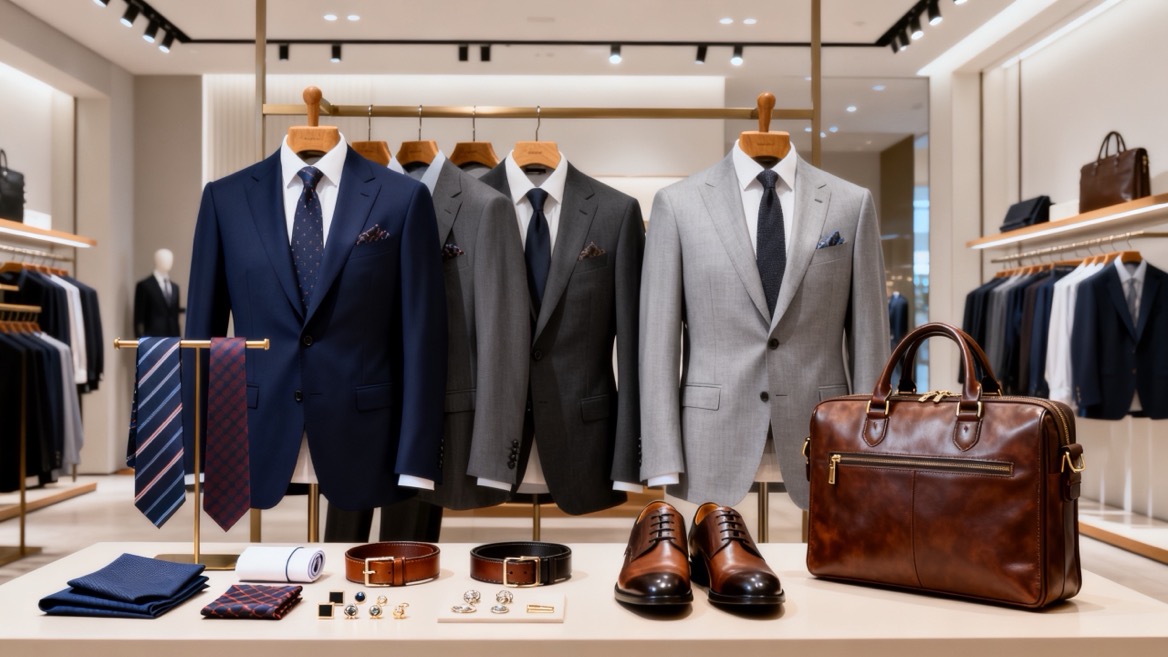
The best men's suit accessories make the wearer look prepared, confident, and appropriate for the moment. Start with the essentials: a good tie, well-maintained shoes, a matching belt, a simple watch, and one tasteful finishing detail such as a pocket square or cufflinks.
Keep colors coordinated, limit competing focal points, and choose materials that suit the season and event. A balanced accessory selection helps one well-made suit serve many more occasions.
For apparel brands, wholesalers, and businesses developing tailored menswear collections, Shanghai Youti Clothing Co., Ltd. provides OEM support for professional suits and related formalwear programs. Contact our team to discuss custom suit construction, fabric options, sizing, branding, production requirements, and coordinated menswear collection development.
The most essential suit accessories are dress shoes, a matching leather belt, a suitable tie when the occasion requires one, a watch, and a pocket square. For formal events, cufflinks may also be appropriate with a French-cuff shirt.
No. A pocket square should coordinate with the tie rather than exactly match it. Pick up a secondary color from the tie, shirt, or suit to create a more natural and refined combination.
Yes. Dark brown shoes are one of the best choices for a navy suit. Match them with a dark brown belt for a cohesive appearance. Black shoes also work when the setting is more formal.
Yes, if the trousers are designed with side adjusters, a clean waistband, or a tailored fit that does not require a belt. If the trousers have belt loops, wearing a belt is generally the more polished choice.
A slim dress watch with a simple dial and leather strap is usually the best option. Choose a watch that fits under the shirt cuff and avoid oversized sports watches for highly formal occasions.
There is no fixed number, but balance matters more than quantity. A tie, watch, belt, shoes, and pocket square are enough for most situations. Add cufflinks or a tie clip only when they fit the occasion and the outfit remains visually calm.
Classic aviator, wayfarer-style, rectangular, or refined metal-frame sunglasses work well with suits. Choose a restrained frame color and make sure the lenses provide 100 percent UV protection or UV400 protection.
1. StudioSuits. "[Best 11 Accessories for Men's Outfits]." Original article structure and baseline accessory categories reviewed for this expanded guide.
2. United States Environmental Protection Agency. "[Textiles: Material-Specific Data]." Textile generation, recycling, combustion, and landfill statistics in the United States.
3. U.S. Government Accountability Office. "[Textile Waste: Federal Entities Should Collaborate on Reduction and Recycling Efforts]." Context on the growth and environmental effects of textile waste.
4. American Academy of Ophthalmology. "[How to Choose the Best Sunglasses to Avoid Sun Damage]." Guidance on selecting sunglasses with 100 percent ultraviolet protection.
5. American Academy of Ophthalmology. "[The Sun, UV Light and Your Eyes]." Information on UV400 and protection from UVA and UVB rays.


