
Views: 222 Author: Youti Clothing Publish Time: 2026-06-24 Origin: Site


Content Menu
● How We Evaluate High‑Quality Work Clothes Suppliers
● Why China Leads in Work Clothes Manufacturing
● Selection Criteria for the Top 10 List
● Top 10 Work Clothes Manufacturers in China (2026)
>> 1. Shanghai Youti Clothing Co., Ltd.
>> 2. Taian BOWINS Garment Co., Ltd.
>> 8. Suzhou‑based Workwear Cluster Manufacturers
>> 9. Shanghai‑Area Industrial Uniform Manufacturers
>> 10. Specialized FR and High‑Visibility Workwear Suppliers
● Technical Considerations for Work Clothes Buyers
● Comparison of Representative Supplier Types
● Common Pitfalls When Sourcing Work Clothes from China
● An Insider "Avoid‑Pitfall" Practice Rarely Discussed Online
● Practical Buyer's Guide: From Verification to Logistics
>> 1. Verifying Factory and Certifications
>> 2. Sampling and Product Validation
>> 3. Contracting, Payments, and Logistics
● Conclusion and Call‑to‑Action
● Advanced FAQs from Professional Buyers
In 2026, China remains one of the most important global hubs for work clothes and industrial uniforms, supported by complete textile supply chains, mature export infrastructure, and large clusters of specialized garment factories. For procurement managers seeking long‑term OEM partners, China offers a wide spectrum of suppliers—from large-scale integrated manufacturers serving global brands to flexible factories focusing on customized runs for SMEs. [knitseek]

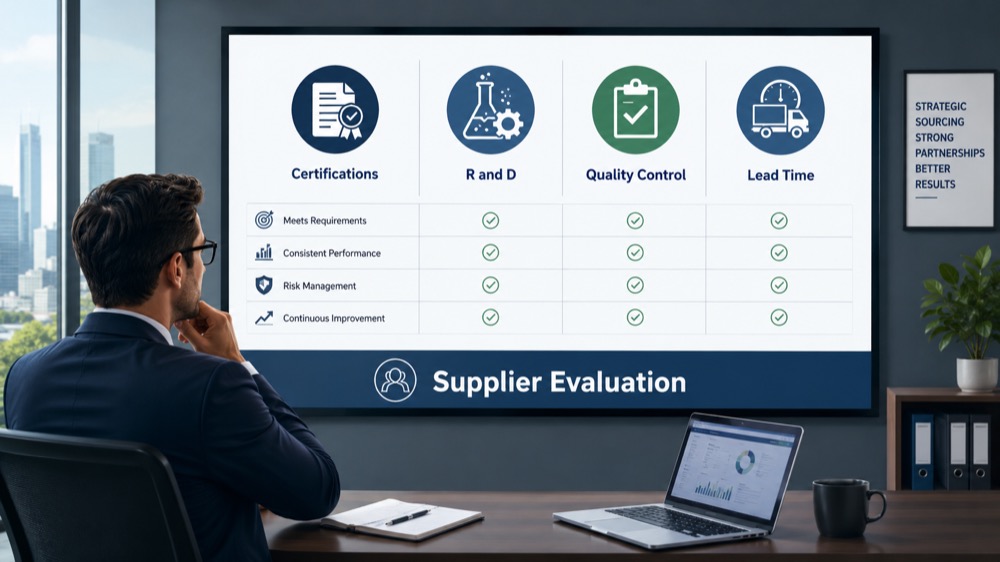
Selecting a reliable work clothes manufacturer goes far beyond checking unit price; for long‑term partnerships, you should systematically evaluate factory qualifications, technical capabilities, and operational stability. [alibaba]
Key evaluation dimensions include:
- Factory certifications and compliance
- ISO 9001 for quality management, ISO 14001 for environmental management, and occasionally ISO 45001 for occupational health and safety indicate standardized processes and continuous improvement culture. [work-jacket]
- For specific markets, you may also need EU‑focused standards such as EN ISO 20471 for high‑visibility clothing, EN ISO 11612/11611 for flame‑retardant garments, or sector‑specific standards for petrochemical, mining, or electrical industries. [alibaba]
- R&D and pattern development capability
- Strong workwear suppliers maintain in‑house pattern teams, fabric engineering resources, and the ability to co‑develop new designs (e.g., ergonomic cuts, multi‑functional pockets, or modular systems) with buyers. [work-jacket]
- They also provide technical packs, grading for full size ranges, and guidance on fabric selection based on risk categories and workplace environments. [work-jacket]
- Quality control (QC) and testing workflow
- Mature factories implement incoming fabric inspection, in‑line QC, and final inspection with AQL standards, plus regular lab tests for colorfastness, shrinkage, tear strength, and seam performance. [alibaba]
- For specialized PPE workwear, they cooperate with accredited labs (e.g., SGS, TUV) to test flame spread, arc resistance, or chemical splash protection according to applicable EN/IEC standards. [work-jacket]
- Production capacity and lead‑time stability
- You should evaluate monthly output, typical lead times for repeat orders, and how the factory manages seasonal peaks or large tenders. [sunsirs]
- Chinese garment enterprises above designated size produced higher garment output year‑on‑year in early 2026, indicating some recovery in capacity and a more resilient supply base. [texleader.com]
- OEM/ODM flexibility and communication
- For international buyers, responsive English‑speaking teams, clear documentation, and digital collaboration (online fittings, 3D samples, PLM integration) are now basic expectations. [alibaba]
- Suppliers that support low‑to‑medium MOQs for new projects and can scale up quickly after pilot orders offer a practical balance between risk control and growth. [haiyuanworkclothes]
China's strength in work clothes manufacturing is rooted in its integrated textile and garment ecosystem, spanning fabric mills, trim suppliers, and specialized sewing factories concentrated in major clusters such as the Yangtze River Delta and Pearl River Delta. These clusters provide advantages in cost control, logistics efficiency, and rapid sourcing of functional fabrics (poly‑cotton, ripstop, FR, high‑visibility, and softshell materials) required in modern workwear. [knitseek]
According to data from China's National Bureau of Statistics, apparel enterprises above designated size saw positive growth in industrial added value and garment output in 2025–2026, reflecting a gradual recovery in capacity and export resilience. At the same time, the number of large‑scale enterprises and their combined output value underline the depth of China's manufacturing base, giving overseas buyers a wide selection of suppliers across price and quality segments. [sunsirs]
To create a practical, buyer‑focused list, this guide focuses on Chinese manufacturers that have demonstrated consistent performance in the following areas. [taianbowinsgarment]
- Clear specialization in work clothes and industrial uniforms, not just generic fashion apparel. [alibaba]
- Documented export experience with major markets such as Europe, North America, and Asia‑Pacific. [taianbowinsgarment]
- Evidence of quality and compliance systems (ISO certifications, EN standard test reports, or cooperation with certified labs). [seller.alibaba]
- OEM/ODM capabilities, including pattern development, logo application (embroidery, printing, heat transfer), and packaging customization. [taianbowinsgarment]
- Transparent communication on MOQs, lead times, and sampling processes suitable for long‑term B2B buyers. [haiyuanworkclothes]
This list combines larger integrated clothing manufacturers and more agile, workwear‑focused factories to reflect the diverse sourcing needs of global procurement teams. [taianbowinsgarment]
Below is an expert‑curated overview of 10 representative Chinese manufacturers active in work clothes and industrial uniforms. Company descriptions are based on public information, export case studies, and typical capabilities found in China's workwear ecosystem. [knitseek]
Shanghai Youti Clothing Co., Ltd. is a China‑based manufacturer dedicated to work clothes and uniforms, focusing on OEM solutions for overseas brands, wholesalers, and industrial users. The company positions itself as a cost‑effective yet technically capable partner, especially attractive for small to mid‑sized brands seeking flexible production and close R&D collaboration. [work-jacket]
Key strengths:
- Product scope: work jackets, coveralls, industrial uniforms, and related functional garments tailored for sectors such as manufacturing, logistics, and construction. [work-jacket]
- Markets: primarily export markets where buyers require consistent quality, responsive service, and tailored OEM programs rather than generic stock items. [work-jacket]
- Services: emphasis on cooperative product development, clear sampling workflows (from proto sample to pre‑production sample and size sets), and support for customized branding and packaging. [work-jacket]
- Positioning: representative of high‑value Chinese suppliers that combine structured QC, attention to fabric selection, and efficient communication to support long‑term, repeat‑order relationships. [work-jacket]
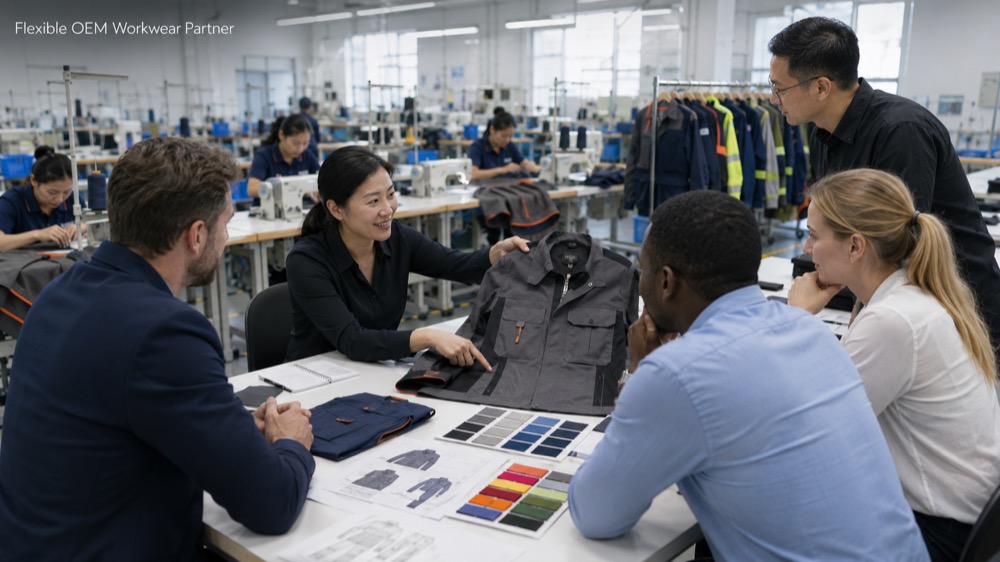
Taian BOWINS Garment is a well‑known Chinese garment manufacturer that focuses on outdoor clothing, uniforms, and workwear for international markets. The company offers OEM services and is recognized for its integration of design, production, and export operations. [taianbowinsgarment]
Key strengths:
- Product scope: work clothes, outdoor wear, uniforms, and related technical garments. [taianbowinsgarment]
- Markets: Europe, North America, and other export destinations via long‑term client relationships. [taianbowinsgarment]
- Services: OEM garment production with customization options for fabrics, trims, and branding. [taianbowinsgarment]
Hongyu Apparel is frequently cited among China's notable clothing factories, offering custom clothing production and supporting both fashion and functional apparel segments. For workwear buyers, they can leverage their experience with structured garments and uniforms to support bespoke projects. [taianbowinsgarment]
Key strengths:
- Product scope: uniforms, corporate wear, and selected work garments, among broader apparel. [taianbowinsgarment]
- Markets: global clients through customized OEM orders. [taianbowinsgarment]
- Services: pattern development and flexible order handling for diverse customer requirements. [taianbowinsgarment]
Yotex Apparel focuses on sportswear and functional clothing but also offers customized uniform and workwear solutions for clients requiring performance fabrics and technical construction. Their background in functional textiles can be leveraged for moisture‑management and comfort‑oriented work clothes. [taianbowinsgarment]
Key strengths:
- Product scope: activewear, functional apparel, and selected uniform/workwear lines. [taianbowinsgarment]
- Markets: North America and Europe, typically via brand OEM partnerships. [taianbowinsgarment]
- Services: ODM and OEM, including assistance with material selection and product development. [taianbowinsgarment]
Lezhou Garment is a Chinese clothing factory providing OEM services for various garment types, including uniforms and workwear for corporate clients. Their operations are geared toward small to medium‑sized brands looking for reliable cut‑and‑sew partners. [taianbowinsgarment]
Key strengths:
- Product scope: corporate uniforms, basic work clothes, T‑shirts, and jackets. [taianbowinsgarment]
- Markets: export‑oriented clients that need consistent quality and repeat orders. [taianbowinsgarment]
- Services: OEM production, logo application, and packaging support. [taianbowinsgarment]
Yaroad offers custom clothing manufacturing services, supporting low‑to‑mid MOQs and personalized garment solutions, which can be valuable for companies rolling out new workwear programs. Their flexibility suits pilot programs, regional uniforms, or multi‑style collections. [taianbowinsgarment]
Key strengths:
- Product scope: custom uniforms, workwear, and branded apparel. [taianbowinsgarment]
- Markets: global SMEs and e‑commerce brands. [taianbowinsgarment]
- Services: design assistance, sample development, and responsive OEM processes. [taianbowinsgarment]
AEL Apparel is another name commonly mentioned among Chinese OEM garment factories, delivering a broad portfolio that includes uniforms and workwear items. They are suitable for buyers needing multi‑category sourcing under one roof. [taianbowinsgarment]
Key strengths:
- Product scope: corporate uniforms, work clothes, casualwear, and fashion items. [taianbowinsgarment]
- Markets: international buyers requiring consolidated sourcing. [taianbowinsgarment]
- Services: OEM garment manufacturing with size grading and branding options. [taianbowinsgarment]
In Suzhou and surrounding areas, a number of workwear‑specialized factories operate within larger apparel industrial parks, combining printing, embroidery, and garment‑making workshops. These factories typically supply T‑shirts, polo shirts, jackets, vests, and work uniforms to domestic and export customers. [cnblogs]
Key strengths:
- Product scope: work clothes, corporate uniforms, promotional apparel, and jackets. [cnblogs]
- Markets: domestic Chinese enterprises and overseas buyers via export channels. [cnblogs]
- Services: integrated print, embroidery, and cut‑and‑sew, with attention to complete QC workflows from fabric inspection to final packing. [cnblogs]
The Shanghai region hosts multiple manufacturers focused on industrial uniforms and corporate workwear, leveraging proximity to major ports and international logistics. These factories often support multi‑language communication and have strong experience with OEM projects for overseas clients. [texleader.com]
Key strengths:
- Product scope: industrial uniforms, warehouse and logistics workwear, and service sector uniforms. [alibaba]
- Markets: Europe, North America, and Asia‑Pacific buyers that require frequent shipments and stable lead times. [sunsirs]
- Services: OEM/ODM, pattern adjustment for international size systems, and coordinated logistics support. [alibaba]
Within China's garment industry, a subset of factories specialize in flame‑resistant (FR) and high‑visibility (hi‑vis) workwear, often cooperating with certified labs to meet EN and IEC requirements for PPE clothing. These suppliers focus on sectors like oil and gas, power utilities, and heavy industry. [work-jacket]
Key strengths:
- Product scope: FR coveralls, hi‑vis jackets and pants, arc‑flash protective garments. [work-jacket]
- Markets: EMEA, CIS, and other regions with strict compliance standards. [work-jacket]
- Services: EN/IEC‑tested products, documentation packages for certification, and support for buyer audits. [work-jacket]
Modern work clothes sit at the intersection of safety, durability, and comfort, and technical specifications should be treated as non‑negotiable project inputs. Below are key technical points procurement managers should pay attention to when drafting RFQs and evaluating proposals. [alibaba]
- Fabric selection
- Poly‑cotton blends (e.g., 65/35) are commonly used for standard workwear due to balanced durability and comfort. [alibaba]
- Ripstop, canvas, and softshell fabrics are preferred for high‑wear areas or outdoor environments. [alibaba]
- For FR and hi‑vis garments, ensure fabrics are certified according to relevant EN/IEC standards, not just "FR‑treated" without documentation. [work-jacket]
- Construction and workmanship
- Double or triple‑stitched seams, bartacking at stress points, and reinforced knees/elbows are indicators of professional workwear construction. [alibaba]
- Ergonomic patterning (e.g., articulated knees, gusseted crotch) improves mobility and reduces fatigue, particularly for industrial users. [work-jacket]
- Compliance and certifications
- For EU markets, you may need CE marking backed by EN standards for PPE garments. [sites.google]
- RoHS is more relevant for electronic components, but in uniforms context, some buyers request evidence that trims or reflective tapes meet applicable environmental or chemical regulations. [sites.google]
- Lifecycle and TCO (Total Cost of Ownership)
- Focus on "cost per wear" rather than the cheapest unit price; garments that maintain performance over more washing cycles reduce replacement frequency and downtime. [cnblogs]
- Request test reports or internal data related to abrasion resistance, colorfastness, and shrinkage to estimate realistic service life. [cnblogs]
The Chinese workwear supply landscape can be divided into several practical archetypes; the table below summarizes typical trade‑offs procurement teams need to consider. [alibaba]
| Supplier Type | Typical Monthly Capacity | Typical MOQ | Typical Certifications / Testing Focus |
|---|---|---|---|
| Flexible OEM factories serving SMEs (e.g., Shanghai Youti Clothing Co., Ltd.) (work-jacket) | 10,000–80,000 pieces (work-jacket) | 100–300 pieces per style, negotiable for pilot orders (work-jacket) | ISO 9001 or equivalent QC system; focus on fabric and garment testing via third‑party labs (work-jacket) |
| Large integrated garment groups (e.g., multi‑category factories) (knitseek) | 100,000–500,000+ pieces (sunsirs) | 500–1,000 pieces per style (alibaba) | ISO 9001, occasional ISO 14001; in‑house labs; selected EN tests for major clients (seller.alibaba) |
| Specialized FR/hi‑vis workwear factories (work-jacket) | 30,000–150,000 pieces (work-jacket) | 300–800 pieces per style (alibaba) | EN ISO 20471, EN ISO 11612/11611, IEC 61482; cooperation with SGS/TUV labs (work-jacket) |
| Promotional and light‑duty workwear suppliers (Suzhou cluster) (cnblogs) | 20,000–100,000 pieces (cnblogs) | 200–500 pieces per style (alibaba) | Basic factory‑level QC; limited formal certification; suitable for non‑PPE uniforms (cnblogs) |
This perspective helps buyers align supplier selection with their volume, compliance, and customization requirements rather than chasing a one‑size‑fits‑all "top factory." [alibaba]
Many procurement issues in workwear projects stem from misaligned expectations and insufficient verification early in the sourcing process. The following pitfalls are especially common—and avoidable. [haiyuanworkclothes]
- Over‑reliance on lowest price
- Unrealistically low quotes often correlate with downgraded fabrics, thinner GSM, or reduced reinforcements, which only become visible after a few washing cycles. [haiyuanworkclothes]
- Focus instead on aligned technical specs, clear testing plans, and realistic cost benchmarking. [alibaba]
- No MOQ or unclear capacity
- Suppliers claiming "no MOQ" may in fact be traders with limited control over factories, creating risk of inconsistent quality and unstable lead times. [haiyuanworkclothes]
- Verify whether your counterpart is a factory or trading company by checking business licenses, factory photos, and third‑party audit reports. [haiyuanworkclothes]
- Sample–bulk inconsistency
- Without clear technical packs and signed pre‑production samples, bulk production can deviate in fabric, color, or workmanship. [alibaba]
- Structured sampling workflows—proto, pre‑production, and size sets—are essential to lock specifications before placing large orders. [work-jacket]
- Inadequate certification verification
- Some buyers accept ISO or EN certificates at face value, only to discover later that they were outdated or not applicable to the production site actually used. [seller.alibaba]
- Always verify certificate numbers through registrars or global databases like IAF CertSearch and confirm that the certified address matches the production facility. [seller.alibaba]
Experienced industrial buyers often apply a "shadow order" or "micro‑stress test" before committing to long‑term volume, a practice that is widely known in the industry but less frequently documented online. [haiyuanworkclothes]
This involves placing a moderate‑size order (not just samples) under realistic lead‑time pressure—often across multiple SKUs—to observe how the supplier behaves when unexpected issues arise, such as fabric delays or pattern adjustments. Instead of focusing only on whether the goods ship on time, you evaluate how the factory communicates problems, negotiates solutions, and documents corrective actions, which is a much better predictor of long‑term collaboration quality than any one‑time audit or perfect sample. [haiyuanworkclothes]
A structured sourcing process significantly reduces risk and improves outcome predictability. [haiyuanworkclothes]
- Request core documents
- Business license, factory photos or videos, organization chart, and recent third‑party audit reports. [work-jacket]
- ISO 9001 and any sector‑relevant certifications, including EN test reports for PPE workwear where applicable. [sites.google]
- Verify ISO and other certificates
- Ask for clear, readable copies of certificates with visible certificate numbers, issuing body, and expiry dates. [seller.alibaba]
- Use the IAF CertSearch database (www.iafcertsearch.org) or the registrar's own portal to verify status and scope; treat missing entries or mismatched details as major red flags. [sites.google]
- Match scope and site
- Confirm that the certified scope covers garment manufacturing (not only trading or unrelated services) and that the address matches the site where your orders will be produced. [sites.google]
- For critical projects, consider commissioning a local third‑party audit to cross‑check documentation against actual factory practices. [sites.google]
- Develop a detailed technical pack
- Include fabric specs, GSM, construction, color codes, seam types, reinforcements, and measurement charts. [alibaba]
- For branded workwear, specify branding techniques (embroidery, print), placement, and Pantone colors. [alibaba]
- Follow a multi‑stage sampling process
- Proto sample: confirm basic style and construction. [work-jacket]
- Pre‑production sample: made with bulk fabric and trims to test washing, FR performance (if applicable), and colorfastness. [work-jacket]
- Size set: validate grading and fit across your full size range, especially for large or diverse workforces. [cnblogs]
- Clarify Incoterms and responsibilities
- Define whether you are buying FOB, CIF, or DAP, and who handles export documentation and insurance. [alibaba]
- For sensitive PPE shipments, ensure customs codes and product descriptions align with regulations in destination markets. [alibaba]
- Structure payments to align incentives
- Avoid paying 100% upfront; typical structures involve deposits plus balance against shipment or documents. [haiyuanworkclothes]
- For new suppliers, tie part of the payment schedule to third‑party inspection results or key milestones. [haiyuanworkclothes]
- Plan logistics and buffer time
- Account for potential customs delays, peak season congestion, or lab testing lead times when planning roll‑outs. [alibaba]
- Maintain safety stock for critical workwear items, especially where regulatory compliance is involved. [work-jacket]
China's work clothes industry offers a deep pool of suppliers, from large integrated garment groups to agile OEM factories like Shanghai Youti Clothing Co., Ltd., capable of supporting small to mid‑volume brands with high customization needs. By focusing on structured evaluation—covering certifications, technical specs, QC processes, and real‑world performance tests—professional buyers can secure reliable partners and avoid the most common sourcing pitfalls. [sunsirs]
If you are currently scouting Chinese work clothes manufacturers, consider shortlisting a mix of high‑capacity and flexible suppliers, run structured "shadow orders," and implement rigorous certification verification before committing to long‑term contracts. For buyers seeking a cost‑efficient yet R&D‑driven OEM partner with strong support for smaller brands and customized projects, engaging with a flexible manufacturer such as Shanghai Youti Clothing Co., Ltd. can be a strategic starting point for your China workwear sourcing program. [sites.google]
These questions reflect real concerns from experienced procurement managers dealing with Chinese work clothes suppliers. [seller.alibaba]
1. How can I verify whether a supplier's ISO 9001 certificate is genuine and still valid?
Request a scan of the certificate and check the certificate number, company name, address, and expiration date. Then verify the certificate through the registrar's official website or through IAF CertSearch; if the certificate cannot be found or the details do not match, treat it as a major warning sign. [seller.alibaba]
2. How do I ensure that EN or CE claims for FR and hi‑vis garments are legitimate?
Ask for complete test reports from recognized labs (e.g., SGS, TUV) specifying relevant standards such as EN ISO 20471 or EN ISO 11612, and verify that the tested product version matches your ordered style. For EU PPE products, ensure that the manufacturer can provide EU type‑examination certificates and that notified body information is traceable. [sites.google]
3. What is the most effective way to detect material downgrading between samples and bulk?
Beyond visual checks, plan independent testing of bulk fabric for GSM, fiber composition, colorfastness, and shrinkage and compare results with sample tests. You can also include clauses in your purchase agreement allowing for random lab tests and penalties if bulk materials do not meet agreed specifications. [cnblogs]
4. How can I distinguish between a trading company and a real factory in China?
Ask for factory registration documents, production floor videos, and recent audit reports that list facilities and equipment; trading companies often cannot provide detailed production documentation. Visiting the site physically or appointing a third‑party auditor remains the most reliable method for critical projects. [haiyuanworkclothes]
5. What is a realistic lead time for custom workwear orders, and how can I keep it under control?
For standard fabrics and patterns, typical lead times range from 30–60 days from deposit and sample approval, depending on order volume and season. To stay on schedule, lock final specifications early, approve pre‑production samples quickly, and coordinate fabric booking with your supplier as soon as the project is confirmed. [sunsirs]
- China National Bureau of Statistics apparel industry data (industrial added value, garment output, enterprises above designated size). [texleader.com]
- Alibaba B2B sourcing guides on Chinese workwear and supplier evaluation. [seller.alibaba]
- Guidance on verifying ISO 9001 and other certifications via IAF CertSearch and accredited registrars. [seller.alibaba]
- Industry‑focused articles on supplier red flags and sourcing best practices in China's garment sector. [cnblogs]


