
Views: 224 Author: Youti Clothing Publish Time: 2026-09-26 Origin: Site


Content Menu
● What Are Women's Work Clothes?
● What Is Standard Women's Clothing?
● Women's Work Clothes vs Standard Women's Clothing
● Why Women Need Specialized Workwear Designs
● Fit Is About Movement, Not Only Measurements
>> Key fit zones for women's workwear
● Fabric Makes a Major Difference
>> Fabric features to evaluate
● Practical Features That Standard Clothing Often Lacks
● Safety Cannot Be Treated as an Afterthought
● The Hidden Cost of Choosing Standard Clothing
>> Consider these cost factors
● A Buyer's Checklist for Women's Workwear Development
>> Step 1: Define the working environment
>> Step 2: Study real job tasks
>> Step 3: Build a female-specific size strategy
>> Step 4: Choose fabric by performance requirements
>> Step 5: Design functional details
>> Step 6: Conduct wear trials
>> Step 7: Plan repeat-order consistency
● How OEM Suppliers Can Add Value
● Why Specialized Designs Matter to Brands
● Partner With a Women's Workwear OEM Supplier
● FAQ
>> 1. What is the difference between women's work clothes and regular women's clothing?
>> 2. Can women wear unisex workwear?
>> 3. Why is women-specific sizing important in workwear?
>> 4. Which fabrics are best for women's workwear?
>> 5. What should buyers consider when sourcing women's work trousers?
>> 6. Can women's workwear be customized with a company logo?
>> 7. What is the minimum order quantity for OEM women's workwear?
For women working in manufacturing, construction, logistics, healthcare, hospitality, laboratories, maintenance, or field services, clothing is not simply a matter of appearance. Work clothes for women must help the wearer move, carry tools, stay comfortable, meet workplace requirements, and represent the employer's brand throughout a demanding shift.
By contrast, standard women's clothing is generally created for daily life, casual occasions, office settings, or fashion trends. It may look professional, but it is not automatically engineered for repeated industrial use, high-abrasion tasks, functional storage, workplace hazards, or uniform consistency.
At Shanghai Youti Clothing Co., Ltd., we work with overseas brands, wholesalers, and professional buyers seeking OEM uniform and workwear solutions. From that perspective, the distinction is clear: specialized women's workwear should not be a smaller version of men's garments, nor should it be ordinary fashion clothing with a logo added. It should be purpose-built around women's movement, body proportions, job tasks, safety needs, and long-term wear.
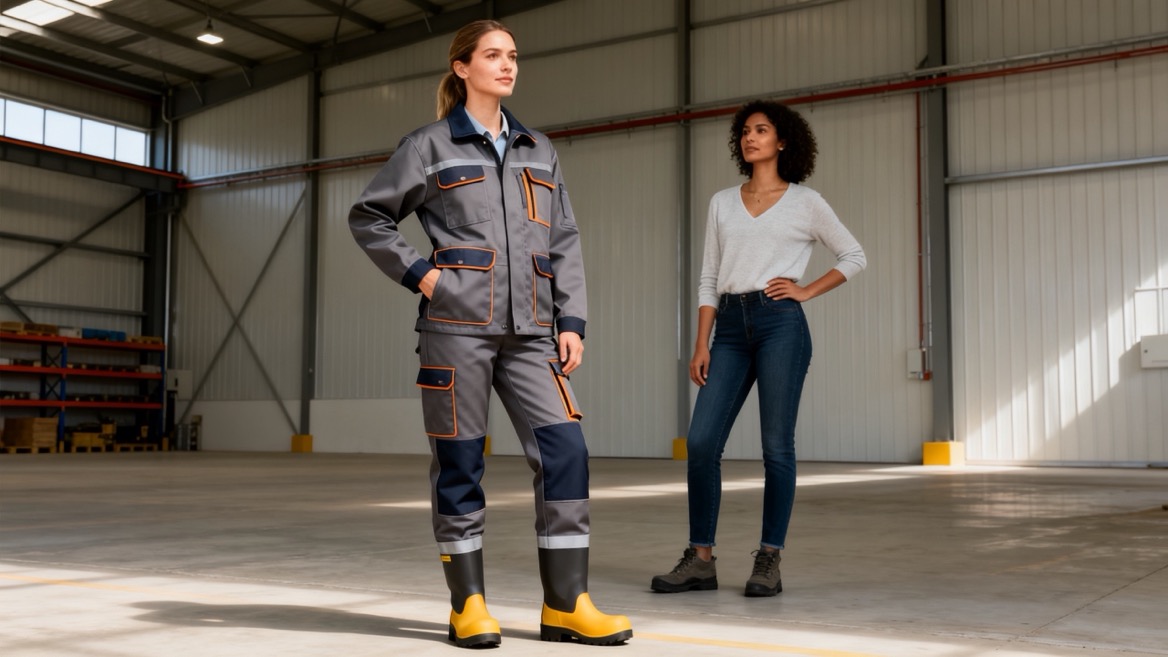
Women's work clothes are garments designed specifically for use in professional environments. Depending on the industry, they can include:
- Women's work shirts and polo shirts
- Work trousers and cargo pants
- Coveralls and boiler suits
- Work jackets and softshell jackets
- Hi-vis workwear
- Healthcare uniforms and scrubs
- Hospitality uniforms
- Warehouse and logistics uniforms
- Flame-resistant workwear
- Waterproof outdoor workwear
- Safety vests and protective outerwear
A well-designed women's workwear collection balances fit, functionality, durability, comfort, visual consistency, and industry-specific protection.
For example, a women's warehouse uniform may need deep secure pockets, abrasion-resistant fabric, stretch panels, reflective details, and a shape that allows frequent bending and lifting. A women's hotel uniform may prioritize refined styling, wrinkle resistance, breathable fabric, easy-care performance, and consistent colors across teams. A women's medical uniform may require mobility, stain resistance, laundering durability, and practical pocket placement.
The garment must support the real work being performed.
Standard women's clothing refers to apparel designed primarily for general everyday wear. This category includes casual shirts, blouses, jeans, leggings, dresses, skirts, cardigans, fashion jackets, and lifestyle trousers.
Although these products may be comfortable and visually appealing, they are not necessarily built for professional work environments. Their development process often emphasizes:
- Seasonal fashion trends
- Retail appearance
- General sizing
- Everyday comfort
- Decorative details
- Lower initial purchase price
- Consumer lifestyle preferences
This does not mean standard women's clothing is low quality. Many fashion garments are beautifully made. However, a fashionable cotton blouse, slim-fit jean, or lightweight casual jacket may not withstand repeated industrial washing, frequent kneeling, tool carrying, warehouse movement, exposure to oil, or the wear-and-tear of a physical job.
That is the essential difference: standard women's clothing is designed for life; women's work clothes are designed for work.
The following comparison helps buyers, brand owners, and procurement teams understand why specialized workwear matters.
| Comparison Area | Work Clothes for Women | Standard Women's Clothing |
|---|---|---|
| Primary purpose | Supports professional tasks, workplace requirements, and team identity | Supports everyday wear, fashion, and personal style |
| Fit approach | Developed around working movement and women's body proportions | Usually based on general lifestyle sizing |
| Fabric performance | Often selected for durability, breathability, stretch, abrasion resistance, or protection | Usually selected for drape, softness, style, or seasonal appeal |
| Pocket design | Designed for tools, phones, pens, radios, keys, or equipment | Often decorative, shallow, or absent |
| Reinforcement | May include reinforced knees, seams, elbows, hems, and stress points | Usually limited reinforcement |
| Laundering | Built for repeated washing and color retention | May require gentler care or lose shape faster |
| Safety features | May include reflective tape, flame resistance, anti-static properties, or protective construction | Typically does not include occupational safety features |
| Branding | Supports embroidery, printing, name badges, and corporate colors | Branding may affect the garment's fashion appearance or durability |
| Production focus | Consistency across sizes, colors, repeat orders, and job roles | Seasonal style changes and retail variety are common |
| Buyer value | Helps improve workforce comfort, uniform compliance, and brand consistency | May have a lower upfront cost but less long-term job suitability |
For B2B buyers, the decision should not be based on the garment's appearance alone. A uniform program becomes successful when employees are willing to wear it correctly, comfortably, and consistently.
A common procurement mistake is to choose a unisex garment and assume it will work equally well for all employees. In some job categories, unisex styles can be practical. However, "unisex" often means that a garment is based largely on male proportions and then offered in smaller sizes.
This can create practical problems for female employees.
Women may need different allowances around the chest, waist, hips, shoulders, torso length, sleeve length, and rise. A work jacket that fits the shoulders may be too loose at the waist. Trousers that fit the hips may be too long in the leg. A coverall that fits the torso may restrict bending, squatting, climbing, or reaching.
Research on workplace protective equipment has repeatedly identified fit challenges for women. Studies have reported that many forms of protective equipment and work garments have historically been developed around male body measurements, which can lead to oversized, restrictive, or less functional products for female workers.
This matters because poor fit is not only uncomfortable. It can affect:
- Ease of movement
- Worker confidence
- Task efficiency
- Garment compliance
- Safe use of protective equipment
- Risk of snagging or catching
- Ability to layer clothing correctly
- Professional appearance in customer-facing roles
For workwear brands, the opportunity is substantial. A women's workwear line designed with genuine fit differentiation can solve a visible market problem while creating stronger customer loyalty.
A good fit chart is important, but measurements alone do not create high-performing women's work clothes. The garment must also work during motion.
A woman may need to reach above shoulder height to stock shelves, climb ladders, crouch during maintenance work, bend repeatedly in a warehouse, drive for long periods, or move quickly in a hospitality setting. Each activity places pressure on different garment areas.
Shoulders and armholes: These areas affect reaching, lifting, and arm rotation. A restrictive armhole can make even simple tasks uncomfortable.
Chest and bust allowance: Work shirts, polos, jackets, and coveralls need enough ease for movement without becoming baggy or creating excess fabric.
Waist shaping: Light contouring can improve appearance and reduce bulk, but excessive shaping may restrict movement or make layering difficult.
Hip and seat room: Work trousers must allow sitting, squatting, kneeling, climbing, and walking without pulling at the seams.
Rise construction: The front and back rise of work pants affects comfort during bending and sitting. A poor rise can expose the lower back, pinch the wearer, or restrict movement.
Sleeve and inseam lengths: Adjustable hems, multiple inseam options, and well-planned grading can reduce the common problem of overly long sleeves and trouser legs.
The practical lesson is simple: a women's workwear supplier should test fit in motion, not only on a standing mannequin.
Standard women's clothing may use lightweight fabrics that feel pleasant at first wear but are not ideal for repeated work conditions. Specialized work clothes for women need fabric choices that reflect the role, climate, laundering process, and required service life.
For many industrial uniforms, a polyester-cotton blend remains popular because it can combine comfort, color retention, strength, and easier care. Stretch workwear may add elastane or mechanical-stretch construction to improve movement. Outdoor uniforms may require water resistance, wind protection, insulation, or breathable membrane technologies.
- Abrasion resistance for warehouses, workshops, transport, and maintenance roles
- Tear resistance for demanding physical environments
- Moisture management for active jobs and warm climates
- Breathability for long shifts and layered uniforms
- Stretch and recovery for bending, lifting, and driving
- Colorfastness for repeated industrial laundering
- Easy-care performance to reduce ironing and maintenance demands
- Stain-release treatments for food service, healthcare, and technical roles
- Protective properties where a risk assessment requires them
Ergonomic workplace design aims to match the job to the worker, helping reduce muscle fatigue and improve productivity. Clothing should be considered part of that wider workplace design process, especially for employees who perform repetitive or physically demanding tasks.
The difference between ordinary apparel and professional workwear is often visible in the details.
A fashion garment may have small decorative pockets or no pockets at all. Women's work clothes can include functional placement for:
- Smartphones
- Pens and markers
- ID cards
- Radios
- Small tools
- Gloves
- Notebooks
- Scanners
- Keys
- Medical instruments
Pocket location matters. A pocket positioned too low may interfere with movement. A chest pocket may be useful for a pen but unsuitable for a heavy device. A cargo pocket may offer storage but become uncomfortable when sitting or driving.
For OEM workwear development, brands should define what employees actually carry during a shift before finalizing the pocket layout.
Industrial work garments often need reinforcement at high-stress points, such as:
- Knees
- Elbows
- Pocket corners
- Crotch seams
- Shoulder seams
- Side seams
- Hems
- Zippers and plackets
Bartacks, double-needle stitching, reinforced panels, and stronger thread selection can extend the useful life of a garment. These features are particularly valuable for logistics, construction, utilities, maintenance, and manufacturing uniforms.
Adjustability can help one design serve a broader workforce without sacrificing appearance. Useful options include:
- Adjustable cuffs
- Elasticated waist panels
- Adjustable waist tabs
- Hem drawcords
- Adjustable hood openings
- Convertible sleeve systems
- Multiple inseam lengths
- Side vents
- Stretch back panels
These details may seem small, but they can significantly improve day-to-day wearability.
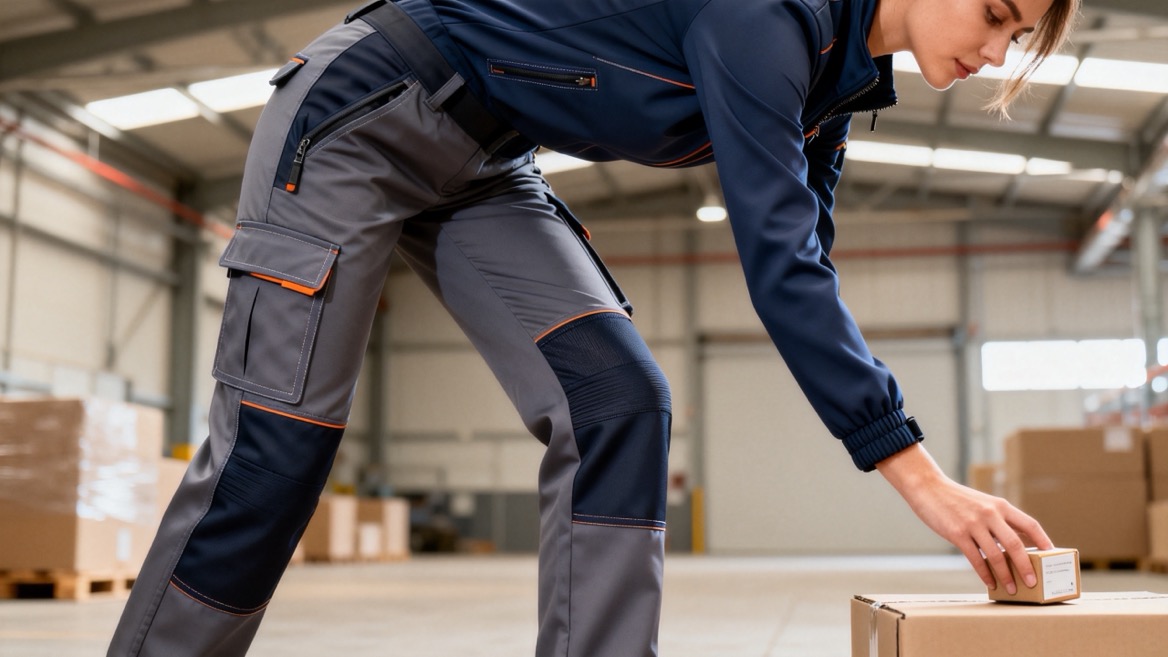
Not every work uniform is personal protective equipment. However, work clothes often interact with protective gear, and their fit can affect how safely that gear is worn.
For example, a bulky jacket may make it harder to wear a harness correctly. Oversized sleeves can catch on equipment. Loose trousers can create a trip risk. A poor-fitting high-visibility vest can shift during movement. In more hazardous settings, incorrect garment selection can contribute to safety issues.
Workplace research has found that poorly fitting protective equipment can make tasks harder, reduce comfort, and discourage consistent use. Women working in industrial environments have reported a narrower range of suitable products, frequent fit problems, and negative effects on work performance, confidence, and morale.
For buyers developing women's workwear, the correct approach is to begin with the workplace risk assessment. Then determine whether the product requires features such as:
- High-visibility materials
- Flame-resistant fabrics
- Anti-static performance
- Chemical protection
- Waterproof construction
- Thermal insulation
- Cut-resistant components
- Compatibility with harnesses or other protective equipment
A garment should never claim a protective capability unless the required testing, certification, and documentation are in place for the target market.
A lower purchase price can be attractive, especially when buying uniforms in large volumes. But procurement teams should assess the total cost of ownership rather than only the unit price.
A low-cost standard garment may require replacement more frequently. It may fade after laundering, lose its shape, develop seam failures, or generate employee complaints. It may also create inconsistency across a workforce, especially when employees purchase their own clothing.
1. Replacement frequency: How many washes or working days can the garment realistically withstand?
2. Employee acceptance: Will workers wear the garment correctly, or will they avoid it because it is uncomfortable?
3. Brand consistency: Does the color remain stable across different production runs and repeat orders?
4. Customization reliability: Can the garment hold embroidery, printing, badges, or name labels without distortion?
5. Operational suitability: Does the garment help employees perform their tasks efficiently?
6. Inventory complexity: Can the supplier provide stable sizing, repeatable fabrics, and consistent trims?
The best uniform is not necessarily the cheapest garment. It is the product that delivers the best balance of durability, usability, appearance, and repeat-order reliability.
For brands, wholesalers, and corporate uniform buyers, a structured product brief can prevent expensive revisions later.
Identify whether the garment will be used indoors, outdoors, in hot conditions, cold conditions, wet weather, clean environments, food-service settings, warehouses, workshops, or customer-facing locations.
Ask employees or end users what they do repeatedly during a shift. Do they bend, lift, kneel, drive, climb, carry tools, interact with customers, or work near machinery?
Do not simply reduce men's sizes. Review chest, waist, hip, shoulder, sleeve, torso, inseam, and rise measurements. Consider whether petite, regular, and tall options are commercially feasible.
Balance comfort, durability, weight, stretch, colorfastness, care requirements, and any needed protection. Request fabric specifications and test reports where appropriate.
Confirm pocket capacity, closure systems, reinforced zones, reflective positioning, ventilation, adjustable components, and branding placements.
Before mass production, test samples with actual female workers performing real job tasks. Gather feedback on fit, mobility, comfort, storage, appearance, and laundering results.
For long-term uniform programs, confirm color standards, approved trims, logo application methods, grading rules, packaging requirements, and quality-control procedures.
This process creates a stronger final product and gives a workwear brand a meaningful point of differentiation in a crowded market.
A professional OEM women's workwear manufacturer should offer more than basic sewing capacity. The supplier should help transform a buyer's concept into a commercially viable, repeatable product range.
At Shanghai Youti Clothing Co., Ltd., an effective OEM development process can include:
- Product concept review
- Tech pack support
- Fabric and trim sourcing
- Women's fit development
- Custom size charts
- Sample making and revisions
- Embroidery, printing, woven labels, and packaging
- Quality-control planning
- Bulk production coordination
- Support for repeat orders and collection expansion
For example, a distributor may begin with a women's work polo and work trouser for warehouse employees. After validating the fit and fabric performance, the range can expand into women's softshell jackets, high-visibility vests, insulated outerwear, and lightweight summer uniforms using a unified color palette and logo placement.
This collection-based approach creates stronger brand recognition and can increase repeat purchasing across seasons and job roles.
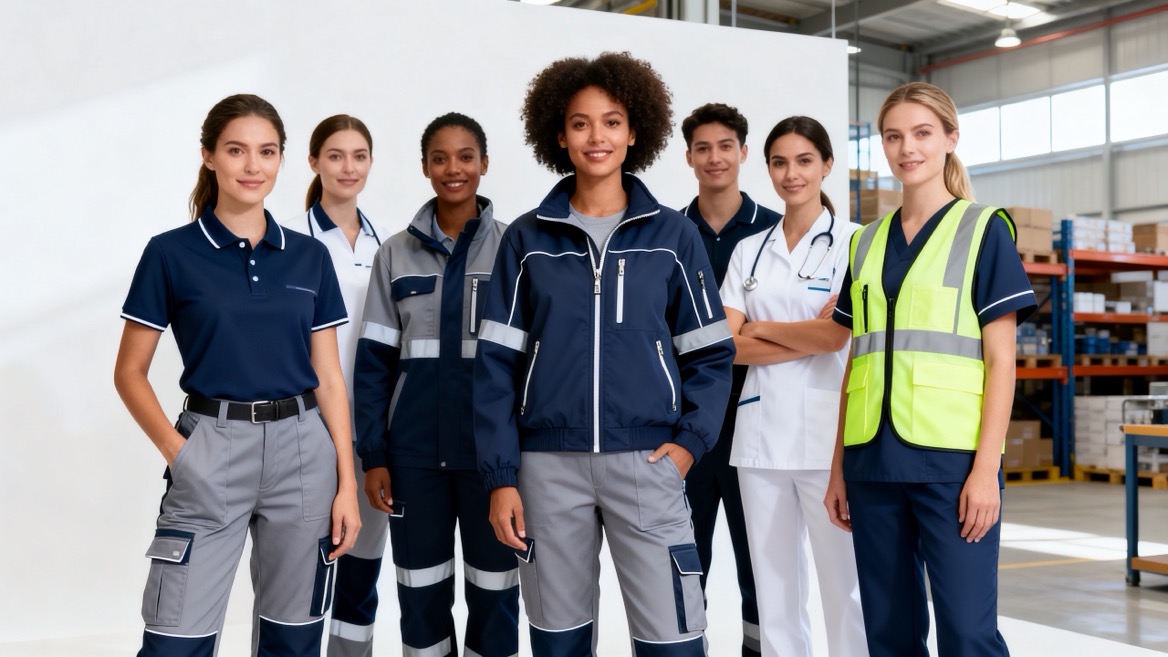
Women's workwear is no longer a small extension of a men's uniform program. As more women work across construction, manufacturing, engineering, logistics, field services, healthcare, and technical professions, buyers need products that respect real fit and performance requirements. Industry research projects the women's workwear segment to grow faster than other workwear segments, supported by women's growing participation in traditionally male-dominated occupations.
For a workwear brand, specialized designs can create competitive advantages:
- Better wearer satisfaction
- Higher uniform adoption
- Stronger customer retention
- Fewer fit-related complaints
- More professional team presentation
- Improved product differentiation
- Greater potential for repeat orders
- A more inclusive brand image
The most successful women's work clothes do not choose between function and style. They combine both. A woman should be able to move confidently, perform safely, feel comfortable, and represent her employer professionally throughout the workday.
If you are developing a private-label uniform range, sourcing women's work trousers, expanding a professional apparel collection, or supplying uniforms to corporate customers, specialized design should be part of the product strategy from the beginning.
Shanghai Youti Clothing Co., Ltd. supports overseas brands, wholesalers, and professional buyers with OEM uniform and workwear manufacturing solutions. We can help develop women's work clothes that align with your target industry, brand positioning, performance requirements, sizing strategy, and customization needs.
Contact our team to discuss your women's workwear project, request product development support, or create customized OEM uniforms for your market.
Women's work clothes are designed for professional tasks, durability, repeated laundering, mobility, and workplace functionality. Regular women's clothing is usually designed for daily wear, fashion, and general comfort rather than demanding work conditions.
Yes, women can wear unisex workwear, especially in simple roles or loose-fitting uniform programs. However, unisex styles may not provide the same fit, mobility, or professional appearance as women-specific workwear, particularly for physical jobs.
Women-specific sizing can improve comfort and movement by accounting for differences in shoulder width, chest, waist, hips, torso length, and trouser rise. Better fit can also improve employee acceptance and daily uniform compliance.
The best fabric depends on the job. Polyester-cotton blends are common for durable uniforms. Stretch fabrics are useful for active roles. Waterproof, insulated, flame-resistant, anti-static, or high-visibility materials may be necessary for particular work environments.
Buyers should assess fit through the waist, hips, seat, thighs, and rise; pocket layout; fabric durability; stretch; reinforced knees; inseam options; closure type; and garment performance after repeated washing.
Yes. Women's workwear can be customized through embroidery, screen printing, heat transfer, woven labels, name badges, reflective logos, and custom color combinations. The best decoration method depends on the fabric, logo detail, garment use, and expected wash frequency.
Minimum order quantities vary depending on the garment design, fabric selection, colors, logo method, and customization level. A standard design with simple logo decoration may have a different requirement from a fully custom women's workwear collection.
1. [Occupational Safety and Health Administration — Ergonomics]
2. [CSA Group — Canadian Women's Experiences with Personal Protective Equipment in the Workplace]
5. [European Trade Union Institute — Personal Protective Equipment: Getting the Right Fit for Women]
6. [Grand View Research — Workwear Market Size, Share and Trends]
7. [The Business Research Company — Uniforms and Workwear Global Market Report]


