
Views: 212 Author: Youti Clothing Publish Time: 2026-08-01 Origin: Site


Content Menu
● Why Fabric Selection Drives Suit Performance
● The Six Fabrics Every Buyer Should Know
>> 1. Wool: The Industry Standard
>> 2. Linen: Best for Warm-Climate Collections
>> 3. Cotton: The Business-Casual Middle Ground
>> 4. Cashmere: The Premium Positioning Fiber
>> 5. Silk: Reserved for Statement Pieces
>> 6. Blended Fabrics: Where Value Meets Performance
● How Fabric Weave Changes Suit Performance
● Reading Fabric Specs Like a Sourcing Professional
● Where the Industry Is Heading in 2026
● A Practical Sourcing Checklist for OEM Buyers
● Matching Fabric to Occasion and Climate
● Partner with a Manufacturer Who Understands Fabric Science
Choosing the best suit fabric determines whether a finished garment feels premium or falls flat with end customers, and getting this decision right is the single biggest lever brands have over product quality and repeat orders.
As an OEM supplier working directly with international brands, wholesalers, and manufacturers, we see firsthand which fabrics perform, which ones create returns, and which ones justify a premium price tag. This guide breaks down the six leading suit fabrics, explains how weave and weight affect performance, and adds practical sourcing insight that most consumer-facing guides skip entirely.
Fabric is not just a surface-level choice — it shapes comfort, seasonal suitability, durability, and how a suit ultimately drapes on the body. For brands, this translates directly into customer satisfaction and product reviews, since a fabric that wrinkles too easily or overheats the wearer becomes a return or a bad review.
- Comfort: Determines whether the wearer can move freely through a full workday.
- Weather performance: Some fabrics regulate temperature better in heat or cold.
- Durability: Quality fabric resists wrinkles and holds its shape across repeated wear.
- Drape and appearance: Premium fabrics hang naturally, giving suits a sharper silhouette.
Wool remains the most versatile suiting fiber because it naturally regulates temperature across seasons and resists wrinkling far better than most alternatives. Within wool, buyers should distinguish between Merino (soft, widely used), worsted (smooth, formal-ready), and tweed (heavier, textured, better for colder climates).
Sourcing professionals also need to understand the "Super" numbering system — labels like Super 100s, 120s, or 150s indicate fiber fineness. Higher numbers mean a softer hand-feel but can trade off some durability, which matters when specifying fabric for high-turnover retail lines versus premium capsule collections.
Linen is the fabric of choice when a brand needs breathability for summer or resort collections, since it stays cool and lightweight in hot conditions. Its main limitation is that it wrinkles readily, which suits casual positioning but is a poor fit for boardroom-focused product lines.
Cotton sits between wool and linen in formality, offering breathability with more structure than linen. Seersucker and twill cotton variants are popular for summer collections because their texture improves airflow. It suits business-casual product ranges but is generally not recommended for high-formality lines.
Cashmere delivers an unmatched soft hand-feel and warmth-to-weight ratio, making it ideal for luxury-tier product lines and cooler-season collections. Because pure cashmere is delicate and costly, many manufacturers blend it with wool to retain the luxury feel while improving durability and manufacturability at scale.
Silk suiting is rare but delivers a distinctive sheen and cool touch that works well for evening or special-occasion collections. Wool-silk blends are increasingly popular among brands wanting silk's visual appeal with wool's practical durability.
Modern OEM production increasingly favors blends because they combine performance traits at a lower landed cost:
| Blend | Key Benefit | Best Use Case |
|---|---|---|
| Wool-Cashmere | Adds softness while retaining durability | Premium seasonal collections |
| Wool-Silk | Lightweight with subtle sheen | Formal and event wear |
| Wool-Polyester | Wrinkle resistance, lower cost | Value and travel-friendly lines |

Fiber type is only half the equation — weave structure materially affects wrinkle resistance and visual finish.
- Twill: Diagonal weave pattern, strong wrinkle resistance, ideal for all-day business wear.
- Sharkskin: Two-tone weave with subtle shine, refined without being flashy.
- Flannel: A brushed finishing technique (not a fiber) applied to wool or cotton for a warmer, fuzzier texture, common in fall and winter collections.
Brands sourcing suit fabric from OEM partners should evaluate three technical details beyond the fiber name itself:
1. Fabric weight (GSM): Lightweight fabrics suit warm climates; midweight options are the most versatile for year-round collections, while heavier weights add structure for winter lines.
2. The Super number for wool: Higher Super numbers (Super 120s, 150s) signal finer, softer fiber but require careful handling in bulk manufacturing to protect durability.
3. Drape consistency: A high-quality fabric should hang smoothly and feel consistent edge to edge — inconsistency at this stage typically signals lower-grade raw material or inconsistent mill processing.
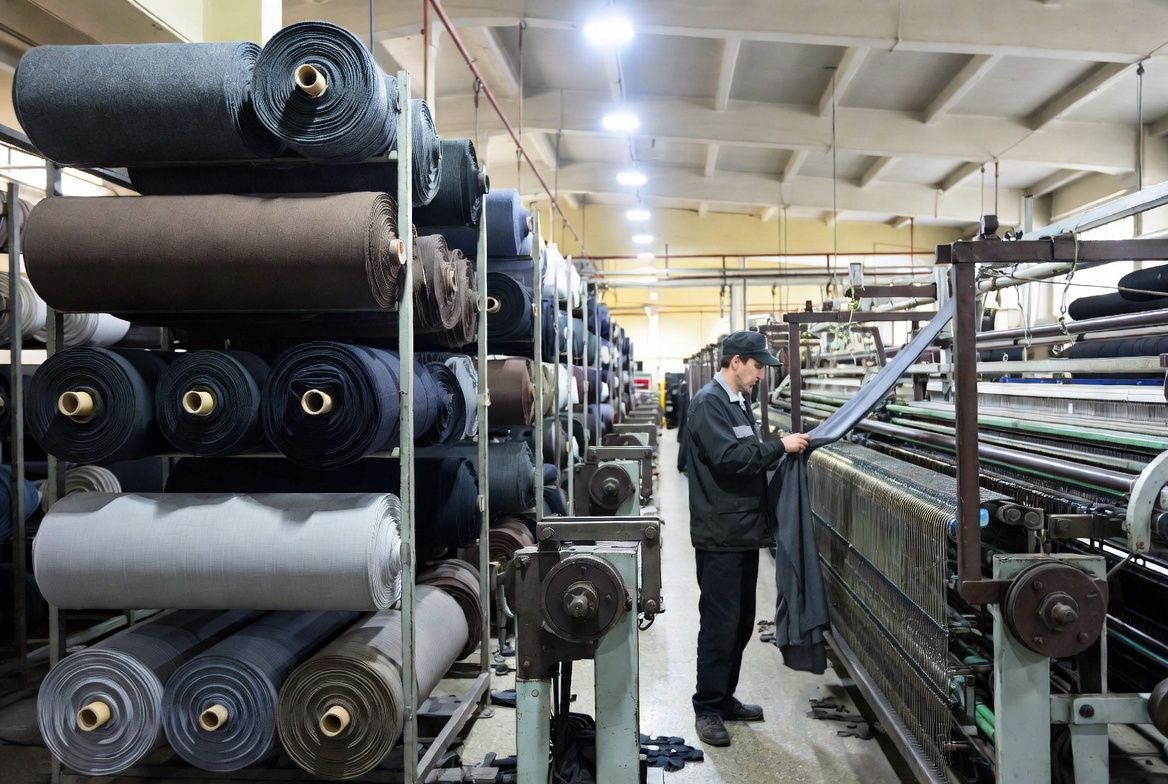
Suiting demand is shifting toward comfort-driven and sustainability-conscious fabrics without sacrificing formality. Buyers should track two structural trends currently reshaping sourcing decisions.
Performance and stretch integration. Brands are increasingly requesting wool and wool-blend fabrics with added stretch, moisture-wicking, and wrinkle-recovery properties, driven by demand for suits that hold up to travel and daily wear. High-twist wool, tightly woven for extra durability and wrinkle resistance, has become one of the most requested specifications for custom and OEM suit programs this year.
Sustainability as a sourcing requirement, not a preference. More than half of global consumers now say they will pay a premium for sustainably produced goods, up sharply from just two years ago. This is pushing brands to request recycled wool blends, certified organic cotton, and mills that can document chemical-safety compliance such as OEKO-TEX certification. For OEM partners, this means fabric traceability documentation is no longer optional — it is becoming a baseline requirement for landing contracts with Western and Japanese brands.
Before finalizing a fabric order with any manufacturing partner, confirm the following:
- Fiber content and blend ratio matches the target price tier and seasonal use case.
- GSM (fabric weight) aligns with the intended climate and formality level.
- Sample yardage has been tested for shrinkage, colorfastness, and tensile strength before bulk production.
- Certifications such as OEKO-TEX or GOTS are documented if sustainability claims will appear in marketing.
- Lead times and MOQs are confirmed in writing, since production timelines for suiting fabric can run several weeks depending on mill capacity.
| Use Case | Recommended Fabric | Why It Works |
|---|---|---|
| Daily business wear | Midweight wool | Versatile across seasons, resists wrinkles |
| Hot-climate or resort lines | Linen or cotton | Maximizes breathability |
| Cold-weather collections | Flannel or cashmere blends | Adds warmth without bulk |
| Luxury or evening wear | Silk or wool-silk blends | Elevated sheen and drape |
| Value-tier retail | Wool-polyester blends | Lower cost, wrinkle-resistant |
Selecting the right suit fabric is a technical decision, not a stylistic one, and it has direct consequences for return rates, brand reputation, and margin. As an OEM manufacturer specializing in professional suiting, we help international brands, wholesalers, and producers select and source fabric specifications that match their target market, price point, and seasonal strategy — backed by in-house quality testing and full production transparency. If you are developing a new suiting line or need a reliable OEM partner for your next collection, reach out to our team to request fabric samples and a production consultation.
What is the best all-around fabric for suits?
Wool is generally considered the best all-around choice because it balances breathability, durability, and wrinkle resistance across most climates and formality levels.
Is linen or cotton better for a summer suit?
Linen is cooler and more breathable, making it ideal for casual summer wear, while cotton offers a bit more structure and a slightly more formal appearance for warm-weather business settings.
What does the "Super" number mean on wool fabric labels?
The Super number (such as Super 100s or Super 150s) refers to the fineness of the wool fiber; higher numbers indicate a softer feel but can mean slightly reduced durability.
Are wool-blend suits lower quality than pure wool?
Not necessarily. Blends like wool-polyester or wool-cashmere are engineered to improve wrinkle resistance, durability, or cost-efficiency while retaining much of wool's natural performance.
How can brands verify fabric quality before placing a bulk order?
Brands should request sample yardage and test it for shrinkage, colorfastness, and tensile strength, and confirm relevant safety certifications like OEKO-TEX before committing to production.
Why is sustainability becoming important in suit fabric sourcing?
Consumer demand for sustainably produced apparel has grown sharply, with over half of global shoppers now willing to pay a premium for it, pushing brands to prioritize certified and traceable fabric sources.
1. StudioSuits, "A Guide to Choosing the Best Suit Fabrics" — https://www.studiosuits.com/blogs/articles/best-suit-fabrics
2. Accio, "How to Choose the Best Fabric for Suits When Sourcing for Your Brand" — https://www.accio-ai.com/blog/how-to-choose-the-best-fabric-for-suits-when-sourcing-for-your-brand
3. Shopify, "How To Source Fabric for a Clothing Line in 2026" — https://www.shopify.com/blog/how-to-source-fabric
4. SAYKI, "Men's Suit Trends 2026: Relaxed Cuts, Sustainable Fabrics & Personal Touches" — https://www.sayki.com/blogs/sayki/mens-suit-trends-2026-relaxed-cuts-sustainable-fabrics-personal-touches
5. A DC Custom Clothier, "Best Fabrics for Custom Suits in 2026" — https://www.adccustomclothier.com


