
Views: 258 Author: Youti Clothing Publish Time: 2026-10-08 Origin: Site


Content Menu
● Hi Vis Safety Vest vs Reflective Workwear: The Essential Difference
>> What Is a Hi Vis Safety Vest?
>> What Is Reflective Workwear?
● Hi Vis Safety Vest vs Reflective Workwear Comparison Table
● How Fluorescent and Retroreflective Materials Work
>> Daytime Visibility: Background Contrast Matters
>> Nighttime Visibility: Reflective Tape Needs Illumination
● Which Safety Standards Should International Buyers Specify?
>> U.S. Projects: Understand Garment Type and Performance Class
>> European Projects: Understand EN ISO 20471 Classes
● Which Option Fits Different Workplace Safety Needs?
>> Warehouses and Distribution Centers
>> Construction and Road Maintenance
>> Manufacturing and Maintenance
>> Outdoor Logistics and Utility Operations
● Expert Insight: Body Movement Can Matter More Than Extra Tape
● Practical Procurement Method: Validate the Smallest Size First
● Illustrative Case: One Logistics Business, Two Clothing Solutions
● Comfort, Fit, and Washing: Where Purchasing Decisions Succeed or Fail
>> Evaluate Garments During Real Tasks
>> Plan Replacement Around Condition and Instructions
● How to Specify OEM High-Visibility Workwear
● Build Your OEM Brief Around the Workplace
>> Is a Hi Vis Safety Vest Better Than Reflective Workwear?
>> Does Every Reflective Jacket Meet High-Visibility Standards?
>> Can a Sleeveless Vest Meet EN ISO 20471 Class 3 Alone?
>> Can We Add a Large Company Logo?
>> Does Reflective Tape Work Without Light?
>> Does High-Visibility Clothing Protect Against Fire?
A hi vis safety vest is often the practical choice for visitors, temporary crews, and workers who need a lightweight visibility layer. Reflective workwear can be more suitable for employees who need visibility integrated into everyday uniforms, weather protection, or broader body coverage.
However, the hi vis safety vest vs reflective workwear comparison is not a choice between two mutually exclusive safety categories. A compliant vest is itself a form of reflective workwear. The important distinction is between a removable visibility layer and an integrated clothing system—and whether either meets the workplace's assessed requirements.
For overseas brands, wholesalers, and manufacturers working with Shanghai Youti Clothing Co., Ltd., this distinction provides a useful starting point for OEM development. Specify the risk, market, and required performance first. Then choose the garment format.
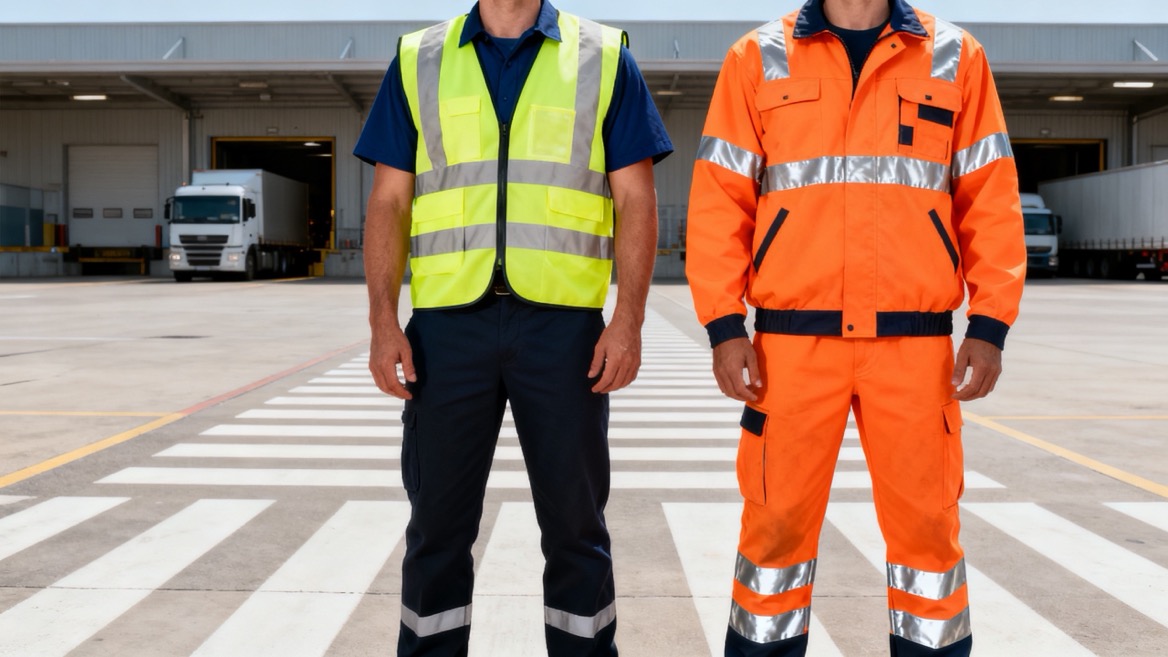
A hi vis safety vest is a sleeveless or sleeved outer garment designed to make its wearer easier to notice. Compliant high-visibility designs combine conspicuous background material with retroreflective material arranged in a defined pattern.
Vests are commonly worn over existing uniforms. They suit situations where people enter vehicle operating areas intermittently or need to change clothing layers quickly.
Typical applications include:
- Warehouse visitors and contractors.
- Delivery drivers entering loading yards.
- Construction personnel.
- Utility crews.
- Site supervisors and inspectors.
Not every brightly colored vest qualifies as protective high-visibility apparel. Color alone does not establish compliance.
Reflective workwear is a broader commercial term covering shirts, trousers, jackets, coveralls, and other garments incorporating reflective material.
Some products meet recognized high-visibility standards. Others are ordinary uniforms with reflective details.
A navy jacket with reflective piping, for example, may improve visibility under illumination without meeting the fluorescent material area or design requirements for certified high-visibility clothing.
The purchasing rule is straightforward: compliance depends on the finished garment's verified performance, not its product name.
| Selection factor | Hi vis safety vest | Integrated reflective workwear |
|---|---|---|
| Main function | Adds a removable visibility layer | Combines visibility with everyday clothing functions |
| Typical products | Mesh, solid-fabric, utility, or breakaway vests | Shirts, trousers, jackets, and coveralls |
| Deployment | Convenient for visitors and changing teams | Suitable for regular workforce uniform programs |
| Weather protection | Usually limited | Can incorporate rain or cold protection |
| Body coverage | Often primarily the torso | Can extend to arms and legs |
| Fit requirements | Must accommodate underlying clothing | Requires role-specific sizing and movement allowance |
| Branding | Limited space before visibility areas are affected | More design options, but the same compliance constraints |
| Maintenance | Can be cleaned or replaced separately | Requires coordinated garment care and replacement |
| Best purchasing approach | Verify the required class and intended use | Verify each garment and any approved ensemble |
Neither format is automatically safer. A suitable, correctly worn vest can outperform an unsuitable jacket with decorative reflective trim.
Fluorescent background materials help workers stand out in daylight. Their effectiveness also depends on contrast with the surroundings.
A yellow garment may contrast differently against vegetation, machinery, concrete, or warehouse shelving. Buyers should evaluate the working background rather than select a color solely because it matches their branding.
Large dark panels, pockets, embroidery, and printed logos can reduce the visible fluorescent area. These features need consideration during design approval.
Retroreflective material returns incident light toward its source. Vehicle headlights are an important example.
Reflective tape does not generate light. It cannot make a worker visible in complete darkness without illumination, and it cannot overcome a driver's blind spot.
For nighttime work, evaluate:
- Headlight direction and available lighting.
- Reflective material placement.
- Visibility from different viewing angles.
- Whether equipment or carried objects obscure the garment.
- The worker's movement and posture.
High-visibility clothing supports a safe traffic system. It does not replace pedestrian separation, barriers, lighting, or vehicle controls.
ANSI/ISEA 107 distinguishes intended-use types, including:
- Type O for off-road environments.
- Type R for roadway environments.
- Type P for public safety personnel.
Performance classes describe different coverage and visibility requirements. Buyers should not treat a class number as a universal recommendation for every workplace.
U.S. highway construction requirements also involve applicable workplace rules and traffic-control requirements. Avoid describing a garment simply as "OSHA approved." Identify the relevant apparel standard, edition, type, class, and supporting documentation instead.
EN ISO 20471 addresses material performance, minimum visible areas, and garment design.
The following figures provide a useful procurement reference for fluorescent background and retroreflective material:
| EN ISO 20471 class | Minimum fluorescent background area | Minimum retroreflective area |
|---|---|---|
| Class 1 | 0.14 m² | 0.10 m² |
| Class 2 | 0.50 m² | 0.13 m² |
| Class 3 | 0.80 m² | 0.20 m² |
These areas are not a complete compliance checklist. Placement, material testing, design, labeling, and other requirements also matter.
Class 3 requires appropriate torso coverage together with sleeves or full-length trouser legs carrying retroreflective bands. A sleeveless vest alone should not be assumed to meet that requirement.
Confirm the applicable edition and destination-market conformity obligations before production. Do not assume similarly numbered classes under different standards are interchangeable.
A hi vis safety vest can be practical for occasional visitors, maintenance contractors, and drivers entering designated loading areas.
For employees who work near forklifts throughout their shifts, integrated high-visibility shirts or jackets may be worth evaluating. They make visibility part of the regular uniform rather than an additional item.
However, neither choice solves poor pedestrian routing. Physical separation and controlled crossings remain essential.
For road construction, select the required visibility performance before deciding between a vest, shirt, or jacket.
A compliant vest may work over suitable clothing in favorable weather. A high-visibility jacket or approved ensemble may better accommodate cold, rain, or broader coverage requirements.
Avoid selecting garments through simplistic traffic-speed rules alone. Exposure, lighting, task demands, weather, local requirements, and site specifications all influence the decision.
Reflective workwear can combine visibility with practical features such as tool pockets and reinforced areas.
Where workers face flame, heat, electrical, or chemical hazards, visibility is only one requirement. A fluorescent garment is not automatically flame resistant, and reflective tape does not establish arc protection.
The complete clothing system must meet each identified hazard requirement.
For workers moving between vehicles, loading areas, and outdoor tasks, seasonal garment systems deserve attention.
A possible program includes:
- High-visibility shirts for warmer conditions.
- Suitable outerwear for rain or cold.
- Approved trousers where additional coverage is required.
- Vests for visitors and short-duration access.
Check the outermost garment. A compliant shirt hidden beneath an ordinary coat cannot provide its intended visibility.
One valuable distinction between a torso-focused vest and broader reflective workwear is the visibility of human movement.
Retroreflective bands on sleeves and trouser legs can help drivers recognize a moving object as a person. This is often called the biomotion effect.
That makes limb coverage relevant when workers bend, carry materials, or operate in visually complex surroundings.
Consider a worker carrying cartons across a loading yard. The cartons may obscure much of the torso. Reflective material on visible limbs can provide additional cues.
This is not permission to add tape arbitrarily. Placement still needs to follow the applicable garment design requirements.

For OEM buyers, the smallest size can be a critical design checkpoint.
As garment dimensions decrease, the available visible material area also decreases. Branding and contrast panels can create further limitations.
A practical approval sequence is:
1. Define the destination market and required garment performance.
2. Develop the smallest proposed size.
3. Assess visible material areas after pockets, logos, and contrast panels.
4. Check tape placement and design requirements.
5. Validate the size range and finished configuration.
6. Freeze approved materials and construction details.
This approach helps identify problems before grading and bulk production.
A test report for reflective tape alone does not establish that the completed vest or jacket complies.
Consider a hypothetical distributor with warehouse employees, visiting drivers, and outdoor yard staff.
Issuing the same vest to everyone is administratively simple. However, different tasks may justify different garments.
| Worker group | Potential clothing approach | Decision basis |
|---|---|---|
| Visiting drivers | Suitable vest issued at entry | Short-duration exposure and easy distribution |
| Warehouse employees | Integrated high-visibility shirt | Regular wear and indoor comfort |
| Outdoor yard staff | Suitable jacket and, where required, approved ensemble | Weather exposure and broader coverage |
This is a planning example, not a documented Shanghai Youti customer project. Actual selections require a site-specific assessment.
The lesson is to standardize performance requirements without forcing every role into the same garment.
A vest should fit over expected clothing without becoming excessively loose. Integrated workwear should allow reaching, bending, sitting, and normal task movements.
Ask wearers to evaluate:
- Closure security.
- Arm and shoulder mobility.
- Heat and moisture comfort.
- Pocket accessibility.
- Compatibility with harnesses or other equipment.
- Visibility when carrying typical loads.
Breathability should be assessed through material construction and wear trials—not inferred from whether a garment is called a vest or jacket.
Dirt, fading, physical damage, and worn reflective material can reduce visibility.
Inspect garments regularly and follow their care instructions. Where a maximum wash count is specified, track it alongside physical condition.
Do not apply a universal replacement interval to every product. A lightly used visitor vest and heavily soiled daily workwear have different service conditions.
A garment may require replacement before reaching its stated wash limit if its performance is compromised.
For overseas brands, wholesalers, and manufacturers, an effective development brief should include:
- Destination country and intended workplace.
- Required standard, edition, type, and class.
- Garment format and seasonal layering.
- Fabric and reflective material specifications.
- Size range and fit requirements.
- Logo dimensions and placement.
- Washing conditions and required durability.
- Labeling, user instructions, and traceability.
- Required test reports and conformity documents.
Control substitutions during production. Changes to fabric, reflective material, color panels, or branding can affect the approved configuration.
Compare total ownership cost rather than unit price alone. Include laundering, replacement, administration, and the availability of spare garments.
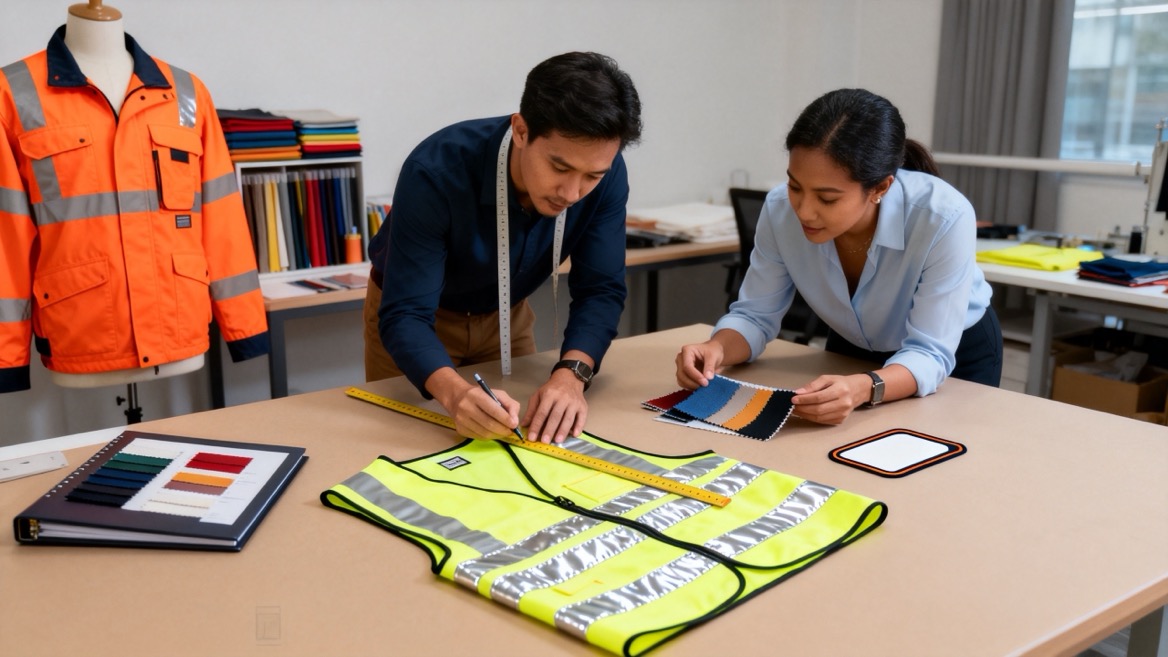
Choose a hi vis safety vest when a removable visibility layer suits the task. Evaluate integrated reflective workwear when regular wear, weather protection, or broader coverage is important.
Send Shanghai Youti Clothing Co., Ltd. your target market, workplace conditions, required standard and class, size range, branding artwork, and expected order quantity. Request a development review covering garment design, material selection, sample validation, and the documentation required before bulk approval.
It is often more convenient for temporary use and visitor access. Integrated reflective workwear may suit regular employees better. Neither is inherently superior; required performance and working conditions determine suitability.
No. Reflective trim may be decorative or supplementary. Check the finished garment's standard identification, class, instructions, and supporting documentation.
A sleeveless vest alone does not provide the required sleeve or trouser-leg coverage. Class 3 may be achieved through an appropriate individual garment or a specifically approved ensemble.
Possibly, but its size and location must be assessed. A logo can reduce the available fluorescent area or interfere with reflective material. Approve branding before final compliance validation.
No. Retroreflective material needs incident light. It returns that light toward the source rather than producing illumination itself.
Not by itself. Flame or arc protection requires separately specified and verified performance appropriate to the identified hazards.
1. American National Standards Institute. "What You Need to Know about High-Visibility Safety Apparel (HVSA)." October 4, 2022. Background on apparel types, performance classes, working environments, and risk-assessment factors. [blog.ansi]
2. Health and Safety Authority, Ireland. "High Visibility Clothing for Use Around Moving Vehicles." Eight-page information sheet. Primary source for EN ISO 20471 material areas, garment classes, approved ensembles, biomotion, branding, care, and vehicle blind-spot limitations. [hsa]
3. Occupational Safety and Health Administration, United States. "Whether Use of High-Visibility Warning Garments by Construction Workers in Highway Work Zones Is Required." August 5, 2009. Historical interpretation explaining highway construction visibility obligations; current project requirements must be verified separately. [osha]
4. Health and Safety Executive, United Kingdom. "High Visibility Clothing." Workplace transport guidance supporting selection by conditions and recognized performance standards. Its older standard references should not be used as a current technical specification. [hse.gov]


