
Views: 272 Author: Youti Clothing Publish Time: 2026-06-30 Origin: Site


Content Menu
● Understanding Wrinkles in Suits
● Key Comparison: Fixing vs Preventing Suit Wrinkles
>> Core Difference Table: Fixing vs Preventing Wrinkles
● Why Suits Wrinkle: Expert Fabric and Construction Insights
● Step by Step: How to Fix a Wrinkled Suit Without an Iron
>> Use Gravity and Steam Together
>> Use a Travel Steamer or Handheld Steamer
>> Emergency Method: Damp Cloth and Hair Dryer
● What to Avoid When Fixing Wrinkled Suits
● Long Term Strategy: How to Keep Your Suit Wrinkle Free
>> Choose Wrinkle Resistant Suit Fabrics
>> Smart Packing for Business Travel
● OEM Manufacturer Perspective: Designing Suits That Resist Wrinkles
● Real World Case Insight: Upgrading Wrinkle Performance for a B2B Brand
● Building Authority: How OEM Suit Manufacturers Support Your Brand
● Practical Checklist: Daily Habits for a Wrinkle Free Suit
● Call to Action: Partner with a Professional OEM Suit Manufacturer
● Frequently Asked Questions (FAQ)
Keeping a suit wrinkle free is a daily challenge for business professionals, especially when you travel frequently or wear tailored garments for long hours. As a professional OEM suit manufacturer serving international brands, wholesalers, and private labels, we see firsthand how fabric choice, construction quality, and care routines determine whether your suit stays sharp or creased.
From that dual perspective—both personal user experience and industry expertise—this guide explains how to fix a wrinkled suit without an iron and how to keep a suit wrinkle free over time, so your brand or business clients can maintain a consistently professional image.

Wrinkles are not just a cosmetic problem; they reveal how your fabric and suit construction perform under stress, heat, and humidity. For end users, they create an unprofessional impression. For brands and B2B buyers, they often translate into returns, complaints, and lower customer satisfaction.
Most suit wrinkles come from:
- Improper storage such as thin hangers, crowded closets, or folding jackets on chairs
- Travel compression when suits are tightly packed into luggage or garment bags
- Moisture and heat from body temperature, rain, or uncontrolled steam
- Low quality fabrics with poor recovery and elasticity
From a manufacturer's perspective, high twist wool and well engineered blends with natural resilience are far more likely to "bounce back" than cheap, loosely woven fabrics. Good pattern cutting and interlining also reduce stress points that tend to wrinkle.
When we analyze user questions and B2B feedback, two big topics appear around wrinkled suits:
- How to fix a wrinkled suit without an iron
- How to keep a suit wrinkle free over time
These two themes focus on different stages of the suit lifecycle.
| Aspect | Fix a Wrinkled Suit (No Iron) | Keep a Suit Wrinkle Free |
|---|---|---|
| Main goal | Restore a presentable look quickly | Maintain long term fabric integrity |
| Time frame | Short term, emergency or situational | Ongoing daily and travel routines |
| Typical tools | Steam, shower steam, hanger, cloth, travel steamer | Quality hanger, garment bag, proper packing, airing |
| Risk level | Higher if done incorrectly (shine, stretching) | Lower if habits are consistent |
| Best for | Last minute meetings, travel emergencies | Professionals who wear suits regularly |
For content UX, this distinction matters: users searching "fix wrinkled suit without iron" need fast, step by step solutions, while those seeking "keep suit wrinkle free" want preventive strategies and product advice. As an OEM partner, addressing both needs helps your brand reduce friction along the entire customer journey.
From a manufacturer's point of view, not all wrinkles are the same. Some are surface creases that can be relaxed with gentle steam, while others are structural deformations caused by poor tailoring, unsuitable fabrics, or distorted canvases.
Key factors influencing wrinkle behavior include:
- Fiber type
High quality wool has natural crimp and elasticity, allowing it to recover after bending. Cheaper fibers often deform permanently and show deeper creases.
- Yarn and weave
High twist yarns and tighter weaves resist deformation better than loose or open structures, which crease easily and recover slowly.
- Garment construction
Half canvas or full canvas suits distribute tension more evenly across the chest and shoulders. Cheap fused construction can lock wrinkles into the fabric and make them harder to remove.
As an OEM partner, we advise brands to balance cost with performance. A modest upgrade in wool quality and interlining can dramatically reduce wrinkles and extend the product's perceived value.
When you already have wrinkles, you need safe, fabric friendly techniques that do not rely on a traditional iron. Below is a step by step routine we recommend to international clients and their end users.
Gravity and gentle moisture are your best allies when you do not have access to an iron.
Steps:
1. Hang the suit correctly on a wide, contoured hanger that supports the shoulders and lapels.
2. Place it in a steamy bathroom while you take a hot shower, making sure the suit is away from direct water contact.
3. Close the door and allow steam to build up for about 10–15 minutes.
4. Remove the suit and smooth the fabric gently by hand, guiding the fibers back into place without pulling or stretching.
5. Let the suit air dry completely in a well ventilated area before wearing.
This method uses wool's natural recovery and is low risk as long as you avoid soaking the fabric.
Portable steamers have become a standard tool for stylists, sales teams, and frequent travelers.
Best practices:
- Keep the steamer head slightly away from the fabric instead of pressing directly on it.
- Steam from top to bottom, following the natural drape of the jacket and trousers.
- Focus on high wrinkle zones such as elbows, knees, and the lower front panels.
- Avoid over steaming; excessive moisture can cause water marks or distort shape.
Including clear steamer instructions in your brand's care guide helps prevent user damage and strengthens trust in your product.
If you have no steamer and no iron, a damp cloth and controlled warm air can help relax localized wrinkles.
Steps:
1. Lay the wrinkled area (such as a sleeve or pant leg) on a flat surface.
2. Place a clean, slightly damp cloth over the wrinkle.
3. Use a hair dryer on low heat at a safe distance, moving continuously to avoid overheating.
4. As the cloth dries, remove it and smooth the suit fabric gently with your hand.
5. Hang the suit and allow it to rest for at least 15–20 minutes.
This is an emergency solution suitable for hotel rooms or office situations, but it should not replace regular steaming or professional pressing.
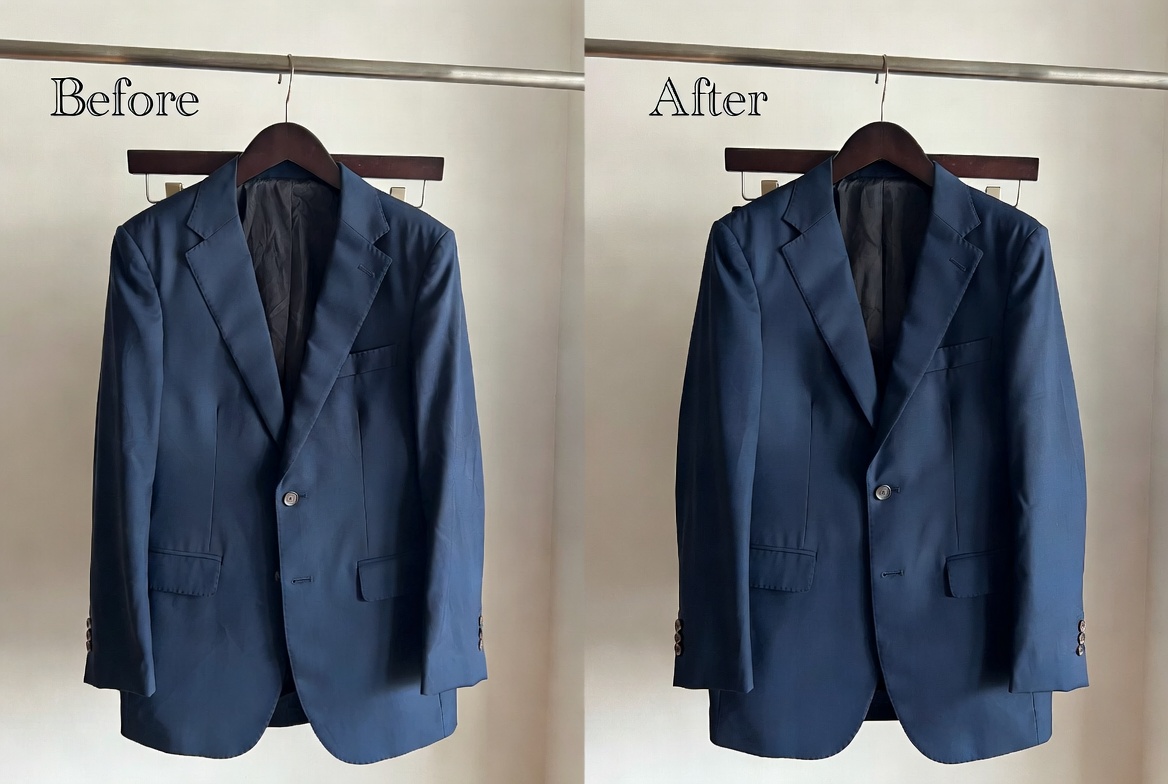
To protect the fabric and structure, it is just as important to know what not to do.
Avoid:
- Direct high heat ironing on wool or blends, especially on lapels, shoulders, and seams. This can create permanent shine and flatten the fabric texture.
- Pressing with excessive pressure, which can crush fibers and damage the internal canvas or fusible layers.
- Household steam cleaners designed for hard surfaces, as they often generate too much heat and uncontrolled moisture.
- Spraying perfumes or harsh chemicals on hot fabric, which may cause discoloration and stains.
Many so called "fabric defects" reported by consumers are actually care related problems. Clear guidance and warnings help reduce avoidable returns and complaints.
Fixing wrinkles is reactive. Preventing them is strategic—for both individual wearers and B2B buyers building a reliable suit program.
Fabric choice is the first line of defense against wrinkles. During development, OEM partners can guide brands toward materials that align with their positioning and customer expectations.
Preferred options include:
- High twist wool with natural stretch and strong recovery, ideal for everyday office wear and business travel
- Engineered blends that incorporate small amounts of performance fibers to enhance wrinkle resistance without sacrificing comfort
- Special finishing treatments from reputable mills that improve elasticity and recovery, especially in travel or easy care lines
Positioning a part of your collection as a "wrinkle resistant" or "travel suit" range gives B2B buyers and corporate clients a clear reason to choose your products.
Daily storage habits strongly influence how quickly suits wrinkle.
Best practices:
- Use broad, curved wooden or high quality plastic hangers that follow the shoulder shape.
- Avoid wire hangers and crowded closets that compress the garment.
- Allow air circulation by leaving some space between suits.
- For long term storage, use breathable garment bags, not sealed plastic covers that trap moisture.
Communicating these basics to end users helps extend the suit's life and keeps its appearance closer to showroom condition.
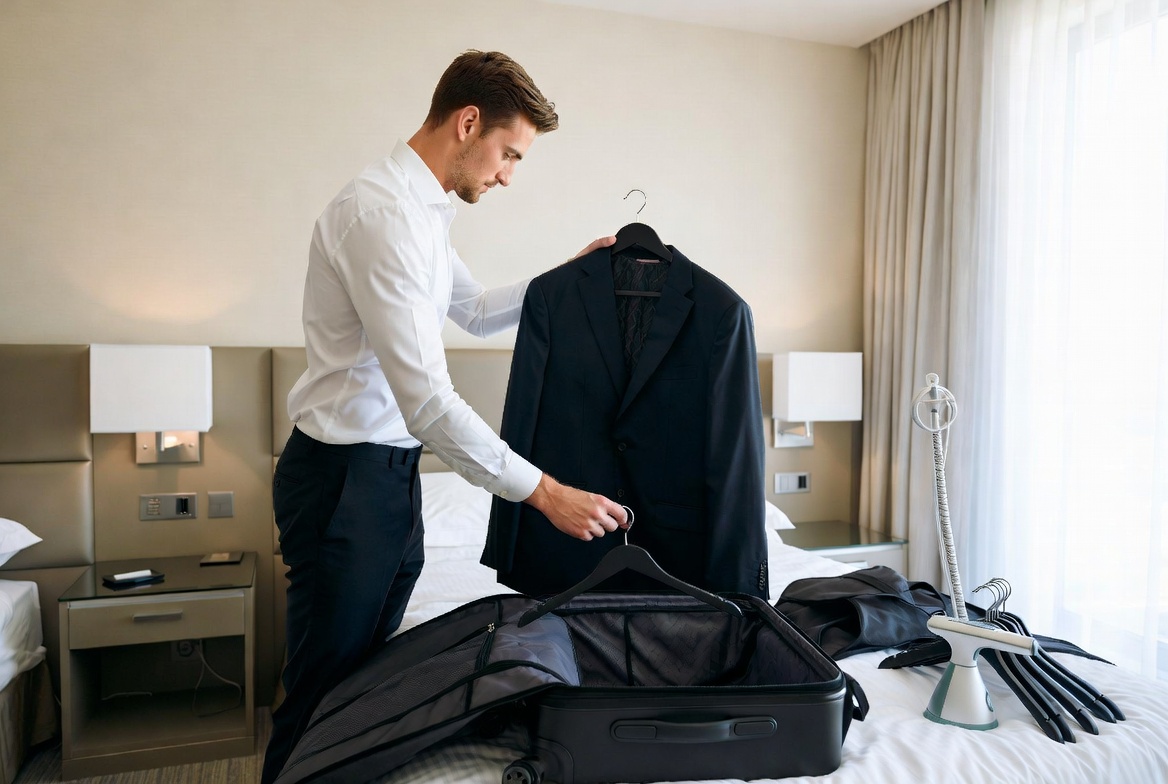
Travel is one of the most common sources of wrinkles, especially for frequent flyers and international sales teams.
Recommended practices:
- Use a garment bag whenever possible; fold the suit minimally and let it hang as soon as you arrive.
- If using a suitcase, turn the jacket inside out, fold shoulder to shoulder, then fold once more gently and place it on top of other items.
- Pack shoes and heavy objects away from the suit to avoid pressure marks.
- Immediately upon arrival, unpack and hang the suit, and use steam or bathroom steam to relax any new wrinkles.
These tips are highly appreciated by corporate clients and can be turned into visual guides or printed inserts inside garment boxes.
From the vantage point of an OEM suit manufacturer, wrinkle performance starts long before the suit reaches your warehouse or store. It is deeply connected to design, materials, and production standards.
Key design and production decisions:
- Pattern engineering
Carefully designed patterns distribute tension evenly, especially around the shoulders, elbows, knees, and seat, reducing chronic wrinkling in those areas.
- Interlining and canvas selection
Choosing the right combination of canvas and fusible materials keeps the jacket's shape while allowing natural movement, rather than creating rigid stress points.
- Quality tests and recovery checks
Fabric swatches and finished garments can be compressed, folded, and hung during testing to evaluate how quickly they return to their original shape.
By partnering closely with an OEM manufacturer, brand owners can transform wrinkle management from a support problem into a product feature and marketing advantage.
Consider a mid tier businesswear brand that receives frequent complaints about suits arriving wrinkled or creasing heavily after the first wear. This problem affects both retail customers and corporate uniform accounts.
After collaborating with an OEM manufacturer:
- The brand upgraded to higher twist wool blends specifically tested for recovery and crease resistance.
- They redesigned internal care labels and online guides to include clear, step by step instructions on steaming and storage.
- A new "travel suit line" was introduced, targeted at frequent business travelers and corporate sales teams.
Within a few seasons, customer satisfaction increased, returns related to wrinkles decreased, and the brand could confidently promote "wrinkle smart" features as part of its core value proposition.
For B2B buyers and private label clients, manufacturing expertise is a critical trust signal. When your content and product documentation clearly show how you manage wrinkle performance, you reinforce your brand's authority.
Benefits of partnering with a professional OEM suit manufacturer include:
- Access to specialist knowledge about fabrics, construction, and finishing techniques that influence wrinkles.
- Support in developing care guides and educational content tailored to your target markets and usage scenarios.
- The ability to offer evidence based claims about wrinkle resistance and durability, instead of generic marketing promises.
This combination of technical depth and user focused guidance positions your brand as a reliable long term partner for corporate buyers, distributors, and retail customers.
For busy professionals and corporate users, a simple checklist is often the most practical tool.
Daily wrinkle free checklist:
- Hang your suit on a proper hanger immediately after wearing it.
- Give it 15–20 minutes to air out in an open space before placing it in a closet.
- Use light steam only when necessary, focusing on high wrinkle zones.
- Rotate suits, giving each garment at least one full day of rest between wears.
- Store suits in clean, dry, ventilated conditions, away from direct sunlight.
When brands provide this checklist with each suit, customers feel supported and are more likely to recommend the product to colleagues and partners.
If you are a brand owner, wholesaler, or distributor seeking to differentiate your formalwear line, wrinkle performance should be a key part of your product strategy.
By partnering with an experienced OEM suit manufacturer:
- You gain fabric and construction expertise that minimizes wrinkling in real life use.
- You can offer your clients clear, practical care guidance, from fixing a wrinkled suit without an iron to maintaining a wrinkle free wardrobe during intensive travel.
- You strengthen your brand's reputation for reliability and professionalism, leading to higher satisfaction, fewer returns, and stronger long term relationships.
Whether you serve retail customers, corporate uniform programs, or international distributors, investing in wrinkle smart design and education delivers measurable value across your supply chain.
Q1: Can I use a regular household iron on my suit if I am careful?
A1: You can, but it is risky. Without a pressing cloth and proper temperature control, an iron can create shine, flatten the fabric texture, and damage the internal structure. Gentle steam is usually safer.
Q2: How often should I steam my suit to remove light wrinkles?
A2: For most wool suits, occasional light steaming is enough—usually after a few wears or following a trip. Over steaming can oversoften the fibers, so focus on visible wrinkles only.
Q3: Are wrinkle resistant suits less breathable than regular wool suits?
A3: Not necessarily. High quality wrinkle resistant fabrics are engineered to maintain breathability while improving recovery. Performance depends on the specific yarns and finishing used by the mill.
Q4: What is the best way to pack a suit in a carry on bag?
A4: Turn the jacket inside out, fold shoulder to shoulder, then fold once again and place it on top of other items. Pack trousers with a single crease fold, and hang the suit immediately upon arrival.
Q5: Do synthetic blends always wrinkle less than pure wool suits?
A5: Synthetic blends can improve wrinkle resistance, but modern high twist wool and advanced finishing techniques can perform just as well or better. The overall design and construction also play a major role.
1. StudioSuits. "How to Fix a Wrinkled Suit Without an Iron."
<https://www.studiosuits.com/blogs/articles/how-to-fix-a-wrinkled-suit-without-an-iron> [work-jacket]
2. Suitsupply. "Wrinkle Free and Easy Care Suits – Fabric and Care Guidelines."
<https://suitsupply.com/zh-cn/men/suits/wrinkle-free-suits/wool> [suitsupply]
3. Suitsupply. "Wrinkle Resistant and Travel Suits – Product Information."
<https://suitsupply.com/zh-cn/men/campaign/casual-business/wrinkle-resistant> [suitsupply]
4. Youti Clothing. "Professional OEM Suit Manufacturer and Wrinkle Free Suit Care Guide."
<https://www.work-jacket.com> [work-jacket]
5. Alibaba. "Youti Clothing – Custom Made Suits Supplier Profile."
<https://www.alibaba.com/supplier/suit-custom-made.html> [alibaba]


